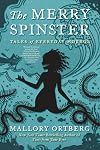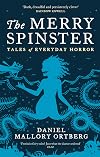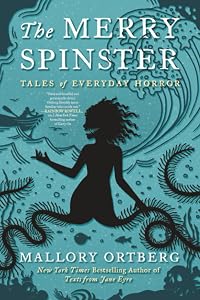
The Merry Spinster: Tales of Everyday Horror
by Daniel M. Lavery
On This Page
Description
"A collection of darkly mischievous stories based on classic fairy tales."--Front flap.Tags
Recommendations

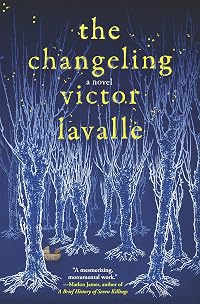
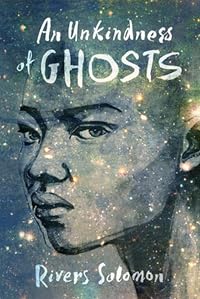

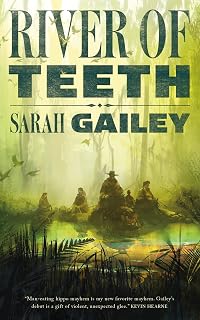
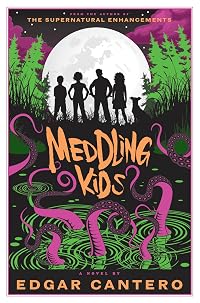
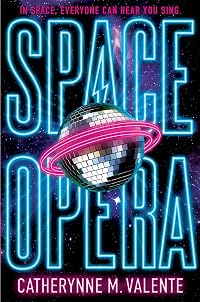
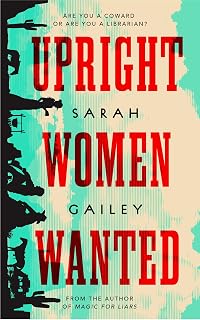

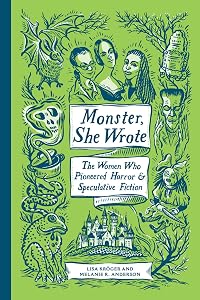
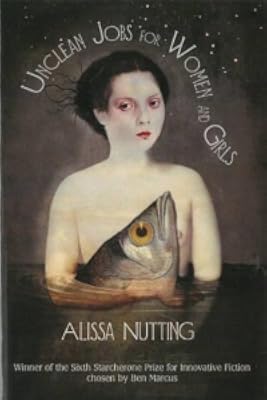


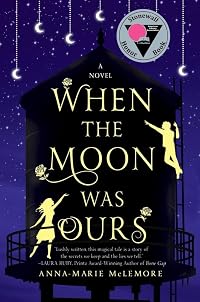
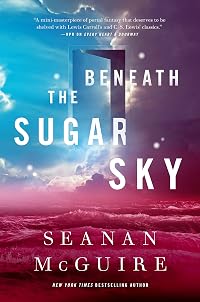
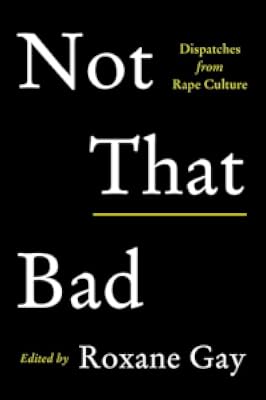
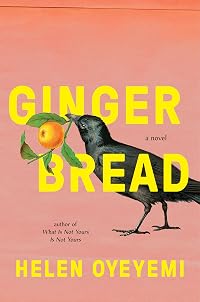
Member Recommendations
nessreader Both side-eye folktales by poking at them with sharp anachronisms and snark
Member Reviews
Note -- I was to be provided with a review copy of this book via the LibraryThing Early Reviews Program, but my copy never arrived. I borrowed a finished copy from my local library in order to write this review. (As far as I've heard, none of the 20 LT members slatted to review this received their copies.)
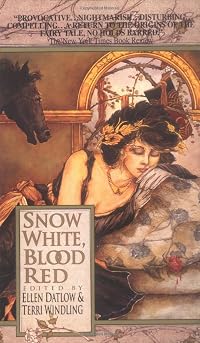
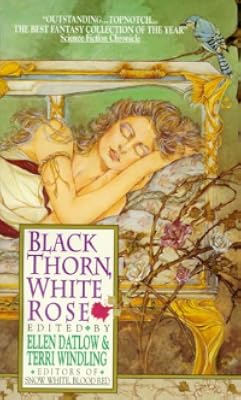
Fair-tale retellings are just my jam, full stop, but I especially love the dark retellings. I discovered the Datlow and Windling collections as a teen, and I've been hooked on that theme ever since. Ortberg's feminist, horror-filled works are tailor-made for me, and many of these stories also featured gender-neutral settings and characters, which I found especially fascinating.
I wouldn't consider this a perfect collection. I loved show more several stories, but found several others not fully satisfying for my taste -- too experimental, too incomplete, too much of a neat idea not fully grounded in a plot. Many of these stories are mashups of multiple fables, ranging from Shakespeare to the Christian Bible to modern classic children's books, and I don't think that scattershot of source influence always worked -- "The Thankless Child" in particular was cited as drawn from six influences and felt particularly unfocused. On the other hand, "The Daughter Cells" was drawn only from one, followed it extremely closely, and felt razor sharp.
Still. I'd give this collection a solid four stars, and I'll be eager to look for more of Ortberg's work. Definitely recommended for fans of horror fairy tales.
Also, for general interest -- There's a neat recent interview with Ortberg about the development and publication of this book with influences by, and on, his gender transition (still in process, but he's legally Daniel Mallory Ortberg now). show less
Fair-tale retellings are just my jam, full stop, but I especially love the dark retellings. I discovered the Datlow and Windling collections as a teen, and I've been hooked on that theme ever since. Ortberg's feminist, horror-filled works are tailor-made for me, and many of these stories also featured gender-neutral settings and characters, which I found especially fascinating.
I wouldn't consider this a perfect collection. I loved show more several stories, but found several others not fully satisfying for my taste -- too experimental, too incomplete, too much of a neat idea not fully grounded in a plot. Many of these stories are mashups of multiple fables, ranging from Shakespeare to the Christian Bible to modern classic children's books, and I don't think that scattershot of source influence always worked -- "The Thankless Child" in particular was cited as drawn from six influences and felt particularly unfocused. On the other hand, "The Daughter Cells" was drawn only from one, followed it extremely closely, and felt razor sharp.
Still. I'd give this collection a solid four stars, and I'll be eager to look for more of Ortberg's work. Definitely recommended for fans of horror fairy tales.
Also, for general interest -- There's a neat recent interview with Ortberg about the development and publication of this book with influences by, and on, his gender transition (still in process, but he's legally Daniel Mallory Ortberg now). show less
 This review was written for LibraryThing Early Reviewers.
I am definitely not the right audience for this book. I read this on easy mode, skipping two stories that were mostly about animals (and I should have skipped the third, but I didn’t realize in time), and the book still left me feeling slimed and poked in bruised places. It’s just grim, unrelentingly grim, unrelentingly saying, “Hey, did you know there are awful things in the world? There are! And they are so very, very awful.” Many of the stories cover the same (grim) territory, and some of them have no resolution, and I finished most of them sort of regretting I’d read them. (The two exceptions were “Daughter Cells” and “The Six Boy-Coffins.”)
I do like fairytale fic, and that’s what these stories are, but I don’t show more like one-note stories, let alone one-note collections — and I really don’t like it when that one note is a long, sustained moan of pain. I think I might have liked at least half of these stories if I’d encountered them mixed with other kinds of stories, or on their own, but all together they were at least 12 times too much.
But! If you like grimdark and you like fairytales, this is definitely the collection for you. It’s just so very very much not for me. show less
I do like fairytale fic, and that’s what these stories are, but I don’t show more like one-note stories, let alone one-note collections — and I really don’t like it when that one note is a long, sustained moan of pain. I think I might have liked at least half of these stories if I’d encountered them mixed with other kinds of stories, or on their own, but all together they were at least 12 times too much.
But! If you like grimdark and you like fairytales, this is definitely the collection for you. It’s just so very very much not for me. show less
I am an unapologetic (Daniel*) Mallory Ortberg fangirl. I've followed his work since the Toast, was overcome with glee when he took over Dear Prudence and basically think he can do no wrong. I also love faerie tales and hate short stories, so that's pretty much the context for where I'm coming from.
Ortberg is a master of language and it shines here. His wit is subtle, but biting, and each story quickly comes into focus with a clear tone and setting, in a way that many short stories authors struggle with. In a lot of ways, the book reminded me of Kelly Link's work -- designed as an intellectual puzzle that left you feeling something, without necessarily understanding why or what was literally happening in the story. Which is a super cool show more effect. But sometimes, a girl just wants to get what's happening, so by the end of the book the impact of that had kind of worn off.
My favorite stories was the first, a really atmospheric retelling of The Little Mermaid, perhaps because many of the conceits that Ortberg used throughout the book were new and shiny still then. I loved the way Ortberg played with my expectations of "mermaid" by introducing radial symmetry, and the administrative humor of the Rules of the Fae. The siren/selkie tale later on used a lot of the same tricks, but just felt less cool.
The two Frog & Toad-based stories stood out. Both because I don't consider Frog & Toad a faerie tale, but also they both had the same tone of passive aggressive/gaslighting horror. (Which was kind of also present in the Merry Spinster -- where Beauty basically just bullied everyone by "never thinking of herself") And yes, that is my personal bogeyman, but at the same time, I kind of wanted to be like "who hurt you?"
*Daniel Mallory Orbterg came out as a transman and changed his name coincident to the publishing of this book. show less
Ortberg is a master of language and it shines here. His wit is subtle, but biting, and each story quickly comes into focus with a clear tone and setting, in a way that many short stories authors struggle with. In a lot of ways, the book reminded me of Kelly Link's work -- designed as an intellectual puzzle that left you feeling something, without necessarily understanding why or what was literally happening in the story. Which is a super cool show more effect. But sometimes, a girl just wants to get what's happening, so by the end of the book the impact of that had kind of worn off.
My favorite stories was the first, a really atmospheric retelling of The Little Mermaid, perhaps because many of the conceits that Ortberg used throughout the book were new and shiny still then. I loved the way Ortberg played with my expectations of "mermaid" by introducing radial symmetry, and the administrative humor of the Rules of the Fae. The siren/selkie tale later on used a lot of the same tricks, but just felt less cool.
The two Frog & Toad-based stories stood out. Both because I don't consider Frog & Toad a faerie tale, but also they both had the same tone of passive aggressive/gaslighting horror. (Which was kind of also present in the Merry Spinster -- where Beauty basically just bullied everyone by "never thinking of herself") And yes, that is my personal bogeyman, but at the same time, I kind of wanted to be like "who hurt you?"
*Daniel Mallory Orbterg came out as a transman and changed his name coincident to the publishing of this book. show less
Daniel Mallory Ortberg makes a valiant entry into the "retellings of fairy tales" genre with this collection. I have to say that knowing the author only from their role as "Dear Prudie" on slate.com, I was impressed and surprised by the strength of their writing and inventiveness of their imagination. However, the quality of the stories varied widely. The haunting retelling of the velveteen rabbit, "The Rabbit," is the kind of story I can see being anthologized in years to come as a classic tale of horror. "The Daughter Cells" and "The Six Boy-Coffins" are both thought-provoking takes on the conventions and assumptions that recur in many fairy tales. Fairy tales teach children about the structures and gendered expectations of the world, show more while serving as a useful outlet for fear, and Ortberg understands that at a deep level. Unfortunately for me, about half the stories did not really work, so the star rating is lower than might be expected. The stories that land, land hard, but the stories that flopped really skewed my overall take-away. Still, I will keep Ortberg in mind as an author to watch for. show less
Creepy and utterly original. Everyone I know was reading this at the same time, but I never arranged a book club conversation and I regret it. There's so much to discuss. The collection holds together better than most short story collections, but also each story is such a horrifying little rotted jewel that I wanted to savor it alone rather than reading the whole collection quickly. I'm reviewing this months later, and the ones I still think about are the Velveteen Rabbit one (that was always a horror story for me anyway), "The Thankless Child," "Cast Your Bread Upon the Waters," and "The Frog's Princess."
3.5 *
Horror isn't my cup of tea, but Lavery (formerly Ortberg) is really good at leaving weird spaces that play with your assumptions and creating an atmosphere of dread.
I think my favorite was "The Thankless Child," vaguely sketched sci fi dystopia with lots of intriguing detail, about salt and a godmother. Wish it ended differently, but, horror. My second favorite was "The Daughter Cells," because of the worldbuilding but also, honestly, because Lavery really captures the archetype of The Prince in fairy stories, and he sucks.
Loved the strong current of genderfuckery running throughout the book---male daughters who owe the world their beauty, brothers named Sylvia and sisters named Paul, the discussion in the salt/stepmother story show more about who should be the husband and who the wife. show less
Horror isn't my cup of tea, but Lavery (formerly Ortberg) is really good at leaving weird spaces that play with your assumptions and creating an atmosphere of dread.
I think my favorite was "The Thankless Child," vaguely sketched sci fi dystopia with lots of intriguing detail, about salt and a godmother. Wish it ended differently, but, horror. My second favorite was "The Daughter Cells," because of the worldbuilding but also, honestly, because Lavery really captures the archetype of The Prince in fairy stories, and he sucks.
Loved the strong current of genderfuckery running throughout the book---male daughters who owe the world their beauty, brothers named Sylvia and sisters named Paul, the discussion in the salt/stepmother story show more about who should be the husband and who the wife. show less
I was put off from this book for a while because of the subtitle: "Tales of Everyday Horror". While that description is arguably accurate, it's certainly very misleading. The worlds, and even the types of worlds, in The Merry Spinster vary wildly from everyday reality, and also from each other. And therein lies the strength of the book, I think-- Lavery has many worlds to explore, and many fresh and interesting things to say. This is frankly unusual for an author writing in the often-hackneyed "twisted fairy tale" genre, though not surprising for a co-founder of The Toast. Overall, I really enjoyed the collection-- many of the stories were quite excellent, though some weren't to my personal taste.
My favorite stories from the collection show more are actually the first four: the deep sea alien uncanniness of "The Daughter Cells"; the salt-scarce science-fantasy genderfluid dystopia of "The Thankless Child", which was not the type of story I expected from this collection but was quite welcome; the short, bureaucratic & biblical "Fear Not: An Incident Log"; and "The Six Boy-Coffins", which felt the most approachable and closest to its fairy tale origins but which still got that distinctive Daniel Lavery twist.
I knew as soon as I hit story #2 that I would not, as is sometimes the case with a themed collection of short stories by a single author, get sick of the gimmick, since each story does something new. Just to be a completionist, the rest of the stories in order:
"Rabbit", a horrific take on The Velveteen Rabbit, was definitely the most viscerally upsetting of the stories, so much so that I had trouble enjoying it even though it was probably the most "perfect" of the whole collection.
I liked the "Merry Spinster", though I thought everything it was doing was done better in "The Thankless Child". The mother character was quite interesting though.
"The Wedding Party" felt a bit off to me-- by this point in the book the reader is primed (or at least I was primed) to identify the story's original, and while there is discussion of the Goose Girl and the Earl of Mar's Daughter, nothing ever seems to coalesce. I think if I had read the story elsewhere, I might have liked it more.
"Some Of Us Had Been Threatening Our Friend Mr. Toad" definitely read the most like Lavery's other writing from The Toast or The Shatner Chatner. Unfortunately (and I know this is very silly) I was distracted by some tiny inaccuracies to Wind in the Willows canon, lol. Lavery writes that all the animals live in the Wild Woods-- but it's just the Wild Wood, singular, and only Badger lives there of the three! Also in this story Mole says he's known Toad the longest, but actually he meets Mr Toad after everyone else! I don't know why these little things bothered me so much. Maybe because it made it feel less like an interesting take on a children's classic, and more like a different story dressed up in Kenneth Grahame's whimsical English clothing, which is ultimately exactly what it is. Felt more like a thought-exercise than a story.
No particular complaints about the last three, all solid stories. "Cast Your Bread Upon The Waters" succeeds on its distinct and colorful narrative voice. "The Frog's Princess" prods at the distasteful subtexts of its original. "Good Fences Make Good Neighbors", painfully real & uncomfortable, makes for a bit of a quietly depressing end to the collection.
And can I just say-- thank god there was no Alice in Wonderland story. I don't think even the inimitable Daniel Lavery could deliver a fresh take on Alice. show less
My favorite stories from the collection show more are actually the first four: the deep sea alien uncanniness of "The Daughter Cells"; the salt-scarce science-fantasy genderfluid dystopia of "The Thankless Child", which was not the type of story I expected from this collection but was quite welcome; the short, bureaucratic & biblical "Fear Not: An Incident Log"; and "The Six Boy-Coffins", which felt the most approachable and closest to its fairy tale origins but which still got that distinctive Daniel Lavery twist.
I knew as soon as I hit story #2 that I would not, as is sometimes the case with a themed collection of short stories by a single author, get sick of the gimmick, since each story does something new. Just to be a completionist, the rest of the stories in order:
"Rabbit", a horrific take on The Velveteen Rabbit, was definitely the most viscerally upsetting of the stories, so much so that I had trouble enjoying it even though it was probably the most "perfect" of the whole collection.
I liked the "Merry Spinster", though I thought everything it was doing was done better in "The Thankless Child". The mother character was quite interesting though.
"The Wedding Party" felt a bit off to me-- by this point in the book the reader is primed (or at least I was primed) to identify the story's original, and while there is discussion of the Goose Girl and the Earl of Mar's Daughter, nothing ever seems to coalesce. I think if I had read the story elsewhere, I might have liked it more.
"Some Of Us Had Been Threatening Our Friend Mr. Toad" definitely read the most like Lavery's other writing from The Toast or The Shatner Chatner. Unfortunately (and I know this is very silly) I was distracted by some tiny inaccuracies to Wind in the Willows canon, lol. Lavery writes that all the animals live in the Wild Woods-- but it's just the Wild Wood, singular, and only Badger lives there of the three! Also in this story Mole says he's known Toad the longest, but actually he meets Mr Toad after everyone else! I don't know why these little things bothered me so much. Maybe because it made it feel less like an interesting take on a children's classic, and more like a different story dressed up in Kenneth Grahame's whimsical English clothing, which is ultimately exactly what it is. Felt more like a thought-exercise than a story.
No particular complaints about the last three, all solid stories. "Cast Your Bread Upon The Waters" succeeds on its distinct and colorful narrative voice. "The Frog's Princess" prods at the distasteful subtexts of its original. "Good Fences Make Good Neighbors", painfully real & uncomfortable, makes for a bit of a quietly depressing end to the collection.
And can I just say-- thank god there was no Alice in Wonderland story. I don't think even the inimitable Daniel Lavery could deliver a fresh take on Alice. show less
Members
- Recently Added By
Lists

Kirkus Starred Fiction Reviews of Books Published in 2018
330 works; 3 members

Publishers Weekly Best Books of the Week / Starred Reviews 2018
78 works; 2 members

Fiction: Supernatural Horror
97 works; 1 member

GoodReads Horror Choice Awards
160 works; 4 members
Author Information

19+ Works 2,223 Members
Awards and Honors
Awards
Distinctions
Notable Lists
Common Knowledge
- Canonical title
- The Merry Spinster: Tales of Everyday Horror
- Original publication date
- 2018
- Epigraph
- With that Christian brake out with a loud voice: Oh, I see him again! and he tells me, "When thou passest through the waters, I will be with thee, and through the rivers, they shall not overflow thee." Then they both took cou... (show all)rage, and the enemy was after that as still as a stone, until they were gone over. Christian therefore presently found ground to stand upon; and so it followed that the rest of the river was but shallow. Thus they got over. -- John Bunyan, The Pilgrim's Progress
- Dedication
- For Nicole Cliffe. t'hy'la
- First words
- Daughters are as good a thing as any to populate a kingdom with -- if you've got them on hand.
- Last words
- (Click to show. Warning: May contain spoilers.)His friend had fallen asleep.
- Blurbers
- Rowell, Rainbow; Link, Kelly; Machado, Carmen Maria; Anders, Charlie Jane; Chee, Alexander; Scalzi, John
- Original language
- English, US
- Canonical DDC/MDS
- 813.6
- Canonical LCC
- PS3615.R72
Classifications
Statistics
- Members
- 722
- Popularity
- 39,304
- Reviews
- 35
- Rating
- (3.53)
- Languages
- English, Italian
- Media
- Paper, Audiobook, Ebook
- ISBNs
- 10
- ASINs
- 3