On This Page
Description
Lyman Frank Baum (1856-1919) was an American author, actor, and independent filmmaker best known as the creator, along with illustrator W. W. Denslow, of one of the most popular books ever written in American children's literature, The Wonderful Wizard of Oz (1900), better known today as simply The Wizard of Oz. He wrote thirteen sequels, nine other fantasy novels, and a plethora of other works, and made numerous attempts to bring his works to the stage and screen.Tags
Recommendations

















Member Recommendations
Member Reviews
I probably first read this book when I was seven or eight years old, when it was my great fortune that Dover reprinted several of L. Frank Baum's non-Oz fantasies in easy-to-afford paperback editions. Although this wasn't my favorite of the bunch, I always liked The Magical Monarch of Mo, and I'm pleased to find out - twenty-five years later - that I still find it very enjoyable. These stories find Baum in transition as a storyteller; they were originally published as A New Wonderland in 1900, and they were slightly revised and reprinted as Mo in 1903. Consequently, they show a stage of Baum's evolution that clearly predates The Wonderful Wizard of Oz; he's playing, here, with established European fairy tale figures and motifs (princes, show more princesses, dragons, giants, and so on) and just barely turning them on their head. It's not as significant, nor as Americanized, a shift as the "fairy tale" he creates with Wizard, but it's far more Baum's own thing than his 1896 Mother Goose in Prose. There's a very pleasing amount of his punning humor and pragmatic magical logic in The Magical Monarch of Mo - enough, in fact, that you can clearly identify this as writing by the far more famous and individually styled author of almost twenty years later.
Of the fourteen "surprises" (not all of which are really long enough or deep enough to qualify as individual stories), some are quite forgettable, while one or two probably could have been left out to the book's benefit. The best of them, though, are marvelously nonsensical: the adventure of the King's missing head, the Prince's fight against the Gigaboo, and the fight with the Purple Dragon. Any one of these show off the great potential Baum had at that moment in time, which he would soon find a way to transmit directly into his own, distinctly American fairy stories of Oz. show less
Of the fourteen "surprises" (not all of which are really long enough or deep enough to qualify as individual stories), some are quite forgettable, while one or two probably could have been left out to the book's benefit. The best of them, though, are marvelously nonsensical: the adventure of the King's missing head, the Prince's fight against the Gigaboo, and the fight with the Purple Dragon. Any one of these show off the great potential Baum had at that moment in time, which he would soon find a way to transmit directly into his own, distinctly American fairy stories of Oz. show less
L. Frank Baum wrote a number of different fantasies early in his career, before the runaway success of Oz (more down to the stage show) made it the one he came back to again and again. In what many cynically regard as an attempt to boost sales of those other books, he referenced many of them in The Road to Oz by having the rulers of the fairylands from them attend Ozma's birthday party. However, The Magical Monarch of Mo was not one of those.
This book was originally written under the title The King of Phunnyland and published as A New Wonderland in 1899, referencing Lewis Carroll. The book didn't sell too well to my knowledge, but after the success of The Wonderful Wizard of Oz, Baum and his publisher changed the title to The Magical show more Monarch of Mo and edited all occurrences of "Phunnyland" in the book to "Mo." Flip the "WW" of "Wonderful Wizard" upside down and you get the "MM" of "Magical Monarch"! Phunnyland had actually been mentioned in The Life and Adventures of Santa Claus, bringing it into Baum's extended fantasy universe (when I read that one aloud to my son, I edited it to be "Mo"), but Baum linked it more directly to Oz later on. The Wise Donkey of Mo has a small appearance in Patchwork Girl, and Trot and Cap'n Bill visit Mo in Scarecrow of Oz.
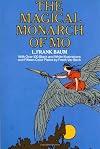
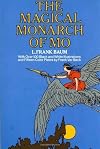
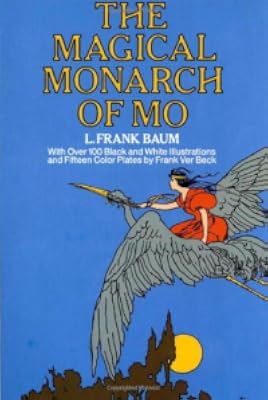
It was this last reference that captured my son's imagination, as it established that in Mo, it rains lemonade and snows popcorn. Since then, he's asked us again and again about other weather phenomena in Mo. So, when we finished Royal Book so quickly that our copy of Kabumpo in Oz hadn't arrived yet, I suggested we read The Magical Monarch of Mo (rereleased with a comprehensive set of illustrations, complete with color plates, by Dover in 1968) while we waited for it, and he eagerly agreed. So if sales was why Baum did it, it worked on us. (Well, except that I've owned my copy since childhood.)
Magical Monarch isn't really a novel; it's more a set of fourteen short stories. Some are about the unnamed King of Mo; others are about his various children. They're usually comedic in tone, and use a kind of cartoon logic. The king loses his head to a Purple Dragon and tries various replacements; members of the royal family get trapped at the bottom of a lake of syrup; a prince gets smooshed flat by a giant's clotheswringer; a neighboring country attacks Mo with a mechanical giant; an evil wizard steals a princess's toe. Some are riffs on fairy tale structures (people going on dangerous journeys where things happen in groups of three), others are just short funny things. Many have ideas Baum would come back later in his career and integrate into Oz: people made up of parts of multiple people, mechanical men, immortality, odd objects growing on trees.
Some are better than others; some worked for my three-year-old son, and some went over his head. Mostly, I think, he delighted in the details about Mo: animal crackers growing on trees, cows that make ice cream, lakes of syrup, rivers of cream with strawberries. Some of the jokes are good for his age; others went over his head. (A fox with a sore throat cuts it out and hangs it in the sun to "cure" it, then puts it back. It's not like my son knows that meaning of the word "cure!") But he seemed to have a good time, and often repeated to his mother strange things he learned about the Land of Mo. He still occasionally asks me if ice cream comes out of cows in Oz, too.
He was inspired to both draw a picture of the Bumpy Man of Mo and demand that we illustrate the entire Oz continent together; you can read more about that on my blog if you're interested. show less
This book was originally written under the title The King of Phunnyland and published as A New Wonderland in 1899, referencing Lewis Carroll. The book didn't sell too well to my knowledge, but after the success of The Wonderful Wizard of Oz, Baum and his publisher changed the title to The Magical show more Monarch of Mo and edited all occurrences of "Phunnyland" in the book to "Mo." Flip the "WW" of "Wonderful Wizard" upside down and you get the "MM" of "Magical Monarch"! Phunnyland had actually been mentioned in The Life and Adventures of Santa Claus, bringing it into Baum's extended fantasy universe (when I read that one aloud to my son, I edited it to be "Mo"), but Baum linked it more directly to Oz later on. The Wise Donkey of Mo has a small appearance in Patchwork Girl, and Trot and Cap'n Bill visit Mo in Scarecrow of Oz.
It was this last reference that captured my son's imagination, as it established that in Mo, it rains lemonade and snows popcorn. Since then, he's asked us again and again about other weather phenomena in Mo. So, when we finished Royal Book so quickly that our copy of Kabumpo in Oz hadn't arrived yet, I suggested we read The Magical Monarch of Mo (rereleased with a comprehensive set of illustrations, complete with color plates, by Dover in 1968) while we waited for it, and he eagerly agreed. So if sales was why Baum did it, it worked on us. (Well, except that I've owned my copy since childhood.)
Magical Monarch isn't really a novel; it's more a set of fourteen short stories. Some are about the unnamed King of Mo; others are about his various children. They're usually comedic in tone, and use a kind of cartoon logic. The king loses his head to a Purple Dragon and tries various replacements; members of the royal family get trapped at the bottom of a lake of syrup; a prince gets smooshed flat by a giant's clotheswringer; a neighboring country attacks Mo with a mechanical giant; an evil wizard steals a princess's toe. Some are riffs on fairy tale structures (people going on dangerous journeys where things happen in groups of three), others are just short funny things. Many have ideas Baum would come back later in his career and integrate into Oz: people made up of parts of multiple people, mechanical men, immortality, odd objects growing on trees.
Some are better than others; some worked for my three-year-old son, and some went over his head. Mostly, I think, he delighted in the details about Mo: animal crackers growing on trees, cows that make ice cream, lakes of syrup, rivers of cream with strawberries. Some of the jokes are good for his age; others went over his head. (A fox with a sore throat cuts it out and hangs it in the sun to "cure" it, then puts it back. It's not like my son knows that meaning of the word "cure!") But he seemed to have a good time, and often repeated to his mother strange things he learned about the Land of Mo. He still occasionally asks me if ice cream comes out of cows in Oz, too.
He was inspired to both draw a picture of the Bumpy Man of Mo and demand that we illustrate the entire Oz continent together; you can read more about that on my blog if you're interested. show less
It's a shame that Baum's Oz stories have been so popular as to eclipse his other work. When Baum became tired of Oz (which he did quickly), and wanted to move on, he did this next. You will see in Baum's titles definite parallels: The Wonderful Wizard of Oz, The Magical Monarch of Mo, Queen Zixi of Ix--all one-syllable places with a polysyllabic, titled person "of" there. The Magical Monarch of Mo will appeal to anyone who likes any of Baum's tales, for they all have much the same flavor (save, possibly, his Santa Claus tales, which rise a bit above the lot in styling). It is certainly great reading for children, and has the added virtue that it will be something new.
In 1896, L. Frank Baum wrote a children’s book he called The king of Phunnyland which was published four years later with the title A new wonderland. This was the same year that his most famous book, The wizard of Oz, was released. That book became very popular and a few years later, to capitalize on that success, a new publisher released the Phunnyland book again, this time with the title The surprising adventures of the magical monarch of Mo and his people. The only change he made to the text was the new name for his land. He also adjusted some of the description. The book still was in fourteen chapters or, as he called them, surprises. Some of Frank Ver Beck’s illustrations, both color plates and black and white text drawings, show more from the original publication were included in the new edition with some additions. My edition is the facsilmile Dover edition which reproduces the 1903 text and uses all of Ver Beck’s illustrations. It also has an excellent introduction by Martin Gardner.
The surprises are tales of Mo, its people and some of their adventures. The inhabitants do not need to work since most everything grows on trees, including violins and bicycles along with food and clothing. There is a root beer river and ponds of custard. There is no money needed. Also I must tell you that no one ever dies in Mo, so when the king went after the Purple Dragon for eating the chocolate caramels before they were ripe, and lost his head, he just needed to have a new one made. Prince Jollikin loses his legs, arms and head but eventually finds them all. Princess Pattycake is given a pill by a good sorceress to cure her bad temper. Prince Fiddlecumdoo visits a friendly giant and is accidentally put through the giantess’s wringer washer. The solution – drill a hole in his head and pump him full of air. Then there is the Turvyland where everything is upside down and contradictory. The Duchess Bredenbutta has a nice but bewildering visit. The book abounds with illogic and puns galore.
Although written for a different generation of children, today’s younger folk will not be put off by these stories. After all, they are used to Wile E. Coyote and Road Runner as well as Popeye, Daffy Duck and other cartoon characters. No matter what befalls, they are always OK. And the truly evil in these stories, like the Purple Dragon and King Scowleyow, do have to accept the consequences of their actions.
As a child, Baum’s Oz works were popular due to the first TV showing of The Wizard of Oz . The local public library had some of the Oz books and we devoured them all. Had I read The magical monarch of Mo at the time, I would have liked it as much then as I do now. show less
The surprises are tales of Mo, its people and some of their adventures. The inhabitants do not need to work since most everything grows on trees, including violins and bicycles along with food and clothing. There is a root beer river and ponds of custard. There is no money needed. Also I must tell you that no one ever dies in Mo, so when the king went after the Purple Dragon for eating the chocolate caramels before they were ripe, and lost his head, he just needed to have a new one made. Prince Jollikin loses his legs, arms and head but eventually finds them all. Princess Pattycake is given a pill by a good sorceress to cure her bad temper. Prince Fiddlecumdoo visits a friendly giant and is accidentally put through the giantess’s wringer washer. The solution – drill a hole in his head and pump him full of air. Then there is the Turvyland where everything is upside down and contradictory. The Duchess Bredenbutta has a nice but bewildering visit. The book abounds with illogic and puns galore.
Although written for a different generation of children, today’s younger folk will not be put off by these stories. After all, they are used to Wile E. Coyote and Road Runner as well as Popeye, Daffy Duck and other cartoon characters. No matter what befalls, they are always OK. And the truly evil in these stories, like the Purple Dragon and King Scowleyow, do have to accept the consequences of their actions.
As a child, Baum’s Oz works were popular due to the first TV showing of The Wizard of Oz . The local public library had some of the Oz books and we devoured them all. Had I read The magical monarch of Mo at the time, I would have liked it as much then as I do now. show less
Totally bizarre. 1 1/2 stars for the book, and a bonus 1/2 star for the excellent LibriVox narration.
Available on Project Gutenberg: https://www.gutenberg.org/ebooks/16259
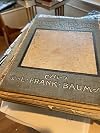
The book has illustrations in the margins and below the text and a few colored full page drawings.
".... his history will surely seem magical to us who inhabit the civilized places of the world and think that anything we can not find a reason for must be due to magic." [p. 5]
The book has illustrations in the margins and below the text and a few colored full page drawings.
".... his history will surely seem magical to us who inhabit the civilized places of the world and think that anything we can not find a reason for must be due to magic." [p. 5]
Had this read to me when I was a kid.
Members
- Recently Added By
Lists

Books Read in 2020
4,379 works; 124 members

Books Read in 2025
4,128 works; 98 members
Talk Discussions
Past Discussions
Found: Book with land in which everything was opposite in Name that Book (April 2025)
Author Information

604+ Works 72,683 Members
Best known as the author of the Wizard of Oz series, Lyman Frank Baum was born on May 15, 1856, in New York. When Baum was a young man, his father, who had made a fortune in oil, gave him several theaters in New York and Pennsylvania to manage. Eventually, Baum had his first taste of success as a writer when he staged The Maid of Arran, a show more melodrama he had written and scored. Married in 1882 to Maud Gage, whose mother was an influential suffragette, the two had four sons. Baum often entertained his children with nursery rhymes and in 1897 published a compilation titled Mother Goose in Prose, which was illustrated by Maxfield Parrish. The project was followed by three other picture books of rhymes, illustrated by William Wallace Denslow. The success of the nursery rhymes persuaded Baum to craft a novel out of one of the stories, which he titled The Wonderful Wizard of Oz. Some critics have suggested that Baum modeled the character of the Wizard on himself. Other books for children followed the original Oz book, and Baum continued to produce the popular Oz books until his death in 1919. The series was so popular that after Baum's death and by special arrangement, Oz books continued to be written for the series by other authors. Glinda of Oz, the last Oz book that Baum wrote, was published in 1920. (Bowker Author Biography) show less
Some Editions
Series

Belongs to Publisher Series
Work Relationships
Is contained in
Common Knowledge
- Canonical title
- The Magical Monarch of Mo
- Original title
- A New Wonderland, Being the First Account Ever Printed of the Beautiful Valley, and the Wonderful Adventures of Its Inhabitants
- Alternate titles
- A New Wonderland; The Magical Monarch of Mo; The Surprising Adventures of the Magical Monarch of Mo and His People
- Original publication date
- 1896-06-17 (copyright registration) (copyright registration); 1899 (original publication) (original publication)
- Important places
- Mo
- Dedication
- To the Comrade of my boyhood days Dr. Henry Clay Baum
- First words
- I dare say there are several questions you would like to ask at the very beginning of this history.
- Last words
- (Click to show. Warning: May contain spoilers.)That same day the Monarch of Mo gave a magnificent feast to all his people to celebrate the destruction of their greatest foe; and ever afterward the gardens of the Beautiful Valley were free from molestation.
- Disambiguation notice
- The book was written in 1896 with the title: The king of Phunnyland. When first published, in 1900 (the same year as The Wizard of Oz), the title was changed to: A new wonderland. In 1903, the title was... (show all) changed again to The magicial monarch of Mo and all place names in the book changed to Mo.
Classifications
Statistics
- Members
- 300
- Popularity
- 107,196
- Reviews
- 9
- Rating
- (3.78)
- Languages
- English, Greek
- Media
- Paper, Audiobook, Ebook
- ISBNs
- 34
- UPCs
- 1
- ASINs
- 15