
Where Angels Fear to Tread
by E. M. Forster
On This Page
Description
Where Angels Fear to Tread (1905) follows two women to Italy: the widowed Lilia Herriton and her traveling companion Caroline Abbott. Lilia falls passionately in love with the country, and also with a young Italian man. Her decision to remain in Italy enrages her dead husband's family, who send her brother-in-law to fetch her back..
Tags
Recommendations






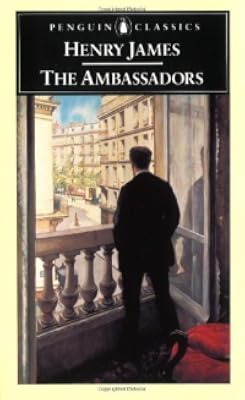




Member Recommendations
Member Reviews
The stuffy and moralistic English middle classes are in full view when the wayward widowed sister-in-law finds love in Italy with a handsome (and younger) Italian man and marries him. When she conveniently dies in childbirth, the family aren’t very aggrieved, but the thought of leaving one of their own to be raised by “those people” is not to be born. The family mounts a rescue mission to bring the child back to England. This expedition, shows the English family at their worst and sets the scene for a terrible tragedy. This is Forster at his finest.
Forster’s first novel, in which he introduces his great theme of the confrontation between English bourgeois suburban stuffiness and all the grand, beautiful and natural things it is afraid of — but secretly longs to join in with — in the wider world. The Herritons pack off their inconvenient widowed daughter-in-law Lilia on a trip to Italy with the respectable Miss Abbott, but it all goes horribly wrong when she falls for the lovely Gino in a small town somewhere in Tuscany. Lilia’s brother-in-law Philip is sent out as a task force to eliminate the problem, but fails dismally, also falling for Gino’s charm. Then the comedy turns dark — oddly I always remember this as a light, sunny book and am shocked by how dark it is when show more I actually re-read it — when Lilia tries to bridge the cultural gap between her and Gino by the traditional English means of waving money around and being calm but determined, and there’s a grotesque finale when Philip and Miss Abbott try to clear up the mess and make it worse. Complete with a glorious set-piece in the opera house, and a Laurentian wrestling scene that reminds us that poor Lilia was merely incidental, and this story is all about the relationship between Gino and Philip… show less
Even considering that a couple of E.M. Forster's books are considered to be flat-out twentieth century classics, "Where Angels Fear to Tread" is a remarkable performance, a debut novella that never seems to put a foot wrong. The book works on a number of levels. It's an acid satire of comfortable upper-class British life at Sawston -- apparently Tunbridge Wells -- transposed to an Italian setting. Skewering the manners and manias of the economically comfortable is never all that difficult, but his upper-class would-be rebels aren't necessarily heroes. They may complain about the dreadfully dull culture of the moneyed upper classes, but lack the fortitude to leave it behind entirely. Being Forster, this little book is splendidly observan show more about character: about what makes some people strong or weak, about which of our connections are really most meaningful to us, about and which values really help us develop. And although Forster didn't know too many Italians personally when he wrote this one, it's a not-too-unsuccessful study in the contrast between Southern European and Northern European attitudes, and, perhaps most delightfully, its a canvas on which the author can describe -- and express his own enthusiasm for -- Italy. Even if it had nothing else to recommend it, "Where Angels Fear to Tread" would be worth reading just for the author's descriptions of Italy's natural beauty, its ancient towns, and its complex social customs that, to a visiting Englishman, must have seemed delightfully novel and strange. You can't fake the sort of enthusiasm that Forster displays here.
What really struck me about "Where Angels Fear to Tread" is how well I felt I knew the characters after spending a mere one hundred and sixty pages with them. Although I've seen Forster's style described as "light," he had the rare gift of describing character: his insight into people's characters and their motivations seems, at times, nothing short of supernatural. The book itself may be brief, but -- from the clever but ineffectual Phillip to the reckless Lilia to the louche but undeniably charming Gino, each of his characters seem to breathe on the page. The changes they undergo -- their character arcs, if you'll permit me the phrase -- also seem significant and complex for such a short book. Forster, in other words, fit a lot of humanity into this little volume.
Lastly, while it's been a while since I've picked up anything by this author, "Where Angels Fear to Tread" seemed to confirm my suspicions that he serves as an important link between nineteenth and twentieth century writing. He writes exclusively in the third person and doesn't hesitate to describe a reader's character or moral precepts to his readers, which may not be to every modern reader's taste. Still, while these descriptions are often remarkably insightful and economical, I felt that something else was constantly trying to emerge here. Forster doesn't hesitate to describe the lazy, likeable, pleasure-seeking Gino in forthrightly physical, almost erotic, terms. Italy itself, with its opera performances and its food and its cafés and its warm, scented night breezes, is portrayed as a garden of sensual delights, something that often disorients our English visitors and makes them question their own values and customs. The body, in all its messy, sensual glory, keeps trying to break through here, and sometimes it does. In "Where Angels Fear to Tread," threadbare Victorian morality constantly seems as risk of toppling over once and for all, and it's sometimes thrilling to watch. I'm not sure if this one is read as often as Forster's "A Passage to India" or his "A Room with a View," but honestly, I can't see why it shouldn't be. Highly recommended. show less
What really struck me about "Where Angels Fear to Tread" is how well I felt I knew the characters after spending a mere one hundred and sixty pages with them. Although I've seen Forster's style described as "light," he had the rare gift of describing character: his insight into people's characters and their motivations seems, at times, nothing short of supernatural. The book itself may be brief, but -- from the clever but ineffectual Phillip to the reckless Lilia to the louche but undeniably charming Gino, each of his characters seem to breathe on the page. The changes they undergo -- their character arcs, if you'll permit me the phrase -- also seem significant and complex for such a short book. Forster, in other words, fit a lot of humanity into this little volume.
Lastly, while it's been a while since I've picked up anything by this author, "Where Angels Fear to Tread" seemed to confirm my suspicions that he serves as an important link between nineteenth and twentieth century writing. He writes exclusively in the third person and doesn't hesitate to describe a reader's character or moral precepts to his readers, which may not be to every modern reader's taste. Still, while these descriptions are often remarkably insightful and economical, I felt that something else was constantly trying to emerge here. Forster doesn't hesitate to describe the lazy, likeable, pleasure-seeking Gino in forthrightly physical, almost erotic, terms. Italy itself, with its opera performances and its food and its cafés and its warm, scented night breezes, is portrayed as a garden of sensual delights, something that often disorients our English visitors and makes them question their own values and customs. The body, in all its messy, sensual glory, keeps trying to break through here, and sometimes it does. In "Where Angels Fear to Tread," threadbare Victorian morality constantly seems as risk of toppling over once and for all, and it's sometimes thrilling to watch. I'm not sure if this one is read as often as Forster's "A Passage to India" or his "A Room with a View," but honestly, I can't see why it shouldn't be. Highly recommended. show less
E. M. Forster's first novel tackles issues of national identity and the potential for interpersonal connection despite societal inequalities that would preoccupy Forster throughout his career. The action is split between England and Italy. Where Angels Fear to Tread culminates in a "song of madness and death" similar to the sad opera Lucia di Lammermoor, which turns raucously amusing in one of the novel's most memorable sequences, yet at times veers into farce.
The novel is gruesome, accomplished, and darkly humorous. The best intentions fail and well-known ideas of virtue and vice fall to pieces in it. This kind of tragedy is distinctively Jamesian, and Philip's tale unmistakably invokes The Ambassadors' storyline. Similar to Strether show more in James' novel, Philip goes to the continent in order to save a fellow countryman from disgrace (first Lilia, then her son), only to fall in love with the place, find himself in the unlikely position of defending it, and have additional "ambassadors" (Harriet and Caroline Abbott) sent in order to save his mission. John Marcher, the main character of Henry James' "The Beast in the Jungle," and, in a way, the model for Strether, have similarities with Philip in his disengagement from life and inability to make snap decisions. However, Philip's tragedy is more difficult to accept because of his conviction that nothing can save him, which is actually the reverse of Strether's.
The action of this novel somewhat presages aspects of Forster's third novel, A Room With A View. As first novels go, this one is one of the best with a literary touch that Forster would continue to develop in his more famous later novels. show less
The novel is gruesome, accomplished, and darkly humorous. The best intentions fail and well-known ideas of virtue and vice fall to pieces in it. This kind of tragedy is distinctively Jamesian, and Philip's tale unmistakably invokes The Ambassadors' storyline. Similar to Strether show more in James' novel, Philip goes to the continent in order to save a fellow countryman from disgrace (first Lilia, then her son), only to fall in love with the place, find himself in the unlikely position of defending it, and have additional "ambassadors" (Harriet and Caroline Abbott) sent in order to save his mission. John Marcher, the main character of Henry James' "The Beast in the Jungle," and, in a way, the model for Strether, have similarities with Philip in his disengagement from life and inability to make snap decisions. However, Philip's tragedy is more difficult to accept because of his conviction that nothing can save him, which is actually the reverse of Strether's.
The action of this novel somewhat presages aspects of Forster's third novel, A Room With A View. As first novels go, this one is one of the best with a literary touch that Forster would continue to develop in his more famous later novels. show less
The title of this novel is the second half of a well-known saying. If you think of the first half, you know what many of the characters do throughout the book. At least the English, middle-class set of characters. They break like a giant wave against the boulder of indolence that is the hallmark of the Italian set of characters, epitomized by the legend of the patron saint of the village church. Caught between the two sets is Philip, the effete younger son of the suburban Herritons, whose sympathies are easily aroused by Italy and its people, in part because their inclinations coincide with his own. There is one crucial difference: the Italians in the book somehow find a way to make their way of (not) doing things work (even if this is show more not enough to forestall a horrible event), whereas Philip aspires to nothing more than honorable failure. In some ways, he is a forerunner of the pair of characters in Forster’s masterpiece, Howards End, Tibby Schlegel and Leonard Bast. If there is a narrative center to Angels, it might be Philip’s perspective, although it seems to be overdoing it to call him the protagonist. That role would be too weighty for him. In a moment of insight, he describes himself as “trivial.” For a brief instant, it appears as if the tragic climax of this clash of cultures might stir him to develop into something more, but this is quickly crushed by one last plot turn, and Philip seems almost relieved that it is so.
This was Forster’s first novel, but he had already found not only themes that would preoccupy him throughout his career (the emptiness of the outwardly-successful English merchant class, the limits and ultimate futility of aesthetic interests, the contrast with other, more elemental cultures), but also his characteristic narrative voice, nominally the anonymous, omniscient story-teller, but occasionally breaking in with asides that align him with an author creating a tale rather than simply a narrator recounting one. Here is an example, from chapter two: “What follows should be prefaced with some simile—the simile of a powder-mine, a thunderbolt, an earthquake—for it blew Philip up in the air and flattened him on the ground and swallowed him up in the depth.”
I first read this some thirty years ago, but picked it up yesterday afternoon to help while away another flu-plagued afternoon; it was just what I needed. Highly recommended, a good read. show less
This was Forster’s first novel, but he had already found not only themes that would preoccupy him throughout his career (the emptiness of the outwardly-successful English merchant class, the limits and ultimate futility of aesthetic interests, the contrast with other, more elemental cultures), but also his characteristic narrative voice, nominally the anonymous, omniscient story-teller, but occasionally breaking in with asides that align him with an author creating a tale rather than simply a narrator recounting one. Here is an example, from chapter two: “What follows should be prefaced with some simile—the simile of a powder-mine, a thunderbolt, an earthquake—for it blew Philip up in the air and flattened him on the ground and swallowed him up in the depth.”
I first read this some thirty years ago, but picked it up yesterday afternoon to help while away another flu-plagued afternoon; it was just what I needed. Highly recommended, a good read. show less
Where Angels Fear to Tread is a gem with too many facets to appreciate fully at first inspection. E. M. Forster packed so much into his short first novel that it would be a pleasure to read several times.
When Lilia Herriton left for a year in Italy, her in-laws breathed a sigh of relief to have the impetuous, somewhat gauche, widow out of their stodgy hair. But when they discover that Lilia has gone and married the ne’er-do-well son of a provincial Italian dentist, their shocked overreaction leads to a series of misfortunes that eventually crush their prim conventions.
Forster uses the star-crossed lovers, Lilia and Gino, to illustrate the clash between star-crossed cultures and philosophies. In surviving these clashes, Lilia’s show more brother-in-law, Philip Harriton, and her companion, Caroline Abbott, grow to appreciate a world much bigger than their tedious hometown of Sawston.
Forster is – for the better – a stripped down version of Henry James. The beauty and big ideas are there, but are not swaddled to obscurity with a million extra words.Where Angels Fear to Tread was published in 1905. To readers used to James’s heavy hand (The Wings of the Dove, The Ambassadors, and The Golden Bowl were published in that order in the three years prior to Angels), Forster must have seemed like the breath of life itself.
Also posted on Rose City Reader. show less
When Lilia Herriton left for a year in Italy, her in-laws breathed a sigh of relief to have the impetuous, somewhat gauche, widow out of their stodgy hair. But when they discover that Lilia has gone and married the ne’er-do-well son of a provincial Italian dentist, their shocked overreaction leads to a series of misfortunes that eventually crush their prim conventions.
Forster uses the star-crossed lovers, Lilia and Gino, to illustrate the clash between star-crossed cultures and philosophies. In surviving these clashes, Lilia’s show more brother-in-law, Philip Harriton, and her companion, Caroline Abbott, grow to appreciate a world much bigger than their tedious hometown of Sawston.
Forster is – for the better – a stripped down version of Henry James. The beauty and big ideas are there, but are not swaddled to obscurity with a million extra words.Where Angels Fear to Tread was published in 1905. To readers used to James’s heavy hand (The Wings of the Dove, The Ambassadors, and The Golden Bowl were published in that order in the three years prior to Angels), Forster must have seemed like the breath of life itself.
Also posted on Rose City Reader. show less
Where Angels Fear to Tread is a short novel that I think might have been an even better short story. It really is a wonderful story, but I felt that the author often got bogged down in exposition and could have cut to the chase with as much and maybe even more impact. As he does in other novels, Forster skewers the conventional, oh-so-proper, early 20th century middle-class British by exposing them (and us) to the spontaneous vitality of Italy. His British characters literally and figuratively embark on journeys from one extreme to the other and come out a little wiser for it.
The story basically centers around two trips to Italy made by members of the Herriton family. In the first journey, Philip Herriton comes to Italy at the behest show more of his mother in order to dissuade his widowed sister-in-law from marrying Gino, a much younger local man and – horrors – the son of a provincial dentist. He discovers that he is too late and that his sister-in-law’s British travelling companion, Caroline Abbott, not only abbetted the marriage but was deceptive when writing to the family about its status and that of the groom.
The second part of the book revolves around the second trip Philip makes to adopt and/or purchase the baby who is the product of the doomed marriage. A guilt-ridden Caroline Abbott has returned to the Italian town to retrieve the baby as well - and to save it from both the Herritons and from Gino. It is in this section that the conflict between right and wrong, love and moralistic self-righteousness as well as impulse and calculation is played out. It seems to me that the turning point for Caroline and Philip occurs during their attendance of a provincial performance of the opera, Lucia di Lammermoor. It can be no coincidence that Forster chooses this opera, written by the Italian composer Gaetano Donizetti and based on Sir Walter Scott’s story of a family’s disastrous attempt to intervene in a marriage that would have dire consequences for their prosperity, reputation and standing in the community.
Both Caroline’s and Philip’s transformation and growth come when British middle class rectitude and Italian passion literally and figuratively collide. The two (especially Philip) are at first charmed in an arrogant, morally superior and disdainful way by the Italian lifestyle. This attitude is then replaced by horror and ultimately, the two main characters are transformed by their exposure to Italy and come to understand, accept and embrace what it represents – both the beautiful and the ugly. In the end, they come to a much broader understanding and acceptance of the fullness of a life that includes mercy and cruelty, love and hate and good and evil. show less
The story basically centers around two trips to Italy made by members of the Herriton family. In the first journey, Philip Herriton comes to Italy at the behest show more of his mother in order to dissuade his widowed sister-in-law from marrying Gino, a much younger local man and – horrors – the son of a provincial dentist. He discovers that he is too late and that his sister-in-law’s British travelling companion, Caroline Abbott, not only abbetted the marriage but was deceptive when writing to the family about its status and that of the groom.
The second part of the book revolves around the second trip Philip makes to adopt and/or purchase the baby who is the product of the doomed marriage. A guilt-ridden Caroline Abbott has returned to the Italian town to retrieve the baby as well - and to save it from both the Herritons and from Gino. It is in this section that the conflict between right and wrong, love and moralistic self-righteousness as well as impulse and calculation is played out. It seems to me that the turning point for Caroline and Philip occurs during their attendance of a provincial performance of the opera, Lucia di Lammermoor. It can be no coincidence that Forster chooses this opera, written by the Italian composer Gaetano Donizetti and based on Sir Walter Scott’s story of a family’s disastrous attempt to intervene in a marriage that would have dire consequences for their prosperity, reputation and standing in the community.
Both Caroline’s and Philip’s transformation and growth come when British middle class rectitude and Italian passion literally and figuratively collide. The two (especially Philip) are at first charmed in an arrogant, morally superior and disdainful way by the Italian lifestyle. This attitude is then replaced by horror and ultimately, the two main characters are transformed by their exposure to Italy and come to understand, accept and embrace what it represents – both the beautiful and the ugly. In the end, they come to a much broader understanding and acceptance of the fullness of a life that includes mercy and cruelty, love and hate and good and evil. show less
Members
- Recently Added By
Lists

1001 Books You Must Read Before You Die
1,448 works; 1,137 members

Classics you know you should have read but probably haven't
421 works; 409 members

Radcliffe's 100 Best Novel of the 20th Century
100 works; 32 members

Read the book and saw the movie
1,170 works; 195 members

Best Historical Fiction
620 works; 261 members

Books Set in Italy
167 works; 19 members

20th Century Literature
1,161 works; 55 members
Best of British Literature
226 works; 41 members

A Novel Cure
742 works; 23 members

Fish Out of Water: The Perils of Abroad
25 works; 5 members
Banned or Challenged Books
402 works; 43 members

Books Read in 2014
2,344 works; 89 members

Books Read in 2023
5,638 works; 147 members

SHOULD Read Books!
354 works; 9 members

Bibliography for How to be a Heroine
148 works; 12 members

Llibres que he llegit el 2008
33 works; 1 member

1900s (Decade, not century)
73 works; 17 members

Global Reads: Books Set in Western Europe
186 works; 10 members

Books Read in 2021
5,361 works; 114 members

Tonikat reading completed on Librarything journals
329 works; 2 members

Biggest Disappointments
606 works; 168 members
Author Information

Edward Morgan Forster was born on January 1, 1879, in London, England. He never knew his father, who died when Forster was an infant. Forster graduated from King's College, Cambridge, with B.A. degrees in classics (1900) and history (1901), as well as an M.A. (1910). In the mid-1940s he returned to Cambridge as a professor, living quietly there show more until his death in 1970. Forster was named to the Order of Companions of Honor to the Queen in 1953. Forster's writing was extensively influenced by the traveling he did in the earlier part of his life. After graduating from Cambridge, he lived in both Greece and Italy, and used the latter as the setting for the novels Where Angels Fear to Tread (1905) and A Room with a View (1908). The Longest Journey was published in 1907. Howard's End was modeled on the house he lived in with his mother during his childhood. During World War I, he worked as a Red Cross Volunteer in Alexandria, aiding in the search for missing soldiers; he later wrote about these experiences in the nonfiction works Alexandria: A History and Guide and Pharos and Pharillon. His two journeys to India, in 1912 and 1922, resulted in A Passage to India (1924), which many consider to be Forster's best work; this title earned the James Tait Black Memorial Prize. Forster wrote only six novels, all prior to 1925 (although Maurice was not published until 1971, a year after Forster's death, probably because of its homosexual theme). For much of the rest of his life, he wrote literary criticism (Aspects of the Novel) and nonfiction, including biographies (Goldsworthy Lowes Dickinson), histories, political pieces, and radio broadcasts. Howard's End, A Room with a View, and A Passage to India have all been made into successful films. (Bowker Author Biography) show less
Some Editions
Awards and Honors
Series
Belongs to Publisher Series
Work Relationships
Is contained in
Howards End / The Longest Journey / A Room with a View / Where Angels Fear to Tread by E. M. Forster
Howards End / The Longest Journey / The Machine Stops / A Room With A View / Where Angels Fear to Tread by E. M. Forster
Common Knowledge
- Canonical title*
- Italialainen avioliitto
- Original title
- Where Angels Fear to Tread
- Original publication date
- 1905
- People/Characters
- Lilia Theobald Herriton; Harriet Herriton; Mrs Herriton; Caroline Abbott; Philip Herriton; Mr Kingcroft (show all 9); Gino Carella; Irma; Perfetta
- Important places
- Italy; England, UK; Monteriano, Tuscany, Italy (fictional town); Sawston, Cambridgeshire, England, UK
- Related movies
- Where Angels Fear to Tread (1991 | IMDb)
- First words
- They were all at Charing Cross to see Lilia off—Philip, Harriet, Irma, Mrs. Herriton herself.
- Quotations
- .... in England a dentist is a troublesome creature, whom careful people find difficult to class. He hovers between the professions and the trades; he may be only a little lower than the doctors, or he may be down among the c... (show all)hemists, or even beneath them.
- Last words
- (Click to show. Warning: May contain spoilers.)They hurried back to the carriage to close the windows lest the smuts should get into Harriet's eyes.
- Original language*
- englanti
*Some information comes from Common Knowledge in other languages. Click "Edit" for more information.
Classifications
Statistics
- Members
- 3,503
- Popularity
- 4,752
- Reviews
- 67
- Rating
- (3.49)
- Languages
- 13 — Catalan, Danish, Dutch, English, Finnish, French, German, Italian, Japanese, Portuguese, Spanish, Swedish, Turkish
- Media
- Paper, Audiobook, Ebook
- ISBNs
- 165
- UPCs
- 1
- ASINs
- 81