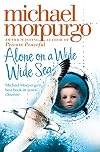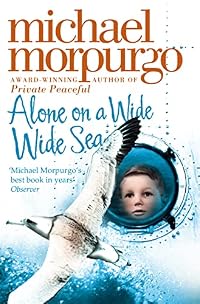
Alone on a Wide Wide Sea
by Michael Morpurgo
On This Page
Description
World War stories 2. Historical fiction. When six-year-old Arthur is shipped to Australia after the Second World War, he loses everything he knows. Subjected to brutal hardship on a working farm before finding a home with the eccentric Aunty Megs, Arthur is eventually called back to the sea. Now Arthur has built a yacht for his daughter, Allie, who is determined to sail to England to find her father's long-lost sister. Will love stretch across time and oceans and reveal how Arthur's life show more began? 10 yrs+ show lessTags
Recommendations





Member Reviews
(2.5) In this novel for older children, Michael Morpurgo presents the story of orphan Arthur Hobhouse, thought to be born sometime around 1940 in Bermondsey, London. In 1946, when he’s only six years old, he and a large group of other child migrant boys are sent by ship to Australia. Marty (Arthur’s ten-year-old friend and protector) tells the younger boy that all of them have been “specially chosen from all the orphans in England” to go to the brand new country of Australia, a place unaffected by war where food is abundant and warm-hearted families are waiting to look after them.
The truth, of course, is a lot less lovely. As the author notes in the afterword, unwanted and orphaned children were troublesome to the British show more government. Getting the kids out of England’s slums and sending them off to the colonies was considered a good way to solve the problem. Morpurgo writes that from 1947 to 1967 somewhere between 7,000 to 11,000 British children were sent to Australia. Some of these kids got lucky: they were placed in loving homes and got a step up in life. A lot were not: they were abused and exploited. Some laboured on farms like slaves, enduring harsh, even cruel conditions. Morpurgo chose to create fiction around one of these unfortunates.
His central character, Arthur, along with nine other boys (including Marty), ends up at Cooper Station, a large farming outfit some 300 miles from Sydney. The place is run by a former fire-and-brimstone-style preacher, Mr. “Piggy” Bacon and his meek and subservient wife, Ida. The Dickensian Piggy drives the boys hard and relishes strapping them for the most minor of infractions. He regularly holds a sort of “punishment hour” every evening to deal with each day’s misdemeanours.
One boy runs away from the farm. His dead body is returned a day later by local Aboriginal people. Arthur and Marty are luckier. Help comes from an unexpected source when Marty decides it’s time for them to try escaping. One evening, the boys’ dormitory door is actually unlocked for them. The two flee the cattle station on a beloved old horse. Out on the scrubland, the boys receive further surprising assistance and are brought to a place of safety. For a number of years, Arthur and Marty experience the feeling of family. In their teens, they leave for Sydney where they learn the boat-building trade.
In this first part of the novel, Arthur and Marty often attribute any positive thing that comes their way to a good luck charm that Arthur wears on a string around his neck. It’s a tiny key that Arthur believes was given to him by his sister, Kitty. His memories of her are so fragmentary, however, that he isn’t even sure she exists. Marty has a dream of the two one day sailing to England in one of their own hand-built boats to find her.
The second part of the novel turns from Arthur’s story to his daughter Allie’s. Her quest is to sail to England from Tasmania in order to fulfill her father’s dream of finding Kitty, should she exist. Allie has been around boats all her life. She learned to sail early and is a highly competent sailor. Her stormy adventures on the sea (described in the upbeat, lightly punctuated, and abbreviated prose of the logbook and email) make up the second half of the book. I have to admit that I sometimes wondered why she didn’t just take a plane. I also tired of her email reports documenting her memorization of her father’s favourite poem, The Rime of the Ancient Mariner.
Although there is certainly sadness and hardship in Morpurgo’s narrative (both father and daughter experience dark nights of the soul), its contents are largely of the “heartwarming” variety. Characters are not particularly complex. It’s easy to separate the good guys from the bad. The conclusion is happy—predictably so. While there is a feeling of authenticity to the narration—two quite real-sounding voices (Arthur’s and Allie’s) are heard telling what happened to them in everyday language—the prose suffers a little for this authorial decision. At times, it is repetitive, wordy, bland, and cliché-ridden. In spite of this, I can imagine some of the young people I know enjoying this essentially positive, somewhat sentimental, and fairly undemanding story of familial love. show less
The truth, of course, is a lot less lovely. As the author notes in the afterword, unwanted and orphaned children were troublesome to the British show more government. Getting the kids out of England’s slums and sending them off to the colonies was considered a good way to solve the problem. Morpurgo writes that from 1947 to 1967 somewhere between 7,000 to 11,000 British children were sent to Australia. Some of these kids got lucky: they were placed in loving homes and got a step up in life. A lot were not: they were abused and exploited. Some laboured on farms like slaves, enduring harsh, even cruel conditions. Morpurgo chose to create fiction around one of these unfortunates.
His central character, Arthur, along with nine other boys (including Marty), ends up at Cooper Station, a large farming outfit some 300 miles from Sydney. The place is run by a former fire-and-brimstone-style preacher, Mr. “Piggy” Bacon and his meek and subservient wife, Ida. The Dickensian Piggy drives the boys hard and relishes strapping them for the most minor of infractions. He regularly holds a sort of “punishment hour” every evening to deal with each day’s misdemeanours.
One boy runs away from the farm. His dead body is returned a day later by local Aboriginal people. Arthur and Marty are luckier. Help comes from an unexpected source when Marty decides it’s time for them to try escaping. One evening, the boys’ dormitory door is actually unlocked for them. The two flee the cattle station on a beloved old horse. Out on the scrubland, the boys receive further surprising assistance and are brought to a place of safety. For a number of years, Arthur and Marty experience the feeling of family. In their teens, they leave for Sydney where they learn the boat-building trade.
In this first part of the novel, Arthur and Marty often attribute any positive thing that comes their way to a good luck charm that Arthur wears on a string around his neck. It’s a tiny key that Arthur believes was given to him by his sister, Kitty. His memories of her are so fragmentary, however, that he isn’t even sure she exists. Marty has a dream of the two one day sailing to England in one of their own hand-built boats to find her.
The second part of the novel turns from Arthur’s story to his daughter Allie’s. Her quest is to sail to England from Tasmania in order to fulfill her father’s dream of finding Kitty, should she exist. Allie has been around boats all her life. She learned to sail early and is a highly competent sailor. Her stormy adventures on the sea (described in the upbeat, lightly punctuated, and abbreviated prose of the logbook and email) make up the second half of the book. I have to admit that I sometimes wondered why she didn’t just take a plane. I also tired of her email reports documenting her memorization of her father’s favourite poem, The Rime of the Ancient Mariner.
Although there is certainly sadness and hardship in Morpurgo’s narrative (both father and daughter experience dark nights of the soul), its contents are largely of the “heartwarming” variety. Characters are not particularly complex. It’s easy to separate the good guys from the bad. The conclusion is happy—predictably so. While there is a feeling of authenticity to the narration—two quite real-sounding voices (Arthur’s and Allie’s) are heard telling what happened to them in everyday language—the prose suffers a little for this authorial decision. At times, it is repetitive, wordy, bland, and cliché-ridden. In spite of this, I can imagine some of the young people I know enjoying this essentially positive, somewhat sentimental, and fairly undemanding story of familial love. show less
Two books in one. The first half is Arthur's story which is very similar to "Becoming Billy Dare" and also has shades of "A Fortunate Life" in it. A 7 year old orphan after World War 2, Arthur is sent to Australia for a chance at a "better" life. The reality is anything but. He and a group of other orphans are sent to a remote farm in NSW where they are used as virtual slave labour in the fields, and beaten and starved if they refuse to work....all in the name of Jesus and salvation. Eventually Arthur escapes with his best mate and they live with a "possum lady" widow who looks after orphaned wild animals and also builds boats. Arthur learns to build boats and also wonders about the key around his neck and the fading memory of a girl show more called Kitty who put it there. Is she his sister or has he imagined her?
Book 2 is not as good as the first book. Allie is Arthur's daughter who sets sail in a yacht built by her father to travel from Australia to England ( much like the famed Jessica Watson) to see if she can solve the mystery of the key. There is a lot of waffle in her diary about albatrosses etc. and I couldn't help thinking "Wouldn't it have been quicker to fly on a plane there!?" show less
Book 2 is not as good as the first book. Allie is Arthur's daughter who sets sail in a yacht built by her father to travel from Australia to England ( much like the famed Jessica Watson) to see if she can solve the mystery of the key. There is a lot of waffle in her diary about albatrosses etc. and I couldn't help thinking "Wouldn't it have been quicker to fly on a plane there!?" show less
During and after the 2nd ww, children were evacuated from England to countries of the commonwealth namely Australia, Canada and New Zealand. This was done in order to safeguard the children and find a safe refuge for them in a loving family. Alone on a wide wide sea is a fictional story of the young life of one Arthur Hobhouse despatched on a boat to Australia and hopefully safety. Unfortunately it was not uncommon for these young people to be mistreated, beaten and used as a form of slave labour.
Arthurs story is aimed at a reading audience of 10+ and told with elegance and a certain aplong. In short it is beautifully written with many stand out moments. From the horror that was everyday life with " The Piggys"......" you're a slave show more they don't just take away your freedom, they take away everything else as well because they own you" The young man's journey has many unexpected moments and a beautifully orchestrated conclusion showcasing the author's love of the ocean and his utlimate belief in human nature....."Death, I discovered that day, is not frightening, because it is utterly still. And it is still because death, when it comes, is always over"....." Someties, though, the fog does clear, and you see the icebergs all around. You can hear them groaning, and grinding and you just want to sail through the field of iceberg and out the other side, or just long for the fog again".....
Highly recommended for young and old alike :) show less
Arthurs story is aimed at a reading audience of 10+ and told with elegance and a certain aplong. In short it is beautifully written with many stand out moments. From the horror that was everyday life with " The Piggys"......" you're a slave show more they don't just take away your freedom, they take away everything else as well because they own you" The young man's journey has many unexpected moments and a beautifully orchestrated conclusion showcasing the author's love of the ocean and his utlimate belief in human nature....."Death, I discovered that day, is not frightening, because it is utterly still. And it is still because death, when it comes, is always over"....." Someties, though, the fog does clear, and you see the icebergs all around. You can hear them groaning, and grinding and you just want to sail through the field of iceberg and out the other side, or just long for the fog again".....
Highly recommended for young and old alike :) show less
Two first-person accounts -- first a father on his deathbed in his 60s tells the story of being shipped out of Britain to Australia after the war as an orphan, with just a key around his neck from a sister Kitty that he barely remembers. His is a sad story of child labor and abuse, then escape, and a long, long search for a family and stability. The second story is by his 18-year-old daughter Allie, who fulfills the dream she shared with her father, of sailing a boat they designed and built all the way to the UK to find Arthur's long-lost sister Kitty, if possible. The Rime of the Ancient Mariner is a poem that binds father and daughter, with the daughter believing her father's spirit was accompanying her in the form of an albatross show more (which of course she accidentally kills). The book has a happy ending -- Allie survives the difficult sail alone (around Cape Horn and all), with the encouragement of scientists up in a space research station and her mother and grandfather back in Tasmania, recording her journey with e-mail. Waiting at the other end is Kitty, alive and well, with the answer to the mystery of the key -- a music box that plays "London Bridge is Falling Down" when wound with the treasured key.
Not sure how kids will take to the first half narrative -- of an old man thinking back over his life.
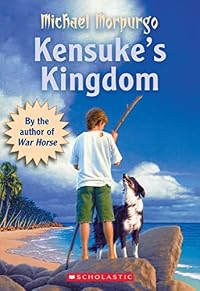
Many similarities with Kensuke's Kingdom (my favorite Morpurgo book) -- sailing, connection with WWII, a relationship between an old dying person and a young adventurer, a discovered relative linking the young person with the older dead one, first-person, etc. show less
Not sure how kids will take to the first half narrative -- of an old man thinking back over his life.
Many similarities with Kensuke's Kingdom (my favorite Morpurgo book) -- sailing, connection with WWII, a relationship between an old dying person and a young adventurer, a discovered relative linking the young person with the older dead one, first-person, etc. show less
I very much enjoyed this. Both narrators were likable and believable, though I preferred Arthur's story to the diary/email format of Allie's.
Some aspects of Arthur's story could probably have benefitted from a little more detail, as it felt a bit rushed toward the end, but this is explained in the book and will probably make the story more approachable for younger readers. In general, though, this first part of the book tells an engaging and emotional story.
Allie made a far more interesting character than I first predicted she would, and the format of her section was less irksome than I usually find diary-style, which I am glad of, as it could have easily spoiled an otherwise pretty excellent book.
Some aspects of Arthur's story could probably have benefitted from a little more detail, as it felt a bit rushed toward the end, but this is explained in the book and will probably make the story more approachable for younger readers. In general, though, this first part of the book tells an engaging and emotional story.
Allie made a far more interesting character than I first predicted she would, and the format of her section was less irksome than I usually find diary-style, which I am glad of, as it could have easily spoiled an otherwise pretty excellent book.
Truly a binding tale, I have laughed and cried at this and I will never forget the journey I had reading it. It now brings tears to my eyes thinking of Henry the Wombat or Aunty Megs. I'm sure that I pray for Arthur up there every day now, though I know no such person exists.
Touching story of a boy shipped to Australia after WW2, having been separated from his sister, Kitty. Arthur goes to live on a farm run by a nasty farmer at Coopers Station. He is rescued by 'bushmen' (Aboriginal people) and taken to an animal rescue where he lives happily with 'Aunty Meg' along with his friend Marty. Eventually Arthur grows up and has a daughter, Ellie, who sails back to UK to find Arthur's long lost sister. Readable but maudlin and unduly sentimental.
Members
- Recently Added By
Lists

BBC Radio 4 Bookclub
340 works; 13 members
Author Information

300+ Works 31,554 Members
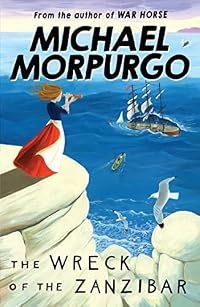
British author Michael Morpurgo was born in St. Albans, Hertforshire in 1943. He attended the University of London and studied English and French. He became a primary school teacher in Kent for about ten years. He and his wife Clare started a charity called Farms for City Children. They currently own three farms where over 2000 children a year show more stay for a week and experience the countryside by taking part in purposeful farmwork. He has published over 100 books and several screenplays. He won the 1995 Whitbread Children's Book Award for The Wreck of the Zanzibar, the 1996 Nestle Smarties Book Prize for The Butterfly Lion, and the 2000 Children's Book Award for Kensuke's Kingdom. Private Peaceful won the 2005 Red House Children's Book Award and the Blue Peter Book of the Year Award. Five of his books have been made into movies and two have been adapted for television. He was named as the third Children's Laureate in May 2003. (Bowker Author Biography) show less
Some Editions
Awards and Honors
Series
Belongs to Publisher Series
Common Knowledge
- Canonical title*
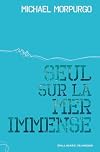
- Seul sur la mer immense
- Original title
- Alone on a Wide Wide Sea
- Original publication date
- 2006 (1e édition originale anglaise, Harper's Collins Children's Books) (1e édition originale anglaise, Harper's Collins Children's Books); 2008-05-15 (1e traduction et édition française, Grand format littérature, Série Romans Junior, Gallimard Jeunesse) (1e traduction et édition française, Grand format littérature, Série Romans Junior, Gallimard Jeunesse); 2012-01-19 (Réédition française reformatée, Folio Junior, N° 1607, Gallimard Jeunesse) (Réédition française reformatée, Folio Junior, N° 1607, Gallimard Jeunesse); 2018-10-11 (Réédition française reformatée, Folio Junior, N° 1607, Gallimard Jeunesse) (Réédition française reformatée, Folio Junior, N° 1607, Gallimard Jeunesse)
- Important places
- Australia
- Important events
- Home Children Immigration to Australia
- Epigraph*
- Étale, la brise soufflait, la blanche écume
Volait, à présent le sillage librement
Se déroulait ; nous étions les premiers qui eussent
Forcé l'accès de cette mer silencieuse.
Le Dit du Vieux Marin, ... (show all)Samuel Taylor Coleridge - Dedication*
- À Lula Léa et Clare, qui ont été avec moi pour écrire ce livre
- First words
- I should begin at the beginning, I know that.
- Original language*
- Anglais (Royaume-Uni) (Royaume-Uni)
*Some information comes from Common Knowledge in other languages. Click "Edit" for more information.
Classifications
- Genres
- Fiction and Literature, Children's Books
- DDC/MDS
- 823.914 — Literature & rhetoric English & Old English literatures English fiction 1900- 1901-1999 1945-1999
- LCC
- PZ7 .M6768 — Language and Literature Fiction and juvenile belles lettres Fiction and juvenile belles lettres Juvenile belles lettres
- BISAC
Statistics
- Members
- 546
- Popularity
- 54,181
- Reviews
- 17
- Rating
- (4.06)
- Languages
- Dutch, English, French, Polish
- Media
- Paper, Audiobook, Ebook
- ISBNs
- 22
- ASINs
- 5