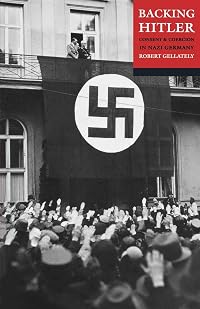
Backing Hitler. Consent and Coercion in Nazi Germany
by Robert Gellately
On This Page
Description
The Nazis never won a majority in free elections, but soon after Hitler took power most Germans turned away from democracy and backed the Nazi regime. Hitler was able to win growing support even as he established the Gestapo and the concentration camps. Yet for over fifty years historians have disputed what the German people knew about these camps and in what ways they were involved in the persecution of ‘race enemies’, slave workers, and social outsiders. This book looks at these show more issues. The book aims to expose once and for all the subsequent consent and active participation of large numbers of ordinary Germans in the terror. It shows that rather than hide their racist and repressive campaigns from the German people the Nazis trumpeted them in the national papers and on the streets. It reveals how they drew on popular images, cherished German ideals, and long-held phobias to win converts to their cause. show lessTags
Recommendations













































Member Recommendations


Member Reviews
Germans welcomed Hitler’s ascension to power in January 1933 when the Great Depression was ravaging Germany. People lost money, jobs and, for those who suicided, their lives. The Weimar Republic, proclaimed in 1919, was borne out of revolution and wasn’t supported by most of the major political parties. The democratic government seemed powerless to stop the suffering. Gellately argues the promise of stability, harmony and prosperity fulfilled the yearning of many Germans.
The Nazis governed Germany through consensus and coercion. Germans knew their government was brutal – from the outset. Gellately’s intensive research of local, regional and national newspapers shows they reported the regime’s brutality, albeit in a positive show more light. Concentration camps were to rehabilitate hardened criminals by giving them a regime of discipline and work. The previous government was soft on crime but now criminals were off the streets.
Gellately draws on the diaries of Jew Victor Klemperer who wrote people looked the other way as authorities deprived Jews of rights and, ultimately, life.
Gellately is among the many historians who deems the Weimar Republic a failure. The argument’s flaw is millions of Germans voted for republican-supporting parties up to and including the last free election in November 1932. These were the same people whose lives were decimated by the economic crisis, yet they held true to the republic’s democratic and human rights ideals.
Backing Hitler is a comprehensive account of the lead-up to Hitler’s appointment as Chancellor of Germany and beyond. It’s easy to judge Germans for looking the other way but today it isn’t just fascist governments denying human rights and dispensing cruelty. Democratic governments also are administering similar policies of cruelty, exclusion and punishment of the innocent. Some of these countries were among the Allies during World War Two. show less
The Nazis governed Germany through consensus and coercion. Germans knew their government was brutal – from the outset. Gellately’s intensive research of local, regional and national newspapers shows they reported the regime’s brutality, albeit in a positive show more light. Concentration camps were to rehabilitate hardened criminals by giving them a regime of discipline and work. The previous government was soft on crime but now criminals were off the streets.
Gellately draws on the diaries of Jew Victor Klemperer who wrote people looked the other way as authorities deprived Jews of rights and, ultimately, life.
Gellately is among the many historians who deems the Weimar Republic a failure. The argument’s flaw is millions of Germans voted for republican-supporting parties up to and including the last free election in November 1932. These were the same people whose lives were decimated by the economic crisis, yet they held true to the republic’s democratic and human rights ideals.
Backing Hitler is a comprehensive account of the lead-up to Hitler’s appointment as Chancellor of Germany and beyond. It’s easy to judge Germans for looking the other way but today it isn’t just fascist governments denying human rights and dispensing cruelty. Democratic governments also are administering similar policies of cruelty, exclusion and punishment of the innocent. Some of these countries were among the Allies during World War Two. show less
3834. Backing Hitler: Consent and Coercion in Nazi Germany, by Robert Gellately (read 13 Dec 2003) The question of how evil could come to power in Germany is one which has never ceased to fascinate me. The author finds that many Germans welcomed the crackdown on crime which accompanied the onset of Nazidom and that if this included such evil as did not concern a lot of Germans, they did not object. Though of course many were cowed by Hitler's terroristic methods. But it is deeply disturbing that so many Germans assisted in the horrible disregard for decency and law. It is a sad book, and one cannot help but wonder what would have been my reaction if I had been a German boy of four when Hitler came to power. Undoubtedly such would have show more depended on the influences surrounding me. show less
interesting approach. interesting history but becomes very redundant. i get the message real quick and don't need so many examples but i do understand that when a historian does all this research he wants to publish it. I am reading it for a course at Cambridge.
Using newspapers and radio broadcasts of the day as evidence, Gellately (The Gestapo and German Society), Strassler Professor in Holocaust History at Clark University, effectively demonstrates how "ordinary Germans" evolved into a powerful base of support for the Nazi regime. Although Hitler and the National Socialists had never garnered an outright majority in elections before 1933, the author convincingly shows that "the great majority of the German people soon became devoted to Hitler and they supported him to the bitter end in 1945." The Nazis achieved this political miracle by "consensus." The Italian Marxist Antonio Gramsci argued that political regimes could hardly expect to use unlimited terror against their subjects a technique show more combining the threat of terror and coercion would be more effective. Using Gramscian theory is hardly new in an analysis of Nazi Germany, but Gellately does make a provocative claim: that the Nazi use of terror against certain categories of "undesirables" (first Communists, Socialists and trade unionists, then Catholic and Protestant opponents, then the mentally and/or physically impaired, then the Jews and Gypsies) was purposively public and that most Germans agreed with such policies. Decrees, legislation, police actions and the concentration camps were not meant to be hidden from the German people, but in fact were extensively publicized. Some of the same arguments have been made in Adam Lebor and Roger Boyes's Seduced by Hitler, but readers will notice that Gellately offers a far more sophisticated argument and more abundant evidence than Daniel Goldhagen's cause celebre, Hitler's Willing Executioners, which saw the persecution of the Jews as mono-causal - to lie in anti-semetism. In truth, Gellately's work is what Goldhagen's book could have been, but wasn't; that is, a closely reasoned and tightly constructed analysis.
Gellately analyzes the role of "ordinary" Germans in the Nazi persecution of those deemed social and political outsiders. Under the guise of "law and order," the Nazis suspended regular jurisprudence and substituted arbitrary arrest and imprisonment. Far from carrying out their activities in secret, the Nazis publicized them as steps to the social, political, and racial regeneration of Germany. Many ordinary Germans actively participated in this process, denouncing neighbors as "asocial" elements for associating with Jews or for "suspicious" activities. Denunciations derived from a variety of motivations personal grudges, economic self-interest, or ideological commitment with the full knowledge of what would happen to the victims. By effectively overturning the belief that Hitler and the Nazi party imposed their ideology upon the German people and maintained control through massed police terror, Gellately's book forces us to consider the role of the ordinary citizen in the maintenance of the Nazi dictatorship. show less
Gellately analyzes the role of "ordinary" Germans in the Nazi persecution of those deemed social and political outsiders. Under the guise of "law and order," the Nazis suspended regular jurisprudence and substituted arbitrary arrest and imprisonment. Far from carrying out their activities in secret, the Nazis publicized them as steps to the social, political, and racial regeneration of Germany. Many ordinary Germans actively participated in this process, denouncing neighbors as "asocial" elements for associating with Jews or for "suspicious" activities. Denunciations derived from a variety of motivations personal grudges, economic self-interest, or ideological commitment with the full knowledge of what would happen to the victims. By effectively overturning the belief that Hitler and the Nazi party imposed their ideology upon the German people and maintained control through massed police terror, Gellately's book forces us to consider the role of the ordinary citizen in the maintenance of the Nazi dictatorship. show less
Prateleira 8 Livro 57
«Ho cominciato il mio lavoro muovendo da una delle grandi domande poste dopo il 1945, quando si seppe dei campi di concentramento, ossia: 'Che cosa sapevano, e quando l'hanno saputo? Sapevano i tedeschi della polizia segreta e dei campi, delle persecuzioni, degli assassinii e così via, e accettarono tutto questo? I tedeschi si sono difesi dicendo che ignoravano l'esistenza dei campi o ne sapevano pochissimo, e che le rivelazioni giunte alla fine della guerra erano state per loro una sorpresa. Tra gli storici c'è stato per lungo tempo un consenso quasi unanime sul fatto che i nazisti occultarono deliberatamente e sistematicamente ciò che facevano, ed era dunque plausibile che la gente comune non sapesse. Questo saggio, risultato show more delle mie ricerche, dimostra il contrario» show less
Sep 10, 2014 (Edited)Italian
Hitler gozó durante su mandato de una popularidad y un respaldo que han permitido al profesor de la Universidad de Floridaacuñar la expresión “dictadura consensuada”. En Backing Hitler: consent and coercion in Nazi Germany (traducido como No sólo Hitler. La Alemania nazi, entre la coacción y el consenso), Gellatelly repasa el alto grado de conocimiento que tenían los alemanes de los principales elementos del terror nazi, como la Gestapo, la justicia policial, los campos de concentración, o el tratamiento a los trabajadores extranjeros. El libro revela cuáles de estas medidas (casi todas) contaban con un apoyo, al menos genérico, de la población, que quería mano dura contra la delincuencia (entendida en un sentido muy show more amplio), aunque en ocasiones se manifestaban reservas sobre las medidas más duras, especialmente en lo que se refiere a las ejecuciones sumarísimas.
Gellately analiza varios archivos de la Gestapo para descubrir cómo la policía secreta no necesitaba contar con una red opresiva de espías profesionales, porque los propios alemanes de a pie se encargaban de denunciar a los judíos, a los trabajadores polacos que mantenían relaciones con las mujeres alemanas, o a sus vecinos que escuchaban la BBC. En muchos casos, los intereses personales o la venganza pesaban en las motivaciones de los denunciantes bastante más que el compromiso ideológico o el odio al enemigo. show less
Gellately analiza varios archivos de la Gestapo para descubrir cómo la policía secreta no necesitaba contar con una red opresiva de espías profesionales, porque los propios alemanes de a pie se encargaban de denunciar a los judíos, a los trabajadores polacos que mantenían relaciones con las mujeres alemanas, o a sus vecinos que escuchaban la BBC. En muchos casos, los intereses personales o la venganza pesaban en las motivaciones de los denunciantes bastante más que el compromiso ideológico o el odio al enemigo. show less
Nov 28, 2009Spanish
Members
- Recently Added By
Lists

Exposing the Man Behind the Curtain
28 works; 3 members
Author Information

14+ Works 1,104 Members
Some Editions
Series
Belongs to Publisher Series
Common Knowledge
- Canonical title
- Backing Hitler. Consent and Coercion in Nazi Germany
- Original title
- Backing Hitler. Consent and Coercion in Nazi Germany
- Original publication date
- 2001 (1e édition originale canadienne, Oxford University press) (1e édition originale canadienne, Oxford University press); 2003-10-24 (1e traduction et édition française, Flammarion) (1e traduction et édition française, Flammarion)
- People/Characters
- Adolf Hitler
- Important places
- Germany
- Important events*
- IIIe Reich (1933 | 1945)
- Original language*
- Anglais (Canada) (Canada)
*Some information comes from Common Knowledge in other languages. Click "Edit" for more information.
Classifications
- Genres
- History, Nonfiction, General Nonfiction
- DDC/MDS
- 943.086 — History & geography History of Europe Central Europe: Germany, Austria, Switzerland, Czech, Poland, Hungary Historical periods of Germany Germany 1866- Third Reich 1933-1945
- LCC
- DD256.5 .G45 — History of Europe, Asia, Africa and Oceania Germany History of Germany History By period Modern, 1519- 19th-20th centuries Revolution and Republic, 1918- Hitler, 1933-1945. National socialism Period of World War II, 1939-1945
- BISAC
Statistics
- Members
- 284
- Popularity
- 113,500
- Reviews
- 7
- Rating
- (4.04)
- Languages
- 7 — Dutch, English, French, German, Italian, Portuguese, Spanish
- Media
- Paper, Ebook
- ISBNs
- 13
- ASINs
- 1