On This Page
Description
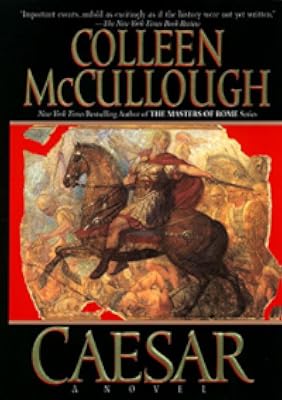
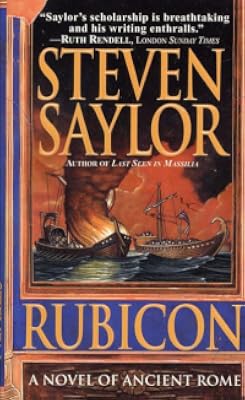
In the long, fabled history of Rome, never was there one more adored - yet more feared - than Gaius Julius Caesar. Invincible on the field of battle, he commands the love and loyalty of those who fight at his side and would gladly give their lives for his glory. Yet in Rome there are enemies everywhere orchestrating his downfall and disgrace. Fanatical rivals like Cato and Bibulus would tear Rome asunder just to destroy her greatest champion - using their wiles, position, and false promises show more to seduce others into the fold: vacillating Cicero, the spineless Brutus ... even Pompey the Great, Caesar's former ally. But only ill fortune can come to the "Good Men" who underestimate Caesar. For Rome is his glorious destiny - one that will impel him reluctantly to the banks of the Rubicon ... and beyond, into triumphant legend. show lessTags
Recommendations






Member Reviews
Even though I think the portrayal of Caesar was pure hero worship, this book was absolutely gripping and exciting. I understand the paranoia of the boni, but they really did drive him to this decision. One of the things that the author drives home is that Caesar does everything by the book. He wanted what he thought was due him, but he wanted the Senate to give it to him legally. Instead, they blindly fought him on every side.
The treatment of Caesar is mostly heroic. He has very few flaws. Interestingly, he is drawn as having an inner personality that is separate from Caesar. In his inner monologues he actually refers to this personality as I, not Caesar. This is how he copes with the deaths of the people he loves and the blind show more thwarting of his plans. He allows “I” to cry, but not Caesar. One thing that is not gone into at all in this book is an actual mental ailment that he suffered from – epilepsy. But rather than being looked at as a weakness or a disability, it is thought of as a sign of being touched by the gods. It is strangely absent. show less
The treatment of Caesar is mostly heroic. He has very few flaws. Interestingly, he is drawn as having an inner personality that is separate from Caesar. In his inner monologues he actually refers to this personality as I, not Caesar. This is how he copes with the deaths of the people he loves and the blind show more thwarting of his plans. He allows “I” to cry, but not Caesar. One thing that is not gone into at all in this book is an actual mental ailment that he suffered from – epilepsy. But rather than being looked at as a weakness or a disability, it is thought of as a sign of being touched by the gods. It is strangely absent. show less
The Fifth book of The Masters of Rome series focusing on The Gallic Wars followed by Caesar's march across the Rubicon and the defeat and death of Pompey Magnus. This one was slow going for me at first - McCullough just plunks us down in Gaul at the begininng of the novel without much backstory or summary of the previous novel. With these intricate novels, I find I need that plot rehash to warm me up.
I found all the names of people, places, and tribes in Gaul hard to follow and I really wasn't emotionally involved in the battles as I have been in previous descriptions. Marius' defeat of the German hordes and the Italian War from her previous novels were more dramatically detailed.
I did begin to enjoy things more as the focus returned to show more Rome and McCullough fleshed out the political climate of the time better. I most enjoyed Caesar's pursuit of Pompey, the introduction of Egypt and Cleopatra, and certainly Pompey's finale was tragically well done -- I did feel pity.
Despite these more well known stories (I couldn't help but picture the actors from HBO's fabulous Rome series in my mind's eye) this one wasn't my favorite -- but still the series is captivating from both a dramatic and historical perspective. show less
I found all the names of people, places, and tribes in Gaul hard to follow and I really wasn't emotionally involved in the battles as I have been in previous descriptions. Marius' defeat of the German hordes and the Italian War from her previous novels were more dramatically detailed.
I did begin to enjoy things more as the focus returned to show more Rome and McCullough fleshed out the political climate of the time better. I most enjoyed Caesar's pursuit of Pompey, the introduction of Egypt and Cleopatra, and certainly Pompey's finale was tragically well done -- I did feel pity.
Despite these more well known stories (I couldn't help but picture the actors from HBO's fabulous Rome series in my mind's eye) this one wasn't my favorite -- but still the series is captivating from both a dramatic and historical perspective. show less
Caesar is the fifth in McCullough's Masters of Rome Series about the late Roman Republic which entranced me from the first book with its picture of a world surprisingly modern in some respects as well as truly alien as only the past can be. A lot of the appeal of this book and this series is her ability to crack the stodgy marble image we have of Romans, and that's epitomized in the book's subtitle: Let the Dice Fly! The more commonly known quote of what Caesar said when crossing the Rubicon and touching off a civil war was "the die is cast." But McCullough chooses another version from an ancient source saying: "'The die is cast' is gloomy and fatalistic. 'Let the dice fly high!' is a shrug, an admission that anything can happen. Caesar show more was not fatalistic. He was a risk taker."
And that's McCullough's Caesar in a nutshell. I wasn't a fan of Caesar before reading this series, and I'm still somewhat resistant. My idea of him was formed by Shakespeare where Brutus and Cassius strove to save their republic from a tyrant. As a "small r" and "small d" republican and democrat, it's hard for me to allow myself to admire a dictator. McCullough's Caesar seems too good to be true and I believed she had Mary Renault syndrome. Renault obviously loved her Alexander the Great to the point of near worship. McCullough seemed in love with her Caesar from the minute he appeared in her series. Early on in this novel she even has Caesar inventing the book--stitching together rolls so he could read by turning pages. Ridiculous I thought! Except when I looked it up I found apparently there are credible sources for this--McCullough didn't make it up. I mentioned my near irritation about how unbelievably gifted Caesar is in these books to a friend who is a Classicist--she teaches Latin for a living. Her response? "Caesar is awesome."
McCullough's picture of Caesar is of someone who didn't want to end the republic or become king, but wanted to strive to be the best among equals--only he had no equals--only jealous rivals. That does reconcile me to him a bit. And he's certainly fascinating enough to propel me through the 600 plus pages. And in this book we begin to glimpse the most famous aspects of the story of Julius Caesar. Marc Anthony, Brutus, Cato, Octavian the future Augustus are here. And the young Cleopatra appears towards the end of the book. So I'd say for me, at least, McCullough has succeeded in weaving a great spell for another book. show less
And that's McCullough's Caesar in a nutshell. I wasn't a fan of Caesar before reading this series, and I'm still somewhat resistant. My idea of him was formed by Shakespeare where Brutus and Cassius strove to save their republic from a tyrant. As a "small r" and "small d" republican and democrat, it's hard for me to allow myself to admire a dictator. McCullough's Caesar seems too good to be true and I believed she had Mary Renault syndrome. Renault obviously loved her Alexander the Great to the point of near worship. McCullough seemed in love with her Caesar from the minute he appeared in her series. Early on in this novel she even has Caesar inventing the book--stitching together rolls so he could read by turning pages. Ridiculous I thought! Except when I looked it up I found apparently there are credible sources for this--McCullough didn't make it up. I mentioned my near irritation about how unbelievably gifted Caesar is in these books to a friend who is a Classicist--she teaches Latin for a living. Her response? "Caesar is awesome."
McCullough's picture of Caesar is of someone who didn't want to end the republic or become king, but wanted to strive to be the best among equals--only he had no equals--only jealous rivals. That does reconcile me to him a bit. And he's certainly fascinating enough to propel me through the 600 plus pages. And in this book we begin to glimpse the most famous aspects of the story of Julius Caesar. Marc Anthony, Brutus, Cato, Octavian the future Augustus are here. And the young Cleopatra appears towards the end of the book. So I'd say for me, at least, McCullough has succeeded in weaving a great spell for another book. show less
"Caesar" is the continuing drama (Book 5 of 7) of the "Masters of Rome" series covering the years 54 BC through 48 BC. As the government of Rome descends into total chaos, the most powerful leaders struggle for control: Cato, Pompey, Caesar, and Clodius. Simultaneously, Egypt - the friend and ally of Rome - is immersed in civil war. The nine year old Egyptian King Ptolemy along with his military advisors have declared war on the Egyptian Queen Cleopatra - Ptolemy’s twenty year old sister/wife... really!
"Caesar" is my favorite of the series thus far. "Caesar" can be viewed from several perspectives; historical, philosophical, and solely on it’s fictional artistry. From the historical perspective, it is amazing how intricately show more detailed Colleen McCullough weaves this saga: vivid descriptions of the vast array of characters, the hand to hand combat battles, the locations - from Rome to the Gaul countryside to the heart of Egypt - and the customs and rituals. The authenticity conveyed through the genre of fiction of this complex story is worthy of an award.
I should probably reserve my thoughts on the philosophical perspective until I’ve completed the last two books of the series, but I will say there is a lesson to be learned from the "Masters of Rome" series.
Rome was never satisfied to merely sit back and enjoy the status of “greatest country on earth”. There was always one more land to conquer, one more group of people to dominate, and one more government treasury to confiscate. “Roman soldiers learned to hate their enemies healthily, they approached war with cool business heads. Thoroughly trained, absolutely pragmatic, fully confident... battles were won... through discipline, restraint, thought, valor. Pride in professional excellence. No other people owned that attitude to war.” (Pg. 318) Yet, for all this effort to view war and global domination as a rational, practical, economical business, Rome suffered the weakness of narcissistic leaders. There was always one more egomaniac waiting in the wings to be the greatest leader Rome had ever known, and unfortunately, the easiest way to do that was through military dominance.
And regardless of how noble the leaders original intentions, they inevitably put more importance in achieving legendary fame and securing their name in the history books than worrying about what was best for their country, Caesar included, though McCullough tends to portray him as a hero.
Regarding fictional artistry, Colleen McCullough does an incredible job of turning historical figures into living people with their ever present emotions of love, hate, envy, and pride. A daunting task, considering the number of primary characters and interwoven relationships in this 100 year saga. What McCullough lacks in style, she makes up for in tenacity.
If you like the other books of the series, you will definitely enjoy "Caesar". It is quite amusing that some reviewers have given the series a bad rating stating the characters were unlikable and the plot was boring. Did these reviewers not know this series was based on real history? show less
"Caesar" is my favorite of the series thus far. "Caesar" can be viewed from several perspectives; historical, philosophical, and solely on it’s fictional artistry. From the historical perspective, it is amazing how intricately show more detailed Colleen McCullough weaves this saga: vivid descriptions of the vast array of characters, the hand to hand combat battles, the locations - from Rome to the Gaul countryside to the heart of Egypt - and the customs and rituals. The authenticity conveyed through the genre of fiction of this complex story is worthy of an award.
I should probably reserve my thoughts on the philosophical perspective until I’ve completed the last two books of the series, but I will say there is a lesson to be learned from the "Masters of Rome" series.
Rome was never satisfied to merely sit back and enjoy the status of “greatest country on earth”. There was always one more land to conquer, one more group of people to dominate, and one more government treasury to confiscate. “Roman soldiers learned to hate their enemies healthily, they approached war with cool business heads. Thoroughly trained, absolutely pragmatic, fully confident... battles were won... through discipline, restraint, thought, valor. Pride in professional excellence. No other people owned that attitude to war.” (Pg. 318) Yet, for all this effort to view war and global domination as a rational, practical, economical business, Rome suffered the weakness of narcissistic leaders. There was always one more egomaniac waiting in the wings to be the greatest leader Rome had ever known, and unfortunately, the easiest way to do that was through military dominance.
And regardless of how noble the leaders original intentions, they inevitably put more importance in achieving legendary fame and securing their name in the history books than worrying about what was best for their country, Caesar included, though McCullough tends to portray him as a hero.
Regarding fictional artistry, Colleen McCullough does an incredible job of turning historical figures into living people with their ever present emotions of love, hate, envy, and pride. A daunting task, considering the number of primary characters and interwoven relationships in this 100 year saga. What McCullough lacks in style, she makes up for in tenacity.
If you like the other books of the series, you will definitely enjoy "Caesar". It is quite amusing that some reviewers have given the series a bad rating stating the characters were unlikable and the plot was boring. Did these reviewers not know this series was based on real history? show less
Yet another book in the fantastic Masters of Rome series written by Colleen McCullough, this one has some of the best known history from Ancient Rome - Julius Caesar in Gaul and his march of Rome and the crossing of the Rubicon. McCullough does a masterly job of making it all alive, and is one of the few writers who can include bucketloads of historical detail and it feels warranted, rather than like an author showing off how much study they did. The characters are all interesting in their own way, from Uberman Caesar to snivelling Brutus, crass Antonius and the flawed Pompey. There is even an inkling of the future Octavius.
Caesar, the fifth book in McCullough's Masters of Rome series (be sure to begin with The First Man in Rome), covers the time period from when Roman general Julius Caesar led the Gallic Wars through the culmination of his Civil War against Pompey's faction. I cannot recommend this series highly enough; they are huge, highly readable even if you have no previous knowledge of ancient Rome, and full of savory detail. Colleen McCullough is genius at bringing to life the figures, culture and everyday goings-on in ancient Rome. My one regret is that I allowed 7 years to pass between reading books four and five, and so had to become newly reacquainted with many of the characters. I shall now wait only two months before commencing the sixth show more book, The October Horse. show less
I must confess I'm finding this one much more difficult to get through than the others in the series. I'm about halfway through it, and it's very heavy going following the Gallic campaigns. The fact that the maps are almost illegible doesn't help. I have to keep getting a magnifying glass out to find out where we are and which tribes we're dealing with.
It was much better once we got out of Gaul and back to all the maneouvring in Rome leading up to the Civil War. I felt McCullough dealt with the Civil War much better than the Gallic War. I zipped through it in a couple of days, while the Gallic War seemed interminable.
It was much better once we got out of Gaul and back to all the maneouvring in Rome leading up to the Civil War. I felt McCullough dealt with the Civil War much better than the Gallic War. I zipped through it in a couple of days, while the Gallic War seemed interminable.
Members
- Recently Added By
Lists

Best Historical Fiction
620 works; 258 members

Best Roman Empire Books
49 works; 18 members
Author Information

71+ Works 30,379 Members
Colleen McCullough was born on June 1, 1937 in Wellington, New South Wales, Australia. She attended Holy Cross College and the University of Sydney. She wanted to pursue a career in medicine but had an allergic reaction to the antiseptic soap that surgeons use to scrub. She decided to study neuroscience and established the department of show more neurophysiology at the Royal North Shore Hospital in Sydney before working as a researcher and teacher at Yale Medical School for ten years. Her first novel, Tim, was published in 1974 and was adapted into a movie starring Mel Gibson. During her lifetime, she wrote 25 novels including The Thorn Birds, An Indecent Obsession, A Creed for the Third Millennium, The Ladies of Missalonghi, the Masters of Rome series, and Bittersweet. The Thorn Birds was adapted into a U.S. television mini-series in 1983, which won four Golden Globe awards. She died after a long illness on January 29, 2015 at the age of 77. (Bowker Author Biography) show less
Series

Work Relationships
Common Knowledge
- Canonical title
- Caesar
- Original title
- Caesar
- Alternate titles
- Caesar: Let the Dice Fly
- Original publication date
- 1997; 1998
- People/Characters
- Julius Caesar (Gaius Julius Caesar); Gnaeus Pompeius Magnus; Marcus Licinius Crassus; Marcus Porcius Cato the Younger; Marcus Tullius Cicero; Servilia Caepionis
- Important places
- Rome; Alesia, Gaul; Pharsalus, Greece; Ancient Rome
Classifications
- Genres
- Fiction and Literature, General Fiction, Historical Fiction
- DDC/MDS
- 823.914 — Literature & rhetoric English & Old English literatures English fiction 1900- 1901-1999 1945-1999
- LCC
- PR9619.3 .M32 .C27 — Language and Literature English English Literature English literature: Provincial, local, etc.
- BISAC
Statistics
- Members
- 1,612
- Popularity
- 14,138
- Reviews
- 27
- Rating
- (4.17)
- Languages
- 9 — Czech, Danish, English, French, German, Italian, Portuguese, Russian, Spanish
- Media
- Paper, Audiobook, Ebook
- ISBNs
- 42
- UPCs
- 1
- ASINs
- 15