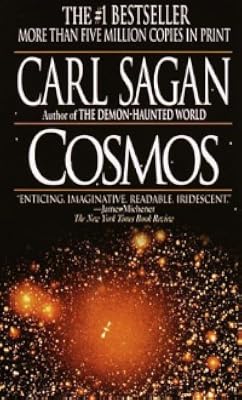
Cosmos: A Personal Voyage
by Carl Sagan
On This Page
Description
RETURNING TO TELEVISION AS AN ALL-NEW MINISERIES ON FOXCosmos is one of the bestselling science books of all time. In clear-eyed prose, Sagan reveals a jewel-like blue world inhabited by a life form that is just beginning to discover its own identity and to venture into the vast ocean of space. Cosmos retraces the fourteen billion years of cosmic evolution that have transformed matter into consciousness, exploring such topics as the origin of life, the human brain, Egyptian show more hieroglyphics, spacecraft missions, the death of the Sun, the evolution of galaxies, and the forces and individuals who helped to shape modern science.
Praise for Cosmos
“Magnificent . . . With a lyrical literary style, and a range that touches almost all aspects of human knowledge, Cosmos often seems too good to be true.”—The Plain Dealer
“Sagan is an astronomer with one eye on the stars, another on history, and a third—his mind’s—on the human condition.”—Newsday
“Brilliant in its scope and provocative in its suggestions . . . shimmers with a sense of wonder.”—The Miami Herald
“Sagan dazzles the mind with the miracle of our survival, framed by the stately galaxies of space.”—Cosmopolitan
“Enticing . . . iridescent . . . imaginatively illustrated.”—The New York Times Book Review
NOTE: This edition does not include images.. show less
Tags
Recommendations





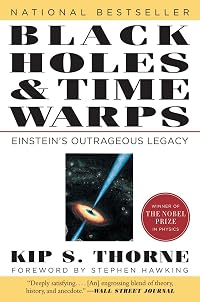
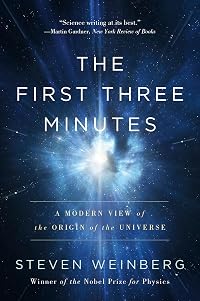
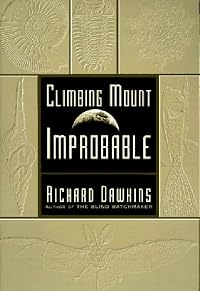
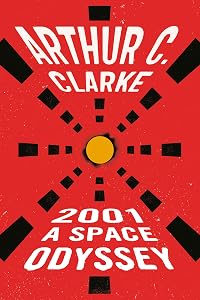

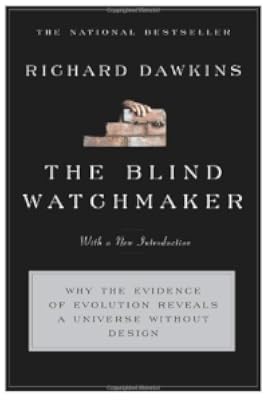
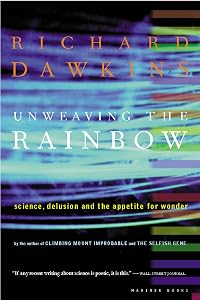
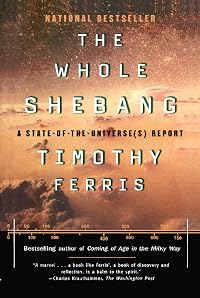

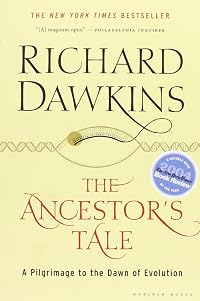
Member Recommendations
Member Reviews
Humans are story tellers. I’m not sure who said that first, but Joseph Campbell made a career out of demonstrating how mythologies transmit information about how to live in the world using personified symbols in narrative structures. But mythologies were products of pre-scientific societies. Ever since scientific understandings of the universe have become more prominent after the Enlightenment and the Renaissance, science has faced opposition from people who cling to the mytho-poetic and religious world view. But when the symbols of myth are revealed to be untrue in a literal sense, empirical realities fill in the void and renders the myths to simply be existential security blankets at best and fumbling attempts at explaining the show more unexplainable at worst. On second thought, maybe mistaking them for historical truth is a bigger problem. But mythological and religious explanations for our existence remain powerful forces throughout human societies. It seems they can’t be killed. And science is looked upon with deep suspicion and even scorn despite its high levels of success in improving our understanding of our nature at it deepest levels.
One suggested explanation for this epistemological split is that science doesn’t rely on stories to transmit information whereas the mytho-poetic framework does. In the latter case, the narrative framework of myth and religion limits the ability to apprehend and analyze information that is encountered outside of its own narrative boundaries. Science also has limitations, but it also takes into account those limitations and it attempts to correct for its own shortcomings as a system of data collection and interpretation. Therefore it has been more successful in improving the human condition, but possibly less successful at addressing deeply felt human needs for connection and meaning.
Enter Carl Sagan, one of the most ambitious and successful public relations spokesperson for science in our time. What he does in his classic book Cosmos is bridge the gap between story telling and scientific explanation by relating science-as-story to make it more relatable to your average person on the street.
Every story needs a beginning so the obvious starting point for a history of science is with the Big Bang. Sagan was an astrophysicist so there is a heavy emphasis on outer space and Earth’s place in the totality of everything. As it turns out, the sun we revolve around is a star smaller than average and it should humble us to know that Earth is only a small fraction of the size of the sun. Other topics covered are the definition of light years and how they explain why it is currently impossible to travel out of our galaxy, the Voyager probes sent to explore other planets like Saturn and Jupiter, the existence of black holes, and the search for extraterrestrial life especially in relation to the SETI program that Sagan was a part of.
Going in the other direction, Sagan explains the structures of molecules and atoms, the breaking apart of which leads to smaller and smaller subatomic particles all the way down to quarks and what may be beyond those if we ever get that far. While humans are not at the center of the cosmos, and it is extremely short sighted to think that we are, we do hold some kind of undefined place in a vast expanse that, as far as we know, is both infinitely small and infinitely large at the same time, extending in all directions at once. The limits of everything are far beyond the comprehension of our tiny little brains which have evolved as a mechanism for survival, not for accuracy or truth.
While humans may not be the center of everything, we are the center of humanity and so far, we are the only creatures we know of that would be considered of higher intelligence. I know the cynics out there will scoff at that idea in the face of massive amounts of human stupidity we confront on a daily basis, but Carl Sagan wasn’t that much of a pessimist. In fact, he celebrates humanity despite all of its faults. His exploration of the human race begins with an analysis of DNA and the theory that a comet crashing into Earth spread stardust across the world that eventually became the building block of all organic life.
Through the course of evolution, humans developed language and abstract reasoning which led to mytho-poetic explanations of physical phenomena. Rather than condemning early humans for being primitive, superstitious, and pre-scientific, he actual lauds them as being the first scientists because they tried to use reason to explain empirical observations. When ancient people looked at the constellations and saw hunters, lions, bears, and fish in the patterns of stars, they were trying to explain what they saw. And that kind of inquiry and explanation is the foundation of science. Likewise medieval astrologers became the first astronomers and alchemy evolved into the science of chemistry. Rationalists in our day can dismiss these things as naive occultism and pseudoscience, but Sagan gives credit where credit is due. Along with these pseudosciences came great advances in mathematics and medicine while great scientists like Newton, and Copernicus came directly out of these practices. Sagan presents the history of science and the rise of complex cultural systems as keys to understanding who we are as a species.
Some critics have dismissed Carl Sagan because they believe he gave too much attention to speculation and imagination. But Cosmos sufficiently counters this claim, especially in the way that Sagan writes about contacting extraterrestrial life. Such an endeavor is not just about where to look for life outside of Earth, but also about how to look for it. It is only through speculation about what we don’t know that we can begin to address problems like how to communicate, what to do in case other life forms are either friendly or hostile, or whether we can even recognize another life form if we find one. While the chances are statistically high that some other life form, possibly even an intelligent life form, exists somewhere in the multitude of galaxies, chances are just as high that such lfe forms would not resemble us in any way whatsoever. This is because they would have adapted to a different set of environmental conditions.
Sagan also argues that imagination is a necessary component of science because that is the most effective way of questioning threats to our existence. If we can imagine contacting an extraterrestrial life form that turns out to be hostile, we can hopefully predict how to deal with it beforehand. Also imagining a nuclear war should be sufficiently scary enough to make people take precautions against having one. And yet, politicians and businessmen around the world have made no strides towards nuclear disarmament. Sagan writes that the search for life outside Earth and its eventually discovery may be the only thing that can unite all of humanity in a way that would prevent us from destroying ourselves once and for all.
But he isn’t entirely optimistic either; when looking at the European conquests and the way those explorers reacted to their discovery of indigenous peoples, the results were violent and disastrous subjugation. We could be dumb enough to do the same thing to other life forms or, even worse, contact could result in them doing the same to us. His pessimism doesn’t stop there. Sagan writes about how science began to flourish in ancient Greece on the island of Ios, but when the standards of living increased, the intellectuals took an unfortunate turn towards mysticism and religion that almost entirely killed off scientific inquiry. Something similar happened with Mediterranean Muslims during the Middle Ages. The Muslims were once at the forefront of science, philosophy, and education. But when scientists made discoveries that contradicted things written in The Holy Qu’ran, Islamic fundamentalists turned on them and banished science and Aristotelian logic. With the current rise of religious fundamentalism and nationalistic bigotry on the right and anti-science attitudes in the social justice movements of the left, we are in danger of falling back into another Dark Ages. So far AI and digital technology don’t appear to be helping us in developing a more rational human society. These speculations relate back to science because it is through the imagination that we can contemplate possible scenarios for the future and hopefully save ourselves from the mutual destruction which appears to be the direction we are headed in now. Speculation in the service of science actually is part of the scientific process so long as it addresses problems derived from empirical data.
If Carl Sagan intended to bring science to the masses by writing about it as a story, he is only partially successful, at least from the standpoint of a conventional story telling narrative structure. He tends to wander from one subject to another in a non-linear fashion. He writes chapters that start in outer space and then take you directly to medieval politics or theoretical discussions on quantum mechanics. The pieces don’t always join together in ways that make sense. In the chapter on Ionian science and its degeneration into Pythagorean and Platonic mysticism, he transitions into an unrelated discussion on astrophysics and the limitations of our current technology. In another chapter, out of the blue he brings up whales and then abruptly transitions into a discussion about the challenges of interstellar space travel. At a distance, you could maybe draw a connection between our inability to understand the whales’ systems of communication with the potential problems we might have in communicating with life in other galaxies, but the connection isn’t firmly made in the text and may not even be Sagan’s intended meaning.
As such, if story telling is Sagan’s intention, this book works more like a collection of short stories than a novel. One reason conventional stories work is that they draw the reader into a series of related cause-and-effect events that culminate in the resolution of a conflict. The action is driven by a character who, in in some good stories, may embody abstract ideas, moral clarity, or exemplary behavior. But science, in its pursuit of ultimate truth, deals in abstractions, methods, logic, observation, probabilities, and other things that are taxing to the minds of people with little interest in technical discussions about the messiness of reality and our inevitable shortcomings in comprehending it as a whole. There are reasons why science is difficult to communicate using mythological language and those reasons are part of the problem that P.R. people for science face in a world full of non-scientific thinkers. But that doesn’t mean that Sagan doesn’t clearly articulate the ideas about science he wishes to communicate. He does and he does so better than other authors on this sbject. There is no reason to dismiss this book even though by literary standards it is flawed. If this issue concerns you, then Bill Bryson’s A Brief History of Everything might be worth checking out; it is basically the same book, but handled by a writer with more of a literary flair and his characteristic dark but warm sense of humor.
Cosmos is a treatise on entry level science. Its intention is to arouse curiosity in the mainstream because the mainstream is so preoccupied with entertainment over anything else. Since Carl Sagan, and the TV show that accompanies this book, have made inroads into pop culture, it succeeds at least on that level. It’s clearly written and easy to follow, but probably the best audience for this is young people who don’t know much about science and want to learn more but don’t know where to start. For people with more education and scientific knowledge, there won’t be much here that they haven’t already learned. For what it is, it’s a great book but if you have an undergraduate level of scientific knowledge it’s little more than refresher material. On the other hand, it serves as a reminder that the scientific quest to learn the ultimate truth about everything ny using sound and consistent methods is a large part of what makes us human. show less
One suggested explanation for this epistemological split is that science doesn’t rely on stories to transmit information whereas the mytho-poetic framework does. In the latter case, the narrative framework of myth and religion limits the ability to apprehend and analyze information that is encountered outside of its own narrative boundaries. Science also has limitations, but it also takes into account those limitations and it attempts to correct for its own shortcomings as a system of data collection and interpretation. Therefore it has been more successful in improving the human condition, but possibly less successful at addressing deeply felt human needs for connection and meaning.
Enter Carl Sagan, one of the most ambitious and successful public relations spokesperson for science in our time. What he does in his classic book Cosmos is bridge the gap between story telling and scientific explanation by relating science-as-story to make it more relatable to your average person on the street.
Every story needs a beginning so the obvious starting point for a history of science is with the Big Bang. Sagan was an astrophysicist so there is a heavy emphasis on outer space and Earth’s place in the totality of everything. As it turns out, the sun we revolve around is a star smaller than average and it should humble us to know that Earth is only a small fraction of the size of the sun. Other topics covered are the definition of light years and how they explain why it is currently impossible to travel out of our galaxy, the Voyager probes sent to explore other planets like Saturn and Jupiter, the existence of black holes, and the search for extraterrestrial life especially in relation to the SETI program that Sagan was a part of.
Going in the other direction, Sagan explains the structures of molecules and atoms, the breaking apart of which leads to smaller and smaller subatomic particles all the way down to quarks and what may be beyond those if we ever get that far. While humans are not at the center of the cosmos, and it is extremely short sighted to think that we are, we do hold some kind of undefined place in a vast expanse that, as far as we know, is both infinitely small and infinitely large at the same time, extending in all directions at once. The limits of everything are far beyond the comprehension of our tiny little brains which have evolved as a mechanism for survival, not for accuracy or truth.
While humans may not be the center of everything, we are the center of humanity and so far, we are the only creatures we know of that would be considered of higher intelligence. I know the cynics out there will scoff at that idea in the face of massive amounts of human stupidity we confront on a daily basis, but Carl Sagan wasn’t that much of a pessimist. In fact, he celebrates humanity despite all of its faults. His exploration of the human race begins with an analysis of DNA and the theory that a comet crashing into Earth spread stardust across the world that eventually became the building block of all organic life.
Through the course of evolution, humans developed language and abstract reasoning which led to mytho-poetic explanations of physical phenomena. Rather than condemning early humans for being primitive, superstitious, and pre-scientific, he actual lauds them as being the first scientists because they tried to use reason to explain empirical observations. When ancient people looked at the constellations and saw hunters, lions, bears, and fish in the patterns of stars, they were trying to explain what they saw. And that kind of inquiry and explanation is the foundation of science. Likewise medieval astrologers became the first astronomers and alchemy evolved into the science of chemistry. Rationalists in our day can dismiss these things as naive occultism and pseudoscience, but Sagan gives credit where credit is due. Along with these pseudosciences came great advances in mathematics and medicine while great scientists like Newton, and Copernicus came directly out of these practices. Sagan presents the history of science and the rise of complex cultural systems as keys to understanding who we are as a species.
Some critics have dismissed Carl Sagan because they believe he gave too much attention to speculation and imagination. But Cosmos sufficiently counters this claim, especially in the way that Sagan writes about contacting extraterrestrial life. Such an endeavor is not just about where to look for life outside of Earth, but also about how to look for it. It is only through speculation about what we don’t know that we can begin to address problems like how to communicate, what to do in case other life forms are either friendly or hostile, or whether we can even recognize another life form if we find one. While the chances are statistically high that some other life form, possibly even an intelligent life form, exists somewhere in the multitude of galaxies, chances are just as high that such lfe forms would not resemble us in any way whatsoever. This is because they would have adapted to a different set of environmental conditions.
Sagan also argues that imagination is a necessary component of science because that is the most effective way of questioning threats to our existence. If we can imagine contacting an extraterrestrial life form that turns out to be hostile, we can hopefully predict how to deal with it beforehand. Also imagining a nuclear war should be sufficiently scary enough to make people take precautions against having one. And yet, politicians and businessmen around the world have made no strides towards nuclear disarmament. Sagan writes that the search for life outside Earth and its eventually discovery may be the only thing that can unite all of humanity in a way that would prevent us from destroying ourselves once and for all.
But he isn’t entirely optimistic either; when looking at the European conquests and the way those explorers reacted to their discovery of indigenous peoples, the results were violent and disastrous subjugation. We could be dumb enough to do the same thing to other life forms or, even worse, contact could result in them doing the same to us. His pessimism doesn’t stop there. Sagan writes about how science began to flourish in ancient Greece on the island of Ios, but when the standards of living increased, the intellectuals took an unfortunate turn towards mysticism and religion that almost entirely killed off scientific inquiry. Something similar happened with Mediterranean Muslims during the Middle Ages. The Muslims were once at the forefront of science, philosophy, and education. But when scientists made discoveries that contradicted things written in The Holy Qu’ran, Islamic fundamentalists turned on them and banished science and Aristotelian logic. With the current rise of religious fundamentalism and nationalistic bigotry on the right and anti-science attitudes in the social justice movements of the left, we are in danger of falling back into another Dark Ages. So far AI and digital technology don’t appear to be helping us in developing a more rational human society. These speculations relate back to science because it is through the imagination that we can contemplate possible scenarios for the future and hopefully save ourselves from the mutual destruction which appears to be the direction we are headed in now. Speculation in the service of science actually is part of the scientific process so long as it addresses problems derived from empirical data.
If Carl Sagan intended to bring science to the masses by writing about it as a story, he is only partially successful, at least from the standpoint of a conventional story telling narrative structure. He tends to wander from one subject to another in a non-linear fashion. He writes chapters that start in outer space and then take you directly to medieval politics or theoretical discussions on quantum mechanics. The pieces don’t always join together in ways that make sense. In the chapter on Ionian science and its degeneration into Pythagorean and Platonic mysticism, he transitions into an unrelated discussion on astrophysics and the limitations of our current technology. In another chapter, out of the blue he brings up whales and then abruptly transitions into a discussion about the challenges of interstellar space travel. At a distance, you could maybe draw a connection between our inability to understand the whales’ systems of communication with the potential problems we might have in communicating with life in other galaxies, but the connection isn’t firmly made in the text and may not even be Sagan’s intended meaning.
As such, if story telling is Sagan’s intention, this book works more like a collection of short stories than a novel. One reason conventional stories work is that they draw the reader into a series of related cause-and-effect events that culminate in the resolution of a conflict. The action is driven by a character who, in in some good stories, may embody abstract ideas, moral clarity, or exemplary behavior. But science, in its pursuit of ultimate truth, deals in abstractions, methods, logic, observation, probabilities, and other things that are taxing to the minds of people with little interest in technical discussions about the messiness of reality and our inevitable shortcomings in comprehending it as a whole. There are reasons why science is difficult to communicate using mythological language and those reasons are part of the problem that P.R. people for science face in a world full of non-scientific thinkers. But that doesn’t mean that Sagan doesn’t clearly articulate the ideas about science he wishes to communicate. He does and he does so better than other authors on this sbject. There is no reason to dismiss this book even though by literary standards it is flawed. If this issue concerns you, then Bill Bryson’s A Brief History of Everything might be worth checking out; it is basically the same book, but handled by a writer with more of a literary flair and his characteristic dark but warm sense of humor.
Cosmos is a treatise on entry level science. Its intention is to arouse curiosity in the mainstream because the mainstream is so preoccupied with entertainment over anything else. Since Carl Sagan, and the TV show that accompanies this book, have made inroads into pop culture, it succeeds at least on that level. It’s clearly written and easy to follow, but probably the best audience for this is young people who don’t know much about science and want to learn more but don’t know where to start. For people with more education and scientific knowledge, there won’t be much here that they haven’t already learned. For what it is, it’s a great book but if you have an undergraduate level of scientific knowledge it’s little more than refresher material. On the other hand, it serves as a reminder that the scientific quest to learn the ultimate truth about everything ny using sound and consistent methods is a large part of what makes us human. show less
“A Timeless, Awe-Inspiring Journey Through the Universe” 5-Stars by Rebecca Raffle
⭐️⭐️⭐️⭐️⭐️
I first read Cosmos at a time when I was searching for perspective, about life, about our place in the universe, about what it all means. Carl Sagan didn’t just provide answers, he gave me a sense of wonder that has never left me.
This book is so much more than a science book. It’s a poetic, deeply human exploration of space, time, history, and the interconnectedness of everything.
Sagan takes us from the origins of life on Earth to the vast possibilities of extraterrestrial intelligence, from the ancient Greeks mapping the stars to modern space exploration. Every chapter is a love letter to curiosity and a reminder show more that we are, as he famously said, “star stuff contemplating the stars.”
One quote that still gives me chills:
“The nitrogen in our DNA, the calcium in our teeth, the iron in our blood, the carbon in our apple pies were made in the interiors of collapsing stars. We are made of star stuff.”
That’s what makes Cosmos special. It’s not just teaching science, it’s connecting us to the universe in a way that feels both vast and deeply personal. Sagan’s optimism about humanity’s potential makes this book as relevant today as when it was first published.
Why This Book Stands Out
✔️ Science with Soul – This isn’t just a book about space; it’s a celebration of human curiosity and discovery.
✔️ Accessible Yet Profound – Sagan explains complex topics in a way that feels effortless and engaging.
✔️ A Call to Explore, Protect, and Understand – His passion for science, reason, and the future of humanity is contagious.
Who Should Read This? 🧐
✔️ Anyone Curious About the Universe – If you’ve ever looked at the night sky and wondered, this book is for you.
✔️ Fans of Thoughtful, Philosophical Science Writing – If you enjoyed A Brief History of Time or The Elegant Universe, you’ll love Sagan’s approach.
✔️ Those Seeking Perspective – This book reminds us how small we are, yet how much we matter.
Final Thoughts 😍
I’m giving Cosmos 5 stars because it changed the way I see the world. It’s beautiful, humbling, and deeply moving. A book I will return to for the rest of my life. If you’ve never read Sagan, this is where to start.
📚 Enjoy my reviews? Let’s connect!
📖 Read more in-depth reviews & essays on Medium: medium.com/@RebeccaRaffle
📷 Follow my Instagram @RebeccaRaffle for book updates & foodie adventures: https://www.instagram.com/rebeccaraffle
🌍 Explore more on my website: https://www.rebeccaraffle.com show less
⭐️⭐️⭐️⭐️⭐️
I first read Cosmos at a time when I was searching for perspective, about life, about our place in the universe, about what it all means. Carl Sagan didn’t just provide answers, he gave me a sense of wonder that has never left me.
This book is so much more than a science book. It’s a poetic, deeply human exploration of space, time, history, and the interconnectedness of everything.
Sagan takes us from the origins of life on Earth to the vast possibilities of extraterrestrial intelligence, from the ancient Greeks mapping the stars to modern space exploration. Every chapter is a love letter to curiosity and a reminder show more that we are, as he famously said, “star stuff contemplating the stars.”
One quote that still gives me chills:
“The nitrogen in our DNA, the calcium in our teeth, the iron in our blood, the carbon in our apple pies were made in the interiors of collapsing stars. We are made of star stuff.”
That’s what makes Cosmos special. It’s not just teaching science, it’s connecting us to the universe in a way that feels both vast and deeply personal. Sagan’s optimism about humanity’s potential makes this book as relevant today as when it was first published.
Why This Book Stands Out
✔️ Science with Soul – This isn’t just a book about space; it’s a celebration of human curiosity and discovery.
✔️ Accessible Yet Profound – Sagan explains complex topics in a way that feels effortless and engaging.
✔️ A Call to Explore, Protect, and Understand – His passion for science, reason, and the future of humanity is contagious.
Who Should Read This? 🧐
✔️ Anyone Curious About the Universe – If you’ve ever looked at the night sky and wondered, this book is for you.
✔️ Fans of Thoughtful, Philosophical Science Writing – If you enjoyed A Brief History of Time or The Elegant Universe, you’ll love Sagan’s approach.
✔️ Those Seeking Perspective – This book reminds us how small we are, yet how much we matter.
Final Thoughts 😍
I’m giving Cosmos 5 stars because it changed the way I see the world. It’s beautiful, humbling, and deeply moving. A book I will return to for the rest of my life. If you’ve never read Sagan, this is where to start.
📚 Enjoy my reviews? Let’s connect!
📖 Read more in-depth reviews & essays on Medium: medium.com/@RebeccaRaffle
📷 Follow my Instagram @RebeccaRaffle for book updates & foodie adventures: https://www.instagram.com/rebeccaraffle
🌍 Explore more on my website: https://www.rebeccaraffle.com show less
First of all, I find the style employed by Sagan very readable. He does not dumb down what he is talking about, but he makes it accessible for someone without an intense background in science courses. I also like that much of the foundation of the book is comprised of concepts and ideas that I have already learned about and understand. Such a jumping off point made for easier comprehension of more in depth discussion.
As for the subjects he treated, they ranged a wide spectrum, including biology, astronomy, evolution, and genetics. In tackling these topics he refers to many instances in history, philosophy, religion, and folklore, which adds a particular richness that most people at first glance might not assign to science. The one show more pitfall of this book is that it was written over twenty years ago—so it is dated. Despite this, much of the book is still pertinent, and the insights packed in every page made it a worthwhile read for me. Reading Carl Sagan is like having a passionate conversation with a friend that happens to be a scientist. He is completely amiable in every sentence that he writes. Not only did I find that this book educated me on a range of topics that I was interested in, but it made me feel better equipped in my knowledge of the planet I live on and the universe around me. show less
As for the subjects he treated, they ranged a wide spectrum, including biology, astronomy, evolution, and genetics. In tackling these topics he refers to many instances in history, philosophy, religion, and folklore, which adds a particular richness that most people at first glance might not assign to science. The one show more pitfall of this book is that it was written over twenty years ago—so it is dated. Despite this, much of the book is still pertinent, and the insights packed in every page made it a worthwhile read for me. Reading Carl Sagan is like having a passionate conversation with a friend that happens to be a scientist. He is completely amiable in every sentence that he writes. Not only did I find that this book educated me on a range of topics that I was interested in, but it made me feel better equipped in my knowledge of the planet I live on and the universe around me. show less
wow. fascinating. really, absolutely riveting. i haven't read so many paragraphs of a book aloud to my partner in a long, long time. there is so much food for thought in these pages. and in the inklings he gives of even more.
he truly does an amazing job of simplifying and explaining pretty complex topics, from molecular biology to physics to astronomy to chemistry. he breaks it down into a few very understandable sentences and then builds from there. this is remarkably readable. it's not a quick read, but the casual reader won't miss out because of how well he explains everything. really impressive.
so many questions are raised by reading this book. he answers many, or sums up answers to many questions that have been scientifically show more proven over the years, but there is such a vast unknown out there, and it made me actually crave science fiction stories about the ideas he poses. (and i don't really read science fiction.) but even more it made me want to be around to learn what discoveries will come over the next thousands of years, if we don't destroy ourselves first. just fascinating.
probably 4.5 stars if you aren't into science at all. but still just as readable. this book is quite an accomplishment.
"Our corn, or maize, has been bred for ten thousand generations to be more tasty and nutritious than its scrawny ancestors; indeed, it is so changed that it cannot even reproduce without human intervention."
in his description of isaac newton:
"At the Stourbridge Fair in 1663, at age twenty, he purchased a book on astrology, 'out of a curiosity to see what there was in it.' He read it until he came to an illustration which he could not understand, because he was ignorant of trigonometry. So he purchased a book on trigonometry but soon found himself unable to follow the geometrical arguments. So he found a copy of Euclid's Elements of Geometry, and began to read. Two years later he invented the differential calculus."
"'If a faithful account was rendered of Man's ideas upon Divinity, he would be obliged to acknowledge, that for the most part the word 'gods' has been used to express the concealed, remote, unknown causes of the effects he witnessed; that he applies this term when the spring of the natural, the source of known causes, ceases to be visible: as soon as he loses the thread of these causes, or as soon as his mind can no longer follow the chain, he solves the difficulty, terminates his research, by ascribing it to his gods...When, therefore, he ascribes to his gods the production of some phenomenon...does he, in fact, do any thing more than substitute for the darkness of his own mind, a sound to which he has been accustomed to listen with reverential awe?' --Paul Heinrich Dietrich, Baron von Holbach, Systeme de la Nature, London, 1770"
"And so it was that the great idea arose, the realization that there might be a way to know the world without the god hypothesis; that there might be principles, forces, laws of nature, through which the world could be understood without attributing the fall of every sparrow to the direct intervention of Zeus."
"Space and time are interwoven. We cannot look out into space without looking back into time....From the Sun to the center of the Milky Way Galaxy is 30,000 light-years. From our galaxy to the nearest spiral galaxy, M31, also in the constellation Andromeda, is 2,000,000 light-years. When the light we see today from M31 left for Earth, there were no humans on our planet, although our ancestors were evolving rapidly to our present form. The distance from the Earth to the most remote quasars is eight or ten billion light-years. We see them today as they were before the Earth accumulated, before the Milky Way was formed."
"To make an apple pie, you need wheat, apples, a pinch of this and that, and the heat of the oven. The ingredients are made of molecules - sugar, say, or water. The molecules, in turn, are made of atoms - carbon, oxygen, hydrogen and a few others. Where do these atoms come from? Except for hydrogen, they are all made in stars. A star is a kind of cosmic kitchen inside which atoms of hydrogen are cooked into heavier atoms. Stars condense from interstellar gas and dust, which are composed mostly of hydrogen. But the hydrogen was made in the Big Bang, the explosion that began the Cosmos. If you wish to make an apple pie from scratch, you must first invent the universe."
"One glance at [a book] and you hear the voice of another person - perhaps someone dead for thousands of years. Across the millennia, the author is speaking, clearly and silently, inside your head, directly to you. Writing is perhaps the greatest of human inventions, binding together people, citizens of distant epochs, who never knew one another. Books break the shackles of time, proof that humans can work magic."
"If I finish a book a week, I will read only a few thousand books in my lifetime, about a tenth of a percent of the contents of the greatest libraries of our time." show less
he truly does an amazing job of simplifying and explaining pretty complex topics, from molecular biology to physics to astronomy to chemistry. he breaks it down into a few very understandable sentences and then builds from there. this is remarkably readable. it's not a quick read, but the casual reader won't miss out because of how well he explains everything. really impressive.
so many questions are raised by reading this book. he answers many, or sums up answers to many questions that have been scientifically show more proven over the years, but there is such a vast unknown out there, and it made me actually crave science fiction stories about the ideas he poses. (and i don't really read science fiction.) but even more it made me want to be around to learn what discoveries will come over the next thousands of years, if we don't destroy ourselves first. just fascinating.
probably 4.5 stars if you aren't into science at all. but still just as readable. this book is quite an accomplishment.
"Our corn, or maize, has been bred for ten thousand generations to be more tasty and nutritious than its scrawny ancestors; indeed, it is so changed that it cannot even reproduce without human intervention."
in his description of isaac newton:
"At the Stourbridge Fair in 1663, at age twenty, he purchased a book on astrology, 'out of a curiosity to see what there was in it.' He read it until he came to an illustration which he could not understand, because he was ignorant of trigonometry. So he purchased a book on trigonometry but soon found himself unable to follow the geometrical arguments. So he found a copy of Euclid's Elements of Geometry, and began to read. Two years later he invented the differential calculus."
"'If a faithful account was rendered of Man's ideas upon Divinity, he would be obliged to acknowledge, that for the most part the word 'gods' has been used to express the concealed, remote, unknown causes of the effects he witnessed; that he applies this term when the spring of the natural, the source of known causes, ceases to be visible: as soon as he loses the thread of these causes, or as soon as his mind can no longer follow the chain, he solves the difficulty, terminates his research, by ascribing it to his gods...When, therefore, he ascribes to his gods the production of some phenomenon...does he, in fact, do any thing more than substitute for the darkness of his own mind, a sound to which he has been accustomed to listen with reverential awe?' --Paul Heinrich Dietrich, Baron von Holbach, Systeme de la Nature, London, 1770"
"And so it was that the great idea arose, the realization that there might be a way to know the world without the god hypothesis; that there might be principles, forces, laws of nature, through which the world could be understood without attributing the fall of every sparrow to the direct intervention of Zeus."
"Space and time are interwoven. We cannot look out into space without looking back into time....From the Sun to the center of the Milky Way Galaxy is 30,000 light-years. From our galaxy to the nearest spiral galaxy, M31, also in the constellation Andromeda, is 2,000,000 light-years. When the light we see today from M31 left for Earth, there were no humans on our planet, although our ancestors were evolving rapidly to our present form. The distance from the Earth to the most remote quasars is eight or ten billion light-years. We see them today as they were before the Earth accumulated, before the Milky Way was formed."
"To make an apple pie, you need wheat, apples, a pinch of this and that, and the heat of the oven. The ingredients are made of molecules - sugar, say, or water. The molecules, in turn, are made of atoms - carbon, oxygen, hydrogen and a few others. Where do these atoms come from? Except for hydrogen, they are all made in stars. A star is a kind of cosmic kitchen inside which atoms of hydrogen are cooked into heavier atoms. Stars condense from interstellar gas and dust, which are composed mostly of hydrogen. But the hydrogen was made in the Big Bang, the explosion that began the Cosmos. If you wish to make an apple pie from scratch, you must first invent the universe."
"One glance at [a book] and you hear the voice of another person - perhaps someone dead for thousands of years. Across the millennia, the author is speaking, clearly and silently, inside your head, directly to you. Writing is perhaps the greatest of human inventions, binding together people, citizens of distant epochs, who never knew one another. Books break the shackles of time, proof that humans can work magic."
"If I finish a book a week, I will read only a few thousand books in my lifetime, about a tenth of a percent of the contents of the greatest libraries of our time." show less
This book is so wonderful not just because of the things we learn from it, but because it acts as a mirror for the personality of Carl Sagan, the way how he sees life and the universe, his authenticity, truth and humanism. I think that this is the reason why this book is still so important. Unlike other physicists, Carl Sagan is not condescending, he speaks to the reader as an equal. Carl Sagan also doesn't try to give science more authority than it actually has, he doesn't turn science into a religion (which is something that many who write popular science do). He is a wonderful writer, including in this book astronomy, astrophysics, history of science, history of thought, biology and more. The most important thing that he does is to show more make the universe beautiful for everyone, writing this book was an act of generosity he had towards humanity.
This is my first time reading Cosmos, but I did see the tv series when I was a teenager. Until this day I still remember watching the episodes, which left an enduring impression on me, and affected the formation of my personality, it awoke interests that never stopped following me. Thank you Carl Sagan, for all the good things you brought into my life. show less
This is my first time reading Cosmos, but I did see the tv series when I was a teenager. Until this day I still remember watching the episodes, which left an enduring impression on me, and affected the formation of my personality, it awoke interests that never stopped following me. Thank you Carl Sagan, for all the good things you brought into my life. show less
A companion book to the television series of the same name, though having seen the show is not necessary (I'm not sure I ever have). Though Sagan's wonder at the universe is infectious as always, and his easy explanations of complex concepts are marvelous, what really got me was the historical context. This book was published in 1980. There's so much talk about the Viking program that I could not help but ponder Sagan's reaction to the Mars rovers we have up there now. It's weird to read about nuclear power before the Chernobyl disaster, about evolution and climate change before they became political grenades. And as much as I loved reading this book, I had to do it in small chunks, or I would become overwhelmed. I'd be reading about show more space and suddenly realize that every single thing we know - every religion, every story, every person, everything - is from this one little planet. Krypton and Vulcan and Gallifrey - they're all inventions of human beings. Our entire knowledge of biology and chemistry and physics is based on this one place, and we've never experienced anything different. It's a little dizzying to look up at the night sky and realize how much else is out there, beyond our home. Luckily, we have Sagan to hold our hands and remind us of the importance of wonder, and rekindle our curiosity about our universe. show less
(Original Review, 1980-11-17)
A lot of talk has been going on about the flaws in Carl Sagan's COSMOS series. These flaws center on either Sagan's unusual speaking style and acting(?) abilities, or the show's contents. I certainly agree that he looks stupid when displaying the "awed" look; however, the complaints about the content of his shows are not justified. Yes, he is short on reasons and long on visual effects, and, yes, he talks as if the viewer did not know the obvious. What we are all forgetting is this: the average person doesn't know what we would consider "obvious". We should realize that Carl Sagan has his work cut out for him making science digestible for the average person. A big gripe is his lack of explanations and show more providing all information as "given". This is due to the belief that science involves explaining why things are as they are. Certainly, COSMOS ignores this premise, but that doesn't mean it doesn't serve a purpose: a person must be aware of something's existence before he can wonder "why". COSMOS makes the public aware of the existence of the world around us as scientists see it. Once they are aware and wondering, then they will seek to find out "why".
I, too, have found myself increasingly interested in Cosmos, mostly for the conceptual simplicity on things I already understand and, more importantly, some fantastic visual data. I have to mind a nonce when he showed a sequence of shots by Voyager approaching Jupiter, which gave an animation of Jupiter turning in the sky and its moons orbiting it. That was lovely.
I've been only mildly enjoying it, and then I sat thru 2 1/2 hrs of pre- and early Saturn flyby last Tuesday night -- and realized how poorly appreciative of Cosmos I'd been! My favorite so far might have been the Martian one, except for 2 things: wondering if the simulated Valley of the Mariners was accurately proportioned... it didn't feel/ right; and, the *%#$& sitting beside me who shouted as Sagan's 'ship' went careening down that canyon, "Use the Force, Luke!"
But from the very 1st show, it's been the music which has most impressed me -- so VERY right for what's on the screen that one has to almost consciously attend to it to appreciate how right it is. It's great having knowledgeable BBSers identify it. Just which of the recordings mentioned is the "impressiveness of the starry universe" one, with those gorgeously sonorous piano chords?
It seems that @i(Cosmos) is giving us just enough information to read science fiction. Mr. Sagan has described to us the concept of scooping up interstellar hydrogen into a fusion reaction chamber as a means of fueling an interstellar spacecraft. Such a craft would accelerate toward the destination for half the journey, turn around, and run in reverse the rest of the way. Larry Niven's Known Space was explored this way.
The problem, which neither Carl Sagan nor Larry Niven has approached, is that the ramscoop is "looking the wrong way" to pick up any fuel. Presumably, the reaction chamber must be turned independent of the ramscoop, or something, so that the ramscoop is still looking forward when the engine is running in reverse. Ideas?
The music of one of my favorite synthesizer artists, Vangelis, has been used in several PBS productions: most recently Cosmos (parts from the albums "Albedo 0.39" and "Heaven and Hell") and earlier on Death of a Princess (Albedo 0.39). What puzzles me is that there were no credits given for the music on either of these shows. Does anybody know why that is? I can think of three possibilities:
1) ripoff, 2) Vangelis didn't WANT credit (?), or 3) the music isn't "important" enough to deserve credit (again, ??)
Some thoughts on some later Cosmos episodes: I've come to really enjoy this show, despite Sagan's sometimes infuriating hand gestures (at least his "cosmic awe" of the earlier installments has ebbed). While the technical information is 99% old hat to SF types, Carl has managed to present the historical aspects of science in a way cohesive enough to keep my attention. Names like Kepler, Copernicus, and Democritus haven't meant much to me before; I'd read about them, be suitably impressed for a little while, and promptly forget everything. I think Sagan's visuals and constant tying-together of everything make it easier for the audience to associatively recall the information in the series. And themusic's real good, too.
It's true that Sagan looks dumb when trying to look awed, but what the hell, he's not an actor. The science may not be 100% correct or detailed enough to suit this crowd, but there are masses of people out there that Cosmos is good for. Remember, the goal is to get lots of people to be pro-science, technology, engineering, etc, not to educate them.
This handsome book, Carl Sagan's tenth, was intended as a sort of course syllabus for his current Public Broadcasting Service science series of the same name. With the exquisite sense of timing for which the book industry is famous, Random House officially published it Friday (Oct. 24), just in time for the fifth show in the series. Sagan has become justly famous in a very few years as a popularizer of science, one who is dedicated to raising the consciousness, and the enthusiasm, of the public about the scientific method and what it has given us since mankind's earlier intellectual stirrings. As a practicing scientist with a university institute of his own, who needs all the public financial support he can get, Sagan might be accused of conflict of interest, but we can let that pass.
What Sagan has done in this book, is to review the history of science from the very earliest times and to engage in speculation about where scientific inquiry may lead us in times to come. No one who has read widely in the literature of science will learn much from this book. Isaac Asimov's "Intelligent Man's Guide to Science" comes to mind as a much more comprehensive treatment of the general theme, and on specialized aspects of science history there have been scores of better books, among them Willy Ley's "Rockets, Missiles and Space Travel" and James R. Newman's four- volume anthology, "The World of Mathematics."
The strong point of Sagan's book is precisely the same as the TV version: the graphics. The book is lavishly, one might even say fulsomely, illustrated, largely with frames from the PBS series. But some of the graphics are rather old hat, the artists' conceptions of other worlds being more than vaguely reminiscent of Chesley Bonestell's paintings for Collier's magazine a generation ago that became enshrined in hard covers under the title "Across the Space Frontier."
Sagan, a practicing astronomer, has excellent scientific credentials, and his ability as a writer speaks for itself in the cogent prose of both "Cosmos," the book, and "Cosmos," the TV show. But in some ways I found the book a disappointment. To deal with the planet Mars, for instance, without mentioning Asaph Hall as the discoverer of its two moons, Deimos and Phobos, is simply inexcusable. Similarly, he discusses the scientific method from the ancient Greeks to the present with no mention of William of Ockham, who taught in the 13th century that the simplest explanation of any phenomenon is usually the best one. "Ockham's razor" survives to this day as a test of scientific truth, and its omission from this book is puzzling. Also, I fear Sagan is at times too caught up in his own role in science to remember history as it actually happened. In the foreword, for example, he records that "in the summer and fall of 1976, as a member of the Viking Lander Imaging Flight Team, I was engaged, with a hundred of my scientific colleagues, in the exploration of the planet Mars. For the first time in human history we had landed two vehicles on the surface of another world." In a single sentence, Sagan manages to brush off six manned lunar landings in Project Apollo - all before 1976 - to say nothing of five unmanned Surveyors that had reached "another world" (the moon) eight to 10 years before Viking.
As Sagan clearly indicated in the first episode of the TV "Cosmos," he has a fascination with antiquity that borders on mania and that most science buffs share. No one can question the seriousness of the loss of the Alexandrian Library. But it seems to me that Sagan minimizes (without actually ignoring) the thickness of superstition that overlays ancient science.
I was curious, too, about Sagan's statement, in a discussion of the Pythagorean view of the universe, that "the cube is the simplest example (of the regular solids), having six squares as sides." I am open to correction, but it would seem to me that the tetrahedron, having four equilateral triangles as sides, is at least 25 percent simpler than the cube.
These are perhaps quibbles because, as story-telling, "Cosmos" is well done, as one has come to expect from Carl Sagan. As a topic, it couldn't be bigger; Sagan says at the start of the TV series and in the opening sentence of Chapter 1 of the book, "The cosmos is all that is or ever was or ever will be," and this, too, we have come to expect. Sagan by now must be the most famous popularizer of science the world has ever known, and he deserves a good, strong B-plus for effort.
But like a brand-new car with a dent in its fender, this book has its shortcomings. And one should recognize that this is largely recycled material: You've seen the movie; now read the book. The $20 price tag seems hardly justifiable, unless you are looking for something new for the coffee table this fall.
Final opinion after having seen the series in its entirety and reading the book from cover to cover:
I found Cosmo's not only dull, but was offended by Sagan’s bombasity. Many of the things that were presented on Cosmo's as FACTS. As per the question of material flexible to loop around in a flat loop versus a typical belt loop. I remember seeing somewhere a luggage moving belt that did just that. It consisted however, of rigid metal plates that overlapped, rather than abutted. When it came time for them to go around a corner, the part of the plate near the inside radius just overlapped more, while the outside portion stayed constant. It would be little tricky to stand on, but I imagine standing on a stretching rubber band would be too.
Firstly, I have not been enlightened as to the "mysteries of the Cosmos." What I have been watching was the way in which Sagan aimed his own feelings about science at the public. He is, I think, doing a damn good job at relating some of the "Romance of Science" to the lay public. I think that I feel some of that same "romance", but Sagan expresses it more clearly than I can. I think that, by relating the basics of science to the public, he is giving them much of the same *spirit* of science that I feel when I read that it is presently believed that the universe has been relatively homogenous for the first 10^-25 seconds of its existence. (From Scientific American - Imagine explaining that in ancient Alexandria). I watch Sagan much more for aesthetic/public-presentation reasons than for learning facts which I get in more depth in school anyway. Secondly, on cetacean intelligence. A few years ago, in Hawaii, a researcher was working on dolphin-human communication using an intermediate language. A lab assistant, after being fired, came and released the dolphins to the ocean. The assistant claimed that he aimed to stop the "slavery" of dolphins, who as intelligent beings, should not be imprisoned. I don't recall what the verdict was, but I heard that "the defense was hopeful".
[2018 EDIT: I remember having conflicted emotions about both the book and the TV show, but I didn’t remember having identified so many glaring omissions and errors in both. I gave 3 stars to both the book and the TV Show…go figure…by reading this review now, everything seemed to be going well at the beginning and then my brain started picking up maladroit stuff; I still can't stop doing it nowadays; that’s why I still like debunking stuff today…lol].
[2018 EDIT: This review was written at the time as I was running my own personal BBS server. Much of the language of this and other reviews written in 1980 reflect a very particular kind of language: what I call now in retrospect a “BBS language”.] show less
A lot of talk has been going on about the flaws in Carl Sagan's COSMOS series. These flaws center on either Sagan's unusual speaking style and acting(?) abilities, or the show's contents. I certainly agree that he looks stupid when displaying the "awed" look; however, the complaints about the content of his shows are not justified. Yes, he is short on reasons and long on visual effects, and, yes, he talks as if the viewer did not know the obvious. What we are all forgetting is this: the average person doesn't know what we would consider "obvious". We should realize that Carl Sagan has his work cut out for him making science digestible for the average person. A big gripe is his lack of explanations and show more providing all information as "given". This is due to the belief that science involves explaining why things are as they are. Certainly, COSMOS ignores this premise, but that doesn't mean it doesn't serve a purpose: a person must be aware of something's existence before he can wonder "why". COSMOS makes the public aware of the existence of the world around us as scientists see it. Once they are aware and wondering, then they will seek to find out "why".
I, too, have found myself increasingly interested in Cosmos, mostly for the conceptual simplicity on things I already understand and, more importantly, some fantastic visual data. I have to mind a nonce when he showed a sequence of shots by Voyager approaching Jupiter, which gave an animation of Jupiter turning in the sky and its moons orbiting it. That was lovely.
I've been only mildly enjoying it, and then I sat thru 2 1/2 hrs of pre- and early Saturn flyby last Tuesday night -- and realized how poorly appreciative of Cosmos I'd been! My favorite so far might have been the Martian one, except for 2 things: wondering if the simulated Valley of the Mariners was accurately proportioned... it didn't feel/ right; and, the *%#$& sitting beside me who shouted as Sagan's 'ship' went careening down that canyon, "Use the Force, Luke!"
But from the very 1st show, it's been the music which has most impressed me -- so VERY right for what's on the screen that one has to almost consciously attend to it to appreciate how right it is. It's great having knowledgeable BBSers identify it. Just which of the recordings mentioned is the "impressiveness of the starry universe" one, with those gorgeously sonorous piano chords?
It seems that @i(Cosmos) is giving us just enough information to read science fiction. Mr. Sagan has described to us the concept of scooping up interstellar hydrogen into a fusion reaction chamber as a means of fueling an interstellar spacecraft. Such a craft would accelerate toward the destination for half the journey, turn around, and run in reverse the rest of the way. Larry Niven's Known Space was explored this way.
The problem, which neither Carl Sagan nor Larry Niven has approached, is that the ramscoop is "looking the wrong way" to pick up any fuel. Presumably, the reaction chamber must be turned independent of the ramscoop, or something, so that the ramscoop is still looking forward when the engine is running in reverse. Ideas?
The music of one of my favorite synthesizer artists, Vangelis, has been used in several PBS productions: most recently Cosmos (parts from the albums "Albedo 0.39" and "Heaven and Hell") and earlier on Death of a Princess (Albedo 0.39). What puzzles me is that there were no credits given for the music on either of these shows. Does anybody know why that is? I can think of three possibilities:
1) ripoff, 2) Vangelis didn't WANT credit (?), or 3) the music isn't "important" enough to deserve credit (again, ??)
Some thoughts on some later Cosmos episodes: I've come to really enjoy this show, despite Sagan's sometimes infuriating hand gestures (at least his "cosmic awe" of the earlier installments has ebbed). While the technical information is 99% old hat to SF types, Carl has managed to present the historical aspects of science in a way cohesive enough to keep my attention. Names like Kepler, Copernicus, and Democritus haven't meant much to me before; I'd read about them, be suitably impressed for a little while, and promptly forget everything. I think Sagan's visuals and constant tying-together of everything make it easier for the audience to associatively recall the information in the series. And themusic's real good, too.
It's true that Sagan looks dumb when trying to look awed, but what the hell, he's not an actor. The science may not be 100% correct or detailed enough to suit this crowd, but there are masses of people out there that Cosmos is good for. Remember, the goal is to get lots of people to be pro-science, technology, engineering, etc, not to educate them.
This handsome book, Carl Sagan's tenth, was intended as a sort of course syllabus for his current Public Broadcasting Service science series of the same name. With the exquisite sense of timing for which the book industry is famous, Random House officially published it Friday (Oct. 24), just in time for the fifth show in the series. Sagan has become justly famous in a very few years as a popularizer of science, one who is dedicated to raising the consciousness, and the enthusiasm, of the public about the scientific method and what it has given us since mankind's earlier intellectual stirrings. As a practicing scientist with a university institute of his own, who needs all the public financial support he can get, Sagan might be accused of conflict of interest, but we can let that pass.
What Sagan has done in this book, is to review the history of science from the very earliest times and to engage in speculation about where scientific inquiry may lead us in times to come. No one who has read widely in the literature of science will learn much from this book. Isaac Asimov's "Intelligent Man's Guide to Science" comes to mind as a much more comprehensive treatment of the general theme, and on specialized aspects of science history there have been scores of better books, among them Willy Ley's "Rockets, Missiles and Space Travel" and James R. Newman's four- volume anthology, "The World of Mathematics."
The strong point of Sagan's book is precisely the same as the TV version: the graphics. The book is lavishly, one might even say fulsomely, illustrated, largely with frames from the PBS series. But some of the graphics are rather old hat, the artists' conceptions of other worlds being more than vaguely reminiscent of Chesley Bonestell's paintings for Collier's magazine a generation ago that became enshrined in hard covers under the title "Across the Space Frontier."
Sagan, a practicing astronomer, has excellent scientific credentials, and his ability as a writer speaks for itself in the cogent prose of both "Cosmos," the book, and "Cosmos," the TV show. But in some ways I found the book a disappointment. To deal with the planet Mars, for instance, without mentioning Asaph Hall as the discoverer of its two moons, Deimos and Phobos, is simply inexcusable. Similarly, he discusses the scientific method from the ancient Greeks to the present with no mention of William of Ockham, who taught in the 13th century that the simplest explanation of any phenomenon is usually the best one. "Ockham's razor" survives to this day as a test of scientific truth, and its omission from this book is puzzling. Also, I fear Sagan is at times too caught up in his own role in science to remember history as it actually happened. In the foreword, for example, he records that "in the summer and fall of 1976, as a member of the Viking Lander Imaging Flight Team, I was engaged, with a hundred of my scientific colleagues, in the exploration of the planet Mars. For the first time in human history we had landed two vehicles on the surface of another world." In a single sentence, Sagan manages to brush off six manned lunar landings in Project Apollo - all before 1976 - to say nothing of five unmanned Surveyors that had reached "another world" (the moon) eight to 10 years before Viking.
As Sagan clearly indicated in the first episode of the TV "Cosmos," he has a fascination with antiquity that borders on mania and that most science buffs share. No one can question the seriousness of the loss of the Alexandrian Library. But it seems to me that Sagan minimizes (without actually ignoring) the thickness of superstition that overlays ancient science.
I was curious, too, about Sagan's statement, in a discussion of the Pythagorean view of the universe, that "the cube is the simplest example (of the regular solids), having six squares as sides." I am open to correction, but it would seem to me that the tetrahedron, having four equilateral triangles as sides, is at least 25 percent simpler than the cube.
These are perhaps quibbles because, as story-telling, "Cosmos" is well done, as one has come to expect from Carl Sagan. As a topic, it couldn't be bigger; Sagan says at the start of the TV series and in the opening sentence of Chapter 1 of the book, "The cosmos is all that is or ever was or ever will be," and this, too, we have come to expect. Sagan by now must be the most famous popularizer of science the world has ever known, and he deserves a good, strong B-plus for effort.
But like a brand-new car with a dent in its fender, this book has its shortcomings. And one should recognize that this is largely recycled material: You've seen the movie; now read the book. The $20 price tag seems hardly justifiable, unless you are looking for something new for the coffee table this fall.
Final opinion after having seen the series in its entirety and reading the book from cover to cover:
I found Cosmo's not only dull, but was offended by Sagan’s bombasity. Many of the things that were presented on Cosmo's as FACTS. As per the question of material flexible to loop around in a flat loop versus a typical belt loop. I remember seeing somewhere a luggage moving belt that did just that. It consisted however, of rigid metal plates that overlapped, rather than abutted. When it came time for them to go around a corner, the part of the plate near the inside radius just overlapped more, while the outside portion stayed constant. It would be little tricky to stand on, but I imagine standing on a stretching rubber band would be too.
Firstly, I have not been enlightened as to the "mysteries of the Cosmos." What I have been watching was the way in which Sagan aimed his own feelings about science at the public. He is, I think, doing a damn good job at relating some of the "Romance of Science" to the lay public. I think that I feel some of that same "romance", but Sagan expresses it more clearly than I can. I think that, by relating the basics of science to the public, he is giving them much of the same *spirit* of science that I feel when I read that it is presently believed that the universe has been relatively homogenous for the first 10^-25 seconds of its existence. (From Scientific American - Imagine explaining that in ancient Alexandria). I watch Sagan much more for aesthetic/public-presentation reasons than for learning facts which I get in more depth in school anyway. Secondly, on cetacean intelligence. A few years ago, in Hawaii, a researcher was working on dolphin-human communication using an intermediate language. A lab assistant, after being fired, came and released the dolphins to the ocean. The assistant claimed that he aimed to stop the "slavery" of dolphins, who as intelligent beings, should not be imprisoned. I don't recall what the verdict was, but I heard that "the defense was hopeful".
[2018 EDIT: I remember having conflicted emotions about both the book and the TV show, but I didn’t remember having identified so many glaring omissions and errors in both. I gave 3 stars to both the book and the TV Show…go figure…by reading this review now, everything seemed to be going well at the beginning and then my brain started picking up maladroit stuff; I still can't stop doing it nowadays; that’s why I still like debunking stuff today…lol].
[2018 EDIT: This review was written at the time as I was running my own personal BBS server. Much of the language of this and other reviews written in 1980 reflect a very particular kind of language: what I call now in retrospect a “BBS language”.] show less
Members
- Recently Added By
Lists

Nonfiction for General Readers
2 works; 3 members

Non-Fiction Worth Reading
1,015 works; 261 members

Unread books
1,063 works; 87 members
Bibliography of "The UFO Phenomenon"
73 works; 1 member

1980 great books
63 works; 1 member
Books That Changed Our Perspective
423 works; 168 members

Books Read in 2024
4,623 works; 126 members

BitLife
212 works; 4 members

Five star books
1,756 works; 108 members

Books Read in 2023
5,547 works; 145 members

Books tagged unread
41 works; 1 member

The r/AskScience Reading List
159 works; 3 members

SHOULD Read Books!
354 works; 9 members

Blue Pyramid 1,276 Best Books of All Time
1,248 works; 32 members

Atheism, humanism, freethought, &c. — Best nonfiction books in favour of
167 works; 14 members

Books Read in 2013
1,630 works; 51 members

In Our Time books
4,934 works; 2 members
Author Information

88+ Works 48,314 Members
A respected planetary scientist best known outside the field for his popularizations of astronomy, Carl Sagan was born in New York City on November 9, 1934. He attended the University of Chicago, where he received a B.A. in 1954, a B.S. in 1955, and a M.S. in 1956 in physics as well as a Ph.D. in 1960 in astronomy and astrophysics. He has several show more early scholarly achievements including the experimental demonstration of the synthesis of the energy-carrying molecule ATP (adenosine triphosphate) in primitive-earth experiments. Another was the proposal that the greenhouse effect explained the high temperature of the surface of Venus. He was also one of the driving forces behind the mission of the U.S. satellite Viking to the surface of Mars. He was part of a team that investigated the effects of nuclear war on the earth's climate - the "nuclear winter" scenario. Sagan's role in developing the "Cosmos" series, one of the most successful series of any kind to be broadcast on the Public Broadcasting System, and his book The Dragons of Eden (1977) won the Pulitzer Prize in 1978. He also wrote the novel Contact, which was made into a movie starring Jodie Foster. He died from pneumonia on December 20, 1996. (Bowker Author Biography) show less
Some Editions
Awards and Honors
Awards
Distinctions
Work Relationships
Contains
Has the (non-series) sequel
Has the adaptation
Is abridged in
Inspired
Has as a student's study guide
Common Knowledge
- Canonical title
- Cosmos: A Personal Voyage
- Original title
- Cosmos
- Alternate titles
- Cosmos: The Story of Cosmic Evolution, Science and Civilisation
- Original publication date
- 1980
- People/Characters
- Isaac Newton; Eratosthenes; Nicolaus Copernicus; Johannes Kepler; Carl Sagan; B. Gentry Lee (show all 166); Adolf Schaller; Rick Sternbach; Jon Lomberg; John Allison; Pharaoh Necho; Christopher Columbus; Alexander the Great; Aristotle, 384-322; Hipparchus; Euclid; Dionysius of Thrace; Anu; En; Herophilus; Heron of Alexandria; Apollonius of Perga; Archimedes; Ptolemy; Hypatia of Alexandria; Aristarchus of Samos; Berossus; Emperor Antoku; Lady Nii; The Heike; The Genji; Charles Darwin [Charles Robert: 1809-1882]; Alfred Russel Wallace; Thomas Henry Huxley; H. J. Muller; Stanley Miller; Harold Urey; E. E. Salpeter; The Duke of Wurttemberg; Rudolf II; Tycho Brahe; The Baron of Rosenberg; Pythagoras; Katharina Kepler; The Duke of Wallenstein; Isaac Barrow; Johann Bernoulli; L. A. Kulik; E. Sobotovich; Andreas Celichius; King Wu; Zhou of Yin; Josephus; Hume, David, 1711-1776; William Huggim; Gervase of Canterbury; Derral Mulholland; Odile Calame; Jack Hartung; Giordano Bruno; Immanuel Velikovsky; Auguste Comte; The Sphinx; Percival Lowell; H. G. Wells; Giovanni Schiaparelli; John Carter; Edgar Rice Burroughs; Konstantin Eduardovich Tsiolkovsky; Robert Hutching's Grandad; Paul Fox; Dejah Thoris; Tars Tarkas; Sergei Korolov; Wernher von Braun; Wolf Vishniac; Helen Simpson Vishniac; Imre Friedman; O. B. Toon; J. B. Pollack; A. Banin; J. Rishpon; Harold Morowitz; Christian Huygens; Constantijn Huygens; Antonie van Leeuwenhoek; Linda Morabito; Stanton Peale; Bernard Burke; Kenneth Franklin; G. P. Kuiper; Hera; Zeus; Thales of Miletus; Anaximander of Miletus; Polycrates; Theodorus; Hippocrates; Empedocles; Democritus; Thomas Wright; Socrates; Anaxagoras; Pericles; Benjamin Farrington; Kuo Shou-Ching; Nathan Sivin; Aristarchus; William Herschel; Harlow Shapley; Edwin Hubble; Albert Einstein; George Gamow; Leonardo da Vinci; Igor Sikorsky; Otto Lilienthal; Wilbur Wright; Orville Wright; R. W. Bussard; Franklin Delano Roosevelt; Arthur Eddington; Ernest Rutherford; Edward Kasner; Count of Saint-Germain; Cagliostro; Robert Goddard; John Mitchell; I. S. Shklovskii; Shiva; W. Napier; S. Clube; Milton Humason; V. M. Slipher; Halton Arp; George Snoot; Nataraja; Shu; Nut; Geb; Horus; Nommo; Riccardo Giacconi; Edwin Abbott; Roger Payne; Paul MacLean; Charles Sherrington; Jean-François Champollion; Joseph Fourier; Thomas Young; Sir Francis Drake; Louis XVI, King of France; The Count of La Perouse; Jean Francois de Galaup; Cowee; Hernán Cortés; G. T. Emmons; Moctezuma; Quetzalcoatl; William Newman; L. F. Richardson; Henry Kissinger; Harry Harlow; Margaret Kuenne Harlow; James W. Prescott; Cyril (Patriarch of Alexandria); Mary Leakey
- Important places
- Library of Alexandria, Alexandria, Egypt; Milky Way Galaxy; Mars; Pluto; Charon; Sun (show all 54); Neptune; Uranus; Saturn; Jupiter; Alexandria, Egypt; Shimonoseki, Japan; Cornell University; Angkor Wat, Angkor, Siem Reap, Cambodia; Abu Simbel, Nubia, Egypt; Chichén Itzá, Yucatán, México; The Great Plains (North America); Maulbronn, Baden-Württemberg, Germany; Tübingen, Baden-Württemberg, Germany; Graz, Styria, Austria; Prague, Czech Republic; Weilder Street; University of Cambridge, Cambridge, Cambridgeshire, England, UK; Woolsthorpe; Wilmette, Illinois, USA; Meteor Crater, Arizona, USA; Giordano Bruno, Moon; Siberia, Russia; Mars Hill, Flagstaff, Arizona, USA; Cydonia, Mars; Chryse Planitia, Mars; University of Rochester, Rochester, New York, USA; Mount Balder, Nunavut, Canada; Antarctica; Europa, a moon of Jupiter; Io; Titan; Bensonhurst, Brooklyn, New York, New York, USA; Samos, Greece; Cos, Greece; Abdera, Thrace, Greece; Tuscany, Italy; Lowell Observatory, Flagstaff, Arizona, USA; Mount Wilson Observatory, Los Angeles, California, USA; Puerto Rico; Arecibo Observatory, Arecibo, Puerto Rico; Litiga Bay; Tenochitlan, Mexico City, Mexico; Yakutat, Alaska, USA; Mexico; New Mexico, USA; Rongelap Atoll, Marshall Islands; Tanzania; Aswan, Egypt
- Important events
- Big Bang
- Related movies
- Cosmos (1980 | IMDb)
- Dedication
- For Ann Druyan; In the vastness of space and the immensity of time, it is my joy to share a planet and an epoch with Annie.
- First words
- In ancient times, in everyday speech and custom, the most mundane happenings were connected with the grandest cosmic events. [Introduction p. xi]
The Cosmos is all that is or ever was or ever will be. [Main Text, p. 4] - Quotations
- The Cosmos is all that is or ever was or ever will be.
We have heard so far the voice of life on one small world only. But we have at last begun to listen for other voices in the cosmic fugue.
We make our world significant by the courage of our questions and by the depth of our answers. - Last words
- (Click to show. Warning: May contain spoilers.)Our obligation to survive is owed not just to ourselves but also to that Cosmos, ancient and vast, from which we spring.
- Blurbers
- Michener, James
- Original language
- English
- Disambiguation notice
- Please distinguish among:
- Carl Sagan's original television series, Cosmos (1980);
- this similarly titled companion book (1980);
- Neil deGrasse Tyson's similarly titled television series... (show all), Cosmos: A Spacetime Odyssey (2014); and
- Ann Druyan's sequel to Sagan's works, Cosmos: Possible Worlds (2019).
Classifications
- Genres
- Science & Nature, General Nonfiction, Nonfiction, History
- DDC/MDS
- 520 — Natural sciences & mathematics Astronomy Astronomy
- LCC
- QB44.2 .S235 — Science Astronomy Astronomy General
- BISAC
Statistics
- Members
- 9,624
- Popularity
- 1,072
- Reviews
- 104
- Rating
- (4.38)
- Languages
- 29 — Arabic, Bulgarian, Catalan, Czech, Dutch, English, French, Georgian, German, Indonesian, Italian, Japanese, Korean, Norwegian (Bokmål), Norwegian, Farsi/Persian, Polish, Romanian, Russian, Serbian, Croatian, Spanish, Swedish, Turkish, Urdu, Portuguese (Portugal), Portuguese (Brazil), Chinese, traditional, Chinese, simplified
- Media
- Paper, Audiobook, Ebook
- ISBNs
- 99
- UPCs
- 3
- ASINs
- 47