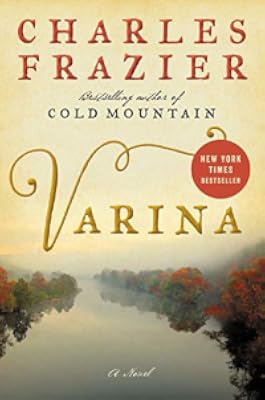
Varina
by Charles Frazier
On This Page
Description
In his powerful fourth novel, Charles Frazier returns to the time and place of Cold Mountain, vividly bringing to life the chaos and devastation of the Civil War.With her marriage prospects limited, teenage Varina Howell agrees to wed the much-older widower Jefferson Davis, with whom she expects a life of security as a Mississippi landowner. He instead pursues a career in politics and is eventually appointed president of the Confederacy, placing Varina at the white-hot center of one of the show more darkest moments in American history—culpable regardless of her intentions.
The Confederacy falling, her marriage in tatters, and the country divided, Varina and her children escape Richmond and travel south on their own, now fugitives with "bounties on their heads, an entire nation in pursuit."
Intimate in its detailed observations of one woman's tragic life and epic in its scope and power, Varina is a novel of an American war and its aftermath. Ultimately, the audiobook is a portrait of a woman who comes to realize that complicity carries consequences.
. show less
Tags
Recommendations








Member Reviews
-- That line in the song, Old times there are not forgotten. I could argue that maybe they're not worth remembering.
-- I've never forgotten that girl, and I wouldn't want to. Remembering doesn't change anything--it will always have happened. But forgetting won't erase it either.
Varina was the second wife of Jefferson Davis, President of the Confederate States of America. She was raised in Mississippi according to her status, owned slaves and served as the first lady in Richmond. But she was also a woman who walked out of her husband's inaugural address halfway through, who, in the middle of the Civil War, took in a black child and raised him with her own children, who finished the work of her husband's memoirs after his death and then show more moved directly to New York City.
Charles Frazier tells the story of Varina's life as a series of reminiscences recounted by Varina to a young man who believes he might be Jimmy Limber, the boy Varina took in during the war. He is searching for his past and they meet each Sunday and she remembers her life before, during and after the war, the memories moving back and forth through time, as her train of thought brings other events to mind.
Many years later, now that choices matter less, V has finally learned that sitting calm within herself and waiting is often the best choice. And even when it's not, those around you become uncomfortable because they think you are wise.
Frazier writes beautifully, there's not a jarring sentence or an awkward word choice anywhere in this book. He also does the difficult job of threading the needle of being both faithful to the attitudes and behaviors of that time without alienating the modern reader. Varina is a sympathetic character, but Frazier never allows us to look away at the harm done by the system she lived in and tried to preserve. show less
-- I've never forgotten that girl, and I wouldn't want to. Remembering doesn't change anything--it will always have happened. But forgetting won't erase it either.
Varina was the second wife of Jefferson Davis, President of the Confederate States of America. She was raised in Mississippi according to her status, owned slaves and served as the first lady in Richmond. But she was also a woman who walked out of her husband's inaugural address halfway through, who, in the middle of the Civil War, took in a black child and raised him with her own children, who finished the work of her husband's memoirs after his death and then show more moved directly to New York City.
Charles Frazier tells the story of Varina's life as a series of reminiscences recounted by Varina to a young man who believes he might be Jimmy Limber, the boy Varina took in during the war. He is searching for his past and they meet each Sunday and she remembers her life before, during and after the war, the memories moving back and forth through time, as her train of thought brings other events to mind.
Many years later, now that choices matter less, V has finally learned that sitting calm within herself and waiting is often the best choice. And even when it's not, those around you become uncomfortable because they think you are wise.
Frazier writes beautifully, there's not a jarring sentence or an awkward word choice anywhere in this book. He also does the difficult job of threading the needle of being both faithful to the attitudes and behaviors of that time without alienating the modern reader. Varina is a sympathetic character, but Frazier never allows us to look away at the harm done by the system she lived in and tried to preserve. show less
Historical fiction set initially in 1906 about the life of Varina Howell Davis, wife of the president of the Confederacy, Jefferson Davis, as told to James Blake aka Jimmie Limber, an African American man she had rescued from a brutal beating when he was very young and has not seen in over forty years. He was taken into her household, included as a playmate with her children, and accompanied her family as they fled Richmond as fugitives on the way to Florida. James, now a teacher, locates Varina in Saratoga, New York, near the end of her life. She had moved to New York at age 60 to make her living as a writer. I looked up Jimmie Limber and he in fact existed and spent time living at the Davis home, as unlikely as that sounds, though he show more is lost to history after 1865. The author has imagined him as an adult wishing to piece together his past through asking questions of Varina. In this way, the book serves to query the past to attempt to understand it.
The timeline jumps forward and backward as Varina recounts her memories to James, which sometimes disrupts the flow, but is in keeping with the nature of memories. Several scenes in this book are particularly memorable, such as the fall of Richmond and Varina's meeting with a farm family in Georgia, and the author employs a florid writing style. The plot simmers but never boils over, and the characterization is centered on Varina. She is shown in a sympathetic light, as an unorthodox educated woman with strong opinions, not always in alignment with her husband, and someone who has grieved the deaths of many of her children. I would have thought she would have been a severe bigot, given her position as first lady of the Confederacy, but Varina is shown in this book as treating everyone with respect, though she never transcends the social structures and racism of the period. The book includes several tense episodes where James calls Varina to task for how she had benefitted from slavery. She grapples with being on the “wrong side of history,” and her role in perpetuating slavery, and ultimately reveals that she believes the right side won the war. In this sense, we find many parallels with current society, as we continue to wrestle with issues that originated from this period (and prior) in American history. The author invites us to learn more about her life by providing a suggested non-fiction reading list.
This book spurred me to do more research about the time-period and the people involved, which I always consider positive. Recommended to readers of American Civil War literature and those interested in this period of history. show less
The timeline jumps forward and backward as Varina recounts her memories to James, which sometimes disrupts the flow, but is in keeping with the nature of memories. Several scenes in this book are particularly memorable, such as the fall of Richmond and Varina's meeting with a farm family in Georgia, and the author employs a florid writing style. The plot simmers but never boils over, and the characterization is centered on Varina. She is shown in a sympathetic light, as an unorthodox educated woman with strong opinions, not always in alignment with her husband, and someone who has grieved the deaths of many of her children. I would have thought she would have been a severe bigot, given her position as first lady of the Confederacy, but Varina is shown in this book as treating everyone with respect, though she never transcends the social structures and racism of the period. The book includes several tense episodes where James calls Varina to task for how she had benefitted from slavery. She grapples with being on the “wrong side of history,” and her role in perpetuating slavery, and ultimately reveals that she believes the right side won the war. In this sense, we find many parallels with current society, as we continue to wrestle with issues that originated from this period (and prior) in American history. The author invites us to learn more about her life by providing a suggested non-fiction reading list.
This book spurred me to do more research about the time-period and the people involved, which I always consider positive. Recommended to readers of American Civil War literature and those interested in this period of history. show less
Varina Howell Davis was the second wife of Jefferson Davis, president of the Confederate States of America. Though she was raised in a world that might have produced a typical Southern belle, her father's fecklessness instead made her a young woman who was unusually educated and aware of the precariousness of her own position in life. This precariousness would color all the rest of her days as she became the second wife of a man still devoted to his dead first bride, a mother who lost her children one by one, and the first lady of a doomed rebel government.
This beautifully written novel tells Varina's story as she tells it to a man who has come to visit her in the New York hotel where she is living her last days. He believes that he is show more Jimmie Limber, a black boy whom Varina took into her home and raised with her own children. The tale of their attempted escape through the war-torn South to Cuba, with the Union army hot on their heels, is powerful and suspenseful. The time after the war is less focused and less powerful, as Varina attempts to find a way to live with the losses she has suffered. But throughout, she never descends into self-pity; she realizes that what she has gone through is not even close to just recompense for the evils perpetuated by the Confederate system that she lived in for so long.
I would probably not have picked up a book about Varina if I hadn't heard Charles Frazier speak about it and been intrigued. Her story is quite interesting and I'm glad that I read it. Frazier is sympathetic to her choices and her lack thereof, and does not let her off the hook for her sins. But the tone of this book is not angry; instead it is more regretful. After all, Varina is somewhat protected by her social status and her whiteness, despite her guilt. Maybe a little more anger would be a good thing in telling this story. show less
This beautifully written novel tells Varina's story as she tells it to a man who has come to visit her in the New York hotel where she is living her last days. He believes that he is show more Jimmie Limber, a black boy whom Varina took into her home and raised with her own children. The tale of their attempted escape through the war-torn South to Cuba, with the Union army hot on their heels, is powerful and suspenseful. The time after the war is less focused and less powerful, as Varina attempts to find a way to live with the losses she has suffered. But throughout, she never descends into self-pity; she realizes that what she has gone through is not even close to just recompense for the evils perpetuated by the Confederate system that she lived in for so long.
I would probably not have picked up a book about Varina if I hadn't heard Charles Frazier speak about it and been intrigued. Her story is quite interesting and I'm glad that I read it. Frazier is sympathetic to her choices and her lack thereof, and does not let her off the hook for her sins. But the tone of this book is not angry; instead it is more regretful. After all, Varina is somewhat protected by her social status and her whiteness, despite her guilt. Maybe a little more anger would be a good thing in telling this story. show less
VARINA by Charles Frazier
The person is eminently interesting – the wife of the Confederate President. The era is interesting – the decades before, during, and after the American Civil War. The episodes are fascinating – a Southern white woman raising an enslaved child as her own: the escape of fugitives in a devastated land: the marriage of a 17 year old to a 40 year old. So why didn’t I like it?
The episodes are just that – episodes that jump from decade to decade with no cohesion. The story is not a story – there is no plot. The tempo and pacing are erratic at best.
BUT… the writing is wonderful. The conclusions are insightful. The characters are real and well presented.
YOU might like it. I didn’t.
3 of 5 stars
The person is eminently interesting – the wife of the Confederate President. The era is interesting – the decades before, during, and after the American Civil War. The episodes are fascinating – a Southern white woman raising an enslaved child as her own: the escape of fugitives in a devastated land: the marriage of a 17 year old to a 40 year old. So why didn’t I like it?
The episodes are just that – episodes that jump from decade to decade with no cohesion. The story is not a story – there is no plot. The tempo and pacing are erratic at best.
BUT… the writing is wonderful. The conclusions are insightful. The characters are real and well presented.
YOU might like it. I didn’t.
3 of 5 stars
The title character of this novel observes in 1865, “Civilization balances always on a keen and precarious point, a showman spinning a fine Spode dinner plate on a long dowel slender as a stem of hay. A puff of breath, a moment’s lost attention, and it’s all gone, crashed to ruination, shards in the dirt.”
Varina Howell Davis knows whereof she speaks. Not only has she seen her native South provoke a catastrophic civil war, her husband has led the charge as president of the Confederacy. Even when the cause rides high, she can’t go anywhere without hearing vicious gossip about herself and Jeff, which becomes ever more strident as defeat looms.
Personal tragedy dogs her as well; most of their children die very young, leaving her show more perpetually in mourning, and her marriage has been a disaster from the first. As the barely eighteen-year-old bride to a much older, widower husband, Varina doesn't reckon on his cold stubbornness, his political ambitions, habit of breaking promises, financial chicanery, or abiding obsession with his late wife.
Not all of this is Varina’s naïveté, however. Her father, having lost his fortune to speculation, tosses her into the hands of a relative who browbeats the women who make up his household. Consequently, Jeff Davis offers freedom, she thinks, an irony that underlies the entire narrative.
All this turmoil might provide drama enough for three novels, but the astonishing thing about Varina is that it fails to add up even to one. Frazier has grounded his tale in 1906, when Varina is living in Saratoga, New York, at a hotel-cum-therapy establishment, and a figure from her distant past drops in.
This is James Blake, whom Varina adopted off a Richmond street during the war, and who has tracked her down to try to piece together the fragments of his early life. His Sunday visits prompt her recollections, which spin the narrative of her life as well.
I dislike this way of telling stories, which seems unnatural and forced—“let me now recount my life"—yet there’s something here that commands attention. James is black, though light-skinned, whereas Varina is dark-complected, which has opened her to ridicule and prejudice throughout her life in the South. James is therefore the prime mover and Varina’s conscience on racial attitudes, a brilliant thematic setup.
Unfortunately, it falls flat. The retrospective narrative jumps around incessantly, as you would expect an oral memoir to do, and the myriad episodes don’t hang together. Frazier creates several marvelous vignettes, introducing, among others, Franklin Pierce, Zachary Taylor, Oscar Wilde, James McNeill Whistler, and Varina’s good friend and famous diarist, the warm, ebullient Mary Chesnut.
But there’s no plot to speak of; no urgent question to answer; no secrets to unravel; and therefore no climax. Sometimes there’s tension, but more often not, for the vignettes, though sometimes interesting, seldom engage you emotionally. Frazier relies on Varina’s moral pronouncements and his ability to set a scene, both of which he expresses in imagery that, at its best, leaps off the page.
But does that equal a novel, or at least, a good novel? I say no, especially because Varina is the only character of any depth. She’s a terrific tragic figure, possessing remarkable strength and heartfelt eloquence (if, at odd moments, she sounds like a psychotherapist). But James remains a vague character, part stage prompter, part Greek chorus.
You see Jeff’s flaws out loud, but the rest of him remains abstract; and if there was ever a complicated leader, it was Jefferson Davis — who, in reality, sought a battlefield command rather than political leadership. Frazier notes that he enjoys combat — Davis attended West Point, after all — but doesn’t show why.
Frazier’s historical perspective mystifies me too. He re-creates the Confederacy’s collapse with verve and frightening detail, but the tone and certain aspects of the story rest on a pretense or a misconception, whichever you prefer to call it. The way Frazier tells it, why, practically nobody in the Confederacy except a few hardheads like Jeff thought that warring against the North was a good idea, which they somehow managed to sell to a credulous populace.
What nonsense. Frazier himself makes clear that the South kept fighting, despite taking terrible punishment, and there were many men who did not desert. Moreover, to suggest that a few misguided souls brought on the Civil War idealizes the Confederacy as a place where fire-eating secession was an anomaly, while also selling short the people who suffered for it.
It’s as if nobody back then had any convictions of their own, so were easily manipulated. I can’t stand that implication, which invites us to look down on nineteenth-century Americans as less intelligent than we, less capable of moral reasoning. Hindsight comes in handy, doesn’t it? show less
Varina Howell Davis knows whereof she speaks. Not only has she seen her native South provoke a catastrophic civil war, her husband has led the charge as president of the Confederacy. Even when the cause rides high, she can’t go anywhere without hearing vicious gossip about herself and Jeff, which becomes ever more strident as defeat looms.
Personal tragedy dogs her as well; most of their children die very young, leaving her show more perpetually in mourning, and her marriage has been a disaster from the first. As the barely eighteen-year-old bride to a much older, widower husband, Varina doesn't reckon on his cold stubbornness, his political ambitions, habit of breaking promises, financial chicanery, or abiding obsession with his late wife.
Not all of this is Varina’s naïveté, however. Her father, having lost his fortune to speculation, tosses her into the hands of a relative who browbeats the women who make up his household. Consequently, Jeff Davis offers freedom, she thinks, an irony that underlies the entire narrative.
All this turmoil might provide drama enough for three novels, but the astonishing thing about Varina is that it fails to add up even to one. Frazier has grounded his tale in 1906, when Varina is living in Saratoga, New York, at a hotel-cum-therapy establishment, and a figure from her distant past drops in.
This is James Blake, whom Varina adopted off a Richmond street during the war, and who has tracked her down to try to piece together the fragments of his early life. His Sunday visits prompt her recollections, which spin the narrative of her life as well.
I dislike this way of telling stories, which seems unnatural and forced—“let me now recount my life"—yet there’s something here that commands attention. James is black, though light-skinned, whereas Varina is dark-complected, which has opened her to ridicule and prejudice throughout her life in the South. James is therefore the prime mover and Varina’s conscience on racial attitudes, a brilliant thematic setup.
Unfortunately, it falls flat. The retrospective narrative jumps around incessantly, as you would expect an oral memoir to do, and the myriad episodes don’t hang together. Frazier creates several marvelous vignettes, introducing, among others, Franklin Pierce, Zachary Taylor, Oscar Wilde, James McNeill Whistler, and Varina’s good friend and famous diarist, the warm, ebullient Mary Chesnut.
But there’s no plot to speak of; no urgent question to answer; no secrets to unravel; and therefore no climax. Sometimes there’s tension, but more often not, for the vignettes, though sometimes interesting, seldom engage you emotionally. Frazier relies on Varina’s moral pronouncements and his ability to set a scene, both of which he expresses in imagery that, at its best, leaps off the page.
But does that equal a novel, or at least, a good novel? I say no, especially because Varina is the only character of any depth. She’s a terrific tragic figure, possessing remarkable strength and heartfelt eloquence (if, at odd moments, she sounds like a psychotherapist). But James remains a vague character, part stage prompter, part Greek chorus.
You see Jeff’s flaws out loud, but the rest of him remains abstract; and if there was ever a complicated leader, it was Jefferson Davis — who, in reality, sought a battlefield command rather than political leadership. Frazier notes that he enjoys combat — Davis attended West Point, after all — but doesn’t show why.
Frazier’s historical perspective mystifies me too. He re-creates the Confederacy’s collapse with verve and frightening detail, but the tone and certain aspects of the story rest on a pretense or a misconception, whichever you prefer to call it. The way Frazier tells it, why, practically nobody in the Confederacy except a few hardheads like Jeff thought that warring against the North was a good idea, which they somehow managed to sell to a credulous populace.
What nonsense. Frazier himself makes clear that the South kept fighting, despite taking terrible punishment, and there were many men who did not desert. Moreover, to suggest that a few misguided souls brought on the Civil War idealizes the Confederacy as a place where fire-eating secession was an anomaly, while also selling short the people who suffered for it.
It’s as if nobody back then had any convictions of their own, so were easily manipulated. I can’t stand that implication, which invites us to look down on nineteenth-century Americans as less intelligent than we, less capable of moral reasoning. Hindsight comes in handy, doesn’t it? show less
By the flow of the inland river,
Whence the fleets of iron have fled,
Where the blades of the grave-grass quiver,
Asleep are the ranks of the dead:
Under the sod and the dew,
Waiting the judgment-day;
Under the one, the Blue,
Under the other, the Gray
One of the hardest wars to understand, for me, is the American Civil War. Perhaps it was unavoidable, but it never seems that way. It is so easy to stand outside of it and condemn the South, but the South was a collection of people, and each one held his own beliefs and motivations and emerged with his own scars, and many were swept up in it by geography, without choosing.
I have stood at the grave of Varina Davis, the wife of Jefferson Davis, the President of the Confederate States of show more America, in Hollywood Cemetery and admit to not giving her more than a passing thought. She was never quoted, or more than mentioned, in Ken Burns’ epic Civil War series and she has been confined to obscurity over the years. Charles Frazier did a marvelous job of lifting her out of that obscurity and giving her flesh again.
One forgets sometimes that historical figures were men and women, who ached and suffered and made huge mistakes that they came to rue or lucked into being heroes because they were positioned at just the right place in just the right moment. Another aspect that escapes us is how very young some of these people were. J.E.B. Stuart was 31 when he died. For me, that puts his strutting heroics in an entirely different light. But, I have wandered off subject, it is Varina’s youth that I meant to address. A seventeen year old married to a man twenty years her senior, who did not entirely agree with his position but shared his station. I find it amazing that she ever found a voice of her own.
There were parts of this novel that pulled at me and wrapped me up in the narrative and parts where I drifted away. It is written in a unique voice, beginning as a conversation between Varina and James Blake, a black man who had been rescued as a boy by Varina and who spent much of his early years in her home as if one of her children. It progresses from that to a more narrative style, which I admit to liking much better, but then bounces back and forth. Perhaps this is the only way to tell the story as he wishes to, because Varina is looking back and she already knows the lessons she has learned and the price that has been paid.
There are moments during the narrative when the genius of Frazier emerges. I felt myself fleeing the burning South and traveling through the devastation that Sherman had left in his wake. One cannot help wondering how anyone managed to survive and rebuild their lives when so little was left intact.
Frazier understands his material, and Varina is a three-dimensional character. If you cut her, she bleeds. Having endured the destruction of her world, Varina also sees the slow erosion of her family as well. A mother to six, with only one alive at the time of her own death. I hope the real Varina Davis was as strong and resilient as he has painted her to be, and I hope she felt the remorse as well.
then one morning the world resembles the wake of Noah’s flood, stretching unrecognizable to the horizon, and you wonder how you got there. One thing for sure, it wasn’t from a bad throw of the dice or runes or an unfavorable turn of cards. Not luck or chance. Blame falls hard and can’t be dodged by the guilty.
He understands life itself, as well, and that much of what we know or feel is in aftermath.
How everyone grew up then, one way or the other, whichever side of the skin line you chanced to be born on. Children don’t judge their own lives. Normal for them is what’s laid before them day by day. Judgment comes later.
I believe this is so, and couldn’t help wondering myself at what age a child stops taking what comes as what is and starts recognizing the abject injustice of the life he leads, or recognizing the unearned privilege that has been gifted to him.
And, all things end up in the past, but a circumstance, such as this war produced, makes the past seem a visible door that is closing in your face.
Don’t ever forget me? Don’t leave me? The instant passed so fast, and when that happens, it goes for good and all you have is a slow lifetime to speculate on revisions. Except time flows one way and drags us with it no matter how hard we paddle upstream.
Imagine all the memories that you carry with you when you realize you have witnessed evil, perhaps witnessed it for a lifetime, and just turned the other way. The main reason I find history so compelling and so important is that sometimes we have to look the worst headon to keep it from happening again.
I’ve never forgotten that girl, and I wouldn’t want to. Remembering doesn’t change anything--it will always have happened. But forgetting won’t erase it either.
I think this is the best thing Charles Frazier has written since Cold Mountain. I suppose that will always remain his masterpiece (and what wouldn’t any of us give to have ONE masterpiece inside us?), but this is another worthy, well-researched effort. Frazier has an emotional connection to the Civil War era that breathes life into his writing. I’m glad he decided to revisit it. show less
Whence the fleets of iron have fled,
Where the blades of the grave-grass quiver,
Asleep are the ranks of the dead:
Under the sod and the dew,
Waiting the judgment-day;
Under the one, the Blue,
Under the other, the Gray
One of the hardest wars to understand, for me, is the American Civil War. Perhaps it was unavoidable, but it never seems that way. It is so easy to stand outside of it and condemn the South, but the South was a collection of people, and each one held his own beliefs and motivations and emerged with his own scars, and many were swept up in it by geography, without choosing.
I have stood at the grave of Varina Davis, the wife of Jefferson Davis, the President of the Confederate States of show more America, in Hollywood Cemetery and admit to not giving her more than a passing thought. She was never quoted, or more than mentioned, in Ken Burns’ epic Civil War series and she has been confined to obscurity over the years. Charles Frazier did a marvelous job of lifting her out of that obscurity and giving her flesh again.
One forgets sometimes that historical figures were men and women, who ached and suffered and made huge mistakes that they came to rue or lucked into being heroes because they were positioned at just the right place in just the right moment. Another aspect that escapes us is how very young some of these people were. J.E.B. Stuart was 31 when he died. For me, that puts his strutting heroics in an entirely different light. But, I have wandered off subject, it is Varina’s youth that I meant to address. A seventeen year old married to a man twenty years her senior, who did not entirely agree with his position but shared his station. I find it amazing that she ever found a voice of her own.
There were parts of this novel that pulled at me and wrapped me up in the narrative and parts where I drifted away. It is written in a unique voice, beginning as a conversation between Varina and James Blake, a black man who had been rescued as a boy by Varina and who spent much of his early years in her home as if one of her children. It progresses from that to a more narrative style, which I admit to liking much better, but then bounces back and forth. Perhaps this is the only way to tell the story as he wishes to, because Varina is looking back and she already knows the lessons she has learned and the price that has been paid.
There are moments during the narrative when the genius of Frazier emerges. I felt myself fleeing the burning South and traveling through the devastation that Sherman had left in his wake. One cannot help wondering how anyone managed to survive and rebuild their lives when so little was left intact.
Frazier understands his material, and Varina is a three-dimensional character. If you cut her, she bleeds. Having endured the destruction of her world, Varina also sees the slow erosion of her family as well. A mother to six, with only one alive at the time of her own death. I hope the real Varina Davis was as strong and resilient as he has painted her to be, and I hope she felt the remorse as well.
then one morning the world resembles the wake of Noah’s flood, stretching unrecognizable to the horizon, and you wonder how you got there. One thing for sure, it wasn’t from a bad throw of the dice or runes or an unfavorable turn of cards. Not luck or chance. Blame falls hard and can’t be dodged by the guilty.
He understands life itself, as well, and that much of what we know or feel is in aftermath.
How everyone grew up then, one way or the other, whichever side of the skin line you chanced to be born on. Children don’t judge their own lives. Normal for them is what’s laid before them day by day. Judgment comes later.
I believe this is so, and couldn’t help wondering myself at what age a child stops taking what comes as what is and starts recognizing the abject injustice of the life he leads, or recognizing the unearned privilege that has been gifted to him.
And, all things end up in the past, but a circumstance, such as this war produced, makes the past seem a visible door that is closing in your face.
Don’t ever forget me? Don’t leave me? The instant passed so fast, and when that happens, it goes for good and all you have is a slow lifetime to speculate on revisions. Except time flows one way and drags us with it no matter how hard we paddle upstream.
Imagine all the memories that you carry with you when you realize you have witnessed evil, perhaps witnessed it for a lifetime, and just turned the other way. The main reason I find history so compelling and so important is that sometimes we have to look the worst headon to keep it from happening again.
I’ve never forgotten that girl, and I wouldn’t want to. Remembering doesn’t change anything--it will always have happened. But forgetting won’t erase it either.
I think this is the best thing Charles Frazier has written since Cold Mountain. I suppose that will always remain his masterpiece (and what wouldn’t any of us give to have ONE masterpiece inside us?), but this is another worthy, well-researched effort. Frazier has an emotional connection to the Civil War era that breathes life into his writing. I’m glad he decided to revisit it. show less
Varina Howell Davis was the wife of Jefferson Davis, president of the Confederacy. This novel is about her life, with the Civil War and her husband's roles in it as a background. This is not a history of that conflict nor much about what Davis did, but it is a story about the woman who he was married to, a wife, mother, and friend to many. Her views on the war are complicated and did not always align with her husband's. She spent time in Washington as the wife of a senator and secretary of war, meeting people who remained lifelong friends despite the divide within the country. I knew very little about Varina, and I enjoyed reading and learning about her, and as always, researching more about her and finding pictures of her. As most show more people are, she was a complex, fascinating individual. The only trouble I had reading the book was the way it jumped around in time, sometimes with little warning. show less
Members
- Recently Added By
Lists

Fiction with Women's Names in the Title
378 works; 15 members

Bitter Southerner Summer Reading Roundup
198 works; 8 members

Amazon best fictional genre picks monthly for 2018
418 works; 9 members

Fiction: Historical
288 works; 3 members

Books Read in 2018
4,360 works; 110 members

To Read
617 works; 7 members
Author Information

11+ Works 20,476 Members
Awards and Honors
Awards
Distinctions
Notable Lists
Common Knowledge
- Canonical title
- Varina
- Original publication date
- 2018
- People/Characters
- Varina Howell Davis; Jefferson Davis; James Blake; James Buchanan; Jane Pierce; Burton Harrison (show all 18); Benjamin Montgomery; Joseph Davis; Florida Davis; Pemberton; Delrey; Mary Chesnut; Laura Scott; Blount Scott; Mary O'Melia; James McNeill Whistler; Sara Dorsey; Oscar Wilde
- Important places
- Richmond, Virginia, USA; Saratoga Springs, New York, USA; London, England, UK; Natchez, Mississippi, USA; Charlotte, North Carolina, USA; Abbeville, South Carolina, USA (show all 12); Washington, D.C., USA; Washington, Georgia, USA; Mayfield, Georgia, USA; Fortress Monroe, Virginia, USA; Biloxi, Mississippi, USA; New York, New York, USA
- Dedication
- For Nancy Olson 1941-2016
- First words
- If he is the boy in the blue book, where to start?
- Last words
- (Click to show. Warning: May contain spoilers.)But what he wants to remember and writes in his notebook is something she said to him one Sunday:
When the time is remote enough nobody amounts to much.
Classifications
Statistics
- Members
- 854
- Popularity
- 32,157
- Reviews
- 43
- Rating
- (3.75)
- Languages
- English
- Media
- Paper, Audiobook, Ebook
- ISBNs
- 24
- ASINs
- 5