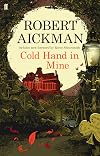
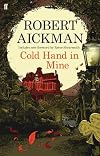
Cold Hand in Mine: Strange Stories
by Robert Aickman
On This Page
Description
Fiction. Horror. Literature. 'Reading Robert Aickman is like watching a magician work, and very often I'm not even sure what the trick was. All I know is that he did it beautifully.' Neil Gaiman For fans of Inside Number 9 and The League of Gentlemen — with an introduction by Reece Shearsmith Aickman's 'strange stories' (his preferred term) are constructed immaculately, the neuroses of his characters painted in subtle shades. He builds dread by the steady accrual of realistic detail, until show more the reader realises that the protagonist is heading towards their doom as if in a dream. Cold Hand in Mine, first published in 1975, stands as one of Aickman's finest collections and contains eight tales including 'Pages from a Young Girl's Journal' which won the World Fantasy Award. 'He had the ability to invest the daylight world with all the terrors of the night, and specialised in subverting notions of safety and sunshine into something sinister and unforgiving.' Christopher Fowler, Independent. show lessTags
Recommendations
















Member Recommendations

Member Reviews
*Partial spoilers ahead*
I like Robert Aickman, but I'm not a huge fan. (I prefer him to Walter de la Mare, whose mantle he obviously inherited.) He's the kind of writer whose stories you read one or two at a time, savoring them, and Cold Hand in Mine contains eight mostly fine examples of his style. You won't feel the urge to consume them back to back--I didn't, anyway--but if you've just finished one long novel and are about to tackle another, Aickman's stories make for interesting palate-cleansers.
Several of the tales in this 1975 collection have been widely anthologized: "The Swords," "Pages from a Young Girl's Journal" and overwhelming fan favorite "The Hospice." The two stories I've found myself rereading most frequently are show more "Niemandswasser" and "The Same Dog," which address similar themes (families with a military background; mothers who died young; awkward, somewhat unconventional male-female relationships) while producing distinctly different effects. The former is an overtly dark meditation on death and the inescapable collapse of all human endeavor, disguised as a monster-in-the-lake yarn; the latter is a surreal account of what happens to two children who witness a strange, disquieting phenomenon after wandering away from their school one afternoon. Aickman hints at explanations (the moldering grimoire that Elmo discovers in the family library in "Niemandswasser"; the apparently regenerative effect that Mary has on the haunted house in "The Same Dog") without actually offering them, and this is what readers will find either fascinating or offputting. Like de la Mare in his classic tale "All Hallows," Aickman aimed to create a sense of unease: not to provide resolutions. show less
I like Robert Aickman, but I'm not a huge fan. (I prefer him to Walter de la Mare, whose mantle he obviously inherited.) He's the kind of writer whose stories you read one or two at a time, savoring them, and Cold Hand in Mine contains eight mostly fine examples of his style. You won't feel the urge to consume them back to back--I didn't, anyway--but if you've just finished one long novel and are about to tackle another, Aickman's stories make for interesting palate-cleansers.
Several of the tales in this 1975 collection have been widely anthologized: "The Swords," "Pages from a Young Girl's Journal" and overwhelming fan favorite "The Hospice." The two stories I've found myself rereading most frequently are show more "Niemandswasser" and "The Same Dog," which address similar themes (families with a military background; mothers who died young; awkward, somewhat unconventional male-female relationships) while producing distinctly different effects. The former is an overtly dark meditation on death and the inescapable collapse of all human endeavor, disguised as a monster-in-the-lake yarn; the latter is a surreal account of what happens to two children who witness a strange, disquieting phenomenon after wandering away from their school one afternoon. Aickman hints at explanations (the moldering grimoire that Elmo discovers in the family library in "Niemandswasser"; the apparently regenerative effect that Mary has on the haunted house in "The Same Dog") without actually offering them, and this is what readers will find either fascinating or offputting. Like de la Mare in his classic tale "All Hallows," Aickman aimed to create a sense of unease: not to provide resolutions. show less
Cold Hand in Mine is a fine collection of eight of Robert Aickman's utterly unique brand of "strange stories" - so unique as to be difficult to describe. While there are elements of horror and the supernatural, the stories to not neatly fit into those genres. These are stories of uncanny occurrences set within an eerie atmosphere. But the stories are not straightforward: events and circumstances are often sketchy; there are likely valid clues throughout, but since the endings are often open-ended or ambiguous, it's hard to connect the dots to a firm conclusion. Much is subject to interpretation. In general we find protagonists in increasingly odd situations, psychologically searching for explanations, desperately grasping for an show more understanding of what they're experiencing. And even at the end, the reader is left as bewildered as the protagonist. Truly unsettling stuff. The stories seem to demand multiple readings. Standouts include "The Swords": A traveling salesman encounters a bizarre sideshow act at a local fair; "The Hospice": Lucas Maybury, hopelessly lost, famished, and nearly out of petrol, enters an establishment offering most unusual accommodations; "The Same Dog": Hilary Brigstock, many years after a repressed traumatic childhood incident, finally gains some insight into exactly what happened; and "Meeting Mr Millar": A struggling writer is intrigued and alarmed by the odd behaviour of one of the tenants in his apartment building. show less
A collection so characteristic of what makes Aickman Aickman, it feels strange to realize that most of these are, by his standards, not superior stories. "Meeting Mr Millar" is best: a seedy London townhouse, a fuddled narrator on the top floor, an adulteress on the lower, and between them an undefined criminal enterprise run by a man who seems terrified of being alone—why? And that midnight visitation by some trudging entity with a death stench and a low moan: the sort of classic ghost maneuver that Aickman almost never employs but can dispatch with absolute mastery. In comparison, "The Same Dog" and "The Swords" are superbly second-rate, and "The Hospice," though finally less unnerving than one has expected, is good to read for show more anyone curious about this author. But energy leaks out through two very long, very dreary stories set in Central Europe in centuries that are not the 20th—and Aickman always does best in a contemporary setting. show less
I like to think of myself as pretty good at talking about books, but Robert Aickman has defeated me. As I read through this collection of stories, I found myself fascinated with Aickman's ability to conjure an atmosphere that didn't seem to be so much mood as the substance of the world the characters occupied. I found myself trying, again and again, and always unsuccessfully, to describe to friends why I had become so fascinated with an unpopular, uncelebrated genre author who wrote stories in which pretty much nothing seemed to happen. The quote everyone repeats about Aickman comes from Neil Gaiman: "Reading Robert Aickman is like watching a magician work, and very often I'm not even sure what the trick was. All I know is that he did show more it beautifully." That seems appropriate. You can't really convey in words what it's like to see a good magic trick. You have to be there.
Which makes it all the more puzzling how Aickman manages to pull off these indescribable feats in language itself. Why is it that I struggle so much to put something into words that itself is nothing but words?
Sometimes good art reflects and connects to the world it exists in. Aickman's writing is instead like a broken part in a machine. You can see how it might have some functional role, but chances are it will escape you. We should expect the characters in Aickman's stories to exist in worlds like our own. But Aickman writes about society like someone experiencing it for the first time, with a sense of bewilderment and exhaustion, and the hauntings in his stories seem as much like outcroppings of a world that cannot be understood as like influence of the paranormal. The ghosts in the stories are indistinguishable from real life, and the strangeness of both is what makes Aickman's stories memorable.
So much for general reflection on Aickman. What about the stories?
The Swords: *****/*****
Maybe the best story here. Certainly my favourite. A queasy story about virginity, sex, commerce, and violence.
The Real Road to the Church: ****/*****
What is a death, and who should we want to be there when it happens? The answers to both of those questions might not be easy to understand. This one's not quite as memorable as some of the others, and relies on some familiar ghost-story staples, but it's worth it for the bizarre and unique setting, and the resonance of the ending.
Niemandswasser: ***/*****
One of the weaker stories in the collection. An aristocrat learns something terrible about the lake his family's castle overlooks. More sterile and uninspired than The Swords and some of the others here.
Pages from a Young Girl's Journal: ****/*****
The most conventional Aickman story I've read. A story about self-discovery and vampirism. It's executed very well, but I didn't think it had much to say.
The Hospice: *****/*****
Many cite this as their favourite Aickman story. I don't find that hard to understand. It's utterly original and perplexing, endlessly interpretable, and clearly meaningful. Very good!
The Same Dog: *****/*****
A story about the ways minor decisions in childhood can define a life. Some people compare Aickman to David Lynch. The comparison is funny. I don't think David Lynch would ever read Aickman, and I bet Aickman would have been disgusted by Lynch's movies. Still, this is Aickman at his most Lynch-ian. I was reminded in particular of the scene in Mulholland Dr. behind the diner. Both take something simple, a man looking at you, and imbue it with a terrifying significance. I might suggest this as an introductory story to people who usually read literary fiction because of how well it blends realism and the strangeness Aickman is known for.
Meeting Mr Millar: *****/*****
An aspiring writer develops a strange relationship with his downstairs neighbour, an accountant. This is a long story, and opaque. But it seems to be the most political story here, intentionally or otherwise. The story reflects anxieties about class, modernity, and gender. It also includes my favourite description from the book:
"But Mr Millar's activities seemed so trivial and futile as to be hardly worth spying on for long, and the chatter he addressed to himself (quite loudly and clearly) was not so much obsessive as escapist. The burden of his thoughts had long ago driven him out of his own personality, even when he was by himself. He had become a walking shell from which the babble of the world re-echoed."
The Clock Watcher: ***/*****
Another story about being perplexed by women. For what it's worth, a pretty good one, but a weak story to close on. show less
Which makes it all the more puzzling how Aickman manages to pull off these indescribable feats in language itself. Why is it that I struggle so much to put something into words that itself is nothing but words?
Sometimes good art reflects and connects to the world it exists in. Aickman's writing is instead like a broken part in a machine. You can see how it might have some functional role, but chances are it will escape you. We should expect the characters in Aickman's stories to exist in worlds like our own. But Aickman writes about society like someone experiencing it for the first time, with a sense of bewilderment and exhaustion, and the hauntings in his stories seem as much like outcroppings of a world that cannot be understood as like influence of the paranormal. The ghosts in the stories are indistinguishable from real life, and the strangeness of both is what makes Aickman's stories memorable.
So much for general reflection on Aickman. What about the stories?
The Swords: *****/*****
Maybe the best story here. Certainly my favourite. A queasy story about virginity, sex, commerce, and violence.
The Real Road to the Church: ****/*****
What is a death, and who should we want to be there when it happens? The answers to both of those questions might not be easy to understand. This one's not quite as memorable as some of the others, and relies on some familiar ghost-story staples, but it's worth it for the bizarre and unique setting, and the resonance of the ending.
Niemandswasser: ***/*****
One of the weaker stories in the collection. An aristocrat learns something terrible about the lake his family's castle overlooks. More sterile and uninspired than The Swords and some of the others here.
Pages from a Young Girl's Journal: ****/*****
The most conventional Aickman story I've read. A story about self-discovery and vampirism. It's executed very well, but I didn't think it had much to say.
The Hospice: *****/*****
Many cite this as their favourite Aickman story. I don't find that hard to understand. It's utterly original and perplexing, endlessly interpretable, and clearly meaningful. Very good!
The Same Dog: *****/*****
A story about the ways minor decisions in childhood can define a life. Some people compare Aickman to David Lynch. The comparison is funny. I don't think David Lynch would ever read Aickman, and I bet Aickman would have been disgusted by Lynch's movies. Still, this is Aickman at his most Lynch-ian. I was reminded in particular of the scene in Mulholland Dr. behind the diner. Both take something simple, a man looking at you, and imbue it with a terrifying significance. I might suggest this as an introductory story to people who usually read literary fiction because of how well it blends realism and the strangeness Aickman is known for.
Meeting Mr Millar: *****/*****
An aspiring writer develops a strange relationship with his downstairs neighbour, an accountant. This is a long story, and opaque. But it seems to be the most political story here, intentionally or otherwise. The story reflects anxieties about class, modernity, and gender. It also includes my favourite description from the book:
"But Mr Millar's activities seemed so trivial and futile as to be hardly worth spying on for long, and the chatter he addressed to himself (quite loudly and clearly) was not so much obsessive as escapist. The burden of his thoughts had long ago driven him out of his own personality, even when he was by himself. He had become a walking shell from which the babble of the world re-echoed."
The Clock Watcher: ***/*****
Another story about being perplexed by women. For what it's worth, a pretty good one, but a weak story to close on. show less
Solid collection of ambiguously nightmarish short stories. I’m an aging horror nerd finding it increasingly difficult to invest as completely in conventional horror as I could as a young ‘ un, and stumbling upon R. Aickman in a horror anthology has pulled my book year out of the doldrums. Most of the entries are not really even horror-adjacent, but still manage to poke at our deep subconscious fears and discomforts in an effective way. My two favorites here were “Niemandswasser” and “The Same Dog”- the latter of which is the horrorest horror I’ve consumed in a while.
There are very few books, even ones that I have enjoyed, that I know while reading them that I will do so again. This 1975 collection of short stories by Robert Aickman is one. I am a recent addition to Aickman’s audience, ever since I read ‘The Stains’, a longer instance of what he called ‘strange stories’. ‘Strange’ hardly does justice to the stories in this collection, which almost casually embody the sentiment of the volume’s epigraph, from Sacheverell Sitwell, ‘In the end it is the mystery that lasts and not the explanation.’
In the year that he died, Aickman won a World Fantasy Award for ‘Pages from a Young Girl’s Journal’, one of the stories in this collection; and perversely enough, this was one of my show more least favourite. It is, in its gothic way, a straightforward story—a kind of pastiche—so there is less about this that is recognisably Aickman than the other stories. Similarly, though the heart of ‘Niemandswasser’ is as dark and cold as you might hope, the setting does not cause the flesh to creep. It has a very fairy-tale ring to it, with a Prince and a kingdom, and rather heightened language. It is the language that particularly undermines these two tales. The real and leaden dread of the best stories here is the way that the mundane and quotidian plunge the character into inexplicable and possibly dangerous situations.
An editor of pornographic literature may have experienced a future event. A salesman seeks refuge, and finds nothing but rococo bizarrerie. A woman buys a house on a path where, in some world, new pall-bearers take up the coffin. Aickman’s characters are very distinctive, and their slightly neurotic personalities add to the strong sense of inexorability that is reminiscent of some of Patricia Highsmith’s novels. Everything appears ordinary at the start, and some small kink in a plain suburban path brings it to a tipping-point, when it turns into the path through the forest, without the reader being able to pinpoint how exactly it happened.
‘Meeting Mr. Millar’ has a faint sense that the mystery has been resolved, but it has been resolved off the page. It is conceivable that the cuckolded husband of the story has a grasp on what is happening (he is one of the few sturdy, practical, likeable characters in the collection) but it is evidently none of the reader’s concern. ‘The Swords’ is possibly the eeriest, but ‘The Hospice’ is a strong contender for the strangest story in this collection. There is an immediate sense of nightmare when the food is described, and the reader visualises a steaming slab of turkey, accompanied by a sauceboat full of ‘specially compounded fluid, dark red and turgid.’ There is clearly no escape when the protagonist notices that one guest is fettered by the ankle. Aickman’s horror is built up with subtlety. The monstrous meat is ‘seeping slightly with a colourless, oily fluid’ which is somehow far worse than mere liquid. In 'The Real Road to the Church', the woman on the route to the church hears a ‘faint, fluttering knock, not necessarily on the outer door.’
Two of my favourite podcasts have aired episodes on Cold Hand in Mine—Weird Studies focusing on ‘The Hospice’, Backlisted on the collection as a whole. In the latter, Andy Miller (I think) had embarked on an effort to synopsise a ‘typical’ Aickman story, and the editor Simon Spanton had suggested “Something happens, which may or may not.” Miller also said “He likes to take you somewhere, and leave you there, without saying there’s the path back.” There is no path back with Aickman. You have been through the story, and nothing ever returns to normal. show less
In the year that he died, Aickman won a World Fantasy Award for ‘Pages from a Young Girl’s Journal’, one of the stories in this collection; and perversely enough, this was one of my show more least favourite. It is, in its gothic way, a straightforward story—a kind of pastiche—so there is less about this that is recognisably Aickman than the other stories. Similarly, though the heart of ‘Niemandswasser’ is as dark and cold as you might hope, the setting does not cause the flesh to creep. It has a very fairy-tale ring to it, with a Prince and a kingdom, and rather heightened language. It is the language that particularly undermines these two tales. The real and leaden dread of the best stories here is the way that the mundane and quotidian plunge the character into inexplicable and possibly dangerous situations.
An editor of pornographic literature may have experienced a future event. A salesman seeks refuge, and finds nothing but rococo bizarrerie. A woman buys a house on a path where, in some world, new pall-bearers take up the coffin. Aickman’s characters are very distinctive, and their slightly neurotic personalities add to the strong sense of inexorability that is reminiscent of some of Patricia Highsmith’s novels. Everything appears ordinary at the start, and some small kink in a plain suburban path brings it to a tipping-point, when it turns into the path through the forest, without the reader being able to pinpoint how exactly it happened.
‘Meeting Mr. Millar’ has a faint sense that the mystery has been resolved, but it has been resolved off the page. It is conceivable that the cuckolded husband of the story has a grasp on what is happening (he is one of the few sturdy, practical, likeable characters in the collection) but it is evidently none of the reader’s concern. ‘The Swords’ is possibly the eeriest, but ‘The Hospice’ is a strong contender for the strangest story in this collection. There is an immediate sense of nightmare when the food is described, and the reader visualises a steaming slab of turkey, accompanied by a sauceboat full of ‘specially compounded fluid, dark red and turgid.’ There is clearly no escape when the protagonist notices that one guest is fettered by the ankle. Aickman’s horror is built up with subtlety. The monstrous meat is ‘seeping slightly with a colourless, oily fluid’ which is somehow far worse than mere liquid. In 'The Real Road to the Church', the woman on the route to the church hears a ‘faint, fluttering knock, not necessarily on the outer door.’
Two of my favourite podcasts have aired episodes on Cold Hand in Mine—Weird Studies focusing on ‘The Hospice’, Backlisted on the collection as a whole. In the latter, Andy Miller (I think) had embarked on an effort to synopsise a ‘typical’ Aickman story, and the editor Simon Spanton had suggested “Something happens, which may or may not.” Miller also said “He likes to take you somewhere, and leave you there, without saying there’s the path back.” There is no path back with Aickman. You have been through the story, and nothing ever returns to normal. show less
Originally published in 1975, Cold Hand in Mine by Robert Aickmn is a collection of short stories that highlight his ability at writing “strange” or “weird” fiction. There are eight stories in this collection and they verge on the supernatural but always with an ambiguous tone that leaves the reader wondering what just happened.
Included in this book are some tales that are slightly familiar in theme such as “Page’s From A Young Girl’s Journal” in which a young English girl travels through Italy and meets a handsome stranger who leaves her with a familiar wound on her neck and a craving to sink her teeth into other necks. Other stories are much more puzzling, often the climax of the story is left dangling and the reader show more is left with unanswered questions. The opening story “Swords” is a fine example of a story that not so much frightens as it disturbs and dismays.
These stories are far from the classic ghost story, yet they speak to our fears and uncertainties. With their chilling atmosphere and multi-levelled meanings, Cold Hand in Mine leaves the reader uneasy with feelings of uncertain menace and dread. Personally I am not very comfortable reading this type of story, as I always wonder if I am missing something, but this collection was an intriguing look at this author’s very original “weird” fiction. show less
Included in this book are some tales that are slightly familiar in theme such as “Page’s From A Young Girl’s Journal” in which a young English girl travels through Italy and meets a handsome stranger who leaves her with a familiar wound on her neck and a craving to sink her teeth into other necks. Other stories are much more puzzling, often the climax of the story is left dangling and the reader show more is left with unanswered questions. The opening story “Swords” is a fine example of a story that not so much frightens as it disturbs and dismays.
These stories are far from the classic ghost story, yet they speak to our fears and uncertainties. With their chilling atmosphere and multi-levelled meanings, Cold Hand in Mine leaves the reader uneasy with feelings of uncertain menace and dread. Personally I am not very comfortable reading this type of story, as I always wonder if I am missing something, but this collection was an intriguing look at this author’s very original “weird” fiction. show less
Members
- Recently Added By
Lists

Weird and Weirder Fiction
270 works; 35 members

Backlisted
109 works; 9 members

To Read - Horror
137 works; 14 members

Stephen King's 'Danse Macabre' reading list
111 works; 25 members

Edward Gorey Covers
150 works; 8 members
Backlisted Podcast
65 works; 3 members

Haunted Britain and Ireland
51 works; 7 members

Jones & Newman: Best Horror Books Further Recommended Reading
577 works; 4 members

Stephen King's Danse Macabre Full Appendix List
110 works; 2 members

Eldritch Exarch Press - Appendix N
244 works; 1 member
Author Information

66+ Works 3,610 Members
Some Editions
Awards and Honors
Distinctions
Series
Belongs to Publisher Series
Science Fiction Book Club (1553)
Work Relationships
Common Knowledge
- Canonical title
- Cold Hand in Mine: Strange Stories
- Original title
- Cold Hand in Mine
- Alternate titles
- The Swords; The Real Road to the Church; Niemandswasser; Pages From a Young Girl's Journal; The Hospice; The Same Dog (show all 8); Meeting Mr Millar; The Clock Watcher
- Original publication date
- 1975
- People/Characters
- Prince Albrecht von Allendorf (Elmo); Lucas Maybury; Hilary Brigstock; Mary Rossiter; Rosa Hughes; Elvira Schwalbe (show all 8); Viktor von Revenstein; Mr Millar
- Important places
- Wolverhampton, West Midlands, England, UK; Lake Constance; Ravenna, Emilia-Romagna, Italy; London, England, UK
- Related movies
- "The Hunger": The Swords (1997 | s1e1 | IMDb)
- Epigraph
- In the end it is the mystery that lasts and not the explanation. —Sacheverell Sitwell, "For Want of the Golden City"
- Dedication
- For Mary George and Ann Pym who lent me a beautiful apartment without which this book could in no wise have taken form.
- First words
- My first experience?
- Last words
- (Click to show. Warning: May contain spoilers.)O Ursula, Ursula.
- Blurbers
- Kirk, Russell; Bloch, Robert ; Leiber, Fritz; Wilson, Gahan
Classifications
Statistics
- Members
- 775
- Popularity
- 36,338
- Reviews
- 13
- Rating
- (3.93)
- Languages
- English
- Media
- Paper, Audiobook, Ebook
- ISBNs
- 12
- UPCs
- 1
- ASINs
- 9