On This Page
Description
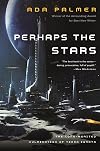
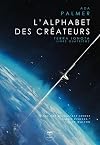
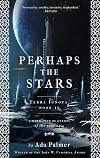
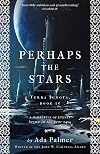
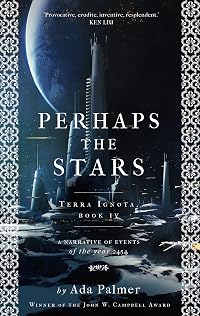
"From the 2017 John W. Campbell Award Winner for Best Writer, Ada Palmer's Perhaps the Stars is the final book of the Hugo Award-shortlisted Terra Ignota series..."--Tags
Recommendations









Member Reviews
Would you destroy this world to save a better one?
Rating: 5/5 – A modern masterpiece.
One sign of a great book is that it’s difficult to summarize, which can be technically expressed as it having “high dimensionality”. These stories feature densely interwoven ideas and theses each of which may be a simple expression, but together form a complex, irreducable whole.
Ada Palmer’s Terra Ignota Tetralogy is such a story. It spans gender, the nuclear family, the nature of God, feasability of human settlement on other planets, 17th century philosophy, Homer, and the economics of resurrection. I cannot possibly provide a useful summary of this book, and that’s what makes it so spectacular.
Every fan of speculative fiction should read show more this. It’s ambitious, subtle, provoking, gentle, towering, and kind. It is everything I have ever wanted in a book and more.
https://timothyrice.org/terraignota/ show less
Rating: 5/5 – A modern masterpiece.
One sign of a great book is that it’s difficult to summarize, which can be technically expressed as it having “high dimensionality”. These stories feature densely interwoven ideas and theses each of which may be a simple expression, but together form a complex, irreducable whole.
Ada Palmer’s Terra Ignota Tetralogy is such a story. It spans gender, the nuclear family, the nature of God, feasability of human settlement on other planets, 17th century philosophy, Homer, and the economics of resurrection. I cannot possibly provide a useful summary of this book, and that’s what makes it so spectacular.
Every fan of speculative fiction should read show more this. It’s ambitious, subtle, provoking, gentle, towering, and kind. It is everything I have ever wanted in a book and more.
https://timothyrice.org/terraignota/ show less
This fourth book of Terra Ignota provides a conclusion worthy of what has come before. It is longer than any of the previous volumes by at least 50%, and it involves more narrative lacunae and changes of style. It does not resolve all of the enigmas raised in previous books, nor even those opened within its own pages, but it does complete the story and give it greater context and significance.
Terra Ignota has an unreliable and culpable narrator addressing himself to a posterity even further removed from the (actual) reader, but represented by a Reader character whose identity is in some measure disclosed at the end. It entertains metaphysics, and it vaults into the very highest political arenas of its imagined world. For these reasons show more and others, it has invited comparison to Gene Wolfe's Book of the New Sun, and Ada Palmer has admitted to her admiration for Wolfe's work. There is an especially Wolfean development in this final volume whenthe narrator A9 is retroactively revealed to have sacrificed their own life and physical substance for the resurrection of the earlier narrator Mycroft Canner. Poignantly, Wolfe died in 2019 as Palmer was finishing Perhaps the Stars, which has for a recurring theme the ways in which the death of a writer is neither the death of the author nor the death of the story.
I feel petty to notice it, but there is grammatical tic that recurs through all the volumes of Terra Ignota: the use of nominative pronouns where objective ones are called for in subordinate formulae at the tail end of sentences, like: "Who knew that such things could happen to we who had accomplished so much?" As I saw this oddness repeat, I grew to wonder whether it was Palmer or Canner who was to blame, and if the latter, what it could portend. It certainly seems wrong that the academically-accomplished writer of these books should have included such nonstandard English as mere error.
The scale and complexity of these books are impressive. They are still new, and I think that they will have staying power to gain in popularity and acclaim, like the Book of the New Sun and Herbert's Dune books. Attempts at scholarly criticism and substantial intellectual response began already after the release of the second book Seven Surrenders. I was not surprised to find out that there is a fan wiki to attempt to trace the sometimes bewildering details of character, place, and plot, but disappointed to discover that it is still sparsely populated.
I would advise prospective readers of Terra Ignota to view the four books as a single work and avoid setting it aside between volumes--perhaps especially between the third and fourth books where there was in fact a delay in publication. Do not skip past the fanciful-seeming publication conditions and dramatis personae front matter in each book. These supply important (p)reviews of the social structures, factions, stakes, and characters. If you've never read Homer, or if it's just been decades, consider reading an encyclopedia article for an overview of the Illiad and the Odyssey. Ditto for Thomas Hobbes and his Leviathan, and perhaps Voltaire and Diderot to boot. show less
Terra Ignota has an unreliable and culpable narrator addressing himself to a posterity even further removed from the (actual) reader, but represented by a Reader character whose identity is in some measure disclosed at the end. It entertains metaphysics, and it vaults into the very highest political arenas of its imagined world. For these reasons show more and others, it has invited comparison to Gene Wolfe's Book of the New Sun, and Ada Palmer has admitted to her admiration for Wolfe's work. There is an especially Wolfean development in this final volume when
I feel petty to notice it, but there is grammatical tic that recurs through all the volumes of Terra Ignota: the use of nominative pronouns where objective ones are called for in subordinate formulae at the tail end of sentences, like: "Who knew that such things could happen to we who had accomplished so much?" As I saw this oddness repeat, I grew to wonder whether it was Palmer or Canner who was to blame, and if the latter, what it could portend. It certainly seems wrong that the academically-accomplished writer of these books should have included such nonstandard English as mere error.
The scale and complexity of these books are impressive. They are still new, and I think that they will have staying power to gain in popularity and acclaim, like the Book of the New Sun and Herbert's Dune books. Attempts at scholarly criticism and substantial intellectual response began already after the release of the second book Seven Surrenders. I was not surprised to find out that there is a fan wiki to attempt to trace the sometimes bewildering details of character, place, and plot, but disappointed to discover that it is still sparsely populated.
I would advise prospective readers of Terra Ignota to view the four books as a single work and avoid setting it aside between volumes--perhaps especially between the third and fourth books where there was in fact a delay in publication. Do not skip past the fanciful-seeming publication conditions and dramatis personae front matter in each book. These supply important (p)reviews of the social structures, factions, stakes, and characters. If you've never read Homer, or if it's just been decades, consider reading an encyclopedia article for an overview of the Illiad and the Odyssey. Ditto for Thomas Hobbes and his Leviathan, and perhaps Voltaire and Diderot to boot. show less
Several hours after finishing the book, I am overwhelmed and happy. Terra Ignota series is such an impressive literary achievement – ambitious, challenging, intricate.
Like all great sci-fi, Perhaps the Stars is a novel of both BIG IDEAS and characters that pierce your soul. I find it impossible to fit all my impressions into one review. But here are a few thoughts:
It is rare (in my experience, at least) that a book packed with philosophy, metaphysics, and ideas about the future of society and humanity is also emotionally exhausting. I had to take a break after nearly every chapter to take a few deep breaths or do something else for a while.
- The writing is consistently sublime.
- I loved how the Greek mythology, the Iliad and the show more Odyssey were integrated into the narrative.
- I loved 9A’s narrative voice (and 9A, of course).
- I have mixed feelings about the big reveal/the root of the conflict. While I was immersed in the book, it made sense. Now I find myself wondering why such a conflict would exist in the first place, the two goals should not negate each other, not in the future as Ada Palmer describes it. (Unless you are fanatic, of course…)
- The ending is beautiful! I went to a very happy place after finishing the last page. show less
Like all great sci-fi, Perhaps the Stars is a novel of both BIG IDEAS and characters that pierce your soul. I find it impossible to fit all my impressions into one review. But here are a few thoughts:
It is rare (in my experience, at least) that a book packed with philosophy, metaphysics, and ideas about the future of society and humanity is also emotionally exhausting. I had to take a break after nearly every chapter to take a few deep breaths or do something else for a while.
- The writing is consistently sublime.
- I loved how the Greek mythology, the Iliad and the show more Odyssey were integrated into the narrative.
- I loved 9A’s narrative voice (and 9A, of course).
- I have mixed feelings about the big reveal/the root of the conflict. While I was immersed in the book, it made sense. Now I find myself wondering why such a conflict would exist in the first place, the two goals should not negate each other, not in the future as Ada Palmer describes it. (Unless you are fanatic, of course…)
- The ending is beautiful! I went to a very happy place after finishing the last page. show less
And so the Terra Ignota saga draws majestically to a close. The ambition and complexity of this series is truly incredible. I've never read any other sci-fi quite so dense with historical and literary material. The plot, style, world-building, and characters are all distinctively erudite. Each book demands the reader's full attention to keep up at all, let alone get the most from it. I'm sure that I missed a great deal, but definitely benefited from some familiarity with [b:The Iliad|1371|The Iliad|Homer|https://i.gr-assets.com/images/S/compressed.photo.goodreads.com/books/1625333695l/1371._SX50_.jpg|3293141], [b:The Odyssey|1381|The show more Odyssey|Homer|https://i.gr-assets.com/images/S/compressed.photo.goodreads.com/books/1390173285l/1381._SY75_.jpg|3356006], Hobbes's [b:Leviathan|91953|Leviathan|Thomas Hobbes|https://i.gr-assets.com/images/S/compressed.photo.goodreads.com/books/1326788684l/91953._SY75_.jpg|680963], and Rousseau's [b:The Social Contract|12651|The Social Contract|Jean-Jacques Rousseau|https://i.gr-assets.com/images/S/compressed.photo.goodreads.com/books/1388197284l/12651._SY75_.jpg|702720]. Knowledge of French and Latin also helped. As with the previous books in the series, it took me at least fifty pages to adjust to the narrative style, remember the characters, and recall their basic allegiances. Once I did, the book became extremely compelling.
In the previous Terra Ignota books, war threatened. In [b:Perhaps the Stars|35424671|Perhaps the Stars (Terra Ignota, #4)|Ada Palmer|https://i.gr-assets.com/images/S/compressed.photo.goodreads.com/books/1609718655l/35424671._SY75_.jpg|56800624], war breaks out; a war unlike any other I've read about. Ada Palmer asks how a utopian global society would conduct a world war while attempting to minimise casualties and damage. The ideological splits that precipitated it are real and complex, but none of the sides want to wholly destroy the others. Their means of harm reduction are suitably ingenious: non-lethal weapons that cause lasting fatigue ('tiring guns'), unilateral suspension of global communications and travel systems, and agreement that combatants and non-combatants must be visually distinguishable by uniforms, among other strategies. The 9th Anonymous has taken over chronicling duties and recounts the outset of world war from the city of Romanova. There are echoes of the pandemic in the bandwidth lags during video calls, fears of local plague outbreaks, and similarity of tiring gun symptoms to Long Covid.
I had the satisfaction of yelling, "Called it!" twice during the ensuing thrilling web of events.The first was ten chapters in, when Mycroft returned. Bridger's lasting power has cast him as Odysseus; the similarities of his account of being lost at sea to the Odyssey are immediately evident. This is the first example in the book of an unsettling yet fascinating concept: characters being forced (seemingly by Bridger) into literary narratives that subsume their identity and free will. Mycroft must play out the Odyssey; reborn Achilles must play out the Iliad (again) with Cornel MASON as Patroclus and Sniper as Paris; Madame abruptly dies off-page as a victim of 18th century drama plots. Despite these threads of irresistible narrative determinism, overall the war follows an unpredictable path as it fragments. I think this exchange is too oblique to constitute spoilers:
The narrator's and thus the reader's expectations of the war are repeatedly challenged and subverted. There are some spectacularly tense and exciting action sequences, as well as unexpected twists.The second event I correctly predicted was Sniper's return to kill Achilles in chapter 25, appropriately titled 'The Wrath of Achilles'. Of course, I predicted this because of the Iliad replay going on. Sniper's reappearance after a long mysterious absence was perfectly timed for dramatic effect and their subsequent role particularly memorable. Sniper manages to stand out in an enormous cast that, frankly, I struggle to keep track of. The range of honorifics do make this tricky - even the helpful dramatis personae at the beginning can only assist so much when titles and allegiances keep shifting, plus new people turn up. I kept up sufficiently to follow and enjoy the plot, without necessarily knowing who everyone referred to was.
Although for much of the book there is no global communications network, the narrators are so central to events that this does not meaningfully restrict their account. When Mycroft returns, they share narrative duties with the 9th Anonymous. I really enjoyed the conversational nature of these shared chapters and was genuinely chilled when it emerged the two were becoming one person. Godlike Bridger and Jehovah need Mycroft, so they gradually take over the body of 9th Anonymous. The final interview with Sniper before 9th Anonymous essentially dies so Mycroft can live is very poignant. The end of 9th Anonymous is prefigured by the creepy chapter when they are deliberately kept helpless and incapacitated in hospital by someone they thought was a friend. Giving their final chapter the title 'No-one' is a neat Odyssey reference.
A strong theme of the whole series is the importance of roles and titles over and above the individuals that hold them. While the godlike children need Mycroft preserved, this is because no-one else seems able to perform his particular role of translating between them and humanity. Emperor, King, Censor, and Anonymous roles are all passed along. The war disrupts both global political dynamics and changes the leaders representing prominent groups. Yet the value of individuals is certainly not discounted; Jehovah declares his hatred of death as it extinguishes unique souls. On a lighter note, why would anyone trust a person named Felix Faust? That's a comic book villain name if ever I heard one. Sure enough, he turns out to be untrustworthy.
This review is rambling as there is just SO MUCH going on in [b:Perhaps the Stars|35424671|Perhaps the Stars (Terra Ignota, #4)|Ada Palmer|https://i.gr-assets.com/images/S/compressed.photo.goodreads.com/books/1609718655l/35424671._SY75_.jpg|56800624] and Terra Ignota as a whole. Palmer dissects themes and tropes of hard sci-fi such as the pursuit of immortality, space exploration, and first contact with aliens via Homer and 18th century philosophy. Other writers have attempted elements of this, e.g. [b:Ilium|3973|Ilium (Ilium, #1)|Dan Simmons|https://i.gr-assets.com/images/S/compressed.photo.goodreads.com/books/1390894862l/3973._SY75_.jpg|3185401], but this is by far the most ambitious and thorough synthesis of far future and literary past that I've read. The series is deeply concerned with humanity's past, present, and future. Questions given significant attention in this book include: should humanity perfect ourselves or explore the stars? Are there reasons not to do both? How can we govern ourselves to ensure social stability, individual choice, and universal comfort? What is important to preserve from the past? After a war, who judges what crimes were committed and how the guilty are to be punished? The narrative is full of striking comments like this:
Other favourite moments I'm tempted to quote include the Diary of a U-beast chapter told in code output, the speech on empire, 9th Anonymous moving the mountain, and the rise of Alexander. This is getting too long, though, so I will simply praise the quality of Palmer's writing instead. How to summarise my thoughts on Terra Ignota? I would describe it as sincerely grandiose, inaccessible, and demanding. While reading [b:Perhaps the Stars|35424671|Perhaps the Stars (Terra Ignota, #4)|Ada Palmer|https://i.gr-assets.com/images/S/compressed.photo.goodreads.com/books/1609718655l/35424671._SY75_.jpg|56800624] I struggled to recall the many events of the prior three books from years ago and wondered if I should re-read them all. I can only imagine that reading the four books together as a single narrative would be utterly overwhelming, albeit probably glorious.
I'm not sure how widely to recommend Terra Ignota, as I do not think everyone would get on with it. I think if you can digest the first fifty to eighty pages, you'll be hooked. (Read a wikipedia summary of the Iliad and Odyssey first if you've never read either.) Then let the elaborate narrative style sweep you along, without dwelling on who every single character is and exactly what they've done. There were too many for me to keep track of, but this did not prevent me from greatly enjoying the profusion of ideas, allusions, debates, dilemmas, and dramas. I think this series would require utter obsession to fully appreciate its every nuance. I am not that reader, as I flit about in search of variety and novelty. Terra Ignota would reward exacting re-reads, as every line has significance. The one thing I feel this series lacks is visuals. It is rich in thoughts, feelings, philosophy, and incident, but descriptions of the characters and settings are layered in Homeric metaphor or intellectual details rather than being visually evocative. I do not intend this as a criticism, as it seems a function of stylistic priorities. Interesting, though, that I have a very visual imagination yet after circa 1,800 pages lack any mental images of Terra Ignota. Perhaps my mind was too preoccupied with the challenges of decoding the text to find space for visualisation. Nonetheless, this is undoubtedly a series that will linger in my mind and act as a catalytic link between other books in several genres. I wonder what Ada Palmer will write next. show less
In the previous Terra Ignota books, war threatened. In [b:Perhaps the Stars|35424671|Perhaps the Stars (Terra Ignota, #4)|Ada Palmer|https://i.gr-assets.com/images/S/compressed.photo.goodreads.com/books/1609718655l/35424671._SY75_.jpg|56800624], war breaks out; a war unlike any other I've read about. Ada Palmer asks how a utopian global society would conduct a world war while attempting to minimise casualties and damage. The ideological splits that precipitated it are real and complex, but none of the sides want to wholly destroy the others. Their means of harm reduction are suitably ingenious: non-lethal weapons that cause lasting fatigue ('tiring guns'), unilateral suspension of global communications and travel systems, and agreement that combatants and non-combatants must be visually distinguishable by uniforms, among other strategies. The 9th Anonymous has taken over chronicling duties and recounts the outset of world war from the city of Romanova. There are echoes of the pandemic in the bandwidth lags during video calls, fears of local plague outbreaks, and similarity of tiring gun symptoms to Long Covid.
I had the satisfaction of yelling, "Called it!" twice during the ensuing thrilling web of events.
"Older and more immortal is the enemy we knew we would awaken with our war. Distance."
"Distance," I repeated, and felt an oceanic echo in the word, a new and crueler facet of Jehovah's unrelenting Peer. "It is your war, Kohaku? I thought it wasn't, that it was Jehovah's war instead, but here we are Mitsubishi battling Masons over land, just as you predicted."
"My war has come," the number-prophet answered, slowly. "So has Tai-kun's, Perry's, Danae's, Apollo's. Distance makes one war a hundred wars. They speciate, like sparrows breeding alone on every island until they no longer recognise each other's chirps. See these Cycladic freedom fighters? They wage a rebel's war for home and liberty; they would no more abandon their islands to escort you to distant Tai-kun than your Shearwaters would abandon their dream of Tai-kun's better world to guard the Cyclades."
A dry sob hurt. "Then was it all for nothing?" I had to ask. "Jehovah's Act, trying to make two sides worth dying for? Did it all fail?"
"No. This is a fractal war. The larger shapes still lend their structure to the whole, and larger powers, by forging their macro-peace, will forge the thousand micro-peaces, too." His smile was shadow. "And not everything has fractured."
The narrator's and thus the reader's expectations of the war are repeatedly challenged and subverted. There are some spectacularly tense and exciting action sequences, as well as unexpected twists.
Although for much of the book there is no global communications network, the narrators are so central to events that this does not meaningfully restrict their account. When Mycroft returns, they share narrative duties with the 9th Anonymous. I really enjoyed the conversational nature of these shared chapters and was genuinely chilled when it emerged the two were becoming one person. Godlike Bridger and Jehovah need Mycroft, so they gradually take over the body of 9th Anonymous. The final interview with Sniper before 9th Anonymous essentially dies so Mycroft can live is very poignant. The end of 9th Anonymous is prefigured by the creepy chapter when they are deliberately kept helpless and incapacitated in hospital by someone they thought was a friend. Giving their final chapter the title 'No-one' is a neat Odyssey reference.
A strong theme of the whole series is the importance of roles and titles over and above the individuals that hold them. While the godlike children need Mycroft preserved, this is because no-one else seems able to perform his particular role of translating between them and humanity. Emperor, King, Censor, and Anonymous roles are all passed along. The war disrupts both global political dynamics and changes the leaders representing prominent groups. Yet the value of individuals is certainly not discounted; Jehovah declares his hatred of death as it extinguishes unique souls. On a lighter note, why would anyone trust a person named Felix Faust? That's a comic book villain name if ever I heard one. Sure enough, he turns out to be untrustworthy.
This review is rambling as there is just SO MUCH going on in [b:Perhaps the Stars|35424671|Perhaps the Stars (Terra Ignota, #4)|Ada Palmer|https://i.gr-assets.com/images/S/compressed.photo.goodreads.com/books/1609718655l/35424671._SY75_.jpg|56800624] and Terra Ignota as a whole. Palmer dissects themes and tropes of hard sci-fi such as the pursuit of immortality, space exploration, and first contact with aliens via Homer and 18th century philosophy. Other writers have attempted elements of this, e.g. [b:Ilium|3973|Ilium (Ilium, #1)|Dan Simmons|https://i.gr-assets.com/images/S/compressed.photo.goodreads.com/books/1390894862l/3973._SY75_.jpg|3185401], but this is by far the most ambitious and thorough synthesis of far future and literary past that I've read. The series is deeply concerned with humanity's past, present, and future. Questions given significant attention in this book include: should humanity perfect ourselves or explore the stars? Are there reasons not to do both? How can we govern ourselves to ensure social stability, individual choice, and universal comfort? What is important to preserve from the past? After a war, who judges what crimes were committed and how the guilty are to be punished? The narrative is full of striking comments like this:
The trolley problem does not describe our reality. Physics is cruel in many, many ways, but not that way. Yet because we all debate it, normalise it, know it, we live psychologically in the trolley problem, expecting it to be the default ethics of our world. Yes, there are corollaries - deadly missions, quarantines - but if we had admitted our kinder reality, that Nature rarely burdens us with such a choice - Cinna? No, Martin! Martin! - might the Saneer-Weeksbooth founders, who saw they could save 50,000 lives by taking one, have asked themselves: Is there a better way to use this data than to kill? Did we poison our ethics with the trolley problem? Is it bad for us, our minds, our souls, to dive, even in thought experiment, into a universe so artificially unkind?
Other favourite moments I'm tempted to quote include the Diary of a U-beast chapter told in code output, the speech on empire, 9th Anonymous moving the mountain, and the rise of Alexander. This is getting too long, though, so I will simply praise the quality of Palmer's writing instead. How to summarise my thoughts on Terra Ignota? I would describe it as sincerely grandiose, inaccessible, and demanding. While reading [b:Perhaps the Stars|35424671|Perhaps the Stars (Terra Ignota, #4)|Ada Palmer|https://i.gr-assets.com/images/S/compressed.photo.goodreads.com/books/1609718655l/35424671._SY75_.jpg|56800624] I struggled to recall the many events of the prior three books from years ago and wondered if I should re-read them all. I can only imagine that reading the four books together as a single narrative would be utterly overwhelming, albeit probably glorious.
I'm not sure how widely to recommend Terra Ignota, as I do not think everyone would get on with it. I think if you can digest the first fifty to eighty pages, you'll be hooked. (Read a wikipedia summary of the Iliad and Odyssey first if you've never read either.) Then let the elaborate narrative style sweep you along, without dwelling on who every single character is and exactly what they've done. There were too many for me to keep track of, but this did not prevent me from greatly enjoying the profusion of ideas, allusions, debates, dilemmas, and dramas. I think this series would require utter obsession to fully appreciate its every nuance. I am not that reader, as I flit about in search of variety and novelty. Terra Ignota would reward exacting re-reads, as every line has significance. The one thing I feel this series lacks is visuals. It is rich in thoughts, feelings, philosophy, and incident, but descriptions of the characters and settings are layered in Homeric metaphor or intellectual details rather than being visually evocative. I do not intend this as a criticism, as it seems a function of stylistic priorities. Interesting, though, that I have a very visual imagination yet after circa 1,800 pages lack any mental images of Terra Ignota. Perhaps my mind was too preoccupied with the challenges of decoding the text to find space for visualisation. Nonetheless, this is undoubtedly a series that will linger in my mind and act as a catalytic link between other books in several genres. I wonder what Ada Palmer will write next. show less
With Perhaps the Stars, Palmer finally gets to the fireworks factory she's been teasing this whole series. WAR! (Hoo, yeah! What is is good for?). With the Olympic truce over, and those capable of making weapons of mass destruction abducted by the Utopian Hive, the battle lines and alliances are rapidly coming into definition. But before the war can go hot, two key technologies of the world fail entirely. The suborbital flying cars switch to an autonomous flight-denial mode, smashing any object in the air to earth. And the global tracker network, the universal internet of the 25th century, is jammed and hacked, forcing everyone back to line of sight lasers, cables, and messengers. The Hive War will be fought in a style Napoleon would show more have mostly recognized, even if troops are armed with stun guns rather than muskets.
In a blessed dose of sanity, the narrator for much of the book switches from much troubled, much overwritten Mycroft, with his digressions to the Reader and Hobbes, to the much more direct 9th Anonymous. 9A spends the first chunk of the story isolated in the global capital of Romanova on the island of Sardinia, fighting their own private war to rebuild communications and clarify the messy field of foes in grand alliances of Remaker and Hiveguard. Palmer manages to depict war with great clarity. It is confusion, and fear, and moments of glory are so much moonshine. War is unvarnished evil.
I also enjoyed the revelations of yet another conspiracy. The Gordian Hive, based in Brillist psychodynamics, is revealed to be the architect of plans against Utopia, with the fate of the human race at stake. Their leader, Felix Faust, believes that the Utopian project of space colonization is a diversion from a better goal of immortality via mind-machine interface. With keen insight, they saw the coming war as well, and while Utopia believed that a small war now was necessary to prevent a worse war in the future, Gordian glimpsed a chance to become humanity's visionary branch, and used their skills to move the war in that fashion.
This is a thrilling conclusion, so why is this not five stars? Three reasons.
First, while the Utopian project of space colonization and flashy miracle tech is well-defined, their Gordian adversary is not. All scifi technology is ultimately an illusion, smoke and mirrors, but Gordian's "pick a number, pick a color, fascinating" mind tricks are more illusory than most. Utopia's plan is enacting Tsiolkovsky's quote, “Earth is the cradle of humanity, but one cannot live in a cradle forever.” Diaspora is both maturity and distancing, the end of a unified humanity. Gordian deserves a grander vision to match Utopia. Not merely a garden Earth, but one of telepathy, new forms of connection, new depths in the psyche. Gordian is drawn as psychoanalysis+, but what if they inherited from Timothy Leary and Teilhard de Chardin more than Freud, charting new vistas of an intelligent, emotive, psychedelic universe? What if the Utopian/Gordian conflict was about two version of world where dreams have become real.
Second, there are still undigested lumps of Hobbes and Homer blended in amongst Palmer's writing. I reached my limit with these philosophical/theological asides in book 3, and while Perhaps the Stars wastes less time on them, it still wastes time on them. The Ninth Anonymous narrates much of the book, but Mycroft returns, and I'm thoroughly done with his voice.
And third, J.E.D.D. Mason is the pivot of the plot, the single figure who could unite the Hives in his person thereby destroying the diversity of futuristic political systems, and a divine alien visitor brought to this universe by our flawed creator, who can only perceive and act in absolutes. I don't mind religious themes in my science-fiction, but J.E.D.D. reads too often as a ponderous nullity, with Capital Letters a crude effort to capture the totality and strangeness of their thoughts. Where this beam of the story needs to be iron, it is instead rotting wood.
On completion, Terra Ignota is great, but frustratingly flawed. It has some of the best and most original ideas I've seen in recent speculative fiction. It also has ideas which are either so outre or flawed on conception that no other author has chosen to use them, and for good reason. show less
In a blessed dose of sanity, the narrator for much of the book switches from much troubled, much overwritten Mycroft, with his digressions to the Reader and Hobbes, to the much more direct 9th Anonymous. 9A spends the first chunk of the story isolated in the global capital of Romanova on the island of Sardinia, fighting their own private war to rebuild communications and clarify the messy field of foes in grand alliances of Remaker and Hiveguard. Palmer manages to depict war with great clarity. It is confusion, and fear, and moments of glory are so much moonshine. War is unvarnished evil.
I also enjoyed the revelations of yet another conspiracy. The Gordian Hive, based in Brillist psychodynamics, is revealed to be the architect of plans against Utopia, with the fate of the human race at stake. Their leader, Felix Faust, believes that the Utopian project of space colonization is a diversion from a better goal of immortality via mind-machine interface. With keen insight, they saw the coming war as well, and while Utopia believed that a small war now was necessary to prevent a worse war in the future, Gordian glimpsed a chance to become humanity's visionary branch, and used their skills to move the war in that fashion.
This is a thrilling conclusion, so why is this not five stars? Three reasons.
First, while the Utopian project of space colonization and flashy miracle tech is well-defined, their Gordian adversary is not. All scifi technology is ultimately an illusion, smoke and mirrors, but Gordian's "pick a number, pick a color, fascinating" mind tricks are more illusory than most. Utopia's plan is enacting Tsiolkovsky's quote, “Earth is the cradle of humanity, but one cannot live in a cradle forever.” Diaspora is both maturity and distancing, the end of a unified humanity. Gordian deserves a grander vision to match Utopia. Not merely a garden Earth, but one of telepathy, new forms of connection, new depths in the psyche. Gordian is drawn as psychoanalysis+, but what if they inherited from Timothy Leary and Teilhard de Chardin more than Freud, charting new vistas of an intelligent, emotive, psychedelic universe? What if the Utopian/Gordian conflict was about two version of world where dreams have become real.
Second, there are still undigested lumps of Hobbes and Homer blended in amongst Palmer's writing. I reached my limit with these philosophical/theological asides in book 3, and while Perhaps the Stars wastes less time on them, it still wastes time on them. The Ninth Anonymous narrates much of the book, but Mycroft returns, and I'm thoroughly done with his voice.
And third, J.E.D.D. Mason is the pivot of the plot, the single figure who could unite the Hives in his person thereby destroying the diversity of futuristic political systems, and a divine alien visitor brought to this universe by our flawed creator, who can only perceive and act in absolutes. I don't mind religious themes in my science-fiction, but J.E.D.D. reads too often as a ponderous nullity, with Capital Letters a crude effort to capture the totality and strangeness of their thoughts. Where this beam of the story needs to be iron, it is instead rotting wood.
On completion, Terra Ignota is great, but frustratingly flawed. It has some of the best and most original ideas I've seen in recent speculative fiction. It also has ideas which are either so outre or flawed on conception that no other author has chosen to use them, and for good reason. show less
I'm not really sure what to make of this last entry in the Terra Ignota quartet. Some parts were absolutely brilliant -- the way that war spirals out into tiny fractal battles with the motivation behind each becoming increasingly personal and complex. I loved the way that Palmer as a historian thinks about not just technological changes but how government, family structure and social mores will change in 500 years. As she reminds us, the American Experiment is not yet 500 years old and there's no reason to believe that 500 years in the future people will continue to idealize democracy and free speech, as dear as that is to us today.
I loved the tension between: do we do everything we can to dream of a better world, or do we work show more incrementally on this one? I thought that ultimately, after The Will To Battle being overly sympathetic to the Masonic Empire, Palmer in this book shows more of the nuance between these sides and ultimately the arc for the original Saneer-Weeksbooth bash and for Carlyle Foster are pretty satisfying.
But there's just too much in this book. There are three pieces that just don't really fit and I feel bad because I think they're really Palmer's favorite parts: The Homeric references, JEDD Mason and Mycroft. Each is central, but ultimately distracting. Perhaps the least clear complaint is Mycroft -- part of what made Terra Ignota stand out is a literally criminally insane, unreliable narrator, whose scandalous secret past is definitely scandalous. But by the third book, Mycroft's deification of JEDD Mason and commitment to the monarchy of the Masonic Empire was starting to really dilute the richness of the setting. Palmer's responded to this criticism by saying that it's just the lens of reading via Mycroft and that readers can read past him. But she had a rich opportunity to provide a foil for his narrative with 9A, and instead 9A too became a JEDD cultist. I think this is simply a theory of mind failure -- as the reader, I cannot completely see past an unreliable narrator to pick up clues from a highly complex setting from only seeing first person narration from said highly unreliable narrator. Also, Mycroft's schtick is that he really is an unforgiveable person and I think Palmer got wrapped up in her own creation and ultimately found him sympathetic in a way that I did not find deserved.
So complex world-building + interesting philosophy + futuristic homeric retelling + morally complex unreliable narrator + exploration of novel divinity = too many things to fit into a quartet show less
I loved the tension between: do we do everything we can to dream of a better world, or do we work show more incrementally on this one? I thought that ultimately, after The Will To Battle being overly sympathetic to the Masonic Empire, Palmer in this book shows more of the nuance between these sides and ultimately the arc for the original Saneer-Weeksbooth bash and for Carlyle Foster are pretty satisfying.
But there's just too much in this book. There are three pieces that just don't really fit and I feel bad because I think they're really Palmer's favorite parts: The Homeric references, JEDD Mason and Mycroft. Each is central, but ultimately distracting. Perhaps the least clear complaint is Mycroft -- part of what made Terra Ignota stand out is a literally criminally insane, unreliable narrator, whose scandalous secret past is definitely scandalous. But by the third book, Mycroft's deification of JEDD Mason and commitment to the monarchy of the Masonic Empire was starting to really dilute the richness of the setting. Palmer's responded to this criticism by saying that it's just the lens of reading via Mycroft and that readers can read past him. But she had a rich opportunity to provide a foil for his narrative with 9A, and instead 9A too became a JEDD cultist. I think this is simply a theory of mind failure -- as the reader, I cannot completely see past an unreliable narrator to pick up clues from a highly complex setting from only seeing first person narration from said highly unreliable narrator. Also, Mycroft's schtick is that he really is an unforgiveable person and I think Palmer got wrapped up in her own creation and ultimately found him sympathetic in a way that I did not find deserved.
So complex world-building + interesting philosophy + futuristic homeric retelling + morally complex unreliable narrator + exploration of novel divinity = too many things to fit into a quartet show less
That was...amazing. Four big books full of big ideas, as many of them drawn from the the past as the future, as much, if not more, metaphysics as physics, and a dense, complex story with so may threads and characters that reach their becoming in this volume and then go on further than the reader could have thought possible, the stakes shifting, the moral grounding and the intellectual debate and ideological convictons as sharp as any physical battle and plot twists and reversals and tragedies and triumphs and somehow it all gets wound up and resolved that is both hopeful and satisfying, and the daring elements that in the first book seemed out of place in a grounded science fiction epic - the miracle child, the seemingly mad man who show more believes himself a god from another universe - all becomes part of the books ultimate beautiful, glorious argument. Up there with the Luna Trilogy for best science fction novels of the past decade.
And that's not even touching on the tour de force performance of T Ryder Smith, the reader of this audio edition which remained glued to my ears for two days straight to the exclusion of almost all else. show less
And that's not even touching on the tour de force performance of T Ryder Smith, the reader of this audio edition which remained glued to my ears for two days straight to the exclusion of almost all else. show less
Members
- Recently Added By
Lists

2022 Hugo Awards -- Eligible Works -- Novels
43 works; 10 members

Top Five Books of 2022
736 works; 272 members

2018 New SF Releases
24 works; 1 member

Books Read in 2021
5,361 works; 113 members

Books Read in 2022
5,226 works; 115 members

Stories of War and Revolution
143 works; 54 members

Most difficult novels
68 works; 27 members

2023 Update: The Best Twenty Books You've Read in the Past Five Years
40 works; 3 members

Top Five Books of 2023
767 works; 317 members

Books Read in 2024
4,727 works; 128 members

Top Five Books of 2024
795 works; 264 members
Author Information

11+ Works 4,248 Members
Awards and Honors
Awards
Series

Common Knowledge
- Canonical title
- Perhaps the Stars
- Original title
- Perhaps the Stars
- Original publication date
- 2021-10-19
- People/Characters
- Mycroft Canner; The Ninth Anonymous (9A); J.E.D.D. Mason; Cornel MASON; Jung Su-Hyeon; Carlyle Foster (show all 12); Huxley Mojave; Ojiro Cardigan Sniper; Achilles; Felix Faust; Bryar Kosala; Jin Im-Jin
- Important places
- Romanova; Alexandria, Egypt
- Epigraph
- "Brothers," I said, "who have braved a hundred
Thousand perils to reach these sunset lands,
Now that so little waking life remains us,
Do not deny yourselves the chance to reach
That world beyond the Sun, untouche... (show all)d by humankind."
—Dante, Inferno, XXVI 112–117 - Dedication
- Terra Ignota is dedicated to the first human who thought to hollow out a log to make a boat, and his or her successors.
- First words
- It was to be a short war.
- Last words
- (Click to show. Warning: May contain spoilers.)"And so I shall, for some things are so longed-for that hearing them spoken heals us, even if we know them already: The seeds have flown."
- Publisher's editor
- Nielsen Hayden, Patrick
- Blurbers
- Gladstone, Max
- Original language
- English
Classifications
Statistics
- Members
- 371
- Popularity
- 84,749
- Reviews
- 16
- Rating
- (4.33)
- Languages
- English, French, Polish
- Media
- Paper, Audiobook, Ebook
- ISBNs
- 13
- ASINs
- 3