On This Page
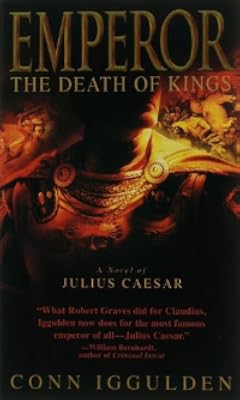
Description
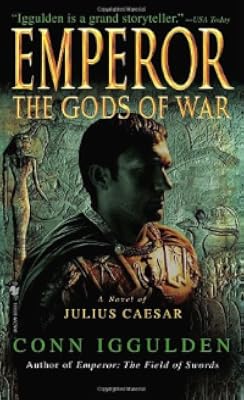
From the author of the bestselling The Dangerous Book for Boys“Brilliant…stunning,” raved the Los Angeles Times about Conn Iggulden’s first novel, Emperor: The Gates of Rome. “Iggulden is a grand storyteller,” declared USA Today. Now Iggulden returns to the landscape of ancient Rome and the life of Julius Caesar in a new novel filled with all the sumptuous storytelling that distinguished his first book. Sweeping from the windswept, pirate-ruled seas to the stifling heat of show more the Roman senate, Iggulden takes us further down the path to glory as Julius Caesar comes into his own as a man, warrior, senator, husband, leader.
In a sweltering, sparsely settled region of North Africa, a band of disheveled soldiers turn their eyes toward one man among them. Ragged, dirty, and half starved, the men will follow their leader into the mad, glorious fight for honor and revenge that only he wants to fight. Their leader is named Julius Caesar. The soldiers are Roman legionaries. And their quarry is a band of pirates who made the mistake of seizing Julius Caesar—and holding him for ransom. Now, to get his revenge, Caesar will turn peasants into soldiers, building a shipborne fighting force that will not only decimate a pirate fleet but will dominate the Mediterranean, earning him the coveted title Military Tribune of Rome.
While Caesar builds a legend far from Rome, his friend Gaius Brutus is fighting battles of another sort, rising to power in the wake of the shocking assassination of a dictator. Once Brutus and Caesar were as close as brothers, both devoted to the same ideals and attracted to the same forbidden woman. Now, when Caesar returns—with the winds of glory at his back—they will find themselves at odds. For each has built an army of elite warriors—Caesar’s forged in far-flung battles, Brutus’ from Rome’ s political killing fields. But in an era when men die for their treachery and their allegiances, the two men will soon be united by a shock wave from the north. There, a gladiator named Spartacus is gathering strength, building an army of seventy thousand desperate slaves—to fight a cataclysmic battle against Rome itself.
Filled with unforgettable images—from the death throes of a king to the birth of Caesar’s child, from the bloody battlefields of Greece to the silent passion of lovers—Emperor: The Death of Kings is an astounding work, a stunning blend of vibrant history and thrilling fiction. show less
Tags
Recommendations











Member Reviews
Good points:
This is a fast-paced adventure yarn from the first-century BC, starring Julius Caesar and Marcus Brutus.
The battle scenes are vivid and believable.
Despite the high number of characters, they are all well-portrayed. The young Octavian is particularly likable.
Bad points:
While most reviewers have criticised – or condemned – the author for his lack of historical accuracy, I can forgive this owing to him making it plain in an afterward that his “errors” are intentional.
My issue is his use – or rather, abuse – of English style. Like most historical novelists, Mr Iggulden doesn’t appear to have studied the art of fiction or elements of style. He never uses free-indirect speech, for example. The number of occasions show more that we’re informed that “Julius knew” or “he knew” or “she knew” is annoying.
Worse still, his overuse of adverbs is astonishing. How is it possible that a modern-day writer doesn’t know that “the road to hell is paved with adverbs”? I lost count of the amount of times that someone was “waiting patiently”. Adverbs “tell”. A good author should “show”.
Conclusion:
The bad points are irritating, but the story and characters are strong enough to endure this, making “The Death of Kings” worth reading – unless you’re really frustrated by the historical inaccuracies. show less
This is a fast-paced adventure yarn from the first-century BC, starring Julius Caesar and Marcus Brutus.
The battle scenes are vivid and believable.
Despite the high number of characters, they are all well-portrayed. The young Octavian is particularly likable.
Bad points:
While most reviewers have criticised – or condemned – the author for his lack of historical accuracy, I can forgive this owing to him making it plain in an afterward that his “errors” are intentional.
My issue is his use – or rather, abuse – of English style. Like most historical novelists, Mr Iggulden doesn’t appear to have studied the art of fiction or elements of style. He never uses free-indirect speech, for example. The number of occasions show more that we’re informed that “Julius knew” or “he knew” or “she knew” is annoying.
Worse still, his overuse of adverbs is astonishing. How is it possible that a modern-day writer doesn’t know that “the road to hell is paved with adverbs”? I lost count of the amount of times that someone was “waiting patiently”. Adverbs “tell”. A good author should “show”.
Conclusion:
The bad points are irritating, but the story and characters are strong enough to endure this, making “The Death of Kings” worth reading – unless you’re really frustrated by the historical inaccuracies. show less
The Death of Kings is the second in Conn Iggulden’s Emperor series telling a (highly) fictionalized version of the life of Julius Caesar.
This one begins a few months after The Gates of Rome. Julius is part of a naval party preparing to storm a captured fortress and rescue a governor. Marcus (now Brutus) is a proud centurion on a quest to meet the mother who abandoned him.
As with the first, historical fact takes a back seat to exciting, fast-paced story-telling as Caesar battles pirates, a renegade Greek king and ultimately takes on Spartacus and his slave army to round out the volume. Back biting, gamesmanship and politics take much more precedence in this book as we follow the rise and fall of Sulla as the Dictator of Rome and show more its’ bloody aftermath.
One thing I’ve noticed more in this book than the last is that the secondary characters wind up being more fleshed out and equally as interesting as Julius himself. Alexandria builds a nice life for herself in Rome and brings Octavian into the story as a young child living a touch life on the streets of Rome. Tibruk accomplishes a mighty task and becomes one of the most admirable characters in the story and senators Pompey, Crassus and Cato are all given their moments to shine. Julius isn’t forgotten though. We see him homesick when he’s captured by pirates to be held for ransom. We see his tremendous self assurance throughout the novel as well as some fear and doubt as a result of a problematic head wound.
Mr. Iggulden’s writing is as full-blooded and exciting this time out as it was before. Scenes of the storming of Mytilene, battles with pirates and the raids on Mithradates enormous army leap off the page. It’s not just battles that are gripping though. Caesar’s trial reclaim his fallen uncle’s house (and good name) and struggles in the Senate regarding just what to do about Spartacus are just was exciting as the battles that bookend them.
Also in here he shows very well written and atmospheric scenes of life in Rome, both good and bad. Vivid depictions of creeping through the filthy back alleys of Rome to meet an assassin and bits of opulence in a brothel and Octavian’s troubles with murderous bullies bring the city to life. Even heroic characters are shown to be brutal by today’s standards. Pompey’s revenge chilled me as much as what he was getting revenge for.
I did notice that Mr. Iggulden seems to set Julius slightly apart from the other characters. While Pompey is shown to take pleasure in his violent and bloody revenge, Caesar comes off as more sensitive. I’m not really sure if this was fair to the character, though it is understandable that he is trying to humanize a guy that could easily become a superhero.
I’ve been thinking a lot about whether the (sometimes huge) departures from history really harm this series. Many people seem to slam these books for their changes. But really, do these same sorts of changes make Brian De Palma’s Untouchables, Frank Miller’s 300 or Peter Shaffer’s Amadeus any less works of art?
As with the first book, The Death of Kings is a rousing and well-written adventure story that happens to be about Julius Caesar. It isn’t historically accurate, but at the very least may spark a layman’s interest in ancient history. I plan to continue reading this series and whatever other novels Mr. Iggulden has waiting in the wings. show less
This one begins a few months after The Gates of Rome. Julius is part of a naval party preparing to storm a captured fortress and rescue a governor. Marcus (now Brutus) is a proud centurion on a quest to meet the mother who abandoned him.
As with the first, historical fact takes a back seat to exciting, fast-paced story-telling as Caesar battles pirates, a renegade Greek king and ultimately takes on Spartacus and his slave army to round out the volume. Back biting, gamesmanship and politics take much more precedence in this book as we follow the rise and fall of Sulla as the Dictator of Rome and show more its’ bloody aftermath.
One thing I’ve noticed more in this book than the last is that the secondary characters wind up being more fleshed out and equally as interesting as Julius himself. Alexandria builds a nice life for herself in Rome and brings Octavian into the story as a young child living a touch life on the streets of Rome. Tibruk accomplishes a mighty task and becomes one of the most admirable characters in the story and senators Pompey, Crassus and Cato are all given their moments to shine. Julius isn’t forgotten though. We see him homesick when he’s captured by pirates to be held for ransom. We see his tremendous self assurance throughout the novel as well as some fear and doubt as a result of a problematic head wound.
Mr. Iggulden’s writing is as full-blooded and exciting this time out as it was before. Scenes of the storming of Mytilene, battles with pirates and the raids on Mithradates enormous army leap off the page. It’s not just battles that are gripping though. Caesar’s trial reclaim his fallen uncle’s house (and good name) and struggles in the Senate regarding just what to do about Spartacus are just was exciting as the battles that bookend them.
Also in here he shows very well written and atmospheric scenes of life in Rome, both good and bad. Vivid depictions of creeping through the filthy back alleys of Rome to meet an assassin and bits of opulence in a brothel and Octavian’s troubles with murderous bullies bring the city to life. Even heroic characters are shown to be brutal by today’s standards. Pompey’s revenge chilled me as much as what he was getting revenge for.
I did notice that Mr. Iggulden seems to set Julius slightly apart from the other characters. While Pompey is shown to take pleasure in his violent and bloody revenge, Caesar comes off as more sensitive. I’m not really sure if this was fair to the character, though it is understandable that he is trying to humanize a guy that could easily become a superhero.
I’ve been thinking a lot about whether the (sometimes huge) departures from history really harm this series. Many people seem to slam these books for their changes. But really, do these same sorts of changes make Brian De Palma’s Untouchables, Frank Miller’s 300 or Peter Shaffer’s Amadeus any less works of art?
As with the first book, The Death of Kings is a rousing and well-written adventure story that happens to be about Julius Caesar. It isn’t historically accurate, but at the very least may spark a layman’s interest in ancient history. I plan to continue reading this series and whatever other novels Mr. Iggulden has waiting in the wings. show less
Immensely frustrating. Conn Iggulden is a really talented writer, who can bring the characters and feel of the late Roman republic to life; but he is so cavalier with the historical record that it's hard to give his work unqualified approval. The historical novelist will always need to tweak events to give a satisfying narrative, but Iggulden pushes this latitude so far it can only irritate readers who have even a superficial knowledge of the period. I'm no classical scholar, but the distortion of the lives of Marius and Sulla, the two greatest figures of the pre-Caesar years, removes them so far from what we know of their lives as to significantly devalue the work.
Iggulden's books are an undoubted pleasure. Their willingness to play show more fast and loose with history must make them a guilty one. show less
Iggulden's books are an undoubted pleasure. Their willingness to play show more fast and loose with history must make them a guilty one. show less
It is a secret vote and they take it seriously, yet time and again the same men are elected, the same families, with few changes. It seems fair, but the voters would not know an outsider. Only the Senate have fame enough and wealth enough to have their names in the mouths of the lowliest freemen of the city. It is all an illusion, but an elegant one. What is astonishing is that a few of the Senate do try to be just, earnestly improving the city and the welfare of her citizens.
I enjoyed this second of Iggulden's Emperor series even more than the first. Caesar has grown up, and with him the story. The Death of Kings picks up right where The Gates of Rome left off, without even a short break in the action. We catch up with Caesar and the show more naval vessel he crews just as they arrive to clean out a rebelling port city. From then on, the action never stops the whole way through the novel.
What makes this book more enjoyable than the first, I think, is that Caesar is finally old enough to be interacting with the political games going on in Rome. There is a more mature aspect to the writing which fairly reflects the growing maturity of the major players and their entrance into the Roman political scene. We begin to see more of the characters and aspects of Roman history that readers are familiar with, and although Iggulden takes liberty with the sequence of events and who is where, the final product justifies those liberties. Much like the first novel, Death of Kings is non-stop action with little intellectual demand. A great read for a weekend afternoon.
(Like its predecessor, this book has a great deal of graphic violence. Parents beware.) show less
I enjoyed this second of Iggulden's Emperor series even more than the first. Caesar has grown up, and with him the story. The Death of Kings picks up right where The Gates of Rome left off, without even a short break in the action. We catch up with Caesar and the show more naval vessel he crews just as they arrive to clean out a rebelling port city. From then on, the action never stops the whole way through the novel.
What makes this book more enjoyable than the first, I think, is that Caesar is finally old enough to be interacting with the political games going on in Rome. There is a more mature aspect to the writing which fairly reflects the growing maturity of the major players and their entrance into the Roman political scene. We begin to see more of the characters and aspects of Roman history that readers are familiar with, and although Iggulden takes liberty with the sequence of events and who is where, the final product justifies those liberties. Much like the first novel, Death of Kings is non-stop action with little intellectual demand. A great read for a weekend afternoon.
(Like its predecessor, this book has a great deal of graphic violence. Parents beware.) show less
The second volume in this series focuses on betrayal, greed, rebellion and coming of age in a world of violence. The battle scenes with the slave rebellion of Spartacus are well done. You can feel the fatigue and desperation on both sides. However, a little more of that could have been added to the book. It seems that this book is considerably more fictionalized than others. This does not detract from the story. Well written and a good read.
Book 2 in The Empire Series, starring Julius Caesar, and I am as excited with this one as I was the first. I have put aside my harsh punishment for author's who are not historically accurate. Iggulden engages me, and keeps me turning the pages late into the night.
A lot of great battle scenes where Iggulden's writing sweeps you right onto the field. His dialogue is realistic, his characters fully matured. I loved it all!
So glad this author has a resume of series on the board, I look forward to them all.
A lot of great battle scenes where Iggulden's writing sweeps you right onto the field. His dialogue is realistic, his characters fully matured. I loved it all!
So glad this author has a resume of series on the board, I look forward to them all.
This was solid. The character development was good, and the story progressed well from the first book. I was left a bit curious about the level of factual accuracy - I wish the author had written another epilogue to talk through that like in the first book. The only negative is that the development of Caesar’s character itself was increasingly not detailed over the course of the book.
Members
- Recently Added By
Lists

Books Read in 2016
4,666 works; 199 members

Kindle Historical Re-Read
69 works; 1 member
Author Information

96+ Works 23,730 Members
Conn Iggulden is a British fiction writer, born in 1971. He studied at English at the University of London. Iggulden headed the English Department at St. Gregory's Roman Catholic School in London and taught English there for seven years. He left teaching to write his first novel, The Gates of Rome. Iggulden has also co-authored the #1 New York show more Times bestseller, "The Dangerous Book for Boys". His title Trinity is the second of the series of books covering the Wars of the Roses, when the English noble families were at war with each other. Book 4, Ravenspur: Rise of the Tudors, was released in May 2016 show less
Some Editions
Series

Work Relationships
Common Knowledge
- Canonical title
- The Death of Kings
- Original title
- Emperor. The Death of Kings
- Alternate titles
- Emperor: The Death of Kings
- Original publication date
- 2004
- People/Characters
- Julius Caesar; Brutus
- Important places
- Ancient Rome; Africa
Classifications
Statistics
- Members
- 1,556
- Popularity
- 14,683
- Reviews
- 22
- Rating
- (3.96)
- Languages
- 14 — Danish, Dutch, English, Finnish, French, German, Italian, Norwegian (Bokmål), Polish, Portuguese, Slovenian, Spanish, Swedish, Thai
- Media
- Paper, Audiobook, Ebook
- ISBNs
- 58
- UPCs
- 1
- ASINs
- 8