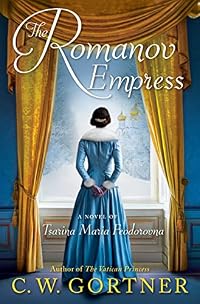
The Romanov Empress
by C. W. Gortner 
On This Page
Description
For readers of Philippa Gregory and Alison Weir comes a dramatic novel of the beloved Empress Maria, the Danish girl who became the mother of the last Russian tsar.Even from behind the throne, a woman can rule.
Narrated by the mother of Russia's last tsar, this vivid, historically authentic novel brings to life the courageous story of Maria Feodorovna, one of Imperial Russia's most compelling women, who witnessed the splendor and tragic downfall of the Romanovs as she fought to save her show more dynasty in its final years.
Barely nineteen, Minnie knows that her station in life as a Danish princess is to leave her family and enter into a royal marriage—as her older sister Alix has done, moving to England to wed Queen Victoria's eldest son. The winds of fortune bring Minnie to Russia, where she marries the Romanov heir, Alexander, and once he ascends the throne, becomes empress. When resistance to his reign strikes at the heart of her family and the tsar sets out to crush all who oppose him, Minnie—now called Maria—must tread a perilous path of compromise in a country she has come to love.
Her husband's death leaves their son Nicholas as the inexperienced ruler of a deeply divided and crumbling empire. Determined to guide him to reforms that will bring Russia into the modern age, Maria faces implacable opposition from Nicholas's strong-willed wife, Alexandra, whose fervor has led her into a disturbing relationship with a mystic named Rasputin. As the unstoppable wave of revolution rises anew to engulf Russia, Maria will face her most dangerous challenge and her greatest heartache.
From the opulent palaces of St. Petersburg and the intrigue-laced salons of the aristocracy to the World War I battlefields and the bloodied countryside occupied by the Bolsheviks, C. W. Gortner sweeps us into the anarchic fall of an empire and the complex, bold heart of the woman who tried to save it.
Advance praise for The Romanov Empress
"Through the voice of Maria, [C. W.] Gortner succeeds in adding a new perspective to the well-known story of Nicholas, Alexandra, and Rasputin. As a sister, wife, mother, and empress, she is a fierce and dynamic narrator."—Library Journal
"Gortner, an experienced hand at recreating the unique aura of a particular time and place, will deftly sweep historical-fictions fans into this glamorous, turbulent, and ultimately tragic chapter in history."—Booklist (starred review). show less
Tags
Recommendations
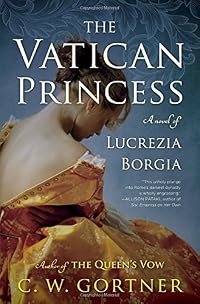


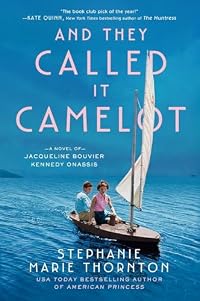
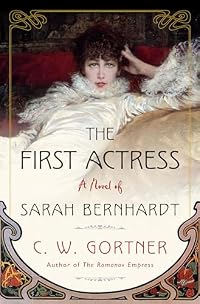

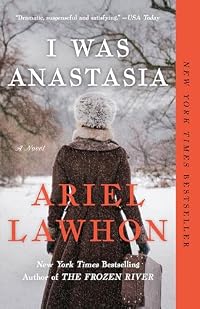


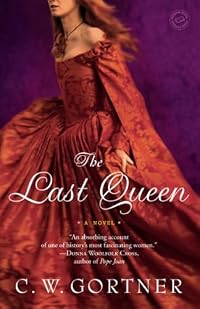
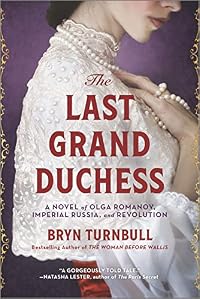
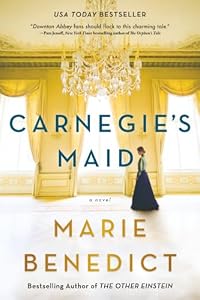



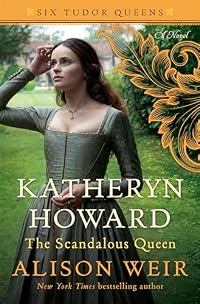

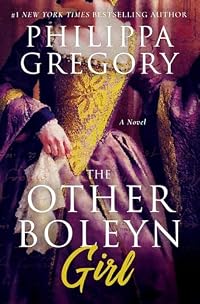
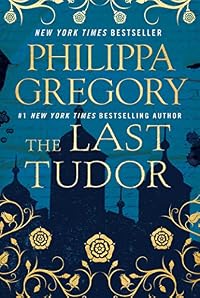
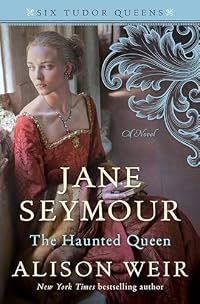
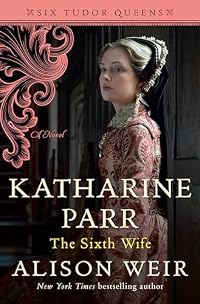
Member Reviews
The Romanov Empress is one of the best examples of historical fiction I have read in a long time. It has everything – exquisite details, a compelling time period, a charismatic historical figure, and extensive research seamlessly compiled into an amazing story of excess, privilege, and politics. Mr. Gortner works his magic once again to bring readers back to Imperial Russia and allows you to view its downfall from a different perspective, lamenting what was and what could have been. It is a fascinating story, one that captures your mind and your heart to the detriment of everything else while reading.
Many an author has tackled the fall of the Romanov dynasty in some fashion, usually from the last tsar’s and his family’s show more perspective as they focus on the tragedy of their deaths. Mr. Gortner instead opts to focus on the final dynastical matriarch, Maria Feodorovna. In doing so, we get a better idea of life before, during, and after the Russian Revolution. Moreover, we get a different look at Nicholas II, his beloved wife, and their children, one that diminishes the myth surrounding this doomed family. It all makes for a wealth of information that helps explain the complicated history of the Russian peasant versus the Russian monarchy to show how many years in the making the Revolution was.
Moreover, while the story revolves around Maria and her family, Mr. Gortner is even-handed in showing the mistakes both sides made along the path to revolution. He does not hide her husband’s policies and use of brute force designed to root out opposition against the royal family. Nor does he hide just how ineffectual Nicholas II is. What is most surprising is how he holds nothing back in regards to Alexandra and how her domineering attitude and abject refusal to see reason about her husband, family, and Rasputin exacerbated a political situation that was already tenuous and had a direct connection to the fate her family suffered. The whole thing reads like a juicy soap opera, but it is a soap opera backed up by a plethora of research. In my mind, this only makes the story that much more compelling.
Alongside the complex politics is this story of Maria herself, a young woman of royalty raised in a household that did not have a lot of money, comparatively speaking. It was only as she approached marrying age wherein her father inherited the Denmark throne, thrusting her virtually overnight into the intrigues, etiquette, and complicated relationships that hallmark a life of royalty. Unlike other coming-of-age stories, which is essentially what The Romanov Empress is, Minnie did not question her role in furthering those ties by the requirement that she marry. She may have hoped for a love match, but she did not hesitate when duty overshadowed that. Converting her faith to Russian Orthodox, learning a new language, absorbing new customs, leaving her family to live among strangers – none of it phased her. Later, we watch her tackle challenge after challenge with the same pragmatic approach, whether it is assassination attempts, challenges to her authority, or the demise of her entire world. She was a formidable woman, worthy of everyone’s respect regardless of how you feel about royalty in this day and age.
Then there is the appeal of the Russian royal society and lifestyle. The jewels, the art, the fabrics, the food, the ceremony – Mr. Gortner brings it all back to life in a way that makes you lament its loss. The details are vivid, so much so that he makes whatever he is describing seem almost too amazing. You find yourself looking up the palaces and other residences, the famous jewelry, and as many images as you can find of the people and their dresses just to make sure that none of it is a fantastic dream. The wealth of this family is mind-boggling, as is the fact that the remaining Romanov family fled and lived the rest of their lives essentially in poverty. While some readers may feel they got their just desserts, maintaining that much wealth while their nation essentially starved, I cannot help but feel saddened by what the world lost when Lenin took power.
The Romanov Empress is the type of novel that is virtually impossible to ignore. You have difficulties finding a good stopping place while reading, and you constantly think of it when you are not reading it. You lament the fact that you were either not alive or not aware of the remaining Romanovs while they were still alive. While you might not approve of any type of monarchical rule, you cannot help but feel that it would be awesome to be able to see the Romanov splendor in its heydey. Minnie’s story haunts you as you constantly ponder all of the “what ifs” that make up her history and wonder how different the world would be had any part of her story been different. Tsars who have been dead for over a century seem more real to you than the current farcical U.S. leaders. Mr. Gortner has given new life to a long-dead female force of nature, and the world is a little better as a result. show less
Many an author has tackled the fall of the Romanov dynasty in some fashion, usually from the last tsar’s and his family’s show more perspective as they focus on the tragedy of their deaths. Mr. Gortner instead opts to focus on the final dynastical matriarch, Maria Feodorovna. In doing so, we get a better idea of life before, during, and after the Russian Revolution. Moreover, we get a different look at Nicholas II, his beloved wife, and their children, one that diminishes the myth surrounding this doomed family. It all makes for a wealth of information that helps explain the complicated history of the Russian peasant versus the Russian monarchy to show how many years in the making the Revolution was.
Moreover, while the story revolves around Maria and her family, Mr. Gortner is even-handed in showing the mistakes both sides made along the path to revolution. He does not hide her husband’s policies and use of brute force designed to root out opposition against the royal family. Nor does he hide just how ineffectual Nicholas II is. What is most surprising is how he holds nothing back in regards to Alexandra and how her domineering attitude and abject refusal to see reason about her husband, family, and Rasputin exacerbated a political situation that was already tenuous and had a direct connection to the fate her family suffered. The whole thing reads like a juicy soap opera, but it is a soap opera backed up by a plethora of research. In my mind, this only makes the story that much more compelling.
Alongside the complex politics is this story of Maria herself, a young woman of royalty raised in a household that did not have a lot of money, comparatively speaking. It was only as she approached marrying age wherein her father inherited the Denmark throne, thrusting her virtually overnight into the intrigues, etiquette, and complicated relationships that hallmark a life of royalty. Unlike other coming-of-age stories, which is essentially what The Romanov Empress is, Minnie did not question her role in furthering those ties by the requirement that she marry. She may have hoped for a love match, but she did not hesitate when duty overshadowed that. Converting her faith to Russian Orthodox, learning a new language, absorbing new customs, leaving her family to live among strangers – none of it phased her. Later, we watch her tackle challenge after challenge with the same pragmatic approach, whether it is assassination attempts, challenges to her authority, or the demise of her entire world. She was a formidable woman, worthy of everyone’s respect regardless of how you feel about royalty in this day and age.
Then there is the appeal of the Russian royal society and lifestyle. The jewels, the art, the fabrics, the food, the ceremony – Mr. Gortner brings it all back to life in a way that makes you lament its loss. The details are vivid, so much so that he makes whatever he is describing seem almost too amazing. You find yourself looking up the palaces and other residences, the famous jewelry, and as many images as you can find of the people and their dresses just to make sure that none of it is a fantastic dream. The wealth of this family is mind-boggling, as is the fact that the remaining Romanov family fled and lived the rest of their lives essentially in poverty. While some readers may feel they got their just desserts, maintaining that much wealth while their nation essentially starved, I cannot help but feel saddened by what the world lost when Lenin took power.
The Romanov Empress is the type of novel that is virtually impossible to ignore. You have difficulties finding a good stopping place while reading, and you constantly think of it when you are not reading it. You lament the fact that you were either not alive or not aware of the remaining Romanovs while they were still alive. While you might not approve of any type of monarchical rule, you cannot help but feel that it would be awesome to be able to see the Romanov splendor in its heydey. Minnie’s story haunts you as you constantly ponder all of the “what ifs” that make up her history and wonder how different the world would be had any part of her story been different. Tsars who have been dead for over a century seem more real to you than the current farcical U.S. leaders. Mr. Gortner has given new life to a long-dead female force of nature, and the world is a little better as a result. show less
As someone who reads a lot of historical fiction and has a particular interest in Russian history, I absolutely inhaled every page of this book! It covers all the drama leading up to the Russian Revolution from an intimate family perspective. Only this family happens to be the Tsar’s.empress
Maria “Minnie” Feodorovna, mother of the last Tsar, Nicolas II, provides the focal point of the novel. This is her multi-generational story, spanning the years from 1864 to 1920. It begins with Dagmar (her birth name) as a teenager. A Danish princess (and sister to Alexandra who becomes the wife of England’s Edward VII), Minnie becomes engaged to the Russian heir Nicholas, who dies shortly before they are to be married. Instead, Minnie show more marries her dead fiance’s younger brother, who eventually becomes Tsar Alexander III and they go on to have six children.
Despite all their wealth, power, and opulent lifestyle, what works so well about this book is that this remains a family dealing with same internal difficulties common to most families; disputes over how to raise the kids, parents trying to control unacceptable behavior in their children, and worry about finding each child a suitable mate. But with that as a foundation, C. W. Gortner then layers in the struggle between autocratic rulers trying desperately to hold onto ancient power in a backward country that increasingly values more representative government. Whether to answer this struggle by tightening control or granting more freedom is at the heart of Romanov family history.
Minnie makes an interesting heroine. She wholeheartedly embraces Russia as her adopted country and grows to deeply love her husband. After she becomes a widow, she remains committed to the Romanov dynasty, but recognizes the need to address the deep suffering of the peasants in her country. Above all, she understands what it takes to honor the responsibility for governing and realizes early on that her son and daughter-in-law as woefully inept. Because instead of prioritizing their royal responsibilities and the escalating political climate of their country, both Nicolas II and his wife Alexandra remain totally fixated on each other and the health of their only son Alexei, who has inherited the deadly disease of hemophilia.
Minnie then becomes the reader’s stand-in witness as Russia confronts repeated violent assassinations, the debacle of Rasputin, World War I, and finally, the Russian Revolution. With so much true historical drama to incorporate, it’s a compelling read. And if, like me, you know the tragic end of the story, it is sometimes unsettling. I became fond of Minnie and so many of the other historical figures, I kept wanting to warn them all what was coming. But I guess that’s exactly why this is such good historical fiction. Enjoy! show less
Maria “Minnie” Feodorovna, mother of the last Tsar, Nicolas II, provides the focal point of the novel. This is her multi-generational story, spanning the years from 1864 to 1920. It begins with Dagmar (her birth name) as a teenager. A Danish princess (and sister to Alexandra who becomes the wife of England’s Edward VII), Minnie becomes engaged to the Russian heir Nicholas, who dies shortly before they are to be married. Instead, Minnie show more marries her dead fiance’s younger brother, who eventually becomes Tsar Alexander III and they go on to have six children.
Despite all their wealth, power, and opulent lifestyle, what works so well about this book is that this remains a family dealing with same internal difficulties common to most families; disputes over how to raise the kids, parents trying to control unacceptable behavior in their children, and worry about finding each child a suitable mate. But with that as a foundation, C. W. Gortner then layers in the struggle between autocratic rulers trying desperately to hold onto ancient power in a backward country that increasingly values more representative government. Whether to answer this struggle by tightening control or granting more freedom is at the heart of Romanov family history.
Minnie makes an interesting heroine. She wholeheartedly embraces Russia as her adopted country and grows to deeply love her husband. After she becomes a widow, she remains committed to the Romanov dynasty, but recognizes the need to address the deep suffering of the peasants in her country. Above all, she understands what it takes to honor the responsibility for governing and realizes early on that her son and daughter-in-law as woefully inept. Because instead of prioritizing their royal responsibilities and the escalating political climate of their country, both Nicolas II and his wife Alexandra remain totally fixated on each other and the health of their only son Alexei, who has inherited the deadly disease of hemophilia.
Minnie then becomes the reader’s stand-in witness as Russia confronts repeated violent assassinations, the debacle of Rasputin, World War I, and finally, the Russian Revolution. With so much true historical drama to incorporate, it’s a compelling read. And if, like me, you know the tragic end of the story, it is sometimes unsettling. I became fond of Minnie and so many of the other historical figures, I kept wanting to warn them all what was coming. But I guess that’s exactly why this is such good historical fiction. Enjoy! show less
As someone who reads a lot of historical fiction and has a particular interest in Russian history, I absolutely inhaled every page of this book! It covers all the drama leading up to the Russian Revolution from an intimate family perspective. Only this family happens to be the Tsar’s.empress
Maria “Minnie” Feodorovna, mother of the last Tsar, Nicolas II, provides the focal point of the novel. This is her multi-generational story, spanning the years from 1864 to 1920. It begins with Dagmar (her birth name) as a teenager. A Danish princess (and sister to Alexandra who becomes the wife of England’s Edward VII), Minnie becomes engaged to the Russian heir Nicholas, who dies shortly before they are to be married. Instead, Minnie show more marries her dead fiance’s younger brother, who eventually becomes Tsar Alexander III and they go on to have six children.
Despite all their wealth, power, and opulent lifestyle, what works so well about this book is that this remains a family dealing with same internal difficulties common to most families; disputes over how to raise the kids, parents trying to control unacceptable behavior in their children, and worry about finding each child a suitable mate. But with that as a foundation, C. W. Gortner then layers in the struggle between autocratic rulers trying desperately to hold onto ancient power in a backward country that increasingly values more representative government. Whether to answer this struggle by tightening control or granting more freedom is at the heart of Romanov family history.
Minnie makes an interesting heroine. She wholeheartedly embraces Russia as her adopted country and grows to deeply love her husband. After she becomes a widow, she remains committed to the Romanov dynasty, but recognizes the need to address the deep suffering of the peasants in her country. Above all, she understands what it takes to honor the responsibility for governing and realizes early on that her son and daughter-in-law as woefully inept. Because instead of prioritizing their royal responsibilities and the escalating political climate of their country, both Nicolas II and his wife Alexandra remain totally fixated on each other and the health of their only son Alexei, who has inherited the deadly disease of hemophilia.
Minnie then becomes the reader’s stand-in witness as Russia confronts repeated violent assassinations, the debacle of Rasputin, World War I, and finally, the Russian Revolution. With so much true historical drama to incorporate, it’s a compelling read. And if, like me, you know the tragic end of the story, it is sometimes unsettling. I became fond of Minnie and so many of the other historical figures, I kept wanting to warn them all what was coming. But I guess that’s exactly why this is such good historical fiction. Enjoy! show less
Maria “Minnie” Feodorovna, mother of the last Tsar, Nicolas II, provides the focal point of the novel. This is her multi-generational story, spanning the years from 1864 to 1920. It begins with Dagmar (her birth name) as a teenager. A Danish princess (and sister to Alexandra who becomes the wife of England’s Edward VII), Minnie becomes engaged to the Russian heir Nicholas, who dies shortly before they are to be married. Instead, Minnie show more marries her dead fiance’s younger brother, who eventually becomes Tsar Alexander III and they go on to have six children.
Despite all their wealth, power, and opulent lifestyle, what works so well about this book is that this remains a family dealing with same internal difficulties common to most families; disputes over how to raise the kids, parents trying to control unacceptable behavior in their children, and worry about finding each child a suitable mate. But with that as a foundation, C. W. Gortner then layers in the struggle between autocratic rulers trying desperately to hold onto ancient power in a backward country that increasingly values more representative government. Whether to answer this struggle by tightening control or granting more freedom is at the heart of Romanov family history.
Minnie makes an interesting heroine. She wholeheartedly embraces Russia as her adopted country and grows to deeply love her husband. After she becomes a widow, she remains committed to the Romanov dynasty, but recognizes the need to address the deep suffering of the peasants in her country. Above all, she understands what it takes to honor the responsibility for governing and realizes early on that her son and daughter-in-law as woefully inept. Because instead of prioritizing their royal responsibilities and the escalating political climate of their country, both Nicolas II and his wife Alexandra remain totally fixated on each other and the health of their only son Alexei, who has inherited the deadly disease of hemophilia.
Minnie then becomes the reader’s stand-in witness as Russia confronts repeated violent assassinations, the debacle of Rasputin, World War I, and finally, the Russian Revolution. With so much true historical drama to incorporate, it’s a compelling read. And if, like me, you know the tragic end of the story, it is sometimes unsettling. I became fond of Minnie and so many of the other historical figures, I kept wanting to warn them all what was coming. But I guess that’s exactly why this is such good historical fiction. Enjoy! show less
Fascinating fictional biography of Maria Feodorovna, tsarina of Russia. We see her grow from an awkward teenager, born Princess Dagmar of Denmark, to Dowager Empress of Russia, during the reign of her son, Nicholas II. We follow her story through the reigns of three emperors: her father-in-law, Alexander II, her husband, Alexander III, then her son, Nicholas, whose reign and subsequent abdication mark the end of the Romanov dynasty. Strangely enough, the fall of the Romanovs was prophesied by Rasputin, should this strange man be killed. This was interesting to read of this period of Russian history from this matriarch's viewpoint. I was stunned by the author's treatment of Nicholas's meddlesome wife, Alexandra. Usually she is treated show more very sympathetically in everything I've read so far but here perhaps the author gave us a completely different point of view, which maybe reflected more honestly peoples' real feelings. I appreciated the family trees of the Danish and Russian dynasties; they brought clarity to so many characters with such similar names and who was related to whom. I also liked the Afterword where the fates of the various Romanovs were laid out. According to the author, there are maybe 100 Romanov descendants alive today. show less
 This review was written for LibraryThing Early Reviewers.
CW Gortner has penned something unforgettable, one of those books I thought about all day and rushed to open after the day was done. It is a story of motherhood and family that follows Russia's next-to-last tsarina from her childhood as a Danish princess to the fall of the Russian empire. I felt her intense love for her children and her sense of duty and dignity as she becomes a Romanov and struggles against all odds to save the family during its headlong plunge into destruction. What I loved best about the book were Gortner's subtlety and deftness. The history does not overwhelm the story, the historical detail is well-placed and adds to the reader's understanding of the characters, and the once-unfamiliar names of places and show more characters quickly become comfortable. I misted up on a plane at the end; that never happens. Read this one. show less
For me, it is sometimes an anxiety-inducing experience to read a work of historical fiction knowing full well the catastrophe in which it will end. This fictionalized biography of Tsar Nicholas II's mother Maria Feodorovna, a Danish princess, is no exception. Though I knew well the culmination of her son's story, I had no inkling of just how many additional tragedies would unfold during the course of her life among the Romanovs, and I caught myself hoping in vain that history would somehow play out differently between the pages of the book than it had in reality (I do that a lot).
It was actually quite astounding to me how much of a dumpster fire surrounded the last few generations of the Romanov family, and I find it remarkable that the show more tsars could remain so oblivious and for so long in knowing which way the wind was blowing. That said, this was a great book, and before having picked it up I would have said I had close to zero interest in Russian history. Now, I eagerly look forward to reading a nonfiction counterpart to learn more. I also expect to seek out additional books by Gortner.
I received this ARC via LibraryThing's Early Reviewers program. show less
It was actually quite astounding to me how much of a dumpster fire surrounded the last few generations of the Romanov family, and I find it remarkable that the show more tsars could remain so oblivious and for so long in knowing which way the wind was blowing. That said, this was a great book, and before having picked it up I would have said I had close to zero interest in Russian history. Now, I eagerly look forward to reading a nonfiction counterpart to learn more. I also expect to seek out additional books by Gortner.
I received this ARC via LibraryThing's Early Reviewers program. show less
This review was written for LibraryThing Early Reviewers.The Romanov Empress by C.W. Gortner
Source: Netgalley
My Rating: 5/5 stars
**THIS REVIEW ASSUMES ALL HISTORICAL INFORMATION IS CORRECT**
The Romanov dynasty is perhaps one of the most famous in all of world history. Their glorious downfall, the death of the tsar and his family, and the forever-changed face of Russia have all been rehashed again and again in everything from scholarly works to popular culture. Their life, and particularly their deaths, have all but been immortalized, yet these accounts, especially those is popular culture often fail to lay the groundwork or simply gloss over the groundwork to get to the “sexy” bits. Gortner doesn’t skip the groundwork at all but rolls around in it and really builds the entire narrative show more around one woman, Maria Feodorovana, mother to Russia’s last tsar, the ill-fated and completely inept, Nicholas II.
Maria was the very definition of duty-bound! From the moment she was born, Maria was always intended to marry well and increase the reputation and hopefully fortunes of her family. As a princess of Denmark, Maria (her adopted Russian name!) understood her place in the world, and with some allowances by her parents, was able to choose her future husband. As it turns out, she also chose a country on the edge of collapse.
Despite little in the way of a formal education, Maria has a strong sense of common sense and for reading a situation. She understands, inherently, if she is to be accepted as a foreigner, she must understand her new country, its people, and make herself known as a force among the nobility and aristocracy. Maria does every bit of that and more, and over the course of her life, she works ceaselessly to advise and guide both her husband and her son. Through uprisings, revolutions, and assassination attempts, Maria is at the forefront of the action, often risking her own life to preserve what she holds dear. Unfortunately, for most of her life, Maria is fighting a losing battle and she is only ever able to scratch the surface of caring for a desperately lost country.
The Bottom Line: This was my first C.W. Gortner book and it will certainly not be my last! The Romanov Empress is everything I look for in historical fiction and then some. This is a sweeping tale, a saga really, that spans more than half a century and includes nearly every royal house/family in Europe. At the center of it all is an indomitable woman determined to see her family and her monarchy survive. There is a sense of impending doom from page one of this read and it kept me on the edge of my seat the entire time. Quite frankly, before this book, I too only really knew the History Channel version of the Romanov family, and I am so glad I now know far more than that glossy version. This was an absolutely enthralling tale and I heartily recommend this one to any reader fond of truly excellent historical fiction. show less
Source: Netgalley
My Rating: 5/5 stars
**THIS REVIEW ASSUMES ALL HISTORICAL INFORMATION IS CORRECT**
The Romanov dynasty is perhaps one of the most famous in all of world history. Their glorious downfall, the death of the tsar and his family, and the forever-changed face of Russia have all been rehashed again and again in everything from scholarly works to popular culture. Their life, and particularly their deaths, have all but been immortalized, yet these accounts, especially those is popular culture often fail to lay the groundwork or simply gloss over the groundwork to get to the “sexy” bits. Gortner doesn’t skip the groundwork at all but rolls around in it and really builds the entire narrative show more around one woman, Maria Feodorovana, mother to Russia’s last tsar, the ill-fated and completely inept, Nicholas II.
Maria was the very definition of duty-bound! From the moment she was born, Maria was always intended to marry well and increase the reputation and hopefully fortunes of her family. As a princess of Denmark, Maria (her adopted Russian name!) understood her place in the world, and with some allowances by her parents, was able to choose her future husband. As it turns out, she also chose a country on the edge of collapse.
Despite little in the way of a formal education, Maria has a strong sense of common sense and for reading a situation. She understands, inherently, if she is to be accepted as a foreigner, she must understand her new country, its people, and make herself known as a force among the nobility and aristocracy. Maria does every bit of that and more, and over the course of her life, she works ceaselessly to advise and guide both her husband and her son. Through uprisings, revolutions, and assassination attempts, Maria is at the forefront of the action, often risking her own life to preserve what she holds dear. Unfortunately, for most of her life, Maria is fighting a losing battle and she is only ever able to scratch the surface of caring for a desperately lost country.
The Bottom Line: This was my first C.W. Gortner book and it will certainly not be my last! The Romanov Empress is everything I look for in historical fiction and then some. This is a sweeping tale, a saga really, that spans more than half a century and includes nearly every royal house/family in Europe. At the center of it all is an indomitable woman determined to see her family and her monarchy survive. There is a sense of impending doom from page one of this read and it kept me on the edge of my seat the entire time. Quite frankly, before this book, I too only really knew the History Channel version of the Romanov family, and I am so glad I now know far more than that glossy version. This was an absolutely enthralling tale and I heartily recommend this one to any reader fond of truly excellent historical fiction. show less
Members
- Recently Added By
Lists

History: Eastern Europe
97 works; 2 members
Author Information

23 Works 4,106 Members
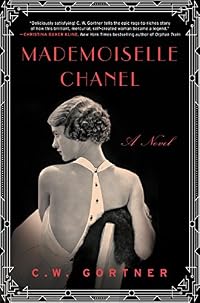
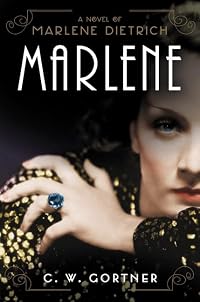
C. W. Gortner was born and raised in Spain. He moved to the United States when he was a teen-ager. He earned a Bachelor of Arts in Marketing from the Fashion Institute of Design and Merchandising in San Francisco and a Masters of Fine Arts in Writing from the New College of California. He soon found his passion for writing and became an author of show more historical fiction. His titles include: The Last Queen, The Confessions of Catherine De Medici, The Queen's Vow: A Novel of Isabella of Castile, Mademoiselle Chanel, and Marlene. He was named one of the top ten historical novelists by The Washington Independent Review of Books. (Bowker Author Biography) show less
C. W. Gortner is a LibraryThing Author, an author who lists their personal library on LibraryThing.
Awards and Honors
Distinctions
Common Knowledge
- Canonical title
- The Romanov Empress
- Original publication date
- 2018-07-10
- People/Characters
- Marie Feodorovna, Empress of Russia
- Canonical DDC/MDS
- 813.6
- Canonical LCC
- PS3607.O78
Classifications
Statistics
- Members
- 368
- Popularity
- 84,955
- Reviews
- 53
- Rating
- (4.26)
- Languages
- English, German, Hungarian, Spanish
- Media
- Paper, Audiobook, Ebook
- ISBNs
- 13
- ASINs
- 4