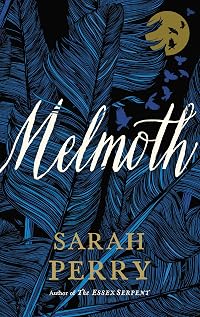
Melmoth
by Sarah Perry
On This Page
Description
"It has been years since Helen Franklin left England. In Prague, working as a translator, she has found a home of sorts--or, at least, refuge. That changes when her friend Karel discovers a mysterious letter in the library, a strange confession and a curious warning that speaks of Melmoth the Witness, a dark legend found in obscure fairy tales and antique village lore. As such superstition has it, Melmoth travels through the ages, dooming those she persuades to join her to a damnation of show more timeless, itinerant solitude. To Helen it all seems the stuff of unenlightened fantasy. But, unaware, as she wanders the cobblestone streets Helen is being watched. And then Karel disappears. . . "-- show lessTags
Recommendations








Member Recommendations
Member Reviews
“When I was a child they told me you wander the earth watching all that’s most base and most wicked in mankind – that wherever sin is greatest you are there, and you are the witness. They said you come to those in the blackest despair, and hold out your hand and offer friendship, because your loneliness is so terrible.” – Sarah Perry, Melmoth
Set in present-day Prague, Helen, an English woman, has been working as a translator of instruction manuals for twenty years. She leads an austere life. A friend and scholar, Karel, tells her of the legend of Melmoth, which he has been researching, and gives her reading material. This material relates to historical atrocities, where Melmoth is believed to have been watching. These bits of show more historical material are used as “nested stories” within Helen’s narrative. Helen begins to catch glimpses of a shadowy figure following her. She believes it is Melmoth, for Helen is harboring a dark secret of her own.
Themes include conscience, guilt, loneliness, and remorse. Perry establishes Melmoth as a witness of the behaviors that people try to hide: “When she turns her eyes on you it’s as if she’s been watching all your life – as if she’s seen not only every action, but every thought, every shameful secret, every private cruelty.” The story provides a sense of reality melded with folklore, the possibility of something unexplainable lurking, following, waiting for an opportunity to strike. The one being followed experiences a build-up of fear and anxiety, questioning if some nefarious presence really is “out there.” It’s just a superstition, right?
It took me a while to figure out what was going on with this book, and I never got completely immersed in it to the point of feeling scared, but it definitely generated a feeling of discomfort. It reads like a 19th century Gothic novel and Perry excels at creating a dark, cold, haunting atmosphere. While quite unsettling in places, it also contains a possibility of redemption, and the ending is extraordinarily well-constructed. Recommended to readers looking for a disquieting read with a thought-provoking message. show less
Set in present-day Prague, Helen, an English woman, has been working as a translator of instruction manuals for twenty years. She leads an austere life. A friend and scholar, Karel, tells her of the legend of Melmoth, which he has been researching, and gives her reading material. This material relates to historical atrocities, where Melmoth is believed to have been watching. These bits of show more historical material are used as “nested stories” within Helen’s narrative. Helen begins to catch glimpses of a shadowy figure following her. She believes it is Melmoth, for Helen is harboring a dark secret of her own.
Themes include conscience, guilt, loneliness, and remorse. Perry establishes Melmoth as a witness of the behaviors that people try to hide: “When she turns her eyes on you it’s as if she’s been watching all your life – as if she’s seen not only every action, but every thought, every shameful secret, every private cruelty.” The story provides a sense of reality melded with folklore, the possibility of something unexplainable lurking, following, waiting for an opportunity to strike. The one being followed experiences a build-up of fear and anxiety, questioning if some nefarious presence really is “out there.” It’s just a superstition, right?
It took me a while to figure out what was going on with this book, and I never got completely immersed in it to the point of feeling scared, but it definitely generated a feeling of discomfort. It reads like a 19th century Gothic novel and Perry excels at creating a dark, cold, haunting atmosphere. While quite unsettling in places, it also contains a possibility of redemption, and the ending is extraordinarily well-constructed. Recommended to readers looking for a disquieting read with a thought-provoking message. show less
Sarah Perry writes with the gravity of myth and the chill of conscience. Melmoth isn’t so much a ghost story as a meditation on witness, guilt, and the way loneliness becomes its own haunting.
The novel’s atmosphere is dense, cold, and cloistered: Prague itself feels like a monastery built out of stone and silence. Helen, the central figure, lives like a penitent nun — stripped of desire, avoiding the world, punishing herself for surviving it. Her counterpart, the bureaucrat Hoffman, is her mirror: both hide behind control to avoid emotion. Into this hush walks Melmoth, the eternal witness, drawn to those who cannot face what they have seen.
What makes the book powerful is its moral ambiguity. We assume the wandering Melmoth was show more cursed for her sin, yet Perry leaves open the possibility that she was the only one who saw clearly — a prophet punished for refusing to lie. She becomes the companion of the forsaken, offering her hand to the lonely and the guilty alike. The horror lies not in her presence, but in the comfort she offers.
At times the prose can feel heavy, the structure labyrinthine, but that weight suits the theme. Perry’s writing demands patience; she wants you to feel the centuries pressing down. When the blackness finally enters the room, it feels earned.
Melmoth lingers because it blurs the line between haunting and mercy. It asks whether seeing the truth is itself a kind of damnation — and whether solitude might be the price of moral clarity. show less
The novel’s atmosphere is dense, cold, and cloistered: Prague itself feels like a monastery built out of stone and silence. Helen, the central figure, lives like a penitent nun — stripped of desire, avoiding the world, punishing herself for surviving it. Her counterpart, the bureaucrat Hoffman, is her mirror: both hide behind control to avoid emotion. Into this hush walks Melmoth, the eternal witness, drawn to those who cannot face what they have seen.
What makes the book powerful is its moral ambiguity. We assume the wandering Melmoth was show more cursed for her sin, yet Perry leaves open the possibility that she was the only one who saw clearly — a prophet punished for refusing to lie. She becomes the companion of the forsaken, offering her hand to the lonely and the guilty alike. The horror lies not in her presence, but in the comfort she offers.
At times the prose can feel heavy, the structure labyrinthine, but that weight suits the theme. Perry’s writing demands patience; she wants you to feel the centuries pressing down. When the blackness finally enters the room, it feels earned.
Melmoth lingers because it blurs the line between haunting and mercy. It asks whether seeing the truth is itself a kind of damnation — and whether solitude might be the price of moral clarity. show less
Melmoth has wandered the earth for centuries witnessing the worst of humanity. In this book, Perry goes back and forth between modern day Helen Franklin’s experience with Melmoth the Witness and the manuscripts left by others who encountered her.
This book is stunning. The story is suspenseful and beautifully well written, but also incredibly timely. With cowardly characters that are complicit in some of the worst human rights violations in modern history, Perry asks readers to consider what role we all have to bear witness and respond to the injustice around us.
This book is stunning. The story is suspenseful and beautifully well written, but also incredibly timely. With cowardly characters that are complicit in some of the worst human rights violations in modern history, Perry asks readers to consider what role we all have to bear witness and respond to the injustice around us.
 This review was written for LibraryThing Early Reviewers.
‘’Look! It is winter in Prague: night is rising in the mother of cities and over her thousand spires. Look down at the darkness around your feet, in all the lanes and alleys, as if it were a soft black dust; look at the stone apostles on the old Charles Bridge, and at all the blue-eyed jackdaws on the shoulders of St John of Nepomuk! Look! She is coming over the bridge, head bent down to the whitening cobblestones.’’
A manuscript that finds its way into Helen’s hands. Helen. A woman that is in a self-inflicted limbo, punishing herself, trying to appear unnoticed through the shadows of a city where mysticism has woven an eternal veil. A woman of mystery, a tale of a dark presence lurking a little behind of all of us, waiting for show more the moment of the great fall, of despair and cruelty and sorrow. This is Melmoth by Sarah Perry. The finest book I’ve read this year. The closest to my heart, following Wuthering Heights.
When I turned the last page, I found I had tears in my eyes. I couldn’t speak. The reasons are many, I won’t add them here but the moving beauty of Perry’s writing cannot leave you indifferent. This is a hymn, an homage to the unique, magnificent city of Prague, a capital very dear to me. A city of culture and spirit. A city where light and darkness battle with each other, its corners the habitat of legends and ghosts. Try walking in its cobblestones streets during the night. Even the most skeptical of you will start looking around and behind in apprehension, hearing footsteps perfectly synchronized with yours. The Vltava, the Old Town Square, the astronomical clock and Charles Bridge. The Black Lights shows, one of the most well-known cultural attractions of Prague. A city that is probably the most haunting in Europe, along with Edinburgh. Having visited Prague twice, I can say that Perry’s nightly descriptions are so vivid and frightening. The city becomes a major character in this outstanding story and I can think of no better setting for Melmoth’s field of action.
‘’It is for the Wanderer’’, he said. ‘For the Witness- for she who is cursed to walk from Jerusalem to Constantinople, from Ireland to Kazakhstan; she who is eternally lonely, who is excommunicated from the grace of God and the company of men; she who watches, whose eyes are upon you in your guilt and transgression.’’
But who is She? What is this presence that causes such terror? Melmoth the Witness. A fascinating legend of a woman who sees the empty tomb following Christ’s Resurrection. Unlike the other women, she lied about what she had witnessed and was condemned to roam the earth with her bleeding, bare feet, witnessing the despair and cruelty of the human race, forever lonely, feared and despised. This is the figure that haunts Helen’s steps…
‘’She finds herself unwilling to raise her head to the window, as if she might see beyond the glass a face with an expression of loneliness so imploring as to be cruel. (And since she will not look, you must.) ‘’
In chilling, eerie sentences, Perry creates a kind of atmosphere unlike anything I’ve ever read, dearest friends. She transforms windows to threatening objects due to the darkness that is lurking behind them. I never liked windows when the curtains were drawn aside. My mother has told me that even as a baby I would nail my gaze to the window, unblinking. When I grew up, I always asked for someone to close the curtains. I still do that, even in gloomy, wintry mornings. So this fact alone in the novel brought me in a state of serious terror. I genuinely avoided reading it unless I had company in the house. Even at noon, I found myself nervously looking around me or at the window. I had goosebumps. The combination of windows and black cladded figures had me shivering. I know, I’m weird….
‘’Brother, didn’t you expect to find me here? Don’t you know me? Don’t you know my name? I, who was your mother’s pain as she gave birth? Didn’t you see my shadow on the page as you went about your work? Didn’t you feel me at your shoulder as you sharpened your pens into knives?’’
‘’Do you think you can atone for all you’ve done? Do you think there’s enough blood in you to settle the debt?’’
Melmoth is there to witness the cruelty, the ultimate violation created by the human race, all the wars and genocides over the centuries. My favourite story-within-a-story was Josef Hoffman’s. Josef and his family are German living in Prague, devoted Nazists due to their maddening notion of lineage and supremacy. The Second World War comes and goes and the time of the reckoning is at hands. Melmoth jumps to the calling. There were many devastating descriptions of the city during the era of the occupation by the Nazi monsters. The events the influenced Josef’s family are powerfully described and yet, I couldn't feel a single ounce of sadness over their fate. Often, you get what you deserve and the blood of millions of innocents cried for justice. Melmoth’s words at that point are Truth personified.
‘’Sir, have a care, lest her eye be on you,, for her loneliness is terrible, and she will not withstand it.’’
Perry breaks the Fourth Wall throughout the course of the story. Her writing style isn’t easy. This isn’t a mere thriller like the ones that are nowadays mass-produced, devoid of any substance. It requires patience, the right mentality. It requires attention and thought. It requires patience. This is what happens with Literary Fiction, it prevents us from becoming lazy readers. Why complain about a book with many characters and multiple narratives? This is what makes a book rich, challenging, meaningful. Many times, Perry’s exquisite writing reminded me of Oscar Wilde’s apocalyptic, breathlessly dark descriptions. The spaces, the rooms, the settings are outstanding. She creates anticipation, sheer terror by a simple description of the shadows of the curtains and the furniture in a hospital room… This is how perfect a writer she is. Any references to Dvořák’s Rusalka always melt my heart. Also, as in her masterpiece The Essex Serpent, there is a very balanced, very interesting focus on religion and the way it is perceived by each one of us in our daily lives.
Read these quotes and immerse yourselves in absolute beauty:
‘’ Look! It is evening now, and no snow falling: the cobbles on Charles Bridge and in the Old Town Square are glittering and treacherous and every minute someone somewhere falls. Master Jan Hus in his winter cloak looks silently over the crowd: you might think, were you so inclined, that he is recalling how once he wore a proper hat on which painted devils danced, and walked to where the fires were banked to burn him.’’
‘’A minute passes and an eerie sound rises from the east of the river, then from the west; from behind the National Theatre with its golden crown, from the ticket booths and pizza stalls, from the Black Lights theatres and the library at the Klementinum, where a student at desk 209 turns the pages of a textbook. It is a low note, melancholy, ringing up from the pavements and down from the eaves of apartment blocks.’’
I cannot say much about the characters because it would a major spoiler in itself but know this: I seldom find a novel where each character could have been the protagonist of a new book. Helen will stay with you for a long, long time. If she doesn’t, you need to be attention, I’m sorry to say.
In the end, words cannot possibly convey the bonding between this novel and me. We are made for each other, I cried upon reaching its final pages, its outstanding last four paragraphs are an example of the finest Literature I’ve ever encountered. I have loved Melmoth so much that I’ve placed it in a very special place in my heart, side-by-side to Wuthering Heights. Those of you who know me well, know what this means. Melmoth is a book unlike any other. A place where darkness, despair, hope, and endurance form a masterfully choreographed danse macabre. It came to find me in a very particular moment in my life. I cannot thank it enough…
‘’And I saw what you did when you shouldn’t have done it - I know what thoughts plague you most, when you cannot keep hold of your mind - I know what you cannot confess - not even alone, when all the doors are bolted against your family and friends! I know what a fraud you are, what an impostor - you never had me fooled.’’
Many thanks to Serpent’s Tail and Edelweiss for the ARC in exchange for an honest review.
My reviews can also be found on https://theopinionatedreaderblog.wordpress.com show less
A manuscript that finds its way into Helen’s hands. Helen. A woman that is in a self-inflicted limbo, punishing herself, trying to appear unnoticed through the shadows of a city where mysticism has woven an eternal veil. A woman of mystery, a tale of a dark presence lurking a little behind of all of us, waiting for show more the moment of the great fall, of despair and cruelty and sorrow. This is Melmoth by Sarah Perry. The finest book I’ve read this year. The closest to my heart, following Wuthering Heights.
When I turned the last page, I found I had tears in my eyes. I couldn’t speak. The reasons are many, I won’t add them here but the moving beauty of Perry’s writing cannot leave you indifferent. This is a hymn, an homage to the unique, magnificent city of Prague, a capital very dear to me. A city of culture and spirit. A city where light and darkness battle with each other, its corners the habitat of legends and ghosts. Try walking in its cobblestones streets during the night. Even the most skeptical of you will start looking around and behind in apprehension, hearing footsteps perfectly synchronized with yours. The Vltava, the Old Town Square, the astronomical clock and Charles Bridge. The Black Lights shows, one of the most well-known cultural attractions of Prague. A city that is probably the most haunting in Europe, along with Edinburgh. Having visited Prague twice, I can say that Perry’s nightly descriptions are so vivid and frightening. The city becomes a major character in this outstanding story and I can think of no better setting for Melmoth’s field of action.
‘’It is for the Wanderer’’, he said. ‘For the Witness- for she who is cursed to walk from Jerusalem to Constantinople, from Ireland to Kazakhstan; she who is eternally lonely, who is excommunicated from the grace of God and the company of men; she who watches, whose eyes are upon you in your guilt and transgression.’’
But who is She? What is this presence that causes such terror? Melmoth the Witness. A fascinating legend of a woman who sees the empty tomb following Christ’s Resurrection. Unlike the other women, she lied about what she had witnessed and was condemned to roam the earth with her bleeding, bare feet, witnessing the despair and cruelty of the human race, forever lonely, feared and despised. This is the figure that haunts Helen’s steps…
‘’She finds herself unwilling to raise her head to the window, as if she might see beyond the glass a face with an expression of loneliness so imploring as to be cruel. (And since she will not look, you must.) ‘’
In chilling, eerie sentences, Perry creates a kind of atmosphere unlike anything I’ve ever read, dearest friends. She transforms windows to threatening objects due to the darkness that is lurking behind them. I never liked windows when the curtains were drawn aside. My mother has told me that even as a baby I would nail my gaze to the window, unblinking. When I grew up, I always asked for someone to close the curtains. I still do that, even in gloomy, wintry mornings. So this fact alone in the novel brought me in a state of serious terror. I genuinely avoided reading it unless I had company in the house. Even at noon, I found myself nervously looking around me or at the window. I had goosebumps. The combination of windows and black cladded figures had me shivering. I know, I’m weird….
‘’Brother, didn’t you expect to find me here? Don’t you know me? Don’t you know my name? I, who was your mother’s pain as she gave birth? Didn’t you see my shadow on the page as you went about your work? Didn’t you feel me at your shoulder as you sharpened your pens into knives?’’
‘’Do you think you can atone for all you’ve done? Do you think there’s enough blood in you to settle the debt?’’
Melmoth is there to witness the cruelty, the ultimate violation created by the human race, all the wars and genocides over the centuries. My favourite story-within-a-story was Josef Hoffman’s. Josef and his family are German living in Prague, devoted Nazists due to their maddening notion of lineage and supremacy. The Second World War comes and goes and the time of the reckoning is at hands. Melmoth jumps to the calling. There were many devastating descriptions of the city during the era of the occupation by the Nazi monsters. The events the influenced Josef’s family are powerfully described and yet, I couldn't feel a single ounce of sadness over their fate. Often, you get what you deserve and the blood of millions of innocents cried for justice. Melmoth’s words at that point are Truth personified.
‘’Sir, have a care, lest her eye be on you,, for her loneliness is terrible, and she will not withstand it.’’
Perry breaks the Fourth Wall throughout the course of the story. Her writing style isn’t easy. This isn’t a mere thriller like the ones that are nowadays mass-produced, devoid of any substance. It requires patience, the right mentality. It requires attention and thought. It requires patience. This is what happens with Literary Fiction, it prevents us from becoming lazy readers. Why complain about a book with many characters and multiple narratives? This is what makes a book rich, challenging, meaningful. Many times, Perry’s exquisite writing reminded me of Oscar Wilde’s apocalyptic, breathlessly dark descriptions. The spaces, the rooms, the settings are outstanding. She creates anticipation, sheer terror by a simple description of the shadows of the curtains and the furniture in a hospital room… This is how perfect a writer she is. Any references to Dvořák’s Rusalka always melt my heart. Also, as in her masterpiece The Essex Serpent, there is a very balanced, very interesting focus on religion and the way it is perceived by each one of us in our daily lives.
Read these quotes and immerse yourselves in absolute beauty:
‘’ Look! It is evening now, and no snow falling: the cobbles on Charles Bridge and in the Old Town Square are glittering and treacherous and every minute someone somewhere falls. Master Jan Hus in his winter cloak looks silently over the crowd: you might think, were you so inclined, that he is recalling how once he wore a proper hat on which painted devils danced, and walked to where the fires were banked to burn him.’’
‘’A minute passes and an eerie sound rises from the east of the river, then from the west; from behind the National Theatre with its golden crown, from the ticket booths and pizza stalls, from the Black Lights theatres and the library at the Klementinum, where a student at desk 209 turns the pages of a textbook. It is a low note, melancholy, ringing up from the pavements and down from the eaves of apartment blocks.’’
I cannot say much about the characters because it would a major spoiler in itself but know this: I seldom find a novel where each character could have been the protagonist of a new book. Helen will stay with you for a long, long time. If she doesn’t, you need to be attention, I’m sorry to say.
In the end, words cannot possibly convey the bonding between this novel and me. We are made for each other, I cried upon reaching its final pages, its outstanding last four paragraphs are an example of the finest Literature I’ve ever encountered. I have loved Melmoth so much that I’ve placed it in a very special place in my heart, side-by-side to Wuthering Heights. Those of you who know me well, know what this means. Melmoth is a book unlike any other. A place where darkness, despair, hope, and endurance form a masterfully choreographed danse macabre. It came to find me in a very particular moment in my life. I cannot thank it enough…
‘’And I saw what you did when you shouldn’t have done it - I know what thoughts plague you most, when you cannot keep hold of your mind - I know what you cannot confess - not even alone, when all the doors are bolted against your family and friends! I know what a fraud you are, what an impostor - you never had me fooled.’’
Many thanks to Serpent’s Tail and Edelweiss for the ARC in exchange for an honest review.
My reviews can also be found on https://theopinionatedreaderblog.wordpress.com show less
Just finished reading this incredible story. I was lucky enough to receive an advance copy. Sarah Perry has woven an intricate tale of sin, punishment, guilt and the one thing that none of us can escape, and that is being human. I believe the story can be taken many different ways. But what it boils down to is that we are hardwired and predictable. The pace of the book is smooth and seamless, even though it moves around quite a bit. She manages to create such a story without filler. Some parts of the book make me wonder if she was visited by the still living but ever wandering dark soul that is Clive Barker. This is one book that will be on my top tier shelf for many years. I walked away from it with a heavy heart, but also knowing that show more even though pre destiny lurks around the corner we are still masters of our own fate and have no one to blame for our consequences than ourselves. I will surely be picking up her other works. Melmoth is much easier on the eyes and brain than Maturin's Melmoth the Wanderer. But don't let that fool you. She will stick her fingers around the back of your brain, pinch your soul and break your heart in a much more subtle way. And when it is all done and you are picking the pieces of broken soul from the floor, you will realize that you are the one who dropped it in the first place. Perry echoes the true Gothic literary movement with her penmanship. In two hundred years her work will still stand with the pioneers of the genre. show less
This review was written for LibraryThing Early Reviewers.Melmoth by Sarah Perry is a 2018 Serpent’s Tale publication.
I have not read ‘The Essex Serpent’ so I had no preset expectations for this book. The main draw for me was the advertised Gothic tone. The book delivers on that front, in spades! The folklore is exquisitely utilized in this crackling good tale of horror and suspense.
Melmoth is a legendary figure said to have witnessed Christ’s resurrection, but then later denied the truth of what she saw. As such, she is now doomed to wander the earth in eternal loneliness, witnessing the dark deeds of humanity. Misery loves company, so Melmoth offers her hand to those at the crux of their darkest moments of despair, imploring them to join her.
Helen Franklin, is an unassuming woman in show more her forties, working as a translator in Prague. Suddenly, her friend, Karel, hands her a manuscript describing encounters with Melmoth the Witness. The he suddenly disappears, and Helen begins to feel as though she’s being watched.
As the story progresses, it becomes clear that our humble Helen Franklin is hiding a dark secret as she finds herself drawn into the fantastical tales of lore contained in the manuscript.
Oh, my goodness! What a deep, heavy, atmospheric story!! This book is supposed to be based, at least in part, on the 1820 Irish Gothic novel ‘Melmoth the Wanderer’ written by Charles Maturin. I am only slightly familiar with the premise of that book, so obviously, it is not necessary to have read it in order to enjoy this book- although I am very interested in reading it someday.
This is the type of story I can get lost in. It is a very creepy story that continually kept my nerves on edge. The setting and scenery couldn’t have been created a better atmosphere. The spine-tingling horror is delicious, but there is also an exploration of profound topics. The story is about seeing, witnessing and about accountability and redemption, with a conclusion that will knock your socks off.
The writing is superb, capping off this finely layered deliciously chilling story!!
4 stars show less
I have not read ‘The Essex Serpent’ so I had no preset expectations for this book. The main draw for me was the advertised Gothic tone. The book delivers on that front, in spades! The folklore is exquisitely utilized in this crackling good tale of horror and suspense.
Melmoth is a legendary figure said to have witnessed Christ’s resurrection, but then later denied the truth of what she saw. As such, she is now doomed to wander the earth in eternal loneliness, witnessing the dark deeds of humanity. Misery loves company, so Melmoth offers her hand to those at the crux of their darkest moments of despair, imploring them to join her.
Helen Franklin, is an unassuming woman in show more her forties, working as a translator in Prague. Suddenly, her friend, Karel, hands her a manuscript describing encounters with Melmoth the Witness. The he suddenly disappears, and Helen begins to feel as though she’s being watched.
As the story progresses, it becomes clear that our humble Helen Franklin is hiding a dark secret as she finds herself drawn into the fantastical tales of lore contained in the manuscript.
Oh, my goodness! What a deep, heavy, atmospheric story!! This book is supposed to be based, at least in part, on the 1820 Irish Gothic novel ‘Melmoth the Wanderer’ written by Charles Maturin. I am only slightly familiar with the premise of that book, so obviously, it is not necessary to have read it in order to enjoy this book- although I am very interested in reading it someday.
This is the type of story I can get lost in. It is a very creepy story that continually kept my nerves on edge. The setting and scenery couldn’t have been created a better atmosphere. The spine-tingling horror is delicious, but there is also an exploration of profound topics. The story is about seeing, witnessing and about accountability and redemption, with a conclusion that will knock your socks off.
The writing is superb, capping off this finely layered deliciously chilling story!!
4 stars show less
Melmoth - Sarah Perry
Audio performance by Jan Cramer
5 stars
“Did your mother never take you on her knee and tell you that Melmoth was watching?”
No, never.
I’d never heard of Melmoth and neither had the contemporary characters in this book. They are unaware of her existence until they inherit the research documents of an eccentric elderly man, recently deceased at a study table in the National Library of the Czech Republic. It is the perfect setting. Karel Prazan, his disabled partner,Thea, and the emotionally wounded, Helen Franklin are 21st century characters inside a 19th century gothic novel.
The research documents begin with the tale of the recently deceased Josef Adelmar Hoffman. It is the story of his introduction to show more Melmoth, and his confession of complicity in Holocaust atrocities. His accumulated documents go on to provide evidence of other Melmoth encounters; all of them associated with atrocities through the ages. Melmoth is the condemned wanderer, the witness, the seductive accuser.
The book progresses slowly, alternating between the historical documents and their impact on the contemporary characters. The insinuating presence of Melmoth is especially heavy for Helen Franklin who lives with her own burden of guilt. She lives in a state of abnegation while hiding her past. You know that somehow her terrible secret will be exposed. Melmoth will come for her.The tension builds very nearly to the last page. The atmosphere is chilling. The prose is lush.
The story is very entertaining, but it was a bit more than that. Without preaching, it raises so many important issues of human behavior; cruelty, cowardice, complicity, mob violence, responsibility, guilt, and the possibility of redemption. That’s an impressive accomplishment for less than 300 pages. show less
Audio performance by Jan Cramer
5 stars
“Did your mother never take you on her knee and tell you that Melmoth was watching?”
No, never.
I’d never heard of Melmoth and neither had the contemporary characters in this book. They are unaware of her existence until they inherit the research documents of an eccentric elderly man, recently deceased at a study table in the National Library of the Czech Republic. It is the perfect setting. Karel Prazan, his disabled partner,Thea, and the emotionally wounded, Helen Franklin are 21st century characters inside a 19th century gothic novel.
The research documents begin with the tale of the recently deceased Josef Adelmar Hoffman. It is the story of his introduction to show more Melmoth, and his confession of complicity in Holocaust atrocities. His accumulated documents go on to provide evidence of other Melmoth encounters; all of them associated with atrocities through the ages. Melmoth is the condemned wanderer, the witness, the seductive accuser.
The book progresses slowly, alternating between the historical documents and their impact on the contemporary characters. The insinuating presence of Melmoth is especially heavy for Helen Franklin who lives with her own burden of guilt. She lives in a state of abnegation while hiding her past. You know that somehow her terrible secret will be exposed. Melmoth will come for her.The tension builds very nearly to the last page. The atmosphere is chilling. The prose is lush.
The story is very entertaining, but it was a bit more than that. Without preaching, it raises so many important issues of human behavior; cruelty, cowardice, complicity, mob violence, responsibility, guilt, and the possibility of redemption. That’s an impressive accomplishment for less than 300 pages. show less
Members
- Recently Added By
Published Reviews
ThingScore 100
Perry’s heartbreaking, horrifying monster confronts the characters not just with the uncanny but also with the human: with humanity’s complicity in history’s darkest moments, its capacity for guilt, its power of witness, and its longing for both companionship and redemption.
added by rretzler
A chilling novel about confronting our complicity in past atrocities—and retaining the strength and moral courage to strive for the future.
added by rretzler
Lists

Best Contemporary Literary Fiction (Around the Last 30 Years)
388 works; 124 members

ALA The Reading List
490 works; 28 members

Magic Realism
371 works; 52 members

Global Reads: Books Set in Eastern Europe
45 works; 10 members

Novels featuring language professionals
98 works; 12 members

Mythical Monsters of the World
199 works; 79 members

Best Mythic Fiction
35 works; 6 members

Five star books
1,767 works; 110 members

Litsy Awards 2018
248 works; 9 members

Books with a Character's Name as the Title
129 works; 9 members

Female Horror Author
35 works; 2 members

Europe
205 works; 6 members

Stories Inspired by Other Fiction
127 works; 24 members

Books Read in 2020
4,379 works; 124 members

The Immortal Wanderer
23 works; 1 member

Recommended Horror and Dark Fiction by Women
81 works; 13 members

Kirkus Starred Fiction Reviews of Books Published in 2018
330 works; 3 members

Books Read in 2018
4,360 works; 110 members

2010s
241 works; 3 members

Autumn books
31 works; 8 members

Books Read in 2019
4,052 works; 110 members

I Love Horror
29 works; 3 members
Author Information

7+ Works 6,162 Members
Some Editions
Awards and Honors
Awards
Work Relationships
Was inspired by
Common Knowledge
- Canonical title
- Melmoth
- Original publication date
- 2018
- People/Characters
- Helen Franklin; Karel Prazan; Thea; Albina Horakova
- Important places
- Prague, Czech Republic
- Epigraph
- Keep your mind in hell, and despair not. Silouan the Athonite quoted in Love's Work by Gillian Rose
- Dedication
- In Memoriam Charles Robert Maturin
- First words
- My dear Mr. Prazan - How deeply I regret that I must put this document in your hands, and so make you the witness to what I have done!
- Last words
- (Click to show. Warning: May contain spoilers.)Oh my friend, my darling - won't you take my hand? I've been so lonely!
- Canonical DDC/MDS
- 823.92
- Canonical LCC
- PR6116.E776
Classifications
Statistics
- Members
- 1,163
- Popularity
- 21,511
- Reviews
- 72
- Rating
- (3.45)
- Languages
- 5 — Czech, Dutch, English, German, Italian
- Media
- Paper, Audiobook, Ebook
- ISBNs
- 33
- ASINs
- 6
