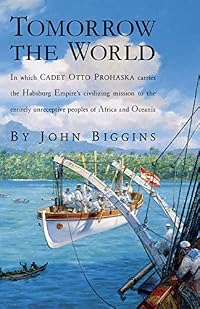
Tomorrow the World: In Which Cadet Otto Prohaska Carries the Habsburg Empire's Civilizing Mission to the Entirely Unreceptive Peoples of Africa and Oceania
by John Biggins
Otto Prohaska (4)
On This Page
Description
Laced with smart humor, this naval tale follows the early career of Lieutenant Otto Prohaska, a cadet in the Austro-Hungarian Navy at the turn of the century. Bad luck continues to shadow Otto, and when a fellow cadet breaks his leg, Otto must take his place on a scientific expedition bound for disaster. But even sinister quack scientists, a misguided attempt to establish a colony in Africa, and angry South Sea cannibals bent on destruction cannot keep Otto from fulfilling his patriotic duty.Tags
Recommendations




















Member Reviews
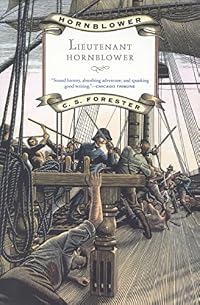
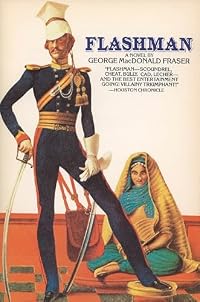
There is a reasonably good chance that you have never heard of John Biggins. Let me put it this way: If you have ever enjoyed one of the Flashman novels or one Patrick O’Brian’s sea tales, then you should stop what you are doing and find obtain a copy of one of John Biggins’ marvelous Otto Prohaska books. They are just that good.
Our man Otto Prohaska was a naval officer in the relatively short-lived and long-departed Austro-Hungarian Navy. Prohaska spins out his tales to a tape recorder and his caretakers from the unlikely vantage point of the advanced age of 101 while residing in an old age home on the edge of world – Wales.
Biggins makes Prohaska far less randy than Harry Flashman (happily, also far less bigoted). Biggins show more writes with more irony and humor than O'Brian. But Otto's adventures are on a par with anything experienced by Flashman or Jack Aubrey.
The first three books take place during the Great War, but in Tomorrow the World, Biggins takes us back to Prohaska’s days as a naval cadet in 1900. He manages to win a spot on a scientific cruise while still in school. Otto’s sails aboard a modest-sized sailing ship (The ship is also equipped with a small mostly useless steam engine). Biggins creates a palpable sense of a world on the cusp of momentous change and nowhere more so than in the lives of sailors.
Biggins sends Prohaska to West Africa, Brazil, Cape Horn, and the South Pacific. His descriptions of life at sea match any produced by O’Brian. The attempt to round Cape Horn going east-to-west is a testament to fortitude, discipline, and irrationality (one is left wondering why any sane person would ever again venture aboard any watercraft after surviving the terrors of the cape).
Ottokar’s experiences on shore are a joy and a marvel. The ‘clashes of civilizations’, if you will, that Biggins describes are somehow incredible, yet entirely believable (or nearly so) and stupendously entertaining. At least some of the tales are based on historical events or persons, such as Otto’s encounter with the ‘lost’ archduke of Austria (google John Orth) in the islands of Tierra del Fuego.
Tomorrow the World is the fourth and sadly apparently final book in the series (it was published in 1993). I usually recommend starting with the first book in a series, but one could logically start the Prohaska adventures here. Once you do you will read the other three anyway. Highest recommendation. show less
Our man Otto Prohaska was a naval officer in the relatively short-lived and long-departed Austro-Hungarian Navy. Prohaska spins out his tales to a tape recorder and his caretakers from the unlikely vantage point of the advanced age of 101 while residing in an old age home on the edge of world – Wales.
Biggins makes Prohaska far less randy than Harry Flashman (happily, also far less bigoted). Biggins show more writes with more irony and humor than O'Brian. But Otto's adventures are on a par with anything experienced by Flashman or Jack Aubrey.
The first three books take place during the Great War, but in Tomorrow the World, Biggins takes us back to Prohaska’s days as a naval cadet in 1900. He manages to win a spot on a scientific cruise while still in school. Otto’s sails aboard a modest-sized sailing ship (The ship is also equipped with a small mostly useless steam engine). Biggins creates a palpable sense of a world on the cusp of momentous change and nowhere more so than in the lives of sailors.
Biggins sends Prohaska to West Africa, Brazil, Cape Horn, and the South Pacific. His descriptions of life at sea match any produced by O’Brian. The attempt to round Cape Horn going east-to-west is a testament to fortitude, discipline, and irrationality (one is left wondering why any sane person would ever again venture aboard any watercraft after surviving the terrors of the cape).
Ottokar’s experiences on shore are a joy and a marvel. The ‘clashes of civilizations’, if you will, that Biggins describes are somehow incredible, yet entirely believable (or nearly so) and stupendously entertaining. At least some of the tales are based on historical events or persons, such as Otto’s encounter with the ‘lost’ archduke of Austria (google John Orth) in the islands of Tierra del Fuego.
Tomorrow the World is the fourth and sadly apparently final book in the series (it was published in 1993). I usually recommend starting with the first book in a series, but one could logically start the Prohaska adventures here. Once you do you will read the other three anyway. Highest recommendation. show less
Ratings
Members
- Recently Added By
Author Information

6 Works 435 Members
Series

Common Knowledge
- Canonical title
- Tomorrow the World: In Which Cadet Otto Prohaska Carries the Habsburg Empire's Civilizing Mission to the Entirely Unreceptive Peoples of Africa and Oceania
- People/Characters
- Otto Prohaska
Classifications
Statistics
- Members
- 76
- Popularity
- 414,480
- Reviews
- 1
- Rating
- (4.21)
- Languages
- English
- Media
- Paper, Ebook
- ISBNs
- 6
- ASINs
- 4