There is 1 current discussion about this work.
On This Page
Description
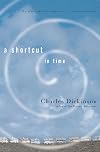
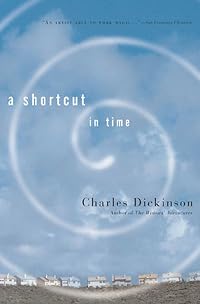
Charles Dickinson's novels and short stories have won widespread acclaim for their deft characterization, humanity, and humor. Now Dickinson slips beyond the bounds of mundane realism to create a poignant fantasy that bears comparison to the work of Jack Finney and Jonathan Carroll. Euclid, Illinois, is a town of many shortcuts, between houses, through orchards, and across fields. Josh Winkler, a local artist and longtime resident, knows these irregular pathways well, but is thoroughly taken show more aback when a hasty dash down a familiar walk deposits him fifteen minutes in the past-literally. At first, Josh is more intrigued than alarmed by this accidental time travel. Then a lost young woman appears, claiming to be from 1908.... As his life, his family, his town, and even history itself begin to unravel, Josh gradually realizes that his only salvation may lie in A Shortcut in Time. show lessTags
Recommendations











Member Recommendations
Member Reviews
I was disappointed in this time travel book. A fan of such great examples of the genre as The Doomsday Book, Passage, Outlander, and, of course, A Connecticut Yankee, I was unimpressed with the lackluster characters in Shortcut. The characters don't seem to learn anything from their travels and remain the same at the end of the book as they were at the beginning. The main character is as willing to dabble at his mediocre art and be supported by a wife, any wife, from beginning to end. None of the characters are particularly inspiring. Even Penny, the most likeable character, can't make up her mind whether to pursue her own life or remain a projection of her father's. Ho hum.
As children in Euclid Heights, Illinois, Josh and Flo were brought together when a local thug, the sheriff's son, killed Flo's brother and caused Josh's brother profound mental damage. Now they're married, still in Euclid Heights, and with a daughter of their own; Josh is an unsuccessful artist while Flo, a moderately pediatrician, keeps the family's economic boat afloat.
One day Josh, out cycling, has an encounter with time travel: a vicious dog that was chasing him suddenly disappears and is soon after re-encountered, seemingly having been slipped a few minutes into the future. A while later, Josh himself experiences minor time travel. He attributes these dislocations of the timeline to the curious layout of Euclid Heights; as well show more as the ordinary grid of streets, the town has so-called perp walks cutting across, and it's while traveling along these perp walks that temporal hiccups seem to occur. And not necessarily just hiccups: into the town comes an adolescent girl, Constance, who seems to have inadvertently made the trip to the present from the early 19th century. Since Josh is now notorious throughout town for his claims about time travel, it's inevitable these two will drift together -- not in any romantic sense, but simply in that Josh feels a solution to Constance's problem will give him some kind of answer to his own.
And in a way that's what happens; she returns to her own time, where she carves out a short and not very happy existence for herself. However, Josh's daughter Penny is likewise sucked back into the past; he succeeds in following her but, on his return to the present he discovers that much has changed: now he isn't married to Flo but instead to a woman called Lee, and they live in happy poverty as tenants of Josh's brother, who in this timeline was not brain-damaged by the bully. After a certain amount of mental conniption, Josh seems to accept this new order.
I loved all but the last few pages of this book. The writing is often very lovely. Not only are the characters fully three-dimensional, so are the relationships between them; particularly impressive was the depiction of the relationship between Josh and Flo, which he thinks is a perfectly happy and healthy one all the while we, the readers, can see this is far from the case -- his fairly ready acclimatization to marriage to a different woman is not as implausible as the bald data might make it seem. Also pleasing is that Josh is by no means the excellent fellow he believes himself to be; one of the contributory reasons for his poor relationship with Flo is that he actually is a bit of a wastrel, a would-be artist who would rather keep on tinkering than face the fact that his talent is slight and he should think about doing something more productive.
So what of those last few pages? Well, it's as if the book had a final chapter that was accidentally left out. We're told that even in this world Josh's brother has some kind of recurring problem, but never do we find out what that problem is. When Penny returns from the past to find herself living in a different Now from the one she left, there's a clumsy attempt to tie everything off in a sentence or two and then the book suddenly ends. Will Penny accept the new status quo and settle down with her father and Lee, or will she try to get back to her original family in the parallel timeline? Who knows? -- any explanation is in that hypothetical missing chapter. When I got to the book's final page, my jaw dropped; I went back a few pages and reread them, in case I'd been stupid and missed something; but seemingly not. Very strange -- especially since all the rest of the book is so very, very good. show less
One day Josh, out cycling, has an encounter with time travel: a vicious dog that was chasing him suddenly disappears and is soon after re-encountered, seemingly having been slipped a few minutes into the future. A while later, Josh himself experiences minor time travel. He attributes these dislocations of the timeline to the curious layout of Euclid Heights; as well show more as the ordinary grid of streets, the town has so-called perp walks cutting across, and it's while traveling along these perp walks that temporal hiccups seem to occur. And not necessarily just hiccups: into the town comes an adolescent girl, Constance, who seems to have inadvertently made the trip to the present from the early 19th century. Since Josh is now notorious throughout town for his claims about time travel, it's inevitable these two will drift together -- not in any romantic sense, but simply in that Josh feels a solution to Constance's problem will give him some kind of answer to his own.
And in a way that's what happens; she returns to her own time, where she carves out a short and not very happy existence for herself. However, Josh's daughter Penny is likewise sucked back into the past; he succeeds in following her but, on his return to the present he discovers that much has changed: now he isn't married to Flo but instead to a woman called Lee, and they live in happy poverty as tenants of Josh's brother, who in this timeline was not brain-damaged by the bully. After a certain amount of mental conniption, Josh seems to accept this new order.
I loved all but the last few pages of this book. The writing is often very lovely. Not only are the characters fully three-dimensional, so are the relationships between them; particularly impressive was the depiction of the relationship between Josh and Flo, which he thinks is a perfectly happy and healthy one all the while we, the readers, can see this is far from the case -- his fairly ready acclimatization to marriage to a different woman is not as implausible as the bald data might make it seem. Also pleasing is that Josh is by no means the excellent fellow he believes himself to be; one of the contributory reasons for his poor relationship with Flo is that he actually is a bit of a wastrel, a would-be artist who would rather keep on tinkering than face the fact that his talent is slight and he should think about doing something more productive.
So what of those last few pages? Well, it's as if the book had a final chapter that was accidentally left out. We're told that even in this world Josh's brother has some kind of recurring problem, but never do we find out what that problem is. When Penny returns from the past to find herself living in a different Now from the one she left, there's a clumsy attempt to tie everything off in a sentence or two and then the book suddenly ends. Will Penny accept the new status quo and settle down with her father and Lee, or will she try to get back to her original family in the parallel timeline? Who knows? -- any explanation is in that hypothetical missing chapter. When I got to the book's final page, my jaw dropped; I went back a few pages and reread them, in case I'd been stupid and missed something; but seemingly not. Very strange -- especially since all the rest of the book is so very, very good. show less
Both lovely and suspenseful. Appealing to fans of both SF and of good popular fiction. The time-travel element was well-explored, rather than just a gimmick, but it wasn't laden with pseudo-science. The characters are interesting and the plot moves along at a good pace. The only problem is that it's too short - not concise in a good way, but it seems, about 2/3 through, as if the author got tired and stopped developing the new ideas and situations, and didn't do any more with the old. Lots of loose ends - not that I wish they'd been tied up pretty, but it seems like the author neither had the vision and ran out of time and energy to figure out where things might have gone.
Sorry the negative comments took up most of the previous show more paragraph. I really did like the book a lot and will definitely look into the author's other work. show less
Sorry the negative comments took up most of the previous show more paragraph. I really did like the book a lot and will definitely look into the author's other work. show less
I was quite disappointed in this time travel novel. It seems to me that when you set out to write about time travel you should have some idea about where you're going with the plot line, how the travel mechanism works, and the perturbations that traveling back in time would cause. I think the author failed in all three counts. I thought of so many questions while reading (How does this work? Why did that happen?)but none were answered.
This was disappointing, in large part because it's a very good story with a lot of potential, but the writing was far too hack for me to enjoy it very much at all. In fact, I'm so het up it's become a struggle not to include outright spoilers.
It's a time travel book, a small town time travel book (see, doesn't that sound promising?) that reminded me a bit of Jack Finney (who I like a lot). What was killing it for me was the interpersonal stuff. I actively disliked just about every character. About 1/3 the way through, I was wondering if this was in fact a novel about the decay of the American family cleverly set up as a genre piece about time travel -- you've got this bratty teenage girl, and her spineless father and bitchy mother have show more no one to blame but themselves and their crap parenting (or lack of parenting). But no, I think it's really a time travel book that handles the interactions between characters so poorly that it's hard to connect with any of them.
I think the problem here is not so much that the characters are awful, but rather it's that the author had to give them certain behaviors in order to make the plot move forward but couldn't figure out how to do it in a way that didn't make them seem 1. reckless, 2. selfish, and/or 3. stupid.
A minor point, but one which made me crazier as the book went on, was the set up of the geography of the town. It seems like a neat idea - there are these pedestrian shortcuts that run through the town, and naturally, this is where there is potential for time travel. It was weird to me that the author set this up as a unique feature ... most towns don't have them, but if you live in a beach town, chances are they are familiar because they are pedestrian right-of-ways. And in the book, they are called "perp walks" because they are walk ways set perpendicular to the streets ... only the author seems unaware that "perp walks" are already a thing (a different thing) so I kept waiting for the joke about perp walks and it never came.
One of my biggest issues is that there are a lot of "rules" about time travel introduced randomly throughout the book, coincidentally whenever the characters needed to have a "rule" that would determine what happened next. And they are based on nothing, it's not like one of the characters was a mad scientist to spent years inventing a time travel machine (it's not that kind of time travel book), these are ordinary people who, before the events of the book, had never given time travel a thought, and suddenly and haphazardly, they pop off with rules like they know what they're talking about it. show less
It's a time travel book, a small town time travel book (see, doesn't that sound promising?) that reminded me a bit of Jack Finney (who I like a lot). What was killing it for me was the interpersonal stuff. I actively disliked just about every character. About 1/3 the way through, I was wondering if this was in fact a novel about the decay of the American family cleverly set up as a genre piece about time travel -- you've got this bratty teenage girl, and her spineless father and bitchy mother have show more no one to blame but themselves and their crap parenting (or lack of parenting). But no, I think it's really a time travel book that handles the interactions between characters so poorly that it's hard to connect with any of them.
I think the problem here is not so much that the characters are awful, but rather it's that the author had to give them certain behaviors in order to make the plot move forward but couldn't figure out how to do it in a way that didn't make them seem 1. reckless, 2. selfish, and/or 3. stupid.
A minor point, but one which made me crazier as the book went on, was the set up of the geography of the town. It seems like a neat idea - there are these pedestrian shortcuts that run through the town, and naturally, this is where there is potential for time travel. It was weird to me that the author set this up as a unique feature ... most towns don't have them, but if you live in a beach town, chances are they are familiar because they are pedestrian right-of-ways. And in the book, they are called "perp walks" because they are walk ways set perpendicular to the streets ... only the author seems unaware that "perp walks" are already a thing (a different thing) so I kept waiting for the joke about perp walks and it never came.
One of my biggest issues is that there are a lot of "rules" about time travel introduced randomly throughout the book, coincidentally whenever the characters needed to have a "rule" that would determine what happened next. And they are based on nothing, it's not like one of the characters was a mad scientist to spent years inventing a time travel machine (it's not that kind of time travel book), these are ordinary people who, before the events of the book, had never given time travel a thought, and suddenly and haphazardly, they pop off with rules like they know what they're talking about it. show less
What the hell kind of ending is that?!
The premise is great. Love the idea of a mysterious way to travel back and forth in time. It was a very slow start. One might say boring.
The main character’s brother and friend are found locked in a container at the bottom of a pool. MC saves his brother and the friend dies. (Not a spoiler. It happens right at the beginning. And, yes, even that was boring.) He knows who did it and just doesn’t say anything. Why?! Why would you let the killer/attempted murderer get away with it? Fast forward to present day and he’s just interacting with the killer like nbd. No anger. No bitterness. Bizarre!
After the time travel starts, everyone is really blasé about it. Except the MC’s wife, Flo. Flo gets show more definitive proof multiple times and refuses to consider it. Everyone else in the town is just kinda like “oh yeah? That’s cool.” Now that I’m thinking of it, the whole book is full of blasé characters acting unrealistically.
And the ending. Just no. show less
The premise is great. Love the idea of a mysterious way to travel back and forth in time. It was a very slow start. One might say boring.
The main character’s brother and friend are found locked in a container at the bottom of a pool. MC saves his brother and the friend dies. (Not a spoiler. It happens right at the beginning. And, yes, even that was boring.) He knows who did it and just doesn’t say anything. Why?! Why would you let the killer/attempted murderer get away with it? Fast forward to present day and he’s just interacting with the killer like nbd. No anger. No bitterness. Bizarre!
After the time travel starts, everyone is really blasé about it. Except the MC’s wife, Flo. Flo gets show more definitive proof multiple times and refuses to consider it. Everyone else in the town is just kinda like “oh yeah? That’s cool.” Now that I’m thinking of it, the whole book is full of blasé characters acting unrealistically.
And the ending. Just no. show less
This is Charles Dickinson's first venture into the time travel genre, and he has succeeded in creating a charming adventure with somewhat of a jarring surprise ending. One day Josh Winkler, living happily with his 15-year old daughter and doctor wife, accidentally manages to project himself back in time about 15 minutes. That's enough to shake him up but his wife really doesn't believe his story. Things take a more disturbing turn for everyone when a young girl from 1908 turns up at the same spot that Winkler first lost his grip on time.
From this point forward the adventure is on and it eventually culminates in Winkler's own daughter finding herself in an orphanage in 1918 just before the flu epidemic hits the United States long and show more hard. Using old newspapers and library microfilm, Winkler is able to track both his daughter and the young lady who suddenly appeared in his life from 1908. After he finds his daughter's death notice in a November 1918 newspaper, the race is on to get her back into the present before the date of her death.
The novel is a page-turner and as I got down to the last few pages I started to wonder how in the world Dickinson was going to tie everything together in the few pages left to him. That led to my one problem with the book. The ending is so abrupt, leaving me with so many questions, that I actually found myself wondering if some pages had been lost from the end of the book. The way that the story ended leaves A Shortcut in Time crying for a sequel. Whether or not Dickinson intends to give us one someday is not something I've heard one way or the other.
Time travel fans should not miss this one...just be prepared for the sudden stop that the rollercoaster makes at the end. show less
From this point forward the adventure is on and it eventually culminates in Winkler's own daughter finding herself in an orphanage in 1918 just before the flu epidemic hits the United States long and show more hard. Using old newspapers and library microfilm, Winkler is able to track both his daughter and the young lady who suddenly appeared in his life from 1908. After he finds his daughter's death notice in a November 1918 newspaper, the race is on to get her back into the present before the date of her death.
The novel is a page-turner and as I got down to the last few pages I started to wonder how in the world Dickinson was going to tie everything together in the few pages left to him. That led to my one problem with the book. The ending is so abrupt, leaving me with so many questions, that I actually found myself wondering if some pages had been lost from the end of the book. The way that the story ended leaves A Shortcut in Time crying for a sequel. Whether or not Dickinson intends to give us one someday is not something I've heard one way or the other.
Time travel fans should not miss this one...just be prepared for the sudden stop that the rollercoaster makes at the end. show less
Members
- Recently Added By
Talk Discussions
Current Discussions
Found: Time travel genre in Name that Book (September 2025)
Author Information

7+ Works 382 Members
Awards and Honors
Awards
Series

Belongs to Publisher Series
Gallimard, Folio SF (327)
Common Knowledge
- Canonical title
- A Shortcut in Time
- Original publication date
- 2003-01
- People/Characters
- Josh Winkler; John "Jack" Ketch Jr. or "Jock Itch"; Kurt Winkler; Vaughn Garner; Flo Garner Winkler; Penny Winkler (show all 8); Constance Morceau; Harold "Dash" Buckley
- Important places
- Euclid Heights, Illinois, USA; Euclid Heights; Illinois, USA
- Dedication
- For Donna, Louis, and Casey
First travelers - First words
- This story began with a broken promise.
- Last words
- (Click to show. Warning: May contain spoilers.)When he said he thought it was me - I knew it was time to come home.
- Blurbers
- Robinson, Frank M.
Classifications
Statistics
- Members
- 187
- Popularity
- 173,900
- Reviews
- 14
- Rating
- (3.34)
- Languages
- English, French
- Media
- Paper, Ebook
- ISBNs
- 5
- ASINs
- 2