
James Halperin
Author of The Truth Machine
About the Author
Image credit: ha.com
Works by James Halperin
The Collector's Handbook Tax Planning, Strategy and Estate Advice for Collectors and Their Heirs (2015) 7 copies
N.C.I. Grading Guide: A Step-by-step approach to the grading of uncirculated and proof coins 6 copies
The Coinage of Augustus Saint-Gauden: as Illustrated by the Phillip H. Morse Collection (2006) 3 copies
The Collector's Handbook: Tax Planning, Strategy, and Estate Advice for Collectors and their Heirs 1 copy
Tagged
Common Knowledge
- Birthdate
- 1952-10-31
- Gender
- male
- Nationality
- USA
- Birthplace
- Boston, Massachusetts, USA
- Associated Place (for map)
- Massachusetts, USA
Members
Discussions
Sci fi: computer guy develops lie detector (called SCIP?) / cloning Neanderthals in Name that Book (July 2015)
Reviews
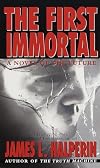
As much as I like the ideas behind the book, the book itself is pretty awful. It's basically just a long-winded version of the Alcor FAQ with some amateurish stories tacked on. I couldn't wait to be done with it.
The characters are inhuman, the conflicts and challenges and constant speeches are implausible and yawnworthy.
There are tons of cheesy, already-dated predictions of the future, like Al Gore being elected President or people sending emails using "PC wristwatches". What are we going show more to do, type on tiny little keyboards with toothpicks?
At one point, we're supposed to believe that nanotechnology can restore frozen people to life, and restore their youth, by rebuilding every cell in their body on a molecular level, but they'll somehow still die of old age. Makes sense? No. Later, they do eventually figure out how to stop old age. Maybe by using the exact same technology they used to restore them to youth? Maybe it just took them a while to realize it could do both?
The standard answer for "How will we correct the cellular damage caused by freezing?" is "nanotechnology", with some handwaving. Instead, this book uses "nanotechnology plus artificial intelligence", with some handwaving. I guess that's an improvement. I did like the idea of general-purpose AIs taking the place of computers, though, even if it's only used here as a deus ex machina solution for unsolvable problems. Also interesting is the idea of implanting memories into a clone from *other* people's external memories of that person, to make an imperfect reproduction of someone who was otherwise completely lost.
At one point, two women get married and have a (designer) baby, then one dies in a skiing accident. While she's frozen, the other marries a man, and then the technology becomes available to revive the dead wife. They do, and instead of relationship drama, they just become a triad. Yay! Most of the characters are still intent on building long-lasting nuclear families and life-long monogamous relationships, though, despite everyone living for the rest of eternity in physically perfect 23 year old bodies. Good luck!
The author's really big on family and children and marriage and parents and big families and having lots of children and family relationships and children. Even after people can live forever they still can't wait to have more kids. Hundreds of kids each. The government pressures people to have even more children because there are only 26 billion humans and that... isn't enough? The obsession with big families of adults living under the same roof for eternity is weird enough already, but it gets creepier when they clone the main character's dead wife and she is raised from infancy as his grandchild, and he can't wait for her to grow old enough that he can take her pants off. She resists the attentions of boys her own age because she's saving herself for her grandfather, despite being a completely different person from his now-dead wife. Hmmm...
Also a weird emphasis on religion, despite repeatedly arguing against it from a logical perspective. Even at the end of the book, in the super far future when everyone is immortal, the main character thanks God for the chance at immortality to spend with his ever-enlarging family. Maybe the author is Catholic?
Websites recommend it, though: "The First Immortal by James L. Halperin is arguably the finest novel about cryonics ever written". "A New York Times bestseller, it's widely considered the best cryonics novel ever written." :/
(Cory Doctorow's books with immortality handle it a lot better, in my opinion, though without immortality itself being the primary focus. I guess the point is that those books actually have a story, and immortality is just part of the setting? This book is just the setting.) show less
The characters are inhuman, the conflicts and challenges and constant speeches are implausible and yawnworthy.
There are tons of cheesy, already-dated predictions of the future, like Al Gore being elected President or people sending emails using "PC wristwatches". What are we going show more to do, type on tiny little keyboards with toothpicks?
At one point, we're supposed to believe that nanotechnology can restore frozen people to life, and restore their youth, by rebuilding every cell in their body on a molecular level, but they'll somehow still die of old age. Makes sense? No. Later, they do eventually figure out how to stop old age. Maybe by using the exact same technology they used to restore them to youth? Maybe it just took them a while to realize it could do both?
The standard answer for "How will we correct the cellular damage caused by freezing?" is "nanotechnology", with some handwaving. Instead, this book uses "nanotechnology plus artificial intelligence", with some handwaving. I guess that's an improvement. I did like the idea of general-purpose AIs taking the place of computers, though, even if it's only used here as a deus ex machina solution for unsolvable problems. Also interesting is the idea of implanting memories into a clone from *other* people's external memories of that person, to make an imperfect reproduction of someone who was otherwise completely lost.
At one point, two women get married and have a (designer) baby, then one dies in a skiing accident. While she's frozen, the other marries a man, and then the technology becomes available to revive the dead wife. They do, and instead of relationship drama, they just become a triad. Yay! Most of the characters are still intent on building long-lasting nuclear families and life-long monogamous relationships, though, despite everyone living for the rest of eternity in physically perfect 23 year old bodies. Good luck!
The author's really big on family and children and marriage and parents and big families and having lots of children and family relationships and children. Even after people can live forever they still can't wait to have more kids. Hundreds of kids each. The government pressures people to have even more children because there are only 26 billion humans and that... isn't enough? The obsession with big families of adults living under the same roof for eternity is weird enough already, but it gets creepier when they clone the main character's dead wife and she is raised from infancy as his grandchild, and he can't wait for her to grow old enough that he can take her pants off. She resists the attentions of boys her own age because she's saving herself for her grandfather, despite being a completely different person from his now-dead wife. Hmmm...
Also a weird emphasis on religion, despite repeatedly arguing against it from a logical perspective. Even at the end of the book, in the super far future when everyone is immortal, the main character thanks God for the chance at immortality to spend with his ever-enlarging family. Maybe the author is Catholic?
Websites recommend it, though: "The First Immortal by James L. Halperin is arguably the finest novel about cryonics ever written". "A New York Times bestseller, it's widely considered the best cryonics novel ever written." :/
(Cory Doctorow's books with immortality handle it a lot better, in my opinion, though without immortality itself being the primary focus. I guess the point is that those books actually have a story, and immortality is just part of the setting? This book is just the setting.) show less
A great book! More near future than science fiction, it concerns a man who, when affected by a terrible crime, decides to make it his life's work to create a completely foolproof lie detector. The rest of the book explores the impact on his life and on society. What happens when it becomes normal for people to be expected to tell the truth - all the time? Very well done.
In the future, according to author James L. Halperin, world crime can be wiped out by a 100% accurate lie detector. Citizens of the world are required to pass lie detector tests in order to gain a driver's license, have children, move to a different state, get hired, and so on. However, the very inventor of this amazing lie detector has committed a horrible crime, and must hide his criminal secret from the world. (And to say anything more on the matter would be a plot spoiler.)
It's a good, show more thought-provoking premise. Unfortunately, the characters are poorly developed, and there are so many plot-holes that I was unable to suspend my disbelief. Good beginning, good ending. Really, really slow middle.
Call me a pessimist, but I find it extremely hard to believe that Earth will have a functional World Government within the next fifty years, or many of the other things that Halperin predicts. Can you see 60% of the current American public voting for "the Swift And Sure Anti-Crime Bill," which guarantees immediate execution for any person who commits three felonies? Too many innocents would be killed in the pre-Truth Machine era. I doubt many people would support this unless criminals could be detected with absolute 100% certainty.
As for the Truth Machine itself...there was not enough evidence in the book to support this foolproof machine. People would come up with a way to fool it. That's what hackers are best at. Humanity consists largely of innovators; we improve upon other people's ideas and inventions. Some desperate people would start training themselves to believe their own lies as truth, thereby tricking the machines. Programmers would tamper with the machines and then sell their results to rich criminals. And computers have a looooooong way to go before they reach a level even close to flawless operation...if they ever will.
Even if you are willing to suspend your disbelief to the heights which this book demands, there isn't much to like. It's philosophy with a thin veneer of plot thrown over it.
Review originally published on my website. show less
It's a good, show more thought-provoking premise. Unfortunately, the characters are poorly developed, and there are so many plot-holes that I was unable to suspend my disbelief. Good beginning, good ending. Really, really slow middle.
Call me a pessimist, but I find it extremely hard to believe that Earth will have a functional World Government within the next fifty years, or many of the other things that Halperin predicts. Can you see 60% of the current American public voting for "the Swift And Sure Anti-Crime Bill," which guarantees immediate execution for any person who commits three felonies? Too many innocents would be killed in the pre-Truth Machine era. I doubt many people would support this unless criminals could be detected with absolute 100% certainty.
As for the Truth Machine itself...there was not enough evidence in the book to support this foolproof machine. People would come up with a way to fool it. That's what hackers are best at. Humanity consists largely of innovators; we improve upon other people's ideas and inventions. Some desperate people would start training themselves to believe their own lies as truth, thereby tricking the machines. Programmers would tamper with the machines and then sell their results to rich criminals. And computers have a looooooong way to go before they reach a level even close to flawless operation...if they ever will.
Even if you are willing to suspend your disbelief to the heights which this book demands, there isn't much to like. It's philosophy with a thin veneer of plot thrown over it.
Review originally published on my website. show less
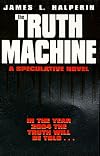
To all intents and purposes it's more a thought experiment than a novel. The characterisation is perfunctory, the plot episodic and the central idea of an infallible lie detector inadequately explored.
I found a number of its base assumptions to be problematic - private finance and big business are central to any positive
developments in society;
killing criminals is OK;
and crucially, that a Truth Machine is a good idea in the first place, and would be accepted unquestioningly by a quiescent show more populace.
It felt like the author only looked at the "technical fix" side of the story and didn't even consider the political and social consequences of all these assumptions. show less
I found a number of its base assumptions to be problematic - private finance and big business are central to any positive
developments in society;
killing criminals is OK;
and crucially, that a Truth Machine is a good idea in the first place, and would be accepted unquestioningly by a quiescent show more populace.
It felt like the author only looked at the "technical fix" side of the story and didn't even consider the political and social consequences of all these assumptions. show less
You May Also Like


Associated Authors
Statistics
- Works
- 19
- Members
- 879
- Popularity
- #29,122
- Rating
- 3.7
- Reviews
- 15
- ISBNs
- 28
- Languages
- 1
- Favorited
- 2
