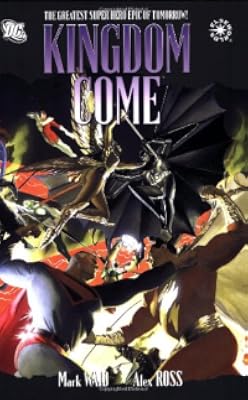
Kingdom Come
by Mark Waid (Writer), Alex Ross (Illustrator)
Kingdom Come (1), DC Elseworlds, Justice League
On This Page
Description
The unforgettable, best-selling miniseries by acclaimed writer Mark Waid and superstar painter Alex Ross returns, with a sketchbook section, annotations on the series, rare art and more! Set just after the dawn of the 21st century in a world spinning inexorably out of control comes this grim tale of youth versus experience, tradition versus change and what defines a hero. Kingdom Come is a riveting story pitting the old guard-Superman, Batman, Wonder Woman and their peers-against a new, show more uncompromising generation and ultimately in the final war against each other to determine nothing less than the future of the planet. show lessTags
Recommendations
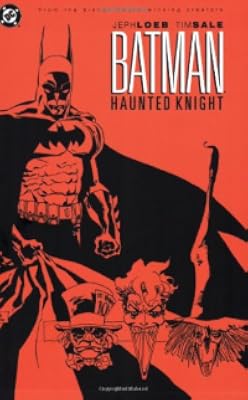
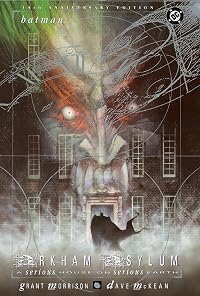
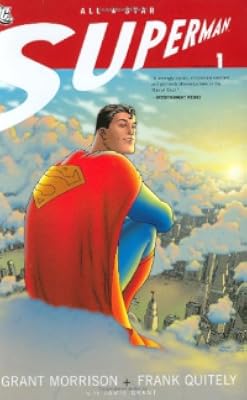
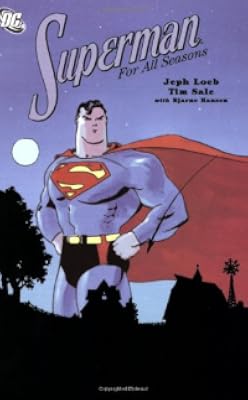
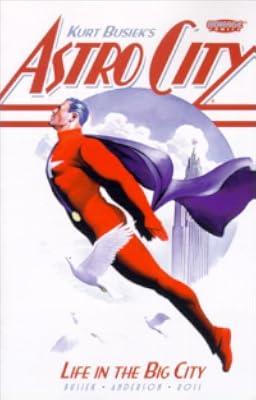
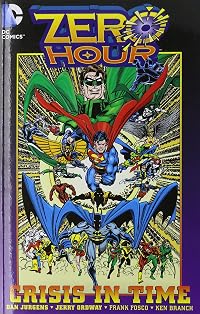
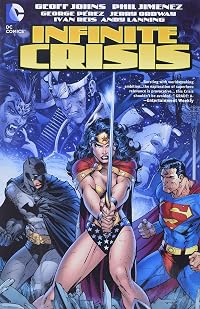
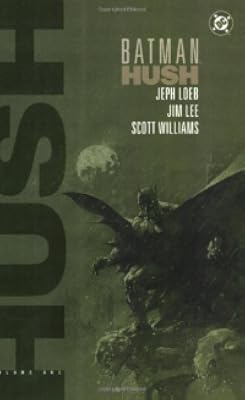
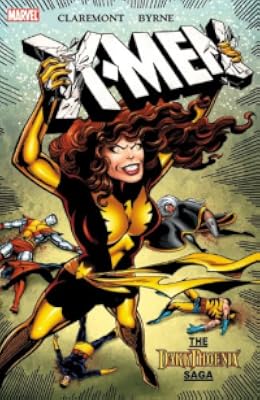

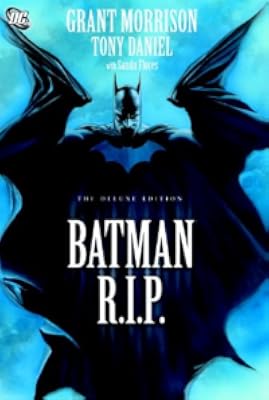
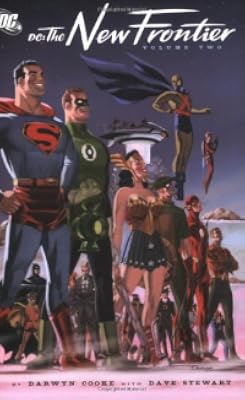
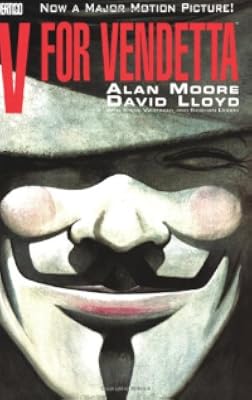
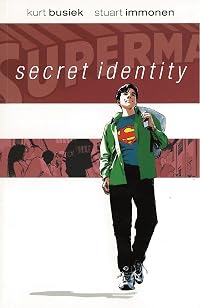
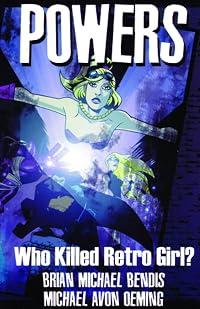
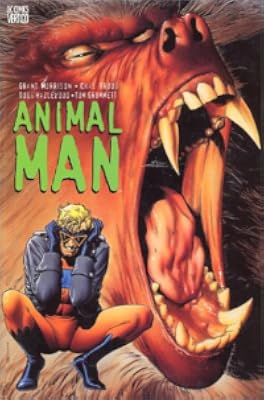
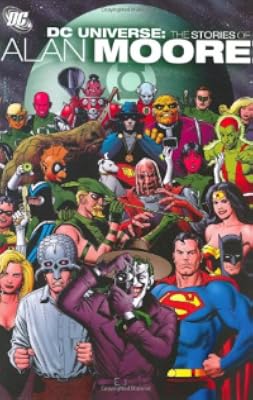
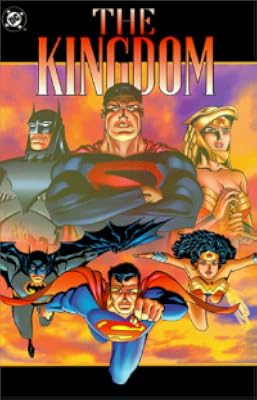
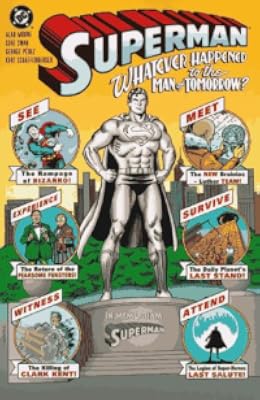
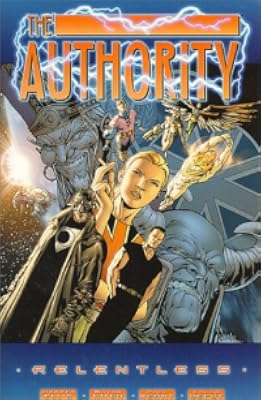
Member Recommendations

artturnerjr Waid and Ross' graphic novel may be nicer to look at, but Gruenwald & co. were there first.
20
FFortuna For Tomorrow tells the story of how a wonderful, naive, innocent Superman can become the wonderful, disillusioned, sometimes hardnosed Superman of Kingdom Come.
Member Reviews
What an incredible graphic novel. Easily my favorite Superman story.
The art style is incredible, I feel like Arkham Asylum wanted to go for something like this; super realistic, but stylistic enough to still feel like a comic book. Every page had interesting panels, angels, colors and layouts that I drowned in the imagery.
The story is very contemporary for 1996, I'm sure at the time it would have been a major paradigm shift in what superhero stories and superheroes themselves should aspire to.
Loved the narrative style, the stakes and even though I'm not overly knowledgeable about many DC characters, it didn't detract from my enjoyment. Fantastic.
The art style is incredible, I feel like Arkham Asylum wanted to go for something like this; super realistic, but stylistic enough to still feel like a comic book. Every page had interesting panels, angels, colors and layouts that I drowned in the imagery.
The story is very contemporary for 1996, I'm sure at the time it would have been a major paradigm shift in what superhero stories and superheroes themselves should aspire to.
Loved the narrative style, the stakes and even though I'm not overly knowledgeable about many DC characters, it didn't detract from my enjoyment. Fantastic.
This is very self-consciously everything that many reviewers call it -- beautifully illustrated, challenging, deep, grim, heavy, important, insightful, layered, majestic, sophisticated, touching, and well-written (mostly). It's a lot more, too. Unfortunately, for all its great qualities, it simply isn't enough for me to regard it as highly as many other readers.
The motivations for the characters are very primary-colors: they only make sense if you accept the simplistic archetypes, mores, and sociopolitical conditions of comics circa 1970, which had been pretty thoroughly demolished in many mainstream comics during the 1980s. Where a few of the "big questions" raised by Chris Claremont's X-Men and Frank Miller's Dark Knight Returns show more storylines in the 1980s are largely just parts of the world in which those series existed, handled with some amount of subtlety and self-awareness, it took more than twenty years for Kingdom Come to attack a relatively small subset of those same concerns in a more heavy-handed, overt, somewhat ungraceful manner. Kingdom Come was the penetrating, unflinching examination of the super-hero condition and humanity's place in the super-hero world that comic books needed . . . in 1981. It was published in 2008.
What little was not addressed by the combination of Frank Miller, and the elephant in the room (Alan Moore's Watchmen), all at the same time, is incidentally covered by the The Death of Superman (via Doomsday: see the "great powers collide" artifice in this comparison, for instance) and Marvel's Civil War series (see the obvious and unimaginative retread of the soulless resurrection of a Great Power to dark ends, complete with thunder and lightning to shake the cosmos, as a key example in this comparison), though not particularly better in either of those than in Kingdom Come -- only sooner. In fact, the essence of the entire Kingdom Come tale centered around a retread of the trite, ham-handed, deeply disappointing ending of Civil War (where what stopped a war with pathetically underdeveloped moral horror in one sparked a war with naively realized caricatured, cartoonish, dare I say "comic book" simplistic moral conflict in the other), without which that Marvel crossover could have been a much more satisfying narrative.
Then, of course, there are the overexposed tropes of both traditional literature and comic book history -- the largely-detached observer providing ongoing exposition that keeps the events of the tale from becoming more visceral to the reader, the oversimplified grittiness of 1990s comic book trends as an eventual reaction to the oversimplified cleanness of pre-1980s comic book trends, the oversimplified morality-play 2000s comic book trends as an overreaction to the 1990s, and so on.
I'm glad I read Kingdom Come. I enjoyed it. It's just almost thirty years too late to be the great book many reviewers describe. The American mainstream super-hero comic book genre grows up . . . again and again and again, because it keeps returning to its infancy. Lately, it seems to grow up less, but more often.
This comes across as a very negative review, but I gave it three stars, which Goodreads identifies as meaning that I enjoyed it. I'll say it one more time: I did enjoy it. Most of this review is simply a clarification of why I did not enjoy it nearly as much as most reviewers. show less
The motivations for the characters are very primary-colors: they only make sense if you accept the simplistic archetypes, mores, and sociopolitical conditions of comics circa 1970, which had been pretty thoroughly demolished in many mainstream comics during the 1980s. Where a few of the "big questions" raised by Chris Claremont's X-Men and Frank Miller's Dark Knight Returns show more storylines in the 1980s are largely just parts of the world in which those series existed, handled with some amount of subtlety and self-awareness, it took more than twenty years for Kingdom Come to attack a relatively small subset of those same concerns in a more heavy-handed, overt, somewhat ungraceful manner. Kingdom Come was the penetrating, unflinching examination of the super-hero condition and humanity's place in the super-hero world that comic books needed . . . in 1981. It was published in 2008.
What little was not addressed by the combination of Frank Miller, and the elephant in the room (Alan Moore's Watchmen), all at the same time, is incidentally covered by the The Death of Superman (via Doomsday: see the "great powers collide" artifice in this comparison, for instance) and Marvel's Civil War series (see the obvious and unimaginative retread of the soulless resurrection of a Great Power to dark ends, complete with thunder and lightning to shake the cosmos, as a key example in this comparison), though not particularly better in either of those than in Kingdom Come -- only sooner. In fact, the essence of the entire Kingdom Come tale centered around a retread of the trite, ham-handed, deeply disappointing ending of Civil War (where what stopped a war with pathetically underdeveloped moral horror in one sparked a war with naively realized caricatured, cartoonish, dare I say "comic book" simplistic moral conflict in the other), without which that Marvel crossover could have been a much more satisfying narrative.
Then, of course, there are the overexposed tropes of both traditional literature and comic book history -- the largely-detached observer providing ongoing exposition that keeps the events of the tale from becoming more visceral to the reader, the oversimplified grittiness of 1990s comic book trends as an eventual reaction to the oversimplified cleanness of pre-1980s comic book trends, the oversimplified morality-play 2000s comic book trends as an overreaction to the 1990s, and so on.
I'm glad I read Kingdom Come. I enjoyed it. It's just almost thirty years too late to be the great book many reviewers describe. The American mainstream super-hero comic book genre grows up . . . again and again and again, because it keeps returning to its infancy. Lately, it seems to grow up less, but more often.
This comes across as a very negative review, but I gave it three stars, which Goodreads identifies as meaning that I enjoyed it. I'll say it one more time: I did enjoy it. Most of this review is simply a clarification of why I did not enjoy it nearly as much as most reviewers. show less
When Superman and his generation of superheroes go into seclusion, the next generation of metahumans come into their own but lose sight of the goals of their forebears. Instead of working to save humanity, they fight only each other with no consideration for the casualties among those without superheroes. When Wonder Woman finally convinces Superman to rejoin the fray larger issues arise of exactly what kind of leader Superman is and what role humanity can possibly play in a world dominated by those with powers beyond imagination.
An interesting exploration of Superman as leader and the meaning of superheroes amongst those without powers. I found this to be a solid read although I felt that the development of the plot line that lead to show more the final climax was left a little too late and didn't get enough space to really breathe. I also rolled my eyes at one of the tidbits dropped in the epilogue of the arc as it was a bit too cliche for me. That said, the art in this volume is gorgeous. Cross does a brilliant job of rendering these characters in a more aged state and many of the full page panels are just beautiful. Worth picking up for the art alone. show less
An interesting exploration of Superman as leader and the meaning of superheroes amongst those without powers. I found this to be a solid read although I felt that the development of the plot line that lead to show more the final climax was left a little too late and didn't get enough space to really breathe. I also rolled my eyes at one of the tidbits dropped in the epilogue of the arc as it was a bit too cliche for me. That said, the art in this volume is gorgeous. Cross does a brilliant job of rendering these characters in a more aged state and many of the full page panels are just beautiful. Worth picking up for the art alone. show less
Kingdom Come is kind of like Watchmen, only with real DC superheroes: Superman, Batman, Wonder Woman, and all the rest. It was published in 1997, is less than half the size of Watchmen, and is absolutely fantastic.
The story takes place some time after the classic "metahumans" have retired, and the world is now being overrun by a new breed of superhero. The kind that America asked for, the kind that doesn't have any rules about not killing its enemies. Unfortunately, they also don't care about human collateral damage. The old superheroes come out of retirement to try to set things to right. The story is told in the form of a Christmas Carol-esque journey taken by a pastor and a cloaked spirit who demands that he judge the superheroes and show more say who will be punished in the end.
The characterization is very good. My favorite character is Batman, which comes as no surprise to me. The art is very good too, not drawing attention to itself while being colorful and descriptive. There are a lot of large panels that I really loved looking at.
The plot is amazing, really grabs you by the throat and makes you listen to what it's saying... It asks questions like "Why do we fight?" "Why should we?" "Who is a part of the human race, and what does that mean?" I was on the edge of my seat the entire book, desperate to know how it ended, and it certainly delivered on its promise of a grand finale.
Reread: It's just as good the second time through, if not better, especially now that I'm more familiar with the minor DC characters that make appearances. One of my favorite graphic novels of all time. show less
The story takes place some time after the classic "metahumans" have retired, and the world is now being overrun by a new breed of superhero. The kind that America asked for, the kind that doesn't have any rules about not killing its enemies. Unfortunately, they also don't care about human collateral damage. The old superheroes come out of retirement to try to set things to right. The story is told in the form of a Christmas Carol-esque journey taken by a pastor and a cloaked spirit who demands that he judge the superheroes and show more say who will be punished in the end.
The characterization is very good. My favorite character is Batman, which comes as no surprise to me. The art is very good too, not drawing attention to itself while being colorful and descriptive. There are a lot of large panels that I really loved looking at.
The plot is amazing, really grabs you by the throat and makes you listen to what it's saying... It asks questions like "Why do we fight?" "Why should we?" "Who is a part of the human race, and what does that mean?" I was on the edge of my seat the entire book, desperate to know how it ended, and it certainly delivered on its promise of a grand finale.
Reread: It's just as good the second time through, if not better, especially now that I'm more familiar with the minor DC characters that make appearances. One of my favorite graphic novels of all time. show less
There can be no denying that Kingdom Come is a beautifully illustrated book. The artwork that is used to tell this Revelations-inspired story using super-heroes as a metaphor for divine and infernal powers is, in a word, stunning. Unfortunately, the story that these illustrations tell simply isn't worthy of being told with such beautiful images. The subtitle on the cover says that this is "The Greatest Super-Hero Epic of Tomorrow", but while it is clear that the authors intended to write a grand and epic tale, they seem to have been given only enough space to tell a median range story, and the strain of packing the amount of story intended into the space available is apparent on almost every page, to the detriment of the book.
The story, show more such as it is, is told through the eyes of Norman McCay as he is whisked from event to event by the Spectre to serve as a mostly unseen and unnoticed observer to the doings of the mighty beings that walk across the Earth. In this future world, the cadre of super-powered heroes that DC comic fans are familiar with has mostly died, retired, or withdrawn to the sidelines, and a new crop of meta-humans has risen to replace their forbears. But these new super-powered beings, unlike their predecessors, seem to have almost no regard for the fragile and weak humans they share the world with, and their uncaring demeanor makes their internecine fights terribly dangerous for their mundane neighbors. Against this backdrop of random conflict, the Spectre shows Norman how the chaos is swirling towards a dangerous and destructive conclusion.
But the book simply isn't substantial enough to tell the full story that would do justice to the idea behind it. The story, concerning the return of Superman to the world stage, the resurrection of the defunct Justice League, the taming of the miscreant younger meta-human generation, the plots against the meta-humans as a whole, and all of the other sweeping epic elements, is stuffed into too few pages to actually tell a coherent tale. Not only that, because the story is set into the future, the book must also spend time establishing the landscape of the super-hero world of tomorrow, and at the same time explain how the present DC universe got there. As a result, the book isn't so much a coherent tale as it is a collection of climactic highlights. But without the build up to support them, the climaxes that the reader is treated to simply fall flat. Without needed context, the reader simply doesn't care who Magog is, and it is simply difficult to be concerned when the incarcerated pseudo-hero Von Bach is struck down.
Superman is the centerpiece, and in many ways exemplary of the problems with, this book. Most of the plot hinges upon Superman withdrawing from the public eye for an extended period of time, and then after a crisis occurs, returning to try to set things right again. But while Superman's withdrawal to a virtual farm is talked about several times, it is explained in a brief handful of panels that give only the most cursory outline of the circumstances that led him to turn his back on humanity. And Superman's decision to return is covered in a similarly brief set of panels and is similarly glossed over. Further, the critical interregnum during which Superman is absent from world affairs takes up a relatively tiny portion of the book. As a result of the cursory way that these portentous events are described, Superman's supposedly momentous decisions to leave and then return seem almost to be careless in nature. By covering only the decisions themselves, and failing to provide more than an outline of the context in which they take place, the book drains any potential weight out of these choices.
In many ways Kingdom Come feels more like a well-illustrated outline of a story than an actual story. Time and again the reader is presented with the end result, often via a brief flashback or one character telling another what happened, rather than being allowed to see the story unfold for themselves. After he returns, Superman goes to visit a retired Bruce Wayne, who is presented as a man confined to an exoskeleton who enforces a draconian order in Gotham via security robots. How Wayne got to this point is never explained. We are told that Wonder Woman had been stripped of her royal status and ambassadorial post by her Amazon sisters, but instead of seeing this as part of the story, we are told of these events by means of a conversation between Clark and Diana. We are told that the new generation of meta-humans has run riot over the world, and we are even shown a little bit of the mayhem they have caused, but the story of how these meta-humans got to the point where nearly all of them felt free to engage in wanton destruction is skipped over. Over and over the book jumps past telling an actual story and simply tells the reader the ending instead.
Even when the book give the reader some actual story to read, it does so in the most perfunctory way. Magog precipitates the crisis that results in Superman's return by devastating and irradiating Kansas, but this entire plot takes up only a few panels. Lex Luthor has organized many of the DC universe's super-villains into the "Mankind Liberation Front", but we only get a scant glimpse of their machinations via a handful of board meetings. Superman restores the Justice League and converts or incarcerates the new generation of meta-humans, almost magically waving a wand to create a prison to keep them in, but this radical transformation of the world is dealt with mostly by offstage fiat. We are shown that Luthor has brainwashed Captain Marvel, but the book takes little more than a single page to show this. Bruce Wayne sides with Luthor, reassuring Luthor of his good intentions by saying little more than "trust me", and then Luthor is shocked (and unprepared) when the former Batman turns on him. There is a lot of plot crammed into this book, but it is unsupported by the amount of story necessary to contain the volume of moving pieces that are presented, and the resulting product is disjointed and unsatisfying.
It is clear that Waid and Ross had an incredibly expansive vision for a story, and for some reason decided to box that story into a contained that was simply too small to tell it properly. And so instead of seeing Superman unable to stop the Joker murdering his way across Metropolis and finally assassinating Lois Lane before the Joker is himself executed by Magog, we are told that these events happened in a flashback to the trial of Magog that followed. Instead of seeing the back and forth cat an mouse game between Bruce Wayne and Lex Luthor as they engage in cloak and dagger intrigue, we see Bruce ally with Luthor on one page, and see him announce that he's figured out Luthor's plan and betray his erstwhile ally on another. Instead of giving the reader a story, the authors gave the reader plot points. The book is, in effect, the skeleton of a story entirely lacking in any flesh or muscle.
Even though they confined themselves to nothing more than plot points, the authors gave a short shrift to some of the most interesting questions raised in the volume - even though we are told that Lois died, this is not the catalyst that spurred Superman to withdraw into seclusion. Rather, the acquittal of Magog for the Joker's murder was the crucial event. But given that Lois (along with the presumably deceased Ma and Pa Kent) was a critical humanizing influence on Superman, shouldn't her loss have meant something more to the Man of Steel than it seems to have? Given that Superman dances around the idea of, and eventually enters into a romantic relationship with the stern and warlike Diana, why does this not affect his ideals? Why is it that without Superman the world inexorably devolves into chaos? Kingdom Come wants to cover some of the same territory that Alan Moore covered in The Watchmen, specifically the responsibility of power, and how to keep a nearly omnipotent being from ruling over the world according to their personal moral code - as Superman does in this book once he returns from his self-imposed exile. But although Kingdom Come wants to raise these subjects, unlike The Watchmen, it doesn't want to make any statements about them, or even really explore them, confining itself to saying little more than "Superman is humble and self-critical, so no one would ever have to worry about his unstoppable power". While the story glosses over many of the plot developments that it presents, it completely ignores many others, leaving the reader wondering why such seemingly critical elements were alluded to if they were simply going to be passed over.
Kingdom Come is a masterfully drawn and incredibly ambitious failure. There is an epic story to be told here, and the reader is given a collection of excellent storyboards outlining that story. There are interesting questions involving competing visions of morality and justice that are raised here, but which are never really dealt with in any meaningful way. By attempting to cram this epic story into a two hundred page graphic novel, Waid and Ross created a stunted and incomplete work that doesn't actually tell a story, doesn't allow its plots or characters to develop, and doesn't deal with the huge questions that it raises. There was a really great story to be told using the ideas that are represented in this books. Unfortunately, this book doesn't actually tell that story so much as it merely outlines it, and as a result, it isn't anything more than average.
This review has also been posted to my blog Dreaming About Other Worlds. show less
The story, show more such as it is, is told through the eyes of Norman McCay as he is whisked from event to event by the Spectre to serve as a mostly unseen and unnoticed observer to the doings of the mighty beings that walk across the Earth. In this future world, the cadre of super-powered heroes that DC comic fans are familiar with has mostly died, retired, or withdrawn to the sidelines, and a new crop of meta-humans has risen to replace their forbears. But these new super-powered beings, unlike their predecessors, seem to have almost no regard for the fragile and weak humans they share the world with, and their uncaring demeanor makes their internecine fights terribly dangerous for their mundane neighbors. Against this backdrop of random conflict, the Spectre shows Norman how the chaos is swirling towards a dangerous and destructive conclusion.
But the book simply isn't substantial enough to tell the full story that would do justice to the idea behind it. The story, concerning the return of Superman to the world stage, the resurrection of the defunct Justice League, the taming of the miscreant younger meta-human generation, the plots against the meta-humans as a whole, and all of the other sweeping epic elements, is stuffed into too few pages to actually tell a coherent tale. Not only that, because the story is set into the future, the book must also spend time establishing the landscape of the super-hero world of tomorrow, and at the same time explain how the present DC universe got there. As a result, the book isn't so much a coherent tale as it is a collection of climactic highlights. But without the build up to support them, the climaxes that the reader is treated to simply fall flat. Without needed context, the reader simply doesn't care who Magog is, and it is simply difficult to be concerned when the incarcerated pseudo-hero Von Bach is struck down.
Superman is the centerpiece, and in many ways exemplary of the problems with, this book. Most of the plot hinges upon Superman withdrawing from the public eye for an extended period of time, and then after a crisis occurs, returning to try to set things right again. But while Superman's withdrawal to a virtual farm is talked about several times, it is explained in a brief handful of panels that give only the most cursory outline of the circumstances that led him to turn his back on humanity. And Superman's decision to return is covered in a similarly brief set of panels and is similarly glossed over. Further, the critical interregnum during which Superman is absent from world affairs takes up a relatively tiny portion of the book. As a result of the cursory way that these portentous events are described, Superman's supposedly momentous decisions to leave and then return seem almost to be careless in nature. By covering only the decisions themselves, and failing to provide more than an outline of the context in which they take place, the book drains any potential weight out of these choices.
In many ways Kingdom Come feels more like a well-illustrated outline of a story than an actual story. Time and again the reader is presented with the end result, often via a brief flashback or one character telling another what happened, rather than being allowed to see the story unfold for themselves. After he returns, Superman goes to visit a retired Bruce Wayne, who is presented as a man confined to an exoskeleton who enforces a draconian order in Gotham via security robots. How Wayne got to this point is never explained. We are told that Wonder Woman had been stripped of her royal status and ambassadorial post by her Amazon sisters, but instead of seeing this as part of the story, we are told of these events by means of a conversation between Clark and Diana. We are told that the new generation of meta-humans has run riot over the world, and we are even shown a little bit of the mayhem they have caused, but the story of how these meta-humans got to the point where nearly all of them felt free to engage in wanton destruction is skipped over. Over and over the book jumps past telling an actual story and simply tells the reader the ending instead.
Even when the book give the reader some actual story to read, it does so in the most perfunctory way. Magog precipitates the crisis that results in Superman's return by devastating and irradiating Kansas, but this entire plot takes up only a few panels. Lex Luthor has organized many of the DC universe's super-villains into the "Mankind Liberation Front", but we only get a scant glimpse of their machinations via a handful of board meetings. Superman restores the Justice League and converts or incarcerates the new generation of meta-humans, almost magically waving a wand to create a prison to keep them in, but this radical transformation of the world is dealt with mostly by offstage fiat. We are shown that Luthor has brainwashed Captain Marvel, but the book takes little more than a single page to show this. Bruce Wayne sides with Luthor, reassuring Luthor of his good intentions by saying little more than "trust me", and then Luthor is shocked (and unprepared) when the former Batman turns on him. There is a lot of plot crammed into this book, but it is unsupported by the amount of story necessary to contain the volume of moving pieces that are presented, and the resulting product is disjointed and unsatisfying.
It is clear that Waid and Ross had an incredibly expansive vision for a story, and for some reason decided to box that story into a contained that was simply too small to tell it properly. And so instead of seeing Superman unable to stop the Joker murdering his way across Metropolis and finally assassinating Lois Lane before the Joker is himself executed by Magog, we are told that these events happened in a flashback to the trial of Magog that followed. Instead of seeing the back and forth cat an mouse game between Bruce Wayne and Lex Luthor as they engage in cloak and dagger intrigue, we see Bruce ally with Luthor on one page, and see him announce that he's figured out Luthor's plan and betray his erstwhile ally on another. Instead of giving the reader a story, the authors gave the reader plot points. The book is, in effect, the skeleton of a story entirely lacking in any flesh or muscle.
Even though they confined themselves to nothing more than plot points, the authors gave a short shrift to some of the most interesting questions raised in the volume - even though we are told that Lois died, this is not the catalyst that spurred Superman to withdraw into seclusion. Rather, the acquittal of Magog for the Joker's murder was the crucial event. But given that Lois (along with the presumably deceased Ma and Pa Kent) was a critical humanizing influence on Superman, shouldn't her loss have meant something more to the Man of Steel than it seems to have? Given that Superman dances around the idea of, and eventually enters into a romantic relationship with the stern and warlike Diana, why does this not affect his ideals? Why is it that without Superman the world inexorably devolves into chaos? Kingdom Come wants to cover some of the same territory that Alan Moore covered in The Watchmen, specifically the responsibility of power, and how to keep a nearly omnipotent being from ruling over the world according to their personal moral code - as Superman does in this book once he returns from his self-imposed exile. But although Kingdom Come wants to raise these subjects, unlike The Watchmen, it doesn't want to make any statements about them, or even really explore them, confining itself to saying little more than "Superman is humble and self-critical, so no one would ever have to worry about his unstoppable power". While the story glosses over many of the plot developments that it presents, it completely ignores many others, leaving the reader wondering why such seemingly critical elements were alluded to if they were simply going to be passed over.
Kingdom Come is a masterfully drawn and incredibly ambitious failure. There is an epic story to be told here, and the reader is given a collection of excellent storyboards outlining that story. There are interesting questions involving competing visions of morality and justice that are raised here, but which are never really dealt with in any meaningful way. By attempting to cram this epic story into a two hundred page graphic novel, Waid and Ross created a stunted and incomplete work that doesn't actually tell a story, doesn't allow its plots or characters to develop, and doesn't deal with the huge questions that it raises. There was a really great story to be told using the ideas that are represented in this books. Unfortunately, this book doesn't actually tell that story so much as it merely outlines it, and as a result, it isn't anything more than average.
This review has also been posted to my blog Dreaming About Other Worlds. show less
I'll immediately state my comic book knowledge as being basically zilch, so I have no idea why this ended up in my collection. Must have been walking down the aisles at the old Stacey's bookstore in San Francisco when the cover caught my eye. I think. Anyway, I am grateful to this book for having the decency to nab me when it did, as I thoroughly enjoyed it and have actually read it a few more times, just for the illustrations.
Captain Marvel looks like a weightlifter I used to see at Gold's Gym in Venice while Wonder Woman comes across as a female George Bush. Rad.
Book Season = Autumn (dark tale)
Captain Marvel looks like a weightlifter I used to see at Gold's Gym in Venice while Wonder Woman comes across as a female George Bush. Rad.
Book Season = Autumn (dark tale)
I thought about the comics that I've enjoyed reading over the years and realized that they were always finite - a specific writer and illustrator with a particular vision for a story, spreading that story out over a specific number of books, and concluding. With that in mind, I decided to check out some of the most well-regarded finite comic series' ever published, and at the top of my list was Kingdom Come.
I don't mean to be hyperbolic, but Kingdom Come is the best comic book I've ever read, tied with Watchmen. The story takes place in the future - the Justice League has retired, Superman now tends to his farm, and the world is overrun by metahumans, superpowered individuals who lack the conviction to justice and the appreciation for show more life that bound Superman, Batman, and the rest of the JLA.
The characters are extremely complex and well-written. Superman is in a state of emotional turmoil, unsure of how to handle leading these metahumans. Wonder Woman slowly grows to embrace something akin to fascism. Batman waffles between wanting to help and wanting the situation to resolve itself. Meanwhile, Lex Luthor has teamed up with Catwoman and The Riddler (as well as others) to take advantage of the situation for his own political ends.
These are the same superheroes you're familiar with, but expressed with a level of depth I've never seen in comics before. The story is epic in every sense of the word, and the art by Alex Ross is breathtaking.
Nearly everything about Kingdom Come is phenomenal, and the finite run ensures that the entire story feels like it's going somewhere at all times. If you like comic books but have never read Kingdom Come, I cannot recommend it highly enough. show less
I don't mean to be hyperbolic, but Kingdom Come is the best comic book I've ever read, tied with Watchmen. The story takes place in the future - the Justice League has retired, Superman now tends to his farm, and the world is overrun by metahumans, superpowered individuals who lack the conviction to justice and the appreciation for show more life that bound Superman, Batman, and the rest of the JLA.
The characters are extremely complex and well-written. Superman is in a state of emotional turmoil, unsure of how to handle leading these metahumans. Wonder Woman slowly grows to embrace something akin to fascism. Batman waffles between wanting to help and wanting the situation to resolve itself. Meanwhile, Lex Luthor has teamed up with Catwoman and The Riddler (as well as others) to take advantage of the situation for his own political ends.
These are the same superheroes you're familiar with, but expressed with a level of depth I've never seen in comics before. The story is epic in every sense of the word, and the art by Alex Ross is breathtaking.
Nearly everything about Kingdom Come is phenomenal, and the finite run ensures that the entire story feels like it's going somewhere at all times. If you like comic books but have never read Kingdom Come, I cannot recommend it highly enough. show less
Members
- Recently Added By
Lists

Recommended Comics / Graphic Novels
595 works; 121 members
Author Information


Alex Ross was born in 1968. He attended St. Alban's School in Washington, D.C. and graduated from Harvard University in 1990. It was there that he studied under composer Peter Lieberson and was a D.J. on the classical and underground rock departments of the college radio station. He earned a Harvard A.B. in English summa cum laude for a thesis on show more James Joyce. From the years, 1992-1996, Alex Ross was a music critic at the New York Times. He also wrote for the New Republic, Slate, and The London Review of Books. In 1993 he started contributing to The New Yorker and became a staff writer in 1996. In 2007 his released his first book in the U.S. entitled The Rest is Noise: Listening to the Twentieth Century, a cultural history of music since 1900. This book received widespread crritical praise in the U.S. and earned a National Book Critics Circle Award, a spot on New York Times list of the ten best books of 2007, and a finalist citation for the Pulitzer Prize in general non-fiction. His second book - Listen to This- was published in September 2010. Alex Ross has also received a Holtzbrink fellowship at the American Academy in Berlin. (Bowker Author Biography) show less
Some Editions
Awards and Honors
Series


Belongs to Publisher Series
DC Compact Comics (Kingdom Come #1–4)
Work Relationships
Is contained in
Contains
Has the adaptation
Common Knowledge
- Canonical title
- Kingdom Come
- Original publication date
- 1997
- People/Characters
- Superman: Clark Kent: Kal-El; Wonder Woman: Diana Prince; Batman: Bruce Wayne; Alan Scott; Green Lantern; Captain Marvel: Billy Batson (show all 19); Flash: Wally West; Lex Luthor; Martian Manhunter: J'onn J'onzz; Magog; Captain Atom: Nathaniel Adams; Spectre; Orion [DC Comics]; Sandman; Mister Miracle; Wesley Dodds (Sandman); Red Robin: Dick Grayson; Hawkman: Katar Hol; Red Tornado
- Important places
- Kansas, USA; Gotham City, New Jersey, USA; Metropolis, USA
- Dedication
- Dedicated to Christopher Reeve who makes us believe that a man can fly.
To Brian Augustyn, who hired me when no one else would, without whom today I would be asking not, "What will the Flash do this month?" but rather, "Would you like fries with that?" - MARK WAID
For my father, Clark Norman Ross, the real McCay and the true inspiration for all of Kingdom Come. - ALEX ROSS - First words
- There were voices... and thunderings and lightnings... and an earthquake.
- Last words
- (Click to show. Warning: May contain spoilers.)Let's go home... and dream about the future.
- Original language
- English
- Disambiguation notice
- This is the entry for the standard collection of Kingdom Come. Please do not combine with single issues, the Absolute Edition, the prose (text) adaptation or the audio book version. Thanks.
Classifications
- Genres
- Graphic Novels & Comics, Fiction and Literature
- DDC/MDS
- 813.54 — Literature & rhetoric American literature in English American fiction in English 1900-1999 1945-1999
- LCC
- PN6727 .W26 .K56 — Language and Literature Literature (General) Literature (General) Collections of general literature Comic books, strips, etc.
- BISAC
Statistics
- Members
- 2,729
- Popularity
- 6,755
- Reviews
- 54
- Rating
- (4.09)
- Languages
- 11 — Czech, Danish, English, Finnish, French, German, Italian, Polish, Spanish, Turkish, Portuguese (Portugal)
- Media
- Paper, Ebook
- ISBNs
- 38
- ASINs
- 7