
The End of Eternity
by Isaac Asimov
On This Page
Description
A spellbinding novel set in the universe of Isaac Asimov's classic Galactic Empire series and Foundation series. Due to circumstances within our control ... tomorrow will be canceled. The Eternals, the ruling class of the Future, had the power of life and death not only over every human being but over the very centuries into which they were born. Past, Present, and Future could be created or destroyed at will. You had to be special to become an Eternal. Andrew Harlan was special. Until he show more committed the one unforgivable sin -- falling in love. Eternals weren't supposed to have feelings. But Andrew could not deny the sensations that were struggling within him. He knew he could not keep this secret forever. And so he began to plan his escape, a plan that changed his own past ... and threatened Eternity itself. show lessTags
Recommendations

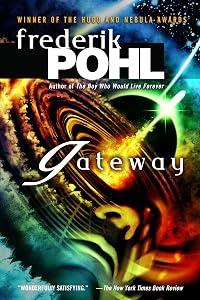
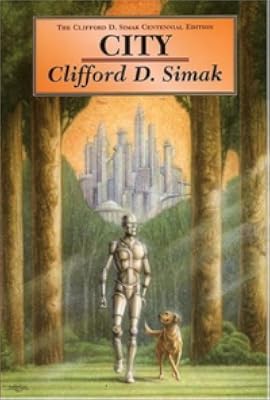
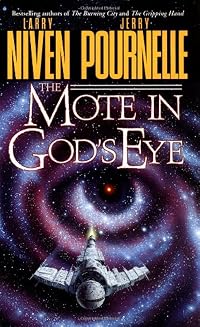
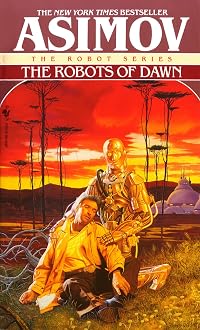
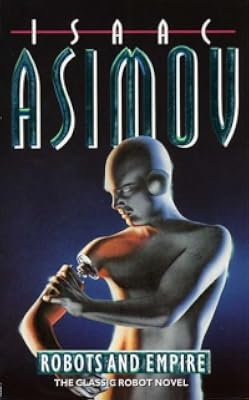

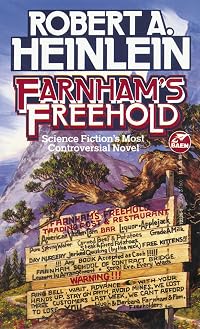
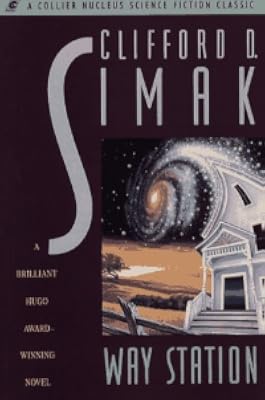
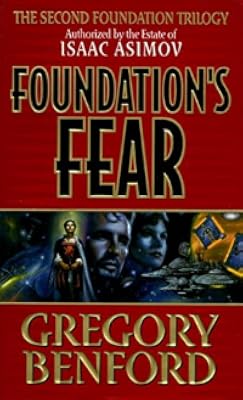




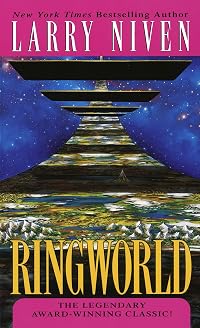
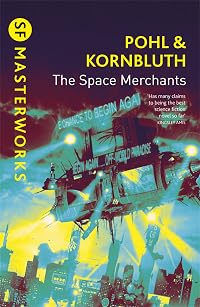

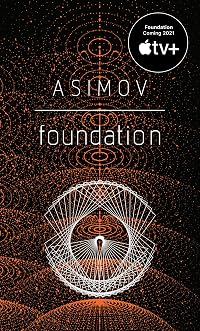


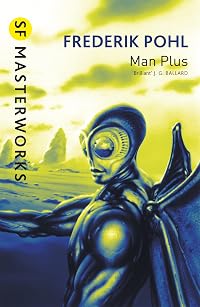

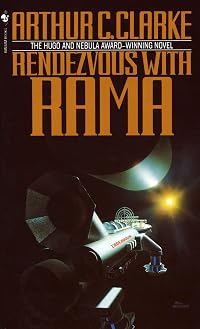
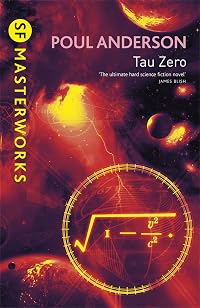


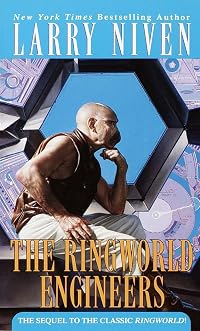

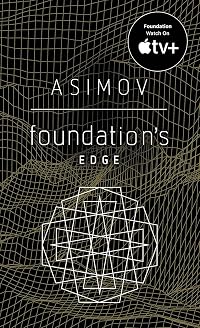



Member Recommendations

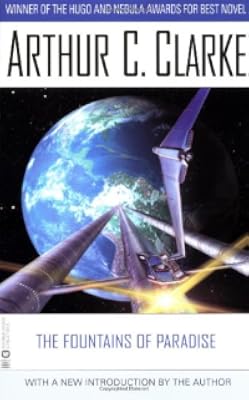
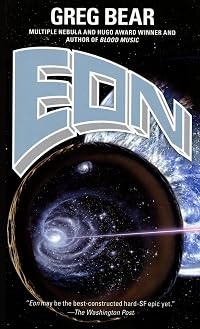
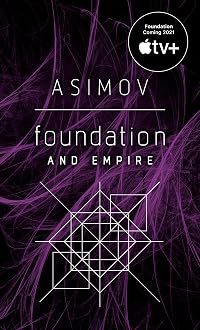
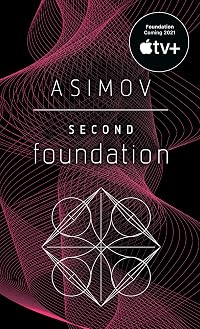
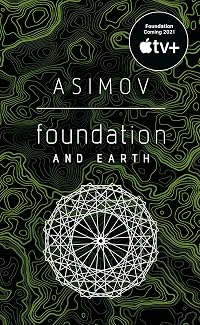
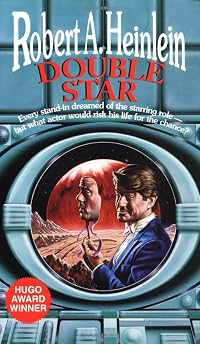
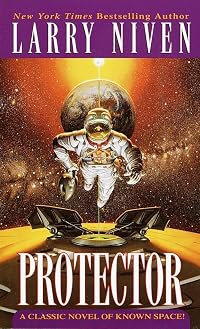
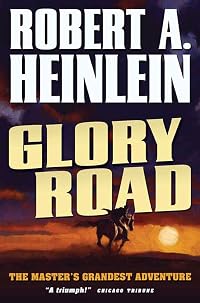
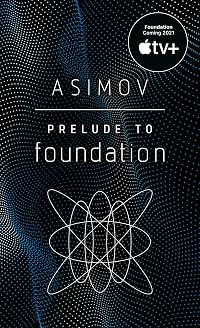
whiten06 Two great time-travel novels with similar premises
Member Reviews
Read: The End of Eternity, Isaac Asimov
Read because it was nominated for the Hugo Award in 1956, and I’ve been trying a few of the old Hugo nominees. It’s also one of the few Asimov novels I managed to miss readings back in my very early teens. Normally, of course, I avoid his books like the plague - I think he was a terrible writer, who managed a couple of ideas per book but everything else was just 1950s USA with a thin wash of paint. He’s the exemplar of Men in Fucking Hats sf. Asimov was 35 when The End of Eternity of publishing, but much of it reads like it was written by a much younger man - even though he didn’t even start it until 1953. The invention of time travel has led to the creation of Eternity, a series of show more stations outside of time, with access to every year from their creation to the distant future, which are staffed by an all-male (for reasons that probably were unexceptional in the 1950s) corps who make carefully calculated changes to history in order to prevent future rough patches. One such staff member, a Technician, Andrew Harlan, born in the 95th Century, despite the resolutely 20th Century US name, falls in love with a young woman from the 575th Century, and jeopardises his career, and Eternity, in order to have a relationship with her. This also includes jeopardising the plan in which he is unwittingly instrumental - sending a technician back to the 24th Century to invent time travel. No time travel, no Eternity, no Andrew Harlan, no nookie. Everything goes entirely as expected, even the plot twists. The prose is anodyne and the level of invention low - one mission involves sabotaging a clutch on a vehicle in the 223rd century because of course they would still have cars with gearboxes 20,000 years from now; although I was… bemused by “her long legs shimmered in faintly luminescent foamite”, which is a really tone-deaf neologism and likely doesn’t evoke the image Asimov intended. The End of Eternity lost the Hugo to Heinlein’s Double Star, although Leigh Brackett’s The Long Tomorrow would have been a better winner. show less
Read because it was nominated for the Hugo Award in 1956, and I’ve been trying a few of the old Hugo nominees. It’s also one of the few Asimov novels I managed to miss readings back in my very early teens. Normally, of course, I avoid his books like the plague - I think he was a terrible writer, who managed a couple of ideas per book but everything else was just 1950s USA with a thin wash of paint. He’s the exemplar of Men in Fucking Hats sf. Asimov was 35 when The End of Eternity of publishing, but much of it reads like it was written by a much younger man - even though he didn’t even start it until 1953. The invention of time travel has led to the creation of Eternity, a series of show more stations outside of time, with access to every year from their creation to the distant future, which are staffed by an all-male (for reasons that probably were unexceptional in the 1950s) corps who make carefully calculated changes to history in order to prevent future rough patches. One such staff member, a Technician, Andrew Harlan, born in the 95th Century, despite the resolutely 20th Century US name, falls in love with a young woman from the 575th Century, and jeopardises his career, and Eternity, in order to have a relationship with her. This also includes jeopardising the plan in which he is unwittingly instrumental - sending a technician back to the 24th Century to invent time travel. No time travel, no Eternity, no Andrew Harlan, no nookie. Everything goes entirely as expected, even the plot twists. The prose is anodyne and the level of invention low - one mission involves sabotaging a clutch on a vehicle in the 223rd century because of course they would still have cars with gearboxes 20,000 years from now; although I was… bemused by “her long legs shimmered in faintly luminescent foamite”, which is a really tone-deaf neologism and likely doesn’t evoke the image Asimov intended. The End of Eternity lost the Hugo to Heinlein’s Double Star, although Leigh Brackett’s The Long Tomorrow would have been a better winner. show less
Though most of the book felt stuck in the gender roles of the '50s, it executes a couple of surprising and ahead-of-its-time twists at the very end. It's also a bit better written than most of Asimov's longer fiction, with a handful of characters who are actually characters and not just plot devices or tools of exposition. The ideas are interesting, and the tension in the plot is well executed.
This is one of my favorite novels by Isaac Asimov, and I think underrated among his works, perhaps because it's a one-off, not something that ties into his Foundation or Robot series. I remember the outline of the story even decades after my first read, which is a sign of its ability to have an impact. What particularly stands out is the world-building. This is as intriguing, imaginative and well-thought out a world than any you can find in Asimov. Eternity is an organization that holds itself out of time. The "Eternals" are from almost all the centuries of man's post-industrial existence--and control and continually tweak that existence, altering reality without the knowledge or consent of those in "Time."
Andrew Harlan is a technician show more in Eternity, helping to make those changes and quite self-satisfied in his role--until Lambent Noys throws a wrench into the gears of his mind and heart. Noys, even if she fits a fairly traditional role in the book, is still one of Asimov's stronger and most memorable female characters. She's more than she seems and in the end Asimov delivers through her quite the critique of patriarchy and paternalism, particularly through the growth of Harlan, one of his most misogynistic characters. I found myself amused by this passage with its reversal of the usual assumptions of women's impact upon history:
Women almost never qualified for Eternity because, for some reason he did not understand (Computers might, but he himself certainly did not), their abstraction from Time was from ten to a hundred times as likely to distort Reality as was the abstraction of a man.
And there's something about the themes and conclusion of this one I find very satisfying. Like all of Asimov's writing, it's great at making you think--but this also had heart. show less
Andrew Harlan is a technician show more in Eternity, helping to make those changes and quite self-satisfied in his role--until Lambent Noys throws a wrench into the gears of his mind and heart. Noys, even if she fits a fairly traditional role in the book, is still one of Asimov's stronger and most memorable female characters. She's more than she seems and in the end Asimov delivers through her quite the critique of patriarchy and paternalism, particularly through the growth of Harlan, one of his most misogynistic characters. I found myself amused by this passage with its reversal of the usual assumptions of women's impact upon history:
Women almost never qualified for Eternity because, for some reason he did not understand (Computers might, but he himself certainly did not), their abstraction from Time was from ten to a hundred times as likely to distort Reality as was the abstraction of a man.
And there's something about the themes and conclusion of this one I find very satisfying. Like all of Asimov's writing, it's great at making you think--but this also had heart. show less
I’m just going to say it: aside from a few select novels and stories, Asimov annoys the hell out of me and is, I think, one of science fiction’s most overrated authors ever. There! Start stoning me now. I’m prepared. I know I have blasphemed. I have read a hell of a lot of Asimov, including all of the Foundation novels and all of the Robot novels, including the extra Robot-inspired books, as well as other books, and I’m always astonished – and always mentioning in my reviews – at what a below average writer I think Asimov was, particularly as a young writer. He barely knew grammatical rules, such as how to use transitions. He knew practically nothing about character development, little about plot development, and wrote the show more absolute worst dialogue of any type of literature of any author I have ever read anywhere, and I have read tens of thousands of books over the course of my life! The WORST dialogue ever! I’m not joking. The most wooden, stilted, unconvincing, academic, formal, boring, inauthentic excuse for dialogue I’ve ever seen in any novel form anywhere. I have three college degrees and have 13 years of university study. I’ve published 15 books of my own. My own poetry, fiction, nonfiction, and criticism have appeared in magazines, newspapers, zines, peer reviewed journals, online magazines and journals, and elsewhere in hundreds and hundreds of sources in dozens of countries in numerous languages and one of my books was nominated for the Pulitzer Prize. I have taught literature and writing at three universities and colleges. I feel like I have some credentials. I feel confident when I say that I feel that there are literally dozens, perhaps even hundreds, of science fiction writers who are better writers and perhaps even scientifically superior to Asimov. His legacy is vastly inflated. But that’s my opinion, and as has been pointed out regularly in my negative reviews of his books, my opinion is worth shit regarding his books.
All that said, I’m going to skip the main synopsis of this book, other than to say it’s about time travel and is fairly innovative, especially for such an early time travel book, having been published in 1955. Pretty original, and I appreciated that. What I want to point out instead is something that I’ve pointed out for some previous books and something that several other reviewers have pointed out for this book, although to my total shock, not very many people at all. Asimov, the total misogynistic pig, is in top form in creating one female character in this book whose primary purpose is to be the sexual crush and ultimate seducer (because, after all, she IS a female, and that’s what they do to good men, right?) of our brave and good protagonist, Andrew Harlan, the Eternal. The beautiful, non-Eternal, Noys Lambent, a secretary or assistant of some sort, because after all, that’s what women do, aside from the scientist in I, Robot, creates a conflict with Andrew because women aren’t supposed to be part of the good old boy’s club in Eternity, his world, meaning he’s never gotten laid, I guess, so when she makes herself available on her world to him, he goes for it, initially feeling a little guilty, then goes for it with gusto and is drawn into her sinful female web, allowing Eternity to possibly be destroyed. Nice. I can’t tell you how many times I’ve seen Asimov write entire novels with either no female characters or just one or two minor background characters who comb their hair in their bedrooms (Foundation, anyone?). Sometimes there’s a more major female character, but they’re either helpless and dependent on a strong male lead (robot novels) or are seductresses (robot novels). To Asimov, women are evil and/or dangerous. Yet somehow he was married. Was he merely a product of his times, was he secretly gay, or was he a stereotypical engineering/science nerd who was an academic social misfit, scared to death of females, yet strangely married to one? Or none of the above? Why did he hate women so much? Yet why in his later books, like the Prelude to Foundation books, did he write in strong female characters? Did he actually grow with the times? Did his attitudes actually change? Maybe they did. Maybe there was hope. Maybe he was a 1940s/50s-era misogynistic product of his time who didn’t know any better than the Nuclear Era Virgin/Whore Syndrome and who wrote that into his novels. If so, fairly pathetic and that goes to show what a weak writer he truly was, backing up my original claim. But then, he wouldn’t have been the only one, so fair’s fair, I suppose.
In any event, I’m one of the very few to level this accusation against him regarding this or any book. The critics seem evenly split between genders, while the five star fans also seem evenly split between genders. In other words, just as many women love this book as men and apparently most women have no problems with him writing his only female character into the book as a stereotypical seductress whore intent upon making a male protagonist trip up and destroy Eternity. Apparently, women readers have no problems with this. While I find that astonishing, again, I am in the vast minority. I want to give this book a low rating, but at the same time, it was highly original, so that deserves a higher rating, so in fairness, I’m going to compromise and give it three stars. I think that’s a fair rating, given my criticisms versus its originality. Recommended for early sci fi time travel originality. Not recommended for fine quality literature. show less
All that said, I’m going to skip the main synopsis of this book, other than to say it’s about time travel and is fairly innovative, especially for such an early time travel book, having been published in 1955. Pretty original, and I appreciated that. What I want to point out instead is something that I’ve pointed out for some previous books and something that several other reviewers have pointed out for this book, although to my total shock, not very many people at all. Asimov, the total misogynistic pig, is in top form in creating one female character in this book whose primary purpose is to be the sexual crush and ultimate seducer (because, after all, she IS a female, and that’s what they do to good men, right?) of our brave and good protagonist, Andrew Harlan, the Eternal. The beautiful, non-Eternal, Noys Lambent, a secretary or assistant of some sort, because after all, that’s what women do, aside from the scientist in I, Robot, creates a conflict with Andrew because women aren’t supposed to be part of the good old boy’s club in Eternity, his world, meaning he’s never gotten laid, I guess, so when she makes herself available on her world to him, he goes for it, initially feeling a little guilty, then goes for it with gusto and is drawn into her sinful female web, allowing Eternity to possibly be destroyed. Nice. I can’t tell you how many times I’ve seen Asimov write entire novels with either no female characters or just one or two minor background characters who comb their hair in their bedrooms (Foundation, anyone?). Sometimes there’s a more major female character, but they’re either helpless and dependent on a strong male lead (robot novels) or are seductresses (robot novels). To Asimov, women are evil and/or dangerous. Yet somehow he was married. Was he merely a product of his times, was he secretly gay, or was he a stereotypical engineering/science nerd who was an academic social misfit, scared to death of females, yet strangely married to one? Or none of the above? Why did he hate women so much? Yet why in his later books, like the Prelude to Foundation books, did he write in strong female characters? Did he actually grow with the times? Did his attitudes actually change? Maybe they did. Maybe there was hope. Maybe he was a 1940s/50s-era misogynistic product of his time who didn’t know any better than the Nuclear Era Virgin/Whore Syndrome and who wrote that into his novels. If so, fairly pathetic and that goes to show what a weak writer he truly was, backing up my original claim. But then, he wouldn’t have been the only one, so fair’s fair, I suppose.
In any event, I’m one of the very few to level this accusation against him regarding this or any book. The critics seem evenly split between genders, while the five star fans also seem evenly split between genders. In other words, just as many women love this book as men and apparently most women have no problems with him writing his only female character into the book as a stereotypical seductress whore intent upon making a male protagonist trip up and destroy Eternity. Apparently, women readers have no problems with this. While I find that astonishing, again, I am in the vast minority. I want to give this book a low rating, but at the same time, it was highly original, so that deserves a higher rating, so in fairness, I’m going to compromise and give it three stars. I think that’s a fair rating, given my criticisms versus its originality. Recommended for early sci fi time travel originality. Not recommended for fine quality literature. show less
Asimov might be my favorite author. Very few books give me such a thrill when it comes to any kind of fiction. His trademarks are here - romance, a fast plot, small cast of characters, huge scope, big feel, twists turns and a conclusion that ended up giving me goosebumps.
As is the case with most time travel stories, there's a ton of paradoxes but Asimov manages to guide most of the way without losing me. There's certainly some antiquated language but the book was written 65 years ago and it's so incredible to see such contemporary themes present, such as class, nuclear power, war, history, psychology, regret...all the good stuff that I loved so much about the Robots/Foundation is present here. Short and sweet.
As is the case with most time travel stories, there's a ton of paradoxes but Asimov manages to guide most of the way without losing me. There's certainly some antiquated language but the book was written 65 years ago and it's so incredible to see such contemporary themes present, such as class, nuclear power, war, history, psychology, regret...all the good stuff that I loved so much about the Robots/Foundation is present here. Short and sweet.
E' affrontando le grandi prove che l'umanità può elevarsi alle grandi altezze. La forza che ci fa andare avanti nasce dal pericolo,dall'incertezza e dall'inquietudine. [...] Le soluzioni si trovano affrontando le avversità ,non evitandole.[...]Qualunque sistema come l'Eternità ,che permette agli uomini di determinare il proprio futuro,finirà per scegliere la sicurezza e la mediocrità ,e in questo contesto le stelle sono irraggiungibili.E l'Uomo è fatto per le stelle,per l'Infinito!Un romanzo di una potenza unica! Un romanzo esortativo a non lasciarsi limitare dalla mediocrità ,ma a cercare la pienezza,anche a costo di rischi e sacrifici.Stupendo,con un finale che mi ha fatto venire i brividi.
Andrew Harlan is an Eternal, a man who has been extracted from ordinary Time to live in Eternity. The Eternals are an elite, lonely bunch, dedicated to an almost monastic life outside of Time, committed to policing humanity by making Changes--usually very small ones, such as a book set on a different shelf or a burned out lightbulb replaced--that will, nonetheless, prevent dangerous or risky developments from occurring. The Eternals have reversed more than one Reality close to developing nuclear weaponry, for example. Eternity is, to say the least, a paternalistic institution. Harlan is a Technician, the person responsible for implementing Changes; he travels, as all Eternals do, up and down the Centuries, never belonging to any one show more era, never making any real connections, certainly never falling in love.
Until, that is, he does. And when that happens, Andrew Harlan will do whatever it takes to be with his love, whatever the cost to the ages.
The End of Eternity, as so much of Isaac Asimov's greatest work, is set against a backdrop that spans millennia, hundreds of millennia, even. Unlike many of those other works, The End of Eternity is rooted firmly on the earth. There are no spaceships, no other worlds, no galaxies, and yet the universe he portrays is as vast as that of the Foundation Trilogy.
Isaac Asimov is not known for either his writing, which is pared down and basic, or his characters, which are frequently cartoonishly broad. But these deficiencies are more than made up for by the vastness and brilliance of his imagination. Asimov's science fiction, like much of that of the Golden Age, is one of ideas, big ideas, and The End of Eternity is no exception. How safe can man keep himself? How safe should he keep himself? Should man's reach exceed his grasp? What would be the result if the spirit of exploration and risk-taking that characterizes our problematic species were extinguished every time it showed evidence of itself? Asimov answers these questions admirably, and in doing so sets his fictional universe up for the coming of the Foundation, a neat little twist at the end of this grand stand alone work. show less
Until, that is, he does. And when that happens, Andrew Harlan will do whatever it takes to be with his love, whatever the cost to the ages.
The End of Eternity, as so much of Isaac Asimov's greatest work, is set against a backdrop that spans millennia, hundreds of millennia, even. Unlike many of those other works, The End of Eternity is rooted firmly on the earth. There are no spaceships, no other worlds, no galaxies, and yet the universe he portrays is as vast as that of the Foundation Trilogy.
Isaac Asimov is not known for either his writing, which is pared down and basic, or his characters, which are frequently cartoonishly broad. But these deficiencies are more than made up for by the vastness and brilliance of his imagination. Asimov's science fiction, like much of that of the Golden Age, is one of ideas, big ideas, and The End of Eternity is no exception. How safe can man keep himself? How safe should he keep himself? Should man's reach exceed his grasp? What would be the result if the spirit of exploration and risk-taking that characterizes our problematic species were extinguished every time it showed evidence of itself? Asimov answers these questions admirably, and in doing so sets his fictional universe up for the coming of the Foundation, a neat little twist at the end of this grand stand alone work. show less
Members
- Recently Added By
Published Reviews
ThingScore 100
The End of Eternity is a love story. Our questions about Andrew’s love are right. In the end as the mists melt — indeed by reflecting on Noÿs — we recognize what he has been and done. His mistakes are worse, and his character better, than we thought. We are left with a man who learns.
Asimov's spare prose is here at its height. It stands in his language, his focus. Hills of detail are at show more a stroke given to the imagination. Minds and hearts — and this is a novel of the mind and heart — are painted partly by silence, by the author's silence, by what is set before us and what goes unsaid. The reader, the re-reader, who looks, who notes, is rewarded. Theodore Sturgeon used to say "Science fiction is knowledge fiction." That is true not only of physical knowledge. show less
Asimov's spare prose is here at its height. It stands in his language, his focus. Hills of detail are at show more a stroke given to the imagination. Minds and hearts — and this is a novel of the mind and heart — are painted partly by silence, by the author's silence, by what is set before us and what goes unsaid. The reader, the re-reader, who looks, who notes, is rewarded. Theodore Sturgeon used to say "Science fiction is knowledge fiction." That is true not only of physical knowledge. show less
added by TomVeal
Lists

Best Science Fiction Novels
816 works; 426 members

Bibliography for Among Others
159 works; 15 members

David Pringle's Science Fiction: The 100 Best Novels
101 works; 9 members
What Makes This Book So Great
102 works; 16 members

Isaac Arthur’s Book Recommendations
98 works; 3 members
Stories Featuring Passages, Gateways and Doors
39 works; 11 members

Books Read in 2006
421 works; 8 members

Books Read in 2014
2,343 works; 86 members
Author Information

2,400+ Works 293,120 Members
Isaac Asimov was born in Petrovichi, Russia, on January 2, 1920. His family emigrated to the United States in 1923 and settled in Brooklyn, New York, where they owned and operated a candy store. Asimov became a naturalized U.S. citizen at the age of eight. As a youngster he discovered his talent for writing, producing his first original fiction at show more the age of eleven. He went on to become one of the world's most prolific writers, publishing nearly 500 books in his lifetime. Asimov was not only a writer; he also was a biochemist and an educator. He studied chemistry at Columbia University, earning a B.S., M.A. and Ph.D. In 1951, Asimov accepted a position as an instructor of biochemistry at Boston University's School of Medicine even though he had no practical experience in the field. His exceptional intelligence enabled him to master new systems rapidly, and he soon became a successful and distinguished professor at Columbia and even co-authored a biochemistry textbook within a few years. Asimov won numerous awards and honors for his books and stories, and he is considered to be a leading writer of the Golden Age of science fiction. While he did not invent science fiction, he helped to legitimize it by adding the narrative structure that had been missing from the traditional science fiction books of the period. He also introduced several innovative concepts, including the thematic concern for technological progress and its impact on humanity. Asimov is probably best known for his Foundation series, which includes Foundation, Foundation and Empire, and Second Foundation. In 1966, this trilogy won the Hugo award for best all-time science fiction series. In 1983, Asimov wrote an additional Foundation novel, Foundation's Edge, which won the Hugo for best novel of that year. Asimov also wrote a series of robot books that included I, Robot, and eventually he tied the two series together. He won three additional Hugos, including one awarded posthumously for the best non-fiction book of 1995, I. Asimov. "Nightfall" was chosen the best science fiction story of all time by the Science Fiction Writers of America. In 1979, Asimov wrote his autobiography, In Memory Yet Green. He continued writing until just a few years before his death from heart and kidney failure on April 6, 1992. (Bowker Author Biography) show less
Some Editions
Awards and Honors
Series
Belongs to Publisher Series
Mirabilia (6)
Gallimard, Folio SF (89)
Présence du futur (105)
Work Relationships
Is contained in
Is abridged in
Common Knowledge
- Canonical title
- The End of Eternity
- Original title
- The End of Eternity
- Original publication date
- 1955-08-25
- People/Characters
- Andrew Harlan; Laban Twissell; Noÿs Lambent; Brinsley Sheridan Cooper; Vikkor Malansohn; Hobbe Ginge (show all 10); Kantor Voy; Neron Feruque; Arbut Lemm; August Sennor
- Important places
- Eternity; Italy
- Important events
- First atomic explosion
- Related movies
- Konets vechnosti (1987 | IMDb)
- Dedication
- To Horace L. Gold
- First words
- Andrew Harlan stepped into the kettle.
- Quotations
- If there was a flaw in Eternity, it involved women. He had known the flaw for what it was from almost his first entrance in to Eternity, but he felt it personally only that day he had first met Noys. From that moment it h... (show all)ad been an easy path to this one, in which he stood false to his oath as an Eternal and to everything in which he had believed.
For what?
For Noys.
And he was not ashamed. It was that which really rocked him. He was not ashamed. He felt no guilt for the crescendo of crimes he had committed, to which the latest addition of the unethical use of confidential Life-Plotting could only rank as a pecadillo.
He would do worse than his worst if he had to.
For the first time the specific and express thought came to him. And though he pushed it away in horror, he knew that, having once come, it would return.
The thought was simply this: That he would ruin Eternity, if he had to.
The worst of it was that he knew he had the power to do it. - Last words
- (Click to show. Warning: May contain spoilers.)— And the beginning of Infinity.
- Blurbers
- Knight, Damon
- Original language
- English
- Canonical DDC/MDS
- 813.08762
Classifications
- Genres
- Science Fiction, Fiction and Literature
- DDC/MDS
- 813.08762 — Literature & rhetoric American literature in English American fiction in English By type Genre fiction Adventure fiction Speculative fiction Science fiction
- LCC
- PS3551 .S5 .E5 — Language and Literature American literature American literature Individual authors 1961-
- BISAC
Statistics
- Members
- 4,142
- Popularity
- 3,715
- Reviews
- 109
- Rating
- (3.99)
- Languages
- 18 — Catalan, Chinese, Czech, Danish, Dutch, English, Finnish, French, German, Hungarian, Italian, Lithuanian, Polish, Portuguese, Russian, Spanish, Swedish, Turkish
- Media
- Paper, Audiobook, Ebook
- ISBNs
- 86
- UPCs
- 2
- ASINs
- 68