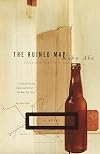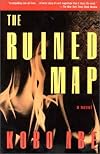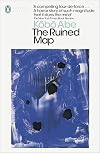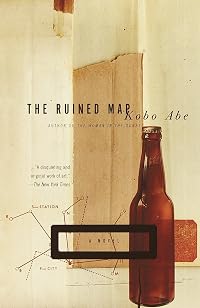
The Ruined Map
by Kōbō Abe
On This Page
Description
Of all the great Japanese novelists, Kobe Abe was indubitably the most versatile. With The Ruined Map, he crafted a mesmerizing literary crime novel that combines the narrative suspense of Chandler with the psychological depth of Dostoevsky. Mr. Nemuro, a respected salesman, disappeared over half a year ago, but only now does his alluring yet alcoholic wife hire a private eye. The nameless detective has but two clues: a photo and a matchbook. With these he embarks upon an ever more puzzling show more pursuit that leads him into the depths of Tokyo's dangerous underworld, where he begins to lose the boundaries of his own identity. Surreal, fast-paced, and hauntingly dreamlike, Abe’s masterly novel delves into the unknowable mysteries of the human mind. Translated from the Japanese by E. Dale Saunders. show lessTags
Recommendations






Member Recommendations

kaixo The last story of "Beyond the Curve" of the same title was written a year before and appears as last chapter of "The Ruined Map".

Member Reviews
This starts off as a detective novel, albeit Japanese, peppered with the odd observations along the lines of: “he had the neck of one who was untrustworthy”. Somewhere along the way it becomes something else entirely and it is that journey that held me the whole time.
The flow is something I have encountered before in Japanese novels, it is like you have missed a page or a whole chapter. You are reading and suddenly you realise that the flow has substantially altered but you don’t know where so you go back and re-read the previous pages and still you cannot find where it shifted but it really is like there is a page missing except it is an ebook.
So you read on and just get over it but you find yourself going back and re-reading show more chunks. It is disorienting but after a while it becomes normal. The story per se is completely unsustainable and yet it becomes part of the confusing experience of reading this book. At times I had absolutely no clear idea what the detective was talking about. Was he describing a woman using landscape terms? or was he describing landscape using woman terms? or was it more of the untrustworthy neck territory?
Every single relationship in this book is just plain weird. But then again it is part of that fabric that serves to undermine you. This book may well be a subtle way of deconstructing the reader as in the reader feels deconstructed without ever piercing the mystery of this detective story.
When I think back on this book it seems to me that it happens mostly at night in places lit by bare electric bulbs in a landscape reminiscent of the underside of the tower block in Brazil mixed up with 1960’s science fiction novels. In reality I have no idea at all what this was about. It is incredibly sensual in places in ways I cannot even begin to describe.
And I loved it! show less
The flow is something I have encountered before in Japanese novels, it is like you have missed a page or a whole chapter. You are reading and suddenly you realise that the flow has substantially altered but you don’t know where so you go back and re-read the previous pages and still you cannot find where it shifted but it really is like there is a page missing except it is an ebook.
So you read on and just get over it but you find yourself going back and re-reading show more chunks. It is disorienting but after a while it becomes normal. The story per se is completely unsustainable and yet it becomes part of the confusing experience of reading this book. At times I had absolutely no clear idea what the detective was talking about. Was he describing a woman using landscape terms? or was he describing landscape using woman terms? or was it more of the untrustworthy neck territory?
Every single relationship in this book is just plain weird. But then again it is part of that fabric that serves to undermine you. This book may well be a subtle way of deconstructing the reader as in the reader feels deconstructed without ever piercing the mystery of this detective story.
When I think back on this book it seems to me that it happens mostly at night in places lit by bare electric bulbs in a landscape reminiscent of the underside of the tower block in Brazil mixed up with 1960’s science fiction novels. In reality I have no idea at all what this was about. It is incredibly sensual in places in ways I cannot even begin to describe.
And I loved it! show less
[n.b. A ‘no star’ rating for books I review does not imply criticism—I rarely give ratings, as giving stars is an unhelpfully blunt instrument and all too often involves comparing apples with oranges.]
An unnamed detective is hired to find his client’s husband. The husband is a salesman who disappeared at the corner of a street near their home, and the client's brother has tried without success to find him.
The detective never seems to be quite certain what he is looking for, and the story reads often as though he has two and two in his two hands, but he cannot make them make four. He seems to be in between very distinct places for much of the book: the couple's apartment and his own office, the office and the dry channel where show more the prostitutes work, the office and the noodle-shop, and so on. Neither the places nor his journeys between them lead to any advancement in his case, as though the eponymous ruined map he has been given keeps him in the wrong place, rather than guiding him to where he might find answers.
In the same way, the detective seems to be in-between the pages of the book, but never quite in, let alone driving, the story. He expects to find ways of resolving the mystery through his obsessive attention to irrelevant details, like traffic patterns or matchbooks. He never seems to get any closer to the object of his search, except insofar as he begins to identify strongly with the husband, thereby failing to find either of them.
'The Ruined Map' is written in a naturalistic way, and is bleakly funny in places, but both characteristics serve to underline isolation as a fundamental human experience, as the detailed description of particular places throws into relief the universality of absurdity as characteristic of life. show less
An unnamed detective is hired to find his client’s husband. The husband is a salesman who disappeared at the corner of a street near their home, and the client's brother has tried without success to find him.
The detective never seems to be quite certain what he is looking for, and the story reads often as though he has two and two in his two hands, but he cannot make them make four. He seems to be in between very distinct places for much of the book: the couple's apartment and his own office, the office and the dry channel where show more the prostitutes work, the office and the noodle-shop, and so on. Neither the places nor his journeys between them lead to any advancement in his case, as though the eponymous ruined map he has been given keeps him in the wrong place, rather than guiding him to where he might find answers.
In the same way, the detective seems to be in-between the pages of the book, but never quite in, let alone driving, the story. He expects to find ways of resolving the mystery through his obsessive attention to irrelevant details, like traffic patterns or matchbooks. He never seems to get any closer to the object of his search, except insofar as he begins to identify strongly with the husband, thereby failing to find either of them.
'The Ruined Map' is written in a naturalistic way, and is bleakly funny in places, but both characteristics serve to underline isolation as a fundamental human experience, as the detailed description of particular places throws into relief the universality of absurdity as characteristic of life. show less
The Existential Detective, slipping in and out of himself in an almost savantlike way that helps him step into the mind of his quarry. Sounds like a Grant Morrison protagonist, but the nameless narrator of Abe's tense, worried novel doesn't really know he's doing it, or how, which drops him on the tragic, or pathetic, end of the scoreboard. His map is ruined, and the more conventional metaphorical sense of that tumbles sickeningly into the darker, more desperate sense in which David Foster Wallace uses it when he talks about people who are being made to disappear being "demapped", suicides "erasing their own maps". The map is not just missing, or wrong. It is ruined, and even if it weren't it would only show you the way to a ruined show more human being.
So much for the big-deal metaphor. Excluding or at least asterisking the phantasmagoria of manga/anime, there are three types of fictional Japan that stand out, I'd venture, above the rest, in terms of iconicity and saying something powerfully symbolically true about this island people. As I write, it's just about a week since their island story suffered the triple catastrophe of planetjolting earthquake, tsunami, and now one or more nuclear meltdowns that we pray will remain partial. And that's perhaps a fourth theme--the bravest people, "enduring the unendurable" and pulling together in its face. 頑張りまして。 But I am thinking of a) your stories of pure honour and deep evil and overmastering sentiment--from samurai to yakuza; b) your neon futures, from almost transparent Tokyo cosmofuturism to dark and twisted Osaka bladerunnerism; c) inaka-and-shitamachi stories, ranging from the heartwarming virtues of Waterboys or Haken no Hinkaku or Tampopo to a grim and Gothic sensibility, where the poverty is no longer a chance to pull together but cause to knife a dude down at the illegal oden stand, and the noodle grease on the walls isn't comforting and a symbol of the soul food of human kindness, but a place where horrible Japanese roaches thrive and breed and are gobbled down by braincracked homuresu that haven't seen their own honour bright in a mirror for a long time. It's that last--the bizarreness and wrongness and lewdness of the everyday, that The Ruined Map evokes so well.
It's crucial that it takes place at the edges of fecund and expanding cities--the ferment is here, and exciting, and sex suffuses every interaction between woman and man and really man and man. But the cities are displacing ancient and evil spirits, and doing it in a clapboard-and-contingency way that provides no spark of humanity to transfer these dwelling-places into settlements--they're unsettled, in fact, places where the spark of human habitation has not yet become a flame, and god knows you're not gonna hide from the starvation of your spirit with pissy sake in your sheetmetal house. They're spooky as hell, I'm trying to say.
So none of that's a bad plan if you're trying to make great art. But it isn't that blurring of lines between hunter and prey that makes this great art--that's standard noir, and this is more than just Nihon noir--nor is it the subsequent unravelling of the lines making up the world, the endwise beginagaining, shiverly, in the very words of the beginning. It's Abe's skill as a miniaturist, and his translator's sensitive touch, that make this a treasure trove and not just, like, a Halloween story told by a Japanese Kafka. I'll end with a few.
This is the epigraph: "The city--a bounded infinity. A labyrinth where you are never lost. Your private map where every block bears exactly the same number. Even if you lose your way, you cannot go wrong."
This is when the detective and the woman for whom he yearns are talking about her missing husband, who has a passion for getting certified to do and be different crap (e.g. truck driver, high-school teacher, and ff., marine radio operator):
"(...) did he dream of the sea, or something like that?"
"My husband is a very matter-of-fact man. When he became section head he was very happy because he had somehow stopped sliding down the slope of life."
"But he did leave you, didn't he."
"It wasn't because of his dreams. He used to say licenses were the anchor of human life."
"Using so many anchors for such a small boat certainly puts him in the category of dreamers, doesn't it? If he didn't use them he'd float away."
This is from almost the end, when the protagonist (nameless, if you haven't figured that out) is reflecting on the end of his marriage. It's plain human sadness.
"The fact that I didn't have the courage to wait in silence until she sought me out may have eroded our relationship."
Great book. You know, I'm gonna say it again, and I don't care if you think it's gauche: good luck, Japan. show less
So much for the big-deal metaphor. Excluding or at least asterisking the phantasmagoria of manga/anime, there are three types of fictional Japan that stand out, I'd venture, above the rest, in terms of iconicity and saying something powerfully symbolically true about this island people. As I write, it's just about a week since their island story suffered the triple catastrophe of planetjolting earthquake, tsunami, and now one or more nuclear meltdowns that we pray will remain partial. And that's perhaps a fourth theme--the bravest people, "enduring the unendurable" and pulling together in its face. 頑張りまして。 But I am thinking of a) your stories of pure honour and deep evil and overmastering sentiment--from samurai to yakuza; b) your neon futures, from almost transparent Tokyo cosmofuturism to dark and twisted Osaka bladerunnerism; c) inaka-and-shitamachi stories, ranging from the heartwarming virtues of Waterboys or Haken no Hinkaku or Tampopo to a grim and Gothic sensibility, where the poverty is no longer a chance to pull together but cause to knife a dude down at the illegal oden stand, and the noodle grease on the walls isn't comforting and a symbol of the soul food of human kindness, but a place where horrible Japanese roaches thrive and breed and are gobbled down by braincracked homuresu that haven't seen their own honour bright in a mirror for a long time. It's that last--the bizarreness and wrongness and lewdness of the everyday, that The Ruined Map evokes so well.
It's crucial that it takes place at the edges of fecund and expanding cities--the ferment is here, and exciting, and sex suffuses every interaction between woman and man and really man and man. But the cities are displacing ancient and evil spirits, and doing it in a clapboard-and-contingency way that provides no spark of humanity to transfer these dwelling-places into settlements--they're unsettled, in fact, places where the spark of human habitation has not yet become a flame, and god knows you're not gonna hide from the starvation of your spirit with pissy sake in your sheetmetal house. They're spooky as hell, I'm trying to say.
So none of that's a bad plan if you're trying to make great art. But it isn't that blurring of lines between hunter and prey that makes this great art--that's standard noir, and this is more than just Nihon noir--nor is it the subsequent unravelling of the lines making up the world, the endwise beginagaining, shiverly, in the very words of the beginning. It's Abe's skill as a miniaturist, and his translator's sensitive touch, that make this a treasure trove and not just, like, a Halloween story told by a Japanese Kafka. I'll end with a few.
This is the epigraph: "The city--a bounded infinity. A labyrinth where you are never lost. Your private map where every block bears exactly the same number. Even if you lose your way, you cannot go wrong."
This is when the detective and the woman for whom he yearns are talking about her missing husband, who has a passion for getting certified to do and be different crap (e.g. truck driver, high-school teacher, and ff., marine radio operator):
"(...) did he dream of the sea, or something like that?"
"My husband is a very matter-of-fact man. When he became section head he was very happy because he had somehow stopped sliding down the slope of life."
"But he did leave you, didn't he."
"It wasn't because of his dreams. He used to say licenses were the anchor of human life."
"Using so many anchors for such a small boat certainly puts him in the category of dreamers, doesn't it? If he didn't use them he'd float away."
This is from almost the end, when the protagonist (nameless, if you haven't figured that out) is reflecting on the end of his marriage. It's plain human sadness.
"The fact that I didn't have the courage to wait in silence until she sought me out may have eroded our relationship."
Great book. You know, I'm gonna say it again, and I don't care if you think it's gauche: good luck, Japan. show less
I decided to read [b:The Ruined Map|9997|The Ruined Map|Kōbō Abe|https://i.gr-assets.com/images/S/compressed.photo.goodreads.com/books/1320459931l/9997._SY75_.jpg|1561737] because I came across it in a charity shop and respected the weirdness of Abe's [b:The Ark Sakura|9996|The Ark Sakura|Kōbō Abe|https://i.gr-assets.com/images/S/compressed.photo.goodreads.com/books/1328000528l/9996._SY75_.jpg|12743] (without enjoying it). Although [b:The Ark Sakura|9996|The Ark Sakura|Kōbō Abe|https://i.gr-assets.com/images/S/compressed.photo.goodreads.com/books/1328000528l/9996._SY75_.jpg|12743] is apocalyptic scifi and [b:The Ruined Map|9997|The Ruined Map|Kōbō show more Abe|https://i.gr-assets.com/images/S/compressed.photo.goodreads.com/books/1320459931l/9997._SY75_.jpg|1561737] ostensibly a noir mystery, I found the latter stranger and more baffling. It was hard to read, in fact. The conventional setup of a private detective investigating a disappeared husband becomes disorientating and existential as any clue only produces more mysteries. The detective narrates his explorations of seedy locales and shifty people in first person, with a tone that starts deadpan and gradually lapses into bewilderment. Reality itself seem to be collapsing.
I think the above is hallucination brought on by head injury, possibly concussion? By the end, I was reminded of Paul Auster's [b:The New York Trilogy|431|The New York Trilogy (New York Trilogy #1-3)|Paul Auster|https://i.gr-assets.com/images/S/compressed.photo.goodreads.com/books/1386924429l/431._SX50_.jpg|2343071], which also tore the mystery genre into confetti, and Martin McInnes' [b:Infinite Ground|30256420|Infinite Ground|Martin MacInnes|https://i.gr-assets.com/images/S/compressed.photo.goodreads.com/books/1463999496l/30256420._SX50_.jpg|50728268], which I much preferred as it transforms a missing person mystery into ecological fiction. I found [b:The Ruined Map|9997|The Ruined Map|Kōbō Abe|https://i.gr-assets.com/images/S/compressed.photo.goodreads.com/books/1320459931l/9997._SY75_.jpg|1561737] so incomprehensible that I wonder whether something was lost in translation. It's also highly plausible I'm lacking necessary the social and spatial context of 1960s Japan to unravel its meaning. Honestly, it's atmospheric but I understood absolutely nothing. show less
Now he is standing here, balancing the weight of unfulfilled dreams with what he has lost. What will he do? I search and fumble for him... but in vain. This blackness I am seeking is after all merely my own self... my own map, revealed by my brain. I am the one standing here, not he. Properly speaking, the place where I should be standing is not here but in front of the board fence around the constuction site from which the window of my wife's room is visible. I stand trembling, seeking the window of a stranger who has only the accidental relationship with me of being my client.
Of all the great Japanese novelists, Kobe Abe was indubitably the most versatile. With The Ruined Map, he crafted a mesmerizing literary crime novel that combines the narrative suspense of Chandler with the psychological depth of Dostoevsky.
Mr. Nemuro, a respected salesman, disappeared over half a year ago, but only now does his alluring yet alcoholic wife hire a private eye. The nameless detective has but two clues: a photo and a matchbook. With these he embarks upon an ever more puzzling pursuit that leads him into the depths of Tokyo's dangerous underworld, where he begins to lose the boundaries of his own identity. Surreal, fast-paced, and hauntingly dreamlike, Abe's masterly novel delves into the unknowable mysteries of the human show more mind.
Translated from the Japanese by E. Dale Saunders.
From the Trade Paperback edition. show less
Mr. Nemuro, a respected salesman, disappeared over half a year ago, but only now does his alluring yet alcoholic wife hire a private eye. The nameless detective has but two clues: a photo and a matchbook. With these he embarks upon an ever more puzzling pursuit that leads him into the depths of Tokyo's dangerous underworld, where he begins to lose the boundaries of his own identity. Surreal, fast-paced, and hauntingly dreamlike, Abe's masterly novel delves into the unknowable mysteries of the human show more mind.
Translated from the Japanese by E. Dale Saunders.
From the Trade Paperback edition. show less
I had a really tough time with this book. There were several reasons that I finished this story, although I really did not want to. First, I won this book from a fellow Bookcrosser who sent it to me because it had been on my wishlist for a long time. The second reason was because I have read works by this author before and have always found his stories weird and wonderful. The last reason was because I wanted to find out what happened to the man who disappeared in the beginning of the book.
To me this book was bizarre, but not in a way that I liked. I had an extremely hard time following the story line. I could not understand why individuals were behaving as they were.
The story itself is about a woman who reports that her husband show more disappeared six months ago. She hires a private investigator to find him, but she is providing little to no information to help the person she hired. As the investigation proceeds, individuals prove to either be helpful or not or they tell the truth or lie. The ending was about as bleak an ending of any story I have recently read. Others may think this a creative book, but I did not enjoy reading it. show less
To me this book was bizarre, but not in a way that I liked. I had an extremely hard time following the story line. I could not understand why individuals were behaving as they were.
The story itself is about a woman who reports that her husband show more disappeared six months ago. She hires a private investigator to find him, but she is providing little to no information to help the person she hired. As the investigation proceeds, individuals prove to either be helpful or not or they tell the truth or lie. The ending was about as bleak an ending of any story I have recently read. Others may think this a creative book, but I did not enjoy reading it. show less
Ratings
Members
- Recently Added By
Lists

Japanese Literature
230 works; 40 members

Reading LIst
648 works; 1 member
Author Information

82+ Works 9,093 Members
Kobo Abe is the pseudonym of Kimifusa Abe, who was born in Tokyo, Japan on March 7 1924. He was brought up in Manchuria where he lived with his father, a doctor of the hosipital attached to the Imperial Medical Colledge of Manchuria. In elementary school, he was educated in the experimental way, in which a teacher trained children to debating and show more rapid reading. Abe went back to Tokyo and went to Sejo Koko High School, a famous private school. He was later admitted to the faculty of medicine of Tokyo University. In 1944, Abe heard that Japan would lose the war before long and he forged a medical certificate to get home to Manchuria. He earned his medical degree in 1948, but never practiced. After graduation he began his writing career and became a member of a literary group led by Kiyoteru Hamada. Often compared to Kafka , he treated the contemporary human predicament in a realistic yet symbolic style. In 1951 he got the Akutagawa Award by his first masterpiece, Kabe (The Walls). Among Abe's novels are Woman in the Dunes, published in 1962 and made into a film in 1964, and his best-known work, Secret Rendezvous. His plays include Friends, published in 1967. The first of his short stories to appear in English were collected in Beyond the Curve, 1944-66. Abe died in 1993. (Bowker Author Biography) show less
Some Editions
Awards and Honors
Distinctions
The Guardian Book of the Day (2020-11-17)
Series
Belongs to Publisher Series
Work Relationships
Has the adaptation
Common Knowledge
- Canonical title
- The Ruined Map
- Original title
- 燃えつきた地図
- Original publication date
- 1967; 1969 (English: Saunders) (English: Saunders)
- Important places
- Japan
- Related movies
- The Man Without a Map (1968)
- Epigraph
- The city—a bounded infinity. A labyrinth where you are never lost. Your private map where every block bears exactly the same number.
Even if you lose your way, you cannot go wrong. - First words
- I pressed down the clutch and slipped the gear into low.
- Last words
- (Click to show. Warning: May contain spoilers.)And when, unconsciously, I tried to give a name to the flattened cat, for the first time in a long time an extravagant smile melted my cheeks and spread over my face.
Classifications
- Genres
- Fiction and Literature, General Fiction, Mystery
- DDC/MDS
- 895.635 — Literature & rhetoric Literatures of other languages Literatures of East and Southeast Asia Japanese Japanese fiction 1945–2000
- LCC
- PL845 .B4 .M613 — Language and Literature Languages and literatures of Eastern Asia, Africa, Oceania Languages of Eastern Asia, Africa, Oceania Japanese language and literature Japanese literature Individual authors and works
- BISAC
Statistics
- Members
- 740
- Popularity
- 38,067
- Reviews
- 6
- Rating
- (3.58)
- Languages
- 7 — English, French, German, Italian, Japanese, Spanish, Swedish
- Media
- Paper, Ebook
- ISBNs
- 18
- ASINs
- 7