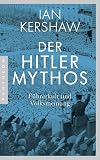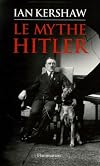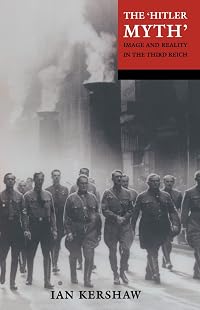
The "Hitler Myth": Image and Reality in the Third Reich
by Ian Kershaw
On This Page
Description
Few, if any, twentieth-century political leaders have enjoyed greater popularity among their own people than Hitler did in the decade or so following his rise to power in 1933. The personality of Hitler himself, however, can scarcely explain this immense popularity or his political effectiveness in the 1930s and '40s. His hold over the German people lay rather in the hopes and perceptions of the millions who adored him. Based largely on the reports of government officials, party agencies, show more and political opponents, Ian Kershaw's groundbreaking study charts the creation, growth, and decline of the "Hitler myth." He demonstrates how the manufactured "Fuhrer-cult" served as a crucial integrating force within the Third Reich and a vital element in the attainment of Nazi political aims. Masters of the new techniques of propaganda, the Nazis used "image-building" to exploit the beliefs, phobias, and prejudices of the day. Kershaw greatly enhances our understanding of the German people's attitudes and behavior under Nazi rule and the psychology behind their adulation of Hitler. show lessTags
Recommendations



















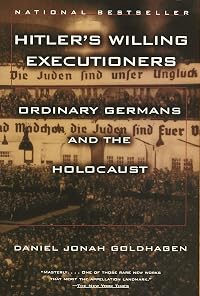
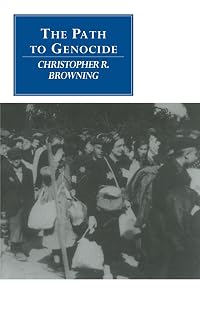










Member Recommendations

The Origins of the Final Solution. The Evolution of Nazi Jewish Policy, September 1939-March 1942 by Christopher R. Browning
AuntieCatherine If, like me, you have always wondered why a modern, industrial, educated nation could have fallen so low - this book gives part of the answer.
Member Reviews
A systematic look at the way Hitler’s image was formed and used before and during WWII. Kershaw’s conclusion claims the circumstances are unique enough and the result extraordinary enough never to be replicated - not sure about that one. His approach is sometimes a bit scattershot in using individuals as representatives for whole regions or social groups, much in the same way you’d see quotes used in Civil War to give an authentic ring to the historian’s narrative about the war. Actual quantitative measurements are few, necessarily, and by the nature of the oppressive state any data from the period is suspect (dissenters were unlikely to voice said dissent through large periods).
The most striking part of the story was seeing show more how Hitler managed his image relative to the audience. The early rabid antisemitism he used in gaining control of the party dies down as he faces the mainstream public and eventually rules the nation. Antisemitism is left to the underlings. Likewise is all the bad news, Hitler appearing only with some message of victory or hope, programming a pavlovian response to his image almost, making people crave reassurance from the Führer when the war stars to go badly. It also seems to have fueled a compensatory narrative that wasn’t a designed propaganda message; that whenever things went wrong, someone had let him down (rather than any incompetence in the leadership).
You can see these mental gymnastics in some war memoirs from the nazi side like Berlins sista timmar - En svensk SS-soldats berättelse om slutstriden (Ragnarok in english). show less
The most striking part of the story was seeing show more how Hitler managed his image relative to the audience. The early rabid antisemitism he used in gaining control of the party dies down as he faces the mainstream public and eventually rules the nation. Antisemitism is left to the underlings. Likewise is all the bad news, Hitler appearing only with some message of victory or hope, programming a pavlovian response to his image almost, making people crave reassurance from the Führer when the war stars to go badly. It also seems to have fueled a compensatory narrative that wasn’t a designed propaganda message; that whenever things went wrong, someone had let him down (rather than any incompetence in the leadership).
You can see these mental gymnastics in some war memoirs from the nazi side like Berlins sista timmar - En svensk SS-soldats berättelse om slutstriden (Ragnarok in english). show less
This is a book that, having read Ian Kershaw's massive two-volume biography of Adolf Hitler (which he wrote afterward), I didn't think I needed to read. Now I realize how wrong I was; this is one of the absolute must-reads for anyone seeking to understand how the Third Reich functioned.
Kershaw's focus in this book is on Hitler's popularity and its role in legitimizing the regime. Using Max Weber's formulation of "charismatic authority," he examines the rise of the "leadership cult" around Hitler, and how it became an important instrument in Nazi rule. This was hardly an original invention of Hitler's, but drew upon leadership cults in German culture from imperial times. Conservative Germans disaffected from the Weimar Republic longed show more for a strong man to restore Germany's imperial greatness, while the miseries of the Great Depression led many to seek someone who could deliver Germany from its travails. Hitler's public persona was crafted to satisfy this demand, and was the key ingredient in the Nazis' rise to power.
Hitler maintained this aura as chancellor through careful image management. An important aspect of this was the awareness that its maintenance required association with positive developments. Because of this his appearances were rationed, tied to announcements of economic progress and foreign policy triumphs. By contrast the party itself soon came into popular disrepute through its conspicuous displays of petty corruption. Not only did Hitler rise above this, but his popularity ensured his indispensability to the party -- in short, they needed him in order to maintain their authority.
For all of Hitler's (and Joseph Goebbels's) success in maintaining his popularity, Kershaw sees it as contingent upon circumstances. The gap between economic promises and results was ignored as Hitler scored foreign policy triumphs, while general uneasiness about the outbreak of the war in 1939 was soon dispelled by the military triumphs in Western Europe. Yet Kershaw portrays Hitler as falling victim to the classic flaw of believing his own press, with the failure to bring about a popularly-anticipated end to the war, coupled with the surprise attack on the Soviet Union in June 1941, as signaling the beginning of the decline of his stature. With the German people increasingly exposed to the failings and brutality of the Nazi regime, Hitler's popularity plummeted to the point when, by the end of the war, they regarded themselves as much as victims of it as were the rest of Europe.
Kershaw's book is a fascinating study of the role the Hitler image played in Nazi Germany. His analysis helps to explain much about his role for the German people during those years, and how Germans rationalized the terrible developments of those years. If there is a flaw, it's that Kershaw doesn't tie his findings into broader discussions of leadership beyond Weber; his argument about how Germans saw Hitler as unaware of Nazi corruption, for example, was squarely in a tradition of "the courtiers, not the king" rationalizations which have a long tradition in Western history. Nevertheless, this is a enormously important study of the Nazi regime, one that should be interested in this history of modern Germany or the Second World War. show less
Kershaw's focus in this book is on Hitler's popularity and its role in legitimizing the regime. Using Max Weber's formulation of "charismatic authority," he examines the rise of the "leadership cult" around Hitler, and how it became an important instrument in Nazi rule. This was hardly an original invention of Hitler's, but drew upon leadership cults in German culture from imperial times. Conservative Germans disaffected from the Weimar Republic longed show more for a strong man to restore Germany's imperial greatness, while the miseries of the Great Depression led many to seek someone who could deliver Germany from its travails. Hitler's public persona was crafted to satisfy this demand, and was the key ingredient in the Nazis' rise to power.
Hitler maintained this aura as chancellor through careful image management. An important aspect of this was the awareness that its maintenance required association with positive developments. Because of this his appearances were rationed, tied to announcements of economic progress and foreign policy triumphs. By contrast the party itself soon came into popular disrepute through its conspicuous displays of petty corruption. Not only did Hitler rise above this, but his popularity ensured his indispensability to the party -- in short, they needed him in order to maintain their authority.
For all of Hitler's (and Joseph Goebbels's) success in maintaining his popularity, Kershaw sees it as contingent upon circumstances. The gap between economic promises and results was ignored as Hitler scored foreign policy triumphs, while general uneasiness about the outbreak of the war in 1939 was soon dispelled by the military triumphs in Western Europe. Yet Kershaw portrays Hitler as falling victim to the classic flaw of believing his own press, with the failure to bring about a popularly-anticipated end to the war, coupled with the surprise attack on the Soviet Union in June 1941, as signaling the beginning of the decline of his stature. With the German people increasingly exposed to the failings and brutality of the Nazi regime, Hitler's popularity plummeted to the point when, by the end of the war, they regarded themselves as much as victims of it as were the rest of Europe.
Kershaw's book is a fascinating study of the role the Hitler image played in Nazi Germany. His analysis helps to explain much about his role for the German people during those years, and how Germans rationalized the terrible developments of those years. If there is a flaw, it's that Kershaw doesn't tie his findings into broader discussions of leadership beyond Weber; his argument about how Germans saw Hitler as unaware of Nazi corruption, for example, was squarely in a tradition of "the courtiers, not the king" rationalizations which have a long tradition in Western history. Nevertheless, this is a enormously important study of the Nazi regime, one that should be interested in this history of modern Germany or the Second World War. show less
This is my second or third time reading the book. While access to East German sources has changed a lot about Hitler studies, Kershaw's main claims still hold up. It's interesting to me how good he is at understanding Hitler's rhetoric. He neither under- nor over-states its impact.
As with any Ian Kershaw book I have read, this is excellent. A good addition to his two volume biography of Hitler, centering on the myth not the person and comparing the two.
900 KER 1
Ratings
Members
- Recently Added By
Author Information

Ian Kershaw is professor of modern history at the University of Sheffield. (Bowker Author Biography)
Some Editions
Series
Belongs to Publisher Series
Common Knowledge
- Canonical title*
- Le mythe Hitler. Image et réalité sous le IIIe Reich
- Original title
- Der Hitler-Mythos [Texte imprimé] : Volksmeinung und Propaganda im Dritten Reich / Ian Kershaw ; mit einer Einführung
- Alternate titles*
- The 'Hitler Myth'. Image and Reality in the Third Reich
- Original publication date
- 1980 (1e édition originale allemande, Schriftenreihe der Vierteljahrshefte für Zeitgeschichte, Deutsche Verlags-Anstalt) (1e édition originale allemande, Schriftenreihe der Vierteljahrshefte für Zeitgeschichte, Deutsche Verlags-Anstalt); 2006-08-17 (1e traduction et édition française, Flammarion) (1e traduction et édition française, Flammarion); 2013-08-24 (Réédition française, Champs histoire, Flammarion) (Réédition française, Champs histoire, Flammarion)
- People/Characters
- Adolf Hitler
- Important events
- World War II
- Original language*
- Anglais (Royaume-Uni) (Royaume-Uni)
*Some information comes from Common Knowledge in other languages. Click "Edit" for more information.
Classifications
- Genres
- History, Nonfiction, General Nonfiction, Biography & Memoir
- DDC/MDS
- 943.086 — History & geography History of Europe Central Europe: Germany, Austria, Switzerland, Czech, Poland, Hungary Historical periods of Germany Germany 1866- Third Reich 1933-1945
- LCC
- DD256.5 .K46513 — History of Europe, Asia, Africa and Oceania Germany History of Germany History By period Modern, 1519- 19th-20th centuries Revolution and Republic, 1918- Hitler, 1933-1945. National socialism Period of World War II, 1939-1945
- BISAC
Statistics
- Members
- 434
- Popularity
- 71,163
- Reviews
- 5
- Rating
- (4.03)
- Languages
- 7 — Czech, English, French, German, Italian, Polish, Spanish
- Media
- Paper, Audiobook, Ebook
- ISBNs
- 22
- ASINs
- 5