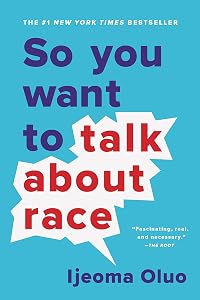
So You Want to Talk about Race
by Ijeoma Oluo
On This Page
Description
"A current, constructive, and actionable exploration of today's racial landscape, offering straightforward clarity that readers of all races need to contribute to the dismantling of the racial divide. In So You Want to Talk About Race, Editor at Large of The Establishment, Ijeoma Oluo offers a contemporary, accessible take on the racial landscape in America, addressing head-on such issues as privilege, police brutality, intersectionality, micro-aggressions, the Black Lives Matter movement, show more and the "N" word. Perfectly positioned to bridge the gap between people of color and white Americans struggling with race complexities, Oluo answers the questions readers don't dare ask, and explains the concepts that continue to elude everyday Americans. Oluo is an exceptional writer with a rare ability to be straightforward, funny, and effective in her coverage of sensitive, hyper-charged issues in America. Her messages are passionate but finely tuned, and crystalize ideas that would otherwise be vague by empowering them with aha-moment clarity. Her writing brings to mind voices like Ta-Nehisi Coates and Roxane Gay, and Jessica Valenti in Full Frontal Feminism, and a young Gloria Naylor, particularly in Naylor's seminal essay "The Meaning of a Word.""-- show lessTags
Recommendations



Member Reviews
So You Want to Talk About Race by Ijeoma Oluo is the kind of book that will have you really thinking about your actions and the way that they affect others. When I finished this book, I immediately passed it onto my manager to read because I wanted to continue the conversation. Oluo uses her own experiences as a person of color navigating our (you have to admit) white supremacist society here in the United States. So this is not only extremely relevant but also a necessary book about an incendiary topic. We (I speak as a collective here with a definite side-eye at my fellow white folks of privilege) need to do better and that starts with educating ourselves. Oluo uses this book like an instruction manual with vocabulary lessons on show more things like microaggressions, the school to prison pipeline, tone policing, intersectionality, cultural appropriation, and the model minority myth. It's full of talking points about how to successfully navigate uncomfortable talks about race, racism, and racial inequality. This isn't an easy book to read because the truth about our society and the way that we have been conditioned to act is a hard pill to swallow BUT it's important to face this head-on so that we can move on to all (hopefully) be better people. Lest you think this is directed solely at white people, Oluo also stresses the importance of people of color having affirmation that their feelings and hurt are valid. Basically, this is a great book that all people wanting to do better should read. 10/10 show less
Whether you answer "yes" or "no" to the titular statement, you should definitely pick up this book. It's simple and straightforward, and explains well how systematic oppression and white supremacy are more important to focus on than single racist actions. Oluo also talks about how unhelpful it is to get defensive when you're called out, because it's not about you! I don't know how our society right now has somehow decided that it's worse to be called a racist than to experience racism but IT IS NOT.
In So You Want to Talk About Race, Ijeoma Oluo addresses both white people and people of color as she introduces various topics you'll want to know as you talk about and desire to learn more about race. Starting with a definition of racism and then delving into topics such as intersectionality, police brutality, affirmative action, the school-to-prison pipeline, microaggressions, the model minority myth and several more, each chapter starts with a personal story illustrating the topic and then explores it more, giving you bullet points of ways to think about and respond to such behaviors.
This is an excellent introduction to a challenging topic. And don't get me wrong, the book is challenging as well. If you're a white person (like me), show more it probably challenges your assumptions at least once, and invites you to live with the discomfort and really think about issues that don't affect you, personally, on a day to day basis. This is a book I would reread several times before I really felt I could entirely grasp it, and even then I know in a sense I never can because as a white woman I do have privileged status in this country. I'm sure a person of color would have a completely different experience reading this book than I ever could. The paperback version of the book (and the e-book I read) has a discussion guide for the book, as well as guidelines to use when discussing. Highly recommended. show less
This is an excellent introduction to a challenging topic. And don't get me wrong, the book is challenging as well. If you're a white person (like me), show more it probably challenges your assumptions at least once, and invites you to live with the discomfort and really think about issues that don't affect you, personally, on a day to day basis. This is a book I would reread several times before I really felt I could entirely grasp it, and even then I know in a sense I never can because as a white woman I do have privileged status in this country. I'm sure a person of color would have a completely different experience reading this book than I ever could. The paperback version of the book (and the e-book I read) has a discussion guide for the book, as well as guidelines to use when discussing. Highly recommended. show less
For the past 4-5 years I have been on my own journey-- re-thinking the selective history I was taught, exploring the nature of what is called white supremacist culture, and examining my own attitudes toward racism. I have read many excellent books by both white and black authors. But SO YOU WANT TO TALK ABOUT RACE is the first time I feel like I have had a frank and open one-on-one talk with a black person about how SHE experiences racism and how HER life is impacted. She's puts it all right in your face and it’s intense. And I so admire her bravery in writing this book.
As a white person it was not always easy to read what Ijeoma Oluo writes, though I did not find myself disagreeing with her keen observations. In fact, I appreciated show more her directness and honesty. I felt I was getting a chance (for once) to be on the inside. Here is a black woman trying to explain the pain, hurt, rage, and all-consuming impact of being on the receiving end of racist America. And, once again, I realize that the country I live in is not the same country she lives in.
The book is as practical as it is instructional. Oluo offers clear and useful explanations on some basic concepts related to racism -- like micro aggressions, affirmative action, school-to-prison pipeline, cultural appropriation, privilege, and use of language. She shares specific and extremely vulnerable anecdotes from her own life. And she offers a list of suggested actions anti-racists can take to help change the racist culture of the United States.
Oluo is an exceptional writer and because she made the book story-based, this is very readable non-fiction. And quite an accomplishment! In a little over two hundred pages, she provides us with such personal, practical, and powerful overview that, for me, it is impossible to finish the book without feeling changed. I wish I could make this book required reading for every American. show less
As a white person it was not always easy to read what Ijeoma Oluo writes, though I did not find myself disagreeing with her keen observations. In fact, I appreciated show more her directness and honesty. I felt I was getting a chance (for once) to be on the inside. Here is a black woman trying to explain the pain, hurt, rage, and all-consuming impact of being on the receiving end of racist America. And, once again, I realize that the country I live in is not the same country she lives in.
The book is as practical as it is instructional. Oluo offers clear and useful explanations on some basic concepts related to racism -- like micro aggressions, affirmative action, school-to-prison pipeline, cultural appropriation, privilege, and use of language. She shares specific and extremely vulnerable anecdotes from her own life. And she offers a list of suggested actions anti-racists can take to help change the racist culture of the United States.
Oluo is an exceptional writer and because she made the book story-based, this is very readable non-fiction. And quite an accomplishment! In a little over two hundred pages, she provides us with such personal, practical, and powerful overview that, for me, it is impossible to finish the book without feeling changed. I wish I could make this book required reading for every American. show less
For the past 4-5 years I have been on my own journey-- re-thinking the selective history I was taught, exploring the nature of what is called white supremacist culture, and examining my own attitudes toward racism. I have read many excellent books by both white and black authors. But SO YOU WANT TO TALK ABOUT RACE is the first time I feel like I have had a frank and open one-on-one talk with a black person about how SHE experiences racism and how HER life is impacted. She's puts it all right in your face and it’s intense. And I so admire her bravery in writing this book.
As a white person it was not always easy to read what Ijeoma Oluo writes, though I did not find myself disagreeing with her keen observations. In fact, I appreciated show more her directness and honesty. I felt I was getting a chance (for once) to be on the inside. Here is a black woman trying to explain the pain, hurt, rage, and all-consuming impact of being on the receiving end of racist America. And, once again, I realize that the country I live in is not the same country she lives in.
The book is as practical as it is instructional. Oluo offers clear and useful explanations on some basic concepts related to racism -- like micro aggressions, affirmative action, school-to-prison pipeline, cultural appropriation, privilege, and use of language. She shares specific and extremely vulnerable anecdotes from her own life. And she offers a list of suggested actions anti-racists can take to help change the racist culture of the United States.
Oluo is an exceptional writer and because she made the book story-based, this is very readable non-fiction. And quite an accomplishment! In a little over two hundred pages, she provides us with such personal, practical, and powerful overview that, for me, it is impossible to finish the book without feeling changed. I wish I could make this book required reading for every American. show less
As a white person it was not always easy to read what Ijeoma Oluo writes, though I did not find myself disagreeing with her keen observations. In fact, I appreciated show more her directness and honesty. I felt I was getting a chance (for once) to be on the inside. Here is a black woman trying to explain the pain, hurt, rage, and all-consuming impact of being on the receiving end of racist America. And, once again, I realize that the country I live in is not the same country she lives in.
The book is as practical as it is instructional. Oluo offers clear and useful explanations on some basic concepts related to racism -- like micro aggressions, affirmative action, school-to-prison pipeline, cultural appropriation, privilege, and use of language. She shares specific and extremely vulnerable anecdotes from her own life. And she offers a list of suggested actions anti-racists can take to help change the racist culture of the United States.
Oluo is an exceptional writer and because she made the book story-based, this is very readable non-fiction. And quite an accomplishment! In a little over two hundred pages, she provides us with such personal, practical, and powerful overview that, for me, it is impossible to finish the book without feeling changed. I wish I could make this book required reading for every American. show less
I should have read this sooner. Oluo writes in a way that makes the issue of race accessible and understandable. She doesn't shy away from sharing her own experiences or from challenging white people to make actual changes in their lives. She explains many topics that are often referenced in race conversations: white privilege, intersectionalism, minor aggressions, and the model minority myth.
It's heartbreaking to see where this country is at right now, but as the author says, it might feel sudden to some of us, but for black people, it has always been there. For them, it is frustrating to have to continuously explain that race never stopped being an issue. She includes a fascinating comparison to being in an abusive relationship. Black show more people are often expected to explain a history of racist treatment from someone based solely on the latest small incident.
The author's own mother is white, but she and her brother have an unavoidable separation from her because of their experiences. I can't imagine trying to explain the racism I was facing to my own mother. There's a story about a student "assaulting" staff members in a school and the harsh actions the administrators want to take to punish him. Then you realize the boy is only 5 and they are painting him as a dangerous criminal instead of finding ways to redirect his energy. When a child that young is being judged differently based on his race, it impacts his entire life and his opportunities. The racism in our country is systemic and it's going to take some serious changes before we see a difference.
I hope that I can recognize the ways I can make a difference. That I can begin to "check my privilege" and then do as she recommends, use that privilege to help others without it. I'm listening and praying that I will continue to learn and fight for change. show less
It's heartbreaking to see where this country is at right now, but as the author says, it might feel sudden to some of us, but for black people, it has always been there. For them, it is frustrating to have to continuously explain that race never stopped being an issue. She includes a fascinating comparison to being in an abusive relationship. Black show more people are often expected to explain a history of racist treatment from someone based solely on the latest small incident.
The author's own mother is white, but she and her brother have an unavoidable separation from her because of their experiences. I can't imagine trying to explain the racism I was facing to my own mother. There's a story about a student "assaulting" staff members in a school and the harsh actions the administrators want to take to punish him. Then you realize the boy is only 5 and they are painting him as a dangerous criminal instead of finding ways to redirect his energy. When a child that young is being judged differently based on his race, it impacts his entire life and his opportunities. The racism in our country is systemic and it's going to take some serious changes before we see a difference.
I hope that I can recognize the ways I can make a difference. That I can begin to "check my privilege" and then do as she recommends, use that privilege to help others without it. I'm listening and praying that I will continue to learn and fight for change. show less
I've tried to write a review for Ijeoma Oluo's excellent book a few times now and failed, so I'm just going to write about what I, personally, got out of the book instead. If the title doesn't give the subject away, this is a book divided into chapters that address topics and issues surrounding race in America. Oluo writes clearly, both with an understanding of the difficulties involved in, and the necessity of, an on-going conversation about race that involves everyone. She points out that conversations about race are uncomfortable and that everyone tends to walk away from such conversations feeling worse than before the conversation started. But the need for the discussion remains.
I've been working to read more from authors of color show more and to follow the writings (from twitter, to articles, to books) of the voices explaining the experience and history of various minority groups, so some of what Oluo is saying are things I'd heard before. But there was a lot new in there, as well as Oluo's remarkable ability to explain concepts clearly. Among the things I took away from this book was that the conversations about race that need to be happening are between white people. We need to talk about the impact of racism among ourselves; it's not the job of any person of color to walk us through the basics of any of this, and that when we do have questions, google is an excellent source of information. Oluo also has an interesting chapter on the specific issues facing Asian Americans, and how the 'model minority' stereo-type can do real harm, just as our assumptions about the teachability of black boys does.
All in all, this was an excellent and well-organized primer on the basics every American needs to understand if we are going to move forward together. show less
I've been working to read more from authors of color show more and to follow the writings (from twitter, to articles, to books) of the voices explaining the experience and history of various minority groups, so some of what Oluo is saying are things I'd heard before. But there was a lot new in there, as well as Oluo's remarkable ability to explain concepts clearly. Among the things I took away from this book was that the conversations about race that need to be happening are between white people. We need to talk about the impact of racism among ourselves; it's not the job of any person of color to walk us through the basics of any of this, and that when we do have questions, google is an excellent source of information. Oluo also has an interesting chapter on the specific issues facing Asian Americans, and how the 'model minority' stereo-type can do real harm, just as our assumptions about the teachability of black boys does.
All in all, this was an excellent and well-organized primer on the basics every American needs to understand if we are going to move forward together. show less
Members
- Recently Added By
Lists

Top Five Books of 2020
982 works; 350 members

Black Authors
384 works; 32 members

2021
26 works; 1 member

Seal Press
48 works; 1 member

Essays/Memoir/Nonfiction
10 works; 1 member

BLM
210 works; 1 member

Books Read in 2018
4,360 works; 110 members

List of Removed Books from Nimitz Library
353 works; 1 member

Books That Changed Our Perspective
423 works; 168 members

Club Read's Recommended Nonfiction Written by Women
618 works; 30 members

Rainbow Gardens: Parent Collection
19 works; 1 member

Banned or Challenged Books
400 works; 41 members

Mind Expanding Books by hackerkid
581 works; 8 members

School library books removed after TX state legislator inquiry
429 works; 6 members

Books Read in 2021
5,361 works; 114 members

Litsy Awards 2018
248 works; 9 members

Patriarchy and white supremacy de-programming
69 works; 1 member
Author Information

6+ Works 4,560 Members
Ijeoma Oluo is a writer and speaker whose work on race has been featured in the New York Times. Washington Post. Elle, the Guardian, and more. She has twice been named to The Root 100 and received the 2018 Feminist Humanist Award from the American Humanist Society.
Awards and Honors
Awards
Distinctions
Work Relationships
Common Knowledge
- Canonical title
- So You Want to Talk about Race
- Original title
- So You Want to Talk about Race
- Original publication date
- 2018-01-16
- First words
- As a Black woman, race has always been a predominant part of my life. (Introduction)
I mean, I just feel like we would have gotten further if we'd focused more on class than race.
When this book first came out one year ago, almost immediately people began asking me, "How is the book doing? Is it successful?" (Preface) - Last words
- (Click to show. Warning: May contain spoilers.)We can do this, together.
(Click to show. Warning: May contain spoilers.)I'm honored to be a part of this conversation with you. (Introduction)
(Click to show. Warning: May contain spoilers.)And above all else, thank you for using these conversations to motivate and guide real action, action beyond talk, to deconstruct White Supremacy and begin to heal the great harm it has brought upon us all. (Preface) - Blurbers
- West, Lindy; Ramsey, Franchesca; Ritcher, Andy; Yang, Jenny; McGorry, Matt; Kondabolu, Hari (show all 17); hampton, dream; Zirin, Dave; Chung, Nicole; Robinson, Phoebe; Jones, Feminista; Gandy, Imani; Satyal, Rakesh; Gorson, Emily V.; DiAngelo, Robin; Khorram, Adib; Moore, Darnell L.
- Original language
- English
- Canonical DDC/MDS
- 305.800973
- Canonical LCC
- E184.A1
Classifications
- Genres
- Sociology, General Nonfiction, Nonfiction
- DDC/MDS
- 305.800973 — Society, government, & culture Social sciences, sociology & anthropology Social group - Age, Gender, Ethnicity Ethnic and national groups standard subdivisions / Ethnic and national groups with ethnic origins from more than one continent, of European descent standard subdivisions Biography And History North America United States
- LCC
- E184 .A1 — History of the United States United States Elements in the population Afro-Americans
- BISAC
Statistics
- Members
- 3,581
- Popularity
- 4,589
- Reviews
- 107
- Rating
- (4.44)
- Languages
- English, German, Spanish, Portuguese (Portugal)
- Media
- Paper, Audiobook, Ebook
- ISBNs
- 24
- ASINs
- 9