
On This Page
Description
Francine Rivers, winner of the ECPA Gold Medallion, is a best-selling author of Christian fiction. A Voice in the Wind takes listeners into a richly imagined ancient Rome in the midst of its great decline. This heart-stirring tale of a young slave girl, torn between her love for a handsome aristocrat and her faith in God, transcends genres with its awe-inspiring power and emotional intensity.Tags
Recommendations




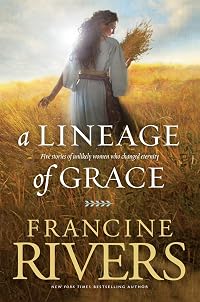
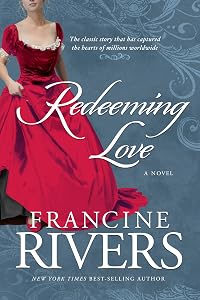

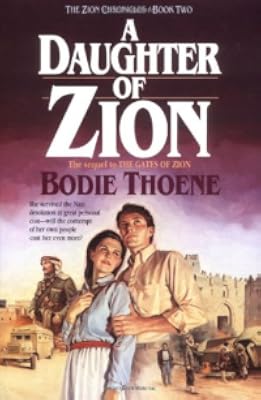
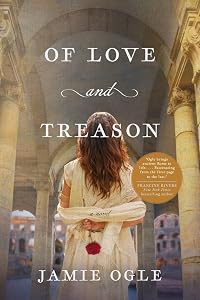

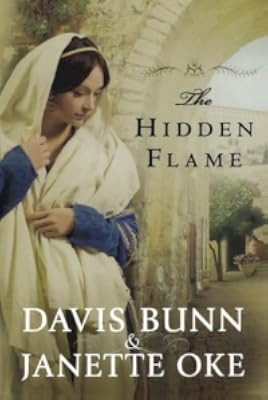

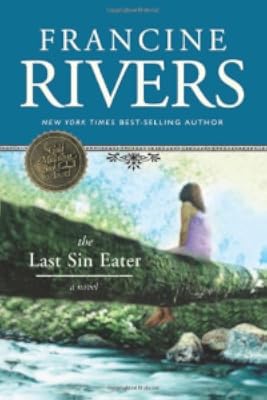
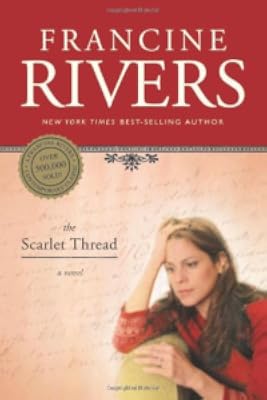




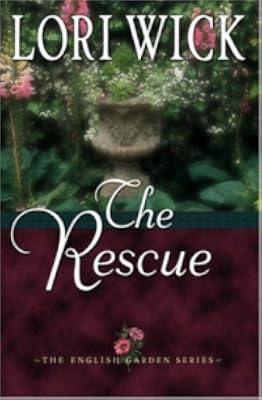


















Member Recommendations

FutureMrsJoshGroban It is BEYOND HILARIOUS how much Francine Rivers ripped off from Quo Vadis. I mean really, and Quo Vadis wasn't all the great. She should have ripped off some stuff from Ben-Hur.
12

Member Reviews
Oh, this book…it’s torn me apart and put me back together again so many times I couldn’t even count them. I’ve wanted to rage at Rivers…why, oh WHY must she make her characters go through some things? But then when I come to my senses again, I realize that it’s very realistic, and that’s when the gravity strikes me—again—that there are lessons here that would hold true in my own life as well. Wow.
Historically speaking, this book is spot-on from everything else I’ve read. Rome was an evil, evil place, and though Rivers doesn’t go into the sordid detail of it all, you know that wrong things are happening (so yes, content warning there—it almost, but didn’t quite, cross my comfortable line, but just be warned in show more case prostitution and things like that bother you). But seeing the good parts come to life—wow. God really does preserve His church through all kinds of things, and for that, I’m grateful!
Characters, setting, theme…all were well-done, immersing me in the story and making it quite difficult to get things done some days because I just wanted to read more! Rivers is a talented author.
Prepare to be challenged and encouraged. This is, in the end, a hopeful, deeply redemptive story…or at least, I trust it will be that way by the time I get to the end of the series. ;) I’m still mulling over several themes from this story, and expect that will continue for quite a while.
Recommended for adults: I don’t believe some content would be suitable for teenagers. show less
Historically speaking, this book is spot-on from everything else I’ve read. Rome was an evil, evil place, and though Rivers doesn’t go into the sordid detail of it all, you know that wrong things are happening (so yes, content warning there—it almost, but didn’t quite, cross my comfortable line, but just be warned in show more case prostitution and things like that bother you). But seeing the good parts come to life—wow. God really does preserve His church through all kinds of things, and for that, I’m grateful!
Characters, setting, theme…all were well-done, immersing me in the story and making it quite difficult to get things done some days because I just wanted to read more! Rivers is a talented author.
Prepare to be challenged and encouraged. This is, in the end, a hopeful, deeply redemptive story…or at least, I trust it will be that way by the time I get to the end of the series. ;) I’m still mulling over several themes from this story, and expect that will continue for quite a while.
Recommended for adults: I don’t believe some content would be suitable for teenagers. show less
Being a non-religious person myself, I am typically jaded about Christian literature, having read some Christian novels that come across as very preachy/cheesy/cliched, but this book (and the rest of the series) was actually surprisingly enjoyable.
The book itself is very well-researched, and I actually learned some new things about the historical period that this book was set in, and the author herself has good writing ability - so a well-researched AND well-written book is always a plus to find, especially in today's culture where so many lackluster authors manage to get themselves published.
I noticed this book because my friend was reading it, and borrowed it from her after she was done. It was not hard to 'get into' the book because show more the author spun a rather engaging tale, you just feel SO bad for Hadassah, and just want to give her a hug. After reading this book, I was rather eager to get started on the next book in this series.
All of the characters in this book are fascinating and fun to read, whether they're protagonist or antagonist, though I did feel that the Christian message came across a bit hard - I felt as if this book was saying that no matter what a good person you are inside, it doesn't count until you actually convert to Christianity (like how Hadassah didn't want to be with Marcus unless he became a Christian, despite the fact that he was so kind to her and loved her and was willing to let her have her religion). I wish Hadassah (and the author) would just relax and accept that people of varying beliefs all have one thing in common, that they can have good hearts. show less
The book itself is very well-researched, and I actually learned some new things about the historical period that this book was set in, and the author herself has good writing ability - so a well-researched AND well-written book is always a plus to find, especially in today's culture where so many lackluster authors manage to get themselves published.
I noticed this book because my friend was reading it, and borrowed it from her after she was done. It was not hard to 'get into' the book because show more the author spun a rather engaging tale, you just feel SO bad for Hadassah, and just want to give her a hug. After reading this book, I was rather eager to get started on the next book in this series.
All of the characters in this book are fascinating and fun to read, whether they're protagonist or antagonist, though I did feel that the Christian message came across a bit hard - I felt as if this book was saying that no matter what a good person you are inside, it doesn't count until you actually convert to Christianity (like how Hadassah didn't want to be with Marcus unless he became a Christian, despite the fact that he was so kind to her and loved her and was willing to let her have her religion). I wish Hadassah (and the author) would just relax and accept that people of varying beliefs all have one thing in common, that they can have good hearts. show less
A Voice in the Wind is the first book of Francine Rivers’s Mark of the Lion series, an inspirational, historical fiction saga set in Ancient Rome, not long after Christ walked the Earth. It features an ensemble cast of characters, but the main ones are Hadassah, a Jewish Christian slave girl; her mistress, Julia; Julia’s brother, Marcus; and Atretes, an enslaved gladiator. Hadassah is caught up in the Roman siege on Jerusalem, and when the city falls and her entire family is killed, leaving her as the only survivor, she’s sold into slavery. After changing hands a few times, she ends up in service to the Valerian family and is specifically given to their daughter, Julia, as a handmaiden. Julia is about the same age as Hadassah, but show more she’s a selfish, petulant girl who resents having decisions made for her by her father and older brother, but even when she’s able to make some choices of her own, she struggles to do the right thing. After two husbands die, she fancies herself in love with the gladiator, Atretes. He’s a warrior from Germania, who was fighting against a Roman invasion of his homeland, when he was caught and enslaved, trained to fight in the arena. Although he hates Rome and all of its people, he can’t seem to help being attracted to Julia, but it’s an ill-fated love affair. Meanwhile, Marcus slowly begins to fall in love with the gentle Hadassah. Although he knows that she’s beginning to fall for him, too, she refuses to share his bed and he’s not inclined to force her. After much contemplation, he tries to persuade Julia to free Hadassah so he can marry her, but when Hadassah turns him down because he doesn’t yet share her faith, Julia does the unthinkable in revenge. This family saga is set against the backdrop of the decadence of the Roman Empire and their pantheon of gods, the bloodthirsty people who regularly attend the games at the arena and cheer on the death and destruction of human life in horrific ways, and the brave, brawny, sometimes arrogant gladiators who put their lives on the line every time for the people’s amusement in hopes of winning their freedom.
Hadassah is a gentle Jewish girl who became a convert to Christianity. Her father preached the Good News in the streets of Jerusalem every day in spite of the risk to his life, but when the Romans besieged the city, the family struggled to survive. Hadassah’s mother and sister eventually succumbed to starvation, while her brother was killed by Roman soldiers. She never quite knew what became of her father, but assumed he, too, was killed. Hadassah, being the only survivor, was swept up and placed on a slave ship with others. Just a tiny young woman, she has little value, but through God’s grace, she avoids being sent to the arena. Instead, she is purchased by a fellow Jew who serves the Valerian family and brought to their home. Phoebe, the matriarch, decides to gift Hadassah to their daughter, Julia, as a handmaiden. At first Julia doesn’t want her, thinking her ugly, and often treats her with disdain, but Hadassah gradually earns Julia’s favor through her stories and songs that amuse Julia and by serving her mistress with humility. Hadassah comes to love Julia like a sister in spite of the girl’s petulant nature and is always there for her. She also begins to fall in love with Julia’s brother, Marcus, even though she knows nothing can come of it. She refuses to merely warm his bed, and even when Marcus arranges for her freedom and asks her to marry him, she believes she can’t because they don’t share the same faith, which leads to Julia turning on her. Hadassah is the perfect servant, meek, humble, kind, compassionate, and long-suffering. And therein lay a problem for me. I felt like she was a little too perfect. Aside from her having trouble sharing her faith out of fear that she might be killed, which was understandable, she has no real flaws. She does everything she’s told and loves her mistress’s entire family unconditionally. I think perhaps the author was trying to make her an archetype of Christ, but even He sometimes lost patience with people. I just think she needed a few more flaws to make her realistic and believable.
Julia is just fifteen when the story opens, and even at that young age, she’s rather haughty and selfish. She has her older brother, Marcus wrapped around her little finger, persuading him to take her to the games at the arena for the first time in defiance of their father’s wishes. Her father arranges a marriage to an intellectual man who is old enough to be her father. Julia despises her new husband and is bored to tears at his country villa. The only bright spot is seeing a handsome gladiator on the road every day, going through his training drills. Eventually her husband dies tragically, after which Julia returns to her father’s house, but a friend introduces her to Calabah, a woman who encourages other women to be more independent. She becomes Julia’s mentor, molding her into her own image, after which Julia becomes more and more unhinged, doing only what pleases her (and what Calabah tells her to do) at the expense of others. After a second marriage ends with the death of her husband, she begins to pursue Atretes, the gladiator who’s caught her fancy. She believes she’s fallen in love with him, but doesn’t want yet another man controlling her, so she makes highly questionable decisions. Those choices lead to more and more heartache and destruction as she gradually loses all sense of self or conscience, ending with betraying Hadassah, the slave who had always looked out for her and done nothing but try to please her, in the worst possible way. I started out being somewhat sympathetic to Julia. She could be pretty irritating with her sense of entitlement, but I understood that some of her unhappiness was rooted in her being a woman who had very little control over her own life or decisions. She had no say in who her first husband would be, and after he died, she had no say over the large estate she inherited. I could easily understand her frustration. But when she kept making bad choices over and over again, never seeming to think of the consequences to anyone, I really lost patience with her. I think maybe the author is setting her up for some kind of grand Christian redemption arc, but after what she did to Hadassah, and with glee I might add, I’m just over her.
Atretes grew up in the woods of northern Germania, where he became a great warrior. He had a beloved wife and was about to become a father, when both his wife and baby died in childbirth. After the Romans invaded, he bravely fought by his father’s side, and he’d just become chieftain of his clan following his father’s death on the battlefield. Then the Roman soldiers cornered him alone, capturing him, but he fought so bravely, they decided to sell him to a slaver who acquired men for the gladiator arena. Atretes resented all of the Romans he encountered but eventually realized he had little choice but to go along with the gladiator training and to fight, hoping to one day earn his freedom. He becomes one of the greatest gladiators Rome has ever seen, earning the admiration of the bloodthirsty crowds at every games. Knowing that his time in the arena could be fleeting if the crowd decides to be fickle and turn on him, he fights with everything he has in every match. Early in his training he caught sight of Julia and admired her from afar, so when she comes seeking his attention years later, he eagerly becomes her lover. However, Julia wants to call the shots in their relationship, and that doesn’t sit well with Atretes. He’s on the cusp of a match that, if he can win it, will give him back his freedom and will make it possible for him to marry Julia, but she might sabotage his efforts with her selfish decisions. Atretes seems like a halfway decent guy, but he’s a little too intensely alpha for my taste. I know he had to be in order to survive and reach the heights he did in the arena, but that type of guy just isn’t my cup of tea. He’s pretty prideful, too, never even considering Julia’s proposition (not that I thought it was a great option) and rejecting his own child (at least at first). After all the killing he’d done both on the battlefield and in the arena, he at least had enough conscience left to regret some of the things he’d done, but he has a ways to go to earn my genuine admiration.
Marcus’s father is a wealthy merchant from Ephesus, who bought his Roman citizenship and has become an influential man in Rome. Marcus is following in his father’s footsteps in that he, too, is working on becoming a self-made businessman. However, where his father is conservative and traditional in his values, Marcus is more the type to live life to fullest, whether that means taking many lovers, going to the games regularly, or partying it up with his friends. However, while he is said to live a rather over indulgent lifestyle, we don’t really see a whole lot of that in the narrative. It’s mostly in the background and told more than shown. Marcus adores his sister and will do almost anything for Julia, but even he has his limits. He doesn’t necessarily like some of the choices she makes along the way, but he assures her that nothing she could do would drive him away… until she does something so unthinkable that he never could have predicted it. From the moment Hadassah comes to be a part of his father’s household, Marcus senses something different about her. He doesn’t understand how someone can be so kind and serene all the time, but her peaceful spirit draws him to her until he starts to realize that he’s falling in love with her. He wants to take her to his bed, but she refuses. In this, I have to say that I really respected Marcus a lot for showing consideration toward Hadassah’s wishes and not taking it any further. Even if she had consented, though, I wouldn’t have been comfortable with it because of the power differential in the master/slave relationship. However, he does continue to pursue Hadassah right up to a marriage proposal, so when she still refuses him because of the differences in their faiths, he’s very hurt. Overall, Marcus seemed like a good guy who showed genuine care and concern for Hadassah, and although he frequently disagreed with his father about many things, he also clearly loves his family very much, too. Out of all the main characters, though, I felt like I got to know the least about him.
Years ago, after reading Francine Rivers’s incomparable romance novel, Redeeming Love, I recall looking for more of her work and found her Mark of the Lion series. I believe I only read the first two books, though, because the third hadn’t been released yet. I didn’t remember much of the story, except a general sense that I’d liked it. I have no idea what I would have rated A Voice in the Wind back then, but on this second reading, it just didn’t grab me the way I thought it would. First of all, I didn’t really consider it to be a romance like it’s sometimes classified online by both readers and bookstores. Yes, Marcus and Hadassah come to love each other, but they share minimal interactions and like I mentioned there’s that uncomfortable power differential as well. There’s some kissing, but they don’t really spend a lot of time alone together, really getting to know one another or find themselves in any genuinely romantic scenarios. Therefore, the progression of their relationship isn’t in any way indicative of a traditional romance. Not to mention, at the point where this book ends, there’s no HEA. Likewise, Atretes and Julia’s relationship wasn’t really romantic to me at all, because it felt more like a toxic mess filled with never-ending drama that didn’t end well either. Julia’s other marriages were equally as fraught and unsatisfying.
Another issue I had was that out of all the characters in the story, Hadassah is the only one who is portrayed as genuinely good, but as I said earlier, she was just too perfect. It simply felt like she was the good and faithful servant who is constantly beleaguered by the whims and beliefs of others, while everyone else in the story is painted in shades of evil. Granted Marcus and Julia’s parents aren’t bad people, but they’re still portrayed in a not good way because of their beliefs (it’s a Christian story, so I get it, but still...). Marcus is supposedly greedy and sybaritic, although he has moments of goodness, but in many ways, I felt those better choices seem to be influenced by his feelings for Hadassah. Although Atretes had little choice in becoming a gladiator, he can be pretty arrogant and self-indulgent, not to mention a stone-cold killer in the arena. He does have moments of conscience, but again some of it is driven by meeting Hadassah when he enters a relationship with Julia. And don’t even get me started on Julia who, by the end, had totally gotten on my last nerve. I was also troubled by the portrayals of Julia’s friends Calabah and Primus. Calabah is introduced as a feminist type of character who is encouraging women to live more independently from men, which IMO isn't a bad thing in and of itself, but she inexplicably turns into a hateful, silver-tongued devil-woman, whispering lies and half-truths into Julia’s ear, making her even more unhinged. I never really understood Calabah’s motivations either. She just seemed evil for the sake of being evil (maybe a Satan archetype), which came off as an extreme caricature when she could have been more nuanced. Primus is the only gay character shown in any detail, but he’s basically portrayed as a pedophile, living with a fourteen-year-old boy as his lover, which perpetuates a horrible and dangerous stereotype that does real harm to the gay community. I’m guessing that at least the main characters are being set up for a Christian redemption arc, but having all of them and the entirety of Roman civilization painted as virtually nothing but evil was a bit much. I know that the Roman Empire was a pretty decadent and indulgent society, but surely there must have been some good and decent people there other than the handful of Christians Hadassah meets along the way.
I really thought I was going to enjoy this reread of A Voice in the Wind, but it ended up being so-so. It started out pretty well, but the rather extreme portrayals of all the characters kind of started ruining it for me. Hadassah is just so kind and sweet and gentle that I wanted everyone to like her, and on some level, most do, but others outright despise her for no good reason other than her race or her faith. When they find out about her faith, nearly everyone taunts her mercilessly. The only ones who don’t are the Valerian siblings’ parents, Phoebe and Decimus, and Julia’s first husband, Claudius. Otherwise, it felt like a case of everyone hates Hadassah or at least her chosen religion with very few shades of gray. Between this and Julia’s incessant whining and bad decision-making, the story just felt really heavy and melodramatic and only became more so as it went on. The author definitely brings the brutality of the gladiator games to life in a realistic way, almost horrifyingly so, particularly in the manner that the crowds celebrate the blood-letting and act like the human lives lost are worthless. I could tell that she had done a lot of research, but the extreme nature of this as well only added to the dreariness of the narrative. Overall, the writing was pretty good, but I found myself frustrated with a lack of the deep POV that I crave in any story. There was a lot of head-hopping, and I didn’t always understand the characters’ motivations, which is probably why I felt like all of them were so extreme in their portrayals. I often felt like things were simply being told to me rather than shown. Still, I was prepared to give A Voice in the Wind four stars until the incessant drama continued right up until the final pages. It ends on a cliffhanger, too, so there’s no real resolution to anything. Because I had trouble stomaching the depressing nature of it all, I ended up dropping a half-star. I have some vague sense that I might have liked the second book better, so I might give it another try at some point. But I’m going to need some time to recover from this one first, because it was a bit too much for me. show less
Hadassah is a gentle Jewish girl who became a convert to Christianity. Her father preached the Good News in the streets of Jerusalem every day in spite of the risk to his life, but when the Romans besieged the city, the family struggled to survive. Hadassah’s mother and sister eventually succumbed to starvation, while her brother was killed by Roman soldiers. She never quite knew what became of her father, but assumed he, too, was killed. Hadassah, being the only survivor, was swept up and placed on a slave ship with others. Just a tiny young woman, she has little value, but through God’s grace, she avoids being sent to the arena. Instead, she is purchased by a fellow Jew who serves the Valerian family and brought to their home. Phoebe, the matriarch, decides to gift Hadassah to their daughter, Julia, as a handmaiden. At first Julia doesn’t want her, thinking her ugly, and often treats her with disdain, but Hadassah gradually earns Julia’s favor through her stories and songs that amuse Julia and by serving her mistress with humility. Hadassah comes to love Julia like a sister in spite of the girl’s petulant nature and is always there for her. She also begins to fall in love with Julia’s brother, Marcus, even though she knows nothing can come of it. She refuses to merely warm his bed, and even when Marcus arranges for her freedom and asks her to marry him, she believes she can’t because they don’t share the same faith, which leads to Julia turning on her. Hadassah is the perfect servant, meek, humble, kind, compassionate, and long-suffering. And therein lay a problem for me. I felt like she was a little too perfect. Aside from her having trouble sharing her faith out of fear that she might be killed, which was understandable, she has no real flaws. She does everything she’s told and loves her mistress’s entire family unconditionally. I think perhaps the author was trying to make her an archetype of Christ, but even He sometimes lost patience with people. I just think she needed a few more flaws to make her realistic and believable.
Julia is just fifteen when the story opens, and even at that young age, she’s rather haughty and selfish. She has her older brother, Marcus wrapped around her little finger, persuading him to take her to the games at the arena for the first time in defiance of their father’s wishes. Her father arranges a marriage to an intellectual man who is old enough to be her father. Julia despises her new husband and is bored to tears at his country villa. The only bright spot is seeing a handsome gladiator on the road every day, going through his training drills. Eventually her husband dies tragically, after which Julia returns to her father’s house, but a friend introduces her to Calabah, a woman who encourages other women to be more independent. She becomes Julia’s mentor, molding her into her own image, after which Julia becomes more and more unhinged, doing only what pleases her (and what Calabah tells her to do) at the expense of others. After a second marriage ends with the death of her husband, she begins to pursue Atretes, the gladiator who’s caught her fancy. She believes she’s fallen in love with him, but doesn’t want yet another man controlling her, so she makes highly questionable decisions. Those choices lead to more and more heartache and destruction as she gradually loses all sense of self or conscience, ending with betraying Hadassah, the slave who had always looked out for her and done nothing but try to please her, in the worst possible way. I started out being somewhat sympathetic to Julia. She could be pretty irritating with her sense of entitlement, but I understood that some of her unhappiness was rooted in her being a woman who had very little control over her own life or decisions. She had no say in who her first husband would be, and after he died, she had no say over the large estate she inherited. I could easily understand her frustration. But when she kept making bad choices over and over again, never seeming to think of the consequences to anyone, I really lost patience with her. I think maybe the author is setting her up for some kind of grand Christian redemption arc, but after what she did to Hadassah, and with glee I might add, I’m just over her.
Atretes grew up in the woods of northern Germania, where he became a great warrior. He had a beloved wife and was about to become a father, when both his wife and baby died in childbirth. After the Romans invaded, he bravely fought by his father’s side, and he’d just become chieftain of his clan following his father’s death on the battlefield. Then the Roman soldiers cornered him alone, capturing him, but he fought so bravely, they decided to sell him to a slaver who acquired men for the gladiator arena. Atretes resented all of the Romans he encountered but eventually realized he had little choice but to go along with the gladiator training and to fight, hoping to one day earn his freedom. He becomes one of the greatest gladiators Rome has ever seen, earning the admiration of the bloodthirsty crowds at every games. Knowing that his time in the arena could be fleeting if the crowd decides to be fickle and turn on him, he fights with everything he has in every match. Early in his training he caught sight of Julia and admired her from afar, so when she comes seeking his attention years later, he eagerly becomes her lover. However, Julia wants to call the shots in their relationship, and that doesn’t sit well with Atretes. He’s on the cusp of a match that, if he can win it, will give him back his freedom and will make it possible for him to marry Julia, but she might sabotage his efforts with her selfish decisions. Atretes seems like a halfway decent guy, but he’s a little too intensely alpha for my taste. I know he had to be in order to survive and reach the heights he did in the arena, but that type of guy just isn’t my cup of tea. He’s pretty prideful, too, never even considering Julia’s proposition (not that I thought it was a great option) and rejecting his own child (at least at first). After all the killing he’d done both on the battlefield and in the arena, he at least had enough conscience left to regret some of the things he’d done, but he has a ways to go to earn my genuine admiration.
Marcus’s father is a wealthy merchant from Ephesus, who bought his Roman citizenship and has become an influential man in Rome. Marcus is following in his father’s footsteps in that he, too, is working on becoming a self-made businessman. However, where his father is conservative and traditional in his values, Marcus is more the type to live life to fullest, whether that means taking many lovers, going to the games regularly, or partying it up with his friends. However, while he is said to live a rather over indulgent lifestyle, we don’t really see a whole lot of that in the narrative. It’s mostly in the background and told more than shown. Marcus adores his sister and will do almost anything for Julia, but even he has his limits. He doesn’t necessarily like some of the choices she makes along the way, but he assures her that nothing she could do would drive him away… until she does something so unthinkable that he never could have predicted it. From the moment Hadassah comes to be a part of his father’s household, Marcus senses something different about her. He doesn’t understand how someone can be so kind and serene all the time, but her peaceful spirit draws him to her until he starts to realize that he’s falling in love with her. He wants to take her to his bed, but she refuses. In this, I have to say that I really respected Marcus a lot for showing consideration toward Hadassah’s wishes and not taking it any further. Even if she had consented, though, I wouldn’t have been comfortable with it because of the power differential in the master/slave relationship. However, he does continue to pursue Hadassah right up to a marriage proposal, so when she still refuses him because of the differences in their faiths, he’s very hurt. Overall, Marcus seemed like a good guy who showed genuine care and concern for Hadassah, and although he frequently disagreed with his father about many things, he also clearly loves his family very much, too. Out of all the main characters, though, I felt like I got to know the least about him.
Years ago, after reading Francine Rivers’s incomparable romance novel, Redeeming Love, I recall looking for more of her work and found her Mark of the Lion series. I believe I only read the first two books, though, because the third hadn’t been released yet. I didn’t remember much of the story, except a general sense that I’d liked it. I have no idea what I would have rated A Voice in the Wind back then, but on this second reading, it just didn’t grab me the way I thought it would. First of all, I didn’t really consider it to be a romance like it’s sometimes classified online by both readers and bookstores. Yes, Marcus and Hadassah come to love each other, but they share minimal interactions and like I mentioned there’s that uncomfortable power differential as well. There’s some kissing, but they don’t really spend a lot of time alone together, really getting to know one another or find themselves in any genuinely romantic scenarios. Therefore, the progression of their relationship isn’t in any way indicative of a traditional romance. Not to mention, at the point where this book ends, there’s no HEA. Likewise, Atretes and Julia’s relationship wasn’t really romantic to me at all, because it felt more like a toxic mess filled with never-ending drama that didn’t end well either. Julia’s other marriages were equally as fraught and unsatisfying.
Another issue I had was that out of all the characters in the story, Hadassah is the only one who is portrayed as genuinely good, but as I said earlier, she was just too perfect. It simply felt like she was the good and faithful servant who is constantly beleaguered by the whims and beliefs of others, while everyone else in the story is painted in shades of evil. Granted Marcus and Julia’s parents aren’t bad people, but they’re still portrayed in a not good way because of their beliefs (it’s a Christian story, so I get it, but still...). Marcus is supposedly greedy and sybaritic, although he has moments of goodness, but in many ways, I felt those better choices seem to be influenced by his feelings for Hadassah. Although Atretes had little choice in becoming a gladiator, he can be pretty arrogant and self-indulgent, not to mention a stone-cold killer in the arena. He does have moments of conscience, but again some of it is driven by meeting Hadassah when he enters a relationship with Julia. And don’t even get me started on Julia who, by the end, had totally gotten on my last nerve. I was also troubled by the portrayals of Julia’s friends Calabah and Primus. Calabah is introduced as a feminist type of character who is encouraging women to live more independently from men, which IMO isn't a bad thing in and of itself, but she inexplicably turns into a hateful, silver-tongued devil-woman, whispering lies and half-truths into Julia’s ear, making her even more unhinged. I never really understood Calabah’s motivations either. She just seemed evil for the sake of being evil (maybe a Satan archetype), which came off as an extreme caricature when she could have been more nuanced. Primus is the only gay character shown in any detail, but he’s basically portrayed as a pedophile, living with a fourteen-year-old boy as his lover, which perpetuates a horrible and dangerous stereotype that does real harm to the gay community. I’m guessing that at least the main characters are being set up for a Christian redemption arc, but having all of them and the entirety of Roman civilization painted as virtually nothing but evil was a bit much. I know that the Roman Empire was a pretty decadent and indulgent society, but surely there must have been some good and decent people there other than the handful of Christians Hadassah meets along the way.
I really thought I was going to enjoy this reread of A Voice in the Wind, but it ended up being so-so. It started out pretty well, but the rather extreme portrayals of all the characters kind of started ruining it for me. Hadassah is just so kind and sweet and gentle that I wanted everyone to like her, and on some level, most do, but others outright despise her for no good reason other than her race or her faith. When they find out about her faith, nearly everyone taunts her mercilessly. The only ones who don’t are the Valerian siblings’ parents, Phoebe and Decimus, and Julia’s first husband, Claudius. Otherwise, it felt like a case of everyone hates Hadassah or at least her chosen religion with very few shades of gray. Between this and Julia’s incessant whining and bad decision-making, the story just felt really heavy and melodramatic and only became more so as it went on. The author definitely brings the brutality of the gladiator games to life in a realistic way, almost horrifyingly so, particularly in the manner that the crowds celebrate the blood-letting and act like the human lives lost are worthless. I could tell that she had done a lot of research, but the extreme nature of this as well only added to the dreariness of the narrative. Overall, the writing was pretty good, but I found myself frustrated with a lack of the deep POV that I crave in any story. There was a lot of head-hopping, and I didn’t always understand the characters’ motivations, which is probably why I felt like all of them were so extreme in their portrayals. I often felt like things were simply being told to me rather than shown. Still, I was prepared to give A Voice in the Wind four stars until the incessant drama continued right up until the final pages. It ends on a cliffhanger, too, so there’s no real resolution to anything. Because I had trouble stomaching the depressing nature of it all, I ended up dropping a half-star. I have some vague sense that I might have liked the second book better, so I might give it another try at some point. But I’m going to need some time to recover from this one first, because it was a bit too much for me. show less
Intriguing characters and rich historical detail made this novel set in ancient Rome one that I savored--and that I would love to read over and over again. Hadassah is a young Christian of Jewish background who is taken to Rome after the conquest on Jerusalem in 70 AD. There she is bought by a Roman family and, though she is just a slave, her life becomes intertwined with theirs. She becomes Julia's maid--and Julia is a young woman bent on experiencing all the pleasures that Rome has to offer to her, although her father, Demetrius, would rather see her settled down into the life of a dutiful Roman wife. Hadassah does her best to bring a godly influence into their household, but despite their love for her songs and stories about the Old show more Testament heroes she witnesses several atrocities that have her heartbroken over the state of her mistresses soul. For abortion, wife abuse, murder, homosexuality, and even the blood baths offered up by gladiators all play a part in this story full of family drama.
As I read this story I felt like I was actually there, experiencing the sights and sounds of the times, and the emotional ups and downs of the characters. The fact that Rivers does not shy away from the seamier side of Roman life made it all the more real, and although some readers may squirm a bit she never goes to an extreme in her descriptions of the violent or sexual escapades her characters indulge in. However, she does realistically portray some of the heart wrenching consequences of those escapades, which adds to the emotional punch of this novel. I have also had the chance to discuss it with a book discussion group and it lead to a very engaging and meaningful discussion as we talked about the characters and their choices, Hadassah's faith, and how much ancient Rome seemed a lot like our modern day U.S. society. Fans of historical fiction, faith based fiction, or just plain good writing should give this book a read! show less
As I read this story I felt like I was actually there, experiencing the sights and sounds of the times, and the emotional ups and downs of the characters. The fact that Rivers does not shy away from the seamier side of Roman life made it all the more real, and although some readers may squirm a bit she never goes to an extreme in her descriptions of the violent or sexual escapades her characters indulge in. However, she does realistically portray some of the heart wrenching consequences of those escapades, which adds to the emotional punch of this novel. I have also had the chance to discuss it with a book discussion group and it lead to a very engaging and meaningful discussion as we talked about the characters and their choices, Hadassah's faith, and how much ancient Rome seemed a lot like our modern day U.S. society. Fans of historical fiction, faith based fiction, or just plain good writing should give this book a read! show less
First I will mention that I have tried to read this book multiple times over the past 7 years and have never been able to get past the first couple chapters. That being said, I finally took the time to read it and I am so thankful I did. I've had many people tell me that this series is life-changing and I must agree.
Take the time to get through the first 80 or so pages, and know that Rivers has to give the history for you to understand the storyline and the characters. It is worth it!!!
This book is of course Christian historical fiction, and the setting takes place 40 years after Jesus' death. The characters represent many different aspects of Christianity and it is truly beautiful. The story and the writing are both amazing and will show more leave you searching your self and where you stand in your Christian walk. Read it, digest it, and search for more in your own walk with Christ. show less
Take the time to get through the first 80 or so pages, and know that Rivers has to give the history for you to understand the storyline and the characters. It is worth it!!!
This book is of course Christian historical fiction, and the setting takes place 40 years after Jesus' death. The characters represent many different aspects of Christianity and it is truly beautiful. The story and the writing are both amazing and will show more leave you searching your self and where you stand in your Christian walk. Read it, digest it, and search for more in your own walk with Christ. show less
Mark of the Lion Trilogy:
One of my all-time favourites by my all-time favourite author!
Christian historical fiction series with wonderfully-written characters and insights into the early church and the time period immediately following the lives of Jesus and the apostles.
Hadassah is a Jewish Christian slave girl serving the Valerian family, struggling with her desire to share her faith and her fear of persecution in a world where every belief system is tolerated except that which refuses to worship the Roman emperor as a god. Her gentle spirit and willingness to serve set her apart from the other slaves in the household, and the family soon takes notice as each of their lives are eventually transformed by the Presence she carries with show more her.
Atretes is a German warrior, captured by Roman soldiers and taken from his home to fight in the arena for the entertainment of the Roman mob. His path and those of the other characters meet at crucial intersections before diverging at the end of the first book.
A Voice in the Wind tells the first half of the story, as seeds are planted and each life is touched by those surrounding them.
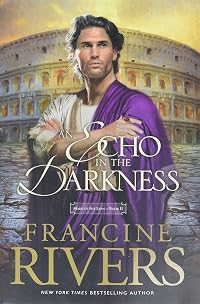
An Echo in the Darkness follows each member of the Valerian family as Hadassah’s influence continues to take hold of their hearts in the aftermath of tragedy.
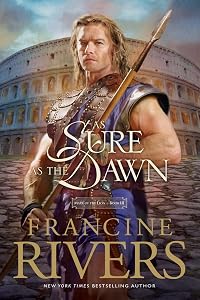
As Sure as the Dawn takes Atretes on a quest to return to his homeland and reclaim the life that was taken from him, but not in the way he expects.
This is one (3) that I recommend to anyone and everyone! They are truly amazing books, the characters are relatable and the historical details are well-integrated and immersive. If you’re a fan of character development, these books are pure gold! A reminder that anyone can be an instrument in spreading the gospel, and absolutely no one is beyond the reach of Christ’s love and redemption! show less
One of my all-time favourites by my all-time favourite author!
Christian historical fiction series with wonderfully-written characters and insights into the early church and the time period immediately following the lives of Jesus and the apostles.
Hadassah is a Jewish Christian slave girl serving the Valerian family, struggling with her desire to share her faith and her fear of persecution in a world where every belief system is tolerated except that which refuses to worship the Roman emperor as a god. Her gentle spirit and willingness to serve set her apart from the other slaves in the household, and the family soon takes notice as each of their lives are eventually transformed by the Presence she carries with show more her.
Atretes is a German warrior, captured by Roman soldiers and taken from his home to fight in the arena for the entertainment of the Roman mob. His path and those of the other characters meet at crucial intersections before diverging at the end of the first book.
A Voice in the Wind tells the first half of the story, as seeds are planted and each life is touched by those surrounding them.
An Echo in the Darkness follows each member of the Valerian family as Hadassah’s influence continues to take hold of their hearts in the aftermath of tragedy.
As Sure as the Dawn takes Atretes on a quest to return to his homeland and reclaim the life that was taken from him, but not in the way he expects.
This is one (3) that I recommend to anyone and everyone! They are truly amazing books, the characters are relatable and the historical details are well-integrated and immersive. If you’re a fan of character development, these books are pure gold! A reminder that anyone can be an instrument in spreading the gospel, and absolutely no one is beyond the reach of Christ’s love and redemption! show less
The characters and events detailed in this amazing novel are so real to life that I felt as if I could feel the Roman breeze on my skin, and hear the cheers of the Roman mob as they shouted for the blood of Christians and gladiators. Hadassah was a truly remarkable character, in that she let her light shine in the evil, and touched those around her so deeply. Julia was truly evil personifed, and Marcus such a confused and tortured soul. Atretes caught my attention because of his resolute hatred of all things Roman, and yet he was touched by a small slave girl's faith. A phenomenal read.
Members
- Recently Added By
Lists

Books We Couldn't Put Down
443 works; 197 members
Author Information

113+ Works 38,682 Members
Francine Rivers received a Bachelor of Arts degree in English and Journalism from the University of Nevada, Reno. From 1976 to 1985, she had a successful writing career in the general market and her books won numerous awards. In 1986, she became a born-again Christian and started writing Christian fiction. Her book, Redeeming Love, is a retelling show more of the biblical story of Gomer and Hosea set during the time of the California Gold Rush. Her Christian novels have won numerous awards including four Rita Awards, the Christy Award, the ECPA Gold Medallion, and the Holt Medallion in Honor of Outstanding Literary Talent. In 1997, she was inducted into the Romance Writers' of America Hall of Fame. She is the author of Lineage of Grace series, Mark of the Lion series, and Sons of Encouragement series. In 2014 her title, Bridge to Haven, made The New York Times Best Seller List. Her latest bestseller is The Masterpiece, published in February 2018. (Bowker Author Biography) show less
Some Editions
Series

Work Relationships
Is contained in
Common Knowledge
- Canonical title
- A Voice in the Wind
- Original title
- A Voice in the Wind
- Original publication date
- 1993
- People/Characters
- Hadassah; Atretes; Marcus Valerian; Julia Valerian
- Important places
- Rome, Italy; Ephesus, Turkey
- Important events
- Gladiatorial Games; Jerusalem under siege; Roman Empire
- Dedication
- This book
is dedicated with love to my mother,
F R I E D A K I N G,
who is a true example
of a humble servant. - First words
- J E R U S A L E M
The city was silently bloating in the hot sun, rotting like the thousands of bodies that lay where they had fallen in street battles. - Last words
- (Click to show. Warning: May contain spoilers.)Hunching over, he covered his head and wept.
- Blurbers
- Morris, Gilbert; Hatcher, Robin Lee; Carmichael, Emily
- Original language
- English
Classifications
- Genres
- Christian Fiction, Fiction and Literature, Romance, Historical Fiction
- DDC/MDS
- 813.54 — Literature & rhetoric American literature in English American fiction in English 1900-1999 1945-1999
- LCC
- PS3568 .I83165 .V65 — Language and Literature American literature American literature Individual authors 1961-
- BISAC
Statistics
- Members
- 3,121
- Popularity
- 5,648
- Reviews
- 45
- Rating
- (4.45)
- Languages
- 9 — Afrikaans, Danish, Dutch, English, German, Norwegian (Bokmål), Norwegian, Spanish, Portuguese (Portugal)
- Media
- Paper, Audiobook, Ebook
- ISBNs
- 38
- UPCs
- 2
- ASINs
- 13