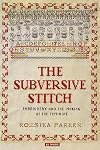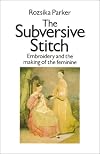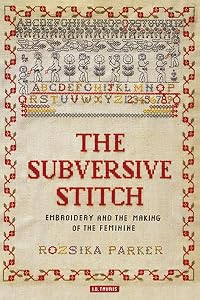
The Subversive Stitch: Embroidery and the Making of the Feminine
by Rozsika Parker
On This Page
Description
"The Subversive Stitch is now available again with a new Introduction that brings the book up to date with exploration of the stitched art of Louise Bourgeois and Tracey Emin, as well as the work of new young female and male embroiderers. Rozsika Parker uses household accounts, women's magazines, letters, novels and the works of art themselves to trace through history how the separation of the craft of embroidery from the fine arts came to be a major force in the marginalisation of women's show more work. Beautifully illustrated, her book also discusses the contradictory nature of women's experience of embroidery: how it has inculcated female subservience while providing an immensely pleasurable source of creativity, forging links between women."--Pub. desc. show lessTags
Recommendations















Member Recommendations

Member Reviews
Rambles a bit but this is an interesting (if currently dated) look at Embroidery and how in many ways it has come to define a certain level of femininity. How it went from being a career to being an acceptable way for women to pass their time and how it has been diminished by both men and women.
I know from personal experience how little people appreciate handcrafts and how if I quote a fair price for embroidery work that people are surprised. This is an interesting look at how embroidery became the domain of both those who had to be seen to be doing something and the cause of suffering in some factories.
It's also interesting how many women subverted this and used it for their own uses, particuarly in the 20th Century. I would love to show more see the Dinner Party exhibition and I was very interested by the table cloth in Sweden sewn by survivors of Nazi concentration camps.
The use and sometimes interesting changes to embroidery are interesting, the fashion, the pride and the perception all make it a very useful document. I'd like to see an update. show less
I know from personal experience how little people appreciate handcrafts and how if I quote a fair price for embroidery work that people are surprised. This is an interesting look at how embroidery became the domain of both those who had to be seen to be doing something and the cause of suffering in some factories.
It's also interesting how many women subverted this and used it for their own uses, particuarly in the 20th Century. I would love to show more see the Dinner Party exhibition and I was very interested by the table cloth in Sweden sewn by survivors of Nazi concentration camps.
The use and sometimes interesting changes to embroidery are interesting, the fashion, the pride and the perception all make it a very useful document. I'd like to see an update. show less
I was disappointed that the plates were not all described in the text and that none of them were in colour.
Ratings
Members
- Recently Added By
Author Information

7 Works 633 Members
Rozsika Parker has published widely in Art History and Psychoanalysis. Her books include Old Mistresses: Women, Art and Ideology and Framing Feminism: Art and the Women's Movement 1970-1985 (both written with Griselda Pollock) and Torn in Two: The Experience of Material Ambivalence. Her latest book is The Anxious Gardener. She now practices as a show more psychotherapist in London. show less
Common Knowledge
Classifications
- Genres
- Nonfiction, Home & Garden, Art & Design, History, General Nonfiction
- DDC/MDS
- 746.44082 — Arts & recreation Drawing & decorative arts Fashion Design / Weaving, Knitting, Embroidery Needlework and handwork Embroidery
- LCC
- NK9206 .P37 — Fine Arts 3600-(9990) Other arts and art industries Decorative arts Other arts and art industries Textiles
- BISAC
Statistics
- Members
- 364
- Popularity
- 86,641
- Reviews
- 3
- Rating
- (3.93)
- Languages
- English
- Media
- Paper, Ebook
- ISBNs
- 8
- ASINs
- 2