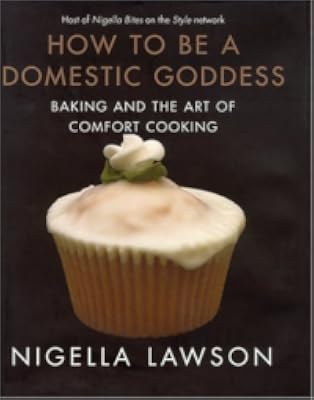
How to Be a Domestic Goddess
by Nigella Lawson
On This Page
Description
How to be a Domestic Goddess is not about being a goddess, but about feeling like one. What this deliciously reassuring and mouthwatering cookbook shows is that it's not hard to bake a tray of muffins, or a sponge layer cake - but the rewards are high. Here is the book that feeds our fantasies, understands our anxieties and puts cakes, pies, pastries, preserves, puddings, bread and biscuits back into our own kitchens. With a writer's flair and a cook's passion, Nigella brings you everything show more from brownies to bagels, from gooseberry-cream crumble to double apple pie, from pizza to pistachio macaroons, from festive bake to Barbie cake. show lessTags
Recommendations





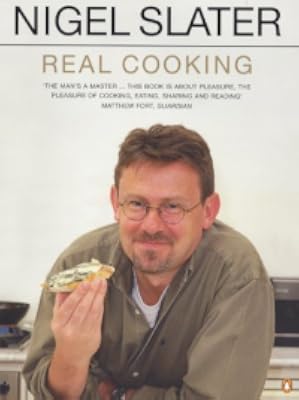
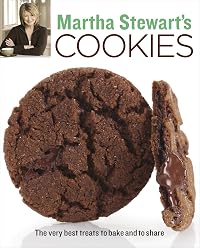

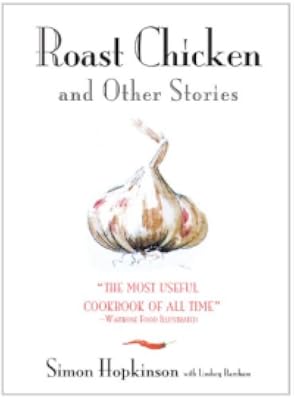
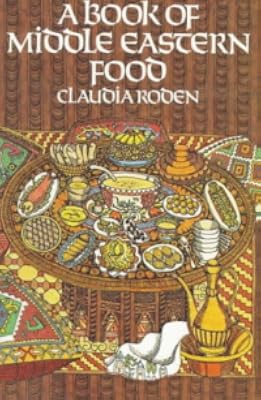


Member Recommendations
by carlym
Member Reviews
First of all, I have to say this - this woman is nuts! She may be a great cook and a very nice person, I don't know, but honestly, she is nuts.
This book, in case you couldn't tell right away, is about baking. She sets it up in several categories: cakes, cookies, bread, pies, Christmas, etc. The pictures are wonderful. But the writing? Wow. It's hard to tell you just how bad it is. So here's an example.
"Coconut Macaroons. These are a very English kind of macaroon, the sort you always used to see displayed in bakers' shops alongside the madeleines (those sponge castles dipped in luminous strawberry jam and dredged in throat-catching grated coconut, and so very different from those that inflamed the memory of Marcel Proust). The difference show more with coconut macaroons is that you need neither to be ironic or self-consciously retro-cool to enjoy them."
What?
I have SO many problems with this paragraph. First of all, I am reading a cookbook. I do not need references to Marcel Proust. Second, don't just assume I am English. I'm not. I have no idea what you are talking about. Third, I have never in my life worried about being ironic when I ate a cookie. (My daughter wondered if perhaps she referred to the IRON CONTENT of the cookie. But no.) And finally, I don't have any idea what 'self-consciously retro-cool' means.
So the writing is bad. Horrible. But if the recipes were good, you could just skip the writing and get straight to the recipes. Well, the recipes aren't bad exactly, but every recipe assumes that you already know what she's talking about. She doesn't explain things for a beginner.
Then there are some rather weird recipes. I don't plan on ever making persimmon or passionfruit curd. And I definitely will not touch a gin and tonic gelatin mold. Several of the recipes, most, in fact, call for ingredients that I would have a hard time tracking down. Like rosewater and some specialty jams. She also uses special equipment, but doesn't give you a picture of it or really describe well how to use it. I know most English cooks know what a pudding basin is. I don't.
And then I am never, ever going to make lavender milk. (You know, get a bowl of milk, put 5-6 lavender sprigs in it, boil, then strain. Yeah.) She skipped an important step there - make sure the lavender in question is pesticide free and has been washed thoroughly. But really, where am I going to find lavender sprigs?
This was without question the most self-important, preciously droll cookbook I have ever read. Wait, is that too close to self-consciously retro-cool? Maybe I should have said vain and complacent. Either way, I would not recommend reading it at all. I've never seen the author's show or read any of her other cookbooks, but after reading this, I heard from a relative that she is just the same on her show. Maybe that appeals to someone. Maybe it's meant to be funny and I just don't get it. But it was just awful. show less
This book, in case you couldn't tell right away, is about baking. She sets it up in several categories: cakes, cookies, bread, pies, Christmas, etc. The pictures are wonderful. But the writing? Wow. It's hard to tell you just how bad it is. So here's an example.
"Coconut Macaroons. These are a very English kind of macaroon, the sort you always used to see displayed in bakers' shops alongside the madeleines (those sponge castles dipped in luminous strawberry jam and dredged in throat-catching grated coconut, and so very different from those that inflamed the memory of Marcel Proust). The difference show more with coconut macaroons is that you need neither to be ironic or self-consciously retro-cool to enjoy them."
What?
I have SO many problems with this paragraph. First of all, I am reading a cookbook. I do not need references to Marcel Proust. Second, don't just assume I am English. I'm not. I have no idea what you are talking about. Third, I have never in my life worried about being ironic when I ate a cookie. (My daughter wondered if perhaps she referred to the IRON CONTENT of the cookie. But no.) And finally, I don't have any idea what 'self-consciously retro-cool' means.
So the writing is bad. Horrible. But if the recipes were good, you could just skip the writing and get straight to the recipes. Well, the recipes aren't bad exactly, but every recipe assumes that you already know what she's talking about. She doesn't explain things for a beginner.
Then there are some rather weird recipes. I don't plan on ever making persimmon or passionfruit curd. And I definitely will not touch a gin and tonic gelatin mold. Several of the recipes, most, in fact, call for ingredients that I would have a hard time tracking down. Like rosewater and some specialty jams. She also uses special equipment, but doesn't give you a picture of it or really describe well how to use it. I know most English cooks know what a pudding basin is. I don't.
And then I am never, ever going to make lavender milk. (You know, get a bowl of milk, put 5-6 lavender sprigs in it, boil, then strain. Yeah.) She skipped an important step there - make sure the lavender in question is pesticide free and has been washed thoroughly. But really, where am I going to find lavender sprigs?
This was without question the most self-important, preciously droll cookbook I have ever read. Wait, is that too close to self-consciously retro-cool? Maybe I should have said vain and complacent. Either way, I would not recommend reading it at all. I've never seen the author's show or read any of her other cookbooks, but after reading this, I heard from a relative that she is just the same on her show. Maybe that appeals to someone. Maybe it's meant to be funny and I just don't get it. But it was just awful. show less
I am obsessed with this book, no other baking recipes seem quite right if there's an alternative in here. The brownies are wonderful and I've been banned from using anything other than a Nigella recipe to make them. I love to read it too, it's comfort reading, as well as comfort cooking.
Nigella doesn't make you feel inadequate for not being perfect, which with my cooking attention span is a good thing. Also she's not ridiculously pefectionist about ingredients, but encourages experimentation, which I love.
Nigella doesn't make you feel inadequate for not being perfect, which with my cooking attention span is a good thing. Also she's not ridiculously pefectionist about ingredients, but encourages experimentation, which I love.
I'm sorry this is going to sound like a gushing fangirl, but I love this book so much. Even though I'd cooked before (my mum is a cookery teacher I was hardly going to get away with not cooking), it is Nigella's How to be a Domestic Goddess that made me love it. Prior to this book the only cookery books I owned were those that my mother had foisted on me fearing that I might starve if she didn't, and were a bit on the dull side (my excuse for living on sandwiches for 3 years).
Then I found myself staring daily at this as it was sat on a shelf, on offer in the bookshop I worked in. Initially it was the cover picture that tempted me into purchase, but once I'd got it home I found myself reading it as I would a novel, something I'd never show more done previously with a cookery book. Lacking in an actual oven where I lived it took six months before I could actually try it out, but it was worth the wait.
Her conversational style may not be everyone's taste, but all my previous books had the aura of a dicatorial school ma'am.
I've found all the recipes easy to follow, and have had success with almost everything I've tried. My only failure was a courgette cake which was because I lacked the correct size pan and it ended up burnt on the outside and soup like in the middle.
The size of tins would probably be my only criticism, I had to search high and low for some of the tin sizes, and lacking as I am in Nigella's budget I've had to restrict myself to only a few.
However, overall I adore this book,and it opened the floodgates for my ever growing cookery book collection. show less
Then I found myself staring daily at this as it was sat on a shelf, on offer in the bookshop I worked in. Initially it was the cover picture that tempted me into purchase, but once I'd got it home I found myself reading it as I would a novel, something I'd never show more done previously with a cookery book. Lacking in an actual oven where I lived it took six months before I could actually try it out, but it was worth the wait.
Her conversational style may not be everyone's taste, but all my previous books had the aura of a dicatorial school ma'am.
I've found all the recipes easy to follow, and have had success with almost everything I've tried. My only failure was a courgette cake which was because I lacked the correct size pan and it ended up burnt on the outside and soup like in the middle.
The size of tins would probably be my only criticism, I had to search high and low for some of the tin sizes, and lacking as I am in Nigella's budget I've had to restrict myself to only a few.
However, overall I adore this book,and it opened the floodgates for my ever growing cookery book collection. show less
The title has revealed our innate desires to please when we cook. So many of us have moved away from the kitchen sink with our careers, it has seemed almost unfashionable to be an acomplished cook, let alone enjoy it.
Speaking from a personal standpoint, I have always loved the domesticity of cooking for others, and have never felt it has categorized me in any way. Nigella's book wholly supports the caring ethos of cooking, and I congratulate her efforts. She has also made most of the recipes seem effortless - what a clever lady!
Speaking from a personal standpoint, I have always loved the domesticity of cooking for others, and have never felt it has categorized me in any way. Nigella's book wholly supports the caring ethos of cooking, and I congratulate her efforts. She has also made most of the recipes seem effortless - what a clever lady!
Such a fabulous book. Worth the price of entry for the bread recipes alone. I can't believe how easy bagels are using Nigella's instructions, they come out so beautifully and better than anything I can buy. Then there is the lovely, light Potato Bread, the Basic White Loaf and the Nigellan Flatbreads.
The Banana Bread, which sounds innocuous stuns people with it's amazing flavour and aroma. The Victoria Sponge is perfect, and the preserves make me feel ever-so-clever for little effort.
This is a fun book, with all different levels of ability catered for and a lot of wonderful hints and tips.
The Banana Bread, which sounds innocuous stuns people with it's amazing flavour and aroma. The Victoria Sponge is perfect, and the preserves make me feel ever-so-clever for little effort.
This is a fun book, with all different levels of ability catered for and a lot of wonderful hints and tips.
Nigella has the best attitude towards food, and it comes across really well in this cookbook. Both the recipes and the commentary are fantastic. This is my favourite baking cookbook of all time. If you like to bake, you need to own it.
This is a book full of wonderful recipes but time and time again I only use one or two of them regularly...
It's nicely written and stands pride of place in my kitchen. I think it's time for me to revisit and try some more of Nigella's sumptuous recipes! It is rather thick so may put some people off but I think its worth taking the time to read through, unlike some other celebrity 'chefs' books...
It's nicely written and stands pride of place in my kitchen. I think it's time for me to revisit and try some more of Nigella's sumptuous recipes! It is rather thick so may put some people off but I think its worth taking the time to read through, unlike some other celebrity 'chefs' books...
Members
- Recently Added By
Author Information

23+ Works 11,404 Members
She is one of Britain's most recognized culinary personalities & the food editor for British Vogue. Her first book, How to Eat, was published to huge acclaim & was the basis for a television series in England. She has been profiled in Gourmet magazine & writes regularly for the London Observer. She lives in London. (Publisher Provided) Nigella show more Lawson was born in London, England on January 6, 1960. She received a degree in medieval and modern languages from Lady Margaret Hall, Oxford University. She worked as a book reviewer and restaurant critic for The Spectator and later became the deputy literary editor of The Sunday Times. She eventually became a freelance journalist. Her first cookbook, How to Eat: The Pleasures and Principles of Good Food, was published in 1998. Her other cookbooks include How to be a Domestic Goddess: Baking and the Art of Comfort Cooking, Nigella Bites: From Family Meals to Elegant Dinners - Easy, Delectable Recipes for Any Occasion, Nigella Kitchen: Recipes from the Heart of the Home, and Nigellissima: Easy Italian-Inspired Recipes. (Bowker Author Biography) show less
All Editions
Some Editions
Awards and Honors
Notable Lists
Common Knowledge
- Canonical title
- How to Be a Domestic Goddess
- Original title
- How to Be a Domestic Goddess
- Dedication
- For John, Goddess-maker
- Original language
- English
Classifications
- Genres
- Food & Cooking, Nonfiction, General Nonfiction
- DDC/MDS
- 641.815 — Applied science & technology Home economics & family management Food, Cooking & Recipes / Meals, Picnics Cooking specific kinds of dishes and preparing beverages Cooking side dishes, sauces, garnishes Bread and bread-like foods
- LCC
- TX763 .L37 — Technology Home economics Home economics Cooking
- BISAC
Statistics
- Members
- 1,990
- Popularity
- 10,643
- Reviews
- 17
- Rating
- (4.14)
- Languages
- 8 — Danish, Dutch, English, French, German, Hungarian, Italian, Portuguese
- Media
- Paper, Ebook
- ISBNs
- 22
- ASINs
- 14