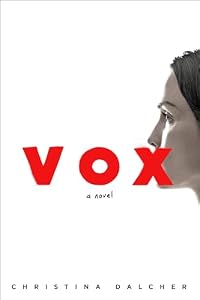
Vox
by Christina Dalcher
On This Page
Description
THE NATIONAL BESTSELLER • ONE OF ENTERTAINMENT WEEKLY'S AND SHEREADS' BOOKS TO READ AFTER THE HANDMAID'S TALE“[An] electrifying debut.”—O, The Oprah Magazine
“The real-life parallels will make you shiver.”—Cosmopolitan
Set in a United States in which half the population has been silenced, Vox is the harrowing, unforgettable story of what one woman will do to protect herself and her daughter.
On the day the government decrees that women are no longer allowed more than one show more hundred words per day, Dr. Jean McClellan is in denial. This can't happen here. Not in America. Not to her.
Soon women are not permitted to hold jobs. Girls are not taught to read or write. Females no longer have a voice. Before, the average person spoke sixteen thousand words each day, but now women have only one hundred to make themselves heard.
For herself, her daughter, and every woman silenced, Jean will reclaim her voice.
This is just the beginning...not the end.
One of Good Morning America's “Best Books to Bring to the Beach This Summer”
One of PopSugar, Refinery29, Entertainment Weekly, Bustle, Real Simple, i09, and Amazon's Best Books to Read in August 2018. show less
Tags
Recommendations


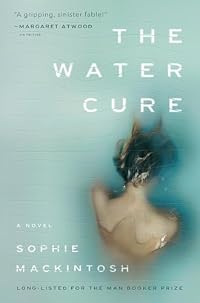
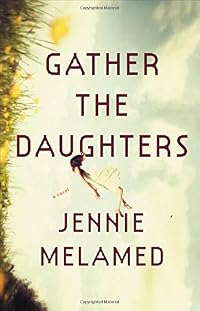
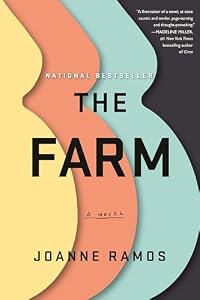
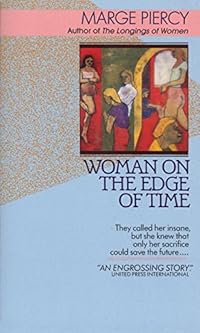




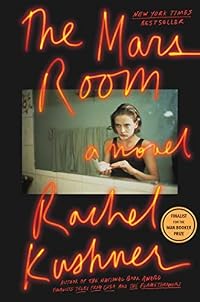
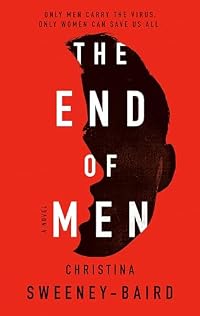
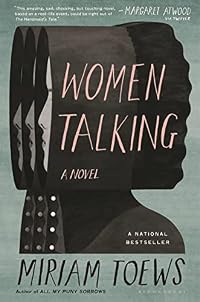
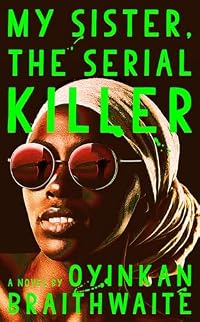


Member Recommendations

2wonderY Women's right have been removed. They develop a private language. This is a minor classic.
20
Member Reviews
You’ve read The Handmaids Tale and you're caught up on the last episode of the series. Now what? Here’s one that might fill the bill - Vox by Christina Dalcher.
It’s not hard to imagine a future (present or past) where women’s lives are controlled by men. And how is that control achieved in Vox? By language - the lack of, to be precise. In Vox women are only allowed 100 words a day. They wear a silver band on their wrist that shocks them if they go over that limit, increasing in voltage with every word above the limit. It's all part of a return to 'traditional values'. "Pure"
Jeanne McClellan was a neurolinguist before her voice was taken away. It is only when the new president needs a cure for his brother that her bracelet is show more taken off and she’s brought in to resume work on her research - restoring language to brain-damaged individuals. But with every suppression...there's resistance. Vox details a time in the near future that isn't too hard to imagine.
I enjoyed Dalcher's world building. And yes, it's not much of a stretch to see the traditional value, male dominated society. Dalcher herself has worked in the linguistics field and that knowledge gave the plot depth and detail. There's lots of action as the tension ramps up to the final 'showdown'. The author has created a good cast of characters in both Jeanne and supporting players. I did find myself more drawn to those supporters though, instead of Jeanne. I didn't agree with some of her decisions or treatment of other resistance members.
Some developments and plot directions seemed a bit quick, if you will. There were points where I felt there should be more plausibility built in. But, on reading the publisher's notes, I learned that Vox was written in two months - which is pretty darn amazing.
There's lots of food for thought in Vox, mirroring many of today's news headlines. I was thoroughly entertained by Vox and would be curious to see what Dalcher writes next. (And that cover is great isn't it?!) show less
It’s not hard to imagine a future (present or past) where women’s lives are controlled by men. And how is that control achieved in Vox? By language - the lack of, to be precise. In Vox women are only allowed 100 words a day. They wear a silver band on their wrist that shocks them if they go over that limit, increasing in voltage with every word above the limit. It's all part of a return to 'traditional values'. "Pure"
Jeanne McClellan was a neurolinguist before her voice was taken away. It is only when the new president needs a cure for his brother that her bracelet is show more taken off and she’s brought in to resume work on her research - restoring language to brain-damaged individuals. But with every suppression...there's resistance. Vox details a time in the near future that isn't too hard to imagine.
I enjoyed Dalcher's world building. And yes, it's not much of a stretch to see the traditional value, male dominated society. Dalcher herself has worked in the linguistics field and that knowledge gave the plot depth and detail. There's lots of action as the tension ramps up to the final 'showdown'. The author has created a good cast of characters in both Jeanne and supporting players. I did find myself more drawn to those supporters though, instead of Jeanne. I didn't agree with some of her decisions or treatment of other resistance members.
Some developments and plot directions seemed a bit quick, if you will. There were points where I felt there should be more plausibility built in. But, on reading the publisher's notes, I learned that Vox was written in two months - which is pretty darn amazing.
There's lots of food for thought in Vox, mirroring many of today's news headlines. I was thoroughly entertained by Vox and would be curious to see what Dalcher writes next. (And that cover is great isn't it?!) show less
Much like traditional white feminism itself, this book comes up short. It's certainly believable in the catastrophe it sets up - after all, we're actually living it. But the resolution is pat and convenient and thus, false. See, when you convince tens and tens of millions of people - men and women both -that female subjugation is right and proper, and that there shouldn't be a separation of church and state - that doesn't all go away with the shuffling of a few key personnel. Kill one charismatic preacher and another will take his place. You don't stop a widespread internalized message of religiously inspired inferiority with assassinations, and you don't
I want to give the author credit for making the heroine deeply, deeply unlikable and flawed; but then I want to take away the credit because in the end she kind of just gets off scott free - don't like your old husband because he's an "intellectual pussy" (sic, and internalized misogyny noted) - hey cool, he gets it in the end along with a redemptive scheme showing you didn't pick wrong in the first place, what a hero he was, well and now she gets to have the sexy italian doctor / renaissance man she had an affair with. oh and she gets to live in sexy! amazing! italy! where everything's grand and expressive.
In the end for me this book just doesn't work. Want to say that people didn't really go along with the BS message? cool - then site the rebellion earlier on, before the tendrils of religiously inspired inferiority are in everything. Want to say that people really did buy into it all (as I think this author did) then don't offer up a pat bullshit ending involving the death or removal from power of a few people.
Imagine that a new President has been elected with the help of the extreme Christian right. So extreme, and so powerful, that they reverse over a hundred years of women's rights, and worse. Women are limited to 100 words a day, enforced by a "bracelet" they wear that administers worsening electric shocks for every word over the limit. Dalcher doesn't waste much time on the details of how this came about, which is fine, as they're largely beside the point for the purposes of her story. But, every time I caught myself saying "this is just too unbelievable - that would never happen here," I reminded myself that that's been said by other people at other times and places in history, and it could, and it did.
As for this book, though, show more comparisons to The Handmaid's Tale are inevitbale, but Vox has a different ambition. Dalcher doesn't pull her punches when it comes to the details of women's subjugation in the new regime, but the story focuses on a small group of people who suddenly realize that they can change everything.
Even that isn't the real point, though. Dalcher also pulls no punches in getting her message across. Everyone: use your voice. While you still can. show less
As for this book, though, show more comparisons to The Handmaid's Tale are inevitbale, but Vox has a different ambition. Dalcher doesn't pull her punches when it comes to the details of women's subjugation in the new regime, but the story focuses on a small group of people who suddenly realize that they can change everything.
Even that isn't the real point, though. Dalcher also pulls no punches in getting her message across. Everyone: use your voice. While you still can. show less
Gagging Women
Vox is such a good idea, such a powerful metaphor for keeping women in their place, for male dominance at any cost, that you wish a stronger writer had rendered the tale. Dalcher has done a decent, if pedestrian, job of telling the story. However, how she has structured the plot limits the new world in which women have been essentially removed from the day-to-day of society and crippled with a wristband that allows them just one hundred words per twenty-fours hours before shocking them into insensibility. Oh yes, very Pavlovian of the ruling males who impose radical right Christian pentecostal doctrine as the law of the land. This aspect of the novel is probably why blurb writers bring up comparisons to The Handmaid’s show more Tale. And therein is what many may find lacking in this novel, that it doesn’t really paint a full, horrifying, and enraging portrait of new society, something making The Handmaid’s Tale so satisfying.
Dr. Jean McClellan is a research linguist who before the change of regime and government in the U.S. was working on and near to finding a medical solution to Werniche (receptive) aphasia (loss of ability to turn thoughts into sensible speech). She’s the mother of four, the youngest a girl. Her husband is a physician working for the White House. Her oldest son, a high school student, gets sucked into the overarching movement now controlling the country, Pure, the inspiration of the chief counselor to the president, a man who spouts Christian doctrine while imposing his brand of restrictions on society. To her credit, Dalcher provides glimpses of the Pure new order, which many readers wish she had fleshed out and explored in more detail.
Instead of balancing plot and context, she launches full bore into a government scheme to silence women and others the Pure leaders hate, LGBTQs and pretty much anybody else who doesn’t toe the mark of Biblical family and societal structure distilled into pure repressiveness, even at the cost of a well functioning and growing social and commercial world. So, what readers have is McClellan and her band of researchers being enlisted forcibly into government research with the end result being nefarious. Along the way, she reunites with her lover, also a scientist, and discovers she’s pregnant with his child. Some may enjoy this excursion into romance on the side, while others will find it compounds the novel’s chasing around tediousness.
Most disappointing about the novel is that it could have been so much more. Not a bad read, but not essential if you are looking for novels about the repression and control of women by men, or religious dictatorships, or self-destructive societies. In that case, if you hadn’t already done so, you’ll want to read the grandma of this dystopian subgenre, Margaret Atwood’s The Handmaid’s Tale. show less
Vox is such a good idea, such a powerful metaphor for keeping women in their place, for male dominance at any cost, that you wish a stronger writer had rendered the tale. Dalcher has done a decent, if pedestrian, job of telling the story. However, how she has structured the plot limits the new world in which women have been essentially removed from the day-to-day of society and crippled with a wristband that allows them just one hundred words per twenty-fours hours before shocking them into insensibility. Oh yes, very Pavlovian of the ruling males who impose radical right Christian pentecostal doctrine as the law of the land. This aspect of the novel is probably why blurb writers bring up comparisons to The Handmaid’s show more Tale. And therein is what many may find lacking in this novel, that it doesn’t really paint a full, horrifying, and enraging portrait of new society, something making The Handmaid’s Tale so satisfying.
Dr. Jean McClellan is a research linguist who before the change of regime and government in the U.S. was working on and near to finding a medical solution to Werniche (receptive) aphasia (loss of ability to turn thoughts into sensible speech). She’s the mother of four, the youngest a girl. Her husband is a physician working for the White House. Her oldest son, a high school student, gets sucked into the overarching movement now controlling the country, Pure, the inspiration of the chief counselor to the president, a man who spouts Christian doctrine while imposing his brand of restrictions on society. To her credit, Dalcher provides glimpses of the Pure new order, which many readers wish she had fleshed out and explored in more detail.
Instead of balancing plot and context, she launches full bore into a government scheme to silence women and others the Pure leaders hate, LGBTQs and pretty much anybody else who doesn’t toe the mark of Biblical family and societal structure distilled into pure repressiveness, even at the cost of a well functioning and growing social and commercial world. So, what readers have is McClellan and her band of researchers being enlisted forcibly into government research with the end result being nefarious. Along the way, she reunites with her lover, also a scientist, and discovers she’s pregnant with his child. Some may enjoy this excursion into romance on the side, while others will find it compounds the novel’s chasing around tediousness.
Most disappointing about the novel is that it could have been so much more. Not a bad read, but not essential if you are looking for novels about the repression and control of women by men, or religious dictatorships, or self-destructive societies. In that case, if you hadn’t already done so, you’ll want to read the grandma of this dystopian subgenre, Margaret Atwood’s The Handmaid’s Tale. show less
I don't read much fiction in the genre but the premise of this book sounded very intriguing so I thought I would give it a try and I sure am glad that I did. This book kept my interest from beginning to the last page. If I had read it twenty years ago, I'd have thought that there was no way this could happen in real life, now I'm not too sure.
Imagine a country where women aren't allowed to work or hold public office, aren't allowed to have computers or to make any decisions about their lives. Imagine a world where girls and boys go to separate school - the boys learn all of the academic subjects and the girls learn how to sew and cook. Worst of all, imagine a world where women are only allowed to speak 100 words every day, the words show more counted on a bracelet that they wear on their arms that will administer a strong shock if they go over 100 words in 24 hours. Where is this unbelievable country? In the new novel VOX - it's right here in the USA.
I loved this book and the way that the main character, Jean, handles her life and the lives of her family members after she is silenced as she struggles to stay within the new rules. The book goes back and forth in time from what life was like before this and how things gradually changed to what is going on in Jean's present day. Be prepared to be angry while reading this book but read it until the last page - it's a story that you don't want to miss. This is an excellent debut novel from this author and I look forward to her future books.
Thanks to First to Read for a copy of this book to read and review. All opinions are my own. show less
Imagine a country where women aren't allowed to work or hold public office, aren't allowed to have computers or to make any decisions about their lives. Imagine a world where girls and boys go to separate school - the boys learn all of the academic subjects and the girls learn how to sew and cook. Worst of all, imagine a world where women are only allowed to speak 100 words every day, the words show more counted on a bracelet that they wear on their arms that will administer a strong shock if they go over 100 words in 24 hours. Where is this unbelievable country? In the new novel VOX - it's right here in the USA.
I loved this book and the way that the main character, Jean, handles her life and the lives of her family members after she is silenced as she struggles to stay within the new rules. The book goes back and forth in time from what life was like before this and how things gradually changed to what is going on in Jean's present day. Be prepared to be angry while reading this book but read it until the last page - it's a story that you don't want to miss. This is an excellent debut novel from this author and I look forward to her future books.
Thanks to First to Read for a copy of this book to read and review. All opinions are my own. show less
Received via NetGalley for review.
Dystopian novels featuring women (or minority groups) being oppressed by the religious right (or the neo-conservatives, or militant, or or or) are all the rage nowadays, especially since our current political climate makes them so poignant. Unfortunately, Vox is not the best example of the genre.
Dr. Jean McClellan is an upper middle class white women who specializes in aphasia (which, believe me, is important) living in a society where women are limited to only 100 words a day under threat of potentially lethal electric shock. When the president's brother suffers from an accidents that gives him aphasia, Dr. McClellan is recruited by the government to work on a cure. Leveraging this, she removes her's show more and her daughter's counters, freeing their words (so only about 1% of the book actually deals with the constraints that Jean, as a woman, faces on her language). Of course, she discovers that the oppressive government is planning on using her research for nefarious purposes.
My problem is not with the cliche plot; it is with the way the plot is executed. Everything is too coincidental and ends too simply. Aphasia has many different types, and the fact that Jean not only specializes in Wernicke's area aphasia, but that her mother has it and that the government is interested in it is a little too far-fetched.Their plan to weaponize it makes no sense - people with this type of aphasia can't communicate with anyone, which is their goal, but they also can't understand anyone, which presents a huge stumbling block in trying to control them! How can you get someone to do what you want if they can't understand what you want?
And Jean is one of the more annoying, basically useless protagonists I've encountered in a long time. She's a stereotypical white feminist: only concerned with herself and her family when they're directly affected (which, granted, is something she confronts as the novel goes on, but never enough to change). Every choice she makes is out of concern for herself, her daughter, or her unborn child who might be a daughter. While I understand that having a daughter in such a climate would be worrying and present different challenges that a son, Jean seems not to care about her sons at all. Leo and Sam (the twins) might not even have been characters for all the effect they had on the plot or on her. And clearly her parenting suffers for it - I appreciate that Dalcher tried to show how ordinary citizens can become radicalized in Steven, but if he had been raised to truly see women as equals (as Lorenzo and Del clearly had been, for example), he never would have been radicalized in the first place.
And while Jean is a doctor, she is never directly involved in the cure for aphasia or the cure for society. Lin and Lorenzo are shown doing all the practical research and discoveries, and Patrick is the one who deploys the bioweapon, Is it even her idea to dose the administration? Does she ever truly face any risk herself, aside from her adultery? Of course not. She would fold under the pressure.
Her relationship with Patrick is failing, and rather than working on it or understanding him, she mopes and moans, not even realizing he's working with the resistance. How is that something you miss, if you truly love and know the man you've married? Why would he keep this monumental secret from her if he trusted and loved her? Instead, she lusts after charming and Italian Lorenzo, risking everything to be with him. Rather than forcing Jean to make a choice, Dalcher instead has Patrick die heroically so that the path is clear for them to be together. The men behind the conspiracy to silence women (which, improbably, only takes a year [I think? The timeline is not very well laid out.]) are all killed, a new president takes over, Jean leaves the US and everything is fine again. Only about 10 pages, if that, are devoted to this conclusion, leaving the reader with, if not whiplash, a sense of incompleteness.
While Vox clearly draws inspiration from A Handmaid's Tale, it does so perhaps a little too freely. Read that classic instead. show less
Dystopian novels featuring women (or minority groups) being oppressed by the religious right (or the neo-conservatives, or militant, or or or) are all the rage nowadays, especially since our current political climate makes them so poignant. Unfortunately, Vox is not the best example of the genre.
Dr. Jean McClellan is an upper middle class white women who specializes in aphasia (which, believe me, is important) living in a society where women are limited to only 100 words a day under threat of potentially lethal electric shock. When the president's brother suffers from an accidents that gives him aphasia, Dr. McClellan is recruited by the government to work on a cure. Leveraging this, she removes her's show more and her daughter's counters, freeing their words (so only about 1% of the book actually deals with the constraints that Jean, as a woman, faces on her language). Of course, she discovers that the oppressive government is planning on using her research for nefarious purposes.
My problem is not with the cliche plot; it is with the way the plot is executed. Everything is too coincidental and ends too simply. Aphasia has many different types, and the fact that Jean not only specializes in Wernicke's area aphasia, but that her mother has it and that the government is interested in it is a little too far-fetched.
And Jean is one of the more annoying, basically useless protagonists I've encountered in a long time. She's a stereotypical white feminist: only concerned with herself and her family when they're directly affected (which, granted, is something she confronts as the novel goes on, but never enough to change). Every choice she makes is out of concern for herself, her daughter, or her unborn child who might be a daughter. While I understand that having a daughter in such a climate would be worrying and present different challenges that a son, Jean seems not to care about her sons at all. Leo and Sam (the twins) might not even have been characters for all the effect they had on the plot or on her. And clearly her parenting suffers for it - I appreciate that Dalcher tried to show how ordinary citizens can become radicalized in Steven, but if he had been raised to truly see women as equals (as Lorenzo and Del clearly had been, for example), he never would have been radicalized in the first place.
And while Jean is a doctor, she is never directly involved in the cure for aphasia or the cure for society. Lin and Lorenzo are shown doing all the practical research and discoveries, and Patrick is the one who deploys the bioweapon, Is it even her idea to dose the administration? Does she ever truly face any risk herself, aside from her adultery? Of course not. She would fold under the pressure.
Her relationship with Patrick is failing, and rather than working on it or understanding him, she mopes and moans, not even realizing he's working with the resistance. How is that something you miss, if you truly love and know the man you've married? Why would he keep this monumental secret from her if he trusted and loved her? Instead, she lusts after charming and Italian Lorenzo, risking everything to be with him. Rather than forcing Jean to make a choice, Dalcher instead has Patrick die heroically so that the path is clear for them to be together. The men behind the conspiracy to silence women (which, improbably, only takes a year [I think? The timeline is not very well laid out.]) are all killed, a new president takes over, Jean leaves the US and everything is fine again. Only about 10 pages, if that, are devoted to this conclusion, leaving the reader with, if not whiplash, a sense of incompleteness.
While Vox clearly draws inspiration from A Handmaid's Tale, it does so perhaps a little too freely. Read that classic instead. show less
I hated this book. It was trying much too hard to be a contemporary Handmaid's Tale, and it failed. I was hating it 50 pages in, and finished it out of rage and spite. I'm only glad I did because the ending was so bad that it justified every ounce of anger.
Spoilers abound from here on, because I do not care.
Let me say, right off, that I am a Northern, non-Christian feminist, so I am not offended by Christian villains. I am offended by cardboard cutout cartoon super-villainy that, if I called it subtle as a sledgehammer, would be an insult to sledgehammers. The central conceit of the novel is that, at an unspecified time not entirely unlike our own, religious zealots have taken over the US. Their means of controlling women? Literally show more taking away our voice. Women and girls are forbidden to read or write, or to speak more than 100 words a day. A wrist counter monitors their speech and delivers increasingly strong levels of electric shocks when the limit is exceeded.
Apparently, the whole thing sneaked up on the US while it slept. Women just gradually stopped being elected to government, and then BOOM! Religion creeps up from the horrible South and takes over with enforced purity. On with the wrist bracelets and being fired from work. Here is where I'll compare it unfavorably to The Handmaid's Tale: as improbable as that scenario seemed, Atwood realistically portrayed it as a mess, with a coup and a civil war. Here, an elected government just uses its own powers, storming over the "resistance" (Familiar?) and... that's it. There are camps, of course, and arrests, but mostly, life goes on. Kids go to school, except now the girls only learn to count. (The ways in which literacy impact housework always seem to be ignored in these books.) This couldn't possibly be a heavy handed allusion to our current state, of course.
The main character, Jean, is a language researcher now stuck at home. Her husband is a science adviser to the new government. I enjoy unsympathetic characters, but the McClellans tend towards the whiny, the type you want to punch in the face. Prior to the wrist bracelets, their insufferable son Steven starts picking up misogyny in school. Instead of cutting it off at the knees, Jean and Patrick let it go, till later Steven is the obvious Hitler Youth of the family, warning them that soon nonverbal communication would be monitored. The characters do, at least, smarten up some in the middle part of the book.
The implications of taking away language from women and girls, long term, don't seem to be fully realized. The relationship between Jean and her young daughter Sonia is correctly portrayed as suffering, but (especially for a novel written by a linguist) the long term effects of depriving women not just of a voice, but of language and nonverbal communication, don't seem to have been considered much.
Anyway, miracles! Jean is needed to do special research for the government and gets her bracelet taken off--and bargains to get Sonia's taken off too. Now we see some resistance to tyranny, as represented by an impossibly assholish minister and the aforementioned smarmy son. Surprise! the research isn't entirely what it pretends to be (I worked out the secret plan before it was revealed. Research works improbably fast, even when aided by the secret that Jean had mostly cracked it before being fired. As a novel, this part works the best; there's plot and character development, and it moves briskly and is written well.
And what happens? A man saves the whole fucking thing in a noble act of self sacrifice. Jean swans off to Italy with the kids and her Italian lovah. Apparently the US wakes up after they're gone, and I guess we're all just sheeple who easily fall in and out of a spell, but who really cares? I wish I were making up this ending.
All told, I just couldn't achieve the suspension of disbelief necessary. I get where Dalcher was coming from, but it never really gelled for me and there were too many convenient developments (OF COURSE her mailman is a secret resister, et cetera. I get why these things have to be to make the plot work, but the McClellans are just the perfect nexus of every component.) show less
Spoilers abound from here on, because I do not care.
Let me say, right off, that I am a Northern, non-Christian feminist, so I am not offended by Christian villains. I am offended by cardboard cutout cartoon super-villainy that, if I called it subtle as a sledgehammer, would be an insult to sledgehammers. The central conceit of the novel is that, at an unspecified time not entirely unlike our own, religious zealots have taken over the US. Their means of controlling women? Literally show more taking away our voice. Women and girls are forbidden to read or write, or to speak more than 100 words a day. A wrist counter monitors their speech and delivers increasingly strong levels of electric shocks when the limit is exceeded.
Apparently, the whole thing sneaked up on the US while it slept. Women just gradually stopped being elected to government, and then BOOM! Religion creeps up from the horrible South and takes over with enforced purity. On with the wrist bracelets and being fired from work. Here is where I'll compare it unfavorably to The Handmaid's Tale: as improbable as that scenario seemed, Atwood realistically portrayed it as a mess, with a coup and a civil war. Here, an elected government just uses its own powers, storming over the "resistance" (Familiar?) and... that's it. There are camps, of course, and arrests, but mostly, life goes on. Kids go to school, except now the girls only learn to count. (The ways in which literacy impact housework always seem to be ignored in these books.) This couldn't possibly be a heavy handed allusion to our current state, of course.
The main character, Jean, is a language researcher now stuck at home. Her husband is a science adviser to the new government. I enjoy unsympathetic characters, but the McClellans tend towards the whiny, the type you want to punch in the face. Prior to the wrist bracelets, their insufferable son Steven starts picking up misogyny in school. Instead of cutting it off at the knees, Jean and Patrick let it go, till later Steven is the obvious Hitler Youth of the family, warning them that soon nonverbal communication would be monitored. The characters do, at least, smarten up some in the middle part of the book.
The implications of taking away language from women and girls, long term, don't seem to be fully realized. The relationship between Jean and her young daughter Sonia is correctly portrayed as suffering, but (especially for a novel written by a linguist) the long term effects of depriving women not just of a voice, but of language and nonverbal communication, don't seem to have been considered much.
Anyway, miracles! Jean is needed to do special research for the government and gets her bracelet taken off--and bargains to get Sonia's taken off too. Now we see some resistance to tyranny, as represented by an impossibly assholish minister and the aforementioned smarmy son. Surprise! the research isn't entirely what it pretends to be (I worked out the secret plan before it was revealed. Research works improbably fast, even when aided by the secret that Jean had mostly cracked it before being fired. As a novel, this part works the best; there's plot and character development, and it moves briskly and is written well.
And what happens? A man saves the whole fucking thing in a noble act of self sacrifice. Jean swans off to Italy with the kids and her Italian lovah. Apparently the US wakes up after they're gone, and I guess we're all just sheeple who easily fall in and out of a spell, but who really cares? I wish I were making up this ending.
All told, I just couldn't achieve the suspension of disbelief necessary. I get where Dalcher was coming from, but it never really gelled for me and there were too many convenient developments (OF COURSE her mailman is a secret resister, et cetera. I get why these things have to be to make the plot work, but the McClellans are just the perfect nexus of every component.) show less
Members
- Recently Added By
Published Reviews
Subtlety is not a concern here, and the theme of “wake up!” is hammered home so vigorously that it can feel hectoring. “Not your fault,” a man says to Jean. “But it is,” she thinks. “My fault started two decades ago, the first time I didn’t vote … was too busy to go on [a march].” It’s of a piece with the preposterous setup, the payoff-heavy writing and the casual show more appropriation of some of humanity’s most heinous instruments of oppression – labour camps, electrified restraints – in the service of a thriller. If Dalcher wants to scare people into waking up, she would do better to send them back to the history books, rather than forward into an overblown, hastily imagined future. show less
added by -pilgrim-
Lists

Favorite Science Fiction by Women Authors
737 works; 196 members

Best Feminist Science Fiction
188 works; 35 members

Dystopian and Apocalyptic Literature
350 works; 74 members

Top Five Books of 2018
802 works; 265 members

Top Five Books of 2020
982 works; 348 members

Speculative Fiction to Read
706 works; 32 members

Amazon best fictional genre picks monthly for 2018
418 works; 9 members
Litsy Awards 2018
248 works; 9 members

To Read
617 works; 7 members

Books Read in 2020
4,379 works; 123 members
Author Information

8 Works 2,430 Members
Christina Dalcher is a Linguist, Teacher, and writer, based in Northfolk, Virginia. She earned her doctorate in theoretical linguistics from Georgetown University. Her short stories and flash fiction have been published in numerous journals. Her debut novel is entitled Vox and was published in August 2018. (Bowker Author Biography)
Some Editions
Awards and Honors
Awards
Distinctions
Common Knowledge
- Canonical title
- Vox
- Alternate titles*
- Vox
- Original publication date
- 2018-08-21
- People/Characters
- Jean McClellan; Patrick McClellan; Lorenzo Rossi; Sonia McClellan; Steven McClellan; Olivia King
- Important places
- Washington, D.C., USA
- Dedication
- In memory of Charlie Jones linguist, professor, friend.
- First words
- If anyone told me I could bring down the president, and the Pure Movement, and that incompetent little shit Morgan LeBron in a week’s time, I wouldn’t believe them.
- Last words
- (Click to show. Warning: May contain spoilers.)They talk with their hands and their bodies and their souls, and they sing.
- Publisher's editor
- Hwang, Cindy; Mursell, Charlotte
- Blurbers
- Child, Lee; Broder, Melissa; Cleveland, Karen; Feeney, Alice; Claire, Marie; O'Neill, Louise
- Original language
- English, US
- Canonical DDC/MDS
- 813.6
- Canonical LCC
- PS3604.A35355
*Some information comes from Common Knowledge in other languages. Click "Edit" for more information.
Classifications
Statistics
- Members
- 1,930
- Popularity
- 10,932
- Reviews
- 132
- Rating
- (3.50)
- Languages
- 10 — Dutch, English, Estonian, French, German, Italian, Polish, Romanian, Spanish, Portuguese (Portugal)
- Media
- Paper, Audiobook, Ebook
- ISBNs
- 48
- ASINs
- 11