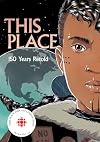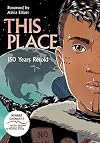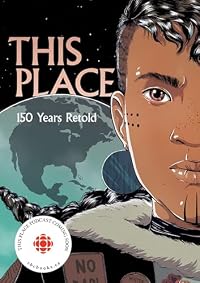
This Place: 150 Years Retold
by Alicia Elliott (Foreword)
On This Page
Description
Explore the past 150 years through the eyes of Indigenous creators in this groundbreaking graphic novel anthology. Beautifully illustrated, these stories are an emotional and enlightening journey through Indigenous wonderworks, psychic battles, and time travel. See how Indigenous peoples have survived a post-apocalyptic world since Contact.Each story includes a timeline of related historical events and a personal note from the author. Find cited sources and a select bibliography for further show more reading in the back of the book. The accompanying teacher guide includes curriculum charts and 12 lesson plans to help educators use the book with their students.
This is one of the 200 exceptional projects funded through the Canada Council for the Arts' New Chapter initiative. With this $35M initiative, the Council supports the creation and sharing of the arts in communities across Canada.
. show less
Tags
Recommendations




Member Recommendations
Member Reviews
”Indigenous writers have pointed out that, as Indigenous people, we all live in a post-apocalyptic world. The world as we knew it ended the moment colonialism started to creep across these lands. But we have continued to tell our stories; we have continued to adapt. Despite everything, we have survived.”
Content warnings:
Oh, boy, lots. Because this talks about the crimes committed against Indigenous peoples by the Canadian government, things can get pretty intense and tough to read.
- genocide
- racism against Indigenous people
- kidnapping
- cannibalism
Maybe I haven’t fully read enough graphic novels, but I haven’t come across any graphic novel anthologies before this one. And what a wonderful idea! Especially in this case because show more as has been said (I think in the foreword), graphic novels are a very accessible and easy way to learn about things that may be less so in a thick nonfiction book written in difficult academic text (and they're more straightforward than fiction).
This anthology contains eleven graphic novel shorts, each with a summary and timeline of events talking a bit about the events in the graphic novel or what inspired it. All of the stories are about Indigenous peoples living in what’s known as Canada.
As with all anthologies, some stories are hit and miss. In this case, it’s the art styles. Some of them aren’t my thing, but none of them are objectively awful. All of the stories, however, are engaging and serve more as springboards into further research than they do a thorough explanation or overview of things. Which is a great thing, actually! I have more notes saved to look things into from this anthology than from many nonfiction books. By covering lots of ground, this anthology is able to get people interested and outraged by what has happened to many of these different Indigenous peoples.
I really hope this is something that will be done more often, because I think it’s very effective. show less
Content warnings:
Oh, boy, lots. Because this talks about the crimes committed against Indigenous peoples by the Canadian government, things can get pretty intense and tough to read.
- genocide
- racism against Indigenous people
- kidnapping
- cannibalism
Maybe I haven’t fully read enough graphic novels, but I haven’t come across any graphic novel anthologies before this one. And what a wonderful idea! Especially in this case because show more as has been said (I think in the foreword), graphic novels are a very accessible and easy way to learn about things that may be less so in a thick nonfiction book written in difficult academic text (and they're more straightforward than fiction).
This anthology contains eleven graphic novel shorts, each with a summary and timeline of events talking a bit about the events in the graphic novel or what inspired it. All of the stories are about Indigenous peoples living in what’s known as Canada.
As with all anthologies, some stories are hit and miss. In this case, it’s the art styles. Some of them aren’t my thing, but none of them are objectively awful. All of the stories, however, are engaging and serve more as springboards into further research than they do a thorough explanation or overview of things. Which is a great thing, actually! I have more notes saved to look things into from this anthology than from many nonfiction books. By covering lots of ground, this anthology is able to get people interested and outraged by what has happened to many of these different Indigenous peoples.
I really hope this is something that will be done more often, because I think it’s very effective. show less
In this teen graphic, Canadian First Nation, Métis and Inuit artists and storytellers depict moments and movements, from the unbearably painful to the boldly triumphant, from the past 150 years from a native perspective. The narratives are intensely personal, and at least one had me tearing up while reading. I selected this title to fulfill the "an anthology featuring diverse voices" category for Read Harder this year, and I'm so glad I did. There is a quote in the book's Foreword that especially resonated with me: "Indigenous writers have pointed out that, as indigenous people, we all live in a post-apocalyptic world. The world as we knew it ended the moment colonialism started to creep across these lands." I had to sit with that for show more a moment, as I had not previously thought about Native history or American history in those terms. show less
The graphic novel, This Place: 150 Years Retold, showcases the voices of eleven Indigenous writers as well as several Indigenous artists. It is a powerful telling of 150 years of Canadian history from the perspective of different First Nations members, Inuit, and Metis, voices rarely heard in our history which is told mostly from the perspective of European settlers.
As in any anthology, the art is somewhat uneven and varies from black and white to full eye-catching colour. Overall, though, it is gorgeous and complements the stories which are uniformly well-written and shine a light on important parts of Canadian history since Confederation that few of us have learned, certainly not in school - stories about the horrors of the show more Residential schools, the kidnapping of their children in the '60s scoop, and the theft of land, culture, and language. Although the stories are (mostly) fictional told in the form of time travel or dystopian tales, there are references to real historical figures like Metis businesswoman Annie Bannatyne (who I had never heard of) and Louie Riel and real historical events like the Red River Rebellion, the Oka crisis, as well as one story about a young Cree boy from the future sent back to witness the effects of climate change.
This Place is a beautiful, heartbreaking, and important book. For those who think graphic novels are for children, yes, this one definitely is and for teens, adults, classrooms, and libraries as well. It gives a side of the story that has too long been hidden but needs to be told and I cannot recommend it highly enough.
Thanks to Netgalley and Portage & Main Press for the opportunity to read this book in exchange for an honest review show less
As in any anthology, the art is somewhat uneven and varies from black and white to full eye-catching colour. Overall, though, it is gorgeous and complements the stories which are uniformly well-written and shine a light on important parts of Canadian history since Confederation that few of us have learned, certainly not in school - stories about the horrors of the show more Residential schools, the kidnapping of their children in the '60s scoop, and the theft of land, culture, and language. Although the stories are (mostly) fictional told in the form of time travel or dystopian tales, there are references to real historical figures like Metis businesswoman Annie Bannatyne (who I had never heard of) and Louie Riel and real historical events like the Red River Rebellion, the Oka crisis, as well as one story about a young Cree boy from the future sent back to witness the effects of climate change.
This Place is a beautiful, heartbreaking, and important book. For those who think graphic novels are for children, yes, this one definitely is and for teens, adults, classrooms, and libraries as well. It gives a side of the story that has too long been hidden but needs to be told and I cannot recommend it highly enough.
Thanks to Netgalley and Portage & Main Press for the opportunity to read this book in exchange for an honest review show less
A powerful look at Canadian history from an Indigenous perspective.
(Full disclosure: I received a free e-ARC for review through NetGalley. Trigger warning for racist violence against Indigenous peoples, including colonialism, kidnapping, forced assimilation, and land theft.)
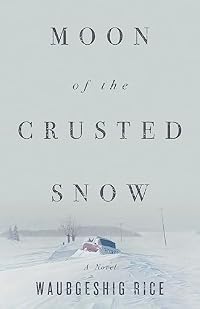
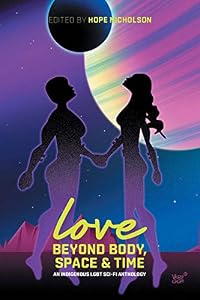
Though the body of post-apocalyptic Indigenous literature is much smaller than I'd like (Moon of the Crusted Snow by Waubgeshig Rice and the 2016 scifi anthology Love Beyond Body, Space, and Time are the only two that spring immediately to mind), in my own experience, one observation seems to cut across them all: that, for Native Americans and Indigenous peoples, the apocalypse has already happened - is happening - in the form of colonialism. For them, show more "post-apocalyptic" is not sub-genre of science fiction, or an escape from the banality of everyday life, or even a warning of what could happen, if we continue down our current path. Rather, "post-apocalyptic" describes their current reality, their lives, their struggles, their continued resistance. No matter how many times I encounter it, it's a statement that always bowls me over.
While This Place: 150 Years Retold is not really a science fiction anthology ("kitaskînaw 2350" by Chelsea Vowel notwithstanding), it's hard not to view the comics in this collection from an apocalyptic lens.
The ten comics featured in This Place explore various historical figures and events in Canadian history from an Indigenous perspective: from Sniper Francis "Peggy" Pegahmagabow, who served in WWI, killed 378 enemy soldiers and captured 300 more, and went on to become the most decorated Indigenous soldier in Canadian history...only to be repeatedly denied loans after the war ("Peggy" by David A. Robertson and Natasha Donovan), to a fictionalized account of a mother's stand against CA's kidnapping of Indigenous children, spurred in part by the young boy she failed to save when she was in foster care herself ("Nimkii" by Kateri Akiwenzie-Damm, Ryan Howe, Jen Storm, and Donovan Yaciuk).
While both the artwork and storytelling is a little uneven (par for the course in anthologies), for the most part I found this a pretty solid collection of historical graphic stories. The result is fierce, cutting, and sorely needed. I hope this lands in high school syllabuses on both sides of the border.
(tbh, a grounding in Canadian history is a plus, but by no means necessary.)
http://www.easyvegan.info/2019/05/21/this-place-150-years-retold-by-kateri-akiwe... show less
(Full disclosure: I received a free e-ARC for review through NetGalley. Trigger warning for racist violence against Indigenous peoples, including colonialism, kidnapping, forced assimilation, and land theft.)
Though the body of post-apocalyptic Indigenous literature is much smaller than I'd like (Moon of the Crusted Snow by Waubgeshig Rice and the 2016 scifi anthology Love Beyond Body, Space, and Time are the only two that spring immediately to mind), in my own experience, one observation seems to cut across them all: that, for Native Americans and Indigenous peoples, the apocalypse has already happened - is happening - in the form of colonialism. For them, show more "post-apocalyptic" is not sub-genre of science fiction, or an escape from the banality of everyday life, or even a warning of what could happen, if we continue down our current path. Rather, "post-apocalyptic" describes their current reality, their lives, their struggles, their continued resistance. No matter how many times I encounter it, it's a statement that always bowls me over.
While This Place: 150 Years Retold is not really a science fiction anthology ("kitaskînaw 2350" by Chelsea Vowel notwithstanding), it's hard not to view the comics in this collection from an apocalyptic lens.
The ten comics featured in This Place explore various historical figures and events in Canadian history from an Indigenous perspective: from Sniper Francis "Peggy" Pegahmagabow, who served in WWI, killed 378 enemy soldiers and captured 300 more, and went on to become the most decorated Indigenous soldier in Canadian history...only to be repeatedly denied loans after the war ("Peggy" by David A. Robertson and Natasha Donovan), to a fictionalized account of a mother's stand against CA's kidnapping of Indigenous children, spurred in part by the young boy she failed to save when she was in foster care herself ("Nimkii" by Kateri Akiwenzie-Damm, Ryan Howe, Jen Storm, and Donovan Yaciuk).
While both the artwork and storytelling is a little uneven (par for the course in anthologies), for the most part I found this a pretty solid collection of historical graphic stories. The result is fierce, cutting, and sorely needed. I hope this lands in high school syllabuses on both sides of the border.
(tbh, a grounding in Canadian history is a plus, but by no means necessary.)
http://www.easyvegan.info/2019/05/21/this-place-150-years-retold-by-kateri-akiwe... show less
A beautiful graphic novel anthology taking the reader through the history of colonialism on Turtle Island. Featuring ten stories by First Nations authors, starting at Confederation and continuing beyond the present into a hopeful future.
The Place: 150 Years Retold provides hope and gives positive, accurate representations to Indigenous people and forces colonizers to examine the impacts our ancestors have had and we continue to have on the lives of Indigenous people. The incredible design by Relish New Brand Experience creates an thought-provoking collection of stories with timelines and context and history, really bringing into focus the role of Europeans in the apocalypse faced by First Nations. Classified as a Teen Graphic Fiction show more book, this anthology needs to find its way into history classrooms and school libraries in not only High Schools but middle schools as well. Our middle grade children are more than capable of learning from the lessons in this book and learning the history of Canada’s colonial system of eradication in the name of progress. I don’t know about you but when I was learning history, first I never learned about the Indian Residential School system and I also found history to be quite dull and dry. I just didn’t really care about things that happened in the past when I couldn’t really see the impact of history on my day to day life in a small Ontario town. If we can provide our children and students with more interesting and engaging mediums to learn history and when we can provide concrete connections to how the past seeked to destroy First People and how the decisions of the past are still affecting the future of First Nations to live their way of life, to thrive and be seen as important stewards of the land.
As contributor David A. Robertson so accurately says in the introduction to his story “Peggy”, “[Comics] often serve as an introduction, and it is up to the reader to continue learning.” This Place: 150 Years Retold forces us as colonizers to continue to learn, to continue to educate ourselves and continue to strive towards a future where colonizers and First Nations can live in harmony. A place where everyone has what they need to find success and a time when we can learn from each other as equals show less
The Place: 150 Years Retold provides hope and gives positive, accurate representations to Indigenous people and forces colonizers to examine the impacts our ancestors have had and we continue to have on the lives of Indigenous people. The incredible design by Relish New Brand Experience creates an thought-provoking collection of stories with timelines and context and history, really bringing into focus the role of Europeans in the apocalypse faced by First Nations. Classified as a Teen Graphic Fiction show more book, this anthology needs to find its way into history classrooms and school libraries in not only High Schools but middle schools as well. Our middle grade children are more than capable of learning from the lessons in this book and learning the history of Canada’s colonial system of eradication in the name of progress. I don’t know about you but when I was learning history, first I never learned about the Indian Residential School system and I also found history to be quite dull and dry. I just didn’t really care about things that happened in the past when I couldn’t really see the impact of history on my day to day life in a small Ontario town. If we can provide our children and students with more interesting and engaging mediums to learn history and when we can provide concrete connections to how the past seeked to destroy First People and how the decisions of the past are still affecting the future of First Nations to live their way of life, to thrive and be seen as important stewards of the land.
As contributor David A. Robertson so accurately says in the introduction to his story “Peggy”, “[Comics] often serve as an introduction, and it is up to the reader to continue learning.” This Place: 150 Years Retold forces us as colonizers to continue to learn, to continue to educate ourselves and continue to strive towards a future where colonizers and First Nations can live in harmony. A place where everyone has what they need to find success and a time when we can learn from each other as equals show less
Explore the past 150 years through the eyes of Indigenous creators in this groundbreaking graphic novel anthology. Beautifully illustrated, these stories are an emotional and enlightening journey through Indigenous wonderworks, psychic battles, and time travel. See how Indigenous peoples have survived a post-apocalyptic world since Contact.
3.5 stars
This is a graphic novel consisting of several short stories by different authors. In its totality, it covers colonization of Canada/Turtle Island, but from the perspective of the Indigenous peoples. There are stories of Metis and Inuit included, as well as ones that focus on specific people and events. It goes in chronological order.
As with many short story anthologies, there were some stories I liked better than others. I wasn’t as interested in the first couple. There were a few I just didn’t understand and a couple that didn’t really end; that is, they just abruptly stopped (I thought). I really liked the stories of the WWII Indigenous soldier, Meech Lake/Oka, the Sixties Scoop, and the environmental one of the show more pipeline running through Dene Territory (the NorthWest Territories). The illustrations were in colour, and again, I liked some more than others. Each story did have a short introduction (just a few paragraphs), and a timeline to go with it. show less
This is a graphic novel consisting of several short stories by different authors. In its totality, it covers colonization of Canada/Turtle Island, but from the perspective of the Indigenous peoples. There are stories of Metis and Inuit included, as well as ones that focus on specific people and events. It goes in chronological order.
As with many short story anthologies, there were some stories I liked better than others. I wasn’t as interested in the first couple. There were a few I just didn’t understand and a couple that didn’t really end; that is, they just abruptly stopped (I thought). I really liked the stories of the WWII Indigenous soldier, Meech Lake/Oka, the Sixties Scoop, and the environmental one of the show more pipeline running through Dene Territory (the NorthWest Territories). The illustrations were in colour, and again, I liked some more than others. Each story did have a short introduction (just a few paragraphs), and a timeline to go with it. show less
Members
- Recently Added By
Lists

Indigenous America Reader
145 works; 12 members

Top Five Books of 2020
982 works; 350 members
Native American Heritage Month
17 works; 2 members

Autochtonie
14 works; 1 member

Books recommended by Calgary Public Library staff
1,588 works; 4 members
Author Information

All Editions
Awards and Honors
Awards
Distinctions
Common Knowledge
- Original publication date
- 2019-04-30
- People/Characters
- Annie McDermot Bannatyne; Andrew Bannatyne (Andrew Graham Ballenden Bannatyne); Louis Riel; Charles Mair; William "Billy" Assu; Israel Wood Powell (show all 23); John A. Macdonald; Franz Boas; Wahsakapeequay; Jack Fiddler (Zhauwuno-geezhigo-gaubow); Zhauwuno-geezhigo-gaubow (Jack Fiddler); Joseph Fiddler (Pesequan); Pesequan (Joseph Fiddler); Francis Pegahmagabow; John Daly; Nimkii; Frank T'Seleie; Thomas Berger; Elijah Harper; Ellen Gabriel; Washashk; Kanontienentha; Wâpanacâhkos
- Important places
- Red River Settlement, Manitoba, Canada; Norway House, Manitoba, Canada; Canada; Ypres, West Flanders, Belgium; Passchendaele, Belgium; Wasauksing First Nation reserve, Ontario, Canada (show all 18); Parry Sound, Ontario, Canada; Toronto, Ontario, Canada; Wabaseemoong, Ontario, Canada; Standing Rock Reservation, USA; Fort Good Hope, Northwest Territories, Canada; Northwest Territories, Canada; Mackenzie River, Northwest Territories, Canada; Listuguj Mi'gmaq First Nation, Quebec, Canada; Winnipeg, Manitoba, Canada; Edmonton, Alberta, Canada; Oka, Québec, Canada; Elsipogtog First Nation, New Brunswick, Canada
- Important events
- World War I; Oka Crisis; Sixties Scoop; Berger Commission
- First words
- October 1868. Andrew and Annie Bannatyne. Louis Riel.
"I hear you had returned! My, how you've grown, dear Louis." - Last words
- (Click to show. Warning: May contain spoilers.)They've returned, câpân. Now, let's welcome them home.
- Blurbers
- Rifkind, Candida; Wente, Jesse; Kubiw, Helen
- Original language
- English
Classifications
- Genres
- Graphic Novels & Comics, Teen
- DDC/MDS
- 741.5 — Arts & recreation Drawing & decorative arts Drawing and drawings Comic books, graphic novels, fotonovelas, cartoons, caricatures, comic strips
- LCC
- PN6732 .T48 — Language and Literature Literature (General) Literature (General) Collections of general literature Comic books, strips, etc.
- BISAC
Statistics
- Members
- 365
- Popularity
- 85,633
- Reviews
- 20
- Rating
- (4.17)
- Languages
- English, German
- Media
- Paper, Ebook
- ISBNs
- 7
- ASINs
- 3