
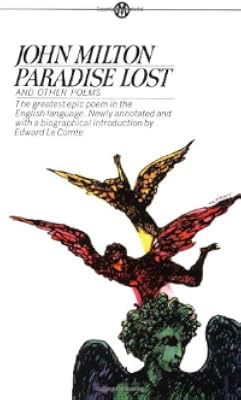
Paradise Lost and Other Poems
by John Milton
On This Page
Description
Presents three major works by the seventeenth-century English poet, including his epic poem "Paradise Lost," which depicts the creation, fall, and redemption of humankind and the moral and spiritual dilemmas of God's judgment.Tags
Recommendations





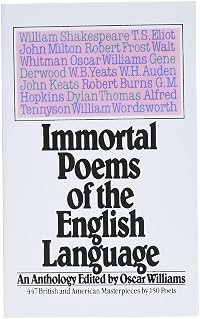
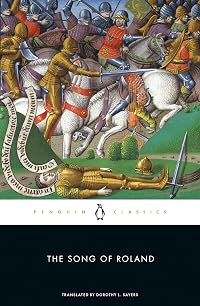
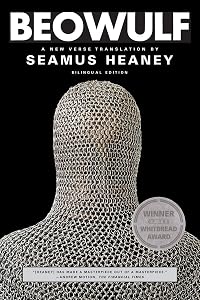

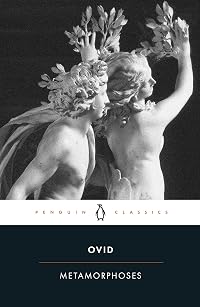














Member Reviews
Milton wrote this while blind, and claimed that the work was one of a divine inspiration which came to him in the night. If there is any modern text of the quality to be believably added into the Bible, it is this one. Indeed, as it outlines portions of that book which, thanks to the basis of combined mythic stories, are never explored. It also updated not only the epic, but the heroic form, and its questioning of the devil is a great philosophical exploration, even if it may be a failure, as I shall later try to explain.
So, the question remains: even if the vatican did not decide to explicitly include it, why are there not smaller sects which we expect should have sprung up around such and inspiring and daring work? The answer is that show more one need not explicitly include something when it has been included implicitly. It is not common to take Milton's view of events as accurate because it was derived from the Bible, and not recognize that most of it is entirely original work.
Under Constantine, Hell and the Devil were re-conceptualized. The representation of Hell in the Bible is often metaphorical, and does not include 'fire or brimstone'. Hell is defined as 'absence from God' and nothing more. This is supposed to be a painful and unfulfilling experience, but not literal physical torture.
Much of the modern conceptualization of Hell is based upon Hellenic mythological influences with verses from Revelation taken out of context for support. The place of 'fire and brimstone' is where the Devil and the Antichrist are put after the apocalypse, and is never stated as being related to human afterlife.
Likewise, the Devil is most commonly depicted as a greedy idiot chasing after farts. The only tempting he ever does Biblically is during Job, where he must first ask God if he is permitted to interfere. The concept of the Devil as a charming, rebellious trickster and genius is entirely Milton.
He portrays him this way to align Satan with the heroic figures of Epic Poetry. This is not because he thinks of the Devil as a hero, but rather so he can subvert that concept to show that heroes should not be rebellious murderers as they were in ancient stories, but humble, pious, simple men.
He gives the Devil philosophical and political motivations for rebelling, but has him fail to notice that God cannot be questioned and defeated. Unfortunately for Milton, this requires that one absolutely believe this assertion without ever testing it. Anyone who believes it unquestioningly (such as C.S. Lewis) is bound to find that the Devil is foolish to question the natural order.
However, Milton himself states that the Devil had no choice but to doubt, and that with our own rational arguments, man cannot help doubting either. In this case, we must then fall in with Blake, and agree that Milton was the Devil's man, but never knew it.
The strength of Paradise Lost is that both of these views stand well-supported, even though Milton may have sided himself with one more than the other. It is a great book of questions, and a book which is entirely demanding on the reader to think and to try to understand.
We are supposed to sympathize with the Devil because he is heroic and dangerous, but we also know he is the Devil. We know that to sympathize with him is wrong, and that he is supposed to be wrong. Milton here invented the concept of the Devil we cannot help but enjoy, and who we must fight daily to overcome.
What he may not have realized is that the Devil is doubt, and that doubt will always deconstruct and old answer and indicate a new one. The fact remains that metaphysically, doubt can only injure us in a realm we cannot know exists. As the enemy of any tyranny--of men, of ideas--doubt is the helpmeet of all who struggle. The Devil is the father of doubt, and the final answer to doubt is always ignorance: either in believing, or in not believing. show less
So, the question remains: even if the vatican did not decide to explicitly include it, why are there not smaller sects which we expect should have sprung up around such and inspiring and daring work? The answer is that show more one need not explicitly include something when it has been included implicitly. It is not common to take Milton's view of events as accurate because it was derived from the Bible, and not recognize that most of it is entirely original work.
Under Constantine, Hell and the Devil were re-conceptualized. The representation of Hell in the Bible is often metaphorical, and does not include 'fire or brimstone'. Hell is defined as 'absence from God' and nothing more. This is supposed to be a painful and unfulfilling experience, but not literal physical torture.
Much of the modern conceptualization of Hell is based upon Hellenic mythological influences with verses from Revelation taken out of context for support. The place of 'fire and brimstone' is where the Devil and the Antichrist are put after the apocalypse, and is never stated as being related to human afterlife.
Likewise, the Devil is most commonly depicted as a greedy idiot chasing after farts. The only tempting he ever does Biblically is during Job, where he must first ask God if he is permitted to interfere. The concept of the Devil as a charming, rebellious trickster and genius is entirely Milton.
He portrays him this way to align Satan with the heroic figures of Epic Poetry. This is not because he thinks of the Devil as a hero, but rather so he can subvert that concept to show that heroes should not be rebellious murderers as they were in ancient stories, but humble, pious, simple men.
He gives the Devil philosophical and political motivations for rebelling, but has him fail to notice that God cannot be questioned and defeated. Unfortunately for Milton, this requires that one absolutely believe this assertion without ever testing it. Anyone who believes it unquestioningly (such as C.S. Lewis) is bound to find that the Devil is foolish to question the natural order.
However, Milton himself states that the Devil had no choice but to doubt, and that with our own rational arguments, man cannot help doubting either. In this case, we must then fall in with Blake, and agree that Milton was the Devil's man, but never knew it.
The strength of Paradise Lost is that both of these views stand well-supported, even though Milton may have sided himself with one more than the other. It is a great book of questions, and a book which is entirely demanding on the reader to think and to try to understand.
We are supposed to sympathize with the Devil because he is heroic and dangerous, but we also know he is the Devil. We know that to sympathize with him is wrong, and that he is supposed to be wrong. Milton here invented the concept of the Devil we cannot help but enjoy, and who we must fight daily to overcome.
What he may not have realized is that the Devil is doubt, and that doubt will always deconstruct and old answer and indicate a new one. The fact remains that metaphysically, doubt can only injure us in a realm we cannot know exists. As the enemy of any tyranny--of men, of ideas--doubt is the helpmeet of all who struggle. The Devil is the father of doubt, and the final answer to doubt is always ignorance: either in believing, or in not believing. show less
I couldn't finish Paradise Lost, not its fault, my mind couldn't handle more than four sections. I really enjoyed Milton's poems, elegies and sonnets.
The version I read, published by Walter J. Black for the Classics Club, had a good introduction and notes to each section for those of us who have not encountered Milton before.
The version I read, published by Walter J. Black for the Classics Club, had a good introduction and notes to each section for those of us who have not encountered Milton before.
Fair condition.
Ratings
Members
- Recently Added By
Author Information

764+ Works 35,355 Members
John Milton, English scholar and classical poet, is one of the major figures of Western literature. He was born in 1608 into a prosperous London family. By the age of 17, he was proficient in Latin, Greek, and Hebrew. Milton attended Cambridge University, earning a B.A. and an M.A. before secluding himself for five years to read, write and study show more on his own. It is believed that Milton read evertything that had been published in Latin, Greek, and English. He was considered one of the most educated men of his time. Milton also had a reputation as a radical. After his own wife left him early in their marriage, Milton published an unpopular treatise supporting divorce in the case of incompatibility. Milton was also a vocal supporter of Oliver Cromwell and worked for him. Milton's first work, Lycidas, an elegy on the death of a classmate, was published in 1632, and he had numerous works published in the ensuing years, including Pastoral and Areopagitica. His Christian epic poem, Paradise Lost, which traced humanity's fall from divine grace, appeared in 1667, assuring his place as one of the finest non-dramatic poet of the Renaissance Age. Milton went blind at the age of 43 from the incredible strain he placed on his eyes. Amazingly, Paradise Lost and his other major works, Paradise Regained and Samson Agonistes, were composed after the lost of his sight. These major works were painstakingly and slowly dictated to secretaries. John Milton died in 1674. (Bowker Author Biography) show less
All Editions
Some Editions
Series
Belongs to Publisher Series
Mentor Books (ME2093)
Work Relationships
Contains
Common Knowledge
- Canonical title
- Paradise Lost and Other Poems
- Original publication date
- 1961
Classifications
Statistics
- Members
- 1,264
- Popularity
- 19,326
- Reviews
- 4
- Rating
- (3.96)
- Languages
- English
- Media
- Paper, Ebook
- ISBNs
- 22
- ASINs
- 29