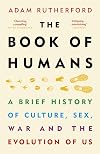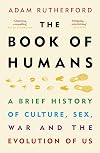
The Book of Humans: The Story of How We Became Us
by Adam Rutherford
On This Page
Description
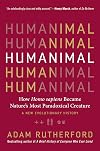
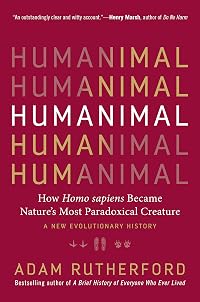
"Evolutionary theory has long established that humans are animals: Modern Homo sapiens are primates who share an ancestor with monkeys and other great apes. Our genome is 98 percent identical to a chimpanzee's. And yet we think of ourselves as exceptional. Are we? In this original and entertaining tour of life on Earth, Adam Rutherford explores the profound paradox of the "human animal." Looking for answers across the animal kingdom, he finds that many things once considered exclusively show more human are not: In Australia, raptors have been observed starting fires to scatter prey; in Zambia, a chimp named Julie even started a "fashion" of wearing grass in one ear. We aren't the only species that communicates, makes tools, or has sex for reasons other than procreation. But we have developed a culture far more complex than any other we've observed. Why has that happened, and what does it say about us? Humanimal is a new evolutionary history--a synthesis of the latest research on genetics, sex, migration, and much more. It reveals what unequivocally makes us animals--and also why we are truly extraordinary."--Dust jacket. show lessTags
Recommendations



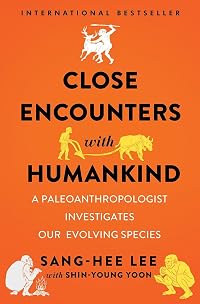
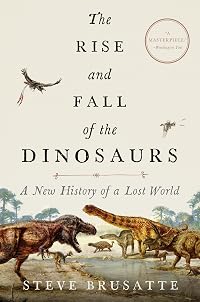
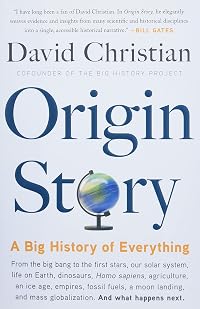
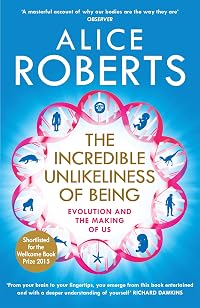

Member Reviews
The effort to distinguish humans from the rest of the animals has filled volumes since before Darwin took his fated voyage on the HMS Beagle: tools, war, sex habits, language. In his latest book, The Book of Humans: The Story of How We Became Us, geneticist Adam Rutherford looks at each of these things and how our behaviour is different to and often surprisingly similar to other animals. The use of tools eg. was once seen as the main distinguishing factor that made us unique but scientists have documented many cases of animals using tools, monkeys using twigs to get at hidden insects and, as recently as 2017, some birds of prey were seen picking up sticks from brush fires and dropping them in dry grass to drive small animals into the show more open for easy pickings. As to sex habits, it has been argued in the past that humans were the only animals that had sex for reasons other than procreation but that is no longer the case. As Rutherford points out, there are few sexual habits of humans that haven't been observed in other species - here, I will freely admit I now know more than I ever I thought I needed or wanted to know about the sex habits of dolphins and otters - turns out they can be really big jerks in the sack.
In the end, Rutherford shows we really aren't that much different from other animals except in our ability, not only to learn but to teach and not just our closest kin but strangers. He also shows how we haven't really evolved genetically from our ancient Homo Sapiens ancestors or even likely Neanderthal or Denisovans - they had a capacity for language, for art, for symbolism just as we do now. He posits that it was increased population rather than genetics that is responsible for the rise of civilization, that as populations increase, so does our knowledge and skill-sharing.
Adam Rutherford has become one of my favourite science writers - he not only makes the science accessible to the scientifically illiterate like myself but, thanks to his use of humour, he makes it fun to read. The Book of Humans is no exception. It is well-written, well-documented, clearly explained and interesting. I would even call it entertaining, a word I'm sure most would agree is rarely used to describe a book of science.
Thanks to Netgalley and The Experiment for the opportunity to read this book in exchange for an honest review show less
In the end, Rutherford shows we really aren't that much different from other animals except in our ability, not only to learn but to teach and not just our closest kin but strangers. He also shows how we haven't really evolved genetically from our ancient Homo Sapiens ancestors or even likely Neanderthal or Denisovans - they had a capacity for language, for art, for symbolism just as we do now. He posits that it was increased population rather than genetics that is responsible for the rise of civilization, that as populations increase, so does our knowledge and skill-sharing.
Adam Rutherford has become one of my favourite science writers - he not only makes the science accessible to the scientifically illiterate like myself but, thanks to his use of humour, he makes it fun to read. The Book of Humans is no exception. It is well-written, well-documented, clearly explained and interesting. I would even call it entertaining, a word I'm sure most would agree is rarely used to describe a book of science.
Thanks to Netgalley and The Experiment for the opportunity to read this book in exchange for an honest review show less
An interesting take on a well-chewed subject. What makes humans human - how do we differ from all our relatives, from the great apes to bacteria and viruses? It's mostly, though not entirely, about behavior - cultural transmission of information and habits, and how that is not _quite_ unique to humans. Use of tools, making of tools, even use of fire...fashion and pointless decoration, too. And considerable discussion of sex, how our behavior is similar to and different from that of various animals - with the repeated caveat that while you can ask a human why they're doing something (and sometimes get the answer "because it feels good"), you can't ask an animal why they're doing it, or how they feel about what they're doing (this applies show more to sex, but also to tool use, and many other behaviors). I also found the review of (relatively) recent archaeological discoveries interesting - a subject I enjoy, but my knowledge is rather behind. This is my first Rutherford, it won't be my last. I received this book through Netgalley in return for a review. show less
To say we have dominated the globe would be an understatement. We have conquered the highest mountains, reached deep into the oceans, become one of the few mammals that can fly and even been in the unique position of having had a select number of people leave the planet when they ventured into space. We tend to think of ourselves as exceptional, but are we? When you look at it from a bigger perspective, we are a single twig on a four-billion-year-old family tree that has countless species and lots of dead ends. All of these from a single origin with a code that is the very heart of our existence; DNA.
Rutherford considers all the things that make us distinctive such as speech and communication, tool creation, art, fire, social skills and show more how sex has gone beyond just being for procreation. But if you look hard enough at the other species that we share this world with you can find traces of these habits where they exist. There are examples of tool usage in other primates, birds and even dolphins. He explains how raptor in Australia have learnt to move fire from one part of the landscape to another and where weapons have been used by all sorts of animals. He discusses how the various types of sex that it was only thought that the human race participated in also exist in other creatures and it makes for grim reading at times.
Our genes are a map and a history of our past. Looking into its mysteries can show all sort of things, like where genes that affect language are and what they do, just how much of us is Neanderthal and how many bits of our DNA we have acquired from elsewhere. We have come to dominate the rest of the world though, even though our roots are common. Even though he is rooting through the history of our cells, this books is just what a pop science should be; accessible, understandable and intriguing enough to make you want to go and discover more about certain aspects of the text. Another book that is well worth reading from Adam Rutherford. show less
Rutherford considers all the things that make us distinctive such as speech and communication, tool creation, art, fire, social skills and show more how sex has gone beyond just being for procreation. But if you look hard enough at the other species that we share this world with you can find traces of these habits where they exist. There are examples of tool usage in other primates, birds and even dolphins. He explains how raptor in Australia have learnt to move fire from one part of the landscape to another and where weapons have been used by all sorts of animals. He discusses how the various types of sex that it was only thought that the human race participated in also exist in other creatures and it makes for grim reading at times.
Our genes are a map and a history of our past. Looking into its mysteries can show all sort of things, like where genes that affect language are and what they do, just how much of us is Neanderthal and how many bits of our DNA we have acquired from elsewhere. We have come to dominate the rest of the world though, even though our roots are common. Even though he is rooting through the history of our cells, this books is just what a pop science should be; accessible, understandable and intriguing enough to make you want to go and discover more about certain aspects of the text. Another book that is well worth reading from Adam Rutherford. show less
Adorei ler este livro, aprendi imenso e sinto que consolidei o meu conhecimento sobre a evolução da nossa espécie.
É uma leitura fácil e muito interessante para quem gosta de temas científicos, nomeadamente biologia e genética.
Penso, no entanto, que o título deste livro é um pouco enganador, já que em grande parte fala de outros animais e dos seus comportamentos. Isto deve-se à sua perspetiva evolutiva, e ao facto de mencionar muitos estudos arqueológicos.
Além da escrita acessível, também achei que o livro estava muito bem organizado, com capítulos sucintos que nunca se tornaram enfadonhos.
E de resto, adorei descobrir o que realmente nos torna humanos e como chegámos até aqui.
É uma leitura fácil e muito interessante para quem gosta de temas científicos, nomeadamente biologia e genética.
Penso, no entanto, que o título deste livro é um pouco enganador, já que em grande parte fala de outros animais e dos seus comportamentos. Isto deve-se à sua perspetiva evolutiva, e ao facto de mencionar muitos estudos arqueológicos.
Além da escrita acessível, também achei que o livro estava muito bem organizado, com capítulos sucintos que nunca se tornaram enfadonhos.
E de resto, adorei descobrir o que realmente nos torna humanos e como chegámos até aqui.
Books of this kind are sometimes hard to digest for people – like me – who are not scientifically gifted. This work, I’m pleased to say, is easy to understand, and it's a great read.
The author makes many comparisons to animals to show the similarities and differences between them and humans. This makes for some interesting and amusing reading.
This is also a quick read, not bogged down with intricate detail.
The author makes many comparisons to animals to show the similarities and differences between them and humans. This makes for some interesting and amusing reading.
This is also a quick read, not bogged down with intricate detail.
On the whole, this book provides an easy to read, overly simplified introduction to human evolution and what makes humans different (or not) from other animals. Each section covers a different aspect of "humaness", such as tool use, sex, speech development and cultural dissemination. I found the book a bit bland and lacking in substance as it did not provide any information that I hadn't come across in other books, journal, magazine or internet articles.
****NOTE: I received a copy of this book from NetGalley. This review is my honest opinion of the book.***
****NOTE: I received a copy of this book from NetGalley. This review is my honest opinion of the book.***
More than everything you ever thought you wanted to know about sex. I've heard otters weren't the cute little animals they seem to be. Yikes! Fascinating information.
Members
- Recently Added By
Author Information

11+ Works 2,859 Members
Adam Rutherford, PhD, studied genetics at University College London and was part of a team that identified the first genetic cause of a form of childhood blindness. He has written and presented award-winning BBC programs and writes on science for the Guardian. His hook Creation was shortlisted for the Wellcome Book Prize.
Awards and Honors
Distinctions
The Guardian Book of the Day (2018-10-09)
Work Relationships
Common Knowledge
- Original title
- Book of humans; The Book of Humans
- Alternate titles
- Humanimal
- Original publication date
- 2018
- First words
- Introduction
"What a piece of work is man!" marvels Hamlet, in awe at our specialness. - Blurbers
- Yong, Ed; Fry, Hannah; Frankopan, Peter; Saini, Angela; Fox, Kate; Snow, Dan
Classifications
- Genres
- Anthropology, Science & Nature, Nonfiction, General Nonfiction
- DDC/MDS
- 599.93 — Natural sciences & mathematics Animals Mammals Homo sapiens Genetics, sex and age characteristics, evolution
- LCC
- GN281 .R884 — Geography, Anthropology and Recreation Anthropology Anthropology Physical anthropology. Somatology Human evolution
- BISAC
Statistics
- Members
- 340
- Popularity
- 93,056
- Reviews
- 11
- Rating
- (4.04)
- Languages
- 5 — Dutch, English, Finnish, Italian, Portuguese (Portugal)
- Media
- Paper, Audiobook, Ebook
- ISBNs
- 19
- ASINs
- 5