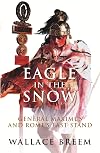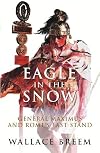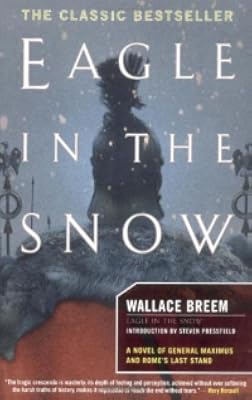
Eagle in the Snow
by Wallace Breem
On This Page
Description
A novel about General Maximus, one of the inspirations behind Ridley Scott's massively successful film GLADIATOR. 'Behind me I left my youth, my middle age, my wife and my happiness. I was a general now and I had only defeat or victory to look forward to. There was no middle way any longer, and I did not care.' In the year AD 406 Rome was on the defensive everywhere, and a single Roman legion stood desperate guard on the Empire's Rhine frontier. Maximus, the legion's commander, is urged to show more proclaim himself emperor, but he stands by his concept of duty and holds the frontier for longer than seems possible. Then chance plays a cruel trick. show lessTags
Recommendations
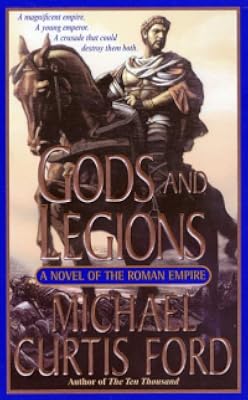

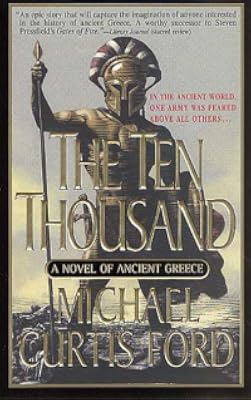
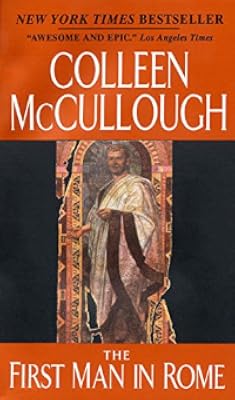
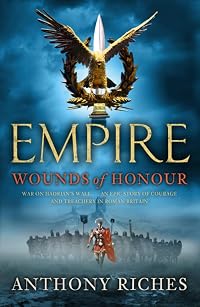






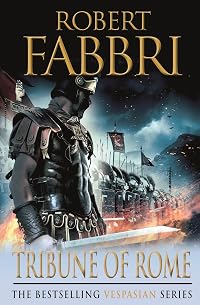
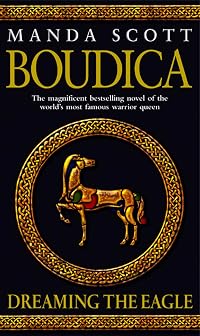
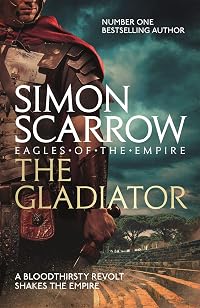

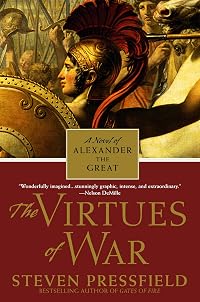

Member Recommendations
Member Reviews
A splendid novel: an absolute masterpiece!!! I loved the author's style and descriptions of the bleak landscape, forts, and towns; I could feel every sword thrust, the ice and snow, every emotion of the protagonist! The mood of foreboding permeated the whole novel. Set in the 4th and 5th centuries, the time of Honorius, Stilicho, and Galla Placidia, the story is told in the first person in flashback by the dour Roman General Maximus, to a group of tribesmen in Segontium (modern-day Caernarfon, Wales). The general holds to the stoic manly virtues of the earlier Rome. Due to a quirk of fate, the Rhine freezes over and the barbarians cross on the ice to the west bank, overwhelming the Romans at the 30th milestone between Augusta Treverorum show more (Trier) and Moguntiacum (Mainz).
In history, this Rhine battle actually did contribute to the collapse of the Western Roman Empire not many years hence. The ending, in an epilogue, was heart-breaking. The author has clearly done his historical research. Possibly for heightened dramatic effect, the author blended the forced suicide of Martinus, Vicarius of Britannia, with those of Arria and Paetus, all three of them historical figures. show less
In history, this Rhine battle actually did contribute to the collapse of the Western Roman Empire not many years hence. The ending, in an epilogue, was heart-breaking. The author has clearly done his historical research. Possibly for heightened dramatic effect, the author blended the forced suicide of Martinus, Vicarius of Britannia, with those of Arria and Paetus, all three of them historical figures. show less
I have no memory of buying this book. But I obviously did at some point, because it was sitting on my shelves as I browsed looking for something to read. And I'm not sure why I picked it up to read this time as I thought I was looking for something more light-hearted. A quick read. Still, this was the one I picked, a classic historical fiction first published in 1970 telling the story of "General Maximus and Rome's Last Stand". It is not quick read.
But it is a very good one.
General Maximus is our narrator, he is telling the story of his own life, and that of the end of the Roman empire. It is a quite a dense book, and at first I will admit I thought that I'd made a mistake and that I wasn't going to enjoy it at all. It seemed on the show more dry and dusty side, but as I read on I realised that it wasn't at all. It is never going to be an in-depth look at the characters or full of stirring heroics. At least not in an overt way. But the writing manages to make you care about this general and his unwavering sense of duty.
I often have issues with historical novels set in the Roman empire, especially when they tell the tales from the Roman POV. I know that the Roman Empire did many great things, ((thank you Monty Python's Life of Brian)) but it was also an empire founded on blood on conquest, and a belief that the Roman way was the best, the only way. I object to that, and also to the dismissal of all other people's at the time as "barbarians".
Eagle in the snow does have a Roman general as it's first person narrator, so of course it is going to give that Roman point of view, but Maximus' perspective does allow for some recognition of the barbarians as people, and he certainly is not above criticising the empire and its corruption.
It is a book all about soldiering, but not the sword and sandals sort, this is the tactics and the actual management of men. Yes, battles feature, but so too does the important of quartermasters and supplies. I enjoyed it a lot more than I thought I would and would recommend it to anyone who has an interest in historical fiction.
As I said, it's style isn't one I often enjoy, but Breem's writing did more than enough to keep me entertained in the whole story. show less
But it is a very good one.
General Maximus is our narrator, he is telling the story of his own life, and that of the end of the Roman empire. It is a quite a dense book, and at first I will admit I thought that I'd made a mistake and that I wasn't going to enjoy it at all. It seemed on the show more dry and dusty side, but as I read on I realised that it wasn't at all. It is never going to be an in-depth look at the characters or full of stirring heroics. At least not in an overt way. But the writing manages to make you care about this general and his unwavering sense of duty.
I often have issues with historical novels set in the Roman empire, especially when they tell the tales from the Roman POV. I know that the Roman Empire did many great things, ((thank you Monty Python's Life of Brian)) but it was also an empire founded on blood on conquest, and a belief that the Roman way was the best, the only way. I object to that, and also to the dismissal of all other people's at the time as "barbarians".
Eagle in the snow does have a Roman general as it's first person narrator, so of course it is going to give that Roman point of view, but Maximus' perspective does allow for some recognition of the barbarians as people, and he certainly is not above criticising the empire and its corruption.
It is a book all about soldiering, but not the sword and sandals sort, this is the tactics and the actual management of men. Yes, battles feature, but so too does the important of quartermasters and supplies. I enjoyed it a lot more than I thought I would and would recommend it to anyone who has an interest in historical fiction.
As I said, it's style isn't one I often enjoy, but Breem's writing did more than enough to keep me entertained in the whole story. show less
While I was reading this, by happenstance my uncle (a naval man) began a blog post with a quote: "Amateurs talk tactics; professionals talk logistics." And that sums up the consummately professional Eagle in the Snow in a nutshell: it is a book about logistics. If you are looking for Hollywood-style speechifying, swordfights and fanfare, look elsewhere. If you want to experience alongside the main character what it's like to be a Roman general just before the fall of the Empire, trying to raise an army and get them equipped before the German tribes overrun your frontier - which we, as readers, know they eventually will - then this is the book for you. Not for everybody, but if you like realistic military history, delay not: get a copy. show more I knew what was going to happen at the end, and I still cried. Tragic and perfect. This will be on my best-of-the-year list.
Review from my blog, This Space Intentionally Left Blank show less
Two days later I rode southwest in the spring sunshine. Behind me I left my youth, my middle age, my wife, and my happiness. I was a general now and I had only defeat or victory to look forward to. There was no middle way any longer, and I did not care.
Review from my blog, This Space Intentionally Left Blank show less
I do not recall exactly how I heard of this book--some stray mention on the internet somewhere--but I'm glad I was influenced enough by whatever it may have been to buy it. I read it a few weeks ago and recall the overwhelming sense of futility and the heroism (?) in the face of it displayed by our Maximus. The prose is not showy, almost flat in fact, but it reads quickly. A previous reviewer mentioned logistics; yes indeed. Most of the battle scenes are light on description but the preparations are given loving attention, and this aesthetic/thematic decision of Breem's puts this book for me in whatever genre Buzzati's The Tartar Steppe is in. I "liked" the book on those grounds. It pushed the reader forward. It put the reader plausibly show more in the mind of a pagan Roman soldier facing his inevitable death in a cold land not his own. It created in this reader something like understanding of a discipline-born fatalism I do not share, and my own pretension and imagination did the rest. Memento Mori.
That said, Breem is not Buzzati. Rated accordingly.
If it is true, parenthetically, that Ridley Scott was influenced by this book for his film Gladiator, only the protagonist's name remains as evidence. show less
That said, Breem is not Buzzati. Rated accordingly.
If it is true, parenthetically, that Ridley Scott was influenced by this book for his film Gladiator, only the protagonist's name remains as evidence. show less
"Eagle In The Snow" by Wallace Breem centers on the years 405 AD to early 407, capturing a key moment in the Roman Empire's death throes as hundreds of thousands of mostly Germanic peoples mass on the east bank of the Rhine waiting for the river to freeze and to walk into Gaul. The tale is an epitaph for the Roman Empire with General Paulinus Gaius Maximus serving as the lone pall bearer, carrying the weight of an empire marching inexorably toward its grave.
Compared to the action adventures of Scarrow, Igguldon or Duffy, the writing style of "Eagle in the Snow" is stark, abrupt and subtle. "Eagle" is deep and the prose and exposition are very genuine. Think of Scarrow and Duffy as TV movies, and Breem as an Oscar-worthy film. It's no show more surprise that the book was a Bestseller, and in the realm of Roman historical fiction, "Eagle" justifies its praise as a classic. For those less interested in Roman military fiction, like the Rhine itself, "Eagle" runs much deeper.
Breem paints a very detailed and accurate picture of life in Maximus' world. This historical novel is as solid in its history as documentation and archaeology allowed in the late `60s, and the liberties taken seem to be few and forgivable. He draws a very vivid exposition of existence at the ends of the Roman earth. He elicits emotion through the subtle interplay between characters and through Maximus' monologue.
The story is structured from Maximus' point of view, who narrates all but the prologue and epilogue. He is the consummate Roman - born in Gaul to Roman ancestry, raised to be a soldier. He loves Rome with every thread of his being, and despite never having been there, he loves what the city is and what it represents. Breem's Maximus is the Roman ideal.
His cousin Julian was brought up by his own parents as Julian's were forced to commit suicide by a usurping Roman Emperor. Julian also grows up to be a soldier, but at this point the cousins' paths diverge. Maximus and Julian represent two sides of a Roman coin - on one side is Maximus: the Empire, staunch, disciplined, loyal and forever Roman. On the other side is Julian: the Empire in decline, resentful, living-on-the-fringe, and consumed by hatred.
Maximus is pushed to break away from the Empire and lead his frontier legions as a new emperor. He declines both times, once to his Roman legion and once to the Germanic tribes. Julian intercedes on the tribes' behalf and Maximus explains why he can't accept: "My Empire has had more usurping Emperors than I can count...all weakened the empire they thought to strengthen. I shall not add to their number." Julian responds: "The Empire is dying, Maximus. It is weaker than when you were a boy..."
Maximus ultimately receives no support from any other Roman legion, reflecting the fractured, disaggregated and self-interested nature of the Empire's far-flung nations. The ending is inevitable - though such is the emotive monologue by Maximus that one can't help but feel hope and optimism at each turn in the ultimate series of battles.
The Rugged Land edition of the book (published in 2004) provides a detailed list of characters, historical timeline, Roman and modern place names, and glossaries of tribes and 5th century terms. It's particularly helpful that historical figures are distinguished from those that are purely fictional. Maximus, while perhaps loosely based on Generals of the time, is fictional. A more detailed map also would've been helpful. show less
Compared to the action adventures of Scarrow, Igguldon or Duffy, the writing style of "Eagle in the Snow" is stark, abrupt and subtle. "Eagle" is deep and the prose and exposition are very genuine. Think of Scarrow and Duffy as TV movies, and Breem as an Oscar-worthy film. It's no show more surprise that the book was a Bestseller, and in the realm of Roman historical fiction, "Eagle" justifies its praise as a classic. For those less interested in Roman military fiction, like the Rhine itself, "Eagle" runs much deeper.
Breem paints a very detailed and accurate picture of life in Maximus' world. This historical novel is as solid in its history as documentation and archaeology allowed in the late `60s, and the liberties taken seem to be few and forgivable. He draws a very vivid exposition of existence at the ends of the Roman earth. He elicits emotion through the subtle interplay between characters and through Maximus' monologue.
The story is structured from Maximus' point of view, who narrates all but the prologue and epilogue. He is the consummate Roman - born in Gaul to Roman ancestry, raised to be a soldier. He loves Rome with every thread of his being, and despite never having been there, he loves what the city is and what it represents. Breem's Maximus is the Roman ideal.
His cousin Julian was brought up by his own parents as Julian's were forced to commit suicide by a usurping Roman Emperor. Julian also grows up to be a soldier, but at this point the cousins' paths diverge. Maximus and Julian represent two sides of a Roman coin - on one side is Maximus: the Empire, staunch, disciplined, loyal and forever Roman. On the other side is Julian: the Empire in decline, resentful, living-on-the-fringe, and consumed by hatred.
Maximus is pushed to break away from the Empire and lead his frontier legions as a new emperor. He declines both times, once to his Roman legion and once to the Germanic tribes. Julian intercedes on the tribes' behalf and Maximus explains why he can't accept: "My Empire has had more usurping Emperors than I can count...all weakened the empire they thought to strengthen. I shall not add to their number." Julian responds: "The Empire is dying, Maximus. It is weaker than when you were a boy..."
Maximus ultimately receives no support from any other Roman legion, reflecting the fractured, disaggregated and self-interested nature of the Empire's far-flung nations. The ending is inevitable - though such is the emotive monologue by Maximus that one can't help but feel hope and optimism at each turn in the ultimate series of battles.
The Rugged Land edition of the book (published in 2004) provides a detailed list of characters, historical timeline, Roman and modern place names, and glossaries of tribes and 5th century terms. It's particularly helpful that historical figures are distinguished from those that are purely fictional. Maximus, while perhaps loosely based on Generals of the time, is fictional. A more detailed map also would've been helpful. show less
"Eagle in the Snow" by Wallace Breem brings to vivid life the final surreal days of the 20th legion and their fateful last stand against the invaders of Rome in Gaul. Mr. Breem's ability to portray the bitterness, hardship and helplessness of a major historical event and the real and not-so-real people who took part is tantamount to a majestic dolour. There was a point during the final stand as comrades and friends were being cut down like so much wheat that I almost began to sob. A definite must read for those who enjoy their historical fiction with exceptionally accuracy, emotion and action.
I have read the negative reviews and the positive. The build up for this story leading to its tragic ending is a slow grind to say the least. But I honestly believe that this what the author was going for. Several reviews point out the lack of characterization of the soldiers. Well. If you can imagine it..then this was probably exactly the way they saw each other. These men knew each other extremely well on the line. But outside of that, which is an area that really did not exist because none of them had much of a life to return to, having been away so long. I guess you can call it being institutionalized in warped sort of way. I see many references to Pressfield's Gates of Fire. An exceptional book in itself. But the comparisons are a show more little too tight to be of much relevance. The story is about one thing....Honor and lack of it. show less
Members
- Recently Added By
Lists

Best Roman Empire Books
49 works; 18 members
Best historical fiction set in the ancient world
126 works; 40 members

once upon a time ~ ancient world
46 works; 7 members

Books Set in Rome
98 works; 2 members
Author Information

3 Works 539 Members
Common Knowledge
- Original title
- Eagle in the Snow
- Original publication date
- 1970
- People/Characters
- Paulinus Gaius Maximus; Gunderic
- Important places
- Mainz, Rhineland-Palatinate, Germany; Trier, Rhineland-Palatinate, Germany; Arles, Bouches-du-Rhône, Provence-Alpes-Côte d'Azur, France; Bingen am Rhein, Rhineland-Palatinate, Germany; Koblenz, Rhineland-Palatinate, Germany; Worms, Rhineland-Palatinate, Germany (show all 8); Rhineland-Palatinate, Germany; Germany
- Important events
- Crossing of the Rhine; Great Conspiracy (367 CE)
- First words
- You think I am lucky because I am old, because I knew a world that was not turned upside down.
- Quotations
- He had no initiative, no imagination, no understanding. It was hard to blame him. He was, after all, only a civil servant.
It was full of polite evasions, veiled threats, meaningless assurances, and hollow sincerities, the whole so wrapped in the stilted language of the civil administration as to rob the contents of any value whatsoever.
DIS MANIBUS P GAIO MAXIMO FILIO CLAUDII ARELATISPRAEFECTUS I COH TUNG LEG XX VAL VIC DUX MOGUNTIACENSIS COMES GALLIARUM ANN LXVII CCCCX ET Q VERONIO PRAEFECTUS ALAE PETRIAE PRAEFECTUS II COH ASTUR MAGISTER EQUITUM GERMANIAE S... (show all)UPER ANN LXVI CECIDIT BELLO RHENO CCCCVII SA TURNINUS AMICUS FECIT - Last words
- (Click to show. Warning: May contain spoilers.)And after that the silence went on forever.
- Blurbers
- Pressfield, Steven; Renault, Mary
- Original language
- English
Classifications
Statistics
- Members
- 411
- Popularity
- 75,820
- Reviews
- 17
- Rating
- (4.07)
- Languages
- 5 — English, Greek, Italian, Korean, Spanish
- Media
- Paper, Audiobook, Ebook
- ISBNs
- 16
- ASINs
- 5