On This Page
Description
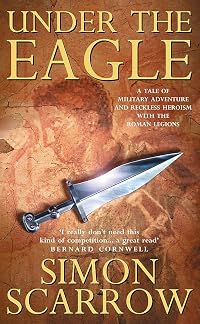
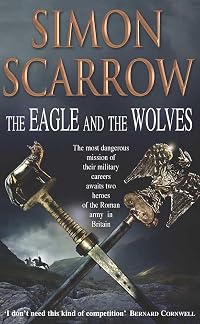
Simon Scarrow's brilliant adventure novels about the Roman army appear with stunning new covers. It is 42 AD, and Quintus Licinius Cato has just arrived in Germany as a new recruit to the Second Legion, the toughest in the Roman army. If adjusting to the rigours of military life isn't difficult enough for the bookish young man, he also has to contend with the disgust of his colleagues when, because of his imperial connections, he is appointed a rank above them. As second-in-command to Macro, show more the fearless, battle-scarred centurion who leads them, Cato will have more to prove than most in the adventures that lie ahead. Then the men discover that the army's next campaign will take them to a land of unparalleled barbarity - Britain. After the long march west, Cato and Macro undertake a special mission that will thrust them headlong into a conspiracy that threatens to topple the Emperor himself... show lessTags
Recommendations


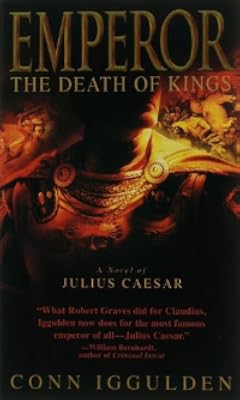
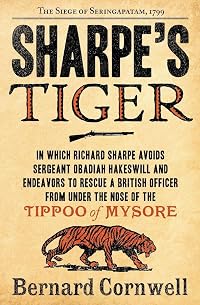
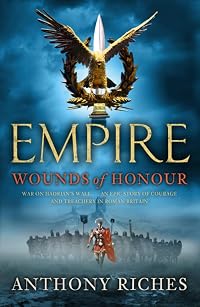
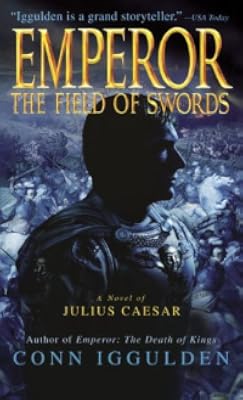

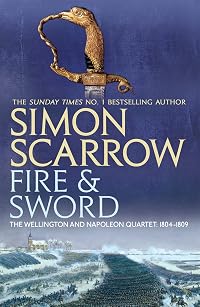
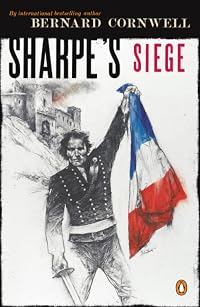
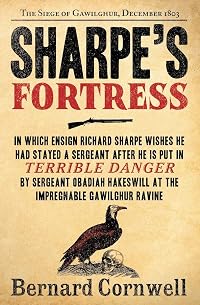
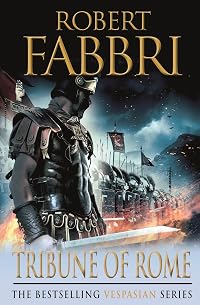
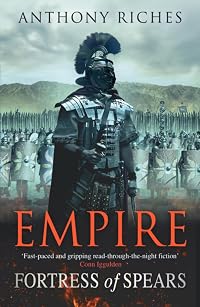


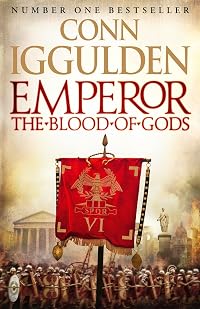
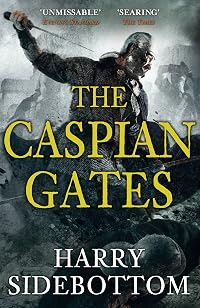
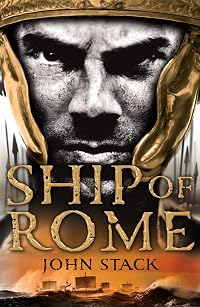
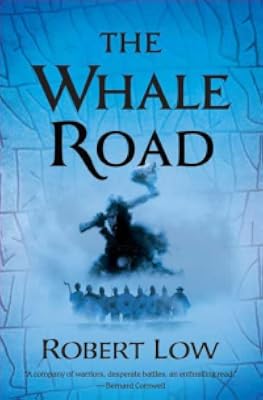


Member Recommendations
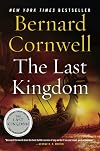
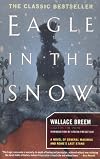
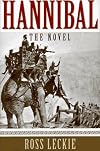
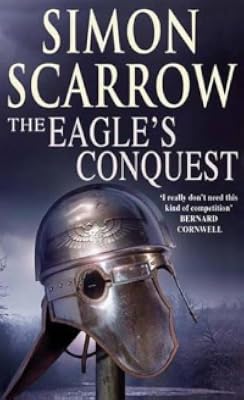
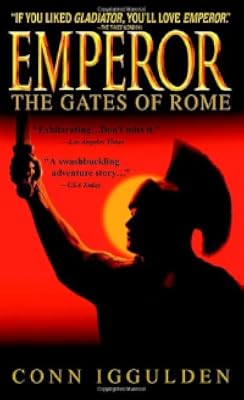
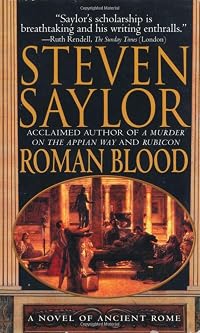
YossarianXeno Both these novels convincingly allow us into the mindset of Roman era soldiers and set them against the geo-political context of the era, albeit that Under the Eagle deals with middle-ranking warriors fighting for Rome and Hannibal chronicles the life of the general who was proably Rome's greatest opponent.
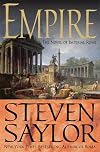
JGolomb Fun fictional military adventure and incorporates non-fictional characters and events well.
Member Reviews
"Under The Eagle" is first class entertainment if you're in the mood for historical military fiction.
Simon Scarrow does an excellent job in generating an insider's view of life in a Roman Legion. It feels real and immediate, even if it also sometimes feels like British Squaddies kitted-out with shields and short swords.
This a simple but exciting tale, told at just the right pace, in clear, straight forward language. The kind of language you might imagine the Legionaries themselves using.
We see the Legion from the point of view of the fictional Macro, a life-long legionary, recently promoted to Centurion; Cato, a young, well-educated, slave from the Imperial Palace, raised with to appreciate poetry and plays and now sent to Legion as a show more condition of being granted his freedom; and through the eyes of three real-life characters, Vespasian, the Legate commanding the Second Legion, his wife Flavia and Vitellius a Tribune under Vespasian's command. The book is set in AD43, when Claudius was planning the invasion of Britain, twenty-six years before both Vitellius and Vespasian would be declared Emperor in "The Year Of The Four Emperors".
We see the Legion in action as a garrison in Germany and follow it as it becomes part of the invasion force and presses on to meet the Britons. Along the way, Cato learns to become an Optio (second in command to the Centurion, roughly equivalent to a Lieutenant) a rank he does not have the experience for, and we have the fun of learning alongside him.
In addition to real historical events, the plot is driven by a political intrigue, centred around a chest of treasure, the Julius Caesar was forced to abandon as he retreated from Britain a hundred years earlier. It is brought to life by battle scenes that are vivid, physical, blood-soaked and just frequent enough to keep up the tension.
This is a fine start to a march through a particularly turbulent period of Roman history. David Thorpe's narration is easy on the ear, turning the inside of my head into a cinema screen and letting me sit back and enjoy the fun.
I'm looking forward to the rest of this series. I'll reach for it whenever I need a relaxing entertainment, spiced with military action and little political intrigue. show less
Simon Scarrow does an excellent job in generating an insider's view of life in a Roman Legion. It feels real and immediate, even if it also sometimes feels like British Squaddies kitted-out with shields and short swords.
This a simple but exciting tale, told at just the right pace, in clear, straight forward language. The kind of language you might imagine the Legionaries themselves using.
We see the Legion from the point of view of the fictional Macro, a life-long legionary, recently promoted to Centurion; Cato, a young, well-educated, slave from the Imperial Palace, raised with to appreciate poetry and plays and now sent to Legion as a show more condition of being granted his freedom; and through the eyes of three real-life characters, Vespasian, the Legate commanding the Second Legion, his wife Flavia and Vitellius a Tribune under Vespasian's command. The book is set in AD43, when Claudius was planning the invasion of Britain, twenty-six years before both Vitellius and Vespasian would be declared Emperor in "The Year Of The Four Emperors".
We see the Legion in action as a garrison in Germany and follow it as it becomes part of the invasion force and presses on to meet the Britons. Along the way, Cato learns to become an Optio (second in command to the Centurion, roughly equivalent to a Lieutenant) a rank he does not have the experience for, and we have the fun of learning alongside him.
In addition to real historical events, the plot is driven by a political intrigue, centred around a chest of treasure, the Julius Caesar was forced to abandon as he retreated from Britain a hundred years earlier. It is brought to life by battle scenes that are vivid, physical, blood-soaked and just frequent enough to keep up the tension.
This is a fine start to a march through a particularly turbulent period of Roman history. David Thorpe's narration is easy on the ear, turning the inside of my head into a cinema screen and letting me sit back and enjoy the fun.
I'm looking forward to the rest of this series. I'll reach for it whenever I need a relaxing entertainment, spiced with military action and little political intrigue. show less
‘Under the Eagle’ is my first Simon Scarrow book and I knew before the halfway point it wouldn’t be my last.
If you like dull moments, don’t expect to find any here. This is a Roman adventure, full of action and drama, along with a little humour and a touch of romance.
Although it’s fast paced, it’s not all hell and no notion. The plot is solid and is engaging from start to end.
The characters are vivid. Cato, the main ‘star’, is my favourite. He’s believable and relatable. He’s a seventeen-year-old thrown into the Roman army with no clue what he’s doing. Worse still, his letter of recommendation results in him being given a position of responsibility as an optio, which is a centurion’s second-in-command. Earning show more the respect on the soldiers beneath his rank is no easy task.
The different ranks take some getting used to if, like me, your knowledge of Roman times is sparse.
Reading other reviews, I see the biggest criticism of ‘Under the Eagle’ is the language. More specifically, the use of modern English slang. My feelings on language in historical fiction is that it should be contemporary but without using modernisms like, for example, ‘It’s a corker.’
That said, the main thing is consistency. I've read historical novels where in one scene a character says something like, ‘Keep it in your trousers,’ while in another scene someone else says, ‘Whence came he thus?’ Mr Scarrow is consistent and never slips in an archaic term.
While I admit I would’ve preferred the language to not incorporate modern slang, the characters and third-person narration are engaging enough for this not to make me feel like I’m reading a story set during any period other than the first century AD.
Perhaps with me being an Englishman makes the slang words and phrases more palatable. I admit, it did annoy me when, in another historical novel, the author of that book used the odd Americanism – ‘ass’ and ‘butt’, for example – so I can understand why any non-English reader – and certainly non-British – would be distracted by the slang terms.
So, while the slang words and phrases didn’t bother me, three other elements did distract me at times. One being a trait that keeps cropping up in books I’ve read this year by different authors, namely this sort of thing: ‘more loudly’, ‘more quietly’, instead of the more concise ‘louder’ and ‘quieter’. Don’t use two words if one will do.
Adverbs: they ‘tell’, not ‘show’, and a fair few appear in this wonderful story, but not too many to spoil it.
The two points above are minor criticisms. The one big gripe I have is the overuse of ‘then’ to state what happens next. This novel is riddled with ‘thens’, at times making the third-person narrative sound like a child’s voice. It’s most frequent during the exciting actions scenes, and I found it distracting to the point that (whilst listening to this on an audio) I started predicting that the narrator would say ‘then’ in the next sentence. ‘Then’ is easy to cut when editing, and it’s not hard to drop it altogether. It ends up being a filler word, notably when using it to start a sentence. The reader knows whatever’s happening is taking place after what’s just happened, so no need to put, ‘Then he …’ and such like.
In most cases, I'll deduct a star if a book is riddled with ‘thens’ or swamped with adverbs. As someone who appreciates good writing style, these things drive me to distraction. Yet, as mentioned, ‘Under the Eagle’ is such a great story it overrode these niggling points, and I’d feel I was doing Simon Scarrow an injustice by rating this anything other than 5 stars.
It’s easier to go on and on criticising a book than it is to praise it over and over, and I’ve doubtless not expressed how impressed I am with ‘Under the Eagle’ to the extent it deserves, so, in a nutshell, I’ll state this: it’s one heck of a great read. show less
If you like dull moments, don’t expect to find any here. This is a Roman adventure, full of action and drama, along with a little humour and a touch of romance.
Although it’s fast paced, it’s not all hell and no notion. The plot is solid and is engaging from start to end.
The characters are vivid. Cato, the main ‘star’, is my favourite. He’s believable and relatable. He’s a seventeen-year-old thrown into the Roman army with no clue what he’s doing. Worse still, his letter of recommendation results in him being given a position of responsibility as an optio, which is a centurion’s second-in-command. Earning show more the respect on the soldiers beneath his rank is no easy task.
The different ranks take some getting used to if, like me, your knowledge of Roman times is sparse.
Reading other reviews, I see the biggest criticism of ‘Under the Eagle’ is the language. More specifically, the use of modern English slang. My feelings on language in historical fiction is that it should be contemporary but without using modernisms like, for example, ‘It’s a corker.’
That said, the main thing is consistency. I've read historical novels where in one scene a character says something like, ‘Keep it in your trousers,’ while in another scene someone else says, ‘Whence came he thus?’ Mr Scarrow is consistent and never slips in an archaic term.
While I admit I would’ve preferred the language to not incorporate modern slang, the characters and third-person narration are engaging enough for this not to make me feel like I’m reading a story set during any period other than the first century AD.
Perhaps with me being an Englishman makes the slang words and phrases more palatable. I admit, it did annoy me when, in another historical novel, the author of that book used the odd Americanism – ‘ass’ and ‘butt’, for example – so I can understand why any non-English reader – and certainly non-British – would be distracted by the slang terms.
So, while the slang words and phrases didn’t bother me, three other elements did distract me at times. One being a trait that keeps cropping up in books I’ve read this year by different authors, namely this sort of thing: ‘more loudly’, ‘more quietly’, instead of the more concise ‘louder’ and ‘quieter’. Don’t use two words if one will do.
Adverbs: they ‘tell’, not ‘show’, and a fair few appear in this wonderful story, but not too many to spoil it.
The two points above are minor criticisms. The one big gripe I have is the overuse of ‘then’ to state what happens next. This novel is riddled with ‘thens’, at times making the third-person narrative sound like a child’s voice. It’s most frequent during the exciting actions scenes, and I found it distracting to the point that (whilst listening to this on an audio) I started predicting that the narrator would say ‘then’ in the next sentence. ‘Then’ is easy to cut when editing, and it’s not hard to drop it altogether. It ends up being a filler word, notably when using it to start a sentence. The reader knows whatever’s happening is taking place after what’s just happened, so no need to put, ‘Then he …’ and such like.
In most cases, I'll deduct a star if a book is riddled with ‘thens’ or swamped with adverbs. As someone who appreciates good writing style, these things drive me to distraction. Yet, as mentioned, ‘Under the Eagle’ is such a great story it overrode these niggling points, and I’d feel I was doing Simon Scarrow an injustice by rating this anything other than 5 stars.
It’s easier to go on and on criticising a book than it is to praise it over and over, and I’ve doubtless not expressed how impressed I am with ‘Under the Eagle’ to the extent it deserves, so, in a nutshell, I’ll state this: it’s one heck of a great read. show less
Newly promoted centurion Macro has a secret and if it comes out he will be reduced to the ranks again. New recruit Cato attracts the attention of a bully and is suspected of cowardice when he tries to avoid him. Can they help each other out in the run-up to Claudius's invasion of Britain?
Enjoyable Roman military fiction. I don't know why it's taken me so long to get to this. So many books, so little time.
Enjoyable Roman military fiction. I don't know why it's taken me so long to get to this. So many books, so little time.
Great storytelling....but not so great writing. SImon Scarrow's Under the Eagle is a fantastic story. It flows, the characters are vivid and alive and the story has a pretty good hook in it. Cato is very well written. He almost reminds me of Roman version of a young Horatio Hornblower. There are actually many tones in this novel that mirror the Hornblower series. That is not a bad thing. One Problem....the language. Use of the words Lad, Mate, Bugger are very annoying. I know the book is primarily about the invasion of Britain, but come on. Luckily the story is engaging enough to almost overlook this. As a reader I have not decided if the first book in this series has sealed the deal to keep reading or not. There are lots of other Roman show more series out there and this one needs to pick up the pace for me to read it. Still...I am on the fence and have not decided. show less
A passable entertainment, set in the initial buildup for the roman conquest of Britannia. There is a very complex and entertaining battle scene, and a couple of anachronisms, but overall, it moves well.
This is an enjoyable adventure story that smacks slightly of 80's buddy movies, with the new guy and the experienced veteran who unhappily takes him under his wing.
It's fascinating to read a roman story that doesn't focus entirely on the political chicanery but more on the life of the common soldier. The story flows well with a good build up to the final few action sequences and story twists.
I certainly intend to pick up the rest of the series and I'm kicking myself that I didn't go down to see the author when he appeared at my local bookseller recently!
It's fascinating to read a roman story that doesn't focus entirely on the political chicanery but more on the life of the common soldier. The story flows well with a good build up to the final few action sequences and story twists.
I certainly intend to pick up the rest of the series and I'm kicking myself that I didn't go down to see the author when he appeared at my local bookseller recently!
Pacey thriller, fulfilling the author's wish to write a military page turner set during the Roman invasion of Britain. The actual invasion of Britain (over three quarters of the way through) is a bit of an anti-climax and the Britons are not really in it until the battle at the end, except as an amorphous horde over the next hill or just inside the nearest patch of mist. Not as good as Saylor, but diverting and exciting. I will be reading the following 7 (at the latest count) novels in the series.
Members
- Recently Added By
Lists

Kindle Historical Re-Read
69 works; 1 member
Author Information

Some Editions
Series

Work Relationships
Common Knowledge
- Canonical title
- Under the Eagle
- Original title
- Under the Eagle
- Original publication date
- 2009
- People/Characters
- Quintus Licinius Cato; Lucius Cornelius Macro; Titus Flavius Vespasianus (Legate)
- First words
- An icy blast of wind swept into the latrine with the sentry.
- Publisher's editor*
- Békési, József
- Original language*
- angol
*Some information comes from Common Knowledge in other languages. Click "Edit" for more information.
Classifications
Statistics
- Members
- 1,116
- Popularity
- 22,660
- Reviews
- 38
- Rating
- (3.75)
- Languages
- 15 — Czech, Dutch, English, Finnish, French, German, Hungarian, Italian, Norwegian (Bokmål), Norwegian, Polish, Russian, Spanish, Swedish, Portuguese (Portugal)
- Media
- Paper, Audiobook, Ebook
- ISBNs
- 49
- ASINs
- 18