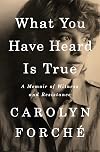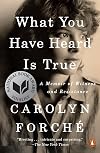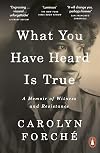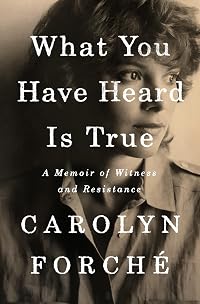
What You Have Heard Is True: A Memoir of Witness and Resistance
by Carolyn Forché
On This Page
Description
Describes the author's deep friendship with a mysterious intellectual who introduced her to the culture and people of El Salvador in the 1970s, a tumultuous period in the country's history, inspiring her work as an unlikely activist.Tags
Recommendations
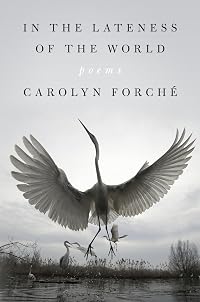
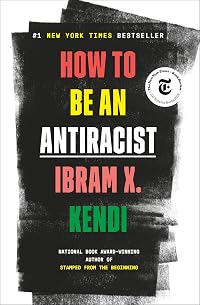
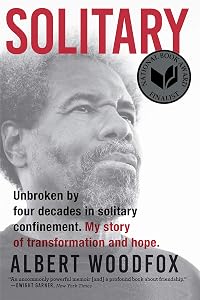
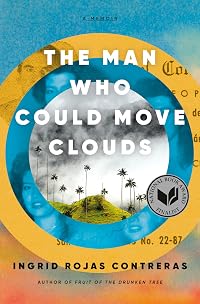
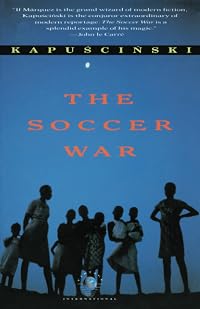
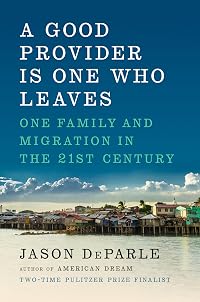
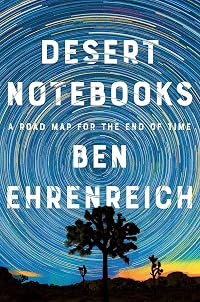
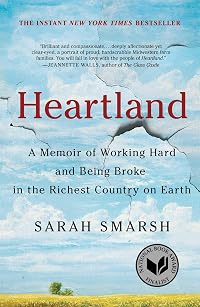
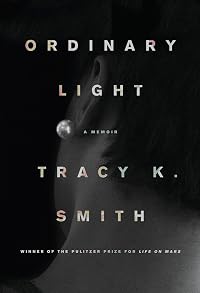
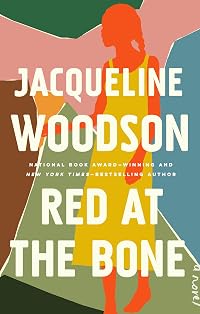
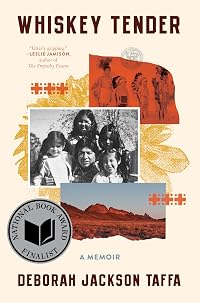
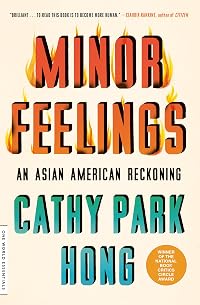


Member Recommendations
Member Reviews
“Over the years, I have been asked why, as a twenty-seven-year-old American poet who spoke Spanish brokenly and knew nothing about the isthmus of the Americas, I would accept the invitation of a man I barely knew to spend time in a country on the verge of war. And why would this stranger…take any interest in a naïve North American poet?”
Poet Carolyn Forche’s memoir about her experiences in El Salvador. In 1977, Leonel, a Salvadoran activist and relatively unknown “friend of a friend,” shows up without warning at Carolyn’s home in California, gives her a crash course in Salvadoran history, and convinces her to travel to El Salvador to witness the beginning of the Salvadoran Civil War (1979-1992). He insists that poets are show more the best witnesses and asks her to write about what she sees.
Leonel knew that a civil war was imminent. He and Carolyn traveled the country. Many times, he left her to her own devices. She saw first-hand how the people lived and the human rights abuses that were being committed. This is one person’s journey on the road to understanding the interrelatedness among people of the world. It is her attempt to open the eyes of others the same way hers were opened by Leonel. I found it powerful and memorable. show less
Poet Carolyn Forche’s memoir about her experiences in El Salvador. In 1977, Leonel, a Salvadoran activist and relatively unknown “friend of a friend,” shows up without warning at Carolyn’s home in California, gives her a crash course in Salvadoran history, and convinces her to travel to El Salvador to witness the beginning of the Salvadoran Civil War (1979-1992). He insists that poets are show more the best witnesses and asks her to write about what she sees.
Leonel knew that a civil war was imminent. He and Carolyn traveled the country. Many times, he left her to her own devices. She saw first-hand how the people lived and the human rights abuses that were being committed. This is one person’s journey on the road to understanding the interrelatedness among people of the world. It is her attempt to open the eyes of others the same way hers were opened by Leonel. I found it powerful and memorable. show less
OMG that was so good! This is a love story, not of romantic love but of the love one has for the person who made them see the world, that taught them to be consequential.
Briefly, Forche was a young poet, teaching at a small college and hiding from the world as she mourned the death by suicide of her Vietnam veteran husband when a Salvadoran resistance leader (this was pre-revolution) dropped on her doorstep through the most tenuous and unlikely of circumstances and convinced her to come to witness and then report on the oppression the campasinos were experiencing at the hands of a brutal US-backed regime. Eventually, Carolyn finds herself narrowly escaping death squads, but not escaping seeing their carnage. This is a terrifying painful show more and riveting story filled with that rarest of things, naked truth. The story is told without softness, there are no spoons filled with sugar to help things go down, but perhaps the one bit of sweetness is Forche's prose, some of the most perfect I have ever read.
I read this and listened to the audio in turn. The words are so beautiful they scream to be seen on the page, but Forche's smoky confiding voice brought an intimacy to this tale that feels like talking to the most interesting person in the world at a coffee shop at 4 am, and that is something I would not have wanted to miss. show less
Briefly, Forche was a young poet, teaching at a small college and hiding from the world as she mourned the death by suicide of her Vietnam veteran husband when a Salvadoran resistance leader (this was pre-revolution) dropped on her doorstep through the most tenuous and unlikely of circumstances and convinced her to come to witness and then report on the oppression the campasinos were experiencing at the hands of a brutal US-backed regime. Eventually, Carolyn finds herself narrowly escaping death squads, but not escaping seeing their carnage. This is a terrifying painful show more and riveting story filled with that rarest of things, naked truth. The story is told without softness, there are no spoons filled with sugar to help things go down, but perhaps the one bit of sweetness is Forche's prose, some of the most perfect I have ever read.
I read this and listened to the audio in turn. The words are so beautiful they scream to be seen on the page, but Forche's smoky confiding voice brought an intimacy to this tale that feels like talking to the most interesting person in the world at a coffee shop at 4 am, and that is something I would not have wanted to miss. show less
What would you do if a man appeared on your doorstep one day and announced that he was Leonel, the mysterious cousin of a friend of yours who you'd heard so much speculation about? What if he told you a tale of conquerors and corruption, of resistance and danger? If you're Carolyn Forché, apparently you agree to join him in El Salvador for a month so that you can educate yourself about the actual situation there, rather than only seeing it only the was the US government wants you to. And then, many years later, you would write a beautiful book about what you saw. Forché is a poet, and it shows in every scene. Even when describing the sight of people using a fetid ditch for a latrine, or the brutal mistreatment of prisoners, her images show more are exquisite.
Unfortunately, she herself doesn't come across nearly so well. Not entirely ignorant when she arrives in El Salvador, thanks to Leonel's lessons, she knows she's not there for a vacation, but she's hardly knowledgeable enough or savvy enough to make her own way. So she sticks pretty close to Leonel, who shows her around the country and introduces her to other members of the movement. But sometimes Leonel has go do something vague, and he leaves her with someone else, sometimes in a nice house in San Salvador, and sometimes in a hut in the jungle.
It's the vagueness that became a real problem for me. It's one of my pet peeves when reading if people aren't being straight with a character and that character doesn't demand straight answers and explanations. And here we have Forché accepting lots of vague answers and allowing herself to be brought into a lot of potentially dangerous situations with little or no information, including meeting with high level Salvadoran government officials who were known to rule through extreme violence. And this is real life! I felt that it was very irresponsible of her to not demand more answers and explanations when walking into situations where her life was literally in danger.
For those who are not bothered by such things, this is absolutely one of the best books to read to get a sense of El Salvador in the late 1970s and the US government's role in it. Forché learns a lot as she spends more time there, and her readers learn along with her. The effect is that the reader becomes the witness of the book's subtitle, just as Forché and Leonel hoped. show less
Unfortunately, she herself doesn't come across nearly so well. Not entirely ignorant when she arrives in El Salvador, thanks to Leonel's lessons, she knows she's not there for a vacation, but she's hardly knowledgeable enough or savvy enough to make her own way. So she sticks pretty close to Leonel, who shows her around the country and introduces her to other members of the movement. But sometimes Leonel has go do something vague, and he leaves her with someone else, sometimes in a nice house in San Salvador, and sometimes in a hut in the jungle.
It's the vagueness that became a real problem for me. It's one of my pet peeves when reading if people aren't being straight with a character and that character doesn't demand straight answers and explanations. And here we have Forché accepting lots of vague answers and allowing herself to be brought into a lot of potentially dangerous situations with little or no information, including meeting with high level Salvadoran government officials who were known to rule through extreme violence. And this is real life! I felt that it was very irresponsible of her to not demand more answers and explanations when walking into situations where her life was literally in danger.
For those who are not bothered by such things, this is absolutely one of the best books to read to get a sense of El Salvador in the late 1970s and the US government's role in it. Forché learns a lot as she spends more time there, and her readers learn along with her. The effect is that the reader becomes the witness of the book's subtitle, just as Forché and Leonel hoped. show less
The good news? Dare I say excellent news? I don't recall any time in many decades where the writing in a book came to draw me in so compulsively and all but demanded I keep reading it. Perhaps, back as a kid when I zoomed through a Hardy Boys or Nancy Drew mystery. The less than good news? What she writes, when she writes, how this book is marketed, and a few other issues are not what they claim to be. I'll mention just a handful of matters that put me off. First, how she starts the book, describing her first meeting with the main character -- no, it's not really her -- that meeting transpires and then results in future actions by the author that barely reach credulity. Her naïveté paired with her scepticism at that point in time show more makes it all the more incredulous. Even toward the end of the book, the author brings up the fact that she is often asked how she came about doing what she did from that meeting -- and then fails yet again to explain it, as if the end result explains it all. Second, the title mentions a memoir of "witness and resistence." The author clearly witnessed (that's the compelling reading), but there's no "resistence" on her part. In fact, the whole purpose of her being where she goes is to just witness. It would be more accurate to say it was a reporting of her witnessing other persons' resistance. I would even go so far as to say it is more a biography of others' resistance, albeit in a first-person, as it was happening, style. Next, why does she take so long to act on what she witnessed? Supposedly, she did publish poetry that reflected her witnessing, but she doesn't mention it in the book. Oh, and why we're at it, what's the thing about poetry and poets. All quotes are from poets. She is recruited for her witnessing assignment because of her poetry connection. If only poets and poetry can make sense of what happens and appropriately convey it to others, why the hell is this a prose book. Is she supposedly stooping down to let the less elite of us a chance to be informed? Thanks, but I was already well informed about the types of things on which she reported and I didn't learn it in poetry. Also, why does she never mention which U.S. administration is doing what at any given time in her time line. I know enough about the different presidencies during this time and what was happening in the country she visited that I could figure out which president left and which president came in and when, to explain why U.S. involvement in that country changed from time to time, but she bends over backwards to leave the "United States" and its official representatives as this nebulous entity. I am thankful and very impressed by how well the author conveys -- in prose -- what she witnessed, but I truly wish it hadn't been in such a mess of contradictions and hidden information. show less
The poet recounts her time with leftist proto-FMLN revolutionaries just prior to the civil war in El Salvador.
The most interesting character is the mysterious small landholder, coffee farmer, guerillero, intellectual, Formula One racing fan, and perhaps C.I.A. agent Leonel Gómez Vides, who one day shows up in his truck at her house in San Diego without an invitation or introduction but only on the basis of a mutual friend and takes for granted that she will come back with him to El Salvador to be an American witness of the oppression by the military dictatorship that precedes the civil war. She tries to explain that in the United States a poet is a nobody and that he should find someone else. This surprises him, because in El Salvador show more a poet is a somebody.
This book vindicates the Salvadoran view that poets make excellent witnesses. show less
The most interesting character is the mysterious small landholder, coffee farmer, guerillero, intellectual, Formula One racing fan, and perhaps C.I.A. agent Leonel Gómez Vides, who one day shows up in his truck at her house in San Diego without an invitation or introduction but only on the basis of a mutual friend and takes for granted that she will come back with him to El Salvador to be an American witness of the oppression by the military dictatorship that precedes the civil war. She tries to explain that in the United States a poet is a nobody and that he should find someone else. This surprises him, because in El Salvador show more a poet is a somebody.
This book vindicates the Salvadoran view that poets make excellent witnesses. show less
There is an incredible story here. But Forché's telling is also infuriating. The poetic writing style, the personal digressions, the unnecessary mystery. She is committed to telling her perspective of everything as it happened, but to me this was frustratingly unclear, not the most interesting part of the story—and it didn't even ring true.
A compelling memoir about (the author) a young woman poet who who is contacted by a man from El Salvador who wants to take her back to his country to learn about and record what is happening there, This was a period of revolution and death squads. Leonel (her guide) takes her all over the country into situations with extreme danger. It is unbelievable that a young woman would have taken such an extended trip. She meets both revolutionaries and members of the corrupt government. Forche, an award winning poet, looks back objectively to ear past forty years ago.
Members
- Recently Added By
Lists

Club Read's Recommended Nonfiction Written by Women
618 works; 30 members
Author Information

25+ Works 2,495 Members
Carolyn Forche is the author of Gathering the Tribes, winner of the Yale Younger Poets Award; The Country Between Us, which received awards from the Academy of American Poets and the Poetry Society of America; and The Angel of History, winner of the Los Angeles Times Book Prize. She is also the editor of the anthology Against Forgetting: show more Twentieth-Century Poetry of Witness. Recently, she was presented with the Edita and Ira Morris Hiroshima Foundation Award for Peace and Culture in Stockholm. show less
Awards and Honors
Awards
Common Knowledge
- Important places
- El Salvador
Classifications
- Genres
- Biography & Memoir, History, Nonfiction
- DDC/MDS
- 972.8405 — History & geography History of North America Mexico, Central America, West Indies, Bermuda Central America El Salvador
- LCC
- F1488 .F67 — Local History of the United States, Canada and Latin America Latin America. Spanish America Salvador (El Salvador)
- BISAC
Statistics
- Members
- 298
- Popularity
- 108,200
- Reviews
- 10
- Rating
- (4.47)
- Languages
- English, German, Spanish
- Media
- Paper, Audiobook, Ebook
- ISBNs
- 10
- ASINs
- 3