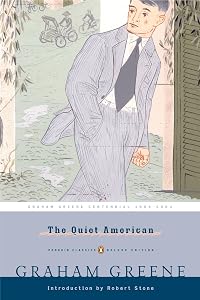
The Quiet American
by Graham Greene 
On This Page
Description
It's 1955 and British journalist Thomas Fowler has been in Vietnam for two years covering the insurgency against French colonial rule. But it's not just a political tangle that's kept him tethered to the country. There's also his lover, Phuong, a young Vietnamese woman who clings to Fowler for protection. Then comes Alden Pyle, an idealistic American working in service of the CIA. Devotedly, disastrously patriotic, he believes neither communism nor colonialism is what's best for Southeast show more Asia, but rather a "Third Force": American democracy by any means necessary. His ideas of conquest include Phuong, to whom he promises a sweet life in the states. But as Pyle's blind moral conviction wreaks havoc upon innocent lives, it's ultimately his romantic compulsions that will play a role in his own undoing. show lessTags
Recommendations






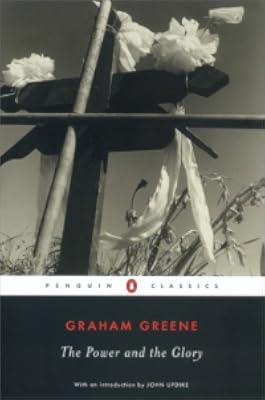
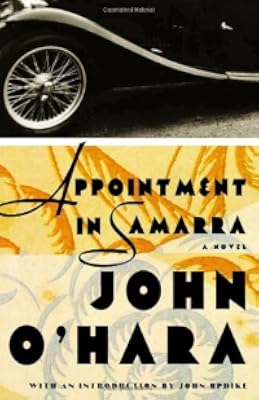
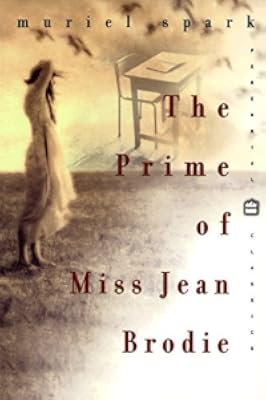
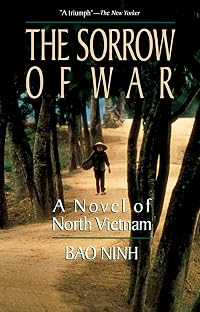








Member Recommendations

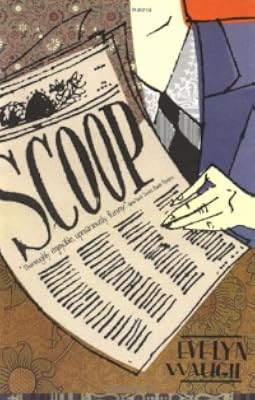
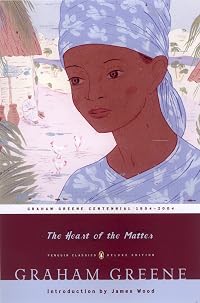
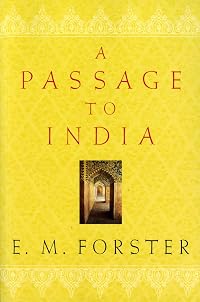
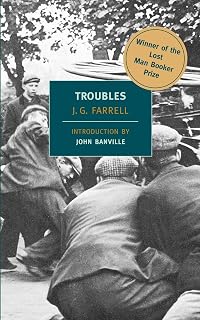
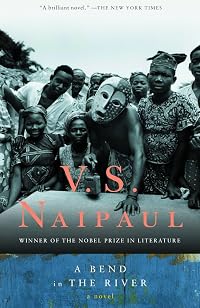
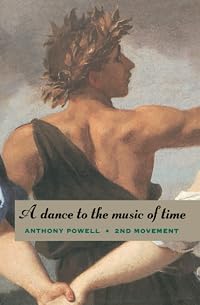
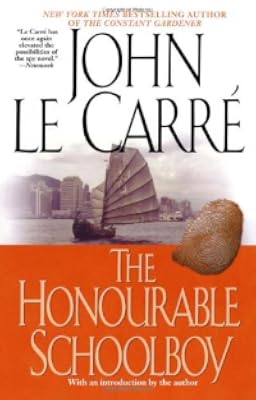
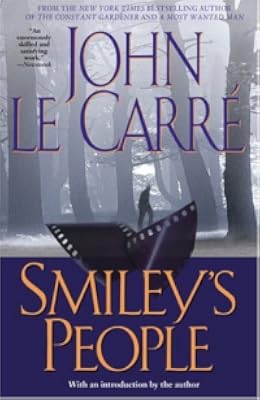
browner56 Powerful, suspenseful fictional accounts of the intended and unintended consequences of colonial rule
90


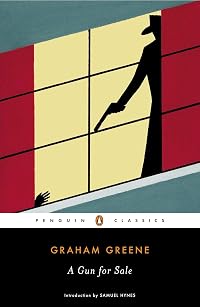
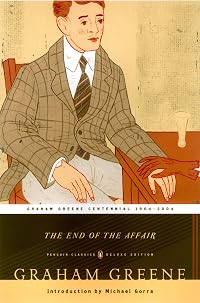
Sandydog1 Equally moving, and I think it shares top honors for Greene's best.


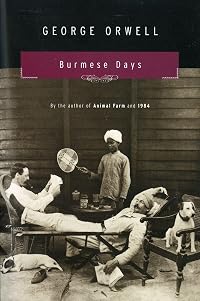
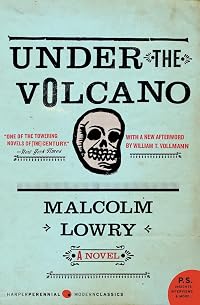
JuliaMaria Schauplatz beider Romane ist Südostasien. Spannung. Grausamkeit der herrschenden Gewalt.
Member Reviews
This doesn't express the infinite weight of living under the tension between autonomy and guilt (which in all Greene's works is how "responsibility" manifests) with the same nuanced, sad patience as some of the author's very best books: The Heart of the Matter or The Power and the Glory, say; that testimonial atmosphere is leavened with the tight allegory and rock-solid plotting that backbeat his "entertainments", and so this is a hybrid creature (as also The Third Man, Brighton Rock), drawing its power from its Shakespearean inexorability. It's prescient politically, of course (the CIA in Vietnam during the independence war against the French, perfecting the kind of "third force" "our guys" skulduggery they would pull all over the show more world in the second half of the twentieth century and that would bear such grim fruit in the twenty-first), and there is a good rate of period and place detail that doesn't usually fall over into exotica (and when it does, like with some of the narrator's observations about the Vietnamese people especially when refracted through Phuong and a gender politics that is both racialized-colonial and prefeminist, its very supersededness helps express the narrator's limits and adds a psychological dimension to the political allegory--and then too also, no doubt only partially at most with Greene's conscious acquiescence, opens the door for an explosive postcolonial recombination, the still here mostly elided perspective of the Vietnamese, who will be the actual victors in the liberation war and who will blow the British–American old hand–young turk structuring dynamic here to smithereens). But basically this is an existential work about "commitment," which for Greene as for Sartre is ultimately the only question, and about the different kinds of monsters it makes of those who embrace it and those who flee from it as long as possible, and how much of our humanity we may salvage under such circumstances, and in what way. Do you like novels that dramatize a moral choice? Then this one will resonate complexly and not with the flatness to which allegory is sometimes prone; if not, not.
(Also, I been drinking vermouth cassis like daily since I read this b, as they did, and so I have it for that to thank.) show less
(Also, I been drinking vermouth cassis like daily since I read this b, as they did, and so I have it for that to thank.) show less
I've become a Graham Greene fan. Never disappointing, always engaging and thought-provoking. Like The Power and the Glory and Our Man in Havana, and others, The Quiet American places a very personal story within a momentous historical setting, finding the questions and the personal struggles the historical setting poses for the lives of ordinary people.
The Quiet American raises questions about the inevitability of taking a stand. There is no such thing as an observer. Sooner or later, merely observing is taking a stand, through knowledge and inaction.
It also recalls all the questions about western involvement in the cultures and politics of other countries. Fowler and Pyle, the British and American figures in the book, take different show more approaches. Fowler is the observer, Pyle the committer. They fall in love with the same woman, with Fowler seeking comfort and pleasure to pass the days while Pyle promises to marry the woman. Fowler professes disinterest in taking sides in the complicated politics of French-occupied Viet Nam. Pyle takes sides. Pyle's actions ultimately compel Fowler to make a choice.
There is certainly an eerie feeling to the book. Although written in 1955 about the French involvement in Viet Nam, it mirrors American involvement in the 60s and 70s. What we learned so much later was apparent to Greene in 1955. Fowler and others move among the native population with the air of being in charge of something, while the divided population carries on their struggles and their resistance invisibly to the westerners, until it's too late for them to do anything about it. The war is recognizably unwinnable for the French, as Fowler remarks and as everyone seems to know, except Pyle and his Harvard-inspired fantasy of a "third force" beyond colonialism and Communism. But the war continues on its own momentum. Viet Nam is itself the "third force" -- it reasserts itself inevitably, no matter what the French do to subdue it, just as it did no matter what we did later. show less
The Quiet American raises questions about the inevitability of taking a stand. There is no such thing as an observer. Sooner or later, merely observing is taking a stand, through knowledge and inaction.
It also recalls all the questions about western involvement in the cultures and politics of other countries. Fowler and Pyle, the British and American figures in the book, take different show more approaches. Fowler is the observer, Pyle the committer. They fall in love with the same woman, with Fowler seeking comfort and pleasure to pass the days while Pyle promises to marry the woman. Fowler professes disinterest in taking sides in the complicated politics of French-occupied Viet Nam. Pyle takes sides. Pyle's actions ultimately compel Fowler to make a choice.
There is certainly an eerie feeling to the book. Although written in 1955 about the French involvement in Viet Nam, it mirrors American involvement in the 60s and 70s. What we learned so much later was apparent to Greene in 1955. Fowler and others move among the native population with the air of being in charge of something, while the divided population carries on their struggles and their resistance invisibly to the westerners, until it's too late for them to do anything about it. The war is recognizably unwinnable for the French, as Fowler remarks and as everyone seems to know, except Pyle and his Harvard-inspired fantasy of a "third force" beyond colonialism and Communism. But the war continues on its own momentum. Viet Nam is itself the "third force" -- it reasserts itself inevitably, no matter what the French do to subdue it, just as it did no matter what we did later. show less
After rereading this for the first time in over 30 years, I was struck by how much of the book is about love. When I read this back in my college days, I focused on the political and social commentary about colonialism and war; ever since, that is how I have thought of this book. But although the political struggle of the Vietminh against the French & Pyle's political ideals play an important part in the book, they are really just the background to the struggle between Fowler & Pyle over Phuong.
I suppose that this struggle between the two men could be interpreted as a metaphor for the struggle between the Old and New World colonial powers over possession of Vietnam/Asia as I thought years ago. But Fowler's desire to have someone who show more will be with him when he is aging so he won't die alone comes through as a truth hiding the deeper truth that he loves Phuong. Given Greene's other writings & personal background, one interpretation of this situation could be that Fowler wants the comfort of God's presence but isn't willing to commit to the demands of religion. The different women in Fowler's life could be representing different religions. Fowler's musings about how it is ultimately impossible to truly "know" another person no matter how close you are to them fit in with this interpretation.
Of course, these different views on the book reflect more about me - my interests and concerns have changed over the years. The fact that I can take away a very different message from the one I previous got is just one more sign that Graham Greene is an excellent writer! show less
I suppose that this struggle between the two men could be interpreted as a metaphor for the struggle between the Old and New World colonial powers over possession of Vietnam/Asia as I thought years ago. But Fowler's desire to have someone who show more will be with him when he is aging so he won't die alone comes through as a truth hiding the deeper truth that he loves Phuong. Given Greene's other writings & personal background, one interpretation of this situation could be that Fowler wants the comfort of God's presence but isn't willing to commit to the demands of religion. The different women in Fowler's life could be representing different religions. Fowler's musings about how it is ultimately impossible to truly "know" another person no matter how close you are to them fit in with this interpretation.
Of course, these different views on the book reflect more about me - my interests and concerns have changed over the years. The fact that I can take away a very different message from the one I previous got is just one more sign that Graham Greene is an excellent writer! show less
I was too young to have heard any of the criticism of this book when it was published in 1955 ("Anti-American!"), and I never encountered Greene's work in school later on...yet I somehow feel like I've always known it was controversial in its day, and down-right prophetic in hindsight. Set in Viet Nam during the first Indo-China war, before partition, at the very beginning of America's covert involvement in the country's affairs, it presents a most unlovely picture of the not-so-quiet American, of nearly all the other foreigners caught up in the conflict between French colonialists and independence factions, and many of the local players as well. As it had something of a Hemingway tinge to it in my mind, I never felt inclined to read it show more until two very perceptive LT'ers brought it my attention separately, a couple years apart. I found it compelling on multiple levels, heart-breaking as almost any decent novel set in time of war must be, and disheartening in its confirmation that the human race simply never learns anything from history. Ever.
Reviewed August 2019 show less
Reviewed August 2019 show less
The setting, period and publication date for this novel are all fascinating. Greene was interested enough in Vietnam in the early 1950s to write a novel about it, when it was still a French debacle before it became an American one. He was also interested in the American presence that was already making itself felt, the press corps but also the not-so-secret signs of American military support.
The story is fascinating too. Greene did not write long novels but very condensed and full of power. There is a lot to unpack here, about the vagaries and selfishness of love, blind loyalty to ideals at all costs, the turmoil of guilt, and (most interesting to me) the nature of objectivity and how long it can be prolonged under extreme conditions. show more Fowler thinks he is an aloof observer, as his role demands of him, but the pressures of remaining human are ever growing.
Fowler insults Pyle's love for the historical Black Prince, citing the massacre of Limoges. Research since 1955 suggests the massacre was overstated. Innocence sometimes does win in the end. But the definition of innocence, and its intersection with guilt, can and should be debated. show less
The story is fascinating too. Greene did not write long novels but very condensed and full of power. There is a lot to unpack here, about the vagaries and selfishness of love, blind loyalty to ideals at all costs, the turmoil of guilt, and (most interesting to me) the nature of objectivity and how long it can be prolonged under extreme conditions. show more Fowler thinks he is an aloof observer, as his role demands of him, but the pressures of remaining human are ever growing.
Fowler insults Pyle's love for the historical Black Prince, citing the massacre of Limoges. Research since 1955 suggests the massacre was overstated. Innocence sometimes does win in the end. But the definition of innocence, and its intersection with guilt, can and should be debated. show less
If I had to choose a word to describe my experience of reading Graham Greene, it would be “refreshing.” As I consider that, it strikes me how oddly such a word sits as a description of a writer whose stories orbit around moral and religious collapse and are filled with characters who can best be called “weary of life.” All of Greene’s characters, it seems, struggle…with faith (or acting on their faith)…with love (or with being genuine in that love)…with compassion (or with trying not to pass off self-interest as compassionate). What makes Greene’s characters so gripping is that these struggles are never peripheral but always essential to their identity. They are souls on the edge of conversion, toeing the line of show more transformation without stepping all the way over. I suspect, in many ways, Greene’s characters are elaborated self-reflections.
There are probably any number of simplistic and unhelpful ways to describe The Quiet American…a “love triangle”…a “story about the Vietnam War”…an “exposé of American interventionism”…but none of these get at what I think is the story’s core. At root, it is a treatise on Doubt and Faith. Aging British reporter Thomas Fowler stands in for Doubt, while young American attaché Alden Pyle stands in for Faith. That Pyle insists on referring to Fowler by his given Christian name, “Thomas” it seems cannot be read in any other way than as an echo of the famed biblical figure of “Doubting Thomas.”
Fowler doubts that resolution to the conflict is even possible, doubts that his life will ever be what he wishes it could be, doubts Pyle’s understanding of the world’s working as untested idealism, doubts Phuong’s ability to fully and truly love. This is the doubt produced by a slow wearing-down of a once vibrant faith. Without saying as much, the story reveals that Pyle is as Fowler once was.
What’s amazing is finesse of Greene’s expression of these complicated emotions. In such a story, it would be easy for the emotions to become caricatures of true feeling, but Greene doesn’t let that happen. (If he had, it would have ruined the story.) Fowler true cares for Pyle and for Phuong but is also jealous and petty and vengeful and selfish. In other words, human.
But—and here I think is the real genius—so is Pyle. Sure, he’s idealistic and introverted and wonder-struck and, well, “quiet” but he is no simple foil for the main anti-hero. He represents an entirely alternative way of viewing and living life that Fowler could access…if only he wasn’t Fowler.
I only know Graham Greene’s story in bits and snatches but from the little I’ve caught, Greene is much nearer Fowler than Pyle, a real-life “doubting Thomas.” The disdain that Fowler expresses in the book for Pyle’s point of view is a touch too personal to be merely literary. Faith and idealism and hope for Fowler/Greene have become the one thing he desperately desires and ultimately cannot have.
So, how is this story of jealous lovers, conspiracy, assassination, and a failed war we’d rather all forget “refreshing”? Because it’s an honest story, one of those fictions that is the more true because it’s “just a story” rather than “what really happened.” Because it brings us to the precipice of Doubt and Faith but refrains from the feather’s touch that would tip us one way or the other. In theological terms, we would say it brings us to the point of “conversion”—that moment where we have to decide to believe or not.
If you’re looking for a story that’s more than a story (while still being a finely-written story), then you will not be disappointed. It is gripping because it speaks openly and forthrightly about the most basic human needs and desires. While being honest about who we really are, there is also a call for us to become better than we are…to move past Fowler’s doubt into Pyle’s faith. And that is a “refreshing” call indeed. show less
There are probably any number of simplistic and unhelpful ways to describe The Quiet American…a “love triangle”…a “story about the Vietnam War”…an “exposé of American interventionism”…but none of these get at what I think is the story’s core. At root, it is a treatise on Doubt and Faith. Aging British reporter Thomas Fowler stands in for Doubt, while young American attaché Alden Pyle stands in for Faith. That Pyle insists on referring to Fowler by his given Christian name, “Thomas” it seems cannot be read in any other way than as an echo of the famed biblical figure of “Doubting Thomas.”
Fowler doubts that resolution to the conflict is even possible, doubts that his life will ever be what he wishes it could be, doubts Pyle’s understanding of the world’s working as untested idealism, doubts Phuong’s ability to fully and truly love. This is the doubt produced by a slow wearing-down of a once vibrant faith. Without saying as much, the story reveals that Pyle is as Fowler once was.
What’s amazing is finesse of Greene’s expression of these complicated emotions. In such a story, it would be easy for the emotions to become caricatures of true feeling, but Greene doesn’t let that happen. (If he had, it would have ruined the story.) Fowler true cares for Pyle and for Phuong but is also jealous and petty and vengeful and selfish. In other words, human.
But—and here I think is the real genius—so is Pyle. Sure, he’s idealistic and introverted and wonder-struck and, well, “quiet” but he is no simple foil for the main anti-hero. He represents an entirely alternative way of viewing and living life that Fowler could access…if only he wasn’t Fowler.
I only know Graham Greene’s story in bits and snatches but from the little I’ve caught, Greene is much nearer Fowler than Pyle, a real-life “doubting Thomas.” The disdain that Fowler expresses in the book for Pyle’s point of view is a touch too personal to be merely literary. Faith and idealism and hope for Fowler/Greene have become the one thing he desperately desires and ultimately cannot have.
So, how is this story of jealous lovers, conspiracy, assassination, and a failed war we’d rather all forget “refreshing”? Because it’s an honest story, one of those fictions that is the more true because it’s “just a story” rather than “what really happened.” Because it brings us to the precipice of Doubt and Faith but refrains from the feather’s touch that would tip us one way or the other. In theological terms, we would say it brings us to the point of “conversion”—that moment where we have to decide to believe or not.
If you’re looking for a story that’s more than a story (while still being a finely-written story), then you will not be disappointed. It is gripping because it speaks openly and forthrightly about the most basic human needs and desires. While being honest about who we really are, there is also a call for us to become better than we are…to move past Fowler’s doubt into Pyle’s faith. And that is a “refreshing” call indeed. show less
In this accomplished literary thriller, Graham Greene pairs the personal and the political more efficiently than any other book I have yet read. Set in French Indochina during the 1950s, we follow the love triangle between Phuong, the innocent young Vietnamese girl and her two admirers, Fowler, the cynical ageing colonial Englishman and Pyle, the 'quiet' young idealistic American of the title. Without meaning to oversimplify what is a cultured book, each of these three characters represents their respective countries and mindsets.
The unintended threat posed by idealism and innocence form Greene's central theme, and his analysis of the United States' well-meaning but naïve intervention in Vietnam is extraordinarily prescient (the book show more was written nearly ten years before the Gulf of Tonkin incident). Not only in the geopolitical aspects of it but in the nature of the ground war ("A war of jungle and mountain and marsh, paddy fields where you wade shoulder-high and the enemy simply disappear, bury their arms, put on peasant dress." (pg. 16)) and in the simultaneous media campaign that would have to be fought ("… have to fight Left-Wing deputies in Paris as well as the troops of Ho Chi Minh" (pg. 56)), Greene's book was a Cassandra-like warning to American policymakers.
But this prescience does not come, of course, from prophecy or divine revelation, but from a hard-nosed assessment of the geopolitical situation in the country from one who had been there and experienced it first-hand. I feel hugely privileged to read a book by someone who had such a tight grip both on the subject matter he dealt with and on the writing talent he deployed. For aside from its timeless geopolitical relativism, the book is also a fine thriller. The plot retains some of its mystery and suspense – which is remarkable considering that the book's non-chronological order means we know some of what happens quite early on – and the book skips along well despite its detail. It is elegant and accomplished but with a sideline of cynicism and dark wit, like inviting a raconteur mandarin to a dinner at a fine restaurant. show less
The unintended threat posed by idealism and innocence form Greene's central theme, and his analysis of the United States' well-meaning but naïve intervention in Vietnam is extraordinarily prescient (the book show more was written nearly ten years before the Gulf of Tonkin incident). Not only in the geopolitical aspects of it but in the nature of the ground war ("A war of jungle and mountain and marsh, paddy fields where you wade shoulder-high and the enemy simply disappear, bury their arms, put on peasant dress." (pg. 16)) and in the simultaneous media campaign that would have to be fought ("… have to fight Left-Wing deputies in Paris as well as the troops of Ho Chi Minh" (pg. 56)), Greene's book was a Cassandra-like warning to American policymakers.
But this prescience does not come, of course, from prophecy or divine revelation, but from a hard-nosed assessment of the geopolitical situation in the country from one who had been there and experienced it first-hand. I feel hugely privileged to read a book by someone who had such a tight grip both on the subject matter he dealt with and on the writing talent he deployed. For aside from its timeless geopolitical relativism, the book is also a fine thriller. The plot retains some of its mystery and suspense – which is remarkable considering that the book's non-chronological order means we know some of what happens quite early on – and the book skips along well despite its detail. It is elegant and accomplished but with a sideline of cynicism and dark wit, like inviting a raconteur mandarin to a dinner at a fine restaurant. show less
Members
- Recently Added By
Published Reviews
Easily, with long-practiced and even astonishing skill, speaking with the voice of a British reporter who is forced, despite himself, toward political action and commitment, Greene tells a complex but compelling story of intrigue and counter-intrigue, bombing and murder. Into it is mixed the rivalry of two white men for a Vietnamese girl. These elements are all subordinate to the political show more thesis which they dramatize and which is stated baldly and explicitly throughout the book. show less
added by John_Vaughan
There are many natural storytellers in English literature, but what was rare about Greene was the control he wielded over his abundant material. Certainly one can imagine nobody who could better weave the complicated threads of war-torn Indochina into a novel as linear, as thematically compact and as enjoyable as The Quiet American
added by John_Vaughan
Lists

1001 Books You Must Read Before You Die
1,448 works; 1,136 members

Best Spy Fiction
153 works; 102 members

Best Political Fiction
92 works; 12 members

Recommend the 20 best books you've read in the last five years
2,168 works; 608 members

BBC's 100 Novels That Shaped Our World
100 works; 22 members
20th Century Literature
1,161 works; 55 members

The Guardian's 100 greatest novels of all time
100 works; 16 members

Books recommended by Barack Obama
295 works; 29 members

Top Five Books of 2013
1,562 works; 715 members

Best War Stories
87 works; 16 members

1950s
340 works; 22 members

Unread books
1,063 works; 87 members
Folio Society
831 works; 49 members

100 Mysteries and Thrillers to Read in a Lifetime
99 works; 22 members

Canon de la narrativa universal del siglo XX
254 works; 6 members

Unreliable Narrators
170 works; 43 members

War Literature
101 works; 19 members

Fiction For Men
142 works; 11 members
1,001 BYMRBYD Concensus
723 works; 27 members

Best Antiheroes and Antiheroines
119 works; 7 members

Blue Pyramid 1,276 Best Books of All Time
1,248 works; 32 members

Top Five Books of 2016
795 works; 228 members

Love Triangles in Literature
108 works; 15 members
Short and Sweet
246 works; 24 members

Asia
178 works; 7 members

Five star books
1,767 works; 110 members

SHOULD Read Books!
354 works; 9 members

Revolutions
72 works; 5 members

Books Featured on Readers' Review of the Diane Rehm Show
161 works; 8 members

Books Read in 2015
3,299 works; 129 members

Undiscovered Classics to Read
70 works; 15 members

Obama Reads
181 works; 3 members

Favorite Books from the 1950s
33 works; 2 members

Books Read in 2017
4,249 works; 129 members

Books I Own But Haven't Read
144 works; 2 members

Tammen Keltainen kirjasto
81 works; 1 member

Americans Abroad
11 works; 6 members

Nifty Fifties
129 works; 14 members

Books Read in 2024
4,727 works; 128 members

THE WAR ROOM
813 works; 24 members

Fiction: Asia
85 works; 2 members
Canon de la narrativa universal del s. XX (cicutadry)
499 works; 3 members

Florida
366 works; 3 members

Books mentioned in Julian Symons’ Bloody Murder
438 works; 6 members
Franklit
95 works; 1 member

Global Reads: Books Set in East Asia
139 works; 12 members
Fave Books
27 works; 1 member

My TBR
371 works; 3 members
Read These Too
458 works; 9 members
Best War Fiction Books
41 works; 4 members

Books Read in 2026
2,134 works; 70 members
Author Information

356+ Works 87,436 Members
Born in 1904, Graham Greene was the son of a headmaster and the fourth of six children. Preferring to stay home and read rather than endure the teasing at school that was a by-product of his father's occupation, Greene attempted suicide several times and eventually dropped out of school at the age of 15. His parents sent him to an analyst in show more London who recommended he try writing as therapy. He completed his first novel by the time he graduated from college in 1925. Greene wrote both entertainments and serious novels. Catholicism was a recurring theme in his work, notable examples being The Power and the Glory (1940) and The End of the Affair (1951). Popular suspense novels include: The Heart of the Matter, Our Man in Havana and The Quiet American. Greene was also a world traveler and he used his experiences as the basis for many books. One popular example, Journey Without Maps (1936), was based on a trip through the jungles of Liberia. Greene also wrote and adapted screenplays, including that of the 1949 film, The Third Man, which starred Orson Welles. He died in Vevey, Switzerland in 1991. (Bowker Author Biography) show less
Graham Greene has a Legacy Library. Legacy libraries are the personal libraries of famous readers, entered by LibraryThing members from the Legacy Libraries group.
Some Editions
Awards and Honors
Distinctions
Notable Lists
Series
Belongs to Publisher Series
Work Relationships
Is contained in
The Heart of the Matter / Stamboul Train / A Burnt-Out Case / The Third Man / The Quiet American / Loser Takes All / The Power and the Glory by Graham Greene
Is retold in
Has the adaptation
Has as a student's study guide
Common Knowledge
- Canonical title
- The Quiet American
- Original title
- The Quiet American
- Original publication date
- 1955-10
- People/Characters
- Alden Pyle; Thomas Fowler; Phuong; Vigot; Granger
- Important places
- Saigon, Vietnam; Vietnam; Southeast Asia
- Important events
- First Indochina War; Vietnam War; 1950s
- Related movies
- The Quiet American (1958 | IMDb); The Quiet American (2002 | IMDb)
- Epigraph
- This is the patent age of new inventions
For killing bodies, and for saving souls,
All propagated with the best intentions. — Byron
I do not like being moved; for the will is excited, and action
Is a most dangerous thing; I tremble for something factitious,
Some malpractice of heart and illegitimate process;
We're so prone to these things, with... (show all) our terrible notions of duty. — A. H. Clough - Dedication
- Dear Rene and Phuong - I have asked permission to dedicate this book to you not only in memory of the happy evenings I have spent with you in Saigon over the last five years, but also because I have quite shamelessly borrowed... (show all) the location of your flat to house one of my characters, and your name, Phuong, for the convenience of readers because it is simple, beautiful, and easy to pronounce, which is not true of all your country-women's names. You will both realized I have borrowed little else, certainly not the characters of anyone in Viet Nam. Pyle, Granger, Fowler, Vigot, Joe - these have had no originals in the life of Saigon or Hanoi, and General The is dead: shot in the back, so they say. Even the historical events have been rearranged For example, the big bomb near the Continental preceded and did not follow the bicycle bombs. I have no scruples about such small changes. This is a story and not a piece of history, and I hope that as a story about a few imaginary characters it will pass for both of you one hot Saigon evening. Yours affectionately, Graham Greene
- First words
- After dinner I sat and waited for Pyle in my room over the rue Catinat; he had said, ‘I’ll be with you at latest by ten,’ and when midnight struck I couldn’t stay quiet any longer and went down into the street.
- Quotations
- innocence is like a dumb leper who has lost his bell, wandering the world, meaning no harm.
- Last words
- (Click to show. Warning: May contain spoilers.)Everything had gone right with me since he had died, but how I wished there existed someone to whom I could say that I was sorry.
- Original language
- English
- Canonical LCC
- PR6013.R44
Classifications
Statistics
- Members
- 8,758
- Popularity
- 1,254
- Reviews
- 206
- Rating
- (3.97)
- Languages
- 23 — Catalan, Czech, Danish, Dutch, English, Estonian, Finnish, French, German, Greek, Hungarian, Italian, Lithuanian, Norwegian (Bokmål), Norwegian, Polish, Portuguese, Romanian, Russian, Croatian, Spanish, Swedish, Turkish
- Media
- Paper, Audiobook, Ebook
- ISBNs
- 137
- ASINs
- 97