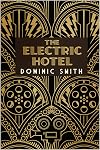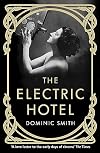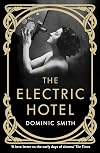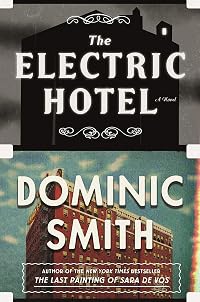
The Electric Hotel: A Novel
by Dominic Smith
On This Page
Description
"Winding through the nascent days of cinema in Paris and Fort Lee, New Jersey, the battlefields of Belgium during World War I, and the faded Knickerbocker Hotel in 1960s Hollywood, The Electric Hotel follows the intertwined fates of the cinematographer Claude Ballard and his muse, Sabine Montrose"--Tags
Recommendations


















Member Reviews
The Electric Hotel by Dominic Smith is an evocative richly detailed story of the earliest days of filmmaking featuring pivotal encounters with historic figures such as the Lumiere brothers and Thomas Edison while taking place in prominent historic film centers of yesterday and today including Paris, Australia, New York, New Jersey, and of course Hollywood. The story begins in the Hollywood in the early sixties when a young academic tracks down Claude Ballard to ask what became of him and his legendary lost film The Electric Hotel. After some persuading Claude decides to tell the whole story starting with his days in Paris as a photographer supporting his sister slowly dying of consumption when his life was upended in 1895 in the show more basement of a Paris hotel. "When Claude recalled seeing those first Lumiere reels"..."he closed his eyes and smelled the warming nitrates of the celluloid." Transformed by the experience Claude signs up to be a cameraman representative of the Lumiere Brothers both creating new views, as he calls the brief early films, and exhibiting them while promoting the Lumiere products. With his sister's encouragement Claude captures on film her last breath as she dies before his camera. Claude's travels eventually take him to New York where he will first encounter his future business partner, a youngster on the make, Hal Bender, and his muse, "who would later maul him like a tiger", actress Sabine Montrose and as "Claude would say, the genesis of our troubled moviemaking family." Claude comes to Sabine's attention when her performance as Hamlet is disrupted by applause for Claude's film views being projected in an adjacent part of the theater. Claude is invited to Sabine's hotel to screen his film views in private for her and her colleagues. This leads to a night together that will transform Claude's emotional life and affect both of them in the future. After agreeing to share thirty percent of the proceeds Claude captures a view of Sabine as she gracefully rises out of a bubble bath before departing for Australia. First we learn about Hal Bender as he hustles for his family amusement parlor in Brooklyn that doubles as the home and support of himself, his younger brothers, and mother in the wake of their father's death. In Australia Chip Spaulding becomes the final member introduced in the "troubled moviemaking family" when Claude films the young daredevil taking a fiery plunge in Sydney as part of a water amusement at the Royal Aquarium and Pleasure Grounds. Claude having recruited Chip to act as his assistant and featured performer they work their way back to America and New York City where Sabine has returned from Europe and Hal Bender is excited or organize a special show with Claude and Sabine as special guests. Author Dominic Smith then traces the troupes' growing success as Claude creates and shoots their scenarios as they grow in length and sophistication with Sabine as their star and Chip providing stunts and Hal organizing financing until they purchase land and build their own studio across the Hudson River on the Palisades of New Jersey right in the shadow of Thomas Edison and the agents who enforce his patents on motion pictures. Claude embarks on their most ambitious photoplay The Electric Hotel a multi-reel epic at an unheard of 60 minutes to be projected in a theater when the average picture was less then 20 minutes and viewed at a Nickelodeon. All this to channel Claude's frustrated romantic obsession with Sabine by having her play a murderous consumptive widow who must be destroyed. As happens with passion projects Hal finds he needs go into debt to complete the picture, against all odds, they do followed by a successful premiere with the promise of recouping their investment, when disaster strikes in the form of Edison and his patent agents. In the financial chaos that follows Sabine vanishes while Claude, Chip, and Hal stick together making what films they can while dodging financial creditors. When war breaks out in Europe the trio follow to document the events only to have their troupe sundered further as they are swept up in the horror and carnage. Resolutions will follow for all the characters, although some will not come until returning to the framing story years later in Hollywood.
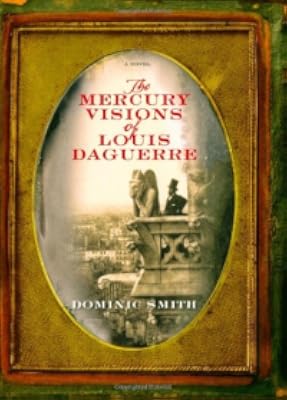
Author Dominic Smith is clearly fascinated by the history of image making, as a previous novel was The Mercury Visions of Louis Daguerre and his development of the eponymous daguerreotype process photography, and he puts his deep research on display as he follows his characters across years as film develops as a medium from impactful images being as simple as a train arriving in a station and a couple embracing with a kiss to advances in visual narrative length and sophistication to documentary horrors of a world at war. As a New Jersey native I particularly enjoyed the central part of the story taking place at a studio on the Palisades which was used as one of the first backlots for movie making. My only quibbles are I think the framing story, which does have interesting incidents, disrupts the narrative flow plus as the viewpoint character I found Claude to be the least dynamic of the three as I think the book could have been even richer if Smith had told parts of the story from the perspectives of Sabine, Chip, and Hal. Still a wonderful voyage through the earliest years in history and development of film as a medium and an artform.
The book includes an Author's Note about the title - "The Electric Hotel is the name of a silent "trick film" made by the early Spanish director Segundo de Chomon and released as El hotel electrico in 1908." show less
Author Dominic Smith is clearly fascinated by the history of image making, as a previous novel was The Mercury Visions of Louis Daguerre and his development of the eponymous daguerreotype process photography, and he puts his deep research on display as he follows his characters across years as film develops as a medium from impactful images being as simple as a train arriving in a station and a couple embracing with a kiss to advances in visual narrative length and sophistication to documentary horrors of a world at war. As a New Jersey native I particularly enjoyed the central part of the story taking place at a studio on the Palisades which was used as one of the first backlots for movie making. My only quibbles are I think the framing story, which does have interesting incidents, disrupts the narrative flow plus as the viewpoint character I found Claude to be the least dynamic of the three as I think the book could have been even richer if Smith had told parts of the story from the perspectives of Sabine, Chip, and Hal. Still a wonderful voyage through the earliest years in history and development of film as a medium and an artform.
The book includes an Author's Note about the title - "The Electric Hotel is the name of a silent "trick film" made by the early Spanish director Segundo de Chomon and released as El hotel electrico in 1908." show less
I could not stop reading Dominic Smith's new novel The Electric Hotel. I was transported back in time to the heady early days of film, disturbed by a trek into the horrors of WWI, and enthralled by the vivid characters and their stories, especially the tragic story of unrequited love.
Claude Ballard's cutting-edge, notorious 1910 film The Electric Hotel had impelled audience to high emotion. It was his highest achievement, but it came crashing down when Thomas Edison sued his company for copyright infringement--as he did all his competition, seeking a monopoly on the film industry.
Claude has not seen a movie since 1920 when in 1962 a grad student in filmography seeks him out. He realizes he has been "pickling" himself for thirty years, show more holed up in a hotel filled with other aging film industry has-beens, his hoard of film decaying from vinegar syndrome.
"He'd witnessed and photographed the passing of a golden, burnished epoch." from The Electric Hotel by Dominic Smith
As Claude answers Martin's questions and shares his hoard of decaying canisters of film, he revisits his early life and ascent from a French farmer's son who in 1895 was mesmerized by the early Lumiere films, how he became a noted movie maker, then while bravely filming WWI he was taken by the German army, always haunted by the film actress who broke his heart.
"When I dream of that old life I see it like a strip of burning celluloid. It smokes and curls in the air, but it's impossible to hold between my fingers." from The Electric Hotel by Dominic Smith
Sabine Montrose had beauty but no heart. She arrived in Paris as a teenager and fled when men pursued her. She learned to act and to use men but never would give her heart. Claude became one of her victims when the older woman took him into her bed for one night only. Claude was caught in her web, filmed her and made her an international star, forever hoping that Sabine would allow him into her life once again.
"Loving a woman was like that...was chasing smoke." from The Electric Hotel by Dominic Smith
The son of a failed nickelodeon owner, Hal was the theater owner who ran Claude's films; the small, spunky boy Chip was the burning man in a circus act when he joined the company as a stuntman. Sabine's mysterious mentor Pavel was always at her side.
The mystery of what happened pulled me along like a magnet, but I cherished every sentence of the gorgeous writing and would not skip a line.
Smith was impressed by the quality and art of the early movies he viewed during his research. What treasures have been lost? The Electric Hotel is an actual 1908 film recently rediscovered. I viewed it online here. A couple take a room in a hotel in which stop-action animated luggage takes itself up the elevator and unpacks itself. Brushes clean the traveler's boots. I can imagine the impact on audiences over 100 years ago!
I received an egalley from the publisher in exchange for a fair and unbiased review. show less
Claude Ballard's cutting-edge, notorious 1910 film The Electric Hotel had impelled audience to high emotion. It was his highest achievement, but it came crashing down when Thomas Edison sued his company for copyright infringement--as he did all his competition, seeking a monopoly on the film industry.
Claude has not seen a movie since 1920 when in 1962 a grad student in filmography seeks him out. He realizes he has been "pickling" himself for thirty years, show more holed up in a hotel filled with other aging film industry has-beens, his hoard of film decaying from vinegar syndrome.
"He'd witnessed and photographed the passing of a golden, burnished epoch." from The Electric Hotel by Dominic Smith
As Claude answers Martin's questions and shares his hoard of decaying canisters of film, he revisits his early life and ascent from a French farmer's son who in 1895 was mesmerized by the early Lumiere films, how he became a noted movie maker, then while bravely filming WWI he was taken by the German army, always haunted by the film actress who broke his heart.
"When I dream of that old life I see it like a strip of burning celluloid. It smokes and curls in the air, but it's impossible to hold between my fingers." from The Electric Hotel by Dominic Smith
Sabine Montrose had beauty but no heart. She arrived in Paris as a teenager and fled when men pursued her. She learned to act and to use men but never would give her heart. Claude became one of her victims when the older woman took him into her bed for one night only. Claude was caught in her web, filmed her and made her an international star, forever hoping that Sabine would allow him into her life once again.
"Loving a woman was like that...was chasing smoke." from The Electric Hotel by Dominic Smith
The son of a failed nickelodeon owner, Hal was the theater owner who ran Claude's films; the small, spunky boy Chip was the burning man in a circus act when he joined the company as a stuntman. Sabine's mysterious mentor Pavel was always at her side.
The mystery of what happened pulled me along like a magnet, but I cherished every sentence of the gorgeous writing and would not skip a line.
Smith was impressed by the quality and art of the early movies he viewed during his research. What treasures have been lost? The Electric Hotel is an actual 1908 film recently rediscovered. I viewed it online here. A couple take a room in a hotel in which stop-action animated luggage takes itself up the elevator and unpacks itself. Brushes clean the traveler's boots. I can imagine the impact on audiences over 100 years ago!
I received an egalley from the publisher in exchange for a fair and unbiased review. show less
Dominic Smith tells a very human story about the birth of the film industry in THE ELECTRIC HOTEL. His novel is replete with interesting historical facts about the struggle to move cinema from a curiosity to an artform, abundant technical details about early film and the machinery that ran it, and especially evocative descriptions of the excitement engendered by people’s first encounters with moving images. He melds these with an engaging plot, nuanced characters, and writing that is both cinematic and atmospheric.
Claude Ballard is an 85-year-old former movie mogul living in a rundown Hollywood hotel in 1962. He is gently coaxed into reminiscing about his past by a film graduate student who interviews him about his important lost work show more (The Electric Hotel). Ballard’s life is indeed epic, spanning the period from 1895 to 1962. His story includes surprising portrayals of Thomas Edison as a menacing greedy man, and the Lumiere brothers as astute marketeers. It also includes harrowing descriptions of life in the trenches of WWI. But the heart of his story revolves around Ballard’s efforts to make art at his studio on the Palisades of Fort Lee, NJ. Who knew Fort Lee is known for more than “bridgegate?” Indeed, it is the predecessor to Hollywood and the birth of the term “cliffhanger.”
Several well-crafted fictional characters inhabit Claude’s tale. The beguiling Sabine Montrose is his star and muse. She is indeed an early version of the complex movie diva. Hal Bender rises from obscurity as a Brooklyn peep show entrepreneur into the archetypical movie producer. These two characters, along with Claude, all have troublesome backstories involving dysfunctional family histories. Lesser characters include Chip Spalding, a runaway Australian stuntman with a penchant for setting himself on fire, and Pavel, a somewhat mysterious acting coach resembling Stanislavsky.
It turns out that Claude had preserved a copy of his masterwork and the graduate student had the capability to restore it. This leads to a particularly poignant ending for this excellent novel. show less
Claude Ballard is an 85-year-old former movie mogul living in a rundown Hollywood hotel in 1962. He is gently coaxed into reminiscing about his past by a film graduate student who interviews him about his important lost work show more (The Electric Hotel). Ballard’s life is indeed epic, spanning the period from 1895 to 1962. His story includes surprising portrayals of Thomas Edison as a menacing greedy man, and the Lumiere brothers as astute marketeers. It also includes harrowing descriptions of life in the trenches of WWI. But the heart of his story revolves around Ballard’s efforts to make art at his studio on the Palisades of Fort Lee, NJ. Who knew Fort Lee is known for more than “bridgegate?” Indeed, it is the predecessor to Hollywood and the birth of the term “cliffhanger.”
Several well-crafted fictional characters inhabit Claude’s tale. The beguiling Sabine Montrose is his star and muse. She is indeed an early version of the complex movie diva. Hal Bender rises from obscurity as a Brooklyn peep show entrepreneur into the archetypical movie producer. These two characters, along with Claude, all have troublesome backstories involving dysfunctional family histories. Lesser characters include Chip Spalding, a runaway Australian stuntman with a penchant for setting himself on fire, and Pavel, a somewhat mysterious acting coach resembling Stanislavsky.
It turns out that Claude had preserved a copy of his masterwork and the graduate student had the capability to restore it. This leads to a particularly poignant ending for this excellent novel. show less
In 1962, Claude Ballard lives in a once-fashionable Los Angeles residential hotel, among old film containers and equipment and memories of a difficult, yet stimulating, past. A long-forgotten (fictional) film director whose magnum opus was The Electric Hotel, shown only once, in 1910, Claude lives out his days taking neighborhood walks with camera in hand and keeping a benevolent eye on a neighbor, a former silent film star whose memory and understanding of her surroundings often desert her.
Into Claude’s quiet, measured existence wanders Martin Embry, an academic field historian writing his dissertation, who takes one look at the director’s apartment and wants to know if the celluloid in those canisters has been developed and show more preserved. Actually, he takes one whiff and realizes they haven’t, for the decomposing film gives off a strong odor, like vinegar, which Claude has never noticed.
That shocks him and makes him more receptive when Martin tries to persuade him to loan him the films that can still be salvaged in the laboratory. Just as important, he coaxes the hermit to recount his life story; it’s as though Claude suddenly realizes that he’s been gathering dust and doesn’t have to.
And what a story, from a lonely youth in Alsace — Claude’s French, by birth — in which his mother died of smallpox when he was quite young. Claude nearly succumbs himself, and afterward, when his vision falters — “the edges of objects began to slowly quake and fringe” — the village doctor sends him to a specialist.
That’s exactly the same impression Claude has when, years later in Paris, he watches the first moving pictures of his life. The Lumière brothers, pioneers known today mostly to ardent cinephiles, create minute-long films of everyday life — a bus traveling down the street, people in a crowd.
From that moment, Claude knows his life mission. Not only does he want to learn about and make films, he wants to see and record life the way the Lumières do. A shy, withdrawn person who expects no one to notice him, for him, this is true adventure.
The Electric Hotel requires a reader’s patience, for the narrative takes a while to get places, portraying Claude’s career, associates, and obsessive love for Sabine Montrose, a French actress who stars in his films. But every time I asked myself if I really wanted to continue reading, once I started, I got lost in the story. It’s not just the writing, which often leaps off the page. Nor is it the fascinating detail about making movies back in the old days--and Smith means old, before any of the silent-film stars commonly discussed today got their start (Charlie Chaplin, Buster Keaton, or Mary Pickford, to name a few).
The tale of how Claude and his friends film The Electric Hotel, which occupies the bulk of the novel, involves a Siberian tiger, a dirigible, an impossible leading lady, and a cameo appearance by a grasping, self-involved Thomas Edison. Equally important, the novel portrays a forgotten time and place.
As always, people crave novelty, wish to be entertained, even to be shocked. But after they see Claude’s films, they may resent them afterward, because their attraction to the images tells them something about themselves they’d have preferred not to know.
So too with Claude, who tries to hide behind the camera, even into old age, to avoid facing his past. But the past never leaves — it’s all there, whether on celluloid or in meaning—and he’s a casualty.
Most of the characters come through fully, at least the important ones; other than Claude and Sabine, I particularly like Chip Spalding, the Australian stunt man who covers himself with grease and sets himself on fire.
However, several lesser figures remain faceless, and I wish the narrative had paid more attention to them, rather than include certain sequences that contribute very little. I especially wonder about a long First World War segment in Belgium, which, though well told, seems utterly superfluous (and bears little resemblance to any historical facts I know, or even possibilities)
.
Nevertheless, The Electric Hotel may beguile as a tale of a bygone era, evoking passionate excitement over a way of seeing that hadn’t existed before—and which we now take for granted. show less
Into Claude’s quiet, measured existence wanders Martin Embry, an academic field historian writing his dissertation, who takes one look at the director’s apartment and wants to know if the celluloid in those canisters has been developed and show more preserved. Actually, he takes one whiff and realizes they haven’t, for the decomposing film gives off a strong odor, like vinegar, which Claude has never noticed.
That shocks him and makes him more receptive when Martin tries to persuade him to loan him the films that can still be salvaged in the laboratory. Just as important, he coaxes the hermit to recount his life story; it’s as though Claude suddenly realizes that he’s been gathering dust and doesn’t have to.
And what a story, from a lonely youth in Alsace — Claude’s French, by birth — in which his mother died of smallpox when he was quite young. Claude nearly succumbs himself, and afterward, when his vision falters — “the edges of objects began to slowly quake and fringe” — the village doctor sends him to a specialist.
That’s exactly the same impression Claude has when, years later in Paris, he watches the first moving pictures of his life. The Lumière brothers, pioneers known today mostly to ardent cinephiles, create minute-long films of everyday life — a bus traveling down the street, people in a crowd.
From that moment, Claude knows his life mission. Not only does he want to learn about and make films, he wants to see and record life the way the Lumières do. A shy, withdrawn person who expects no one to notice him, for him, this is true adventure.
The Electric Hotel requires a reader’s patience, for the narrative takes a while to get places, portraying Claude’s career, associates, and obsessive love for Sabine Montrose, a French actress who stars in his films. But every time I asked myself if I really wanted to continue reading, once I started, I got lost in the story. It’s not just the writing, which often leaps off the page. Nor is it the fascinating detail about making movies back in the old days--and Smith means old, before any of the silent-film stars commonly discussed today got their start (Charlie Chaplin, Buster Keaton, or Mary Pickford, to name a few).
The tale of how Claude and his friends film The Electric Hotel, which occupies the bulk of the novel, involves a Siberian tiger, a dirigible, an impossible leading lady, and a cameo appearance by a grasping, self-involved Thomas Edison. Equally important, the novel portrays a forgotten time and place.
As always, people crave novelty, wish to be entertained, even to be shocked. But after they see Claude’s films, they may resent them afterward, because their attraction to the images tells them something about themselves they’d have preferred not to know.
So too with Claude, who tries to hide behind the camera, even into old age, to avoid facing his past. But the past never leaves — it’s all there, whether on celluloid or in meaning—and he’s a casualty.
Most of the characters come through fully, at least the important ones; other than Claude and Sabine, I particularly like Chip Spalding, the Australian stunt man who covers himself with grease and sets himself on fire.
However, several lesser figures remain faceless, and I wish the narrative had paid more attention to them, rather than include certain sequences that contribute very little. I especially wonder about a long First World War segment in Belgium, which, though well told, seems utterly superfluous (and bears little resemblance to any historical facts I know, or even possibilities)
.
Nevertheless, The Electric Hotel may beguile as a tale of a bygone era, evoking passionate excitement over a way of seeing that hadn’t existed before—and which we now take for granted. show less
Claude Ballard is a legend in film making. Having started at the times of the brothers Lumière and the silent film, his „The Electric Hotel“ was a highly innovative masterpiece which is meant to have been lost for decades. Yet, when a student comes to interview Ballard about his life and work, he not only learns about the beginning of the moving pictures, but also makes an interesting discovery.
Dominic Smith’s novel is a must read for film lovers, at the example of Claude Ballard who wanders the streets of Paris and New York of 1910 to capture real life through the lens, the history and development of the silent film is narrated. His only film – “The Electric Hotel” – could have been a great success, but times weren’t show more easy and so were the women, first and foremost Sabine Montrose the actress who had the main role in his film and his life.
The cinematic background is clearly well researched and also the times that the characters remember come to life vividly. Yet, I am not enough into cinema to really enjoy this intensive read and the characters were quite hard for me to relate to. I am sure that readers with more interest I the topic will find a lot more delight in the novel than I did. show less
Dominic Smith’s novel is a must read for film lovers, at the example of Claude Ballard who wanders the streets of Paris and New York of 1910 to capture real life through the lens, the history and development of the silent film is narrated. His only film – “The Electric Hotel” – could have been a great success, but times weren’t show more easy and so were the women, first and foremost Sabine Montrose the actress who had the main role in his film and his life.
The cinematic background is clearly well researched and also the times that the characters remember come to life vividly. Yet, I am not enough into cinema to really enjoy this intensive read and the characters were quite hard for me to relate to. I am sure that readers with more interest I the topic will find a lot more delight in the novel than I did. show less
In 1962, fictional silent film pioneer Claude Ballard, now in his eighties and living in a dilapidated Hollywood hotel, is sought out by a young man writing his dissertation on the history of early movies. The storyline covers Ballard’s eventful life, including his medical photography, creation of films to promote the Lumière brothers’ cinématographe, infatuation with an actress, production of The Electric Hotel, and involvement in capturing images of the Great War. It focuses on an ensemble of characters whose personal and professional interactions drive the plot.
This strength of this book lies in its vivid depiction of the history of the early silent film industry. The narrative covers the precursors to today’s Hollywood, show more from its initial short action scenes to full-length movies. It allows the reader to get a feel for what life was like in the early days of cinema, how audiences initially reacted, and the tendency toward sensationalism.
Though the pacing is a bit uneven and there are a few minor anachronisms, the multiple storylines are well-integrated. Sensitive readers may want to be aware that the book contains animal cruelty and graphic scenes of war-related atrocities. It will appeal to readers interested in the history of filmmaking. show less
This strength of this book lies in its vivid depiction of the history of the early silent film industry. The narrative covers the precursors to today’s Hollywood, show more from its initial short action scenes to full-length movies. It allows the reader to get a feel for what life was like in the early days of cinema, how audiences initially reacted, and the tendency toward sensationalism.
Though the pacing is a bit uneven and there are a few minor anachronisms, the multiple storylines are well-integrated. Sensitive readers may want to be aware that the book contains animal cruelty and graphic scenes of war-related atrocities. It will appeal to readers interested in the history of filmmaking. show less
THE ELECTRIC HOTEL is historical fiction that goes all the way back to the beginning of silent movies (which was in the 19th century in France) to the 1960s showing of “The Electric Hotel.” But the book begins with an old man in 1962 and the PhD candidate who is interviewing him for his dissertation on “innovation in American silent film before 1914.” Nearly everything else is flashback as the old man, Claude, tells his story.
The first and longest flashback deals, mostly, with Claude, a movie maker, and Sabine, the actress he loves. This part, more than half of the book, is both interesting, as the reader learns how and where this movie business began and what obstacles they had to deal with, and boring, as Dominic Smith is show more often too wordy.
But after Claude’s production of “The Electric Hotel,” the story is both interesting and engaging, even for someone who doesn’t particularly care about the movie making business. I know I’ll never feel the same way about Thomas Edison again.
I expected to love THE ELECTRIC HOTEL because I loved Smith’s last book, THE LAST PAINTING OF SARA DE VOS. I didn’t. But I did like THE ELECTRIC HOTEL a lot. I must have because now I want to watch some silent movies. And I wonder if anyone asked Smith whether he modeled Claude and Sabine on real people.
I won this book through goodreads.com. show less
The first and longest flashback deals, mostly, with Claude, a movie maker, and Sabine, the actress he loves. This part, more than half of the book, is both interesting, as the reader learns how and where this movie business began and what obstacles they had to deal with, and boring, as Dominic Smith is show more often too wordy.
But after Claude’s production of “The Electric Hotel,” the story is both interesting and engaging, even for someone who doesn’t particularly care about the movie making business. I know I’ll never feel the same way about Thomas Edison again.
I expected to love THE ELECTRIC HOTEL because I loved Smith’s last book, THE LAST PAINTING OF SARA DE VOS. I didn’t. But I did like THE ELECTRIC HOTEL a lot. I must have because now I want to watch some silent movies. And I wonder if anyone asked Smith whether he modeled Claude and Sabine on real people.
I won this book through goodreads.com. show less
Members
- Recently Added By
Lists

Kirkus Starred Fiction Reviews of Books Published in 2019
411 works; 12 members

Books Read in 2019
4,052 works; 110 members
Author Information

6 Works 2,102 Members
Dominic Smith grew up in Sydney, Australia and now lives in Austin, Texas. Smith earned an MFA in writing from the Michener Center for Writers at the University of Texas at Austin. His writing has been nominate for a Pushcart Prize and appeared in numerous journals and magazines, including The Atlantic Monthly. Dominic's writing has received show more several awards including the Dobie Paisano Fellowship, the Sherwood Anderson Fiction Prize, and the Gulf Coast Fiction Prize. His debut novel The Mercury Visions of Louis Daguerre was selected for the Barnes and Noble Discover Great New Writers Program. It also received the Steven Turner Prize for First Fiction from the Texas Institute of Letters. Dominic's second novel, The Beautiful Miscellaneous, was optioned for a film by Southpaw Entertainment. His third novel-Bright and Distant Shores was published in 2011 and was shortlisted for The Age Book of the Year and the Vance Palmer Prize, two of Australia's foremost literary awards. His most recent book is The Last Painting of Sara De Vos (2016). It won the 2017 2017 Indie Book Award for Fiction. Dominic serves as a faculty of the Warren Wilson MFA Program for Writers and has taught recently at the University of Texas at Austin and Southern Methodist University. (Bowker Author Biography) show less
Some Editions
Awards and Honors
Common Knowledge
- Original publication date
- 2019
- People/Characters
- Claude Ballard; Thomas Edison
- Important places
- Paris, France; Fort Lee, New Jersey, USA; New York, New York, USA; Belgium; Andorra
- Important events
- Halley's Comet; World War I
- Epigraph
- The cinema is an invention without a future -attributed to Louis Lumiere
- Dedication
- For James Magnuson, who taught us how to love the work
- First words
- Each morning, for more than thirty years, Claude Ballard returned to the hotel lobby with two cameras strapped across his chest and a tote bag full of foraged mushrooms and herbs.
- Quotations
- He sometimes photographed this kind of apparition out on Hollywood Boulevard, among the music and creative types, the urban cowboy with the unruly sideburns and big belt buckle who’s just moved out of his parent’s basemen... (show all)t in Van Nuys.
—That you never worked again after The Electric Hotel. That you went to film in Europe during the first war and had some kind of nervous breakdown … —No, no, there was nothing nervous about it. It was quite decisive.
...was Hamlet beating at the walls of his own paralysis. I have the chicken skin just thinking of it. —Goose bumps. —All languages are bastards. I let my speech fornicate with whatever happens by.
The human mind was capable of placing its own hurt and muddle at the center of the universe. If you weren’t properly tied to the living, then you were convinced that the planets were orbiting the sun of your own discontent. - Last words
- (Click to show. Warning: May contain spoilers.)Claude stared at his younger self and expected to feel pity or loss, some inexpressible weariness for all that was to come, but he felt nothing but awe for these figments standing at the edge of New Jersey, waving to the camera as it spooled the present into the past, beckoning to the audience through the evanescent light above the river.
- Canonical DDC/MDS
- 813.6
- Canonical LCC
- PS3619.M5815
Classifications
Statistics
- Members
- 231
- Popularity
- 141,031
- Reviews
- 20
- Rating
- (3.47)
- Languages
- English
- Media
- Paper, Audiobook, Ebook
- ISBNs
- 23
- ASINs
- 3