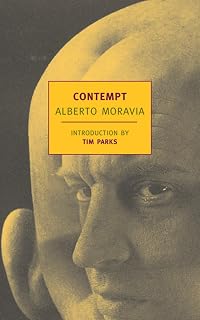
Contempt
by Alberto Moravia
On This Page
Description
"Contempt" is a brilliant and unsettling work by one of the revolutionary masters of modern European literature. All the qualities for which Alberto Moravia is justly famous--his cool clarity of expression, his exacting attention to psychological complexity and social pretension, his still-striking openness about sex--are evident in this story of a failing marriage. "Contempt" (which was to inspire Jean-Luc Godard's no-less-celebrated film) is an unflinching examination of desperation and show more self-deception in the emotional vacuum of modern consumer society. show lessTags
Recommendations

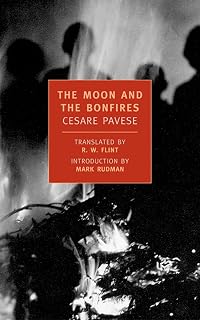

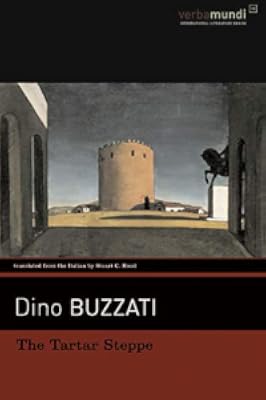
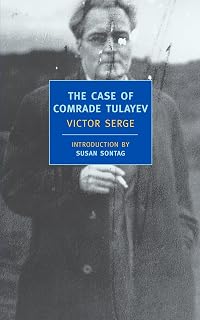

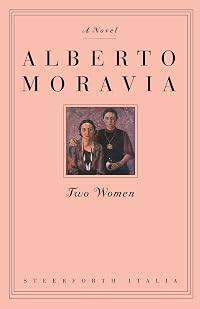

















Member Recommendations

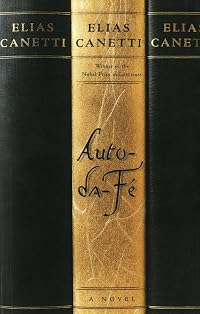
giovannigf Looking for pseudo-existentialist first-person narratives from paranoid misogynists consumed by jealousy? This is your lucky day! I'd recommend Sabato's novel over Moravia's because it's mercifully brief, but you should save yourself the grief and read Tolstoy's masterful "The Kreutzer Sonata" instead.
20

giovannigf Both novels are first-hand accounts by tortured narrators consumed by self-hatred and jealousy, and both share existentialist themes.

Member Reviews
Ayn Rand's writing is probably the only thing that I have read and found more annoying than Contempt. Moravia's idea had such great potential. An existential, psychological drama, doesn't it sound promising? In fact, Moravia did succeed in portraying the obsessive, supremely self-centered and over-analytic narrator, Riccardo Molteni, pretty well. He lets the reader discover the unreliability of the narrator and see through his wrong judgements slowly during the course of the novel. But being inside the head of this obsessive narrator gets irritating very soon...like fingernails scraping a chalkboard. He is so full of negativity. I have nothing against a negative character being the lead, but he/she should be somewhat interesting. On the show more contrary, Molteni's narration is excruciatingly painful to read and insufferably repetitive.
"Emilia doesn't love me."
"I am too good to be writing film-scripts."
"Emilia, why do you despise me?"
"Emilia, do you love me?"
Keep repeating these thoughts in a mixed fashion, throw in the words repugnance, despise, have an explanation with as often as possible and you have the first 150 pages written.
Now bring in a director who incessantly analyzes Ulysses from Odyssey, repeat the phrases from the previous part whenever the director shuts up and that's another 70-80 pages.
The narrator sometimes gets stuck at one thought and writes an entire page saying the same thing several times. At times he thinks way too slowly. He devotes one full page to Emilia discussing the dinner menu with the maid, and another page analyzing that scene. Not just that the thoughts are repeated, they are expressed in the same manner, using the same words over and over again. May be it is the translator's fault, but I do not want to read the same phrase four times in a single paragraph.
This still could have been tolerable if the prose weren't so lifeless and dry. All I felt while reading Contempt was FRUSTRATION! It is not touching, it is no fun to read, it is not informative or thought-provoking, why read it?
Riccardo Molteni, STOP THINKING or JUST DIE! show less
It was reading this unending tirade that made me realize there was a style to 20th century existentialist literature that I assume stemmed from Dostoevsky’s “Notes from Underground”: first-person rants from unlikeable characters. As much as I like Dostoevsky’s story, many of the novels it inspired make the reader feel like they’re cornered at a party by an obnoxious bore. I could almost feel the spit flying from the mouth of Alberto Moravia’s protagonist as he droned on about his irrational jealousy and the demise of his marriage. I somehow made it halfway through the book based on memories of Moravia’s infinitely superior The Conformist, though I really should have known better after having read his aptly titled Boredom show more last year. show less
Some novelists are better off writing novellas.
It is rare, anymore, to encounter, in the context of the 'psychological novel,' an uninsightful character who is not, at least implicitly, presented as such. If we can find this anywhere, it is perhaps in the product of the older, typically male, author who cannot sustain an --- idea.
Moravia is capable of writing. The characters and situation are adequately sketched, often humorously, and with an emotional clarity which is the mark of mastery; and perhaps the early expository section remains worthwhile for these reasons. However, the narrator's fixation on the single explanation, incapable of considering the additional possibility or playing one off of the other, never considering a show more subsequent movement, occasionally acting with cleverness but only by instinct, and the unshakable - to the last pages - belief/conceit that he could "prove [his] case" against the charge of contempt if given the opportunity, is bizarre. Not to mention the high-school-level Freudian interpretation of Ulysses presented as fracturing deep-brain-insight by one of Wager's operatic eponyms. show less
It is rare, anymore, to encounter, in the context of the 'psychological novel,' an uninsightful character who is not, at least implicitly, presented as such. If we can find this anywhere, it is perhaps in the product of the older, typically male, author who cannot sustain an --- idea.
Moravia is capable of writing. The characters and situation are adequately sketched, often humorously, and with an emotional clarity which is the mark of mastery; and perhaps the early expository section remains worthwhile for these reasons. However, the narrator's fixation on the single explanation, incapable of considering the additional possibility or playing one off of the other, never considering a show more subsequent movement, occasionally acting with cleverness but only by instinct, and the unshakable - to the last pages - belief/conceit that he could "prove [his] case" against the charge of contempt if given the opportunity, is bizarre. Not to mention the high-school-level Freudian interpretation of Ulysses presented as fracturing deep-brain-insight by one of Wager's operatic eponyms. show less
Moravia masterfully writes a novel about the contempt, real or imagined, between Molteni (the narrator) and his wife. Molteni's obsession reminded me of an insecure teenage girl. He was constantly second guessing himself, wondering if his wife still loved him or not. Every chapter he had a new revelation in which he figured out the source of his wife's contempt and every chapter he would be left guessing again whether she loved him or not and trying all manner of moves to win her love again. It's a short and very intense study into the one word, contempt.
"I was not so much meditating as stirring together in my mind the cold, acid flavors of the various feelings, all of them disagreeable, that agitated me." "I was all nerves and imagination, morbidly sensitive and complex."
Molteni, your narrator, never more accurately describes both his personal weaknesses and his narrative style. There are no rays of light in "Contempt." This novel incarcerates a reader within the arrogant and insecure psyche of an unsatisfied man. Molteni is incredibly self-conscious without being self-aware and certainly without being aware of his wife. "Contempt" centers around the total breakdown of his relationship with Emilia, who he introduces as follows: "I had not married a woman who could understand and share show more my ideas, tastes and ambitions; instead I had married, for her beauty, an uncultivated, simple typist, full, it seemed to me, of all the prejudices and ambitions of the class from which she came."
That "seemed to me" clause is rather important. It should not be surprising that Molteni's classist portrait of his love-object should fall short as a true characterization. While Moravia succeeds in making Molteni's obsessions and anxieties seem plausible and addictive, he doesn't convince me, entirely, that someone could have his head buried so far up his ass as Molteni. A jealous and insecure man would be more aware of the implications of subjecting his wife to the courtship of another man and he would certainly be more reluctant to let her alone with any of her dashing suitors.
However, the relentlessness of Molteni's self-sabotage makes for a riveting account and his wife, when she chooses to defend herself, is a more engaging character than I expected. "Contempt" could probably have done without the rather tedious parallel interpretations of "The Odyssey" with all of the psychoanalysis of Ulysses and the doubting of Penelope. The themes were relevant; but a bit heavy-handed and far too prevalent. Additionally, the dream/hallucination/ghost nonsense towards the book's conclusion clashed in real pin-the-tail-on-the-donkey sort of fashion with the rest of Moravia's work.
If someone gave me specific reasons for reading another of Moravia's novels, I wouldn't object; but I'd make sure I knew what I was in for. show less
Molteni, your narrator, never more accurately describes both his personal weaknesses and his narrative style. There are no rays of light in "Contempt." This novel incarcerates a reader within the arrogant and insecure psyche of an unsatisfied man. Molteni is incredibly self-conscious without being self-aware and certainly without being aware of his wife. "Contempt" centers around the total breakdown of his relationship with Emilia, who he introduces as follows: "I had not married a woman who could understand and share show more my ideas, tastes and ambitions; instead I had married, for her beauty, an uncultivated, simple typist, full, it seemed to me, of all the prejudices and ambitions of the class from which she came."
That "seemed to me" clause is rather important. It should not be surprising that Molteni's classist portrait of his love-object should fall short as a true characterization. While Moravia succeeds in making Molteni's obsessions and anxieties seem plausible and addictive, he doesn't convince me, entirely, that someone could have his head buried so far up his ass as Molteni. A jealous and insecure man would be more aware of the implications of subjecting his wife to the courtship of another man and he would certainly be more reluctant to let her alone with any of her dashing suitors.
However, the relentlessness of Molteni's self-sabotage makes for a riveting account and his wife, when she chooses to defend herself, is a more engaging character than I expected. "Contempt" could probably have done without the rather tedious parallel interpretations of "The Odyssey" with all of the psychoanalysis of Ulysses and the doubting of Penelope. The themes were relevant; but a bit heavy-handed and far too prevalent. Additionally, the dream/hallucination/ghost nonsense towards the book's conclusion clashed in real pin-the-tail-on-the-donkey sort of fashion with the rest of Moravia's work.
If someone gave me specific reasons for reading another of Moravia's novels, I wouldn't object; but I'd make sure I knew what I was in for. show less
An overbearing psychological first-person narrative where the protagonist's situation is compared obscurely to the relationship between Odysseus and Penelope. Have I read this before? Yes, I have: Bernhard Schlink uses a similar device in Homecoming. The finale is simultaneously dark and reassuring.
Thinly plotted as it is, I can't say I enjoyed Contempt. There is thinking, then some more thinking, then some thinking about thinking. The "feature" of this novel is the super-analytical mind of a writer whose relationships with his wife and work overlap and disintegrate. But it felt more a study of neurosis and depression; which, from a first-hand perspective, isn't comfortable reading.
Thinly plotted as it is, I can't say I enjoyed Contempt. There is thinking, then some more thinking, then some thinking about thinking. The "feature" of this novel is the super-analytical mind of a writer whose relationships with his wife and work overlap and disintegrate. But it felt more a study of neurosis and depression; which, from a first-hand perspective, isn't comfortable reading.
Alberto Moravia effortlessly makes the reader feel for characters that have a certain dislikeable streak to them...
Members
- Recently Added By
Lists

Le Monde - Les 100 livres du siècle
121 works; 25 members

Italian Literature
557 works; 42 members

Books Set in Italy
167 works; 19 members

20th Century Literature
1,161 works; 54 members

1950s
340 works; 22 members
1,001 BYMRBYD Concensus
723 works; 27 members

Existentialism
90 works; 11 members

Tammen Keltainen kirjasto
81 works; 1 member

The wanderings of Odysseus
61 works; 6 members
Lista dei 100 migliori libri italiani degli ultimi 200 anni
100 works; 1 member
Author Information

462+ Works 10,502 Members
Born in Rome of Jewish-Roman Catholic parents, Moravia was not much affected by the "Fascist racial laws" until Mussolini's fall in 1943 and the consequent German occupation of Rome. Under fascism, Moravia published his first novel, The Time of Indifference (1929), at his own expense when he was only 22; yet it was a great success and remains his show more most characteristic work. He produced nothing to match it until after World War II, when he emerged as the leading Italian neorealist, publishing in rapid order The Woman of Rome (1947), Disobedience (1948), The Conformist (1951), Ghost at Noon (1948), Roman Tales (1954), and Two Women (1957). Many believe the latter is his best novel, telling of the efforts of a shopkeeper and her daughter, raped by Italy's liberators and learning to adapt themselves to the postwar new order. Moravia made a great stir in world literary circles after World War II by announcing his conversion to Roman Catholicism, which had given him solace and protection during the German occupation. Among his more recent publications is 1984. In 1941 Moravia married ~Elsa Morante. They separated in 1962. (Bowker Author Biography) show less
Some Editions
Awards and Honors
Series
Belongs to Publisher Series
Work Relationships
Common Knowledge
- Canonical title
- Contempt
- Original title
- Il disprezzo; Il depresso
- Alternate titles
- A Ghost at Noon
- Original publication date
- 1954
- People/Characters
- Riccardo Molteni; Emilia Molteni; Battista; Rheingold
- Important places
- Capri, Campania, Italy; Italy
- Related movies
- Le mépris (1963 | IMDb)
- First words
- During the first two years of our married life my relations with my wife were, I can now assert, perfect.
- Quotations
- By which I mean to say that, in those two years, a complete, profound harmony of the senses was accompanied by a kind of numbness - or should I say silence? - of the mind which, in such circumstances, causes an entire suspens... (show all)ion of judgment and looks only to love for any estimate of the beloved person.
The less one notices happiness, the greater it is. It may seem strange, but in those two years I sometimes thought I was actually bored. Certainly, at the time, I did not realize that I was happy. It seemed to me that I wa... (show all)s doing what everyone did - loving my wife and being loved by her; and this love of ours seemed to me an ordinary, normal fact, or rather, to be in no way precious - just like the air one breathes, and there's plenty of it and it become precious only when it begins to run short.
I began therefore to live like one who carries within him the infirmity of an impending disease but cannot make up his mind to go to the doctor; in other words, I tried not to reflect too much either upon Emilia's demeanor to... (show all)wards me, or upon my work.
Why did Emilia no longer love me, and how had she arrived at this state of indifference? With a feeling of anguish in my heart, I foresaw that this first general conclusion, already so painful, would demand an infinite numbe... (show all)r of further, minor proofs before I became completely convinced - proofs which, just because they were of lesser importance, would be more concrete and, if possible, still more painful. I was, in fact, now convinced that Emilia could no longer love me; but I did not know either why or how this had come about; and in order to be entirely persuaded of it I must have an explanation with her, I must seek out and examine, I must plunge the thin, ruthless blade of investigation into the would which, hitherto, I had exerted myself to ignore.
She would have replied that it was not true, and - quite probably - she would have reminded me, with crude technical precision, or certain transports of sensuality on her own side, in which everything was included - skill, pu... (show all)rsuit of pleasure, violent excitement, erotic fury - everything except tenderness and the indescribable abandonment of true surrender; and I should not have known what to say to this; and, into the bargain, I should have offended her with that insulting comparison, and thus have put myself in the wrong.
In order to take one single step, it seems, we displace an infinite number of muscles, and yet, thanks to this automatism, we are unaware of it. The same thing happens in our relations with other people. As long as I believ... (show all)ed myself to be loved by Emilia, a kind of happy automatism had presided over our relations; and only the final completion of any course of conduct on my part had been illuminated by the light of consciousness, all the rest remaining in the obscurity of affectionate and unnoticed habit. But not that the illusion of love had faded, I discovered myself to be conscious of every one of my actions, even the smallest. - Last words
- (Click to show. Warning: May contain spoilers.)And I decided to write down these memories, in the hope of succeeding in my intention.
- Original language
- Italian
Classifications
Statistics
- Members
- 1,055
- Popularity
- 24,456
- Reviews
- 17
- Rating
- (3.65)
- Languages
- 13 — Catalan, Danish, Dutch, English, Finnish, French, German, Hungarian, Italian, Portuguese, Russian, Spanish, Swedish
- Media
- Paper, Ebook
- ISBNs
- 39
- ASINs
- 28