On This Page
Description
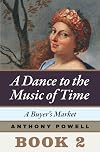
Anthony Powell's universally acclaimed epic A Dance to the Music of Time offers a matchless panorama of twentieth-century London. Now, for the first time in decades, readers in the United States can read the books of Dance as they were originally published-as twelve individual novels-but with a twenty-first-century twist: they're available only as e-books. The second volume, A Buyer's Market (1952),finds young Nick Jenkins struggling to establish himself in London. Amid the fever of the show more 1920s, he attends formal dinners and wild parties; makes his first tentative forays into the worlds of art, culture, and bohemian life; and suffers his first disappointments in love. Old friends come and go, but the paths they once shared are rapidly diverging: Stringham is settling into a life of debauchery and drink, Templer is plunging into the world of business, and Widmerpool, though still a figure of out-of-place grotesquerie, remains unbowed, confident in his own importance and eventual success. A Buyer's Market is a striking portrait of the pleasures and anxieties of early adulthood, set against a backdrop of London life and culture at one of its most effervescent moments. "Anthony Powell is the best living English novelist by far. His admirers are addicts, let us face it, held in thrall by a magician."--ChicagoTribune "A book which creates a world and explores it in depth, which ponders changing relationships and values, which creates brilliantly living and diverse characters and then watches them grow and change in their milieu. . . . Powell's world is as large and as complex as Proust's."--Elizabeth Janeway, New YorkTimes "One of the most important works of fiction since the Second World War. . . . The novel looked, as it began, something like a comedy of manners; then, for a while, like a tragedy of manners; now like a vastly entertaining, deeply melancholy, yet somehow courageous statement about human experience."--Naomi Bliven, New Yorker "The most brilliant and penetrating novelist we have."--Kingsley Amis. show lessTags
Recommendations






















Member Recommendations



Member Reviews
If I'd got this as a stand alone novel, I think I would be very disappointed. As 1/12th of a series, I think it makes more sense. The basic structure is 4 different social events at which Nick meets various people form his social circle and re-meets those we have met previously. It's not entirely clear from the text when this is set after the conclusion of the preceding books, probably a few years. In this installment, Nick finds a love rival, falls out of love, meets an old love and grows up just a bit.
In this growing up there is the interaction with Mr Deacon, the painter, who appeared in book 1, but passes away in book 2. The framing device in this is Nick sees some of his paintings for sale at an auction and it reminds him of a show more painting by Deacon that used to hang in a house he visited - and so we are in the house and attending a party.
I suspect this might be a theme, but the ladies aren't terribly well represented. It is a very male, upper crust world. The treatment of Gypsy Jones got me rather riled. We hear of her difficulty with Widemerpool (we imagine that he has got her pregnant and is paying for the abortion) but we hear it just from Widmerpool and we hear it as if it is an imposition on him, at no point do we hear from Gypsy herself on the subject. The privilege displayed is quite astounding.
The writing is quite lovely at times and I do want to know where this is going to go, albeit slowly, over the next 10 books. show less
In this growing up there is the interaction with Mr Deacon, the painter, who appeared in book 1, but passes away in book 2. The framing device in this is Nick sees some of his paintings for sale at an auction and it reminds him of a show more painting by Deacon that used to hang in a house he visited - and so we are in the house and attending a party.
I suspect this might be a theme, but the ladies aren't terribly well represented. It is a very male, upper crust world. The treatment of Gypsy Jones got me rather riled. We hear of her difficulty with Widemerpool (we imagine that he has got her pregnant and is paying for the abortion) but we hear it just from Widmerpool and we hear it as if it is an imposition on him, at no point do we hear from Gypsy herself on the subject. The privilege displayed is quite astounding.
The writing is quite lovely at times and I do want to know where this is going to go, albeit slowly, over the next 10 books. show less
"This is perhaps an image of how we live."
There are occasions when I look back at previous reviews and feel somewhat naive. When I read A Question of Upbringing in those heady days of November 2016, I didn't warm to much in Powell's literary toolkit. Now that I've read A Buyer's Market, although I fully stand by that review and my analysis of the author's shortcomings, I appreciate him all the more. This review is a high 3 stars, but I can't yet offer him that much-ballyhooed fourth.
Aside from some flashbacks to Paris after "the war", we are mostly situated at the end of the '20s, as Nick and Widmerpool attend a variety of social functions, from grand dances to awkward dinners and finally a funeral, along the way running into everyone show more they met in the first book, and being forced to constantly reassess their approach and point-of-view.
Although Powell and Proust share a connection, it's becoming clear that Powell is as far from modernism as one can be while still writing literature in the mid-20th century. Powell's interest is in our personal development, and how we interact with society, but I think less with how society forms us, and especially less with the idea of human memory and fallibility. When Powell deals with character growth, he does not primarily mean internal growth - aside, perhaps, from Nick Jenkins himself - but instead with how we change as viewed by others.
The received wisdom about these books is that Jenkins is something of an audience surrogate, but I see him as a fully-fledged character. What works best about these novels is the wry understanding Jenkins develops about himself, and the way he viewed the world. I think what people mean is that Jenkins' life remains opaque. He is constantly reflecting on how separated he has become from those school and university chums we met in book one. But we really have little idea of which people he is spending his time with.
What else works? Powell's ability to conjure up ambience in just a few sentences, his gradual comic Jenga puzzles, as in the first event the lads attend which culminate in little moments of comedy like the forgotten pile of Deacon's anti-war magazine. And his light skewering of the upper classes, always with affection but never with a blind eye.
What doesn't work? Well, Powell's prose meanders between the sublime and the utterly mundane. Maybe up to 10 times in this novel, Jenkins sees someone in the distance, or hears a voice, and tells us how it was vaguely familiar. Sometimes Powell will devote a whole paragraph of inane reflection, only to gradually reveal a character we've met before. If thinking cynically, I wonder if this was Powell attempting to formulate the actions of the mind and memory on the page but if so, he is far from successful.
In his satire of the lower classes, from the insufferable Quiggins to the constantly aggressive Gypsy Jones, Powell reveals his own biases in a way that - unfortunately - is setting him against the zeitgeist, and I suspect it's the reason these famous books have stunningly few reviews on Goodreads, especially as the series moves toward its end.
There's also the problematic nature of older writing, which I'm not going to keep bringing up in these reviews, but here black people, Jewish people, and not infrequently women get a bum rap, and - unlike in the writing of Powell's great, humanist contemporary Barbara Pym - one cannot write these bigotries off as the voice of characters. Still, Powell existed in his world, and his writings are not intending to stir up hate or disenfranchisement, so I'm not going to hold him in contempt just because his views do not match mine.
Powell and Art
Art continues to play a crucial role in Book Two, and I think any reader is well-advised to engage with the works mentioned. The Pre-Raphaelites;the porcelain Staffordshire dogs that tell us so much about character; Jenkins' view of Le Bas as a figure from the Bayeux Tapestry; Mr. Deacon's strong dislike of the Impressionists; Degas; Mestrovic; and the Haig Memorial. Art inhabits and surrounds these characters, and interpretations of art are one of the key methods by which Powell distributes characterisation to the ever-expanding supporting cast. It's one of his greatest attributes.
So, it's fair to say I won't be waiting another two-and-a-half years to dip into the Dance again. At the same time, what surprised me most when I skimmed through Book One before starting this one was that I remembered it so well. Not just the plot but so many specific incidents and conversations. If Powell can linger with me so strongly after one book, I imagine I can string out the Dance over a number of years and be richly rewarded. show less
There are occasions when I look back at previous reviews and feel somewhat naive. When I read A Question of Upbringing in those heady days of November 2016, I didn't warm to much in Powell's literary toolkit. Now that I've read A Buyer's Market, although I fully stand by that review and my analysis of the author's shortcomings, I appreciate him all the more. This review is a high 3 stars, but I can't yet offer him that much-ballyhooed fourth.
Aside from some flashbacks to Paris after "the war", we are mostly situated at the end of the '20s, as Nick and Widmerpool attend a variety of social functions, from grand dances to awkward dinners and finally a funeral, along the way running into everyone show more they met in the first book, and being forced to constantly reassess their approach and point-of-view.
Although Powell and Proust share a connection, it's becoming clear that Powell is as far from modernism as one can be while still writing literature in the mid-20th century. Powell's interest is in our personal development, and how we interact with society, but I think less with how society forms us, and especially less with the idea of human memory and fallibility. When Powell deals with character growth, he does not primarily mean internal growth - aside, perhaps, from Nick Jenkins himself - but instead with how we change as viewed by others.
The received wisdom about these books is that Jenkins is something of an audience surrogate, but I see him as a fully-fledged character. What works best about these novels is the wry understanding Jenkins develops about himself, and the way he viewed the world. I think what people mean is that Jenkins' life remains opaque. He is constantly reflecting on how separated he has become from those school and university chums we met in book one. But we really have little idea of which people he is spending his time with.
What else works? Powell's ability to conjure up ambience in just a few sentences, his gradual comic Jenga puzzles, as in the first event the lads attend which culminate in little moments of comedy like the forgotten pile of Deacon's anti-war magazine. And his light skewering of the upper classes, always with affection but never with a blind eye.
What doesn't work? Well, Powell's prose meanders between the sublime and the utterly mundane. Maybe up to 10 times in this novel, Jenkins sees someone in the distance, or hears a voice, and tells us how it was vaguely familiar. Sometimes Powell will devote a whole paragraph of inane reflection, only to gradually reveal a character we've met before. If thinking cynically, I wonder if this was Powell attempting to formulate the actions of the mind and memory on the page but if so, he is far from successful.
In his satire of the lower classes, from the insufferable Quiggins to the constantly aggressive Gypsy Jones, Powell reveals his own biases in a way that - unfortunately - is setting him against the zeitgeist, and I suspect it's the reason these famous books have stunningly few reviews on Goodreads, especially as the series moves toward its end.
There's also the problematic nature of older writing, which I'm not going to keep bringing up in these reviews, but here black people, Jewish people, and not infrequently women get a bum rap, and - unlike in the writing of Powell's great, humanist contemporary Barbara Pym - one cannot write these bigotries off as the voice of characters. Still, Powell existed in his world, and his writings are not intending to stir up hate or disenfranchisement, so I'm not going to hold him in contempt just because his views do not match mine.
Powell and Art
Art continues to play a crucial role in Book Two, and I think any reader is well-advised to engage with the works mentioned. The Pre-Raphaelites;the porcelain Staffordshire dogs that tell us so much about character; Jenkins' view of Le Bas as a figure from the Bayeux Tapestry; Mr. Deacon's strong dislike of the Impressionists; Degas; Mestrovic; and the Haig Memorial. Art inhabits and surrounds these characters, and interpretations of art are one of the key methods by which Powell distributes characterisation to the ever-expanding supporting cast. It's one of his greatest attributes.
So, it's fair to say I won't be waiting another two-and-a-half years to dip into the Dance again. At the same time, what surprised me most when I skimmed through Book One before starting this one was that I remembered it so well. Not just the plot but so many specific incidents and conversations. If Powell can linger with me so strongly after one book, I imagine I can string out the Dance over a number of years and be richly rewarded. show less
Nothing in the first novel of ADMT really prepares you for this. There you get short introductions to characters, traditional plot movements, transparent prose and above all variety. With A Buyer's Market we're suddenly in the realm of Proust volume three, which is pretty much a party described over hundreds of pages. Say what you will about Powell. This is shorter than Le Côté de Guermantes. I wonder if Marias, anglophile that he is, took as much from Powell as from Proust to write Your Face Tomorrow?
Anyway, as in Proust (and Marias), we're pretty much without plot, something of which I often disapprove. Things happen, but they're reported in dialogue rather than narrated, and the things that happen are, unsurprisingly given that show more the narrator is in his mid twenties, mostly sex and drinking and the results of sex and drinking, until Mr. Deacon dies, probably due to drinking. There's no grit here, just humor. It could easily be Wodehouse, with less plot.
But the form of the novel is breath-taking. We begin, for no obvious reason, with Mr. Deacon, his late-decadent, Alma-Tadema-esque painting, and his antique shop. We conclude with his death, which is followed, uncomfortably, by the narrator fucking Mr. Deacon's young lady friend (who, uncomfortably, has fooled Widmerpool into paying for an abortion, probably by promising him her favors, and then not actually given him any favors) in Deacon's antique shop.
So the narrator's generation takes over from that of their parents: Deacon dies, Uncle Giles is rendered more and more silly, and even the high and mighty end up looking much more down to earth. Characters from 'A Question of Upbringing' have attained some notoriety in their fields. The musical analogy starts to make sense, too, both with the 'return' of Deacon at the end, and with motifs from AQU showing up again (notably the car accident).
In short, ABM is funnier than AQU, but not as entertaining. As an artifact to think about, though, it's much more impressive. Also, Powell's prose becomes more Jamesian here. I can't remember if that keeps up through the other volumes, or not. show less
Anyway, as in Proust (and Marias), we're pretty much without plot, something of which I often disapprove. Things happen, but they're reported in dialogue rather than narrated, and the things that happen are, unsurprisingly given that show more the narrator is in his mid twenties, mostly sex and drinking and the results of sex and drinking, until Mr. Deacon dies, probably due to drinking. There's no grit here, just humor. It could easily be Wodehouse, with less plot.
But the form of the novel is breath-taking. We begin, for no obvious reason, with Mr. Deacon, his late-decadent, Alma-Tadema-esque painting, and his antique shop. We conclude with his death, which is followed, uncomfortably, by the narrator fucking Mr. Deacon's young lady friend (who, uncomfortably, has fooled Widmerpool into paying for an abortion, probably by promising him her favors, and then not actually given him any favors) in Deacon's antique shop.
So the narrator's generation takes over from that of their parents: Deacon dies, Uncle Giles is rendered more and more silly, and even the high and mighty end up looking much more down to earth. Characters from 'A Question of Upbringing' have attained some notoriety in their fields. The musical analogy starts to make sense, too, both with the 'return' of Deacon at the end, and with motifs from AQU showing up again (notably the car accident).
In short, ABM is funnier than AQU, but not as entertaining. As an artifact to think about, though, it's much more impressive. Also, Powell's prose becomes more Jamesian here. I can't remember if that keeps up through the other volumes, or not. show less
I'm not saying this is the best part of the book, but here's a brief part near the end that stuck with me:
"She looked so despairing at the idea of Widmerpool possessing, as it were, an operational base in extension to the cottage from which he, and his mother, could already potentially molest Hinton, that I felt it my duty to explain with as little delay as possible that Widmerpool had recently taken a job at Donners-Brebner, and had merely come over that afternoon to see Sir Magnus on a matter of business."
Whether you find this formulation tiresome or clever--I definitely think the latter--is a good indicator of how you'll feel about the series. Slow-moving but always well-written, with plenty of little moments like the above.
"She looked so despairing at the idea of Widmerpool possessing, as it were, an operational base in extension to the cottage from which he, and his mother, could already potentially molest Hinton, that I felt it my duty to explain with as little delay as possible that Widmerpool had recently taken a job at Donners-Brebner, and had merely come over that afternoon to see Sir Magnus on a matter of business."
Whether you find this formulation tiresome or clever--I definitely think the latter--is a good indicator of how you'll feel about the series. Slow-moving but always well-written, with plenty of little moments like the above.
Much like the first one in this series, I found the final chapter quite poignant. There's something very sly about the humour in this book, such that every time I laughed out loud it made me wonder if I'd been missing jokes all along. I don't think I had - there's just so much depth and richness here that it's not quite clear where to focus the attention.
OK book....not great.....i suppose a logical sequel to the first and knowing there are 10 more.....i guess not that much can happen. I enjoyed the first quite a bit, and i do definitely relate to the narrator Jenkins and his general sense of always being a bit behind the curve in all that develops in his life....i still feel like I'm there quite often. A lot of coincidences that are obviously the point, but i did not expect quite so many. But I guess that early career phase where you are finding your feet is not the most exciting part of our lives, so it is rather accurate. I am still very interested in continuing through this series and i do enjoy the subtle humor that is gently inserted throughout. Gonna take a little break from show more Powell, but i will be back soon. show less
Maybe someday I'll come back to this. I just can't, 150 pages of being at a party. I know they say that things really start to pick up in books three and four, around there, but yeesh. First book was much more enjoyable.
Members
- Recently Added By
Lists

Time Magazine's "All-Time 100"
113 works; 15 members

1,001 BYMRBYD Concensus
723 works; 27 members

Books Read in 2021
5,361 works; 114 members
Talk Discussions
Past Discussions
A Dance to the Music of Time GR 2013 - February: A Buyer's Market in 75 Books Challenge for 2013 (March 2013)
Author Information

61+ Works 13,440 Members
Anthony Powell was born on December 21, 1905 in Westminster, England and was educated at Eton College and Balliol College, Oxford. In 1926 he became an editor at Duckworth & Co. and later moved on to be a scriptwriter for Warner Brothers. By 1937 he was a regular contributor to The Spectator and the Daily Telegraph. From 1953-1959 Powell was the show more Literary Editor of Punch. His first book, The Barnard Letter, was published in 1928 and his first novel, Afternoon Men, was published in 1931. In 1951 Powell published A Question of Upbringing, which was the first of the 12-novel sequence A Dance to the Music of Time. In 1975 he published Hearing Secret Harmonies, which was the last novel of the sequence. Powell wrote Infants of the Spring, which is part of To Keep the Ball Rolling, his memoirs. He also published The Fisher King in 1986. Anthony Powell died peacefully at his home, The Chantry, aged 94 on March 28, 2000. (Bowker Author Biography) show less
Some Editions
Awards and Honors
Series

Work Relationships
Is contained in
Has as a reference guide/companion
Common Knowledge
- Canonical title
- A Buyer's Market
- Original title
- A Buyer's Market
- Original publication date
- 1952
- People/Characters
- Nicholas Jenkins; Kenneth Widmerpool; Edgar Deacon; Gypsy Jones; Milly Andriadis; Ralph Barnby
- Important places
- London, England, UK
- First words
- The last time I saw any examples of Mr. Deacon's work was at a sale, held obscurely in the neighborhood of Euston Road, many years after his death.
- Quotations
- I had read some of [St. John Clarke]'s books at school with great enjoyment; now I felt myself superior to his windy, descriptive passages, two-dimensional characterisation, and the emptiness of the writing's inner content.
- Last words
- (Click to show. Warning: May contain spoilers.)For reasons not always at the time explicable, there are specific occasions when events begin suddenly to take on a significance previously unsuspected, so that, before we really know where we are, life seems to have begun in earnest at last, and we ourselves, scarcely aware that any change has taken place, are careering uncontrollably down the slippery avenues of eternity.
- Canonical DDC/MDS
- 823.912
- Canonical LCC
- PR6031.O74
Classifications
Statistics
- Members
- 645
- Popularity
- 45,062
- Reviews
- 20
- Rating
- (3.63)
- Languages
- 5 — Dutch, English, Finnish, French, German
- Media
- Paper, Audiobook, Ebook
- ISBNs
- 24
- ASINs
- 17