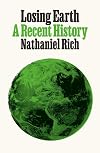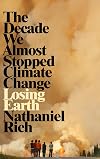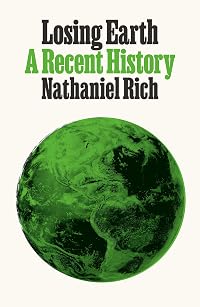
Losing Earth: A Recent History
by Nathaniel Rich
On This Page
Description
"By 1979, we knew nearly everything we understand today about climate change--including how to stop it. Over the next decade, a handful of scientists, politicians, and strategists, led by two unlikely heroes, risked their careers in a desperate, escalating campaign to convince the world to act before it was too late. [This] is their story"--Tags
Recommendations












Member Reviews
Summary: An account of the lost opportunity of the 1980's to address climate change and the birth of the polarized dialogue that exists to this day.
Did you know that much of the scientific understanding of the greenhouse effect and global warming traces back to the nineteenth century? That in the 1950's and throughout the Sixties and Seventies, scientists were already warning of global warming and contending that warming connected with higher carbon dioxide levels was already evident? Did you know there was a time when climate change and the science behind it was not a political issue and that political leaders in both parties, and many others in most the the countries of the world, substantially agreed that this was a looming problem show more that needed to be addressed? That world leaders came very close to an agreement to limit and reduce carbon dioxide emissions in 1989? That was thirty years ago. In 1990 human beings emitted more than 20 billion metric tons of carbon dioxide into the atmosphere. Instead of cutting that amount, by 2018, the amount was projected at 37.1 billion metric tons and growing.
Nathaniel Rich narrates the story of a lost moment through two figures: Rafe Pomerance, an environmental lobbyist and Gordon MacDonald, a climate scientist. A third figure who plays a prominent role is James Hansen, a NASA climate scientist who compiled massive amounts of data, and gave compelling testimony wherever called upon. Pomerance, came across this finding in a government study on the continued use of fossil fuels: "continued use of fossil fuels might, within two or three decades, bring about 'significant and damaging' changes to the global atmosphere." That was in the Spring of 1979 and changed the course of his life. It led to his interview with Gordon MacDonald, a geophysicist, who was glad that someone beside him finally noticed.
Rich's book traces their efforts to mobilize awareness and action, culminating in the formation of the IPCC (Intergovernmental Panel on Climate Change) and a climate summit in the Netherlands in 1989. Initially, action on climate change was widely supported, at least in public statements. Meanwhile, a transformation began to take place in the fossil fuel industry from studying the issue themselves and reckoning on the consequences of continued fuel use, to a movement of resistance and a challenge to the science, and exercise of increasing leverage. In the climate talks, the resistance of one US figure led to a meaningless agreement to which the US never subscribed, and an increasingly politicized discourse around climate issues. Perhaps the most stunning revelation of this book was that it was not always so.
Rich's afterword is both hopeful and sobering. He both notes the technological advances that might be turned to action limiting global temperature rises to somewhere between 1.5 and 2 degrees Celsius. Yet he also wrestles with the propensity of human beings to not act to address possible dangers down the road and instead prefer their present comfort. He not only condemns in the strongest terms those who twist and deny what they know. He challenges all of us:
"We do not like to think about loss, or death; Americans in particular, do not like to think about death. No matter how obsessively one follows the politics of climate change, it is difficult to contemplate soberly an existential threat to the species. Our queasiness even infects the language we use to describe it: the banalities of "global warming" and "climate change" perform the linguistic equivalent of rolling on sanitary gloves to palpate a hemorrhaging wound."
To see how close the world came to a climate agreement on carbon emissions in the 1980's, to learn of a time when this was not a political football, suggests that it may be possible in the future. To avert the worst possibilities, it is imperative. One concludes Rich's book wondering, will we seize or miss the opportunity that we have? show less
Did you know that much of the scientific understanding of the greenhouse effect and global warming traces back to the nineteenth century? That in the 1950's and throughout the Sixties and Seventies, scientists were already warning of global warming and contending that warming connected with higher carbon dioxide levels was already evident? Did you know there was a time when climate change and the science behind it was not a political issue and that political leaders in both parties, and many others in most the the countries of the world, substantially agreed that this was a looming problem show more that needed to be addressed? That world leaders came very close to an agreement to limit and reduce carbon dioxide emissions in 1989? That was thirty years ago. In 1990 human beings emitted more than 20 billion metric tons of carbon dioxide into the atmosphere. Instead of cutting that amount, by 2018, the amount was projected at 37.1 billion metric tons and growing.
Nathaniel Rich narrates the story of a lost moment through two figures: Rafe Pomerance, an environmental lobbyist and Gordon MacDonald, a climate scientist. A third figure who plays a prominent role is James Hansen, a NASA climate scientist who compiled massive amounts of data, and gave compelling testimony wherever called upon. Pomerance, came across this finding in a government study on the continued use of fossil fuels: "continued use of fossil fuels might, within two or three decades, bring about 'significant and damaging' changes to the global atmosphere." That was in the Spring of 1979 and changed the course of his life. It led to his interview with Gordon MacDonald, a geophysicist, who was glad that someone beside him finally noticed.
Rich's book traces their efforts to mobilize awareness and action, culminating in the formation of the IPCC (Intergovernmental Panel on Climate Change) and a climate summit in the Netherlands in 1989. Initially, action on climate change was widely supported, at least in public statements. Meanwhile, a transformation began to take place in the fossil fuel industry from studying the issue themselves and reckoning on the consequences of continued fuel use, to a movement of resistance and a challenge to the science, and exercise of increasing leverage. In the climate talks, the resistance of one US figure led to a meaningless agreement to which the US never subscribed, and an increasingly politicized discourse around climate issues. Perhaps the most stunning revelation of this book was that it was not always so.
Rich's afterword is both hopeful and sobering. He both notes the technological advances that might be turned to action limiting global temperature rises to somewhere between 1.5 and 2 degrees Celsius. Yet he also wrestles with the propensity of human beings to not act to address possible dangers down the road and instead prefer their present comfort. He not only condemns in the strongest terms those who twist and deny what they know. He challenges all of us:
"We do not like to think about loss, or death; Americans in particular, do not like to think about death. No matter how obsessively one follows the politics of climate change, it is difficult to contemplate soberly an existential threat to the species. Our queasiness even infects the language we use to describe it: the banalities of "global warming" and "climate change" perform the linguistic equivalent of rolling on sanitary gloves to palpate a hemorrhaging wound."
To see how close the world came to a climate agreement on carbon emissions in the 1980's, to learn of a time when this was not a political football, suggests that it may be possible in the future. To avert the worst possibilities, it is imperative. One concludes Rich's book wondering, will we seize or miss the opportunity that we have? show less
This book documents opportunities that existed from 1979 to 1989 to address climate change, and the manner in which the US went from bipartisan agreement that something must be done to our current state of polarization. Many people may not be aware that climate change and the science associated with it were not always political issues, and that many leaders of both parties (along with the global community) agreed that this was an impending crisis that needed to be addressed. World leaders came very close to a global agreement back in 1989 at a conference in the Netherlands to reduce carbon dioxide and other greenhouse gas emissions.
“More carbon has been released into the atmosphere since [the Noordwijk conference ended in 1989] than show more in the entire history of civilization preceding it.”
The author traces the efforts to raise awareness and take actions, resulting in the formation of the Intergovernmental Panel on Climate Change. He cites the early acceptance by the oil industries in their programs focused on alternative sources of energy and studying the issue from within. The author provides the history of what occurred to lose the previous momentum. The primary reasons relate to economics, politics, and human nature, with a common bond of short-term thinking.
The Afterword provides some hope and notes that the fundamentals of the science behind climate change have not changed. I think it is enlightening to see how close the global community came to an agreement on this issue in the 1980s, which provides at least a glimmer of optimism that it may be possible in the future. show less
“More carbon has been released into the atmosphere since [the Noordwijk conference ended in 1989] than show more in the entire history of civilization preceding it.”
The author traces the efforts to raise awareness and take actions, resulting in the formation of the Intergovernmental Panel on Climate Change. He cites the early acceptance by the oil industries in their programs focused on alternative sources of energy and studying the issue from within. The author provides the history of what occurred to lose the previous momentum. The primary reasons relate to economics, politics, and human nature, with a common bond of short-term thinking.
The Afterword provides some hope and notes that the fundamentals of the science behind climate change have not changed. I think it is enlightening to see how close the global community came to an agreement on this issue in the 1980s, which provides at least a glimmer of optimism that it may be possible in the future. show less
This book begins in the late 1970s and follows those who dared to push back against the political and economic agendas of both big fossil fuel companies and the U.S. government. Viewing these as separate entities has been a mistake as many of the key decisions about what should (or shouldn't) be done to mitigate the disastrous effects of rising temperatures were made with fossil fuels + the global economy in mind. The author of this book lays out step-by-step how policies were proposed, watered down, and ultimately made useless in the face of what many policymakers thought would cause an 'economic disaster' to the United States (and our trade partners across the globe). Through disinformation and outright denialism, the American public show more who once fully understood that scientists wholeheartedly agreed on the generalities of climate change were made to question and eventually come to distrust any information that was labeled as 'environmental science'. And this is how it stands today with very little in the way of real statutes or limitations regarding the use of fossil fuels. Every time there has been an approach to a global agreement, the U.S. (and usually its allies) have refused to participate wholesale.
Climate change is undeniable and in the 1980s when it became a hot button topic both politically and socioeconomically no one questioned this fact (or the science behind it). But when it first 'hit the scene' at this time it was not a new subject to those who were studying climate science and worrying about how to get the U.S. government to begin making widespread (leading to global) changes to slow the heating up of our planet.
If you're interested in this topic (and we all should be!) then this is a great little starter book to give you a history of how this topic was approached in the States + how it stands today. show less
Climate change is undeniable and in the 1980s when it became a hot button topic both politically and socioeconomically no one questioned this fact (or the science behind it). But when it first 'hit the scene' at this time it was not a new subject to those who were studying climate science and worrying about how to get the U.S. government to begin making widespread (leading to global) changes to slow the heating up of our planet.
If you're interested in this topic (and we all should be!) then this is a great little starter book to give you a history of how this topic was approached in the States + how it stands today. show less
A fast-paced, very readable look at the climate "debate" (such as it was) in the 1980s, and how that decade has shaped the ensuing forty years of discussion over global climate change. Fascinating and profoundly disturbing.
This is the story of the global warming debate from 1979 to 1992 with the emphasis on Rafe Pomerance, a Friends of the Earth activist, who was the first environmentalist to see the seriousness of the issue in 1979. Rich recounts how scientists and concerned politcians attempted to bring the issue into the public debate and the challenges that they faced. The realization in the mid-1980s of the hole in the ozone layer caused a sudden and surprising consensus across the spectrum. Even President Ronald Reagan supported action. Then, just as an international agreement seemed attainable, the oil companies and their political allies went on the counter offensive. Rich puts much of the blame on President George H.W. Bush who promoted himself show more as the environmental president but waffled at the worst time. His chief of staff John Sununu plays the role of central villan in this account. It is depressing to think we were so close to implementing meaningful reforms thirty years ago and blew it show less
Utterly frustrating and aggravating.
In Losing Earth, Nathaniel Rich weaves a narrative detailing the events that unfolded in the 70's upon the discovery of an excerpt in a climate report stating that if the burning of fossil fuels didn't slow down the earth would warm considerably -- and bring about disastrous consequences in the upcoming decades.
The book doesn't get into the science behind what causes global warming but rather the (ongoing) battle between scientists and environmentalists versus the governments of the world (mainly the U.S., since they are the biggest contributor to carbon dioxide, the main culprit from the results of fossil fuels). The inaction by our elected representatives and the false information springing from Big show more Oil and Gas companies will have you screaming at the pages.
I have in the last couple of years tried my best to be as 'green' as possible, but I know I can do better. We call can do better. It won't be easy but any little action helps. Also, we have to try and be more vocal towards our congressmen and our governments. Vote for those who have a serious plan on passing climate legislation. Let's leave a healthy planet for our future generations. show less
In Losing Earth, Nathaniel Rich weaves a narrative detailing the events that unfolded in the 70's upon the discovery of an excerpt in a climate report stating that if the burning of fossil fuels didn't slow down the earth would warm considerably -- and bring about disastrous consequences in the upcoming decades.
The book doesn't get into the science behind what causes global warming but rather the (ongoing) battle between scientists and environmentalists versus the governments of the world (mainly the U.S., since they are the biggest contributor to carbon dioxide, the main culprit from the results of fossil fuels). The inaction by our elected representatives and the false information springing from Big show more Oil and Gas companies will have you screaming at the pages.
I have in the last couple of years tried my best to be as 'green' as possible, but I know I can do better. We call can do better. It won't be easy but any little action helps. Also, we have to try and be more vocal towards our congressmen and our governments. Vote for those who have a serious plan on passing climate legislation. Let's leave a healthy planet for our future generations. show less
With all the propaganda and distractions, do you really know what humanity is up against and how we got to this reckoning of human existence?
This book tells it as well as most any I've read, at least the more recent history.
Not a lively read, but an important one if you value your future.
This book tells it as well as most any I've read, at least the more recent history.
Not a lively read, but an important one if you value your future.
Members
- Recently Added By
Lists

Top Five Books of 2020
982 works; 350 members

Climate Change
39 works; 2 members

Bitter Southerner Summer Reading Roundup
198 works; 8 members

Science: Earth
109 works; 1 member
Author Information

11+ Works 1,071 Members
Awards and Honors
Awards
Distinctions
Notable Lists
Common Knowledge
- Original publication date
- 2019
- Important events
- climate change; global warming
- Blurbers
- Kiser, Barbara; Frank, Adam; Foer, Jonathan Safran; Kolbert, Elizabeth; Gourevitch, Philip; Brand, Stewart
- Original language
- English
Classifications
- Genres
- Science & Nature, General Nonfiction, Nonfiction, History
- DDC/MDS
- 363.738 — Society, government, & culture Social problems and social services Public Safety - Police, Crime Investigation Environmental Issues - Pollution, Recycling, Global Warming Pollution Pollutants by source
- LCC
- QC981.8 .G56 .R53 — Science Physics Physics Meteorology. Climatology Climatology and weather
- BISAC
Statistics
- Members
- 342
- Popularity
- 92,761
- Reviews
- 12
- Rating
- (3.98)
- Languages
- 5 — English, French, German, Polish, Spanish
- Media
- Paper, Audiobook, Ebook
- ISBNs
- 17
- ASINs
- 3