
On This Page
Description
"Five New Yorkers must come together in order to save their city from destruction in the first book of a stunning new series by Hugo award-winning and NYT bestselling author N. K. Jemisin. Every great city has a soul. Some are ancient as myths, and others are as new and destructive as children. New York? She's got six. When a young man crosses the bridge into New York City, something changes. He doesn't remember who he is, where he's from, or even his own name. But he can feel the pulse of show more the city, can see its history, can access its magic. And he's not the only one. All across the boroughs, strange things are happening. Something is threatening to destroy the city and her six newborn avatars unless they can come together and stop it once and for all"-- show lessTags
Recommendations



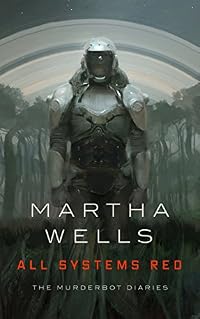
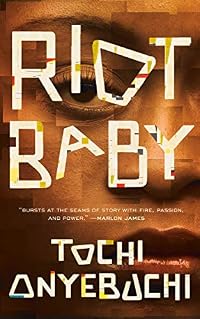
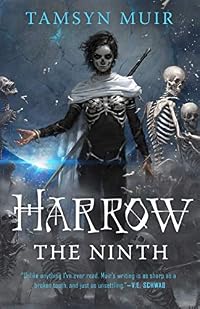
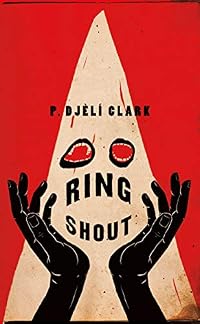

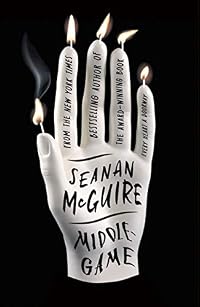
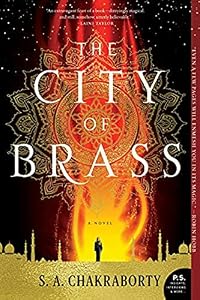
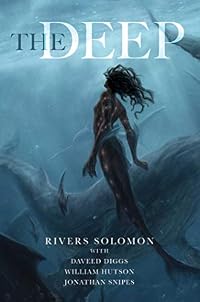
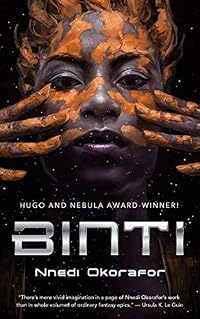


Member Recommendations
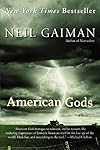
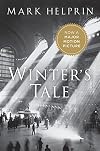
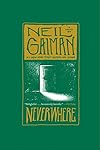
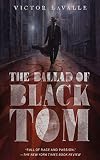
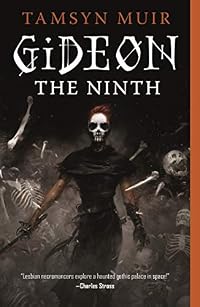
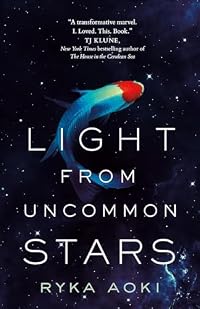
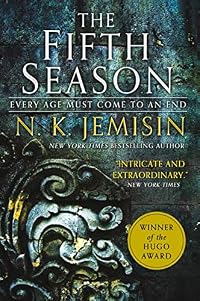
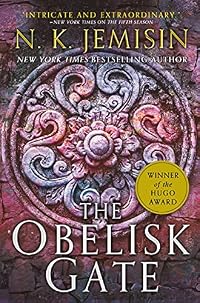
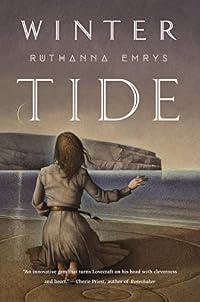
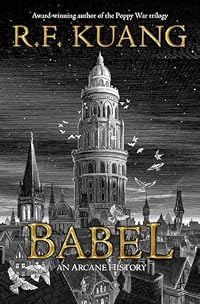
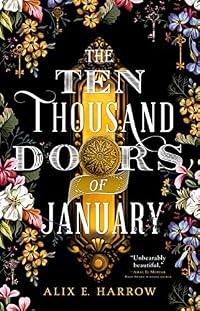
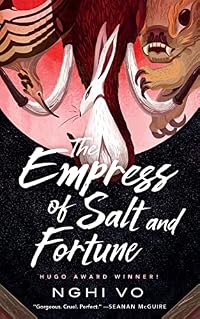
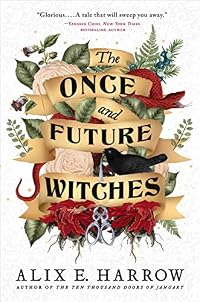
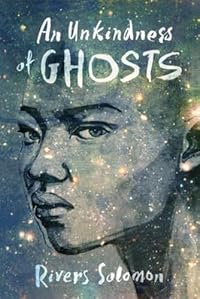
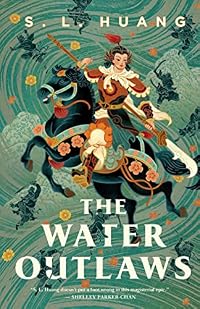
Sammelsurium Two books in dialogue with and critical of Lovecraft's depiction of New York.
Member Reviews
I totally get the buzz about Jemisin now. This is one of the most complex and interesting fantasies, especially contemporary fantasies, I’ve read in a good while, right up there with Middlegame. It’s fun and layered and hard-hitting and beautiful, and I don’t know how much hype this is getting yet, but it deserves so much. So. So. Much.
So on the surface, this is a really cool modern fantasy, with an awesome magic system and some great characters and a lot of diversity. There are some really great action scenes, a lot of quippy dialogue, strong twists and turns, the whole bit. You see New York at its best and worst, and it’s truly a love letter to the city. I was caught up right away and even though I knew what the ending had to show more be, I seriously had no idea how Jemisin and her characters were going to achieve it right until it happened.
Even this side of the novel is way more complex than it looks, though, because of all the ways the protagonists embody and interact with New York, and the many, many facets of the city that we see over the course of the story. Everything has meaning, many things have multiple meanings, everything has been thought through, and I’m saying that as someone who’s only familiar with New York through media. I’m probably missing so, so much.
On a deeper level, this is an incredibly topical book about racism, bigotry, and gentrification, and it’s not pulling its punches either. The protagonists are largely minorities who deal with bigotry every day. The antagonists would very much like a clean, orderly, safe, white city, and don’t care who knows it. Gentrification and Lovecraftian ideas play important roles in the story, and if there’s something awful or systemic that white people do to minorities, it probably gets at least name-dropped. The conflict in the book is as much about the survival of diversity as it is about the city itself.
My biggest complaint is minor, that a character we’re introduced to near the start of the book doesn’t come back despite being very cool. My other bit of grump is the fate of one of the characters, like I get why it happens like it does from a narrative and allegorical standpoint, but also I really, really wanted them to have better. I’m still conflicted about what point Jemisin was making with the end of that subplot.
And that’s about as far as I get digging for negatives because this book. Is. Amazing. I don’t know how Jemisin pulled this off. It shouldn’t work. It’s terrifying. It’s angry. It’s uncomfortable. It’s fantastic. It’s necessary and you should read it.
9.5/10
Contains: Racism, homophobia, and misogyny directed at the protagonists, including but not limited to slurs, some incredibly offensive artwork, and a woman living with abuse. White people, you will get called out and feel uncomfortable. show less
So on the surface, this is a really cool modern fantasy, with an awesome magic system and some great characters and a lot of diversity. There are some really great action scenes, a lot of quippy dialogue, strong twists and turns, the whole bit. You see New York at its best and worst, and it’s truly a love letter to the city. I was caught up right away and even though I knew what the ending had to show more be, I seriously had no idea how Jemisin and her characters were going to achieve it right until it happened.
Even this side of the novel is way more complex than it looks, though, because of all the ways the protagonists embody and interact with New York, and the many, many facets of the city that we see over the course of the story. Everything has meaning, many things have multiple meanings, everything has been thought through, and I’m saying that as someone who’s only familiar with New York through media. I’m probably missing so, so much.
On a deeper level, this is an incredibly topical book about racism, bigotry, and gentrification, and it’s not pulling its punches either. The protagonists are largely minorities who deal with bigotry every day. The antagonists would very much like a clean, orderly, safe, white city, and don’t care who knows it. Gentrification and Lovecraftian ideas play important roles in the story, and if there’s something awful or systemic that white people do to minorities, it probably gets at least name-dropped. The conflict in the book is as much about the survival of diversity as it is about the city itself.
My biggest complaint is minor, that a character we’re introduced to near the start of the book doesn’t come back despite being very cool. My other bit of grump is the fate of one of the characters, like I get why it happens like it does from a narrative and allegorical standpoint, but also I really, really wanted them to have better. I’m still conflicted about what point Jemisin was making with the end of that subplot.
And that’s about as far as I get digging for negatives because this book. Is. Amazing. I don’t know how Jemisin pulled this off. It shouldn’t work. It’s terrifying. It’s angry. It’s uncomfortable. It’s fantastic. It’s necessary and you should read it.
9.5/10
Contains: Racism, homophobia, and misogyny directed at the protagonists, including but not limited to slurs, some incredibly offensive artwork, and a woman living with abuse. White people, you will get called out and feel uncomfortable. show less
The harbingers of the Enemy will hide among the city's parasites. Beware of them. [9]
Jemisin by turns delights and disappoints in this fabulist imagining of living cities as avatars, beings awakening to a reality hidden from us even while living alongside us, and battling a threat uncertain in origin and intent. Readers are thrown into this parallel world with scant introduction, observing as a boy learns there is much more going on than living on the streets has prepared him to understand. When that boy's world turns inside out, events come thick and fast, and the boy responds far more competently than he should be capable of doing ... only for the story to shift abruptly to another set of characters not yet aware of what just show more happened.
My chief pleasure in reading The City We Became was in figuring out what was going on, separate from the immediate events and interactions between characters, that hidden reality behind the scenes. These hints and glimpses are the delights Jemisin provides, and they are myriad and plentiful, and spool out in a believable way. The disappointment is, from a certain vantage, hardly worth mentioning: the depiction of the city's avatars as almost DC Comics or Marvel-style superheroes, who battle their unseen foe in manner reminiscent of Superman or Godzilla, yet almost shadowboxing given their foes never fully manifest. Keeping the enemy inchoate, rather than having a Super Villain or Villains step from the shadows, is key to keeping the disappointment factor from overtaking the story. This comic pastiche is amusing and done well, but that is not what holds my attention.
The threat these avatars face contributes to a recent sub-genre which subverts tropes of Weird Fiction, effectively using the racism of HPL against itself, and the myopia of early English-language fantasy as a plot device. Jemisin's satire is part homage and part critique, which I find more interesting than simple mimickry.
I've already read the short story from which the duology evolved, and another short published earlier and -- while not explicitly linked by publisher or author to the Great Cities series, so far as I can tell -- even more compelling in its milieu and mythology. The setting is rich enough in suggested themes and potential meaning to ensure I will read the concluding novel, eventually.
//
A collage preceding the Preface depicts in a two-page image the layers evident in Jemisin's story. At first look, it seems a simplified map of NYC's five boroughs, with cute souvenirs (fridge magnet, business card) laid upon that map, and writing upon it as if by a tourist in a scrapbook. Only after finishing the novel can a reader grasp the full significance of what has been labeled, and what not; why the odd designs or hand-made placenames have been added. A visual representation of the hidden world irrupting into our own. show less
Jemisin by turns delights and disappoints in this fabulist imagining of living cities as avatars, beings awakening to a reality hidden from us even while living alongside us, and battling a threat uncertain in origin and intent. Readers are thrown into this parallel world with scant introduction, observing as a boy learns there is much more going on than living on the streets has prepared him to understand. When that boy's world turns inside out, events come thick and fast, and the boy responds far more competently than he should be capable of doing ... only for the story to shift abruptly to another set of characters not yet aware of what just show more happened.
My chief pleasure in reading The City We Became was in figuring out what was going on, separate from the immediate events and interactions between characters, that hidden reality behind the scenes. These hints and glimpses are the delights Jemisin provides, and they are myriad and plentiful, and spool out in a believable way. The disappointment is, from a certain vantage, hardly worth mentioning: the depiction of the city's avatars as almost DC Comics or Marvel-style superheroes, who battle their unseen foe in manner reminiscent of Superman or Godzilla, yet almost shadowboxing given their foes never fully manifest. Keeping the enemy inchoate, rather than having a Super Villain or Villains step from the shadows, is key to keeping the disappointment factor from overtaking the story. This comic pastiche is amusing and done well, but that is not what holds my attention.
The threat these avatars face contributes to a recent sub-genre which subverts tropes of Weird Fiction, effectively using the racism of HPL against itself, and the myopia of early English-language fantasy as a plot device. Jemisin's satire is part homage and part critique, which I find more interesting than simple mimickry.
I've already read the short story from which the duology evolved, and another short published earlier and -- while not explicitly linked by publisher or author to the Great Cities series, so far as I can tell -- even more compelling in its milieu and mythology. The setting is rich enough in suggested themes and potential meaning to ensure I will read the concluding novel, eventually.
//
A collage preceding the Preface depicts in a two-page image the layers evident in Jemisin's story. At first look, it seems a simplified map of NYC's five boroughs, with cute souvenirs (fridge magnet, business card) laid upon that map, and writing upon it as if by a tourist in a scrapbook. Only after finishing the novel can a reader grasp the full significance of what has been labeled, and what not; why the odd designs or hand-made placenames have been added. A visual representation of the hidden world irrupting into our own. show less
When a city reaches a certain state of vibrancy and history and culture, it births and becomes alive in a new way. New York is on the cusp of that, but at it's birthing something goes horribly wrong and odd white fronds or tentacles seem to be finding a foothold. Now, that person that is New York is missing, and its boroughs - each a person, an avatar embodying a part of the city - need to come together before the city dies without having a chance to live.
N.K. Jemisin is one of my go-to authors who writes phenomenal, complex fantasy with amazing world building. This book lives up to my expectations while being completely different from everything I've read by her. It's a love letter to New York while being aware of its flaws. It's raw, show more with a lot of swearing (in a fitting way, this is New York after all), and also a very diverse cast that has to fight racism and other societal evils just as much as the infiltrating white thing. It's a nod to Lovecraft while subverting it, too. When is the next book in the trilogy out again? I'm going to be preordering it. show less
N.K. Jemisin is one of my go-to authors who writes phenomenal, complex fantasy with amazing world building. This book lives up to my expectations while being completely different from everything I've read by her. It's a love letter to New York while being aware of its flaws. It's raw, show more with a lot of swearing (in a fitting way, this is New York after all), and also a very diverse cast that has to fight racism and other societal evils just as much as the infiltrating white thing. It's a nod to Lovecraft while subverting it, too. When is the next book in the trilogy out again? I'm going to be preordering it. show less
The city of New York is being born, but something has gone awry, and now the avatars of the five boroughs - Manhattan, Brooklyn, Queens, the Bronx, and Staten Island - must find each other and the primary avatar before the Woman in White and her terrifying tentacles take over their city and doom it entirely. Each character is carefully built and developed and entirely convincing, from new arrival Manny (Manhattan) to former DJ "MC Free" turned mother and council member (Brooklyn) to an Indian grad student (Padmini/Queens) to an older Lenape woman who runs an arts center (the Bronx), to lonely, xenophobic Aislyn Houlihan (Staten Island).
Gripping, zipping, full of powerful voice(s) and creative world/universe-building; Jemisin at the top show more of her game.
Quotes
What good does it do to be valuable, if nobody values you? (New York, 9)
...should've taken it easy and not been so angry; the world can't hurt you if you just ignore everything that's wrong with it; well, not until it kills you anyway. (14)
The city needs newcomers! He belongs here as much as anyone born and bred to its streets, because anyone who wants to be of New York can be! (Manny, 47)
It is as if every other place he's visited or lived has been a vacation, and only now has he come home. (Manny, 58)
Is the power dependent on context, then? (59)
"What other world celebrates not knowing anything about how life really works?" (the Woman in White to Bronca, re: innocence, 119)
"So, lesson one of New York: what people think about is isn't what we really are." (Brooklyn to Manny, 134)
"Reality isn't binary." (Bronca to Veneza, 164)
"And don't fucking bring your squamous eldritch bullshit here." (Padmini, 179, echoing)
The Enemy has been a thing of immensity and animalistic savagery for tens of thousands of years. It has never been a small rich passive-aggressive white woman. (Bronca, 239)
"Well, I mean, just the sight of something awful and incomprehensible isn't going to send me off frothing at the mouth....I'm from Jersey." (Veneza, 261)
"Yeah, well, you New Yorkers...always say that....But ever notice how none of you ever fucking leave?.....most of you just say here, hating this city, hating everything, and taking it out on everybody." (Veneza, 295)
"Imagining a world creates it, if it isn't already there. That's the great secret of existence: it's supersensitive to thought. Decisions, wishes, lies - that's all you need to create a new universe." (Bronca, 302)
"The [tentacles/feathers] don't control people, not precisely. They just...guide. Encourage preexisting inclinations, and channel the energies from same into more compatible wavelengths." (Woman in White to Aislyn, 331)
She cannot imagine a world where people who mean well can do any real harm. (Aislyn, 345)
...belonging is as quintessential to Staten Island-ness as toughness is to the Bronx and starting over is to Queens and weathering change is to Brooklyn... (409) show less
Gripping, zipping, full of powerful voice(s) and creative world/universe-building; Jemisin at the top show more of her game.
Quotes
What good does it do to be valuable, if nobody values you? (New York, 9)
...should've taken it easy and not been so angry; the world can't hurt you if you just ignore everything that's wrong with it; well, not until it kills you anyway. (14)
The city needs newcomers! He belongs here as much as anyone born and bred to its streets, because anyone who wants to be of New York can be! (Manny, 47)
It is as if every other place he's visited or lived has been a vacation, and only now has he come home. (Manny, 58)
Is the power dependent on context, then? (59)
"What other world celebrates not knowing anything about how life really works?" (the Woman in White to Bronca, re: innocence, 119)
"So, lesson one of New York: what people think about is isn't what we really are." (Brooklyn to Manny, 134)
"Reality isn't binary." (Bronca to Veneza, 164)
"And don't fucking bring your squamous eldritch bullshit here." (Padmini, 179, echoing)
The Enemy has been a thing of immensity and animalistic savagery for tens of thousands of years. It has never been a small rich passive-aggressive white woman. (Bronca, 239)
"Well, I mean, just the sight of something awful and incomprehensible isn't going to send me off frothing at the mouth....I'm from Jersey." (Veneza, 261)
"Yeah, well, you New Yorkers...always say that....But ever notice how none of you ever fucking leave?.....most of you just say here, hating this city, hating everything, and taking it out on everybody." (Veneza, 295)
"Imagining a world creates it, if it isn't already there. That's the great secret of existence: it's supersensitive to thought. Decisions, wishes, lies - that's all you need to create a new universe." (Bronca, 302)
"The [tentacles/feathers] don't control people, not precisely. They just...guide. Encourage preexisting inclinations, and channel the energies from same into more compatible wavelengths." (Woman in White to Aislyn, 331)
She cannot imagine a world where people who mean well can do any real harm. (Aislyn, 345)
...belonging is as quintessential to Staten Island-ness as toughness is to the Bronx and starting over is to Queens and weathering change is to Brooklyn... (409) show less
The City We Became by N. K. Jemisin is as much an ode to New York City as a fantasy novel about a sentient city. You don’t have to be familiar with the city to hear the pride underlining each sentence. The heroes are harsh and bristly but lovable. Moreover, they are perfect representations of the boroughs they embody. Along with being a trippy story about cities as people, The City We Became is a love story to each inhabitant’s quirks and foibles, making New York City what it is.
After a slow start, the story hits its stride thanks to the characters as they strive to stop a mysterious enemy. Half of the novel’s fun is meeting each avatar and understanding how they represent their borough. Brooklyn, with her street past but a show more polished veneer; Manny, with his cutthroat nature and everyman appearance, their secrets reveal themselves to you slowly but not so slowly as to impede the story. The best part is that if you are like me and have never been to NYC, you don’t miss out on the fun of deciphering the character traits. Ms. Jemisin makes some very obvious without straying into stereotypes or caricatures of each borough.
What made The City We Became a stellar book for me was the narrator. Without Robin Miles’ performance, I would not have finished the book. Ms. Miles, more than anything, helped me understand the differences between each borough, which helped me understand the story. She does a stellar job differentiating between the various borough accents and differing nationalities, ages, races, and genders. She is so good that it felt like I was listening to a full-cast audio production. By the end, I became so impressed with her performance that I immediately downloaded the sequel to continue listening to her.
The City We Became is such an odd story, simple to describe, yet it was not easy to understand at first. Ms. Jemisin jumps right into the action, and you only understand what happened after the fact as each avatar comes into their powers. I believe having an intimate knowledge of the city also helps one’s enjoyment of the story. While I understood enough to delight in the little eccentricities Ms. Jemisin adds to each avatar, I know there are more I did not catch simply because I haven’t been there. Still, what I got I loved, and I credit Ms. Miles’ performance for taking Ms. Jemisin’s words and bringing them to life. show less
After a slow start, the story hits its stride thanks to the characters as they strive to stop a mysterious enemy. Half of the novel’s fun is meeting each avatar and understanding how they represent their borough. Brooklyn, with her street past but a show more polished veneer; Manny, with his cutthroat nature and everyman appearance, their secrets reveal themselves to you slowly but not so slowly as to impede the story. The best part is that if you are like me and have never been to NYC, you don’t miss out on the fun of deciphering the character traits. Ms. Jemisin makes some very obvious without straying into stereotypes or caricatures of each borough.
What made The City We Became a stellar book for me was the narrator. Without Robin Miles’ performance, I would not have finished the book. Ms. Miles, more than anything, helped me understand the differences between each borough, which helped me understand the story. She does a stellar job differentiating between the various borough accents and differing nationalities, ages, races, and genders. She is so good that it felt like I was listening to a full-cast audio production. By the end, I became so impressed with her performance that I immediately downloaded the sequel to continue listening to her.
The City We Became is such an odd story, simple to describe, yet it was not easy to understand at first. Ms. Jemisin jumps right into the action, and you only understand what happened after the fact as each avatar comes into their powers. I believe having an intimate knowledge of the city also helps one’s enjoyment of the story. While I understood enough to delight in the little eccentricities Ms. Jemisin adds to each avatar, I know there are more I did not catch simply because I haven’t been there. Still, what I got I loved, and I credit Ms. Miles’ performance for taking Ms. Jemisin’s words and bringing them to life. show less
It may be that the reasons this worked so well for me have to do with my specific circumstances of 1. having read and loved both Jemisin's weightier Broken Earth series and her comic-book writing, 2. having lived in NYC a long time, so the references and inside jokes (both incidental, and ones that are directly relevant to the plot like the attitudes of New Yorkers toward Staten Island and nearby areas of New Jersey) make sense and so does the specific style of hometown pride the book is fueled by, and 3. not being there now, so my nostalgic affection isn't heavily colored by what the city has gone through in the last few years. Anyway, the book takes a great idea that was already well told in the earlier story "The City Born Great," show more changes its context in some pretty big ways that work well to widen the story, adds a hefty dose of superhero-style moment-by-moment action narration and a dialogue style that's on the cartoony side (this will bother some people but I think she pulls it off pretty well), and brings in imagery and themes from H.P. Lovecraft in a way that's very different and more interesting to me than the many other "borrow some Lovecraftian monsters/terminology for your horror antagonist" things I've read.
Jemisin is very up-front about the political ideas in this, and I like how her use of Lovecraft doesn't begin and end with either "he was a bigoted asshole" or "cosmic horror is a cool idea," but manages to integrate both his imagery/vibes and his personal issues deeply into the story and the world-building: this is a world where the kinds of things he liked to write about are real and significant, but where he himself is also part of the problem, and the idea of how nihilistic dread (humanity is irrelevant/doomed, only huge cosmic forces matter) and bigotry (differences between humans are super important and scary) can coexist within the same person is directly relevant to what the evil forces are doing. The conflict between humanistic fantasy ideas and the anti-human aspect of cosmic horror is illustrated as being less about what kind of universe this ultimately is, and more about psychological and political choices that people or entities make. There's also a revelation near the end about how this universe works that I think is a very sneaky and incisive choice, as it's designed to poke at a fundamental unease that's impossible for any American reader with a lefty worldview to fully avoid: that every one of us is sort of the fruit of a poison tree by being born into a society whose origins involved so much destruction and injustice, so where do we go from there.
It's also a plain fun story about getting magic powers and fighting monsters and giving alt-right douchebags their just deserts. show less
Jemisin is very up-front about the political ideas in this, and I like how her use of Lovecraft doesn't begin and end with either "he was a bigoted asshole" or "cosmic horror is a cool idea," but manages to integrate both his imagery/vibes and his personal issues deeply into the story and the world-building: this is a world where the kinds of things he liked to write about are real and significant, but where he himself is also part of the problem, and the idea of how nihilistic dread (humanity is irrelevant/doomed, only huge cosmic forces matter) and bigotry (differences between humans are super important and scary) can coexist within the same person is directly relevant to what the evil forces are doing. The conflict between humanistic fantasy ideas and the anti-human aspect of cosmic horror is illustrated as being less about what kind of universe this ultimately is, and more about psychological and political choices that people or entities make. There's also a revelation near the end about how this universe works that I think is a very sneaky and incisive choice, as it's designed to poke at a fundamental unease that's impossible for any American reader with a lefty worldview to fully avoid: that every one of us is sort of the fruit of a poison tree by being born into a society whose origins involved so much destruction and injustice, so where do we go from there.
It's also a plain fun story about getting magic powers and fighting monsters and giving alt-right douchebags their just deserts. show less
When I started reading this book I had a few moments of sideways déja vu. Jemison’s story begins as the unexpecting Manny becomes an embodied avatar of New York (followed shortly thereafter by manifestations of the other boroughs), and I was getting serious flashbacks to the beginning of Kate Griffin’s Matthew Swift series, wherein Matthew becomes a host to the Electric Blue Angels and then takes on the title of Midnight Mayor of London (with all its power and responsibilities). There are definitely themes that run throughout both books (treading similar conversations about a city’s power, its magical citizens, and having unexpected power and responsibility thrust upon the protagonists in defense of said City), but like the show more differences between the cities of New York and London, Jemisin’s book stands apart as its own citified entity. I absolutely loved Griffin’s take on manifesting magical London (as much as I love the city itself), so Jemison’s version of magical urbanity was like visiting and falling in love with the magic of a new and equally interesting city. This is only the first book in a planned trilogy, and it’s clear that the Cthulu-inspired antagonist isn’t nearly done yet, so I am very much looking forward to seeing where this story goes! show less
Members
- Recently Added By
Published Reviews
The City We Became is an intensely political work of speculative fiction charting two distinct storylines, with both layers of the novel's narrative producing unexpected insights and parallels as they are superimposed atop one another. By blending concepts as diverse as the true nature of social constructs, what it takes for fictional stories to become “real,” and some of the more show more bewildering implications of the many-worlds interpretation of quantum physics, Jemisin manages to explore hidden dimensions of social existence and racism. In so doing, she dramatizes the cues and subtexts that underlie even the most outwardly mundane of everyday interactions into an intensely compelling science fiction story.... Initially straining to maintain and introduce its large cast of characters, The City We Became eventually becomes an allegory for the ways in which all types of bigotry quite literally “infect” the societies and subcultures they target. The novel is in part an over-the-top adventure story whose characters engage in literal rap battles with two-dimensional spider-people, fight off a giant underground worm composed of discarded subway cars, and momentarily drive off parasitic alien sea anemones by throwing money at the problem until it goes away. However, behind all of that, this is also a novel about the horrifyingly absurd nature of bigotry, and the extent to which people are forced to accept as facts things that should not be true, but somehow are. show less
added by Lemeritus
IN 2018, N. K. Jemisin made genre history as the first author to win three consecutive Hugo Awards... Jemisin’s well-earned triumph was particularly notable given the fact that 2013 had seen the emergence of right-wing groups of predominantly white men, known as the “Sad Puppies” and “Rabid Puppies,” who until 2017 attempted to flood the Hugo nomination system with blocs of authors show more and texts they deemed appropriate. In light of the failure of this extended reactionary tantrum, Jemisin didn’t just win — her victories announced that science fiction and fantasy were, as she put it in her acceptance speech, “the aspirational drive of the zeitgeist” .... it’s difficult, now, to avoid the temptation to retroactively read into the novel the historic events that are transforming New York, along with so many other United States and global cities. The language of infestation, infection, and contagion seeps into Jemisin’s description of the Enemy’s invasion of New York, illuminating with terrifying insight the physical ecosystems by which a pathogen spreads through the city .... The City We Became estranges us from the everyday operations of power so that we can, with new clarity, see how it works and how it can be unraveled and remade; like her Hugo acceptance speech, the novel declares that the stakes of social power, the significance of asserting that the world belongs to the marginalized, is nothing less than epic. show less
added by Lemeritus
The basic premise, which was previewed in Jemisin’s 2016 story “The City Born Great”, is this: each great city reaches a point in its history when it literally comes alive and is embodied in an avatar who might otherwise seem an ordinary, undistinguished citizen. When this happens, ancient eldritch forces try to use this moment of instability to invade and gain a foothold in our show more world.... As a standalone narrative, The City We Became offers only a degree of closure in a rather abrupt ending, as Jemisin sets the stage for the epic struggles we can expect in subsequent volumes. As the inaugural volume of what promises to be a wildly original fantasy trilogy, quite unlike anything else Jemisin has written, it completely takes command of the very notion of urban fantasy, and it leaves us exactly where we need to be – wanting the next volume now. show less
added by Lemeritus
Lists

2021 Hugo Eligible Novels
37 works; 14 members

Best Urban Fantasy
632 works; 78 members

Books Read in 2023
5,547 works; 145 members

Top Five Books of 2022
736 works; 272 members

Female Author
1,235 works; 66 members

Can't Wait Books of 2020
12 works; 1 member

Speculative Fiction to Read
706 works; 32 members

Dear Nerdfighteria Maybe-Fiction Recommendations
24 works; 1 member

Spotted on ABC Book Club
19 works; 1 member

To read
9 works; 1 member

Books Read in 2020
4,379 works; 124 members

Books Read in 2022
5,164 works; 113 members

Books Read in 2021
5,361 works; 113 members

Black Authors
381 works; 28 members

Physical TBR List
68 works; 1 member

BBC World Book Club
265 works; 5 members

Fiction With Familiar Settings
279 works; 92 members

The Five Books That Represent Us
390 works; 147 members
Author Information

68+ Works 45,226 Members
N. K. Jemisin is an American author and blogger, born in 1972, and based in Brooklyn, New York. She earned a B.S. in Psychology from Tulane University and her Masters of Education from the University of Maryland College Park. Her work includes numerous short stories, a novella, a triptych, The Inheritance trilogy, Dreamblood series, and The Broken show more Earth trilogy. The Fifth Season is a book in The Inheritance trilogy for which she won the 2016 Hugo Award for Best Novel. Her other awards include Romantic Times Reviewers' Choice, Fantasy (for The Shadowed Sun); Sense of Gender Award, 2011 (for The Hundred Thousand Kingdoms, Japanese version); Romantic Times Reviewers' Choice, Fantasy (for The Broken Kingdoms); and the Locus Award, 2010 (First Novel, for The Hundred Thousand Kingdoms). She won the 2017 Nebula Award and the 2018 Hugo Award, Best Novel category for The Stone Sky. (Bowker Author Biography) show less

N. K. Jemisin is a LibraryThing Author, an author who lists their personal library on LibraryThing.
Some Editions
Awards and Honors
Series

Common Knowledge
- Canonical title
- The City We Became
- Original title
- The City We Became
- Original publication date
- 2020-03
- People/Characters
- Paulo; Brooklyn Thomason; Manhattan; Madison; Bel Nguyen; Aislyn Houlihan (show all 17); The Woman in White; Bronca; Yijing; Veneza; Padmini Prakash; Jojo; Kendra Houlihan; Conall; Matthew Houlihan; Hong; Neek
- Important places
- New York, New York, USA
- Epigraph
- "One belongs to New York instantly, one belongs to it as much in five minutes as in five years."
--Thomas Wolfe - First words
- I sing the city.
Fucking city. I stand on the rooftop of a building I don't live in and spread my arms and tighten my middle and yell nonsense ululations at the construction site that blocks my view. I'm really singin... (show all)g to the cityscape beyond. The city'll figure it out. - Quotations
- All he uses his mouth for is smoking, drinking coffee, and talking. Shame; it’s a nice mouth otherwise. -Page 2
It isn’t that I’m not listening. I just don’t give a shit. -Page 3
The Woman is well dressed and clean, but there is a high, manic gleam in her gaze, and her bright, cheerful voice sounds false. No one is ever that happy. She’s clearly Not From Around Here. Maybe she’s an immigrant, tooâ... (show all)€”legal, of course. Maybe she’s a Canadian who has been driven mad by the cold and socialized medicine. -Page 101
Jess watches Yijing go, then shakes her head and cocks an eyebrow skeptically at Bronca’s posture. “Tell me you aren’t sulking. You’re like sixty.” “Sulking is petulant, pointless anger. Mine is righteous.” And ... (show all)she’s actually nearly seventy, but nobody needs to be reminded of that. -Page 117
Innocence is nothing but a ceremony, after all. So strange that you people venerate it the way you do. What other world celebrates not knowing anything about how life really works?” A soft laugh-sigh. “How your species ma... (show all)naged to get this far, I will never know.” -Page 119
She grew up missing a few elders, too—and contemporaries, for that matter. It’s not paranoia when people are actually setting fires and shooting up nightclubs. -Page 152
“White dude whining as a growth industry,” Jess says grimly. -Page 154
Now, instead of just a COINTELPRO operation, she’s got to worry about that and some dude stalking her relatives from his mother’s basement, and kids bombarding her with death threats because it makes them feel like part o... (show all)f the (terrorist) gang, and a troll farm in Russia using the Center as the next cause célèbre to whip up Nazis. All the people who really are a threat to the country; somehow they’ve been convinced to do its dirty work, more or less for free. She would admire it if it weren’t so damn horrific. -Page 155
Nothing but housing projects in the area, and the city’s done everything it can to isolate the people who live in them—fences, highways that cut the neighborhood in half, a no-man’s-land of industrial blocks hemming the... (show all) residential area in. There’s one sad-looking grocery store in the area that Bronca knows of, but they pass ten payday lenders and dollar stores while she drives, dotting every half-busy thoroughfare like fast-proliferating tumors. -Page 159
“It was… a job, I think. I did it for power, and maybe money.” But somewhere along the way, he’d chosen to stop. He clings to this proof of his humanity as if it is the only thing that matters. Because it is. “Well,... (show all) that’s pretty damn fitting, for Manhattan.” He can feel the weight of her gaze. -Page 200
“People who say change is impossible are usually pretty happy with things just as they are.” -Page 233
But these people are always gonna tell themselves that a little fascism is okay as long as they can still get unlimited drinks with brunch!” -Page 241
The Artistes are clearly the victims of a conspiracy by uppity women “of color” and questionable sexuality to promote their own indisputably inferior art over the work of skilled, deserving artists who just happen to be c... (show all)ishet white men. In conclusion, the Artistes instruct viewers to “let the Bronx Art Center know what you think”—after which they display the names of the board from the Center’s own newsletter masthead. -Page 245
The Woman in White has the kind of angular, high-boned face that Bronca has only ever seen before on high-fashion models, and other women deemed beautiful for their ability to act as living props. -Page 253
“You eat each other’s cuisines and learn new techniques, new spice combinations, trade for new ingredients; you grow stronger. You wear each other’s fashions and learn new patterns to apply to your lives, and because of... (show all) it you grow stronger. Even just one new language infects you with a radically different way of thinking! Why, in just a few thousand years you’ve gone from being unable to count to understanding the quantum universe—and you’d have made it there faster if you didn’t keep destroying each other’s cultures and having to start over from scratch. It’s just too much.” -Page 342
“Well, they’re disrupting us pretty fucking well,” Bronca mutters, turning onto Second Avenue. “Bet NYPD isn’t even going to stop them. Or else they’ll arrest any counter-protestors or people these guys pull out o... (show all)f their cars for a beatdown.” “But a march of angry white men, though,” Queens says worriedly. “That’s never good.” -Page 380
Only the bodegas stand open, sentinels of The City That Never Sleeps And Occasionally Needs Milk At Two A.M. ... Then comes the proof that it’s all over for the neighborhood’s original character: they pass a Starbucks on ... (show all)the corner. -Page 381
She looks like an evil midcareer Joni Mitchell. -Page 388 - Last words
- (Click to show. Warning: May contain spoilers.)"No place in the world that can compare," I say, and we smile with the magic of this truth.
- Blurbers
- Gaiman, Neil
- Original language
- English
- Canonical DDC/MDS
- 813.6
- Canonical LCC
- PS3610.E46
Classifications
Statistics
- Members
- 4,504
- Popularity
- 3,256
- Reviews
- 134
- Rating
- (3.92)
- Languages
- 10 — English, Finnish, French, German, Italian, Polish, Romanian, Spanish, Turkish, Portuguese (Portugal)
- Media
- Paper, Audiobook, Ebook
- ISBNs
- 35
- ASINs
- 11