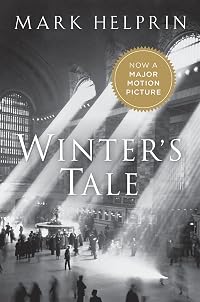
Winter's Tale
by Mark Helprin
On This Page
Description
A bestseller that takes readers on a journey to New York of the Belle Epoque, where Peter Lake attempts to rob a Manhattan mansion only to find the daughter of the house at home. Thus begins the love between the middle-aged Irishman and Beverly Penn, a young girl who is dying. “This novel...is a gifted writer’s love affair with the language” (Newsday).Tags
Recommendations






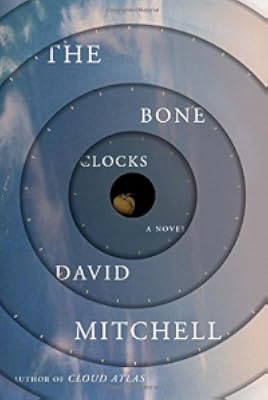
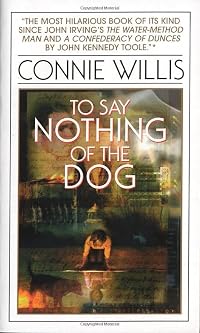
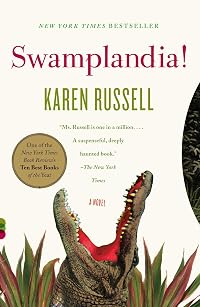
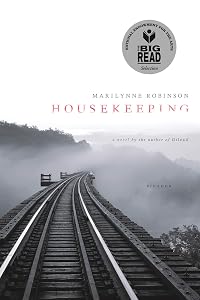
Member Recommendations

Manthepark Another imaginative historical novel of New York, a very funny story of life on Manhattan with the first Dutch settlers.

Member Reviews
Wow, this is just one big messy pile of "um, wha?!" Magical realism, as you may remember, is super not my jam, mostly because I am a firm believer in the notionthat if you introduce magic or any other out-of-the-ordinary elements into an otherwise-normal setting, you're gonna need to explain and justify it. But this novel goes so far beyond breaking that rule that it pushes over into utter nonsense. So we have a steampunk-ish, old-timey, yet sort-of-quasi-futuristic NYC, a street rat orphan who's wise beyond his means, a magical (and in no way explained) flying horse, a street gang that's meant, I think, to be menacing but comes off 100% comical and which is, I think, supposed to be the main Big Bad, but disappears for most of the book show more only to POOF back into the action at the end, again, with no explanation, and a super-rich and super-brilliant (or maybe just totally bananas) young woman who's dying of TB. Oh, and a cloud bank that's somehow deadly and surrounds NYC but also moves but also people come and go from the city unharmed with - you guessed it - no explanation. But wait - there's more! Helprin apparently gets bored of these main characters, so he abandons them for a new set, but their actions and circumstances aren't any less lacking in logic. Just...wooof. And it doesn't read as if all these logistical problems are the point; instead it reads like a sloppily-written fevre dream, or a toddler telling you about the dream they had last night and getting sidetracked many, MANY times along the way. Yeah, it's that agonizing and exhausting. show less
There are so many things I want to say about this book, that I don't know where to begin. First off, I loved it. I don't believe I've ever read a book that touched me on so many different levels. I can't really say what it was "about." It begins as the story of Peter Lake, who falls in love with the daughter of the man whose home he is attempting to rob. Then it travels over dozens of other lives, in and out of time, turning into a fantasy story that might not really be fantasy. It's the story of love lasting through time, but different kinds of love. And it is without question the most beautifully written story I have ever read. The language, the descriptions, the conversations--absolutely masterful. I went to a book reading by Mark show more Helprin once, and found him to be a very colorless and dull conversationalist. He must save it all up for his writing. To top it all off, I listened to the audiobook, narrated by Oliver Wyman, who did a fabulous job with the reading. Every character (and there were a ton of characters) had a distinctive, recognizable voice that doubled my enjoyment. It kept me enraptured for 22 CDs over 3 months. When I finished, I didn't want to read anything else. show less
A fairy tale, steam-punk masterpiece set in snowy New York City, in a Belle Epoque that never was. There's a charming thief, a story within a story and a horse that flies. It's a great big hulking huge book and it took forever to read, but only because the writing was so exquisite that I had to stop every other paragraph and gasp.
Did I mention that I liked this book?
ETA: Beware the audiobook, the narrator is not up to it.
Did I mention that I liked this book?
ETA: Beware the audiobook, the narrator is not up to it.
This is neither urban fantasy nor magical realism, occupying its own niche between the two. It is dreamy realism, an alternate version of reality overlapping our own where most things are recognizable but with fantastic elements scattered among them. A wall of clouds plays with time, pornography burns through the floor, police applaud in their sleep, an indefatigable horse can fly... Some people in the story are shocked and don't know what to make of it, while others hardly blink, and therein lies the clue and the difference. Perhaps the author's greatest invention lies outside of the city: the Lake of the Coheeries, an upstate backwoods Shangri-la. Another layer of unreality is added since its 1983 publication, in presenting a show more millennium without the Internet, cellphones etc. and events that never happened.
New York provides the perfect setting for the majority of this novel. It is one of a handful of cities that pervade the western cultural conscience even of those who will never lay eyes on it. Many of its citizens no doubt love and appreciate their city, but for distant admirers who aren't exposed to the day-in, day-out experience of living there that can take the shine off of anything, New York projects an aura of myth and legend like a distant land of Oz.
While it is not a difficult novel to read, it is also not straightforward. Characters we're introduced to in part one are set aside for the entirety of part two as we move significantly forward in time. It didn't bother me, personally. I can see how the passage of time is mirrored in the interval we must wait before Peter Lake returns (multiple clues are dropped to assure us that he eventually will.) We're introduced to several other engaging characters who can be made three-dimensional, rather than rushing their introduction all at once. And we can share Peter's disorientation upon his rejoining the story, now an outsider among the characters we've been following in his absence.
The novel's ending becomes clearer upon noting the underlying unreality to our reality, and that this novel is populated by characters with the ability to see it. Pearly Soames is fascinated by colour, the Baymen predict the future, Beverly's father opines that she has seen what he cannot, etc. - and then there is Peter Lake, in a class of his own. It is due to these characters that lines between worlds have been blurred in the telling, thus the 'magical realism' elements. In that underlying reality, justice is ultimately served and all things must be balanced. Someone who understands that balance like Peter Lake (he is a master mechanic in every sense) knows how he must proceed if he is to maintain it. He knows the sacrifice he must make in order to obtain his desired victories.
The descriptive passages in this novel must be mentioned. Mark Helprin is a writer's writer, not necessarily for the words he uses but for the sound they make. I expect he read every page aloud to himself and then fine-tuned it like a piano. Of course all that would be lost when the story is translated to film. It's a shame the 2014 movie is apparently so terrible that it couldn't renew much interest in this intriguing, mystical novel. show less
New York provides the perfect setting for the majority of this novel. It is one of a handful of cities that pervade the western cultural conscience even of those who will never lay eyes on it. Many of its citizens no doubt love and appreciate their city, but for distant admirers who aren't exposed to the day-in, day-out experience of living there that can take the shine off of anything, New York projects an aura of myth and legend like a distant land of Oz.
While it is not a difficult novel to read, it is also not straightforward. Characters we're introduced to in part one are set aside for the entirety of part two as we move significantly forward in time. It didn't bother me, personally. I can see how the passage of time is mirrored in the interval we must wait before Peter Lake returns (multiple clues are dropped to assure us that he eventually will.) We're introduced to several other engaging characters who can be made three-dimensional, rather than rushing their introduction all at once. And we can share Peter's disorientation upon his rejoining the story, now an outsider among the characters we've been following in his absence.
The novel's ending becomes clearer upon noting the underlying unreality to our reality, and that this novel is populated by characters with the ability to see it. Pearly Soames is fascinated by colour, the Baymen predict the future, Beverly's father opines that she has seen what he cannot, etc. - and then there is Peter Lake, in a class of his own. It is due to these characters that lines between worlds have been blurred in the telling, thus the 'magical realism' elements. In that underlying reality, justice is ultimately served and all things must be balanced. Someone who understands that balance like Peter Lake (he is a master mechanic in every sense) knows how he must proceed if he is to maintain it. He knows the sacrifice he must make in order to obtain his desired victories.
The descriptive passages in this novel must be mentioned. Mark Helprin is a writer's writer, not necessarily for the words he uses but for the sound they make. I expect he read every page aloud to himself and then fine-tuned it like a piano. Of course all that would be lost when the story is translated to film. It's a shame the 2014 movie is apparently so terrible that it couldn't renew much interest in this intriguing, mystical novel. show less
I've not been so disappointed in a novel in a long, long time. I really wanted to love this novel, but honestly it was a chore to read. The author seems to be completely disconnected from his reader and is off in his own world. But I think a book needs a compelling plot and some sort of payoff after such a long and labored buildup -- and to me, this book had neither.
Winter's Tale held the promise of being a book that I would have absolutely loved: a fantastical novel set in a New York City of the Belle Epoque -but in some alternate universe- with perpetual winters, with a large cast of characters, and a love story at its core. I really looked forward to reading it, and was actually excited at the prospect of immersing myself into the show more world that Mark Helprin created, and losing hours for the story that he told, reading deep into the night. This last year, the novel was finally adapted into a movie - but I decided that I could wait no longer and dove right in to the novel, instead. I am sad to say that I was wrong - and that with each passing page initial enthusiasm that I had for the book waned, and as I was nearing the end it disappeared altogether
Instead, Winter's Tale is a mess - it's a long book, and throughout all that length I could never find a real story that it wanted to tell. Perhaps the largest offense of the novel is the love story, which makes absolutely no sense. Early in the novel Peter Lake breaks into an luxurious apartment, where for no reason a girl falls in love with him at first sight. Literally. Beverly Penn is her name, and she is perfect - hopelessly beautiful, and brilliant. People are changed for the better when they are around her, and even evil villains stop being evil. She's also dying. But from tuberculosis - nothing which would spoil her beauty and perfection too much. What! Ever!
So then Beverly eventually dies 'off-screen', and the book loses what little focus it had. Characters come and go without much impact on whatever events are going on, random people fall in love with other random people, and we're never sure what the novel is actually supposed to be about. There is also an actual flying horse named Athansor, who serves no real purpose other than getting Peter Lake out of completely impossible situations.
Maybe had the entire book been written as a poking satire, laughing at our culture's wish to harness the perceived perfection of times long gone while simultaneously making terrible decisions that will lead even further away from a golden age, it might not have been so tedious. All the word misuse was not fanciful, the ridiculous names not whimsical. It was grating and it irritated because the story was not a simple satire.
It was also supposed to be a love poem to New York City. But instead, we also have a...what? Fallen angel trying to make the rainbow bridge in order to get home? Or maybe the rainbow bridge was to connect other realities with this one. I don't know, it was never explained...! And now that I'm done with the novel, I'm not sure I care. In fact, I never did discover a plot. The human characters came and went without any real impact, either on the story or on me, although the magical horse is characterized probably better than most. Peter Lake does span the whole novel, but he spends the final part in a daze of incomprehension which I shared. The occasional moments of drama all resolved easily and without any great surprises. Everything happens without much point, even within the universe of the book. Why would a super idealistic newspaper run a column entitled 'The Mayor Looks Like an Egg. Period.?' Why is it that the one horrid person in the universe is a complete buffoon? What was the point of the horse other than a deus ex machina? Why did the little girl die in the first place? What is the point of her coming back to life? Why did we hear about Beverly's so called prophecy of the little girl in the last 50 pages of the book? And worst of all, why is there that complete copout of for what happened to Peter Lake, it must be left to the reader's imagination? My imagination's pretty strong, I could have imagined what happened to him about 500 pages before it was actually asked of me. Such a pointless waste of time.
I was irritated by the wholesale dismissal of non-central characters, but it seemed I was expected to believe in the city and care what happened to it. I am reluctant to call it New York because it is obviously not a real place. In fact, we are somewhat confused as to what century it is that Peter Lake "time-travels" to at first.. Was it modern day? Who knows?
The problem is that in this case, and in this novel, fantasy does not mean "anything goes." Dude, fantasy must have a self-consistent internal logic....! You have magic? Okay. Your magic needs rules, boundaries, limitations....! This is the source of tension and suspense. In Helprin's universe, there are no rules. Nothing is constant. Nothing obeys causal logic. Magic occurs capriciously to paint a pretty image or solve plot problems. Since anything can happen at any time, there is zero tension. Without tension, I find no reason to read any more of Helprin's fiction.
To make it worse, Mark Helprin is one of those authors who love hearing their own voices, and relentlessly drags every little description to make it as evocative and poetic as he possibly can, being less and less aware of this self-indulgence as the novel progresses. It seemed more like the constant glut of "lyric passages" were instead used to beat us in the head with Helprin's massive and expansive vocabulary, instead of educating/entertaining us plebeians. (It made me feel like one, anyway.). Also, one of the minor character (Mrs. Gamely) in fact vomited up such a volume of antiquated - and possibly non-existent words, that it seemed she ate thesauruses for breakfast. My iPad's dictionary had no idea what most of them were, and neither did the Internet.
I think this is a book which desperately needed an editor, but somehow never got one. Or worse - this is an actual edited book, and somewhere in the universe still exists the original manuscript of Winter's Tale, three times as long. (*shudders*). Ultimately meaningless, there were waaayyyy too many beautifully descriptive passages, mostly of the wind & snow. Unfortunately, there are SO many of them, and I found my heart beginning to sink whenever another chapter began with another beautifully descriptive passage about the wind & snow. I mean, is it just me, or is Mark Helprin constantly trying to sound profound rather than to make actual sense? I literally had to FORCE myself back to this novel, three times, just in order to finish it. And I LOVE large novels...!!
I also have to say that there's never any real sense of arriving somewhere in this plot, and learning something important and unique. The book never shakes off its internal confusion and decides what it wants to be and where it wants to go, and ultimately fails to leave any mark. I'd rather eat a shitload of snow than read it again. What a missed opportunity.....
Bottom line is that I don't mind reading the occasional crap, but I do mind deadly dull crap. In the end, I felt no attachment to the city, or the characters. and to me it seemed, finally, that the author didn't either. And I am left scratching my head, thinking that somehow, I have missed something.
1-1/2 stars, for making me work for nothing. show less
This may be the strangest, most beautiful and most frustrating book I have read. In terms of language, Helprin is a poet. That's the strength and weakness of the story, because the story is Helprin's vision of New York City, and poetic vision does not always translate well into plot. But no matter. Peter Lake, Beverly Penn, Hardesty Marratta, Jackson Mead, Praeger de Pinto, Harry Penn, Virginia Gamely, Pearly Soames, and a white horse named Athansor all exist in a shining, fluctuating world as mysterious as the white cloud wall that rises around New York as if the city sits in the eye of an enormous, eternal hurricane. At times the willing suspension of disbelief requires some heavy lifting. Yet after 748 pages, I was sad the book was show more over. It's as if Gabriel Garcia Marquez channeled Walt Whitman and E.L. Doctorow. Helprin took a hell of a risk with this book. Ultimately he is myth-making, and in the end his characters want what most of us want: love, purpose, eternity, and a touch of the empyrean. show less
Rarely have I read a book that created such a palpable atmosphere and inner reality, it's also the most difficult book I've ever tried to review. That's pretty much all I can say about this book, which is rather a compliment. Describing the plot is extremely difficult since there is not exactly a plot as such, instead the reader and characters drift along the same timeline towards an inevitable ending. Most of the content revolves around character development and the driving forces that push humans forward on a collision course with their own destination.
The main character Peter Lake, an orphan, is followed through his live as he discovers a snow covered New York, the love of his life and a destiny he can't escape. Characters in this show more novel in my estimation are portrayed as extremely realistic in this otherwise hyper real narrative. Peter Lake is not the perfect protagonist and is, to be fair, not the brightest bulb in the pack. He meets a young fragile girl by the name of Beverly Penn, as he attempts to rob the family's house. From this point on the world becomes a snow covered vista in which antagonists hunt protagonists in search for revenge and where protagonists hunt for answers to questions they can not formulate for themselves. It is as vague as that. Once you get used to this format the story pulls you along.
Winter's Tale is one of the best examples of Magical Realism and perfectly blends surrealism, larger than life events and characters into a compelling narrative. Peter Lake and Beverly Penn are fragile real people who try to survive in a world much bigger than themselves. In many ways this novel can be described as the answer to Ayn Rand's Atlas Shrugged. In Atlas Shrugged the main characters are intitled larger than live super humans who do not love but instead take using cold flawed logic. In Winter's Tale the leading characters try to survive in their own flawed elegant way in a world that is constantly working against them. Unlike Atlas Shrugged, people have children and care for each other in a very human way.
Winter's Tale is not a perfect novel, it is not a paragon of Magical Realism. But it's close and it is an important literary work that should have received much more attention than it has so far received. show less
The main character Peter Lake, an orphan, is followed through his live as he discovers a snow covered New York, the love of his life and a destiny he can't escape. Characters in this show more novel in my estimation are portrayed as extremely realistic in this otherwise hyper real narrative. Peter Lake is not the perfect protagonist and is, to be fair, not the brightest bulb in the pack. He meets a young fragile girl by the name of Beverly Penn, as he attempts to rob the family's house. From this point on the world becomes a snow covered vista in which antagonists hunt protagonists in search for revenge and where protagonists hunt for answers to questions they can not formulate for themselves. It is as vague as that. Once you get used to this format the story pulls you along.
Winter's Tale is one of the best examples of Magical Realism and perfectly blends surrealism, larger than life events and characters into a compelling narrative. Peter Lake and Beverly Penn are fragile real people who try to survive in a world much bigger than themselves. In many ways this novel can be described as the answer to Ayn Rand's Atlas Shrugged. In Atlas Shrugged the main characters are intitled larger than live super humans who do not love but instead take using cold flawed logic. In Winter's Tale the leading characters try to survive in their own flawed elegant way in a world that is constantly working against them. Unlike Atlas Shrugged, people have children and care for each other in a very human way.
Winter's Tale is not a perfect novel, it is not a paragon of Magical Realism. But it's close and it is an important literary work that should have received much more attention than it has so far received. show less
Members
- Recently Added By
Lists

Unread books
1,063 works; 83 members

Magic Realism
371 works; 52 members

20th Century Literature
1,161 works; 55 members

Favourite Books
1,820 works; 316 members

Winter Books
127 works; 16 members

David Pringle's Modern Fantasy: The 100 Best Novels
100 works; 5 members

Books Read in 2014
2,344 works; 86 members
Ten Books That Have Stayed With Me
160 works; 30 members

Historical Fantasy
93 works; 14 members

Favourite Discoveries Through LT
12 works; 2 members

My E-Book Collection - Opinions Welcome
92 works; 10 members

Books You Couldn't Finish
202 works; 32 members

Time Travel Stories
64 works; 6 members

Books mentioned in Vandermeer's Wonderbook
34 works; 2 members

Gen X Library
245 works; 4 members

Books We Discovered On LibraryThing
530 works; 130 members

Bookshelf from Interstellar
62 works; 1 member
Top-Rated Books on LibraryThing
272 works; 118 members
Author Information

21+ Works 13,889 Members
Mark Helprin was born in Manhattan, New York on June 28, 1947. He received degrees from Harvard College and Harvard's Graduate School of Arts and Sciences, and did postgraduate work at the University of Oxford, Princeton University, and Columbia University. He has served in the British Merchant Navy, the Israeli infantry, and the Israeli Air show more Force. He is the author of numerous novels including Refiner's Fire, A Soldier of the Great War, Memoir from Antproof Case, Freddy and Fredericka, and In Sunlight and In Shadow. Winter's Tale was adapted into a movie in 2014. His short story collection, Ellis Island and Other Stories, was nominated for a National Book Award in 1981. His other short story collections include A Dove of the East and Other Stories and The Pacific and Other Stories. He also writes children's books including Swan Lake, A City in Winter, and The Veil of Snows. He has received several awards including the National Jewish Book Award, the Prix de Rome, the Peggy V. Helmerich Distinguished Author Award in 2006, and the Salvatori Prize in the American Founding in 2010. (Bowker Author Biography) show less
Some Editions
Awards and Honors
Awards
Distinctions
Series
Belongs to Publisher Series
Work Relationships
Is contained in
Has the adaptation
Has as a commentary on the text
Common Knowledge
- Canonical title
- Winter's Tale
- Original title
- Winter's Tale
- Original publication date
- 1983
- People/Characters
- Peter Lake; Beverly Penn; Isaac Penn; Pearly Soames; Virginia Gamely; Hardesty Marratta (show all 16); Praeger de Pinto; Jessica Penn; Asbury Gunwillow; Christiana Friebourg; Craig Binky; Jackson Mead; Reverend Mootfowl; Mr. Cecil Wooley (Cecil Mature); Harry Penn; Caradelba
- Important places
- New York, New York, USA; Lake of the Coheeries, New York, USA; San Francisco, California, USA
- Related movies
- Winters Tale (2013 | IMDb)
- Epigraph
- "I have been to another world, and come back. Listen to me."
- Dedication
- FOR MY FATHER
No One Knows the City Better - First words
- A great city is nothing more than a portrait of itself, and yet when all is said and done, its arsenals of scenes and images are part of a deeply moving plan.
- Quotations
- Winter, it was said, was the season in which time was superconductive - the season when a brittle world might shatter in the face of astonishing events, later to reform in a new body as solid and smooth as young transparent i... (show all)ce.
A tranquil city of good laws, fine architecture, and clean streets is like a classroom of obedient dullards, or a field of gelded bulls - whereas a city of anarchy is a city of promise. - Last words
- (Click to show. Warning: May contain spoilers.)At least until there are new lakes in the clouds that open upon living cities as yet unknown, and perhaps forever, that is a question which you must answer within your own heart.
Classifications
- Genres
- Fiction and Literature, Fantasy, General Fiction, Historical Fiction
- DDC/MDS
- 813.54 — Literature & rhetoric American literature in English American fiction in English 1900-1999 1945-1999
- LCC
- PS3558 .E4775 .W5 — Language and Literature American literature American literature Individual authors 1961-
- BISAC
Statistics
- Members
- 5,119
- Popularity
- 2,714
- Reviews
- 149
- Rating
- (3.97)
- Languages
- 13 — Chinese, Dutch, English, Finnish, French, German, Hungarian, Italian, Polish, Portuguese, Spanish, Swedish, Turkish
- Media
- Paper, Audiobook, Ebook
- ISBNs
- 58
- ASINs
- 25