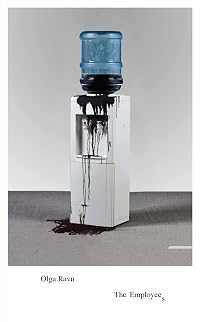
The Employees
by Olga Ravn
On This Page
Description
"Funny and doom-drenched, The Employees chronicles the fate of the Six-Thousand Ship. The human and humanoid crew members complain about their daily tasks in a series of staff reports and memos. When the ship takes on a number of strange objects from the planet New Discovery, the crew becomes strangely and deeply attached to them, even as tensions boil toward mutiny, especially among the humanoids. Olga Ravn's prose is chilling, crackling, exhilarating, and foreboding. The Employees probes show more into what makes us human, while delivering a hilariously stinging critique of life governed by the logic of productivity"-- show lessTags
Recommendations






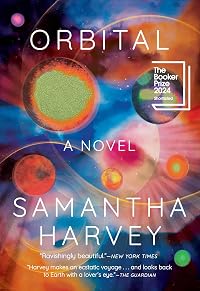
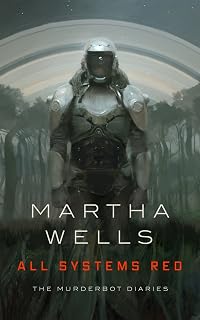
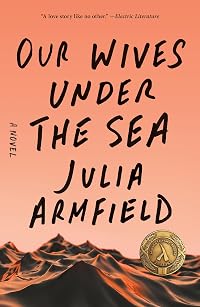

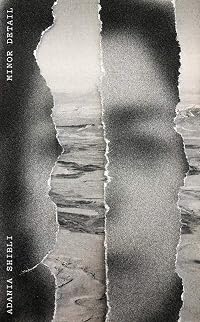
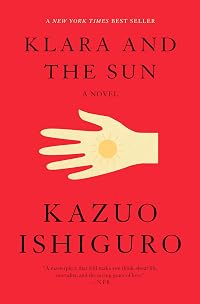
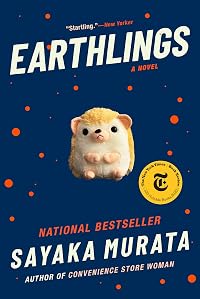

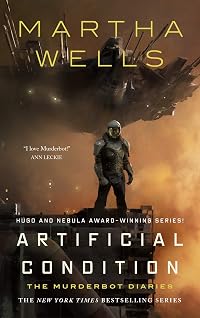


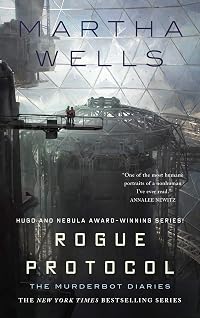
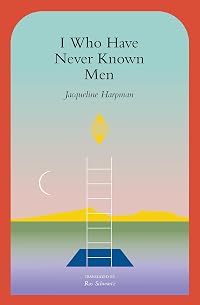
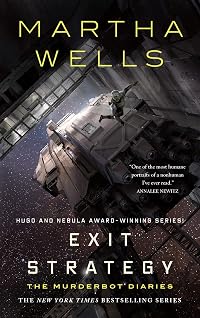

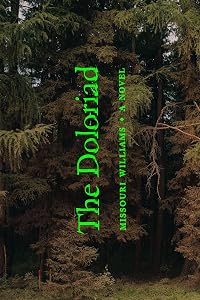



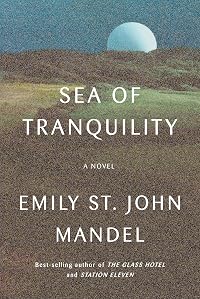






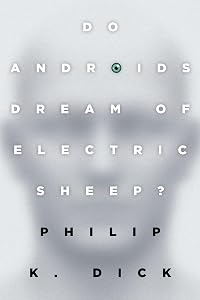
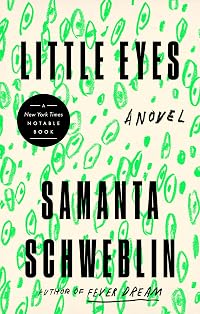
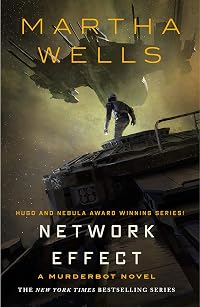
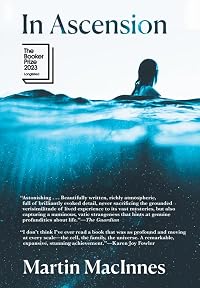


Member Recommendations

Member Reviews
Oh, my God!
From the time that David Anderson (thank you!) recommended The Employees to me, I’ve had a Portal vibe, the part at the end of the game where a player realizes there’s been a massacre and that the Cake Is A Lie. I don’t want to give away too much, but let’s just say that’s an accurate vibe.
This novella consists exclusively of statements taken from the crew of the Six Thousand Ship, both humans and humanoid (think robots, not aliens). In modern life, the only time that happens is in the wake of a catastrophe or a unionization effort. Things aren’t that different in the 22nd century, when this book takes place. Indeed, in the preface to the statement, management writes:
In other words, management cares only about costs to productivity, not to human life. Very 21st century there.
The crew has been taking Objects (capital O) from a planet called New Discovery. Ever since, the crew has been dramatically affected. The novella deals with the nature of humanity but also of “aliveness.” Are the Objects alive? Are the robots alive? What makes someone human? The management doesn’t deal with those issues, of course, but readers certainly will. Highly, highly recommended. show less
From the time that David Anderson (thank you!) recommended The Employees to me, I’ve had a Portal vibe, the part at the end of the game where a player realizes there’s been a massacre and that the Cake Is A Lie. I don’t want to give away too much, but let’s just say that’s an accurate vibe.
This novella consists exclusively of statements taken from the crew of the Six Thousand Ship, both humans and humanoid (think robots, not aliens). In modern life, the only time that happens is in the wake of a catastrophe or a unionization effort. Things aren’t that different in the 22nd century, when this book takes place. Indeed, in the preface to the statement, management writes:
It was our wish by means of theseshow more
unprejudiced recordings to gain knowledge of local workflows and to investigate possible impacts of the objects, as well as the ways those impacts, or perhaps relationships, might give rise to permanent deviations in the individual employee, and moreover to assess to what degree they might be said to precipitate reduction or enhancement of performance, task-related understanding, and the acquisition of new knowledge and skills, thereby illuminating their specific consequences for production. (emphasis added)
In other words, management cares only about costs to productivity, not to human life. Very 21st century there.
The crew has been taking Objects (capital O) from a planet called New Discovery. Ever since, the crew has been dramatically affected. The novella deals with the nature of humanity but also of “aliveness.” Are the Objects alive? Are the robots alive? What makes someone human? The management doesn’t deal with those issues, of course, but readers certainly will. Highly, highly recommended. show less
Sometime in the future, a spaceship is traveling, populated by works both human and humanoid. The humans can remember Earth, have had children and lost loved ones. The humanoid were created by one Dr. Lund and exist to work based on their programming, though some long for more than that. Now, a committee has come out to the ship to interview the employees and figure out their reactions to the objects that have been found and taken on the ship. How are these objects affecting the crew, and does it impact their productivity?
Told in a series of "statements" from each of the crew members, most unnamed, this odd little novella left me feeling unsettled. Because almost none of the narrators identify themselves, you need to look for clues and show more decide if there are repeats of the same person or if each statement is by a different crew member. Who is human and who humanoid, and how is each affected by the objects? Like Jeff Vandermeer's Area X, we're left with an odd assortment of information to sift through and every time you think you might have a grasp on it, the story veers away again from easy answers. The novella itself was inspired by the sculptures of Lea Guldditte Hestelund, who in fact asked Ravn to write a story to go along with a specific installation of artwork. And while the two pieces of art can be in conversation with each other, this story also stands successfully on its own, asking what makes us human and more than just cogs in the machine. show less
Told in a series of "statements" from each of the crew members, most unnamed, this odd little novella left me feeling unsettled. Because almost none of the narrators identify themselves, you need to look for clues and show more decide if there are repeats of the same person or if each statement is by a different crew member. Who is human and who humanoid, and how is each affected by the objects? Like Jeff Vandermeer's Area X, we're left with an odd assortment of information to sift through and every time you think you might have a grasp on it, the story veers away again from easy answers. The novella itself was inspired by the sculptures of Lea Guldditte Hestelund, who in fact asked Ravn to write a story to go along with a specific installation of artwork. And while the two pieces of art can be in conversation with each other, this story also stands successfully on its own, asking what makes us human and more than just cogs in the machine. show less
Back in 2014, Paul Park published the novel All Those Vanished Engines, which comprised three linked novellas. One of these, which shared the book’s title, was originally commissioned to accompany a sound installation by Stephen Vitiello at the Massachusetts Museum of Contemporary Art in 2011. The Employees by Olga Ravn was inspired by the art of Lea Gulditte Hestelund, a Danish visual artist, after Ravn was asked to provide accompanying text for her exhibition, Consumed Future Spewed Up as Present. Knowing this in no way affects reading The Employees, although it does in part explain some parts of a novel which takes pains to obscure its story.
The novel is told in one- or two-page chapters, each of which is the testimony of a member show more of the crew of the Six-Thousand Ship, so called because that’s the number of people aboard it. Just like the Three Ship that went to the Moon, and indeed the One Ship that put the first human being in space. Not all of the six thousand are human, some of them are androids – the novel is vague to their exact status, only that they are human in all ways except actually being considered human. Science fiction is normally quite happy to feature chattel slavery without commentary, so why it bothered to invent a metaphor for it will forever be a mystery.
The opening testimonies describe members of the crew, or “employees”, visiting rooms containing “objects” from Hestelund’s installation. There are also visits outside the ship to a valley, although its unclear if the ship has landed on a planet or is in space. At some point, the non-human humans object to not being treated as humans, and mutiny. This is supposed to comment meaningfully on the human, or indeed non-human, condition.
The problem is, there is nothing new here. And couching everything in terms so vague, despite the manyfold viewpoints, does not render the story profound or deep. I am in general in favour of science fiction written by non-genre writers. Their unfamiliarity with the tropes and conventions of science fiction can result in something interesting to say about common sf concerns – although that “common” often means their treatment is old-fashioned or adds little to the genre conversation.
And so it is here: The Employees, while poetically written, contains no new insights into the human condition, or even human resources. Some nice prose, an interesting structure, and a link to an art installation of a real-life artist are married to a story that tries hard to hide the fact it is thuddingly obvious from start to finish. show less
The novel is told in one- or two-page chapters, each of which is the testimony of a member show more of the crew of the Six-Thousand Ship, so called because that’s the number of people aboard it. Just like the Three Ship that went to the Moon, and indeed the One Ship that put the first human being in space. Not all of the six thousand are human, some of them are androids – the novel is vague to their exact status, only that they are human in all ways except actually being considered human. Science fiction is normally quite happy to feature chattel slavery without commentary, so why it bothered to invent a metaphor for it will forever be a mystery.
The opening testimonies describe members of the crew, or “employees”, visiting rooms containing “objects” from Hestelund’s installation. There are also visits outside the ship to a valley, although its unclear if the ship has landed on a planet or is in space. At some point, the non-human humans object to not being treated as humans, and mutiny. This is supposed to comment meaningfully on the human, or indeed non-human, condition.
The problem is, there is nothing new here. And couching everything in terms so vague, despite the manyfold viewpoints, does not render the story profound or deep. I am in general in favour of science fiction written by non-genre writers. Their unfamiliarity with the tropes and conventions of science fiction can result in something interesting to say about common sf concerns – although that “common” often means their treatment is old-fashioned or adds little to the genre conversation.
And so it is here: The Employees, while poetically written, contains no new insights into the human condition, or even human resources. Some nice prose, an interesting structure, and a link to an art installation of a real-life artist are married to a story that tries hard to hide the fact it is thuddingly obvious from start to finish. show less
First up, I feel the need to admit that I approached this novella with something of a chip on my shoulder, as I was suspicious that such a short work could live up to the hype. I know, one doesn't buy art by the measure, but I was skeptical that this was just another case of a literary writer trying their hand at science fiction, and impressing literary critics, but not living up to the standards of contemporary speculative fiction.
Having said all that, I am actually quite impressed with this novella, which is more of a fable than an actual story; anyone looking for character development is probably not going to be happy with this work. What Ravn does really well though is to write about alienation and anxiety, between the Humans who show more are not coping well with their interstellar exile, the Humanoids who resent their second-class status, and the so-called "Objects" that, having been brought on the "Six Thousand Ship," seem to have an agenda of their own. This all being over-topped by a corporate command authority which is only concerned with individual well-being to the extent that it doesn't undermine "efficiency."
While Ravn has gone out of her way to claim Ursula K. Le Guin as an influence ("The Word for World is Forest" comes to mind), there are a number of authors this book can be seen in conversation with; Stanislaw Lem and Jeff VanderMeer being high on the list. VanderMeer might be particularly relevant, in as much as this work can be seen as tip-toeing up to the edge of cosmic horror. Because "The Employees" can be seen to be in conversation with a considerable number of traditions in speculative fiction, I might also argue that the more such fiction you've read, the more you're probably going to get out of the work. Speaking as a long-time reader of SF and fantasy, it would have been perfectly appropriate for "The Employees" to have been short-listed for the appropriate year of eligibility for the Nebula or Hugo award. show less
Having said all that, I am actually quite impressed with this novella, which is more of a fable than an actual story; anyone looking for character development is probably not going to be happy with this work. What Ravn does really well though is to write about alienation and anxiety, between the Humans who show more are not coping well with their interstellar exile, the Humanoids who resent their second-class status, and the so-called "Objects" that, having been brought on the "Six Thousand Ship," seem to have an agenda of their own. This all being over-topped by a corporate command authority which is only concerned with individual well-being to the extent that it doesn't undermine "efficiency."
While Ravn has gone out of her way to claim Ursula K. Le Guin as an influence ("The Word for World is Forest" comes to mind), there are a number of authors this book can be seen in conversation with; Stanislaw Lem and Jeff VanderMeer being high on the list. VanderMeer might be particularly relevant, in as much as this work can be seen as tip-toeing up to the edge of cosmic horror. Because "The Employees" can be seen to be in conversation with a considerable number of traditions in speculative fiction, I might also argue that the more such fiction you've read, the more you're probably going to get out of the work. Speaking as a long-time reader of SF and fantasy, it would have been perfectly appropriate for "The Employees" to have been short-listed for the appropriate year of eligibility for the Nebula or Hugo award. show less
The Six Thousand Ship is orbiting an earthlike planet. A group of objects from this planet have been brought on board. The crew, which includes humans and humanoids, interacts with these objects (which may be sentient), primarily using the senses of taste, smell, and touch. Readers must sometimes infer which interviewees are human versus humanoid. The objects inspire many different feelings, such as paranoia, desire, sadness, curiosity, pleasure, happiness. The reactions of the crew to these objects have disrupted productivity and a group of investigators is interviewing the titular employees. The text is in the form of a log of answers given by the interviewees.
This is an unusual and creative work inspired by an art exhibit. It drops show more the reader into an unfamiliar environment, which is gradually revealed through the answers to the investigators’ questions. It is rather bizarre (in a good way) and packs a lot of thought-provoking material into just over a hundred pages. I enjoyed it as an exploration of the border between “real” life and “artificial” life. It also examines the relationship between the corporate entity that owns the spaceship and the employees/crew.
It reminds me a bit of the classic SciFi Solaris by Stanislaw Lem. I think it will appeal to many Science Fiction fans, especially those who do not mind the lack of a traditional plot or enjoy piecing together a larger story from fragments.
4.5 show less
This is an unusual and creative work inspired by an art exhibit. It drops show more the reader into an unfamiliar environment, which is gradually revealed through the answers to the investigators’ questions. It is rather bizarre (in a good way) and packs a lot of thought-provoking material into just over a hundred pages. I enjoyed it as an exploration of the border between “real” life and “artificial” life. It also examines the relationship between the corporate entity that owns the spaceship and the employees/crew.
It reminds me a bit of the classic SciFi Solaris by Stanislaw Lem. I think it will appeal to many Science Fiction fans, especially those who do not mind the lack of a traditional plot or enjoy piecing together a larger story from fragments.
4.5 show less
This experimental sci fi novel does not consist of a narrative. Rather, it is excerpts of interviews with both human and humanoid residents/employees of the Six-Thousand Ship in the 22nd century. As the book goes along, the reader slowly learns about the humans and humanoids, about the objects they have collected at New Discovery, about the ship, and about what has occurred.
I really liked this book, and there is an off chance that I will bump it up to 5 stars in the future. But right now, there us too much I still wonder about. Was Earth destroyed? (I don't think so.) Was there a climate catastrophe? (Maybe--but there are humans on the ship that have memories readers will relate to.) Or is it just a ship for exploration/research? (Also show more maybe.) How did people get hired/chosen to work/live on the ship? To me, the meaning of what happened/is happening on the Six-Thousand Ship can't be fully appreciated without understanding how and why the ship and staff are even there.
This is one of those books that made me want MORE. show less
I really liked this book, and there is an off chance that I will bump it up to 5 stars in the future. But right now, there us too much I still wonder about. Was Earth destroyed? (I don't think so.) Was there a climate catastrophe? (Maybe--but there are humans on the ship that have memories readers will relate to.) Or is it just a ship for exploration/research? (Also show more maybe.) How did people get hired/chosen to work/live on the ship? To me, the meaning of what happened/is happening on the Six-Thousand Ship can't be fully appreciated without understanding how and why the ship and staff are even there.
This is one of those books that made me want MORE. show less
(3.5)
This might be the most interesting book I've read all year. What a unique concept! What a fantastic way to execute that concept!
The Six-Thousand Ship is examining objects it's taken from the planet New Discovery. Its crew (made up of humans and humanoids) complains about their day-to-day tasks, and their employee statements, which make up the format and entirety of the book, begin to change the more time they spend around the objects.
So why didn't I give this a higher rating? I'm not even sure. I loved the format, though a note to whoever designed the book: the words are ridiculously tiny! I'm not even sure that I particularly disliked anything, which makes my final opinion of it even more confusing. It might be a matter of show more personal taste; it's a little less definitive then I would've wanted. What exactly was happening by the end? It's mostly left open to interpretation.
But I loved the switch: the way the humans seemed to give up and long for Earth, while the humanoids who initially seemed content to work forever on the ship connected to the objects and wanted to root down in New Discovery and create a permanent home planet. It's an interesting take on the assumption that humans will colonize everything and everywhere.
The critiques on capitalism and productivity were excellent, too. I'll have to keep an eye out for what else the author writes. show less
This might be the most interesting book I've read all year. What a unique concept! What a fantastic way to execute that concept!
The Six-Thousand Ship is examining objects it's taken from the planet New Discovery. Its crew (made up of humans and humanoids) complains about their day-to-day tasks, and their employee statements, which make up the format and entirety of the book, begin to change the more time they spend around the objects.
So why didn't I give this a higher rating? I'm not even sure. I loved the format, though a note to whoever designed the book: the words are ridiculously tiny! I'm not even sure that I particularly disliked anything, which makes my final opinion of it even more confusing. It might be a matter of show more personal taste; it's a little less definitive then I would've wanted. What exactly was happening by the end? It's mostly left open to interpretation.
But I loved the switch: the way the humans
The critiques on capitalism and productivity were excellent, too. I'll have to keep an eye out for what else the author writes. show less
Members
- Recently Added By
Lists

Speculative Fiction from around the World
610 works; 18 members

Open Book 2021
17 works; 2 members

Books Read in 2021
5,361 works; 114 members

National Book Awards 2022 Longlist
50 works; 1 member

Books Read in 2022
5,218 works; 114 members

Top Five Books of 2023
767 works; 317 members

Books Read in 2024
4,712 works; 127 members

Books Read 2024
23 works; 1 member

Book Riot Read Harder 2026
80 works; 1 member
Author Information

8+ Works 1,590 Members
Some Editions
Awards and Honors
Awards
Distinctions
Notable Lists
Series
Belongs to Publisher Series
Llibres Anagrama (104)
Common Knowledge
- Canonical title
- The Employees
- Original title
- De ansatte
- Important places
- Denmark
- Dedication
- With thanks to Lea Guldditte Hestelund for her installations and sculptures, without which this book would not exist
- First words
- The following statements were collected over a period of 18 months, during which time the committee interviewed the employees with a view to gaining insight into how they related to the objects and the rooms in which they wer... (show all)e placed.
- Last words
- (Click to show. Warning: May contain spoilers.)These words are the last you'll hear from us.
- Blurbers
- VanderMeer, Jeff; Porter, Max; Jordan, Justine; Haddon, Mark; Moskovich, Yelena
- Original language
- Danish
- Canonical DDC/MDS
- 839.8138
- Canonical LCC
- PT8177.28.A87
Classifications
- Genres
- Fiction and Literature, Science Fiction
- DDC/MDS
- 839.8138 — Literature & rhetoric German & related literatures Other Germanic literatures Danish and Norwegian literatures Danish Danish fiction 2000–
- LCC
- PT8177.28 .A87 — Language and Literature German, Dutch and Scandinavian literatures Danish literature Individual authors or works 2001-
- BISAC
Statistics
- Members
- 1,173
- Popularity
- 21,391
- Reviews
- 41
- Rating
- (3.64)
- Languages
- 15 — Catalan, Danish, Dutch, English, Finnish, French, German, Greek, Italian, Norwegian, Polish, Portuguese, Spanish, Swedish, Turkish
- Media
- Paper, Audiobook, Ebook
- ISBNs
- 31
- ASINs
- 10