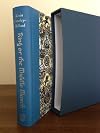
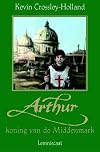
On This Page
Description
Arthur de Caldicot, on his way to becoming a man, witnesses the horrors of the Fourth Crusade in Venice and Zara, as well as the downfall of King Arthur's court, in his seeing stone.Tags
Recommendations
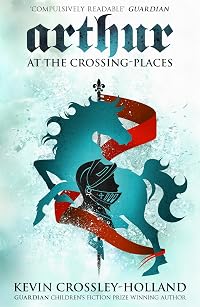
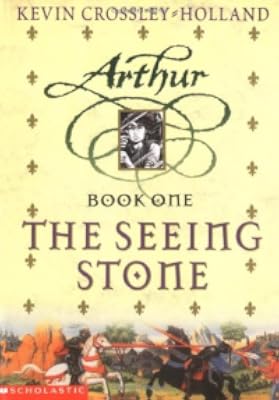
















Member Reviews
A really strong tale set during the beginning of the Fourth Crusade. It is strange to find so many knight who, like Lord Stephen, can barely see or who, like Sir William, are failing in all their faculties. I guess the young knights are supposed to do the athletic portion of the fighting.
The terrible things he has observed and been unable, mostly, to prevent and even the very real fighting he has had to do himself, mostly against his fellow crusaders has changed the protagonist greatly. The previous books were not very easy going, but this book, since it is set in the middle of a war is by far the most difficult and contains the most terrible and barbaric events.
The protagonist's metaphor of himself as the apple containing the knowledge show more of good and evil in the garden of Eden is really striking.
Michael Maloney's reading is excellent. show less
The terrible things he has observed and been unable, mostly, to prevent and even the very real fighting he has had to do himself, mostly against his fellow crusaders has changed the protagonist greatly. The previous books were not very easy going, but this book, since it is set in the middle of a war is by far the most difficult and contains the most terrible and barbaric events.
The protagonist's metaphor of himself as the apple containing the knowledge show more of good and evil in the garden of Eden is really striking.
Michael Maloney's reading is excellent. show less
Sixteen-year-old Arthur leaves the Middle March to go on a crusade. He makes new friends, gets to know his real father better but does not really learn to like him but never makes it to Jerusalem. The obsidian is still part of his life and he continues to follow King Arthur's and his knights' lives in it.
OK but did not engross me.
OK but did not engross me.
The third in a trilogy telling of the life of a 12th Century boy who can "see" something of the life and heroism of King Arthur. The language tends to be a bit simplistic, even for a young person but the story is interesting and does a very nice job of packing information about the period and some moral lessons in with enough adventure to keep a child engaged.
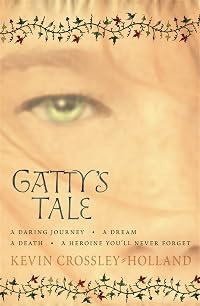
The book after this in the series "Gatty's Tale", I didn't enjoy quite as much, probably because I wasn't quite convinced that in the Middle Ages a peasant girl could become a fine lady so easily.
Arthur - King of the Middle March ist der dritte Teil der Artus-Trilogie von Kevin Crossley-Holland. Der Leser begleitet (Sir) Arthur de Gortanore auf dem 4. Kreuzzug (1202/03), der unter keinem guten Stern stand. Gleichzeitig sieht Arthur in seinem Stein das Ende der klassischen Artussaga - die Liebesgeschichte zwischen Lancelot und Guinivere, das Auseinanderbrechen der Tafelrunde und schließlich die Schlacht Mordred vs. Artus. Zum Glück geht die Geschichte für Arthur besser aus, auch wenn er realisieren muss, dass Krieg alles andere als heroisch ist.
Wie die letzten Bände auch ist die Geschichte in viele (hier: 112) in der Regel sehr kurze Kapitel eingeteilt. Sonst waren es auch mehr Schlaglichter auf die Geschehnisse um 1200, show more abgewechselt mit Erzählungen der Artussage. Im dritten Band ist die Erzählung durchgehender, da waren die kurzen Kapitel am Anfang etwas irritierend, auch, weil wenig Entwicklung statt fand. Zum Ende hin las sich die Geschichte dann nochmal flüssiger.
Insgesamt ein überzeugendes Konzept, die Artussage mit dem mittelalterlichen Leben in England an der Grenze zu Wales und einem Kreuzzug zu verknüpfen. So, wie Kevin Crossley-Holland das mittelalterliche Leben beschreibt, könnte es wohl wirklich gewesen sein. show less
Wie die letzten Bände auch ist die Geschichte in viele (hier: 112) in der Regel sehr kurze Kapitel eingeteilt. Sonst waren es auch mehr Schlaglichter auf die Geschehnisse um 1200, show more abgewechselt mit Erzählungen der Artussage. Im dritten Band ist die Erzählung durchgehender, da waren die kurzen Kapitel am Anfang etwas irritierend, auch, weil wenig Entwicklung statt fand. Zum Ende hin las sich die Geschichte dann nochmal flüssiger.
Insgesamt ein überzeugendes Konzept, die Artussage mit dem mittelalterlichen Leben in England an der Grenze zu Wales und einem Kreuzzug zu verknüpfen. So, wie Kevin Crossley-Holland das mittelalterliche Leben beschreibt, könnte es wohl wirklich gewesen sein. show less
Jan 4, 2017German
Ratings
Members
- Recently Added By
Lists

Books with Noble Titles
179 works; 11 members

Folio Society
831 works; 53 members
Author Information

128+ Works 11,715 Members
Kevin Crossley-Holland is a well-known poet, a prize-winning children's author, and a translator. Crossley-Holland has translated Beowulf and The Exeter Book of Riddles from the Anglo-Saxon. He has collaborated with composers Nicola Lefanu (The Green Children and The Wildman), Rupert Bawden (The Sailor's Tale), Sir Arthur Bliss, William Mathias, show more and Stephen Paulus. Crossley-Holland's book The Seeing Stone won the Guardian Children's Fiction Award, the Smarties Prize Bronze Medal, and the Tir na n-Og Award. The trilogy has won critical acclaim and been translated into twenty-five languages. His recent and forthcoming books are The Hidden Roads: A Memoir of Childhood, Bracelet of Bones and his new and selected poems The Mountains of Norfolk. Crossley-Holland often lectures abroad on behalf of the British Council and offers poetry and prose workshops and talks on the Anglo-Saxons and Vikings, King Arthur, heroines and heroes, and myth, legend and folk-tale. Kevin Crossley-Holland is an Honorary Fellow of St Edmund Hall, Oxford, a patron of the Society for Storytelling, and a Fellow of the Royal Society of Literature. He lives on the north Norfolk coast in East Anglia with his wife and children. (Bowker Author Biography) show less
Some Editions
Awards and Honors
Series

Work Relationships
Is contained in
Common Knowledge
- Canonical title
- King of the Middle March
- Alternate titles
- Arthur : King of the Middle March
- Original publication date
- 2002
- People/Characters
- King Arthur; Guinevere; Lancelot du Lac; Arthur de Caldicot (Sir Arthur de Catmole); Lord Stephen de Holt; Sir William de Gortanore
- Important events
- Fourth Crusade
- Dedication
- For Judith Elliot, with love.
- First words
- Away east over the thousand-tongued sea,
- Last words
- (Click to show. Warning: May contain spoilers.)I waved it like a wand. I made words out of air.
- Blurbers
- Fine, Anne; Pullman, Philip; Funke, Cornelia
- Original language
- English
Classifications
Statistics
- Members
- 820
- Popularity
- 33,668
- Reviews
- 6
- Rating
- (3.61)
- Languages
- 9 — Danish, Dutch, English, Finnish, French, German, Greek, Norwegian (Bokmål), Swedish
- Media
- Paper, Audiobook, Ebook
- ISBNs
- 36
- ASINs
- 8