
A Son of the Circus
by John Irving
On This Page
Description
A Hindi film star, an American missionary, a pair of twins separated at birth, a diminutive chauffeur, and a serial killer collide in a riotous novel by the author of The World According to Garp "His most entertaining novel since Garp."--The New York Times Book Review "A Son of the Circus is comic genius . . . get ready for [John] Irving's most raucous novel to date."--The Boston Globe "Dr. Farrokh Daruwalla, reared in Bombay by maverick foes of tradition, educated in Vienna, married to an show more Austrian and long a resident of Toronto, is a 59-year-old without a country, culture, or religion to call his own. . . . The novel may not be 'about' India, but Irving's imagined India, which Daruwalla visits periodically, is a remarkable achievement--a pandemonium of servants and clubmen, dwarf clowns and transvestite whores, missionaries and movie stars. This is a land of energetic colliding egos, of modern media clashing with ancient cultures, of broken sexual boundaries."--New York Newsday "His most daring and most vibrant novel . . . The story of circus-as-India is told with gusto and delightful irreverence."--Bharati Mukherjee, The Washington Post Book World "Ringmaster Irving introduces act after act, until three (or more) rings are awhirl at a lunatic pace. . . . [He] spills characters from his imagination as agilely as improbable numbers of clowns pile out of a tiny car. . . . His Bombay and his Indian characters are vibrant and convincing."--The Wall Street Journal "Irresistible . . . powerful . . . Irving's gift for dialogue shines."--Chicago Tribune show lessTags
Recommendations
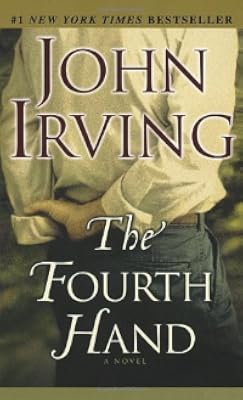

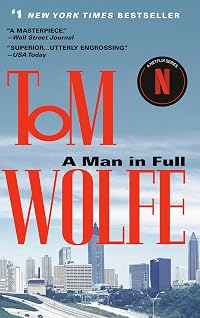
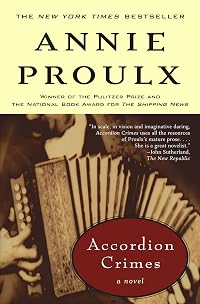
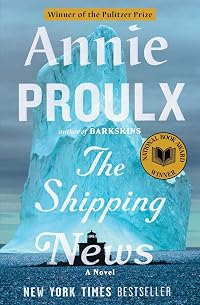
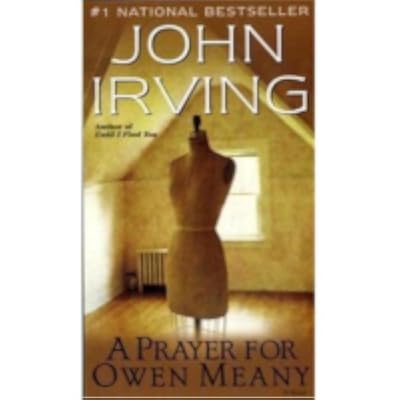




Member Recommendations
kpriester one of the tangents in the story continues
Member Reviews
SPOILER WARNING
I haven't read all of Irving's work, but this is my second favorite after A Prayer for Owen Meany. As other reviewers have said, Irving's style can be a bit plodding and the apparent folding together of different time periods can leave the unprepared reader breathless. Once you get past this, though, this is a delightful read.
The main character, Dr. Farrokh Daruwalla, is an orthopedist and the anonymous screenwriter behind a series of Bollywood crime dramas (dramas with singing and dancing, of course, because Bollywood). His surname turns out to be symbolic. The word “wallah,” coming from the Hindi suffix “-vala,” indicates one who performs a specific function or, interestingly, one who is connected to a show more particular place. The doctor, then, as the writer of the Inspector Dhar movies, performs the service of creating and maintaining Dhar. This suffix then turns ironical, as Daruwalla has never felt at home anywhere.
Don't read this expecting a lot of circus action. That's like coming to Jurassic Park and expecting cool dinosaurs. Maybe a chapter or two is in the circus proper and that's it. The disconnect between the title and the plot, however, is part of the novel's genius. This is the second ironic twist to the doctor’s name. For when, as a screenwriter, he ventures out from the genre he is familiar with, has a difficult time settling on a title. He finally chooses Limo Roulette, which is a very small portion of the screenplay he's writing.
Dr. Daruwalla is a perfect Irving character: at home but not at home, searching for some kind of meaning. In many ways, he is like John Wheelwright, the narrator and lead in Owen Meany. As Daruwalla has also chosen Toronto for his permanent residence, there are even a couple of near-misses at creating a shared universe for the two novels. Grace Church on-the-Hill and Bishop Strachan School, both of which are connected to Wheelwright, appear briefly in the epilogue. Daruwalla is even said to have spent a considerable amount of quiet time in Grace Church; Wheelwright preferred the weekday services at the Church for their sparse and quiet attendance.
There are a significant number of similarities between Circus and Owen Meany: a main character (Daruwalla and Wheelwright) floating on the margins of Christianity; a mystical character (Martin Mills and Owen Meany) obsessed with a sense of mission that doesn’t turn out like he thought it would; a parent killed violently (Daruwalla’s father by a car bomb, Wheelwright’s mother by an errant baseball); and mysterious fathers (the twins John D. and Martin Mills and Wheelwright). There are probably some others but this is already getting longer than it needs to.
Even with these similarities, however, Owen Meany and Circus are not the same novel. This leads me to one of the many great phrases I underlined as I was reading. This is found on p 548 of the paperback: “Instead of listening to the numbers or enduring the Jesuitical provocations of Martin Mills, Farrokh chose to tell a story. Although it was a true story—and, as the doctor would soon discover, painful to tell—it suffered from the disadvantage that the storyteller had never told it before; even true stories are improved by revision.” Circus, published five years after Owen Meany, may be a revision of the former. Perhaps this question need not be answered. After all, as a minor character realizes on p 473, perhaps not everything needs to be understood in order to follow a plot. One final word: the deadnaming of the transgender character “the second Mrs. Dogar” has not aged well. However, Irving has often treated themes of gender and sexual non-conformity in his works so maybe this is yet another place where the true story has undergone revision. show less
I haven't read all of Irving's work, but this is my second favorite after A Prayer for Owen Meany. As other reviewers have said, Irving's style can be a bit plodding and the apparent folding together of different time periods can leave the unprepared reader breathless. Once you get past this, though, this is a delightful read.
The main character, Dr. Farrokh Daruwalla, is an orthopedist and the anonymous screenwriter behind a series of Bollywood crime dramas (dramas with singing and dancing, of course, because Bollywood). His surname turns out to be symbolic. The word “wallah,” coming from the Hindi suffix “-vala,” indicates one who performs a specific function or, interestingly, one who is connected to a show more particular place. The doctor, then, as the writer of the Inspector Dhar movies, performs the service of creating and maintaining Dhar. This suffix then turns ironical, as Daruwalla has never felt at home anywhere.
Don't read this expecting a lot of circus action. That's like coming to Jurassic Park and expecting cool dinosaurs. Maybe a chapter or two is in the circus proper and that's it. The disconnect between the title and the plot, however, is part of the novel's genius. This is the second ironic twist to the doctor’s name. For when, as a screenwriter, he ventures out from the genre he is familiar with, has a difficult time settling on a title. He finally chooses Limo Roulette, which is a very small portion of the screenplay he's writing.
Dr. Daruwalla is a perfect Irving character: at home but not at home, searching for some kind of meaning. In many ways, he is like John Wheelwright, the narrator and lead in Owen Meany. As Daruwalla has also chosen Toronto for his permanent residence, there are even a couple of near-misses at creating a shared universe for the two novels. Grace Church on-the-Hill and Bishop Strachan School, both of which are connected to Wheelwright, appear briefly in the epilogue. Daruwalla is even said to have spent a considerable amount of quiet time in Grace Church; Wheelwright preferred the weekday services at the Church for their sparse and quiet attendance.
There are a significant number of similarities between Circus and Owen Meany: a main character (Daruwalla and Wheelwright) floating on the margins of Christianity; a mystical character (Martin Mills and Owen Meany) obsessed with a sense of mission that doesn’t turn out like he thought it would; a parent killed violently (Daruwalla’s father by a car bomb, Wheelwright’s mother by an errant baseball); and mysterious fathers (the twins John D. and Martin Mills and Wheelwright). There are probably some others but this is already getting longer than it needs to.
Even with these similarities, however, Owen Meany and Circus are not the same novel. This leads me to one of the many great phrases I underlined as I was reading. This is found on p 548 of the paperback: “Instead of listening to the numbers or enduring the Jesuitical provocations of Martin Mills, Farrokh chose to tell a story. Although it was a true story—and, as the doctor would soon discover, painful to tell—it suffered from the disadvantage that the storyteller had never told it before; even true stories are improved by revision.” Circus, published five years after Owen Meany, may be a revision of the former. Perhaps this question need not be answered. After all, as a minor character realizes on p 473, perhaps not everything needs to be understood in order to follow a plot. One final word: the deadnaming of the transgender character “the second Mrs. Dogar” has not aged well. However, Irving has often treated themes of gender and sexual non-conformity in his works so maybe this is yet another place where the true story has undergone revision. show less
I've read ten of Irving's novels and this is the first one which I struggled reading. High expectations probably got in the way. I look forward to anything Irving writes and this was far from his best. It does have many features I've come to expect from an Irving novel. There's a doctor, a writer, a priest, an absent parent, fallen women, prostitutes, an Austrian connection, animals, contradictions, deformities, homosexuals, sex, Iowa, The University of Iowa, religion, reading, ruminating, and lots of imagery. Perhaps the most glaring omission is wrestling but there's lots of acrobats in the circus so maybe wrestling wasn't needed. The other thing missing is New England but there's some minimal action in Boston.
What sets this novel off show more from the rest of Irving's work is its location – India. While the main character claims to live in Toronto only a few pages of this 633 page tome are set in Canada. India is both the location and a character. In the forward Irving says he's only spent a month in India. Yet he writes like someone who is thoroughly familiar with the place. If he's off base I would never know. He sounds totally accurate in his description of the caste system, living conditions, religions, Gods, types of people, media, police, medical conditions, Bollywood obsession, etc.
A major aspect of this book is the circus. Irving portrays the circus as a safer place for kids than the mean streets on which they beg for their daily existence. He decides to rescue a boy and a girl by placing them with a circus which overlooks the basic problem of their total lack of talent and experience. There's a basic agreement. The circus will take these two on as long as they accept the rules and all the training they will need to be productive for the circus. One immediately opts out, she never really wanted this anyway. The boy buys in to the arrangement but falls victim to his desire to skywalk and overcome the limp from his foot having been stepped on long ago by an elephant. He falls to his death. So much for being a safer place.
Like most circuses there are dwarfs. The doctor believes by drawing the blood of the many dwarfs in the circus he may be able to locate a genetic marker which will predict the likelihood of a couple's offspring being a dwarf. The dwarf we follow through the book never permits his own blood being drawn but helps the doctor convince others to have their blood drawn. This independent dwarf has cars modified so he can drive them as taxis with hand controls. He and his wife wind up helping the Doctor throughout the story.
A surprising subplot is a murder mystery. We actually know who the murderer is early on so Iriving has to keep dropping new hints to keep this viable. One twist is that the murderer in the past twenty years has had a sex change operation so he's now a she. Interesting but this is really stretching credulity.
A more interesting subplot is the doctor's other side. He turns out to be a screenwriter of a series of movies starring his adopted son as a Detective that everyone loathes. Being loathed runs in the family. The Doctor's father was a famous surgeon and a staunch atheist with a propensity to challenge everyone. He made a slew of enemies. The father was assassinated.
Normally an Irving novel has at least a little eroticism. This one does but there's a twist. Instead of Irving composing his own erotic passages Irving has the Doctor and his wife go on a second honeymoon. It's low-key, they take their kids along. The Doctor discovers that the book his wife has brought along is a classic piece of 1960s erotica by a real author, James Slater. They decide to read passages from "A Sport and a Pastime" to each other with the desired effect. Seems like Irving's opted for erotica by proxy. It does virtually nothing to advance the plot but proves to be an interesting interruption. show less
What sets this novel off show more from the rest of Irving's work is its location – India. While the main character claims to live in Toronto only a few pages of this 633 page tome are set in Canada. India is both the location and a character. In the forward Irving says he's only spent a month in India. Yet he writes like someone who is thoroughly familiar with the place. If he's off base I would never know. He sounds totally accurate in his description of the caste system, living conditions, religions, Gods, types of people, media, police, medical conditions, Bollywood obsession, etc.
A major aspect of this book is the circus. Irving portrays the circus as a safer place for kids than the mean streets on which they beg for their daily existence. He decides to rescue a boy and a girl by placing them with a circus which overlooks the basic problem of their total lack of talent and experience. There's a basic agreement. The circus will take these two on as long as they accept the rules and all the training they will need to be productive for the circus. One immediately opts out, she never really wanted this anyway. The boy buys in to the arrangement but falls victim to his desire to skywalk and overcome the limp from his foot having been stepped on long ago by an elephant. He falls to his death. So much for being a safer place.
Like most circuses there are dwarfs. The doctor believes by drawing the blood of the many dwarfs in the circus he may be able to locate a genetic marker which will predict the likelihood of a couple's offspring being a dwarf. The dwarf we follow through the book never permits his own blood being drawn but helps the doctor convince others to have their blood drawn. This independent dwarf has cars modified so he can drive them as taxis with hand controls. He and his wife wind up helping the Doctor throughout the story.
A surprising subplot is a murder mystery. We actually know who the murderer is early on so Iriving has to keep dropping new hints to keep this viable. One twist is that the murderer in the past twenty years has had a sex change operation so he's now a she. Interesting but this is really stretching credulity.
A more interesting subplot is the doctor's other side. He turns out to be a screenwriter of a series of movies starring his adopted son as a Detective that everyone loathes. Being loathed runs in the family. The Doctor's father was a famous surgeon and a staunch atheist with a propensity to challenge everyone. He made a slew of enemies. The father was assassinated.
Normally an Irving novel has at least a little eroticism. This one does but there's a twist. Instead of Irving composing his own erotic passages Irving has the Doctor and his wife go on a second honeymoon. It's low-key, they take their kids along. The Doctor discovers that the book his wife has brought along is a classic piece of 1960s erotica by a real author, James Slater. They decide to read passages from "A Sport and a Pastime" to each other with the desired effect. Seems like Irving's opted for erotica by proxy. It does virtually nothing to advance the plot but proves to be an interesting interruption. show less
I almost bailed out after the first hundred pages of this book, and should have followed that inclination. When one keeps dozing off and dropping the book on one's foot, it's seldom a good sign.
There are, undeniably, some very funny moments here, generally based on cultural misunderstandings. The "American hippy" girl's taxicab ride into Bombay from the airport is laugh-out-loud funny, and scattered moments like this (along with Irving's gift for creating memorable characters) kept me slogging along well after any real interest in the plot fizzled out.
There's a murder mystery, and a subplot about twins separated at birth, and frequent reminders about the toilet habits of homeless people in large cities. There's a side trip through the show more world of "Bollywood" movies, and the existential dilemma of a man born to one culture but reared in another, who tries to maintain his balance with a foot in each.
But mostly, there are just words -- thousands of them, pouring over the defenseless reader like a tsunami. In the end, perhaps, it's best just to stay away from the literary shoreline here. show less
There are, undeniably, some very funny moments here, generally based on cultural misunderstandings. The "American hippy" girl's taxicab ride into Bombay from the airport is laugh-out-loud funny, and scattered moments like this (along with Irving's gift for creating memorable characters) kept me slogging along well after any real interest in the plot fizzled out.
There's a murder mystery, and a subplot about twins separated at birth, and frequent reminders about the toilet habits of homeless people in large cities. There's a side trip through the show more world of "Bollywood" movies, and the existential dilemma of a man born to one culture but reared in another, who tries to maintain his balance with a foot in each.
But mostly, there are just words -- thousands of them, pouring over the defenseless reader like a tsunami. In the end, perhaps, it's best just to stay away from the literary shoreline here. show less
Now a Canadian citizen, Dr Farrokh Daruwalla lives and works in Canada but spends some time each year in his place of birth, Bombay, and it is in Bombay and India that we spend our time with him. He maintains his own apartment there with a staff, and pursues his interest in the dwarfs who work in the circuses; and it is in the circus that is seems we might be spending most of our time - but the action does move elsewhere, and often back in time.
As we would expect with John Irving the story is far from straight forward, and includes in addition to the dwarfs, the low life of Bombay including beggars and prostitutes, actors and film stars, gays, transsexuals and other variations, twins, a handsome Bombay film star as much hated as he is show more loved, and an unusually honest police officer among others. Much of the action centres around the Duckworth Club, a very respectable club with a twenty year waiting list for members. But bringing everything together is a murder that proves to be more than an isolated case.
Farrokh, a family man now in his late fifties, becomes involved with the murders, he has a connection with the first, and he is there when the latest occurs, and his penchant for writing detective stories ensures his involvement.
The Son of the Circus I consider one of Irving's best efforts. Initially I must admit I did not find it immediately involving, but once we got beyond the circus and met met some of the other characters I was completely drawn in and found it captivating, with a number of very endearing characters - along with one or two villains. show less
As we would expect with John Irving the story is far from straight forward, and includes in addition to the dwarfs, the low life of Bombay including beggars and prostitutes, actors and film stars, gays, transsexuals and other variations, twins, a handsome Bombay film star as much hated as he is show more loved, and an unusually honest police officer among others. Much of the action centres around the Duckworth Club, a very respectable club with a twenty year waiting list for members. But bringing everything together is a murder that proves to be more than an isolated case.
Farrokh, a family man now in his late fifties, becomes involved with the murders, he has a connection with the first, and he is there when the latest occurs, and his penchant for writing detective stories ensures his involvement.
The Son of the Circus I consider one of Irving's best efforts. Initially I must admit I did not find it immediately involving, but once we got beyond the circus and met met some of the other characters I was completely drawn in and found it captivating, with a number of very endearing characters - along with one or two villains. show less
People keep telling me to read Irving, but up to now I've never really got into one of his novels. I picked this one up on holiday and made the effort to stick with it: I'm not completely convinced, but it was probably just about worth finishing.
I found it rather long and rambling, but with patches of very engaging detail. Research is clearly one of Irving's strengths, but he doesn't seem to be good at discarding material he doesn't need. Of the big plot threads, the one about emigration and deracination wasn't particularly interesting, but I did enjoy the way the book plays around with the conventions of crime fiction and with the way in which the narratives we construct about other people can come back and affect our and their lives.
I found it rather long and rambling, but with patches of very engaging detail. Research is clearly one of Irving's strengths, but he doesn't seem to be good at discarding material he doesn't need. Of the big plot threads, the one about emigration and deracination wasn't particularly interesting, but I did enjoy the way the book plays around with the conventions of crime fiction and with the way in which the narratives we construct about other people can come back and affect our and their lives.
This was the first book I read by John Irving, and I had no idea what I was in for. Also, I read it in high school, when it probably wasn't appropriate for me! It's such a strange story, like his other work, I have since learned. But his characters are always compelling and keep you reading.
As with (almost) all the Irving books I have read, I cannot exactly pinpoint what I love so much about this book. I guess he just has a writing style that makes me want to be in the world he creates. Or it's the fact that the characters in this book are just so absurd that you can't help yourself but be curious as to what crazy things will happen next.
Members
- Recently Added By
Lists

Books Read in 2021
5,361 works; 114 members

Lucy's Long List
69 works; 1 member

Books With Family Relationships in the Title
44 works; 4 members
Author Information

61+ Works 96,585 Members
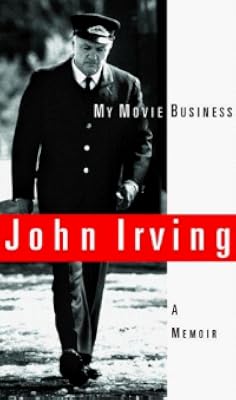
John Irving published his first novel at the age of twenty-six. He has received awards from the Rockefeller Foundation, the National Endowment for the Arts, and the Guggenheim Foundation; he has won an O. Henry Award, a National Book Award, and an Academy Award. (Publisher Provided) John Irving was born John Wallace Blunt, Jr. on March 2, 1942 in show more Exeter, New Hampshire. His named was changed to John Winslow Irving when his stepfather adopted him at the age of six. He was a dyslexic child and it took him five years to get through Exeter Academy, which is where his adoptive father taught Russian history. He received a B.A. (cum laude) from the University of New Hampshire in 1965 and an M.F.A. from the Iowa Writers' Workshop, in 1967, where he studied with Kurt Vonnegut Jr. His first novel was Setting Free the Bears (1969) but it wasn't until The World According to Garp was published in 1978, that he became a literary star. The novel spent six months on the bestseller list and won the American Book Award in 1980. It was also made into a movie in 1982 starring Robin Williams and costarring Glenn Close and John Lithgow. In 1981, he received an O. Henry Award for the short story Interior Space. Some of his other novels were also made into movies including The Hotel New Hampshire starring Jodie Foster and Rob Lowe; A Prayer for Owen Meany, which was titled Simon Birch starring Jim Carrey; and The Cider House Rules starring Michael Caine. He won the Oscar for Best Adapted Screenplay for The Cider House Rules in 2000. Irving also wrote two memoirs; one detailing his wrestling adventures entitled The Imaginary Girlfriend, and another concerning his novels made into Hollywood films entitled My Movie Business: A Memoir. (Bowker Author Biography) show less
Some Editions
Awards and Honors
Distinctions
Series
Belongs to Publisher Series
Keltainen kirjasto (276)
Common Knowledge
- Canonical title*
- Een zoon van het circus
- Original title
- A Son of the Circus
- Original publication date
- 1994
- People/Characters
- Dr. Daruwalla; Inspector Dhar; Rahul Rai; Detective Patel
- Important places
- India; Toronto, Ontario, Canada; Bishop Strachan School, Toronto, Ontario, Canada; Mumbai, Maharashtra, India (as Bombay); Goa, India
- Dedication
- For Salman
- First words
- Usually, the dwarfs kept bringing him back--back to the circus and back to India.
- Last words
- (Click to show. Warning: May contain spoilers.)Farrokh was listening to the applause--he was still at the circus.
- Original language
- English
*Some information comes from Common Knowledge in other languages. Click "Edit" for more information.
Classifications
Statistics
- Members
- 4,169
- Popularity
- 3,702
- Reviews
- 42
- Rating
- (3.57)
- Languages
- 16 — Czech, Danish, Dutch, English, Finnish, French, German, Hungarian, Italian, Lithuanian, Norwegian (Bokmål), Norwegian, Polish, Portuguese, Spanish, Swedish
- Media
- Paper, Audiobook, Ebook
- ISBNs
- 71
- ASINs
- 29