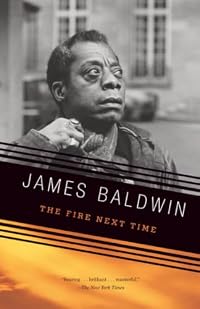
The Fire Next Time
by James Baldwin
On This Page
Description
At once a powerful evocation of his early life in Harlem and a disturbing examination of the consequences of racial injustice to both the individual and the body politic, James Baldwin galvanized the nation in the early days of the civil rights movement with his eloquent manifesto. The Fire Next Time stands as one of the essential works of our literature..
Tags
Recommendations



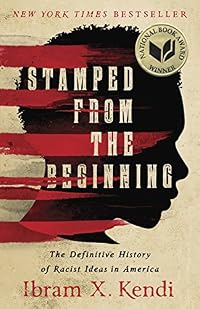
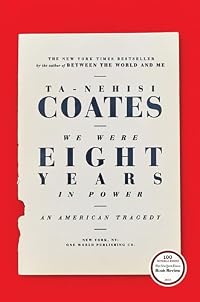
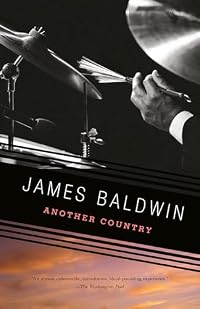
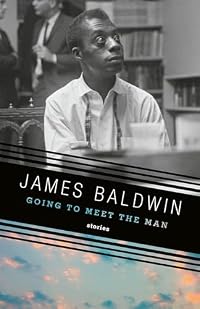


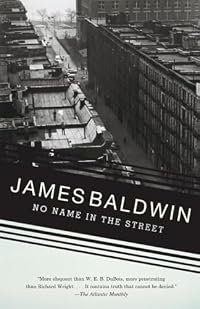
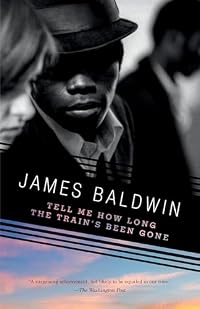
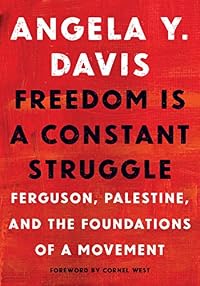
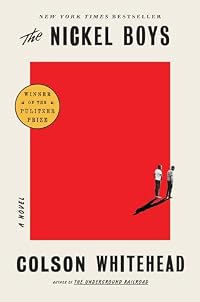


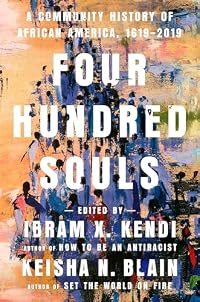
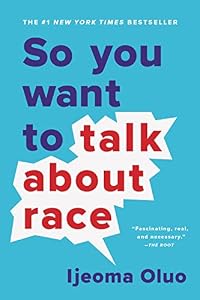

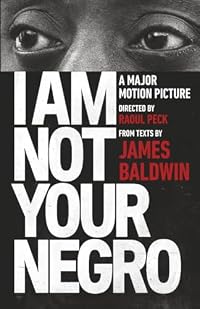


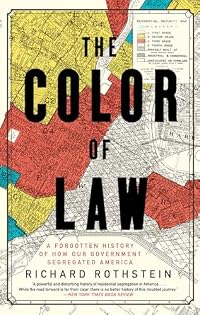




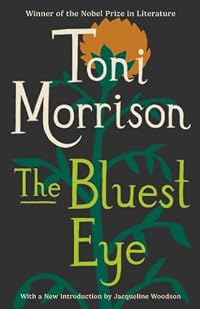
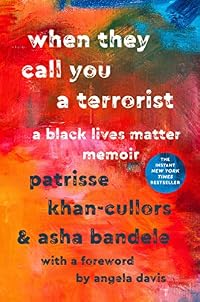
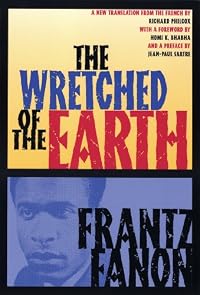
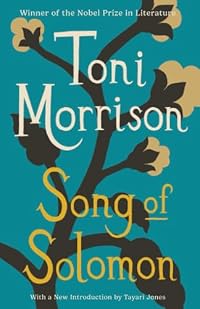

Member Recommendations


Member Reviews
Baldwin's seminal treatise on the state of racism in the United States in the 1960s both sears and soars. The slim masterpiece is made up of a letter from Baldwin to his nephew and an essay about his young religious life and a later experience with Nation of Islam. Reading it was a fevered task, gliding on his perfectly timed and weighed prose.
On the latter, the scales fell from Baldwin's eyes quite early about the nature of American Christianity, and the lack of Christ-like behavior among its practitioners. And there are few places to go, beyond Malcolm X's biography to learn about the beliefs as well as the rise of the Nation of Islam. Baldwin does it in a much more concise and quickening way than Malcolm.
I picked this one up because show more Eddie Glaude, Jr. quotes from and discusses it in [Democracy in Black], and I wanted to read the source. What's surprising to me is that Baldwin's conclusion is to fall for more love and understanding between the races. He calls for a more clear eyed evaluation of racist systems, and calls for people to oppose them, but he always comes back to love. It's the most and, yet, the least radical thing for which he could ask. Sadly, too many of those to whom he would call for love would never consider it because of an ingrained bigotry.
5 bones!!!!!
Highly recommended. show less
On the latter, the scales fell from Baldwin's eyes quite early about the nature of American Christianity, and the lack of Christ-like behavior among its practitioners. And there are few places to go, beyond Malcolm X's biography to learn about the beliefs as well as the rise of the Nation of Islam. Baldwin does it in a much more concise and quickening way than Malcolm.
I picked this one up because show more Eddie Glaude, Jr. quotes from and discusses it in [Democracy in Black], and I wanted to read the source. What's surprising to me is that Baldwin's conclusion is to fall for more love and understanding between the races. He calls for a more clear eyed evaluation of racist systems, and calls for people to oppose them, but he always comes back to love. It's the most and, yet, the least radical thing for which he could ask. Sadly, too many of those to whom he would call for love would never consider it because of an ingrained bigotry.
5 bones!!!!!
Highly recommended. show less
James Baldwin's justly respected essays, paired in the 1963 book [The Fire Next Time], are solid foundations for all of the antiracist literature published in the almost 60 years since. To put them briefly, the first is written to Baldwin's nephew "on the 100th Anniversary of the Emancipation" and offers him advice on growing up Black in a white world. Ta-Nehisi Coates drew inspiration from it in writing a letter to his own son, a letter published in 2015 as [Between the World and Me].
The longer second essay was the important one for me. It's Baldwin's account of his growth and maturing, dwelling on, first, his embrace and eventual rejection of Christianity and, second, his consideration and rejection of Elijah Mohammed's Nation of show more Islam. The following passages are among the many I underlined as I read that second essay.
The longer second essay was the important one for me. It's Baldwin's account of his growth and maturing, dwelling on, first, his embrace and eventual rejection of Christianity and, second, his consideration and rejection of Elijah Mohammed's Nation of show more Islam. The following passages are among the many I underlined as I read that second essay.
show less
I was forced, reluctantly, to realize that the Bible itself had been written by men, and translated by men out of languages I could not read, and I was already, without quite admitting it to myself, terribly involved with the effort of putting words on paper.: Of course, I had the rebuttal ready; These men had all been operating under divine inspiration. Had they? All of them?
I realized that the Bible had been written by white men. I knew that, according to many Christians, I was a descendant of Ham, who had been cursed, and that I was therefore predestined to be a slave. This had nothing to do with anything I was, or contained, or could become; my fate had been sealed forever, from the beginning of time. And it seemed, indeed, when one looked out over Christendom, that this was what Christendom effectively believed.
…[T]he real architect of the Christian church was not the disreputable, sun-baked Hebrew who gave it his name but the mercilessly fanatical and self-righteous St. Paul.
…[A] civilization is not destroyed by wicked people; it is not necessary that people be wicked but only that they be spineless.
…[T]he most dangerous creation of any society is that man who has nothing to lose. You do not need ten such men—one will do.
Yet I could have hoped that the Muslim movement had been able to inculcate in the demoralized Negro population a truer and more individual sense of its own worth, so that Negroes in the Northern ghettos could begin, in concrete terms, and at whatever price, to change their situation. But in order to change a situation one has first to see it for what it is: in the present case, to accept the fact, whatever one does with it thereafter, that the Negro has been formed by this nation, for better or for worse, and does not belong to any other—not to Africa, and certainly not to Islam. The paradox—and a fearful paradox it is—is that the American Negro can have no future anywhere, on any continent, as long as he is unwilling to accept his past. To accept one's past—one's history—is not the same thing as drowning in it; it is learning how to use it. [Emphasis mine]
The American Negro is a unique creation; he has no counterpart anywhere, and no predecessors. The Muslims react to this fact by referring to the Negro as "the so-called American Negro" and substituting for the names inherited from slavery the letter "X." It is a fact that every American Negro bears a name that originally belonged to the white man whose chattel he was. I am called Baldwin because I was either sold by my African tribe or kidnapped out of it into the hands of a white Christian named Baldwin, who forced me to kneel at the foot of the cross. I am, then, both. visibly and legally the descendant of slaves in a white, Protestant country, and this is what it means to be an American Negro, this is who he is— a kidnapped pagan, who was sold like animal and treated like one, who was once defined by the American_Constitution as "three-fifths" of a man, and who, according to the Dred Scott decision, had no rights that a white man was bound to respect. And today, a hundred years after his technical emancipation, he remains—with the possible exception of the American Indian—the most despised creature in his country.
This has everything to do, of course, with the nature of that dream and with the fact that we Americans, of whatever color, do not dare examine it and are far from having made it a reality. There are too many things we do not wish to know about ourselves. People are not, for example, terribly anxious to be equal (equal, after all, to what and to whom?) but they love the idea of being superior.
Perhaps the whole root of our trouble, the human trouble, is that we will sacrifice all the beauty of our lives, will imprison ourselves in totems, taboos, crosses, blood sacrifices, steeples, mosques,
flags, nations, in order to deny the fact of death, which is the only fact we have.
Why, for example—especially knowing the family as I do—I should want to marry your sister is a great mystery to me. But your sister and I have every right to marry if we wish to, and no one has the right to stop us. If she cannot raise me to her level, perhaps I can raise her to mine.
There is absolutely no reason to suppose that white people are better equipped to frame the laws by which I am to be governed than I am. It is entirely unacceptable that I should have no voice in the political affairs of my own country, for I am not a ward of America; I am one of the first Americans to arrive on these shores.
This past, the Negro's past, of rope, fire, torture, castration, infanticide, rape; death and humiliation; fear by day and night, fear as deep as the marrow of the bone; doubt that he was worthy of life, since everyone around him denied it; sorrow for his women, for his kinfolk, for his children, who needed his protection, and whom he could not protect; rage, hatred, and murder, hatred for white men so deep that it often turned against him and his own, and made all love, all trust, all joy impossible—this past, this endless struggle to achieve and reveal and confirm a human identity, human authority, yet contains, for all its horror, something very beautiful.
The American Negro has the great advantage of having never believed that collection of myths to which white Americans cling: that their ancestors were all freedom-loving heroes, that they were born in the greatest country the world has ever seen, or that Americans are invincible in battle and wise in peace, that Americans have always dealt honorably with Mexicans and Indians and all other neighbors or inferiors, that American men are the world's most direct and virile, that American women are pure. Negroes know far more about white Americans than that; it can almost be said, in fact, that they know about white Americans what parents—or, anyway, mothers—know about their children, and that they very often regard white Americans that way…[O]ne felt that if one had had that white man's worldly advantages, one would never have become as bewildered and as joyless and as thoughtlessly cruel as he.
James Baldwin’s The Fire Next Time collects his essays “My Dungeon Shook: Letter to My Nephew on the One Hundredth Anniversary of the Emancipation” and “Down at the Cross: Letter from a Region in My Mind.” Each examines the nature of race and the Black American experience in the early 1960s, while also exploring issues such as legacy and religion. He notes how one’s birthplace can determine one’s future (p. 7, 21) and how white America remains willfully ignorant (p. 9, 85) in a way that forecasted current socio-political studies. Critically, Baldwin accuses his country and countrymen, “that they have destroyed and are destroying hundreds of thousands of lives and do not know it and do not want to know it” (p. 5). While show more Baldwin may have meant this to discuss the Black American experience when he wrote it, it also encapsulates the entire history of the American empire both in its conquest of North America at the expense of indigenous nations as well as its spreading of its hegemonic influence through cultural exports, foreign spending, and military actions. In terms of religion, Baldwin notes how “those virtues preached but not practiced by the white world were merely another means of holding” Black Americans and others in subjection (p. 23). Further, he notes how only America creates legally hyphenated existences in order to define those who belong and those who do not (p. 25). He returns again and again to the nature of apathy. Baldwin writes, “The subtle and deadly change of heart that might occur in you would be involved with the realization that a civilization is not destroyed by wicked people; it is not necessary that people be wicked but only that they be spineless” (p. 55). Though Baldwin wrote in the mid-twentieth century, his work remains as prescient as ever. show less
A seminal work by Baldwin that actually consists of two essays. The first, quite short, is an open letter to his nephew on the 100th anniversary of the Emancipation Proclamation. The heart of the book is the second essay, in which Baldwin writes with searing honesty about the prospects of Negroes ever achieving equality in America, and whether they wouldn't be better off establishing their own separate country apart from the one that enslaved and brutalized them. The most interesting part for me was Baldwin's account of his meeting with Elijah Mohammed, the founder of the Nation of Islam. Mohammed and his fellow travelers, including Malcolm X, were not impressed with the progress being made by Martin Luther King's nonviolent protests show more and were prepared to take their piece of the American pie by force, if necessary. Baldwin makes it clear that while he understands and agrees with much of Mohammed's viewpoint, he ultimately rejects the path laid out by the Nation of Islam even as he acknowledges that the nonviolent movement is not making much progress, either.
It was especially interesting to read this after having read Ta-Nehisi Coates' [Between the World and Me] last year. I saw in Baldwin's writing what seems to have been the genesis for much of what Coates believes and writes about. If I hadn't already read Coates I might have been jarred by the harsh tone and anger that Baldwin displays, but instead I found myself much closer to understanding what both Baldwin and Coates wrote about by having read both of them. I've definitely made a note to myself to read some of Baldwin's fiction to get a fuller sense of where he was coming from. show less
It was especially interesting to read this after having read Ta-Nehisi Coates' [Between the World and Me] last year. I saw in Baldwin's writing what seems to have been the genesis for much of what Coates believes and writes about. If I hadn't already read Coates I might have been jarred by the harsh tone and anger that Baldwin displays, but instead I found myself much closer to understanding what both Baldwin and Coates wrote about by having read both of them. I've definitely made a note to myself to read some of Baldwin's fiction to get a fuller sense of where he was coming from. show less
Baldwin shows much wisdom about human nature and perspicacity about race relations in America. Baldwin describes a very specific moment in time, but the tools he uses to analyze it and the conclusions he reaches are universal. Sadly, I feel that American society as Baldwin describes it, benighted as it was, was so much more progressive than it is today. I feel that we’re regressing, that the hopeful changes Baldwin could envision are slipping out of reach.
Baldwin describes a dinner with Elijah Muhammad, the leader of the Nation of Islam, a movement with which he sympathizes but about which he also has reservations. He writes, “And if I were a Muslim, I would not hesitate to utilize—or, indeed, to exacerbate—the social and show more spiritual discontent that reigns here, for, at the very worst, I would merely have contributed to the destruction of a house I hated, and it would not matter if I perished, too. One has been perishing here so long!” For “Muslim,” one could substitute “poor, alienated white person” to better understand how Trump has won not one but two elections. It’s difficult not to see those present-day Trump voters in Baldwin’s description of “a people from whom everything has been taken away, including, most crucially, their sense of their own worth. People cannot live without this sense; they will do anything whatever to regain it. This is why the most dangerous creation of any society is that man who has nothing to lose.”
But one mustn’t let these universal observations about disenfranchised people distract one from the specific tribulations of African Americans that Baldwin also writes about:
I wish I could share Baldwin’s hope that the better angels of our nature might one day prevail. Nevertheless, I’m glad I read this wise book in these dark times. show less
Baldwin describes a dinner with Elijah Muhammad, the leader of the Nation of Islam, a movement with which he sympathizes but about which he also has reservations. He writes, “And if I were a Muslim, I would not hesitate to utilize—or, indeed, to exacerbate—the social and show more spiritual discontent that reigns here, for, at the very worst, I would merely have contributed to the destruction of a house I hated, and it would not matter if I perished, too. One has been perishing here so long!” For “Muslim,” one could substitute “poor, alienated white person” to better understand how Trump has won not one but two elections. It’s difficult not to see those present-day Trump voters in Baldwin’s description of “a people from whom everything has been taken away, including, most crucially, their sense of their own worth. People cannot live without this sense; they will do anything whatever to regain it. This is why the most dangerous creation of any society is that man who has nothing to lose.”
But one mustn’t let these universal observations about disenfranchised people distract one from the specific tribulations of African Americans that Baldwin also writes about:
“White people were, and are, astounded by the holocaust in Germany. They did not know that they could act that way. But I very much doubt whether black people were astounded—at least, in the same way. For my part, the fate of the Jews, and the world’s indifference to it, frightened me very much. I could not but feel, in those sorrowful years, that this human indifference, concerning which I knew so much already, would be my portion on the day that the United States decided to murder its Negroes systematically instead of little by little and catch-as-catch-can.”
“If one is continually surviving the worst that life can bring, one eventually ceases to be controlled by a fear of what life can bring; whatever it brings must be borne. And at this level of experience one’s bitterness begins to be palatable, and hatred becomes too heavy a sack to carry. The apprehension of life here so briefly and inadequately sketched has been the experience of generations of Negroes, and it helps to explain how they have endured and how they have been able to produce children of kindergarten age who can walk through mobs to get to school.”
I wish I could share Baldwin’s hope that the better angels of our nature might one day prevail. Nevertheless, I’m glad I read this wise book in these dark times. show less
Written during the early days of the Civil Rights Movement of the 1960s, James Baldwin’s biographical essays teach Americans what it’s like to be a black man in our society as it emerged from Jim Crow. Even sixty years later, it still resonates with me as I seek to understand my African-American young mentee. Certainly, much progress has been made as reading these essays shows, but Baldwin shows even then what progress we can still make now.
This short book consists of two parts. First, a memoir details how American religion has failed the black man. On the one hand, you have a Christian church which, too often, has become a trumpet for subservience to whites. He describes his life as a pastor’s son and his early flirtation with a show more ministerial career. On the other, militant Islam inaccurately makes all white people into “devils.” He describes meeting Nation of Islam leader Elijah Muhammed in Chicago and why he didn’t convert. He tries to tease out a more moderate middle way.
In the second essay, Baldwin writes a personal essay on the 100th anniversary of the Emancipation Proclamation. He describes the unheralded benefits African Americans bring to society. He highlights how black voices often show shortcomings of whites and the willful ignorance of white culture. Even sixty years later, these views continue to be controversial, but hard to argue against.
In a contemporary world where the Black Lives Matter continues to teach us of systemic inequities, this book reminds us that prophets like Baldwin saw many problems in the 1960s. The pace of change is, unfortunately, slow, but the promise of a more just society makes the struggle worth it. Baldwin’s command of both the English language and social conditions surpasses almost every other voice except luminaries like Dr. King. Baldwin’s words, though piercing, resonate with me as deeply true and reliable. If only white Americans would listen better! show less
This short book consists of two parts. First, a memoir details how American religion has failed the black man. On the one hand, you have a Christian church which, too often, has become a trumpet for subservience to whites. He describes his life as a pastor’s son and his early flirtation with a show more ministerial career. On the other, militant Islam inaccurately makes all white people into “devils.” He describes meeting Nation of Islam leader Elijah Muhammed in Chicago and why he didn’t convert. He tries to tease out a more moderate middle way.
In the second essay, Baldwin writes a personal essay on the 100th anniversary of the Emancipation Proclamation. He describes the unheralded benefits African Americans bring to society. He highlights how black voices often show shortcomings of whites and the willful ignorance of white culture. Even sixty years later, these views continue to be controversial, but hard to argue against.
In a contemporary world where the Black Lives Matter continues to teach us of systemic inequities, this book reminds us that prophets like Baldwin saw many problems in the 1960s. The pace of change is, unfortunately, slow, but the promise of a more just society makes the struggle worth it. Baldwin’s command of both the English language and social conditions surpasses almost every other voice except luminaries like Dr. King. Baldwin’s words, though piercing, resonate with me as deeply true and reliable. If only white Americans would listen better! show less
An essential, and way overdue read on my part. I absolutely love James Baldwin, his intellect, his intelligence, his eloquence, the visionary way he probes the past, the present and looks into the future. What a writer, and what a book! It is a true tragedy that this book still rings with the same great resonance and immediate importance as it did fifty five years ago when it was first published.
Members
- Recently Added By
Lists

Must-Read Books by Black Authors
114 works; 90 members

New York Public Library's Books of the Century
120 works; 20 members
David Bowie's Top 100
97 works; 23 members

Books That Changed Me
156 works; 47 members

Books recommended by Barack Obama
295 works; 28 members

New York Public Library's Books of the Century - All
170 works; 13 members

The Black Archives: All Power To the People! Reading List
79 works; 10 members

Black Authors
381 works; 28 members

2021
26 works; 1 member

Ten Books That Have Stayed With Me
160 works; 30 members

Obama Reads
181 works; 3 members

Recommended Reading : 600 Classics Reviewed, Editors of Salem Press, 2015
634 works; 6 members

Books That Changed Our Perspective
423 works; 168 members

1960s
281 works; 16 members
David Bowie’s Top 100 Favourite Reads
100 works; 3 members

Books by Black Men
49 works; 2 members

Books mentioned in bell hooks' All About Love
70 works; 1 member

Books We Want To Read Again For The First Time
384 works; 160 members
Reading LIst
648 works; 1 member

Mo's Reading List
218 works; 1 member

Epistolary Non-Fiction (Letters and Correspondence)
99 works; 5 members

Top Five Books of 2023
767 works; 317 members

Books for Birute
39 works; 1 member

Mustich's 1000 Books to Read Before You Die: A Life Changing List
1,001 works; 18 members
Five star books
1,755 works; 108 members
David Bowie's List of Top 100 Books
94 works; 6 members
1960s, Best books published therein
254 works; 22 members

1964 College Preparatory Reading List
202 works; 8 members

African American History Month
99 works; 2 members

20th Century Literature
1,161 works; 55 members

Changamire's Bookshelf
19 works; 1 member

Books Read in 2018
4,360 works; 110 members

Silent Scream
20 works; 2 members

Charleston Syllabus (waitingtoderail)
143 works; 2 members

United States
35 works; 1 member
Author Information

120+ Works 41,816 Members
James Baldwin was born on August 2, 1924, in New York. Baldwin's father was a pastor who subjected his children to poverty, abuse, and religious fanaticism. As a result, many of Baldwin's recurring themes, such as alienation and rejection, are attributable to his upbringing. Living the life of a starving artist, Baldwin went through numerous jobs, show more including dishwasher, office boy, factory worker, and waiter. In 1948, he moved to France, where much work originated. Baldwin published Go Tell It on the Mountain in 1953. A largely autobiographical work, it tells of the religious awakening of a fourteen-year-old. In addition to his childhood experiences, his experiences as a black man and a homosexual provided inspiration for such works as Giovanni's Room, Nobody Knows My Name, and Another Country. Baldwin holds a distinguished place in American history as one of the foremost writers of both black and gay literature. He was an active participant in the Civil Rights movement. Baldwin succumbed to cancer on December 1, 1987. (Bowker Author Biography) show less
Awards and Honors
Awards
Distinctions
Notable Lists
Series
Belongs to Publisher Series
Work Relationships
Is contained in
Is abridged in
Is replied to in
Inspired
Common Knowledge
- Canonical title*
- La prossima volta il fuoco: due lettere
- Original title
- The fire next time
- Original publication date
- 1963-01-31
- People/Characters
- Elijah Muhammad; James Baldwin
- Important places
- Harlem, New York, New York, USA; New York, New York, USA; New York, USA; Chicago, Illinois, USA
- Important events
- African-American Civil Rights Movement
- Epigraph
- "God gave Noah the rainbow sign,
No more water, the fire next time!" - Dedication
- for James
James
Luc James - First words
- Dear James:
I have begun this letter five times and torn it up five times. - Quotations
- Whoever debases others is debasing himself.
- Last words
- (Click to show. Warning: May contain spoilers.)If we do not now dare everything, the fulfillment of that prophecy, re-created from the Bible in song by a slave, is upon us: God gave Noah the rainbow sign, No more water, the fire next time!
- Original language
- English
- Canonical DDC/MDS
- 305.896073
- Canonical LCC
- E185.61
*Some information comes from Common Knowledge in other languages. Click "Edit" for more information.
Classifications
- Genres
- Nonfiction, General Nonfiction, Biography & Memoir
- DDC/MDS
- 305.896073 — Society, Government, and Culture Social sciences, sociology & anthropology Social group - Age, Gender, Ethnicity Ethnic and national groups Other ethnic and national groups Africans and people of African descent; Blacks of African origin standard subdivisions / located in North America African Americans {United States Blacks}
- LCC
- E185.61 — History of the United States United States Elements in the population Afro-Americans Status and development since emancipation
- BISAC
Statistics
- Members
- 6,114
- Popularity
- 2,039
- Reviews
- 165
- Rating
- (4.39)
- Languages
- 11 — Catalan, Danish, Dutch, English, Finnish, French, German, Italian, Portuguese, Spanish, Swedish
- Media
- Paper, Audiobook, Ebook
- ISBNs
- 56
- ASINs
- 56