On This Page
Description
The adventures of a youth in Britain during the Saxon invasion.Tags
Recommendations














Member Reviews
This is yet another beautifully written historical novel by Rosemary Sutcliff. Set in the 7th century AD, Owain is a young Briton who escapes wounded from a catastrophic British defeat in battle at the hands of the advancing Saxons near Aquae Sulis (Bath). He wanders across the seemingly almost empty landscape of southern England, including the eerie deserted remains of the former Roman town Vinconium and meets a young equally homeless and rootless girl Regina. Years pass and Owain becomes a slave to a Saxon master Beornwulf, who nevertheless treats him well and he earns his freedom and becomes involved in national events, including St Augustine's visit to Kent (the coming of Christianity being the "dawn wind" of the novel's title - show more "ever since the last stand, by Aquae Sulis, [Owain] had felt himself at the end of something. Now.....he knew all at once, that he was at a beginning"). As in The Lantern Bearers and Sword at Sunset, Sutcliff is very evocative in describing the sense of vacuum and rootlessness during this time after the Roman legions leave: "Britain was a lost land and a lost cause, the swords were rusted and the lights were out, and nothing seemed left to do but to get away and leave it to the dark". This story is loosely tied to the Eagle of the Ninth series through Owain's possession of the dolphin ring that is passed down through the Aquila family line in that trilogy, though this is by no means integral to the plot and it can be enjoyed as a self-standing and typically extremely high quality piece of historical fiction. show less
This is a reread and a childhood favorite, a book I first read in 6th grade, checked out from my elementary school library. (Which rather surprises me now, as this book is VERY dark, especially at the start.) I then managed to buy a discarded hardcover of Dawn Wind from my hometown library in the mid-90s. I probably haven't read it in... gosh, at least fifteen years, but it's moved around the country with me.
Rosemary Sutcliff's historical fiction had a big impact on me as a writer. She writes deep, engrossing works, and really delves into detail. Perhaps too much detail for some readers, but I can geek out over this stuff. This book takes place as Britain falls to Saxon invaders. Owain is at that final, fateful battle with his father show more and brother. He is the lone survivor--human survivor, anyway. He finds a dog, dubbed Dog, who becomes his steadfast companion. They wander for a while before returning to the city where the war host gathered, to find the Roman-British inhabitants have fled before the Saxon forces. There, he finds a girl just slightly younger than him. Regina was a beggar even in better times, and together they scrape by to survive. But as they follow a fantasy of fleeing to Gaul, Regina falls terribly ill. For a chance of saving her, Owain turns to enemy Saxons, selling himself into slavery so that Regina can get the aid she needs.
One thing I always loved about this book is that every character is nuanced. There are helpful and horrible Britains, and kind and horrendous Saxons. It does a great job of showing the full spectrum of humanity, though Owain is certainly an example of goodness and purity. If this book were an RPG, he'd be a lawful good paladin in training. He readily sacrifices years of his life in order to help others--and does this more than once. As a kid, I accepted this ideal and embraced it. At age 39, his extreme altruism strikes me as unlikely in reality, but not impossible, certainly.
I really enjoyed this reread. Also, until inputting this book on Goodreads, I had no idea this was considered part of the same series as several other of Sutcliff's books that I read ages ago. Now I want to seek out the ones I've missed and reread the others. show less
Rosemary Sutcliff's historical fiction had a big impact on me as a writer. She writes deep, engrossing works, and really delves into detail. Perhaps too much detail for some readers, but I can geek out over this stuff. This book takes place as Britain falls to Saxon invaders. Owain is at that final, fateful battle with his father show more and brother. He is the lone survivor--human survivor, anyway. He finds a dog, dubbed Dog, who becomes his steadfast companion. They wander for a while before returning to the city where the war host gathered, to find the Roman-British inhabitants have fled before the Saxon forces. There, he finds a girl just slightly younger than him. Regina was a beggar even in better times, and together they scrape by to survive. But as they follow a fantasy of fleeing to Gaul, Regina falls terribly ill. For a chance of saving her, Owain turns to enemy Saxons, selling himself into slavery so that Regina can get the aid she needs.
One thing I always loved about this book is that every character is nuanced. There are helpful and horrible Britains, and kind and horrendous Saxons. It does a great job of showing the full spectrum of humanity, though Owain is certainly an example of goodness and purity. If this book were an RPG, he'd be a lawful good paladin in training. He readily sacrifices years of his life in order to help others--and does this more than once. As a kid, I accepted this ideal and embraced it. At age 39, his extreme altruism strikes me as unlikely in reality, but not impossible, certainly.
I really enjoyed this reread. Also, until inputting this book on Goodreads, I had no idea this was considered part of the same series as several other of Sutcliff's books that I read ages ago. Now I want to seek out the ones I've missed and reread the others. show less
Arthur is dead, the Men of Wessex and Mercia have driven the Welsh to the west, and one has to get on with a much narrower life than the province of Britannia could provide. The children find a place to live, and try to get along with the society created by the Germanic take-over of England. A terribly sad book, if you liked the earlier Aquila books.
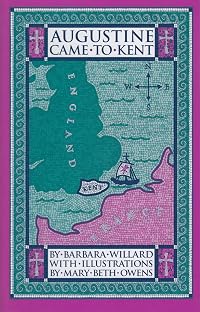
Though written slightly earlier, this is set few generations later than Sword at Sunset, with Arthur as a fading memory --there is a moving moment when someone in a British army about to fight the Saxons (and lose) sings a song of Arthur. The young protagonists are living through the transition to Saxon domination and the arrival of Augustine of Canterbury -- Sutcliff uses the story --I think from Bede --of Augustine failing to rise to welcome visiting British bishops.
Een jongen, een hond, een meisje, een wereld die verdwijnt. Jongeren die hun weg zoeken tussen de puinhopen van een beschaving, die doen wat ze moeten doen. Maar - het is een jeugdboek - ze komen nog niet zo slecht terecht. En er is hoop aan het einde, als de ochtendwind opsteekt. Of ze daar minder eenzaam door worden, is nog maar de vraag.
Dec 2, 2009Dutch
Ratings
Members
- Recently Added By
Lists

Books Read in 2020
4,379 works; 124 members

Books We Loved As Children
603 works; 252 members
Author Information

84+ Works 22,303 Members
Rosemary Sutcliff was on born December 14, 1920 in East Clandon in Surrey, England. As a child she had Still's Disease, a form of juvenile arthritis. The effect of this led to many stays in hospital for painful remedial operations. She ended her formal education at fourteen, and went to Bideford Art School. She passed the City and Guilds show more examination and worked as a painter of miniatures. She felt cramped by the small canvas of miniature painting and turned to writing. Her first two books, The Chronicles of Robin Hood and The Queen Elizabeth Story, were published in 1950. Her other works included The Eagle of the Ninth, The Silver Branch, Sword Song, and the autobiography Blue Remembered Hills. She won the annual Carnegie Medal from the Library Association for The Lantern Bearers in 1959 and the annual Horn Book Award for Tristan and Iseult in 1971. She won inaugural Phoenix Award in 1985 for The Mark of the Horse Lord and again in 2010 for The Shining Company. In 1975, she was appointed an Officer of the Order of the British Empire for services to children's literature, and was promoted to be a Commander of the Order of the British Empire in 1992. She died on July 23, 1992. (Bowker Author Biography) show less
Some Editions
Awards and Honors
Awards
Series


Work Relationships
Common Knowledge
- Canonical title*
- Ochtendwind
- Original title
- Dawn Wind
- Original publication date
- 1961
- People/Characters
- Owain; Regina; Beornwulf; Uncle Widreth; Vadir; Bryni (show all 8); Augustine of Canterbury; Athelbert, King of Kent
- Important places
- Viroconium; Regnum; Great Britain
- First words
- The moon drifted clear of a long bank of cloud, and the cool slippery light hung for a moment on the crest of the high ground, and then spilled down the gentle bush-grown slope to the river.
- Last words
- (Click to show. Warning: May contain spoilers.)"Then we'll build a turf hut and light a fire in it, and intake a patch of hillside, and I'll find a sheep to go with your little brown hen," Owain said.
- Original language*
- Engels
*Some information comes from Common Knowledge in other languages. Click "Edit" for more information.
Classifications
Statistics
- Members
- 318
- Popularity
- 100,179
- Reviews
- 6
- Rating
- (4.23)
- Languages
- 5 — Dutch, English, German, Japanese, Swedish
- Media
- Paper, Ebook
- ISBNs
- 15
- ASINs
- 11