On This Page
Description
The acclaimed author of The Periodic Table and If Not Now, When? presents this impressive collection of stories that celebrate the spirit of having survived the horrors of Auschwitz.Tags
Recommendations















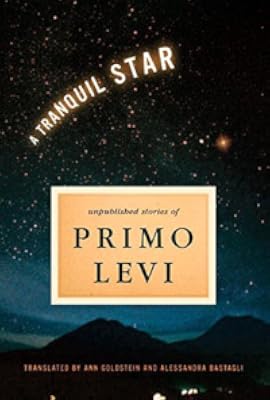
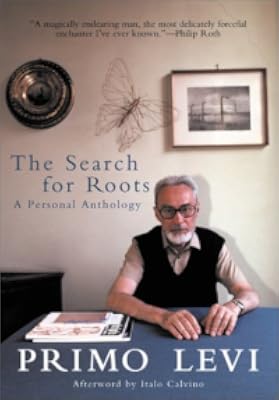








Member Recommendations
Member Reviews
"Haunting" is a word too readily given to any work even tangentially related to the Holocaust. Primo Levi's Moments of Reprieve is indeed that, but so much more besides. Levi's work is a rare feat of tonal balance and perfect resonance. It's wonderful storytelling that tells of its atrocious subject matter with a detachment and investment that only an actual survivor can manage. It avoids the saccharine bill-boarding of Spielberg's Schindler's List (overrated, sorry) and chooses a different side then, say, Jerzy Kosinksi's The Painted Bird (brilliant but almost debilitating in its savage evisceration of the human animal) opting instead to detail the sparse but very real moments of emotional cognizance that imply a shared humanity show more between oppressor and oppressed. And all of this in under 150 pages.
I don't have much else to add save that even for a brief work this is one to take slowly. Genocide, and the Jewish Holocaust specifically, are not subjects (for me at least) to dive in and consume. I have to pace myself and, in the words of Amos Oz, take little sips. But overall it's a consummate work of a brilliant mind resistant to the lugubrious decay that the subject matter so often dredges up. Levi was a gift, I see that now, and look forward to his words with great expectation but with more than a little trepidation given how well he writes of the horror of Nazi Germany. But this is buoyed more than slightly by his artistic and philosophic bent that can make even the darkest hours shine more than they might otherwise. show less
I don't have much else to add save that even for a brief work this is one to take slowly. Genocide, and the Jewish Holocaust specifically, are not subjects (for me at least) to dive in and consume. I have to pace myself and, in the words of Amos Oz, take little sips. But overall it's a consummate work of a brilliant mind resistant to the lugubrious decay that the subject matter so often dredges up. Levi was a gift, I see that now, and look forward to his words with great expectation but with more than a little trepidation given how well he writes of the horror of Nazi Germany. But this is buoyed more than slightly by his artistic and philosophic bent that can make even the darkest hours shine more than they might otherwise. show less
Primo Levi has written extensively about the Holocaust and his experiences in Auschwitz; If this is a man, The True, If not now, when?, The Wrench, The Drowned & The Saved.. But this is the first book I've come across of his in all my reading life. I first read briefly about Primo Levi not long ago in Bob Carr's "My Reading Life", but was prompted to seek Levi out after a conversation with Shellie(Layers of Thought) on GR. Shellie being the first person I had spoken to who had read and recommended Levi to me. Moments of Reprieve was the only book of Levi's my college library held - so I borrowed it. The local library did not stock any.
Compared to other Holocaust books and memoirs I've read Moments of Reprieve does not shock me overly, show more perhaps because of previous exposure to similar material (although I hope that is not the case because that can breed apathy) - but I think perhaps because Levi's focus is primarily on individuals that he knew or knew of, in Auschwitz. Individuals who despite their collective circumstances at finding themselves in a concentration camp were still able to behave like decent human beings - with compassion and virtue.
The moments that Levi writes about here are not so terribly tragic (and he says that in the introduction)- those more sinister events he wrote about in earlier books. These moments are vignettes, small scenes, like dreams, although precisely clear and lucid. Fully fleshed out and filled with details, but still minor incidents captured like short films -moments in Levi's memories that stand out above the greater picture of horror that was Auschwitz; & that which was the Holocaust - that unspeakable evil that must be spoken about and remembered. Small snapshots of selflessness - these are what Primo documents; images that haunted him after the trauma. He writes about the people he met there who for one reason or another made a difference in the camps by their actions & kindness, so that life was bearable.
To bear witness, is a Jewish form of Remembrance of the Holocaust & for the memory of those lost in it. Moments Of Reprieve I believe was Primo's way of bearing witness for those individuals that he perhaps did not mention in earlier books.
It is said that Levi committed suicide in 1987 and had survivor's guilt and the latter may well be true. Trauma of any kind can haunt the human mind forever. Trauma of the camps, the unexplained horror, the loss of friends, family, home, society & even country: basically everything previously known was lost, the idea of it is of such magnitude as to be mind shattering. Even the loss of a loved one under most normal circumstances can be impossible for many people to recover from, so I personally cannot imagine how many of the survivor's mentally adjusted after the camps, even though I did grow up next door to a neighbour who was a survivor; Irma, it did take her many years to seemingly fully re-enter society again. One thing I know I will never forget the sight of the tattooed number on her arm. It's one thing to see photographs. It's another to be faced with reality.
Survivors, like Irma, and like Primo would have memories surface - the horror stricken and also the small mercies that are documented within this book. Memories are difficult things to control. You can turn them off. Shut them down. Freud called it repression. You disassociate. Many do this to survive. Primo faced them and wrote about his experiences. The trouble is with keeping the tap open you run the risk of being overwhelmed. Drowning you in the dark thoughts of memory, repeatedly.
While I'm no expert and postulate with little real evidence, it seems possible that Primo found it impossible to hold back the memories. This slim volume is a testament to Levi's belief in the rightness of virtue and that humans do have the capacity for goodness and purity even in the direst of circumstances, despite Levi himself saying that this was the exception not the rule in the camps.
The fates of many of the people in this book remains unknown. Sadly he didn't know everyone's real name, so he could not trace them to assuage his fears for them. Writing these stories would have seemed the decent thing to do, in fact the only remaining thing to do where there are no remains to be found - to bless, pray or cry over. These people had no funerals, and there were no rituals of closure for those remaining. Valerio, Leon Rappoport, Eddy, Tischler, Lilith, Bandi, Lomnitz, Joulty, Hirsch, Janek, Elias, Wolf, Grigo, Vladek, Otton, Ezra, Frau Mayer, Alberto, Mertens, Fraulein Dreschsel, Avrom, Joel Konig, Cesare, Lorenzo, and Chaim Rumkowski whose face appears on a coin from Litzmannstadt ghetto. I mention their names because I could not do justice to their individual stories. For that read Primo's book.
I will mention Rumkowski, the last story in the book. Rumkowski's story is a warning to us all - he was not a "bad" man, not a Nazi, but a Jew. He was subject to the pitfalls of power & seduced by it. He was not a "MONSTER" but intoxicated by Nazi promises, and sent many to their death by co-operation in running the ghetto in Litzmannstadt.
Primo writes; Like Rumkowski, we too are so dazzled by power and money, as to forget our essential fragility, forget that all of us are in the ghetto, that the ghetto is fenced in, that beyond the fence stand the Lords of Death, and not far away the train is waiting.
That's a frighteningly sobering thought and one that should make one assess what side of the fence you are on at any given point in your life. While no one want to be on that death train, no one should morally want to be one of the lords who is in charge of the selection. Unlike Rumkowski we should be ever alert to how our actions effect other people.
*************************************************************************
Library borrow. (the edition I have has a different cover image).
I have 24 hrs reprieve to finish this before really getting stuck into writing my end of term assignment. Lucky it's not a big book. show less
Compared to other Holocaust books and memoirs I've read Moments of Reprieve does not shock me overly, show more perhaps because of previous exposure to similar material (although I hope that is not the case because that can breed apathy) - but I think perhaps because Levi's focus is primarily on individuals that he knew or knew of, in Auschwitz. Individuals who despite their collective circumstances at finding themselves in a concentration camp were still able to behave like decent human beings - with compassion and virtue.
The moments that Levi writes about here are not so terribly tragic (and he says that in the introduction)- those more sinister events he wrote about in earlier books. These moments are vignettes, small scenes, like dreams, although precisely clear and lucid. Fully fleshed out and filled with details, but still minor incidents captured like short films -moments in Levi's memories that stand out above the greater picture of horror that was Auschwitz; & that which was the Holocaust - that unspeakable evil that must be spoken about and remembered. Small snapshots of selflessness - these are what Primo documents; images that haunted him after the trauma. He writes about the people he met there who for one reason or another made a difference in the camps by their actions & kindness, so that life was bearable.
To bear witness, is a Jewish form of Remembrance of the Holocaust & for the memory of those lost in it. Moments Of Reprieve I believe was Primo's way of bearing witness for those individuals that he perhaps did not mention in earlier books.
It is said that Levi committed suicide in 1987 and had survivor's guilt and the latter may well be true. Trauma of any kind can haunt the human mind forever. Trauma of the camps, the unexplained horror, the loss of friends, family, home, society & even country: basically everything previously known was lost, the idea of it is of such magnitude as to be mind shattering. Even the loss of a loved one under most normal circumstances can be impossible for many people to recover from, so I personally cannot imagine how many of the survivor's mentally adjusted after the camps, even though I did grow up next door to a neighbour who was a survivor; Irma, it did take her many years to seemingly fully re-enter society again. One thing I know I will never forget the sight of the tattooed number on her arm. It's one thing to see photographs. It's another to be faced with reality.
Survivors, like Irma, and like Primo would have memories surface - the horror stricken and also the small mercies that are documented within this book. Memories are difficult things to control. You can turn them off. Shut them down. Freud called it repression. You disassociate. Many do this to survive. Primo faced them and wrote about his experiences. The trouble is with keeping the tap open you run the risk of being overwhelmed. Drowning you in the dark thoughts of memory, repeatedly.
While I'm no expert and postulate with little real evidence, it seems possible that Primo found it impossible to hold back the memories. This slim volume is a testament to Levi's belief in the rightness of virtue and that humans do have the capacity for goodness and purity even in the direst of circumstances, despite Levi himself saying that this was the exception not the rule in the camps.
The fates of many of the people in this book remains unknown. Sadly he didn't know everyone's real name, so he could not trace them to assuage his fears for them. Writing these stories would have seemed the decent thing to do, in fact the only remaining thing to do where there are no remains to be found - to bless, pray or cry over. These people had no funerals, and there were no rituals of closure for those remaining. Valerio, Leon Rappoport, Eddy, Tischler, Lilith, Bandi, Lomnitz, Joulty, Hirsch, Janek, Elias, Wolf, Grigo, Vladek, Otton, Ezra, Frau Mayer, Alberto, Mertens, Fraulein Dreschsel, Avrom, Joel Konig, Cesare, Lorenzo, and Chaim Rumkowski whose face appears on a coin from Litzmannstadt ghetto. I mention their names because I could not do justice to their individual stories. For that read Primo's book.
I will mention Rumkowski, the last story in the book. Rumkowski's story is a warning to us all - he was not a "bad" man, not a Nazi, but a Jew. He was subject to the pitfalls of power & seduced by it. He was not a "MONSTER" but intoxicated by Nazi promises, and sent many to their death by co-operation in running the ghetto in Litzmannstadt.
Primo writes; Like Rumkowski, we too are so dazzled by power and money, as to forget our essential fragility, forget that all of us are in the ghetto, that the ghetto is fenced in, that beyond the fence stand the Lords of Death, and not far away the train is waiting.
That's a frighteningly sobering thought and one that should make one assess what side of the fence you are on at any given point in your life. While no one want to be on that death train, no one should morally want to be one of the lords who is in charge of the selection. Unlike Rumkowski we should be ever alert to how our actions effect other people.
*************************************************************************
Library borrow. (the edition I have has a different cover image).
I have 24 hrs reprieve to finish this before really getting stuck into writing my end of term assignment. Lucky it's not a big book. show less
Unlike his other books regarding the holocaust and camp internment, this is a book of Levi's ability to find some modicum of humor amid the horror. Looking back 40 years after writing In Survival in Auschwitz, the author found there were memories that surfaced that brought hope and exhibited the survival to find some meaning, perhaps a ray of sunshine peeking through the insanity.
Each chapter is dedicated to a particular person or incident. Many of these characters did not survive, and some Levi did not know what happened to them.
He tells of Ezra, an Ortodox Jew who despite the fact he was dying of starvation insisted on fasting on Yam Kippur.
A chemist before his encampment, during his stay at Auschwitz, he was given a job of making show more and measuring chemical compounds. Sick with scarlet fever, his life was saved.
He tells the story of small acts of courage and revenge. For example, some people forced to care for the laundry of the guards, picked lice off the bodies of the dead and carefully sewed them in the folds of the collars of the uniforms. show less
Each chapter is dedicated to a particular person or incident. Many of these characters did not survive, and some Levi did not know what happened to them.
He tells of Ezra, an Ortodox Jew who despite the fact he was dying of starvation insisted on fasting on Yam Kippur.
A chemist before his encampment, during his stay at Auschwitz, he was given a job of making show more and measuring chemical compounds. Sick with scarlet fever, his life was saved.
He tells the story of small acts of courage and revenge. For example, some people forced to care for the laundry of the guards, picked lice off the bodies of the dead and carefully sewed them in the folds of the collars of the uniforms. show less
My first completed read of the year, Moments of Reprieve, aptly described in its missive as a discovery of 'bizarre, marginal, moments of reprieve' charts the stories of a myriad variety of people, mostly Jews who Primo Levi had come across during his stay at Auschwitz. Among many others, a juggler, an almost mute worker, a mirror chemist, a helpful SS officer, are all bound in a conflict, both that ravaged their internal beings as well as the external world they inhabited in times where sense failed. Primo Levi, like what he is well known for in his holocaust works, tells the tales of harrowing times in quiet, unaffected prose, and thus sharing an intimate experience with the reader than just a book.
Primo Levi returns to some of his old characters, describing his experience of each of them in the same intriguing style employed in "If This Is A Man" et al. The tone of the book seems more hopeful and less despairing than his other Auschwitz memoirs. An essential read for anyone who has read Levi's more famous works.
Good short book. Likely I should have not started with this as a first exposure to Levi’s writing. Stories were interesting and had a haunting feeling to them when knowing what happens at the camps. Would read more from this author.
A collection of stories centering on life and death in Auschwitz during World War II. The 15 stories each focus on a different character, a protagonist who, behind barbed wire, somehow survives, even if the virtue that allows him to survive is not always one approved of by common morality.
Members
- Recently Added By
Lists

Italian Literature
556 works; 41 members
Author Information

167+ Works 25,363 Members
Primo Levi was born on July 31, 1919 in Turin, Italy. He pursued a career in chemistry, and spent the early years World War II as a research chemist in Milan. Upon the German invasion of northern Italy, Levi, an Italian Jew, joined an anti-fascist group and was captured and sent to the Auschwitz concentration camp in Poland. He was able to survive show more the camp, due in part to his value to the Nazis as a chemist. After the war ended, Levi did chemistry work in a Turin paint factory while beginning his writing career. His first book, If This Is a Man (title later was changed to Survival in Auschwitz) was published in 1947 and its sequel, The Truce (later retitled The Reawakening) came out in 1958. These two books recount Levi's story of surviving concentration camp life. Levi also published poetry, short stories, and novels, some under the pen name Damianos Malabaila. His 1985, largely autobiographical work, The Periodic Table, cemented his world fame. Awards in tribute to his writing included the Kenneth B. Smilen fiction award, presented by the Jewish Museum in New York. Ironically, despite his surviving Auschwitz, Primo Levi appears to have died by suicide, in Turin on April 11, 1987. (Bowker Author Biography) show less
Some Editions
Series

Belongs to Publisher Series
Work Relationships
Is contained in
Common Knowledge
- Canonical title*
- Moments of reprieve
- Original title
- Lilit e altri racconti
- Original publication date
- 1981
- Important places
- Piedmont, Italy
- Disambiguation notice
- 'Moments of reprieve' contains only the autobiographical stories from 'Lilít e altri racconti'.
*Some information comes from Common Knowledge in other languages. Click "Edit" for more information.
Classifications
Statistics
- Members
- 664
- Popularity
- 43,324
- Reviews
- 8
- Rating
- (4.29)
- Languages
- Chinese, Dutch, English, Italian
- Media
- Paper
- ISBNs
- 12
- ASINs
- 4