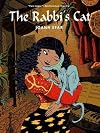
The Rabbi's Cat: The Bar Mitzvah / Malka of the Lions / Exodus
by Joann Sfar
The Rabbi's Cat (Collections and Selections — 1-3)
On This Page
Description
When the rabbi's cat wins the gift of speech by swallowing a parakeet, he uses it both to tell lies (that he didn't eat the parakeet, for example) and to tell his own story. But now that he's lied, the rabbi forbids him from talking to his daughter, Zlabya, and vows to educate him in the Torah. For his part, the cat wants to study Kabbalah and he wants a bar mitzvah. But the question of whether a feline can be Jewish must first be intensely debated by the cat and his master. When Zlabya show more falls in love with a dashing young rabbi, both are crestfallen and jealous, but the journey to meet the young man's secular family in Paris provides additional opportunities for the rabbi and his cat to discuss both the important and petty details of life. Vibrant with the colors, textures, and feeling of a lost world (one where Jews and Arabs easily co-existed) "The Rabbi's Cat is populated with wholly believable and endearing people and one truly unforgettable cat. show lessTags
Recommendations


































Member Recommendations
Member Reviews
Rabbi's Cat is a clever way of introducing Talmudic teaching...sort of like sneaking spinach into a burger to make it "healthier" (yeah, right). The philosophical arguments with a cat about God and love are pretty funny yet serious. To start from the beginning. A parrot annoyed a cat, so the cat ate the bird and gained the ability to speak and lie, not necessarily in that order. Even as a liar, the cat is a straight shooter, albeit a little sarcastic. The cat is also a true cat, randomly knocking over things, or walking on piano keys when you are trying to play, or sitting directly on the very book you are trying to read. But, remember, this cat can talk so it should be no surprise it is demanding a Bar Mitzvah. The rabbi needs to show more consult his rabbi on that one (although he doesn't faze him to hear a cat speak). Thus begins the argument, what does it mean to have faith? Does what you practice define your level of spirituality? What about the differences between being a Jew or an Arab? I loved the argument between the cat and the donkey about the name 'Sfar.' Truly a clever book. show less
In this delightful and uproariously funny parable set in Algeria in the 1930s, the rabbi’s cat, a conniving, profane cat who appears to be a blue Abyssinian, devours a garrulous parrot, thereby acquiring the bird’s power of speech. The clever but prevaricating cat immediately launches into a campaign to get himself a Bar Mitzvah — despite the opposition of both the rabbi and the rabbi’s rabbi. Eventually, the rabbi relents due to the intervention of the rabbi’s beautiful daughter, Zlabya — to whom both cat and rabbi are completely devoted. Thus, begins the instruction of the cat in the ways of the Torah, although the cat would much prefer to begin with the Kabbalah.
The atheistic cat and the devout rabbi debate the most show more important questions of their time — and ours: science versus religion, why evil occurs, the impenetrable nature of God, how best to live a more perfect life in an imperfect world. Unsurprisingly, the cat often getting the better part of the argument. Even so, both develop a closer bond and develop as — dare I use the term? — people.
But it’s on the visit to Paris that the cat really shines. Zlabya meets and instantly falls in love with Jules Nahum, a Paris-born rabbi come to take over a nearby congregation. Zlabya and Jules soon marry, and — with father and cat in tow — the happy couple head to Paris for a visit to the in-laws. The rabbi cannot find a thing to like in the City of Lights, criticizing everything, from the weather to the prayer habits of the synagogue goers, until finally Jules has had more than enough. And that’s when the biggest adventure begins for man and beast.
French artist-writer Joann Sfar won the prestigious Jury Prize at Angoulême for The Rabbi’s Cat, and it’s easy to see why. The dialogue is clever and, at times, laugh-out-loud funny, and the illustrations so closely evoke the Algeria and Paris of a bygone day that you can nearly smell the berbouche d’Alger and the garlicky escargot. At 142 pages, you can finish this slim volume at a sitting — and, trust me, you won’t be able to stop yourself from reading cover to cover all at once!
Be sure to take a look in the back at the dust jacket to catch a glimpse at the inspiration for the cat on Sfar’s chest. show less
The atheistic cat and the devout rabbi debate the most show more important questions of their time — and ours: science versus religion, why evil occurs, the impenetrable nature of God, how best to live a more perfect life in an imperfect world. Unsurprisingly, the cat often getting the better part of the argument. Even so, both develop a closer bond and develop as — dare I use the term? — people.
But it’s on the visit to Paris that the cat really shines. Zlabya meets and instantly falls in love with Jules Nahum, a Paris-born rabbi come to take over a nearby congregation. Zlabya and Jules soon marry, and — with father and cat in tow — the happy couple head to Paris for a visit to the in-laws. The rabbi cannot find a thing to like in the City of Lights, criticizing everything, from the weather to the prayer habits of the synagogue goers, until finally Jules has had more than enough. And that’s when the biggest adventure begins for man and beast.
French artist-writer Joann Sfar won the prestigious Jury Prize at Angoulême for The Rabbi’s Cat, and it’s easy to see why. The dialogue is clever and, at times, laugh-out-loud funny, and the illustrations so closely evoke the Algeria and Paris of a bygone day that you can nearly smell the berbouche d’Alger and the garlicky escargot. At 142 pages, you can finish this slim volume at a sitting — and, trust me, you won’t be able to stop yourself from reading cover to cover all at once!
Be sure to take a look in the back at the dust jacket to catch a glimpse at the inspiration for the cat on Sfar’s chest. show less
The rabbi's cat swallows a parrot, and suddenly receives the gift of speech, which he uses to argue religion with the rabbi, among other things. I found the story a bit choppy and muddled, the religious explication a bit heavy-handed, and the art unappealing. Maybe I'm just not ever going to take to the graphic novel format. There was, however, a fair amount of "my kind" of humor in it.
Review written December 2017
Review written December 2017
This graphic novel is set in colonial Algeria & Paris and tells the story of an Algerian rabbi coming to terms with religious and cultural change - oh and his talking cat. :) At first, the book drew me in with its story of a devilish cat who devours a parrot and learns to talk; he immediately demands to know if he's Jewish, wants a bar mitzvah and begs to be taught Kabbalah. If the book had been nothing more than a cute story about a cat, I still would have loved it. But it ended up being so much more - sprinkled throughout the text are little trinkets of wisdom on Jewish tradition, colonialism, cultural alienation & interaction, Jewish-Muslim coexistence & cultural syncretism, differences between Sephardic & Ashkenazi Jews in North show more Africa and in Europe - all done without being at all pretentious, in my opinion.
Near the end of the story, the rabbi and his cat travel from Algeria to France and the book masterfully uses color to contrast how the rabbi perceives his home (bright, warm, dirty, alive, familiar) and the land of his temporary & self-imposed exile (dark, cold, rainy, foreign, somewhat menacing). Using both written and visual cues to demonstrate how alienated the rabbi felt during his first trip to Paris really enhanced the presentation of the story. Thanks to all who recommended this book to me - its my first great read of the year! show less
Near the end of the story, the rabbi and his cat travel from Algeria to France and the book masterfully uses color to contrast how the rabbi perceives his home (bright, warm, dirty, alive, familiar) and the land of his temporary & self-imposed exile (dark, cold, rainy, foreign, somewhat menacing). Using both written and visual cues to demonstrate how alienated the rabbi felt during his first trip to Paris really enhanced the presentation of the story. Thanks to all who recommended this book to me - its my first great read of the year! show less
The illustrations are much more fluid than your typical comic book art and took me some time to get used to. Interesting philosophical arguments, a new rabbi from a less observant French family, a cat who can suddenly speak (eating a bird helped this happen), all sorts of strange, but interesting goings-on.
The Rabbi's cat gains the power to talk (by ingestion of parrot) and is no longer allowed to spend time with the Rabbi's daughter, whom he loves, because he is a bad influence. He asks to be bar mitzvahed so that he can be with her, and a delightful discussion ensues.
I loved the first story in this book. In fact, I might have to go back and steal it from John's so I can read it again whenever I want. The two stories that followed were great as well, but the first story made me fall in love with this clever, self-interested, but ultimately loving, cat. I was truly delighted and laughed out loud.
I loved the first story in this book. In fact, I might have to go back and steal it from John's so I can read it again whenever I want. The two stories that followed were great as well, but the first story made me fall in love with this clever, self-interested, but ultimately loving, cat. I was truly delighted and laughed out loud.
A widowed rabbi, his cat and his daughter live in Algeria spin a story and lesson in Judaism very cleverly crafted in this graphic novel. Through the cat, who having eaten the family parrot, is imparted a miraculous ability to speak, questions and challenges to the Jewish faith are presented to the rabbi and the rabbi's rabbi. First the cat lies about eating the parrot, and then he insists on learning the Kabbalah and wants a Bar Mitzvah.
The rabbi's daughter gets married to a French rabbi and they honeymoon in Paris to meet with the in-laws. The widowed rabbi and the cat accompany them and the rabbi's faith is tested along the way, as well as his tolerance for those who don't practice the faith as he is believes it should be practiced. show more
You don't have to be Jewish to appreciate this graphic novel. It's funny, sad and is a wonderful little theological study. show less
The rabbi's daughter gets married to a French rabbi and they honeymoon in Paris to meet with the in-laws. The widowed rabbi and the cat accompany them and the rabbi's faith is tested along the way, as well as his tolerance for those who don't practice the faith as he is believes it should be practiced. show more
You don't have to be Jewish to appreciate this graphic novel. It's funny, sad and is a wonderful little theological study. show less
Members
- Recently Added By
Lists

Recommended Comics / Graphic Novels
595 works; 122 members

Middle East and Maghreb Graphic Novels
46 works; 3 members

Graphic Novels with Female Positive Representation
107 works; 5 members

Jewish Books
367 works; 24 members

Books You Couldn't Finish
202 works; 32 members

Recommend the 20 best books you've read in the last five years
2,168 works; 603 members

Books Read in 2017
4,249 works; 129 members

Animals in the Title
498 works; 11 members

Cats in Fiction
209 works; 9 members

Books Read in 2026
2,134 works; 70 members

Favorite French Fiction
223 works; 107 members
Author Information

308+ Works 8,981 Members
Awards and Honors
Series

Work Relationships
Common Knowledge
- Canonical title
- The Rabbi's Cat: The Bar Mitzvah / Malka of the Lions / Exodus
- Original title
- Le Chat du Rabbin [in three volumes]
- Original publication date
- 2001-2003
- People/Characters
- Zlabya
- Important places
- Algeria; Paris, France
- Related movies
- Le chat du rabbin (2011 | IMDb)
- First words
- Jewish people aren't crazy about dogs.
- Quotations
- I answer him that even a kitten would not buy this nonsense.
- Last words
- (Click to show. Warning: May contain spoilers.)Come on. Let's do the kiddush, because if you're late for dinner your wives will chew me out. Yom hashishi, vaychulu; vechoh lzevaam ...
- Blurbers
- Satrapi, Marjane; Langer, Adam; Bloom, Amy; Thompson, Craig
- Original language
- French
- Disambiguation notice
- The Rabbi's Cat collects the first three books of the series, originally published in France. Please do not combine with Le Chat du Rabbin, tome 1 : La Bar-Mitsva which is the first book alone.
Classifications
- Genre
- Graphic Novels & Comics
- DDC/MDS
- 741.5944 — Arts & recreation Drawing & decorative arts Drawing Comic books, graphic novels, fotonovelas, cartoons, caricatures, comic strips History, geographic treatment, biography European France & Monaco
- LCC
- PN6747 .S48 .C4813 — Language and Literature Literature (General) Literature (General) Collections of general literature Comic books, strips, etc.
- BISAC
Statistics
- Members
- 938
- Popularity
- 28,531
- Reviews
- 51
- Rating
- (4.04)
- Languages
- 8 — Danish, English, Finnish, French, German, Norwegian (Bokmål), Portuguese, Swedish
- Media
- Paper
- ISBNs
- 14
- UPCs
- 1
- ASINs
- 2