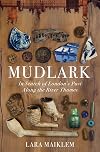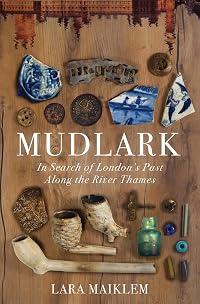
Mudlark: In Search of London's Past Along the River Thames
by Lara Maiklem
On This Page
Description
Long heralded as a city treasure herself, expert "mudlarker" Lara Maiklem is uniquely trained in the art of seeking. Tirelessly trekking across miles of the Thames' muddy shores, where others only see the detritus of city life, Maiklem unearths evidence of England's captivating, if sometimes murky, history--with some objects dating back to 43 AD, when London was but an outpost of the Roman Empire. From medieval mail worn by warriors on English battlefields to nineteenth-century glass marbles show more mass-produced for the nation's first soda bottles, Maiklem deduces the historical significance of these artifacts with the quirky enthusiasm and sharp-sightedness of a twenty-first century Sherlock Holmes. show lessTags
Recommendations










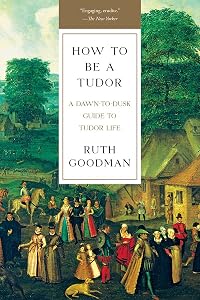
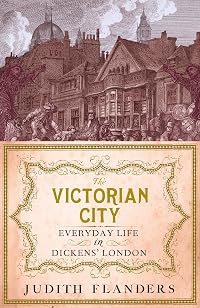
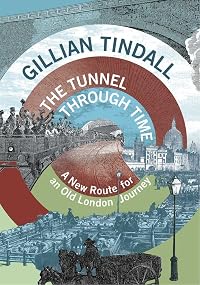
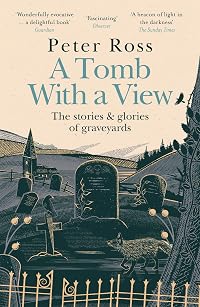




Member Recommendations
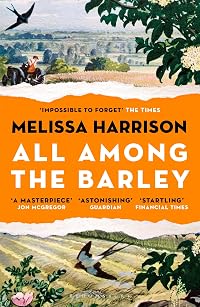
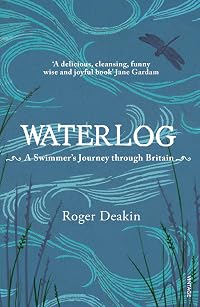
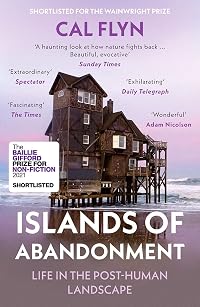
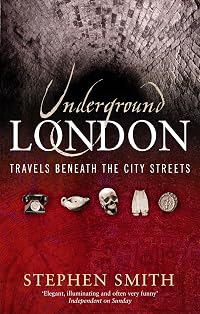
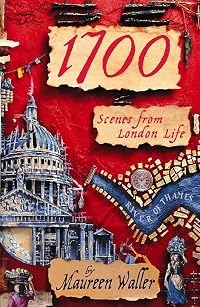
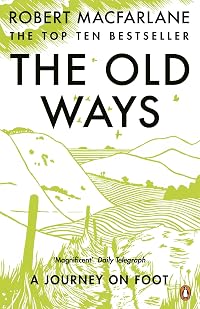
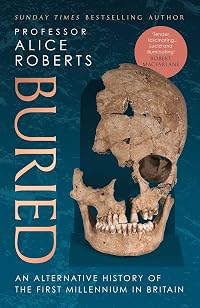
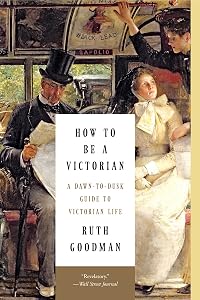
wandering_star These books share a delight in finding little traces of the past, and a similar ability to imagine lives from those traces.
Member Reviews
I was honestly surprised by how much I loved this book -- I picked it up because I have a friend who's been salivating over its publication for a year, and I thought I might find bits interesting. Nope, the whole thing is fascinating. Maiklem deftly weaves Thames' history through her personal journeys -- way more history than autobiography, but far more approachable to me through the lens of her memories.
I was also dubious because it's clearly not a heavily visual book, and yet it's all about finding objects. I've seen frustration about that mentioned elsewhere -- and then my friend mentioned that there is a companion Instagram collection that walks through the whole story visually. You can access that here: show more target="_top">https://www.instagram.com/laramaiklem_mudlarking/?igshid=72axiv5fljim
I found that I didn't, in the end, need the visuals because Maiklem's prose is so richly evocative; however, I also appreciated catching up on the Insta feed, and enjoyed the photography very much. I think it's an innovative way to address an overwhelming number of visuals -- I just think maybe that needs to be more prominently conveyed in the marketing.
Overall, an astonishing journey through time and space, centering on everyday connections to objects. I loved it.
Advanced Reader's Copy Provided by Edelweiss. show less
I was also dubious because it's clearly not a heavily visual book, and yet it's all about finding objects. I've seen frustration about that mentioned elsewhere -- and then my friend mentioned that there is a companion Instagram collection that walks through the whole story visually. You can access that here: show more target="_top">https://www.instagram.com/laramaiklem_mudlarking/?igshid=72axiv5fljim
I found that I didn't, in the end, need the visuals because Maiklem's prose is so richly evocative; however, I also appreciated catching up on the Insta feed, and enjoyed the photography very much. I think it's an innovative way to address an overwhelming number of visuals -- I just think maybe that needs to be more prominently conveyed in the marketing.
Overall, an astonishing journey through time and space, centering on everyday connections to objects. I loved it.
Advanced Reader's Copy Provided by Edelweiss. show less
'Mudlarking', or searching through the mud of the foreshore at low tide to find treasures washed up by the river, is a simple and timeless pastime, but not one that really occurred to me before reading Lara Maiklem's part-biography, part historical study. I would have associated grubbing through the muck of the Thames more with characters in Dickens than modern Londoners, but I can see the appeal now. I too would be fascinated by that brush with the past when picking up unconsidered trifles like coins, clay pipes and old bottles. Who touched these items last? What was their story?
Lara takes us on a mudlarking journey along the Thames from Teddington to the wonderfully named Hoo Peninsula in the Thames Estuary, telling us about her life show more and how she discovered the art of sifting the river banks for treasure to examples of the weird and wonderful items she and other mudlarkers have found. From tokens in Bankside, (chain) mail, lead shot and UXBs at Tower Beach and sewage and modern pollution at Tilbury, artefacts of history from the Romans to the World Wars are always washing up with the tide. Lara thoughtfully decides what to keep and what to give back to the river.
Like the best non-fiction, I learned a lot from Lara. For instance, there is a Society of Mudlarkers and a mudlarking permit system - only those with a 'mudlark' permit can use metal detectors and dig down into the foreshore for their treasures (and 'treasure' is also legally defined, and must be reported to the Crown/City of London). The 'godfather of mudlarking' was a man called Noel Hume, who called himself 'a something for nothing collector' and donated his amazing haul to a London museum. And mudlarkers can be divided into two camps - hunters, usually men, who employ metal detectors and are 'more demanding of the river', and gatherers, women like Lara who consider that 'time spent looking is more important' than finding.
My one criticism of this eyeopening account would have to be the distinct dearth of photographs! There are some beautiful illustrations of finds by a fellow mudlarker on the endpapers, but not a single image otherwise - I had to Google the bronze statues on Vauxhall Bridge, Trig Lane stairs, the Ferryman's Seat at Bankside and the Doomsday Ship at Sheerness, never mind some of the incredible items Lara must have found over the years. Very disappointing.
Overall, though, this is a personal introduction to an unusual hobby, and I enjoyed the adventure. I must end with this quote on the evils of tobacco from James I on tobacco, though:
'A custome lothsome to the eye, hatefull to the Nose, harmeful to the braine, dangerous to the Lungs, and in the blacke stinking fume thereof, nearest resembling the horrible Stygian smoke of the pit that is bottomless'! show less
Lara takes us on a mudlarking journey along the Thames from Teddington to the wonderfully named Hoo Peninsula in the Thames Estuary, telling us about her life show more and how she discovered the art of sifting the river banks for treasure to examples of the weird and wonderful items she and other mudlarkers have found. From tokens in Bankside, (chain) mail, lead shot and UXBs at Tower Beach and sewage and modern pollution at Tilbury, artefacts of history from the Romans to the World Wars are always washing up with the tide. Lara thoughtfully decides what to keep and what to give back to the river.
Like the best non-fiction, I learned a lot from Lara. For instance, there is a Society of Mudlarkers and a mudlarking permit system - only those with a 'mudlark' permit can use metal detectors and dig down into the foreshore for their treasures (and 'treasure' is also legally defined, and must be reported to the Crown/City of London). The 'godfather of mudlarking' was a man called Noel Hume, who called himself 'a something for nothing collector' and donated his amazing haul to a London museum. And mudlarkers can be divided into two camps - hunters, usually men, who employ metal detectors and are 'more demanding of the river', and gatherers, women like Lara who consider that 'time spent looking is more important' than finding.
My one criticism of this eyeopening account would have to be the distinct dearth of photographs! There are some beautiful illustrations of finds by a fellow mudlarker on the endpapers, but not a single image otherwise - I had to Google the bronze statues on Vauxhall Bridge, Trig Lane stairs, the Ferryman's Seat at Bankside and the Doomsday Ship at Sheerness, never mind some of the incredible items Lara must have found over the years. Very disappointing.
Overall, though, this is a personal introduction to an unusual hobby, and I enjoyed the adventure. I must end with this quote on the evils of tobacco from James I on tobacco, though:
'A custome lothsome to the eye, hatefull to the Nose, harmeful to the braine, dangerous to the Lungs, and in the blacke stinking fume thereof, nearest resembling the horrible Stygian smoke of the pit that is bottomless'! show less
My only experience of "mudlarking" was a short walk on the Thames "beach" at Southwark with granddaughter- bits of glass, shells, old rope...
This FASCINATING book by a professional takes you along the length of the Thames, from Teddington through to the dangerous mud flats of the estuary. Peppered with recollections of a fascination since childhood with collecting, and with historical facts, it was an unputdownable read. Different areas yield different specialities- from the 1950s waste of Tilbury, to Tudor relics near historic palaces.
I wish I lived in London...!
This FASCINATING book by a professional takes you along the length of the Thames, from Teddington through to the dangerous mud flats of the estuary. Peppered with recollections of a fascination since childhood with collecting, and with historical facts, it was an unputdownable read. Different areas yield different specialities- from the 1950s waste of Tilbury, to Tudor relics near historic palaces.
I wish I lived in London...!
Mudlark: In Search of London's Past Along the River Thames by Lara Maiklem
Published: 2019
Publisher: Liveright Publishing Corporation
Genre: Non-Fiction, History, England, London
Pages: 314
available: hardback, paperback, ebook
Violence: none 😀
Sex: none 💓
Reviewers Note: I checked this book out at my local library! I'm tempted to keep it. 😍 But I won't.
Author's Bio: Scraped from the internet: Maiklem was born in 1971 on a dairy farm in Surrey, 30 miles from Central London. Her father's family have been farmers for at least 400 years. Her mother's family are from London, until the early 20th century they worked as shipbuilders on the Thames and lived in the East End. She earned a degree in Sociology and Social Anthropology from show more Newcastle University in 1993. She lived in London for 25 years and now lives on the Kent coast with her partner and two children. She is licensed to mudlark on the River Thames by the Port of London Authority and has been searching the foreshore in her spare time for over 15 years.
My Review: I first heard of the author Lara Maiklem via Twitter. Someone retweeted one of her tweets about her madlarking finds. Lara Maiklem mudlarks along the foreshore of the River Thames in search of historical artifacts. She posts about her finds on Facebook and Twitter. This led me to follow Maiklem on social media and watch her videos on Youtube. I was intrigued. (more on this later.) I did not realize she had written a book until I saw it in my library and immediately dropped the other books I was looking at and ran home to start reading.
I gotta tell you straight up, this book is amazing. I couldn't put it down. Lara Maiklem has written a love letter to the Thames, to London and to English history. Starting at the tidal head of the Thames River in Teddington, Maiklem takes us on a seaward tour of the river, stopping at prime mudlarking sites, chapter by chapter. Now to some, this sounds like a coma-inducing bore, but it's not.
Maiklem has the rare talent of making the past come alive. The author describes in great detail the foreshore of the river and shares the history of the Thames from pre-Roman to modern times.Her love of the river is reflected in the pages as she details the changes wrought by man over the centuries as they forced, what was once a wide shallow river into an embankment-confided, channel-dredged super-highway to the sea.
The author shares not only her amazing finds: pottery shards, roman beads, coins of all ages, 17th century tobacco pipes, ceramic dolls, 600 year old leather shoes, and so much more, but she researches and tell us the history behind the object. We learn when it was made, where, how, and who might have used and lost it. Maiklem believes each item, whether a lowly button or a valuable roman artifact, has a story to tell about the human who once held then lost it.
Now, here is my one and only complaint about the book. THERE ARE NO PICTURES! I had to sit with my phone handy, ready to Google items that I just had to see a picture of. My favorite find was the Frozen Charlotte dolls. I loved the back story about the doll, and of course, I had to see an actual picture of one.
Recommendation: If you love history, especially British/English history you will love this book!
I give this book 5 Stars⭐⭐⭐⭐⭐ show less
Published: 2019
Publisher: Liveright Publishing Corporation
Genre: Non-Fiction, History, England, London
Pages: 314
available: hardback, paperback, ebook
Violence: none 😀
Sex: none 💓
Reviewers Note: I checked this book out at my local library! I'm tempted to keep it. 😍 But I won't.
Author's Bio: Scraped from the internet: Maiklem was born in 1971 on a dairy farm in Surrey, 30 miles from Central London. Her father's family have been farmers for at least 400 years. Her mother's family are from London, until the early 20th century they worked as shipbuilders on the Thames and lived in the East End. She earned a degree in Sociology and Social Anthropology from show more Newcastle University in 1993. She lived in London for 25 years and now lives on the Kent coast with her partner and two children. She is licensed to mudlark on the River Thames by the Port of London Authority and has been searching the foreshore in her spare time for over 15 years.
My Review: I first heard of the author Lara Maiklem via Twitter. Someone retweeted one of her tweets about her madlarking finds. Lara Maiklem mudlarks along the foreshore of the River Thames in search of historical artifacts. She posts about her finds on Facebook and Twitter. This led me to follow Maiklem on social media and watch her videos on Youtube. I was intrigued. (more on this later.) I did not realize she had written a book until I saw it in my library and immediately dropped the other books I was looking at and ran home to start reading.
I gotta tell you straight up, this book is amazing. I couldn't put it down. Lara Maiklem has written a love letter to the Thames, to London and to English history. Starting at the tidal head of the Thames River in Teddington, Maiklem takes us on a seaward tour of the river, stopping at prime mudlarking sites, chapter by chapter. Now to some, this sounds like a coma-inducing bore, but it's not.
Maiklem has the rare talent of making the past come alive. The author describes in great detail the foreshore of the river and shares the history of the Thames from pre-Roman to modern times.Her love of the river is reflected in the pages as she details the changes wrought by man over the centuries as they forced, what was once a wide shallow river into an embankment-confided, channel-dredged super-highway to the sea.
The author shares not only her amazing finds: pottery shards, roman beads, coins of all ages, 17th century tobacco pipes, ceramic dolls, 600 year old leather shoes, and so much more, but she researches and tell us the history behind the object. We learn when it was made, where, how, and who might have used and lost it. Maiklem believes each item, whether a lowly button or a valuable roman artifact, has a story to tell about the human who once held then lost it.
Now, here is my one and only complaint about the book. THERE ARE NO PICTURES! I had to sit with my phone handy, ready to Google items that I just had to see a picture of. My favorite find was the Frozen Charlotte dolls. I loved the back story about the doll, and of course, I had to see an actual picture of one.
Recommendation: If you love history, especially British/English history you will love this book!
I give this book 5 Stars⭐⭐⭐⭐⭐ show less
Its amazing what people get up to... this woman enjoys going down to the banks of the Thames at low tide and searching through the rubbish. The remarkable thing is that there's lots of interesting stuff to find, and it doesn't all smell. There are apparently areas with any amount of Roman remains, Georgian pins, and a specific sort of Type to be found. In amongst the accounts of the different parts of the tidal Thames, (it has to be tidal to churn up the stuff) she tells us the stories of the place or the people involved. You learn about traitors and bricks; and filth too. It turns out there are packs of mudlarks going through the stuff and websites devoted to their pickings, and the Museums regularly acquire exhibits from them. A show more surprisingly enjoyable book. show less
What a fun book! Over the years, I've found plenty of "old" stuff through my travels around Pittsburgh's non-empty hillsides and neighborhoods: glass bottles, plates, commercial/industrial bits and bobs made of iron or steel, and a large array of modern-day illegal dumping and trash. But none of this compares to Maiklem's foraging along The Thames in England. With hundreds of years of lost and discarded items waiting below the mud, she takes readers through the history of many commonly found items: pipes, buttons, pins (and more) in a fascinating and well-researched manner. I recently saw that Maiklem has written a follow-up book on this same topic, and I'm eager to dig in and get some dirt on my hands. :-)
A mudlark is a person who scavenges for debris in the mud of a river or harbour. And that is how Lara Meiklem spends her free time, scavenging the foreshore of the River Thames with an enthusiasm that borders on obsession. On the tidal reaches of the river (and the River Thames is tidal as far upstream as Teddington Lock to the west of London) low tide exposes the banks of mud and gravel where the detritus of centuries can be found, from Roman game tokens and pieces of tesserae, to medieval buckles and shoes, to glass bottles from the nineteenth century:
In Mudlarking, Lara Meiklem provides an account of her activities, looking at how and why the items she collects have ended up in the river, and how the river itself has changed since London was settled in Roman times.
I used to work in an office just west of London Bridge that looked straight down onto the Thames (depending on the tide my view was either a patch of mud or a little flock of ducks) so I was interested to find out what that mud might contain. And it is an interesting account, but I kept wanting to know more about the topics that are only touched on tangentially, and I just couldn't generate quite as much enthusiasm over her mudlarked finds as Lara clearly does. I wanted to know more about the geographical history of the Thames. For instance, it's mentioned that in Roman times the Thames was only tidal until London Bridge, but doesn't really explain why. And I'd I have loved some maps showing how the river had changed over the centuries: as Lara points out, in Roman times the river used to be much wider and a visualisation of this would have been great.
A reasonable read, but a little bit anecdotal for my tastes. show less
I peer between the bricks and stones, looking around them as much as I can without moving them: I'm in a protected area, and I mustn't disturb as much as a pebble in my search. Kneelingshow more
down helps. It's a worm's eye view that means I can look more closely into dips and crevices and underneath overhanging bits of rubble. I can also look across patches of sand for subtle contours that suggest something might be hidden just below the surface. This close up, the gravel is not just a grey-brown textured mass — every stone is different — and I scan it for anything that doesn't fit.
In Mudlarking, Lara Meiklem provides an account of her activities, looking at how and why the items she collects have ended up in the river, and how the river itself has changed since London was settled in Roman times.
I used to work in an office just west of London Bridge that looked straight down onto the Thames (depending on the tide my view was either a patch of mud or a little flock of ducks) so I was interested to find out what that mud might contain. And it is an interesting account, but I kept wanting to know more about the topics that are only touched on tangentially, and I just couldn't generate quite as much enthusiasm over her mudlarked finds as Lara clearly does. I wanted to know more about the geographical history of the Thames. For instance, it's mentioned that in Roman times the Thames was only tidal until London Bridge, but doesn't really explain why. And I'd I have loved some maps showing how the river had changed over the centuries: as Lara points out, in Roman times the river used to be much wider and a visualisation of this would have been great.
A reasonable read, but a little bit anecdotal for my tastes. show less
Members
- Recently Added By
Lists

Top Five Books of 2020
982 works; 350 members

History: England, Ireland, Scotland, Wales
94 works; 2 members

Five star books
1,767 works; 110 members

Club Read's Recommended Nonfiction Written by Women
618 works; 30 members
Talk Discussions
Past Discussions
Lara Maiklem: Mudlarking in It's a LondonThing (November 2020)
Author Information

3+ Works 661 Members
Lara Maiklem has been mudlarking on the River Thames for over fifteen years and has been featured in the Washington Post, New York Times and on NPR's Fresh Air. In the UK she has written for the Guardian, the Financial Times, and the BBC. She lives on the Kent coast with her family, close to the Thames Estuary, and visits the river as regularly as show more the tides permit. show less
Some Editions
Awards and Honors
Awards
Common Knowledge
- Original title
- Mudlarking: Lost and Found on the River Thames
- Alternate titles
- Mudlark: In Search of London’s Past Along the River Thames
- Original publication date
- 2019
- Important places
- River Thames, England, UK
- Epigraph
- … an old woman with a nut-cracker nose and chin, which almost dipped into the filthy slush into which she peered, and dirty flesh as well as a scrap or two of dirty linen showing through the slashes of her burst gown, over ... (show all)which, for ‘warmth’s sake’, she wore a tippet of ragged sack-cloth … She slinks off to her lair, followed by an imp bearing a rusty crumpled colander, piled with its find. Its sex is indistinguishable. It has long mud-hued hair hanging down in a mat over its shoulders. Through the hair one gets a glimpse of a never-washed little face, whose only sign of intelligence is an occasional glance of wicked knowingness.
Richard Rowe, ‘A Pair of Mudlarks’, Life in the London Streets (1881) - First words
- It is hot and airless on the 7.42 from Greenwich to Cannon Street.
- Last words
- (Click to show. Warning: May contain spoilers.)In my head I tell my river forebears: I'll be back with you on the river soon.
- Blurbers
- Mortimer, Ian; Tucci, Stanley; Rubenhold, Hallie; Harrison, Melissa
- Original language
- English
- Disambiguation notice
- 'Mudlark: In Search of London's Past Along the River Thames' is the US and CAN edition. Published in UK, Aus and NZ as 'Mudlarking: Lost and Found on the River Thames'
Classifications
- Genres
- Anthropology, General Nonfiction, History, Nonfiction, Biography & Memoir
- DDC/MDS
- 942.1 — History & geography History of Europe England and Wales London
- LCC
- DA677.1 .M34 — History of Europe, Asia, Africa and Oceania Great Britain History of Great Britain England Local history and description London
- BISAC
Statistics
- Members
- 578
- Popularity
- 51,050
- Reviews
- 30
- Rating
- (4.15)
- Languages
- English, Spanish
- Media
- Paper, Audiobook, Ebook
- ISBNs
- 16
- ASINs
- 5