On This Page
Description
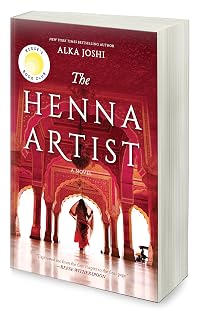
"Escaping from an abusive marriage, seventeen-year-old Lakshmi makes her way alone to the vibrant 1950s pink city of Jaipur. There she becomes the most highly requested henna artist - and confidante - to the wealthy women of the upper class. But trusted with the secrets of the wealthy, she can never reveal her own...Known for her original designs and sage advice, Lakshmi must tread carefully to avoid the jealous gossips who could ruin her reputation and her livelihood. As she pursues her show more dream of an independent life, she is startled one day when she is confronted by her husband, who has tracked her down these many years later with a high-spirited young girl in tow - a sister Lakshmi never knew she had. Suddenly the caution that she has carefully cultivated as protection is threatened. Still she perseveres, applying her talents and lifting up those that surround her as she does."--Publisher description. show lessTags
Recommendations
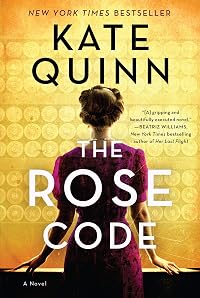
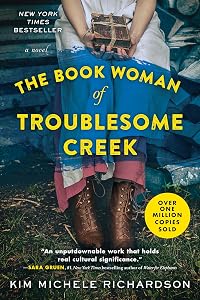
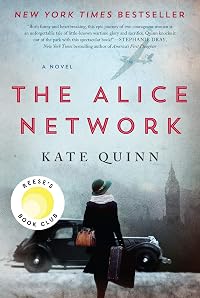
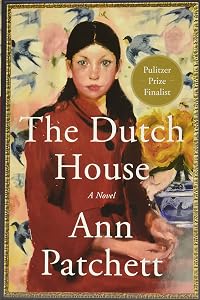

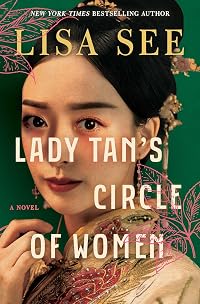
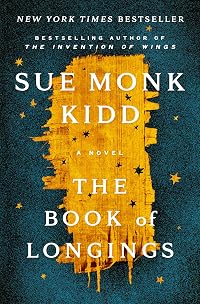
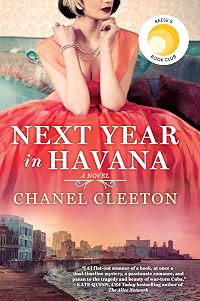
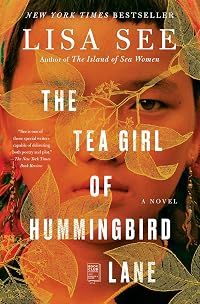


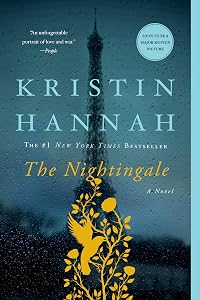
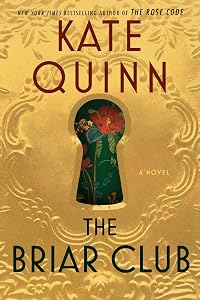
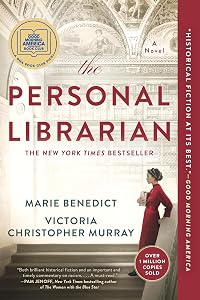
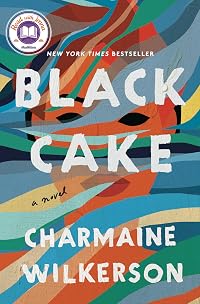

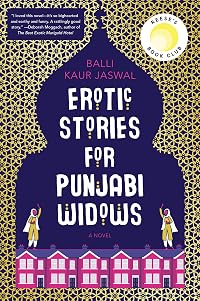
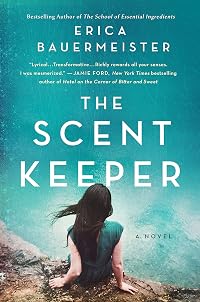
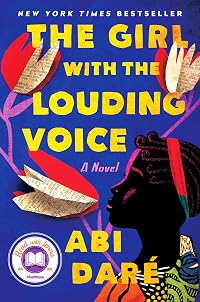
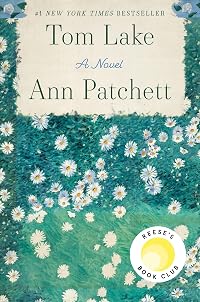

Member Recommendations
Member Reviews
It's the 1950s, India is evolving and Lakshmi has decided to take her life into her own hands. Deciding to buck cultural and family expectations she leaves an abusive marriage to become a henna artist in Jaipur. She has worked hard and is close to gaining the life she's dreamed of when her husband appears with a surprise; her little sister she never knew she had.
I feel that this book really struck a chord with me because it had a deeper story that I was not expecting and it is incredibly timely. Lakshmi is not only a henna artist, but also helps women with their medical needs, up to an including abortion. The United States is currently going through a change in women's health rights and this book asks questions the US is struggling show more with now. What is the state of women's health? What rights do women have? Is it any one else's right to decide about another's bodies? I appreciate that this book has that dialogue and allows space for the reader to reflect on different perspectives. show less
I feel that this book really struck a chord with me because it had a deeper story that I was not expecting and it is incredibly timely. Lakshmi is not only a henna artist, but also helps women with their medical needs, up to an including abortion. The United States is currently going through a change in women's health rights and this book asks questions the US is struggling show more with now. What is the state of women's health? What rights do women have? Is it any one else's right to decide about another's bodies? I appreciate that this book has that dialogue and allows space for the reader to reflect on different perspectives. show less
It’s 1955, eight years since India received its independence, and Lakshmi Shastri feels as though she too has finally earned her own. At thirty, living in Jaipur, Rajasthan, she has saved enough money to buy a house, something she’s always wanted, both to live without a landlady and for the respect and prestige owning property brings.
Lakshmi’s practice in herbal medicine has grown, but she’s even better known for her henna artistry, in which she paints designs on women’s bodies for decoration, good luck, and as a health treatment. Word has gotten around among upper-class women that Lakshmi is capable, discreet, and above reproach; the last quality matters the most.
Consequently, none of them know that her parents married her show more off at fifteen because they couldn’t feed her — not that such a tale would bother them. Rather, when Lakshmi tired of her husband’s beatings, administered because she remained childless and therefore shamed him, she brought even greater shame by running away. If her clients knew that story, they’d cut her dead.
Another unsavory secret: She earned her keep for years among courtesans, decorating them with henna and supplying herbal contraceptives and abortifacients. Now, in Jaipur, she still doles out these remedies, but under the table, often to rich men who pass them on to their mistresses.
But this income, though more or less comfortable, won’t cover the cost overruns on Lakshmi’s house; her contractor demands payment. So, to cement her standing, garner an entrée to the maharani’s palace, and collect a nice piece of change, Lakshmi tries to broker a marriage between the son of her most important customer and the daughter of another wealthy client. Still, she has no reason to suspect that trouble beckons, until her abandoned husband tracks her down and hands over a sister she didn’t know she had, thirteen-year-old Radha.
Explaining the girl’s sudden appearance, strange accent, and unpolished manners tests Lakshmi’s diplomatic skills (perhaps not enough, I think), but the real problem is Radha’s ungovernable character. The girl’s own desire for independence, too much, too fast, causes conflict between the siblings.
This setup, though complicated, promises a remarkable novel, and in the most important ways, Joshi delivers. The Henna Artist has its soap-opera arias, but the author redeems them somewhat by lingering in those moments, adding meaning, or returning to them. Problems that seem to resolve actually don’t, and a crucial one that defies solution is the gross inequity between men and women.
Lakshmi rails against it in her heart. Yet she still feels the shame she brought on herself, her parents, and her husband. This duality rings true, a woman perhaps slightly ahead of her time who can’t escape her split perspective — ideals in one frame, and cruel knowledge of cultural and social reality in the other. Contrasting her with Radha, a brilliant stroke, widens the split. Lakshmi wants her sister to escape the male-dominated trap to the extent she can. But Radha craves the familial love she never got, and though Lakshmi would want that herself, she’s cynical about it.
Joshi also provides a detailed social context, and a fascinating one it is, in which, for instance, individual shame doesn’t exist. “Humiliation spread, as easily as oil on wax paper, to the entire family,” which includes distant cousins. Another aspect, which Joshi reveals without hitting you over the head, involves upper-class preferences for the former colonial masters’ habits.
Such preferences extend to hairstyles, luxuries, reading matter, and schooling. Closer to Joshi’s story, the two teenagers whose marriage she hopes to arrange are the most spoiled products of wealth and social position you can imagine. The chase for money and prestige runs through these pages and twists Lakshmi’s life.
I wish, however, that Lakshmi didn’t beat herself up quite so often, especially to apologize for what she didn’t do. I believe her powerful urge for self-blame, but if repeated too much, I begin to wonder whether a character showing such masochistic impulses could have achieved what she’s been credited with. Or is the author trying to burnish her protagonist’s image as a person of conscience? To me, she’d be more believable, therefore more appealing, with slightly less earnestness. But that said, The Henna Artist is a good novel. show less
Lakshmi’s practice in herbal medicine has grown, but she’s even better known for her henna artistry, in which she paints designs on women’s bodies for decoration, good luck, and as a health treatment. Word has gotten around among upper-class women that Lakshmi is capable, discreet, and above reproach; the last quality matters the most.
Consequently, none of them know that her parents married her show more off at fifteen because they couldn’t feed her — not that such a tale would bother them. Rather, when Lakshmi tired of her husband’s beatings, administered because she remained childless and therefore shamed him, she brought even greater shame by running away. If her clients knew that story, they’d cut her dead.
Another unsavory secret: She earned her keep for years among courtesans, decorating them with henna and supplying herbal contraceptives and abortifacients. Now, in Jaipur, she still doles out these remedies, but under the table, often to rich men who pass them on to their mistresses.
But this income, though more or less comfortable, won’t cover the cost overruns on Lakshmi’s house; her contractor demands payment. So, to cement her standing, garner an entrée to the maharani’s palace, and collect a nice piece of change, Lakshmi tries to broker a marriage between the son of her most important customer and the daughter of another wealthy client. Still, she has no reason to suspect that trouble beckons, until her abandoned husband tracks her down and hands over a sister she didn’t know she had, thirteen-year-old Radha.
Explaining the girl’s sudden appearance, strange accent, and unpolished manners tests Lakshmi’s diplomatic skills (perhaps not enough, I think), but the real problem is Radha’s ungovernable character. The girl’s own desire for independence, too much, too fast, causes conflict between the siblings.
This setup, though complicated, promises a remarkable novel, and in the most important ways, Joshi delivers. The Henna Artist has its soap-opera arias, but the author redeems them somewhat by lingering in those moments, adding meaning, or returning to them. Problems that seem to resolve actually don’t, and a crucial one that defies solution is the gross inequity between men and women.
Lakshmi rails against it in her heart. Yet she still feels the shame she brought on herself, her parents, and her husband. This duality rings true, a woman perhaps slightly ahead of her time who can’t escape her split perspective — ideals in one frame, and cruel knowledge of cultural and social reality in the other. Contrasting her with Radha, a brilliant stroke, widens the split. Lakshmi wants her sister to escape the male-dominated trap to the extent she can. But Radha craves the familial love she never got, and though Lakshmi would want that herself, she’s cynical about it.
Joshi also provides a detailed social context, and a fascinating one it is, in which, for instance, individual shame doesn’t exist. “Humiliation spread, as easily as oil on wax paper, to the entire family,” which includes distant cousins. Another aspect, which Joshi reveals without hitting you over the head, involves upper-class preferences for the former colonial masters’ habits.
Such preferences extend to hairstyles, luxuries, reading matter, and schooling. Closer to Joshi’s story, the two teenagers whose marriage she hopes to arrange are the most spoiled products of wealth and social position you can imagine. The chase for money and prestige runs through these pages and twists Lakshmi’s life.
I wish, however, that Lakshmi didn’t beat herself up quite so often, especially to apologize for what she didn’t do. I believe her powerful urge for self-blame, but if repeated too much, I begin to wonder whether a character showing such masochistic impulses could have achieved what she’s been credited with. Or is the author trying to burnish her protagonist’s image as a person of conscience? To me, she’d be more believable, therefore more appealing, with slightly less earnestness. But that said, The Henna Artist is a good novel. show less
Thanks to author Alka Joshi and publisher HarperCollins for a digital ARC of this book. All comments and opinions are my own.
I loved this book. I don't have any firsthand knowledge about India but that didn't matter as there is a glossary at the back which lists all the words and phrases, plus a description of the caste system. I felt like I had been to India (and gone back in time as it takes place in the 1950's). But what makes this book so readable is the captivating story and the believable characters. I was engrossed from the first pages, caring about the henna artist Lakshmi, her sister Radha, young Malik, plus several others. The author provides vivid descriptions throughout - the clothes, the food, the smells, the sounds. The show more story was well-plotted and emotionally realistic with a satisfying ending. This is a book I'll be telling my friends to read. show less
I loved this book. I don't have any firsthand knowledge about India but that didn't matter as there is a glossary at the back which lists all the words and phrases, plus a description of the caste system. I felt like I had been to India (and gone back in time as it takes place in the 1950's). But what makes this book so readable is the captivating story and the believable characters. I was engrossed from the first pages, caring about the henna artist Lakshmi, her sister Radha, young Malik, plus several others. The author provides vivid descriptions throughout - the clothes, the food, the smells, the sounds. The show more story was well-plotted and emotionally realistic with a satisfying ending. This is a book I'll be telling my friends to read. show less
Lakshmi has a lucrative business in Jaipur as a henna artist to the city’s elite, but when her sister arrives on her doorstep her carefully built world begins to crumble. Secret #1: Lakshmi’s husband is alive (if not exactly well). After fleeing his abuses a decade before, Lakshmi has been careful to keep her reputation a secret from the still traditional women who pay her bills. Secret #2: Her business as a henna artist is bolstered by a side-hustle as an apothecary cum abortionist. Taught by her mother-in-law, Lakshmi brings a knowledge of traditional herbal lore to help women in Jaipur gain a modicum of freedom from the restrictions of marriage and childrearing - even if the clients are the mistresses of the husbands of her show more henna-ed ladies. Secret #3: As Lakshmi’s sister becomes ingrained in Jaipur’s society, she accidentally becomes pregnant by way of the son of one of Lakshmi’s most important clients. The pregnancy creates a rift in Lakshmi’s carefully built life, one which can’t be solved by any easy means. Yet, through her networks of contacts (and a few daring moves), a solution is found that looks like it will carefully bridge the gap between India’s traditions and modern life - and which will maybe regain Lakshmi her reputation and business. Joshi weaves a colourful setting with fractious characters that make us question the notion of tradition, making the complicated world of Jaipur come to life and exploring a women’s perspective of a shifting 1950s India. Complicated to say the least, and endearing or heartrending in theme - depending on your perspective - I definitely want to go back to Joshi’s Jaipur for another literary visit. show less
In this first novel of Alka Joshi's, she manages to paint a startlingly real picture of 1950's India. In her novel, she shows India on the brink of change, shortly after they recently became a republic. The old ways are slowly giving way to the new ways, but cultural changes, as is usually the case, are slower to evolve than politics. This book shows one woman's struggle to pull herself up out of an abusive marriage at the age of 20, and depicts her rise to be one of the most respected henna artists in Jaipur. Not only is Lakshmi a gifted artist, but she has a very extensive knowledge of herbal remedies. After 13 years she has become a respected member of society and is in the process of having her own home built. But then her 13 year show more old sister comes into her life, and Lakshmi's life changes completely. She finally has a family, but with this particular family member, it becomes a struggle to try to integrate her into traditional Indian society. Some missteps along the way drastically changes Lakshmi's prospects and her position in society. As she finds out, to her disappointment, there is still no place for the "modern" woman in Indian society. in her journey to find and re-invent herself yet again. Lakshmi finds that she sometimes needs help from others in order to take that next step. And there is always a price to be paid for favours received. I found myself deep into Lakshmi's life while I read this story, and Ms. Joshi's characterizations and story plot held my interest throughout. I felt like I understood a little bit more about Indian society and its progression into the self-reliant nation that it is today. show less
Set in Jaipur, India, this is the story of Lakshmi. She fled an abusive husband at age 17, becoming a henna artist to wealthy women. She is an astute business woman, building her own house, giving advice to her clients, keeping her own secrets as well as theirs. Estranged from her parents, she is surprised to learn of their deaths when her sister comes to her, a sister she was unaware of. This story is well written, filled with local color and customs, but also overflowing with family drama and some angst. There is much unhappiness, yet joy, too, in Lakshmi’s life, and eventually, she must decide what is important and what she must let go. There are multiple characters who come in and out of this tale as it winds its way towards its show more conclusion, so be aware that some characters add little to the story. As I was not familiar with Jaipur and its people in the 1950’s, this interesting tale was quite enlightening to me. show less
In the years following her flight from an arranged, abusive marriage, Lakshmi has settled in Jaipur and slowly built up a successful business painting henna and providing other artistic and clandestine services to high-ranking ladies of the city. One day a surprise awaits her at the door: her younger sister Radha, whose very existence is a complete surprise, and whose presence threatens the life that Lakshmi has spent the last thirteen years building for herself.
Joshi's narrative is exquisitely written, the kind of prose you want to read slowly and savor (which I admittedly struggle to do). Because Lakshmi has so much going for her at the beginning of the novel, there is an almost palpable sense of foreboding accompanying the text, show more which made me feel somewhat stressed during my reading, but I really enjoyed the book overall. I'm looking forward to reading further in the series and learning more about Malik and Radha as they receive their own books. show less
Joshi's narrative is exquisitely written, the kind of prose you want to read slowly and savor (which I admittedly struggle to do). Because Lakshmi has so much going for her at the beginning of the novel, there is an almost palpable sense of foreboding accompanying the text, show more which made me feel somewhat stressed during my reading, but I really enjoyed the book overall. I'm looking forward to reading further in the series and learning more about Malik and Radha as they receive their own books. show less
Members
- Recently Added By
Lists

Top Five Books of 2020
982 works; 350 members

Books Read in 2021
5,361 works; 114 members

A Smorgasbord of Culinary Fiction
221 works; 94 members

Fiction: Asia
85 works; 2 members

Reese Witherspoon Book Club
100 works; 4 members

Reese's Book Club
122 works; 2 members

Art and Artists
10 works; 1 member
Author Information

7 Works 3,204 Members
Awards and Honors
Awards
Distinctions
Reese's Book Club (2020-05 – 2020)
Series

Work Relationships
Common Knowledge
- Canonical title
- The Henna Artist
- Original title
- The Henna Artist
- Original publication date
- 2020-03-10; 2020-3-3
- People/Characters
- Lakshmi Shastri; Radha; Malik; Parvati Singh; Samir Singh
- Important places
- Jaipur, India
- Epigraph
- The traveler has to knock
at every alien door to come to his own,
and one has to wander through all the outer worlds
to reach the innermost shrine at the end.
—from the poem Journey Home by Rabindranath T... (show all)agore
When the Goddess of Wealth comes to give you her blessing,
you shouldn't leave the room to wash your face.
—Hindu proverb - Dedication
- For my mother, Sudha Latika Joshi, who championed my independence
For my father, Ramesh Chandra Joshi, who sang me the sweetest lullaby - First words
- Her feet step lightly on the hard earth, calloused soles insensible to the tiny pebbles and caked mud along the riverbank.
- Last words
- (Click to show. Warning: May contain spoilers.)Behind us, from his cage, Madho Singh called out again: "Namaste! Bonjour! Welcome!"
- Publisher's editor
- Sagan, Kathy
- Blurbers
- Amirrezvani, Anita; Belfer, Lauren; Scofield, Sandra; Barbash, Tom; McGraw, Erin; Massey, Sujata (show all 9); Newman, Janice Cooke; McNeal, Laura; McNeal, Tom
- Original language
- English
Classifications
Statistics
- Members
- 1,922
- Popularity
- 11,111
- Reviews
- 94
- Rating
- (3.96)
- Languages
- 9 — Czech, Dutch, English, French, Italian, Polish, Spanish, Swedish, Portuguese (Portugal)
- Media
- Paper, Audiobook, Ebook
- ISBNs
- 35
- ASINs
- 8