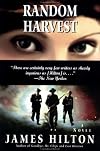
Random Harvest
by James Hilton
On This Page
Description
A World War I veteran's comfortable life is upended by buried memories in this "completely real and convincing" New York Times bestseller by an Academy Award-winning screenwriter (The New York Times). Charles Rainier's family feared him lost along with so many of Britain's youth during the Great War. But two years after he was reported missing in action, he appears in a Liverpool hospital with no memory of the time that has passed. Rainier marries and embarks on a life of relative success, show more but he still can't recall his time on the battlefield--until the first bombs of the Second World War begin to fall. Suddenly, his memories flood back. Now, recollections of a violent battlefield, a German prison, and a passionate affair all threaten to fracture the peaceful life he has worked so hard to create. From the bestselling author of Lost Horizon and Goodbye, Mr. Chips--who also earned an Oscar for his screenwriting during Hollywood's Golden Age--Random Harvest is a moving account of the trauma of war, the disruption of a seemingly ordinary life, and the courage required to find redemption in the face of the most overwhelming circumstances. show lessTags
Recommendations


















Member Recommendations
BonnieJune54 Both main characters explore what their lives would have been if they had taken a different fork in the road.

Member Reviews
"… he isn't happy now – that I do know – there's always a look in his eyes as if he were searching for something and couldn't find it." (pg. 26)
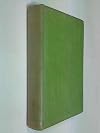
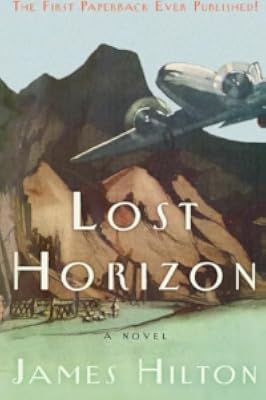
As the creator of Shangri-La in Lost Horizon, James Hilton should be a more well-known writer; his name, by rights, part of our collective cultural memory even if he's no longer widely read. But, with the exception of that magnificent Lost Horizon and the short, sentimental Goodbye Mr Chips, none of his books are in print. To get Random Harvest, I had to buy a charming, old-fashioned hardback on eBay, a yellowed 1942 reprint with a dust jacket that proclaimed the role of the BBC as the 'voice of freedom' broadcasting to 'the occupied countries of Europe'.
Reading Random Harvest, a show more bestseller on its release in 1941 and considered the 'best of the rest', you can see why Hilton's reputation rests on just two books. Hilton, who died aged 54, was perhaps too prolific – and too popular – for his own good. However engagingly written – and Random Harvest is very charming – you get a sense of a writer writing middlebrow entertainments when he had the talent to write something more.
Whilst never a pot-boiler, and never gushingly sentimental, it is hard to peg just what Random Harvest is and why it never transcends itself in the way that Lost Horizon and Goodbye Mr Chips could. The book follows a successful but dissatisfied upper-class businessman who served in World War One and is now, as the world gears up for its sequel against Hitler, trying to remember what happened during a two-year period immediately following the war, where he lost his memory and, presumably, led another life.
It is a mystery book that never seems to care about its mystery; a love story that never commits to the centrality of its romance; a homespun, middlebrow Dickensian sketch that spends a lot of time talking about share dividends and board meetings. It seems to want to both bask in its created warmth – and there's always warmth in a Hilton story – and yet aspire to something more. The businessman's plight works as an overarching metaphor for a "brief unmemoried idyll" (pg. 321) between two wars, but this melancholy acceptance of impending cataclysm was done to much better effect in Lost Horizon and Mr Chips. Neither of the businessman's two lives are especially interesting – indeed, they seem drearily alien to a modern reader. A sentimental, improbable ending doesn't convince – although some readers will like it – and brings Random Harvest back down into the ranks of middle fiction.
None of this is to say the book doesn't work. It does – only it's hard to see the purpose towards which it is actually working. Plot, character, theme, setting and dialogue are all ably done without ever seeming to lift the novel off the ground. This is a writer who has a learned idiosyncrasy that brings texture and idea to his books, yet in Random Harvest it seems to be all things and none. Part of Hilton's appeal is that his characters are often reaching for something they cannot express and cannot grasp; it does not work quite so well when the book itself is doing the same. show less
As the creator of Shangri-La in Lost Horizon, James Hilton should be a more well-known writer; his name, by rights, part of our collective cultural memory even if he's no longer widely read. But, with the exception of that magnificent Lost Horizon and the short, sentimental Goodbye Mr Chips, none of his books are in print. To get Random Harvest, I had to buy a charming, old-fashioned hardback on eBay, a yellowed 1942 reprint with a dust jacket that proclaimed the role of the BBC as the 'voice of freedom' broadcasting to 'the occupied countries of Europe'.
Reading Random Harvest, a show more bestseller on its release in 1941 and considered the 'best of the rest', you can see why Hilton's reputation rests on just two books. Hilton, who died aged 54, was perhaps too prolific – and too popular – for his own good. However engagingly written – and Random Harvest is very charming – you get a sense of a writer writing middlebrow entertainments when he had the talent to write something more.
Whilst never a pot-boiler, and never gushingly sentimental, it is hard to peg just what Random Harvest is and why it never transcends itself in the way that Lost Horizon and Goodbye Mr Chips could. The book follows a successful but dissatisfied upper-class businessman who served in World War One and is now, as the world gears up for its sequel against Hitler, trying to remember what happened during a two-year period immediately following the war, where he lost his memory and, presumably, led another life.
It is a mystery book that never seems to care about its mystery; a love story that never commits to the centrality of its romance; a homespun, middlebrow Dickensian sketch that spends a lot of time talking about share dividends and board meetings. It seems to want to both bask in its created warmth – and there's always warmth in a Hilton story – and yet aspire to something more. The businessman's plight works as an overarching metaphor for a "brief unmemoried idyll" (pg. 321) between two wars, but this melancholy acceptance of impending cataclysm was done to much better effect in Lost Horizon and Mr Chips. Neither of the businessman's two lives are especially interesting – indeed, they seem drearily alien to a modern reader. A sentimental, improbable ending doesn't convince – although some readers will like it – and brings Random Harvest back down into the ranks of middle fiction.
None of this is to say the book doesn't work. It does – only it's hard to see the purpose towards which it is actually working. Plot, character, theme, setting and dialogue are all ably done without ever seeming to lift the novel off the ground. This is a writer who has a learned idiosyncrasy that brings texture and idea to his books, yet in Random Harvest it seems to be all things and none. Part of Hilton's appeal is that his characters are often reaching for something they cannot express and cannot grasp; it does not work quite so well when the book itself is doing the same. show less
“You saved the family inheritance, you rescued the money of hundreds of outsiders, and you kept intact the jobs of a whole army of workpeople. You did, in fact, everything you set out to do.” “There’s only one thing more important,” he [Ranier] answered, “and that is, after you’ve done what you set out to do, to feel that it’s been worth doing.”
Set in England, from immediately after the Great War to just prior to WWII. In 1937, graduate student Harrison meets Charles Rainier on a train. They discuss the approaching war and Ranier’s service in the last. Ranier confides in Harrison about his war experiences that resulted in a stay in a mental hospital. At the time of their meeting, Rainier is a successful businessman show more and a Member of Parliament. Eventually, Harrison works for Ranier as his secretary.
Harrison starts out as narrator, then the story shifts to third person to tell Ranier’s backstory – how he lost his memory, eventually found his family again, and ended up rescuing the family’s business from bankruptcy. It is a story of loss, psychological trauma, and change.
Ranier feels his life is incomplete in some vague way. He is going through the motions, but feels no commitment, no passion. The forward momentum of the story is maintained by curiosity as to what happened to Ranier during the years he cannot remember. I got the impression that Ranier may represent what was happening in England at the time.
“The war was over … but now what? The dead were still dead; no miracle of human signature could restore limbs and sight and sanity; the grinding hardships of those four years could not be wiped out by a headline. Emotions were numb, were to remain half-numbed for a decade, and relief that might have eased them could come no nearer than a fret to the nerves.”
This book was published in 1941, so it is a slice of time from the perspective of someone who lived it. Hilton is a wonderful writer. His characters are vividly drawn, even the minor characters such as the traveling troupe of actors and the eccentric country pastor. It is beautifully crafted, with a number of storylines converging at the end in a satisfying and unexpected way. show less
Set in England, from immediately after the Great War to just prior to WWII. In 1937, graduate student Harrison meets Charles Rainier on a train. They discuss the approaching war and Ranier’s service in the last. Ranier confides in Harrison about his war experiences that resulted in a stay in a mental hospital. At the time of their meeting, Rainier is a successful businessman show more and a Member of Parliament. Eventually, Harrison works for Ranier as his secretary.
Harrison starts out as narrator, then the story shifts to third person to tell Ranier’s backstory – how he lost his memory, eventually found his family again, and ended up rescuing the family’s business from bankruptcy. It is a story of loss, psychological trauma, and change.
Ranier feels his life is incomplete in some vague way. He is going through the motions, but feels no commitment, no passion. The forward momentum of the story is maintained by curiosity as to what happened to Ranier during the years he cannot remember. I got the impression that Ranier may represent what was happening in England at the time.
“The war was over … but now what? The dead were still dead; no miracle of human signature could restore limbs and sight and sanity; the grinding hardships of those four years could not be wiped out by a headline. Emotions were numb, were to remain half-numbed for a decade, and relief that might have eased them could come no nearer than a fret to the nerves.”
This book was published in 1941, so it is a slice of time from the perspective of someone who lived it. Hilton is a wonderful writer. His characters are vividly drawn, even the minor characters such as the traveling troupe of actors and the eccentric country pastor. It is beautifully crafted, with a number of storylines converging at the end in a satisfying and unexpected way. show less
Random Harvest opens in 1937 with the first narrator, a Cambridge graduate student named Harrison, encountering an older man named Charles Rainier on a train. They discuss the impending war and a shared interest in psychology, as well as a story about Rainier's service in the Great War and his two years of amnesia. One thing leads to another and after Harrison finishes his degree he takes a job as Rainier's secretary.
They become somewhat close, and eventually Charles tells Harrison his story. He was the younger son of an autocratic father who ran a prominent company. He eventually joined the army to fight the Germans, and became severely injured. He remembered nothing from the time of his injury until waking on a bench in the Liverpool show more rain a year or two after the armistice. Then he returned home to find his father dying. Charles is pressured into taking over the firm leading to an apparently loveless marriage to an efficient secretary who, as his wife, works hard to make him a social and political leader. He's filled with a growing sense of loss, and of having missed a chance to do what he really should have with his life.
Random Harvest is a really fascinating story. The narrative moved along somewhat slowly during the first part but once Charles begins his story it was hard to put down. The finale was very surprising but one I never saw coming while reading the book. The characters are developed fully and compassionately over time, revealing through the progression of events and interactions, the true sense of a public man struggling with his private demons. James Hilton was a master story teller, and Random Harvest displays his talents at their height. show less
They become somewhat close, and eventually Charles tells Harrison his story. He was the younger son of an autocratic father who ran a prominent company. He eventually joined the army to fight the Germans, and became severely injured. He remembered nothing from the time of his injury until waking on a bench in the Liverpool show more rain a year or two after the armistice. Then he returned home to find his father dying. Charles is pressured into taking over the firm leading to an apparently loveless marriage to an efficient secretary who, as his wife, works hard to make him a social and political leader. He's filled with a growing sense of loss, and of having missed a chance to do what he really should have with his life.
Random Harvest is a really fascinating story. The narrative moved along somewhat slowly during the first part but once Charles begins his story it was hard to put down. The finale was very surprising but one I never saw coming while reading the book. The characters are developed fully and compassionately over time, revealing through the progression of events and interactions, the true sense of a public man struggling with his private demons. James Hilton was a master story teller, and Random Harvest displays his talents at their height. show less
James Hilton deals in sentimentality and nostalgia, all presented through a middlebrow medium. That sounds harsh. And so it was meant when Hilton began his career in the interwar years, especially among the modernist highbrow set. But during the 1950s, middlebrow literature gained a slight degree of respectability--although it was still used by aspiring highbrows to harpoon great literary whales represented by such institutions as the Book-of-the-Month Club and the Modern Library. The sense of ennui after World War II sent a generation on a search for meaning. And books such as Random Harvest and Hilton's other two earlier major works, Lost Horizon and Goodbye Mr. Chips fit the bill perfectly, even if they had already gained widespread show more popularity during their initial publication in the 1930s and early 1940s and in subsequent film versions. For the post World War II 1950s, material comfort and well being were not enough. Albeit set against the backdrop of possible annihilation through atomic war, life needed a certain frisson. And so a flurry of successful middlebrow works in literature addressed to this concern began to flourish. And Hilton's work also gained a foothold as a sort of classic for the medium.
Random Harvest, in particular, sounded a sympathetic chord both when it first appeared (1941) and later on. World War II was in its second year and a successful outcome was far from assured. In that atmosphere, the story of Charles Ranier, a wealthy business tycoon and veteran of World War I who had for some months during and following the Great War lost his memory, presented itself as a paean to earlier and better times of old English values. These included a sort of feudal fantasy of intermingling social classes, unspoiled village life, and idyllic scenes of the countryside.
The twist in the story is that Ranier regains his memory lost due to shellshock (aka combat fatigue/PTSD) in 1917 but in so doing then loses his memory of the time he became hospitalized during the war until just around Christmas in 1920. Recovering those three years and merging them into Ranier's postwar life becomes the task of the novel.
Along the way, Hilton engages in some visionary preaching. These are the moments of greatest weakness in Random Harvest. Delivered by an old parson, these harangues cover everything from the League of Nations to the Common Law rights of villagers to restore their access to the commons being swallowed up by arrogant and distant members of the elite. There are also allusions to the rights and values of the working man in a reformed system of capitalism. (Did Hilton recognize the similarity between his social solutions and the corporatism of Mussolini?) In the end, he sort of espouses a Fabian socialist worldview without accompanying rules of parliamentary procedure. The only thing missing is an avowal of fruit juices and veganism.
So, yes, it's easy to punch holes in Hilton's literary world. But taken on its own terms, it nevertheless maintains its appeal. Is it a literary crime, after all, to write accessibly for the wider public? Should an author reject giving voice to a sense of unease in society simply because it is too common a feeling? And so what if he provides a satisfying answer that lifts people out of those moments of despair about their lack of being connected both to earlier generations and coming generations. Must everything end in modernist cynicism? And Hilton may have dealt in feelings primarily. But without them what do you have?
Finally, an interesting point of view for contemporary readers. While Hilton employed nostalgia for an England he saw disappearing into the abyss of World War II, readers today, of course, have an added level of nostalgia to encounter. There is not only that of the world before and right after World War I but the milieu of World War II in which Random Harvest first appeared. The two greatest political calamities of the twentieth century. And we are drawn back to them. Constantly. show less
Random Harvest, in particular, sounded a sympathetic chord both when it first appeared (1941) and later on. World War II was in its second year and a successful outcome was far from assured. In that atmosphere, the story of Charles Ranier, a wealthy business tycoon and veteran of World War I who had for some months during and following the Great War lost his memory, presented itself as a paean to earlier and better times of old English values. These included a sort of feudal fantasy of intermingling social classes, unspoiled village life, and idyllic scenes of the countryside.
The twist in the story is that Ranier regains his memory lost due to shellshock (aka combat fatigue/PTSD) in 1917 but in so doing then loses his memory of the time he became hospitalized during the war until just around Christmas in 1920. Recovering those three years and merging them into Ranier's postwar life becomes the task of the novel.
Along the way, Hilton engages in some visionary preaching. These are the moments of greatest weakness in Random Harvest. Delivered by an old parson, these harangues cover everything from the League of Nations to the Common Law rights of villagers to restore their access to the commons being swallowed up by arrogant and distant members of the elite. There are also allusions to the rights and values of the working man in a reformed system of capitalism. (Did Hilton recognize the similarity between his social solutions and the corporatism of Mussolini?) In the end, he sort of espouses a Fabian socialist worldview without accompanying rules of parliamentary procedure. The only thing missing is an avowal of fruit juices and veganism.
So, yes, it's easy to punch holes in Hilton's literary world. But taken on its own terms, it nevertheless maintains its appeal. Is it a literary crime, after all, to write accessibly for the wider public? Should an author reject giving voice to a sense of unease in society simply because it is too common a feeling? And so what if he provides a satisfying answer that lifts people out of those moments of despair about their lack of being connected both to earlier generations and coming generations. Must everything end in modernist cynicism? And Hilton may have dealt in feelings primarily. But without them what do you have?
Finally, an interesting point of view for contemporary readers. While Hilton employed nostalgia for an England he saw disappearing into the abyss of World War II, readers today, of course, have an added level of nostalgia to encounter. There is not only that of the world before and right after World War I but the milieu of World War II in which Random Harvest first appeared. The two greatest political calamities of the twentieth century. And we are drawn back to them. Constantly. show less
Sandwiched between Armistice Day of World War I and the opening shots of World War II, this is the story of a man who lost his memory from shell shock in the first war, started to build a new life, and then had an accident that took his memory of that life while restoring his pre-war memory. On the surface it's a well-told romance with wonderful characters, both major and minor. Underneath, it's a metaphor for England, it's preparation for World War II and a disappearing way of life.
I liked this more than either Goodbye, Mr. Chips or Lost Horizon...both books that I enjoyed.
I liked this more than either Goodbye, Mr. Chips or Lost Horizon...both books that I enjoyed.
Even if life seems like a random harvest between surprising positive and negative meaningless events, love can always find a way to have a life changing purpose. This is a very good novel that examined the peace culture in post World War I England.
Charles, a war veteran severely wounded in the trenches tried to find some sense in his life filled with shell shocked sporadic memory. Like James hilton's earlier novel, “Lost Horizon,” this novel is remarkably prescient considering today's seemingly chaotic peace between the wars.
The precarious peace that was achieved after World War 1 seemed to leave British citizens desperately yearning for return to a way of life that was more an illusion than a reality. Politics had became show more increasingly aggressive in European countries. One country after another was attempting to assert its former dominance whether large or small.
People seemed to wander here and there looking for some sort of purpose in the culture of Peace. Celebrations of peace were slowly but surely evaporating. The common reaction was to wait and see what happens and try to maintain a peace at all costs.
There was a rise of nations that had not learned anything from the horrors of the First World War. These European nations only needed a single world tyrant to raise the specter of aggression.
Just as we allowed the Vietnam War and our desert wars to spawn the current batch of sociopaths in government, European citizens relied on well-meaning optimists obeying the laws of a rational culture to magically return the world to peace and prosperity.
In Random Harvest Charles the victim of major injuries in the trenches of war wanders around Europe looking for the keys to his vague memory of a peaceful existence.
Sometimes peace on earth is measured in money and property, but these do not phase Charles. He is looking for something in his lost memory that perhaps was worth the risk of dying for in the past and living for in the present. He does not know that it will be a random meeting, a chance encounter with the love of his life that will be the treasure of the random harvest of his life. show less
Charles, a war veteran severely wounded in the trenches tried to find some sense in his life filled with shell shocked sporadic memory. Like James hilton's earlier novel, “Lost Horizon,” this novel is remarkably prescient considering today's seemingly chaotic peace between the wars.
The precarious peace that was achieved after World War 1 seemed to leave British citizens desperately yearning for return to a way of life that was more an illusion than a reality. Politics had became show more increasingly aggressive in European countries. One country after another was attempting to assert its former dominance whether large or small.
People seemed to wander here and there looking for some sort of purpose in the culture of Peace. Celebrations of peace were slowly but surely evaporating. The common reaction was to wait and see what happens and try to maintain a peace at all costs.
There was a rise of nations that had not learned anything from the horrors of the First World War. These European nations only needed a single world tyrant to raise the specter of aggression.
Just as we allowed the Vietnam War and our desert wars to spawn the current batch of sociopaths in government, European citizens relied on well-meaning optimists obeying the laws of a rational culture to magically return the world to peace and prosperity.
In Random Harvest Charles the victim of major injuries in the trenches of war wanders around Europe looking for the keys to his vague memory of a peaceful existence.
Sometimes peace on earth is measured in money and property, but these do not phase Charles. He is looking for something in his lost memory that perhaps was worth the risk of dying for in the past and living for in the present. He does not know that it will be a random meeting, a chance encounter with the love of his life that will be the treasure of the random harvest of his life. show less
This is a very good story.... it's completely readable and well constructed. It is a tale of lost identity due to shell shock in the last world war. The main character has become a successful industrialist but has a two year gap in his memory. His personal life has remained detached and almost unnaturally unemotional but he continually seeks clues to those missing years. The reader gets his story in a series of flashbacks as one phase after another is revealed. There is an element of suspense...of mystery...of romance...which when all combined makes for memorable story.
Members
- Recently Added By
Lists

Publisher's Weekly Bestsellers - Part II - 1940 - 1979
355 works; 5 members

Armed Services Editions
150 works; 1 member
Author Information

49+ Works 9,359 Members
James Hilton was born in Leigh, Lancashire, England on September 9, 1900. While attending the Leys School in Cambridge, he published several stories in the school magazine. In 1918, he won a scholarship to Christ's College, Cambridge, where he joined the University Officer Training Squadron. Before he saw any action, the war ended. He published show more his first novel, Catherine Herself, in 1920, while still an undergraduate. After Cambridge, he became a freelance journalist, writing chiefly for The Manchester Guardian and later The Irish Independent and reviewing fiction for The Daily Telegraph. During this time, he had several more of his novels published, though without conspicuous success. In 1931, he enjoyed his first popular success with And Now Goodbye and was able to take up writing fiction full time. His other works include Lost Horizon, which won the Hawthornden Prize, Goodbye Mr. Chips, and Random Harvest, all of which were made into highly successful motion pictures. In 1935, he was invited to Hollywood to work as a screenwriter. He wrote screenplays for Camille, Foreign Correspondent, Forever and a Day, The Story of Dr. Wassell, The Tuttles of Tahiti, and We Are Not Alone. He won the Best Screenplay Oscar for Mrs. Miniver in 1942. During his Hollywood years, he continued to write novels including Nothing So Strange, Morning Journey, and Time and Time Again. He also served as the narrator for Madame Curie and the adaptation of his novel So Well Remembered, in addition to hosting CBS Radio's Hallmark Playhouse from 1948 until 1953. He died of liver cancer on December 20, 1954. (Bowker Author Biography) show less
Awards and Honors
Distinctions
Series
Belongs to Publisher Series
Zephyr Books (17)
Work Relationships
Is contained in
Has the adaptation
Common Knowledge
- Canonical title*
- Prigionieri del passato
- Original title
- Random Harvest
- Original publication date
- 1941
- People/Characters
- Charles Rainier; Paula Ridgeway; John Smith; Helen Rainier; Harrison; Miss Hobbes (show all 9); John Blampied; Woburn; Sheldon
- Important places
- London, England, UK; Beaching Over, England, UK; Liverpool, England, UK
- Important events
- World War I (1914 | 1918); Armistice Day - World War I
- Related movies
- Random Harvest (1942 | IMDb)
- Epigraph
- According to a British Official Report, bombs fell at Random. — German Official Report
- First words
- On the morning of the eleventh of November, 1937, precisely at eleven o'clock, some well-meaning busybody consulted his watch and loudly announced the hour, with the result that all of us in the dining car felt constrained to... (show all) put aside drinks and newspapers and spend two minutes' silence in rather embarrassed stares at one another or out of the window.
- Last words
- (Click to show. Warning: May contain spoilers.)She knew this too, for she ran into his arms, calling out, "Oh, Smithy—Smithy—it may not be too late!"
- Blurbers
- Gannett, Lewis
*Some information comes from Common Knowledge in other languages. Click "Edit" for more information.
Classifications
- Genres
- Fiction and Literature, General Fiction, Romance, Historical Fiction
- DDC/MDS
- 823.912 — Literature & rhetoric English & Old English literatures English fiction 1900- 1901-1999 1901-1945
- LCC
- PZ3 .H5677 — Language and Literature Fiction and juvenile belles lettres Fiction and juvenile belles lettres Fiction in English
- BISAC
Statistics
- Members
- 554
- Popularity
- 53,450
- Reviews
- 24
- Rating
- (4.02)
- Languages
- 7 — Danish, English, German, Italian, Norwegian (Bokmål), Spanish, Swedish
- Media
- Paper, Audiobook, Ebook
- ISBNs
- 28
- ASINs
- 32