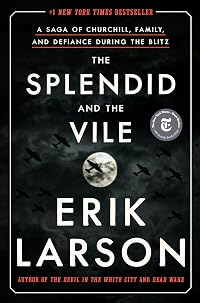
The Splendid and the Vile: A Saga of Churchill, Family, and Defiance During the Blitz
by Erik Larson
On This Page
Description
"The #1 New York Times bestselling author of The Devil in the White City and Dead Wake delivers a fresh and compelling portrait of Winston Churchill and London during the Blitz On Winston Churchill's first day as prime minister, Hitler invaded Holland and Belgium. Poland and Czechoslovakia had already fallen, and the Dunkirk evacuation was just two weeks away. For the next twelve months, Hitler would wage a relentless bombing campaign, killing 45,000 Britons. It was up to Churchill to hold show more the country together and persuade President Franklin Roosevelt that Britain was a worthy ally-and willing to fight to the end. In The Splendid and the Vile, Erik Larson shows, in cinematic detail, how Churchill taught the British people "the art of being fearless." It is a story of political brinkmanship, but it's also an intimate domestic drama set against the backdrop of Churchill's prime-ministerial country home, Chequers; his wartime retreat, Ditchley, where he and his entourage go when the moon is brightest and the bombing threat is highest; and of course 10 Downing Street in London. Drawing on diaries, original archival documents, and once-secret intelligence reports-some released only recently-Larson provides a new lens on London's darkest year through the day-to-day experience of Churchill and his family: his wife, Clementine; their youngest daughter, Mary, who chafes against her parents' wartime protectiveness; their son, Randolph, and his beautiful, unhappy wife, Pamela; Pamela's illicit lover, a dashing American emissary; and the cadre of close advisers who comprised Churchill's "Secret Circle," including his lovestruck private secretary, John Colville; newspaper baron Lord Beaverbrook; and the Rasputin-like Frederick Lindemann. The Splendid and the Vile takes readers out of today's political dysfunction and back to a time of true leadership, when-in the face of unrelenting horror-Churchill's eloquence, courage, and perseverance bound a country, and a family, together."-- show lessTags
Recommendations




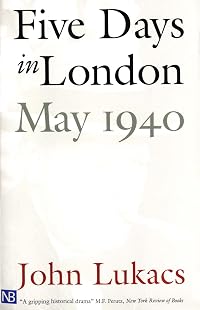

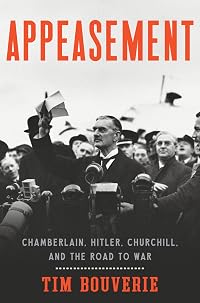

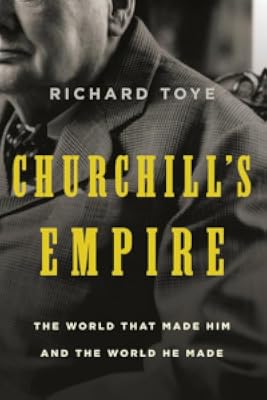



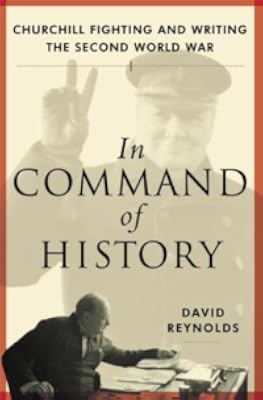
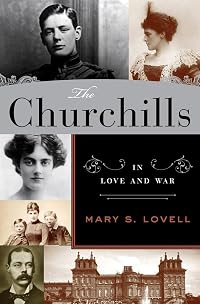




Member Recommendations
No Ordinary Time: Franklin and Eleanor Roosevelt: The Home Front in World War II by Doris Kearns Goodwin
auldhouse These two would make to great companion reads. One from Winston Churchill and one from Franklin Roosevelt.
Member Reviews
There's little I could do to add to the numerous complimentary reviews and high ratings, especially given [[Erik Larson]]'s deserved popularity. But I should say that this history is less comprehensive in favor of the personal. Larson says in his afterword that he was taken by the idea to look at Churchill from a more personal perspective, the day-to-day, even in the midst of a vicious world war. His subject comes to life in an uncommon way with this slightly off-angle take. This book was hard to put down, which is rare for histories - not a surprise, though, for anyone who's read Larson. Churchill felt real to me, human, in a way he's never before. We take these superhumanly noble figures of our past as little more than caricatures, show more and Churchill's own bohemian nature might relegate him to that realm anyway. But, here, he was flesh and blood, complicated and imminently human.
Highly recommended.
5 bones!!!!! show less
Highly recommended.
5 bones!!!!! show less
Summary: A day to day narrative of the first year as prime minister of Winston Churchill, focusing on the circle around him as well as how he inspired a nation fighting alone under the Blitz.
There are a number of biographies of Winston Churchill and studies of his leadership as prime minister during World War 2. What distinguishes this one is that Larson takes us into the intimate circle around Churchill, bringing the great man to life out of the pages of history. We become observers on the edge of an intimate circle rather than removed readers of history from eighty years ago during Churchill’s first year as prime minister.
We are with Churchill as he speaks in parliament or over radio broadcasts, not so much giving the people courage show more as helping them summon the courage and resolve that was in them. They would need it. Almost at once the bombings began, taking a frightful toll. We walk with Churchill among the ruins as people try to recover and go about their lives.
We get to know Churchill with his closest leadership, particularly the asthmatic but effective Max Beaverbrook who takes over aircraft production and doubles it. Beaverbrook had a genius for cutting through red tape and making enemies, but he got things done–between his resignations, which Churchill refused. The wisdom of Churchill was having someone so close who never told Churchill what he wanted to hear, but only the unvarnished truth, with no reverence for any institutions.
Larson takes us into the family circle: the reserved and opinionated Clementine, the dissolute Randolph, constantly mired in debt and affairs, to the distress of young Pamela, wife and mother, and Mary, the spirited youngest daughter discovering the world, love, and living with courage amid the restraints of her parents. She ends up heading up an anti-aircraft battery and recognizing her parents wisdom in rejecting her first love. John Colville rounds out the circle as Churchill’s secretary. His “intended” doesn’t return his affection, he wants to enter the air corps, but apart from a few sorties, serves with Churchill, in the process keeping a diary that is a treasure trove for historians like Larson.
We are acquainted with the ever-present dangers of the bombing, almost always at night, rendering the RAF ineffective, except in its own nighttime bombing of Germany. We learn of underground shelters for 10 Downing Street, the special hideaway of Churchill at Ditchley, rather than Checquers on the nights around the full moon. We glimpse the tragedy of the bombing of a nightclub that would have been Mary’s next stop on a night out. And we walk with and observe with Churchill, oblivious to dangers to his own person.
Another theme is Churchill’s clear perception of the vital importance the United States would play, and his vital role in maintaining the spirits and fight of the nation until it became politically possible for the U.S. to fully join the fight. As a career politician, he grasped Roosevelt’s challenges, working incrementally through the exchange of bases for materials and the passage of Lend-Lease. Of great fortune was the recall of Joseph Kennedy and the presence of Harry Hopkins and later Averill Harriman, both of whom Churchill welcomed into his inner circle and who became Churchill’s advocates with Roosevelt in consequence. It would cost Randolph’s marriage, already on the rocks, when Harriman and Pamela take up an affair.
Through it all is Churchill himself. I don’t think it is possible to write a bad book about Churchill because he is so interesting, even if sometimes exasperating! Larson gives us the man in full, from his demand to bathe twice daily wherever he went, dictating letters in bath and bed, to his prodigious alcohol consumption, the cigar which made him incomprehensible to his inspiring speeches and presence that made it clear to both his own country and Germany, that unlike the countries of the European mainland, there would be no surrender. This, too, was critical to the hoped for alliance with America.
What Larson has done is not just given us another biography or war history. He has helped us imagine being with Churchill during this first year from May 1940 to May 1941. Perhaps this is a good book for our time, when we are fighting a different, but it appears, no less protracted, combat. When life cannot be normal, we see what it is to live with day to day courage, resolve, and determination without losing heart. show less
There are a number of biographies of Winston Churchill and studies of his leadership as prime minister during World War 2. What distinguishes this one is that Larson takes us into the intimate circle around Churchill, bringing the great man to life out of the pages of history. We become observers on the edge of an intimate circle rather than removed readers of history from eighty years ago during Churchill’s first year as prime minister.
We are with Churchill as he speaks in parliament or over radio broadcasts, not so much giving the people courage show more as helping them summon the courage and resolve that was in them. They would need it. Almost at once the bombings began, taking a frightful toll. We walk with Churchill among the ruins as people try to recover and go about their lives.
We get to know Churchill with his closest leadership, particularly the asthmatic but effective Max Beaverbrook who takes over aircraft production and doubles it. Beaverbrook had a genius for cutting through red tape and making enemies, but he got things done–between his resignations, which Churchill refused. The wisdom of Churchill was having someone so close who never told Churchill what he wanted to hear, but only the unvarnished truth, with no reverence for any institutions.
Larson takes us into the family circle: the reserved and opinionated Clementine, the dissolute Randolph, constantly mired in debt and affairs, to the distress of young Pamela, wife and mother, and Mary, the spirited youngest daughter discovering the world, love, and living with courage amid the restraints of her parents. She ends up heading up an anti-aircraft battery and recognizing her parents wisdom in rejecting her first love. John Colville rounds out the circle as Churchill’s secretary. His “intended” doesn’t return his affection, he wants to enter the air corps, but apart from a few sorties, serves with Churchill, in the process keeping a diary that is a treasure trove for historians like Larson.
We are acquainted with the ever-present dangers of the bombing, almost always at night, rendering the RAF ineffective, except in its own nighttime bombing of Germany. We learn of underground shelters for 10 Downing Street, the special hideaway of Churchill at Ditchley, rather than Checquers on the nights around the full moon. We glimpse the tragedy of the bombing of a nightclub that would have been Mary’s next stop on a night out. And we walk with and observe with Churchill, oblivious to dangers to his own person.
Another theme is Churchill’s clear perception of the vital importance the United States would play, and his vital role in maintaining the spirits and fight of the nation until it became politically possible for the U.S. to fully join the fight. As a career politician, he grasped Roosevelt’s challenges, working incrementally through the exchange of bases for materials and the passage of Lend-Lease. Of great fortune was the recall of Joseph Kennedy and the presence of Harry Hopkins and later Averill Harriman, both of whom Churchill welcomed into his inner circle and who became Churchill’s advocates with Roosevelt in consequence. It would cost Randolph’s marriage, already on the rocks, when Harriman and Pamela take up an affair.
Through it all is Churchill himself. I don’t think it is possible to write a bad book about Churchill because he is so interesting, even if sometimes exasperating! Larson gives us the man in full, from his demand to bathe twice daily wherever he went, dictating letters in bath and bed, to his prodigious alcohol consumption, the cigar which made him incomprehensible to his inspiring speeches and presence that made it clear to both his own country and Germany, that unlike the countries of the European mainland, there would be no surrender. This, too, was critical to the hoped for alliance with America.
What Larson has done is not just given us another biography or war history. He has helped us imagine being with Churchill during this first year from May 1940 to May 1941. Perhaps this is a good book for our time, when we are fighting a different, but it appears, no less protracted, combat. When life cannot be normal, we see what it is to live with day to day courage, resolve, and determination without losing heart. show less
Having read Chris McNab's excellent Hitler's Armies I came to this unsure of what I would be reading. I was not particularly interested in another blow by blow account of how the war unfolded.
This however is a biography of Winston Churchill during the war years.
My parents were war generation and my mother a Londoner. She held Winston Churchill in a level of regard that I never saw her hold for any other human being. When he died in 1965 and was lying in state, I was dragged by my mother on buses and trains to Westminster Abbey to view his coffin. The abbey is huge and was full of weeping people both men and women, old men in uniform in particular. So many men of my father's age would stop in front of the coffin and salute.
I was 15 and show more was full of all the knowledge and cynicism that only 15 year olds can have. But I was stopped dead in my tracks in this place by so much emotion by people I would have otherwise sneered at. In this huge place, in spite of the sheer number of people streaming through it was silence, stillness and sobs. I was only too aware that I was in the presence of something bigger than I could even begin to comprehend. For once I was at a loss for clever smart things to say and just shut up.
I've never forgotten that experience and this book clarified for me what was happening there. It also gave me some idea of what people endured. I have read other accounts of that time but what this book did was to frame it all through peoples eyes. It was very personal.
This book is strictly a non-fiction but I found it incredibly moving in so many places. It really brings home the reality of those times in ways that "blood n guts" books and movies cannot even get close to.
This is the third book by Erik Larson that I have read and loved every one of them. This one is no exception. He manages to weave human experiences into what would otherwise be dried recording events in a way that brings them to life and gives you eyes in the past. show less
This however is a biography of Winston Churchill during the war years.
My parents were war generation and my mother a Londoner. She held Winston Churchill in a level of regard that I never saw her hold for any other human being. When he died in 1965 and was lying in state, I was dragged by my mother on buses and trains to Westminster Abbey to view his coffin. The abbey is huge and was full of weeping people both men and women, old men in uniform in particular. So many men of my father's age would stop in front of the coffin and salute.
I was 15 and show more was full of all the knowledge and cynicism that only 15 year olds can have. But I was stopped dead in my tracks in this place by so much emotion by people I would have otherwise sneered at. In this huge place, in spite of the sheer number of people streaming through it was silence, stillness and sobs. I was only too aware that I was in the presence of something bigger than I could even begin to comprehend. For once I was at a loss for clever smart things to say and just shut up.
I've never forgotten that experience and this book clarified for me what was happening there. It also gave me some idea of what people endured. I have read other accounts of that time but what this book did was to frame it all through peoples eyes. It was very personal.
This book is strictly a non-fiction but I found it incredibly moving in so many places. It really brings home the reality of those times in ways that "blood n guts" books and movies cannot even get close to.
This is the third book by Erik Larson that I have read and loved every one of them. This one is no exception. He manages to weave human experiences into what would otherwise be dried recording events in a way that brings them to life and gives you eyes in the past. show less
“May I just say that history is lively abode, full of surprises.” — Erik Larson, “The Splendid and the Vile”
So much has been written about Winston Churchill, about World War II in general and about the Blitz in particular that you wouldn't think someone could write anything fresh and original about them. But this is Erik Larson and the book is “The Splendid and the Vile” (2020), so move to the edge of your seat.
Larson has a way of turning history into something that reads like a thriller, as he has done before with the sinking of the Lusitania and the Chicago World's Fair. Now he does it again with the Churchills and the Blitz. Winston, the new prime minister, shares the spotlight here with his wife, Clementine; his show more daughter, Mary, then in her late teens; and his playboy son, Randolph, with his huge gambling debts and numerous affairs.
Larson makes the war personal, and not just for the Churchills but also for various figures in the British government and and even for some of those on the German side and in the United States. Good fiction requires interesting detail, and Larson shows that the same is true with books of history. For example, Winston Churchill took two baths each day, conducting business with his secretaries and advisors while in the tub. Larson tells us that Churchill once met with President Franklin Roosevelt while entirely nude and out of his tub.
Larson turns his history into a love story, and in fact into multiple love stories, including Mary and her temporary sweetheart and Pamela Churchill (Randolph's wife) and William Averell Harriman, FDR's representative to London. Meanwhile, he gives us plenty of detail about the German bombing attacks.
One detail I found particularly interesting was that the London Blitz began by accident. Hitler ordered his pilots to bomb only military targets in England, but one dark night bombs were accidentally dropped over London. Churchill retaliated by bombing Berlin. Hitler, unaware of the accidental London bombing, retaliated by bombing London. From then on the bombing of cities became routine, right up to Hiroshima
In Erik Larson's hands, history certainly is a lively abode. show less
So much has been written about Winston Churchill, about World War II in general and about the Blitz in particular that you wouldn't think someone could write anything fresh and original about them. But this is Erik Larson and the book is “The Splendid and the Vile” (2020), so move to the edge of your seat.
Larson has a way of turning history into something that reads like a thriller, as he has done before with the sinking of the Lusitania and the Chicago World's Fair. Now he does it again with the Churchills and the Blitz. Winston, the new prime minister, shares the spotlight here with his wife, Clementine; his show more daughter, Mary, then in her late teens; and his playboy son, Randolph, with his huge gambling debts and numerous affairs.
Larson makes the war personal, and not just for the Churchills but also for various figures in the British government and and even for some of those on the German side and in the United States. Good fiction requires interesting detail, and Larson shows that the same is true with books of history. For example, Winston Churchill took two baths each day, conducting business with his secretaries and advisors while in the tub. Larson tells us that Churchill once met with President Franklin Roosevelt while entirely nude and out of his tub.
Larson turns his history into a love story, and in fact into multiple love stories, including Mary and her temporary sweetheart and Pamela Churchill (Randolph's wife) and William Averell Harriman, FDR's representative to London. Meanwhile, he gives us plenty of detail about the German bombing attacks.
One detail I found particularly interesting was that the London Blitz began by accident. Hitler ordered his pilots to bomb only military targets in England, but one dark night bombs were accidentally dropped over London. Churchill retaliated by bombing Berlin. Hitler, unaware of the accidental London bombing, retaliated by bombing London. From then on the bombing of cities became routine, right up to Hiroshima
In Erik Larson's hands, history certainly is a lively abode. show less
As terrible as the costs of war are, we tend to feel especial horror over civilian casualties.
Shortly after the beginning of World War II, German bombers attacked Britain relentlessly in what came to be known as “the Blitz” after the German word “blitzkrieg,” meaning “lightning war.” Between September 7, 1940 and May 10, 1941, some 45,000 British civilians were killed and another 139,000 were injured. Many more were left homeless - over 12,000 alone in the final, brutal raid on London. Hundreds of thousands of buildings were destroyed or damaged. Overall, some 33,000 tons of bombs were dropped by the Germans over Britain. It was only after the Germans opened up a second front against Russia that the bombing abated because show more the Germans needed to redeploy the aircraft of the Luftwaffe to their new Eastern Front.
Larson explains that he wrote this history after wondering how anyone could stand the frightening reality of constant bombardment and threat of actual invasion by Germany. The noise of the planes and blasts from the bombs added to the general fear and anxiety. (As a passage relates that Larson shares from one Londoner's diary: “My heart misses a beat whenever a car changes gear-up, or when someone runs, or walks very quickly, or suddenly stands still, or cocks their head on one side, or stares up at the sky, or says, ‘Sshh!’...") The physical damage from the bombings required ongoing repairs but there was a lack of sufficient supplies and labor. Shortages of food and medicine increased the worries of the populace. In particular, Larson wondered, how could parents handle the threat to their children? During the Blitz 7,736 children were killed and 7,622 seriously wounded.
Larson was curious how Churchill, by then aged 65, coped psychologically with the challenges. Because so many biographies of Churchill had already been written, Larson opted to craft “a more intimate account” of this period using source material from diaries as well as other documents. He drew mainly from the private diaries of Mary Churchill, at 17 the youngest of Churchill’s four children; John “Jock” Colville, 25, one of Churchill’s private secretaries; and Joseph Goebbels, Hitler’s chief propagandist.
The author takes us from the evacuation of the Allies from Dunkirk in June, 1940, through the collapse of France shortly thereafter, the invasion by Hitler of Russia in late June, 1941, and finally to the bombing of Pearl Harbor in December 1941 and subsequent entry of the United States into the war. After vicariously enduring all that Churchill and the British suffered, one can’t help but have mixed feelings over the Japanese bombing: the sacrifice of the soldiers at Pearl Harbor and resulting willingness of Americans to enter the fray undoubtedly saved Britain, hanging on by a thread, from Hitler’s juggernaut.
Larson embellishes what history buffs already know about the first year of the war in England with interesting personal observations by those closely tied to the centers of power. The daily ravages of war did not stop those caught up in its vise from experiencing the gamut of personal relationships. It is notable that, as Larson observed, “the attacks on London seemed clearly to unleash a new sexuality . . . As bombs fell, libidos soared.” One woman in London at the time wrote: “Young people were reluctant to contemplate death without having shared their bodies with someone else.” Affairs involving married people were also common, Larson reports.
Evaluation: It is hard to read this gripping account without gaining even more appreciation for Churchill than if one only had read his speeches, which were simply superb. One will also admire the courage and perseverance of those who went through so much and still carried on. It’s an inspiring story, and written to appeal to more than just a “history” audience - it reads in many ways like a thriller, albeit with an outcome you already know. show less
Shortly after the beginning of World War II, German bombers attacked Britain relentlessly in what came to be known as “the Blitz” after the German word “blitzkrieg,” meaning “lightning war.” Between September 7, 1940 and May 10, 1941, some 45,000 British civilians were killed and another 139,000 were injured. Many more were left homeless - over 12,000 alone in the final, brutal raid on London. Hundreds of thousands of buildings were destroyed or damaged. Overall, some 33,000 tons of bombs were dropped by the Germans over Britain. It was only after the Germans opened up a second front against Russia that the bombing abated because show more the Germans needed to redeploy the aircraft of the Luftwaffe to their new Eastern Front.
Larson explains that he wrote this history after wondering how anyone could stand the frightening reality of constant bombardment and threat of actual invasion by Germany. The noise of the planes and blasts from the bombs added to the general fear and anxiety. (As a passage relates that Larson shares from one Londoner's diary: “My heart misses a beat whenever a car changes gear-up, or when someone runs, or walks very quickly, or suddenly stands still, or cocks their head on one side, or stares up at the sky, or says, ‘Sshh!’...") The physical damage from the bombings required ongoing repairs but there was a lack of sufficient supplies and labor. Shortages of food and medicine increased the worries of the populace. In particular, Larson wondered, how could parents handle the threat to their children? During the Blitz 7,736 children were killed and 7,622 seriously wounded.
Larson was curious how Churchill, by then aged 65, coped psychologically with the challenges. Because so many biographies of Churchill had already been written, Larson opted to craft “a more intimate account” of this period using source material from diaries as well as other documents. He drew mainly from the private diaries of Mary Churchill, at 17 the youngest of Churchill’s four children; John “Jock” Colville, 25, one of Churchill’s private secretaries; and Joseph Goebbels, Hitler’s chief propagandist.
The author takes us from the evacuation of the Allies from Dunkirk in June, 1940, through the collapse of France shortly thereafter, the invasion by Hitler of Russia in late June, 1941, and finally to the bombing of Pearl Harbor in December 1941 and subsequent entry of the United States into the war. After vicariously enduring all that Churchill and the British suffered, one can’t help but have mixed feelings over the Japanese bombing: the sacrifice of the soldiers at Pearl Harbor and resulting willingness of Americans to enter the fray undoubtedly saved Britain, hanging on by a thread, from Hitler’s juggernaut.
Larson embellishes what history buffs already know about the first year of the war in England with interesting personal observations by those closely tied to the centers of power. The daily ravages of war did not stop those caught up in its vise from experiencing the gamut of personal relationships. It is notable that, as Larson observed, “the attacks on London seemed clearly to unleash a new sexuality . . . As bombs fell, libidos soared.” One woman in London at the time wrote: “Young people were reluctant to contemplate death without having shared their bodies with someone else.” Affairs involving married people were also common, Larson reports.
Evaluation: It is hard to read this gripping account without gaining even more appreciation for Churchill than if one only had read his speeches, which were simply superb. One will also admire the courage and perseverance of those who went through so much and still carried on. It’s an inspiring story, and written to appeal to more than just a “history” audience - it reads in many ways like a thriller, albeit with an outcome you already know. show less
Describing a London night of diamond-bright stars, a rising moon over Westminster, searchlight beams crisscrossing the sky, exploding shells, buildings aflame, and flashes of anti-aircraft guns, John Colville, Churchill's private secretary, wrote, “Never was there such a contrast of natural splendor and human vileness,” giving Eric Larson his title for The Splendid and the Vile: A Saga of Churchill, Family, and Defiance During the Blitz. One might also say that Larson has written a splendid telling of a vile period of human history.
This is by no means just another biography of Winston Churchill or just another history of World War II. Both have already been written about extensively. The book primarily covers only two years, the show more approach of war in 1940 and the aerial onslaught by the Luftwaffe in 1941. For all intents and purposes, the book ends with the Japanese attack on Pearl Harbor and the United States' entrance into the war.
In that limited time frame, the reader learns a great deal about Churchill's courting of President Roosevelt and of his efforts to entice the United States into action, action necessary to ensure the continued freedom of the British Isles. One also sees the very human nature of Churchill, of his family, of his appointees, of U.S. envoys and ambassadors, and even a bit about their adversaries. More than just learning about these people, the reader sees them, sees their hopes, aspirations, loves, infatuations, adulteries, jealousies, personal defeats, and personal victories. No one is exalted in Larson's book, nor is anyone pilloried. Rather, these mortals are revealed to us as they were: people caught up in running a country that finds itself enveloped in the firestorm of war.
Numerous tidbits of Churchill's personality find their way into Larson's narrative, a few peeks into his nature that likely never appear in more, shall we say, formal biographies. For example, almost immediately after the U.S, declared war on Germany, Churchill loaded his top ministers on a destroyer and set sail for the U.S. to visit Roosevelt in person. While lodged in the White House, Churchill heard a knock on his bedroom door, and in wheeled Roosevelt to find himself in the presence of a stark naked British prime minister walking about the room with a cigar in one hand, a drink in the other, and eager to talk with the President at some length while in that attire (or, rather, lack thereof). Larson's book describes quite a few personal scenarios that one is not likely to come across in a high school world history book.
Larson is able to work in a few insightful observations from behind German lines as well. He cites a joke that circulated among what he calls “the more cynical quarters of Berlin: 'An airplane carrying Hitler, Göring and Goebbels crashes. All three are killed. Who is saved? Answer: The German People.'”
Another book comes to mind that gives the reader quite a few additional insights into Winston Churchill, particularly in his early career and experience in the Boer War, Hero of the Empire by Candice Millard. That, paired with The Splendid and the Vile, will give the reader a rather good understanding of Churchill, and both books furnish us with very entertaining reading. In the hands of adroit authors, neither history nor biography need be boring genres, and if any histories or biographies can be described as “page turners,” these are definitely among them! show less
This is by no means just another biography of Winston Churchill or just another history of World War II. Both have already been written about extensively. The book primarily covers only two years, the show more approach of war in 1940 and the aerial onslaught by the Luftwaffe in 1941. For all intents and purposes, the book ends with the Japanese attack on Pearl Harbor and the United States' entrance into the war.
In that limited time frame, the reader learns a great deal about Churchill's courting of President Roosevelt and of his efforts to entice the United States into action, action necessary to ensure the continued freedom of the British Isles. One also sees the very human nature of Churchill, of his family, of his appointees, of U.S. envoys and ambassadors, and even a bit about their adversaries. More than just learning about these people, the reader sees them, sees their hopes, aspirations, loves, infatuations, adulteries, jealousies, personal defeats, and personal victories. No one is exalted in Larson's book, nor is anyone pilloried. Rather, these mortals are revealed to us as they were: people caught up in running a country that finds itself enveloped in the firestorm of war.
Numerous tidbits of Churchill's personality find their way into Larson's narrative, a few peeks into his nature that likely never appear in more, shall we say, formal biographies. For example, almost immediately after the U.S, declared war on Germany, Churchill loaded his top ministers on a destroyer and set sail for the U.S. to visit Roosevelt in person. While lodged in the White House, Churchill heard a knock on his bedroom door, and in wheeled Roosevelt to find himself in the presence of a stark naked British prime minister walking about the room with a cigar in one hand, a drink in the other, and eager to talk with the President at some length while in that attire (or, rather, lack thereof). Larson's book describes quite a few personal scenarios that one is not likely to come across in a high school world history book.
Larson is able to work in a few insightful observations from behind German lines as well. He cites a joke that circulated among what he calls “the more cynical quarters of Berlin: 'An airplane carrying Hitler, Göring and Goebbels crashes. All three are killed. Who is saved? Answer: The German People.'”
Another book comes to mind that gives the reader quite a few additional insights into Winston Churchill, particularly in his early career and experience in the Boer War, Hero of the Empire by Candice Millard. That, paired with The Splendid and the Vile, will give the reader a rather good understanding of Churchill, and both books furnish us with very entertaining reading. In the hands of adroit authors, neither history nor biography need be boring genres, and if any histories or biographies can be described as “page turners,” these are definitely among them! show less
I have always admired the British for standing up to Hitler’s forces in WWII, after almost all of Europe had fallen under Nazi control. How did they endure the almost nightly bombing raids? This book focuses on Churchill’s first year (1940-1941) as British Prime Minister, the Battle of Britain, and what life was like for Churchill, his family, and his inner circle. As Larson states in his introductory notes to readers:
“Mine is a more intimate account that delves into how Churchill and his circle went about surviving on a daily basis: the dark moments and the light, the romantic entanglements and debacles, the sorrows and laughter, and the odd little episodes that reveal how life was really lived under Hitler’s tempest of show more steel.”
Larson draws upon memoirs, diaries, letters, recently declassified material, and many other sources documented in the appendix. He artfully weaves personal stories into the larger tapestry of significant events, Churchill’s famous speeches, and the escalating war with Nazi Germany. He shows Churchill’s active pursuit of involvement by the United States, along with the obstacles. The reader gains insight into Churchill as a person, including his leadership style, daily routines, and eccentricities.
Mary Churchill’s diary and previously unpublished excerpts from John Colville’s journal provide material for many personal anecdotes. I found it interesting that Mary, Churchill’s seventeen-year-old daughter, acts as most would expect of an adventurous teen, even while her parents try to protect her by sending her away from London. Larson also mines German sources, such as Goebbels’ journal and fighter pilot Adolf Galland’s recollections.
A few highlights include:
- The need to camouflage Chequers, the country house supplied to the Prime Minister, where he entertained family, colleagues, and dignitaries
- Professor Frederick Lindemann’s scientific ideas to assist in the war effort
- Rudolf Hess’ flight to Scotland
The Splendid and the Vile is a masterful work of narrative non-fiction and is up to the high standards I have come to expect from Erik Larson. I have previously read five of the author’s works and this one is of the same superior quality. Larson puts the “story” in history. Highly recommended!
Many thanks to the publisher via NetGalley for an advanced reader’s copy. This book is scheduled to be released February 25, 2020. show less
“Mine is a more intimate account that delves into how Churchill and his circle went about surviving on a daily basis: the dark moments and the light, the romantic entanglements and debacles, the sorrows and laughter, and the odd little episodes that reveal how life was really lived under Hitler’s tempest of show more steel.”
Larson draws upon memoirs, diaries, letters, recently declassified material, and many other sources documented in the appendix. He artfully weaves personal stories into the larger tapestry of significant events, Churchill’s famous speeches, and the escalating war with Nazi Germany. He shows Churchill’s active pursuit of involvement by the United States, along with the obstacles. The reader gains insight into Churchill as a person, including his leadership style, daily routines, and eccentricities.
Mary Churchill’s diary and previously unpublished excerpts from John Colville’s journal provide material for many personal anecdotes. I found it interesting that Mary, Churchill’s seventeen-year-old daughter, acts as most would expect of an adventurous teen, even while her parents try to protect her by sending her away from London. Larson also mines German sources, such as Goebbels’ journal and fighter pilot Adolf Galland’s recollections.
A few highlights include:
- The need to camouflage Chequers, the country house supplied to the Prime Minister, where he entertained family, colleagues, and dignitaries
- Professor Frederick Lindemann’s scientific ideas to assist in the war effort
- Rudolf Hess’ flight to Scotland
The Splendid and the Vile is a masterful work of narrative non-fiction and is up to the high standards I have come to expect from Erik Larson. I have previously read five of the author’s works and this one is of the same superior quality. Larson puts the “story” in history. Highly recommended!
Many thanks to the publisher via NetGalley for an advanced reader’s copy. This book is scheduled to be released February 25, 2020. show less
Members
- Recently Added By
Lists

Stories of War and Revolution
143 works; 54 members

Top Five Books of 2020
982 works; 348 members

Books recommended by Barack Obama
295 works; 28 members

History: England, Ireland, Scotland, Wales
94 works; 2 members

Obama Reads
181 works; 3 members

Books Read in 2022
5,226 works; 115 members
THE WAR ROOM
813 works; 24 members

Florida
366 works; 3 members

Top Five Books of 2023
767 works; 317 members

Barack Obama's Summer Reading List 2020
17 works; 5 members

History: War & Terrorism
64 works; 1 member

Fiction With Familiar Settings
280 works; 93 members
Author Information

15+ Works 57,038 Members
Erik Larson was born in Brooklyn on January 3, 1954. He graduated Summa Cum Laude from the University of Pennsylvania and went to graduate school at Columbia University. Larson worked for the Wall Street Journal and then began writing non-fiction books. He is the bestselling author of the National Book Award finalist and Edgar Award-winning, The show more Devil in the White City, which has been optioned for a feature film by Leonardo DiCaprio. He also wrote In the Garden of the Beasts, Issac's Storm, Thunderstruck and The Naked Consumer. Larson has taught non-fiction writing at San Francisco State University, the Johns Hopkins Writing Seminars, and the University of Oregon. (Bowker Author Biography) show less
Some Editions
Awards and Honors
Awards
Distinctions
Work Relationships
Is contained in
Common Knowledge
- Canonical title*
- La splendeur et l'infamie
- Original title
- The Splendid and the Vile. Churchill, Family and Defiance During the Bombing of London
- Original publication date
- 2020
- People/Characters
- Winston Churchill; Clementine Churchill; Mary Churchill; John Colville; Joseph Goebbels
- Important places
- London, England, UK
- Important events
- World War II; The Blitz
- Epigraph
- It is not given to human beings - happily for them, for otherwise life would be intolerable - to foresee or to predict to any large extent the unfolding course of events.
--Winston Churchill,
Eulogy for Neville Chamberl... (show all)ain,
November 12, 1940 - Dedication
- To David Woodrum
--for secret reasons - First words
- No one had any doubt that the bombers would come.
- Last words
- (Click to show. Warning: May contain spoilers.)Churchill was the last to sign.
He added beneath his name a single word: "Finis." - Original language
- English
- Canonical DDC/MDS
- 940.542121
- Canonical LCC
- DA566.9.C5
*Some information comes from Common Knowledge in other languages. Click "Edit" for more information.
Classifications
- Genres
- History, General Nonfiction, Nonfiction, Biography & Memoir
- DDC/MDS
- 940.542121 — History & geography History of Europe History of Europe 1918- Military history of World War II Campaigns and battles by theatre European theatre England & Wales London
- LCC
- DA566.9 .C5 — History of Europe, Asia, Africa and Oceania Great Britain History of Great Britain England History By period Modern, 1485- 20th century
- BISAC
Statistics
- Members
- 4,510
- Popularity
- 3,268
- Reviews
- 162
- Rating
- (4.21)
- Languages
- 6 — Dutch, English, French, Italian, Swedish, Portuguese (Portugal)
- Media
- Paper, Audiobook, Ebook
- ISBNs
- 28
- ASINs
- 8