On This Page
Description
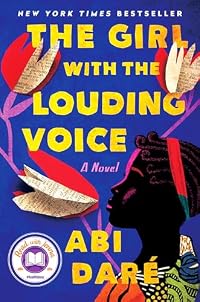
"A powerful, emotional debut novel told in the unforgettable voice of a young Nigerian woman who is trapped in a life of servitude but determined to get an education so that she can escape and choose her own future. Adunni is a fourteen-year-old Nigerian girl who knows what she wants: an education. This, her mother has told her, is the only way to get a "louding voice"-the ability to speak for herself and decide her own future. But instead, Adunni's father sells her to be the third wife of a show more local man who is eager for her to bear him a son and heir. When Adunni runs away to the city, hoping to make a better life, she finds that the only other option before her is servitude to a wealthy family. As a yielding daughter, a subservient wife, and a powerless slave, Adunni is told, by words and deeds, that she is nothing. But while misfortunes might muffle her voice for a time, they cannot mute it. And when she realizes that she must stand up not only for herself, but for other girls, for the ones who came before her and were lost, and for the next girls, who will inevitably follow; she finds the resolve to speak, however she can-in a whisper, in song, in broken English-until she is heard"-- show lessTags
Recommendations




Member Reviews
It took me nine days to finish what is a comparatively short book. Even in the middle of the COVID-19 Quarantine, with plenty of reading time. Why? Because this is a hard story to read. Very Hard! And I kept wanting to put it down and escape.
THE GIRL WITH THE LOUDING VOICE will take you deep inside Nigeria (the most populous country in Africa.) From life in a small rural village (where young girls are routinely married off -aka sold - in exchange for a guarantee of a more stable food supply) to life in the main city of Lagos, where even business success and affluence provides neither a guarantee of political stability nor happiness. It’s a country straddling the divide between ancient customs and culture and the technological and show more social advancements of the modern world.
The story centers on 14 year old Adunni — whose beloved mother has recently died, forcing her to abandon the success she has had in school to take care of her father and two brothers. Living in desperately impoverished circumstances, she nonetheless dreams of returning to her education and eventually becoming a teacher. Unfortunately, opportunities are few in a rural village, especially for young girls. And so, for the good of the family, Adunni’s future takes a new direction that her father determines will be best for all.
It turns out to be a harrowing journey for Adunni, still a child with little control over her circumstances. Along the way, there is hunger, human trafficking, physical abuse, and sexual harassment. That’s the part that made this novel difficult to read. There are also friendships, protectors, and advocates.
The author has been extremely creative in the voice she gives Adunni, which adds to her believability and makes this read VERY distinctive. And for those who complete the book, Adunni turns out to be quite an amazing, spirited, intelligent and caring person!
Bottom line: I am glad to understand more now about a country I never learned much about. I have been reminded of how vastly different life experiences are for children, depending on the geographical accident of their birth location. But I also had to confront the horrible experiences children sometimes face when resources are scarce, when they are powerless, and where a single female life is undervalued. So, be warned. show less
THE GIRL WITH THE LOUDING VOICE will take you deep inside Nigeria (the most populous country in Africa.) From life in a small rural village (where young girls are routinely married off -aka sold - in exchange for a guarantee of a more stable food supply) to life in the main city of Lagos, where even business success and affluence provides neither a guarantee of political stability nor happiness. It’s a country straddling the divide between ancient customs and culture and the technological and show more social advancements of the modern world.
The story centers on 14 year old Adunni — whose beloved mother has recently died, forcing her to abandon the success she has had in school to take care of her father and two brothers. Living in desperately impoverished circumstances, she nonetheless dreams of returning to her education and eventually becoming a teacher. Unfortunately, opportunities are few in a rural village, especially for young girls. And so, for the good of the family, Adunni’s future takes a new direction that her father determines will be best for all.
It turns out to be a harrowing journey for Adunni, still a child with little control over her circumstances. Along the way, there is hunger, human trafficking, physical abuse, and sexual harassment. That’s the part that made this novel difficult to read. There are also friendships, protectors, and advocates.
The author has been extremely creative in the voice she gives Adunni, which adds to her believability and makes this read VERY distinctive. And for those who complete the book, Adunni turns out to be quite an amazing, spirited, intelligent and caring person!
Bottom line: I am glad to understand more now about a country I never learned much about. I have been reminded of how vastly different life experiences are for children, depending on the geographical accident of their birth location. But I also had to confront the horrible experiences children sometimes face when resources are scarce, when they are powerless, and where a single female life is undervalued. So, be warned. show less
4.5. I thought the decision to have Adunni (the main character) start the story narrating with very broken English and then slowly progress into more fluent English as she learned more about verbs and tenses was very interesting. I also really appreciated that although Adunni went through a lot of very horrible things, there were still multiple people who were kind to her with no ulterior motive and just wanted to help her. I think some people may say that these types of books (girls wanting to go to school and get educated, specifically across Africa) are overdone, but it is still important to read about and not become desensitized to because it's still a reality for so many girls in the world, even though we may take it for granted.
Fourteen-year-old Adunni is stunned when her father marries her off to an older man with two wives, for he had promised her dying mother that Adunni would be allowed to pursue an education. But her father needs the dowry money, and the prospective groom needs a boy heir. From a child bride in a remote village to a domestic servant in Lagos, Adunni struggles to find her louding voice and break free of those who would silence her.
This debut novel by Nigerian-born Abi Daré is an interesting addition to feminist coming-of-age stories from the region. It is written in a nonstandard English that the author chose as Adunni's voice. Although awkward at first, it becomes a sign of her growing facility with English and an indicator of her show more relationship with the person to whom she is speaking. Another interesting element is the dichotomy between the wealthy business owners in Lagos (Nigeria has the highest GDP in Africa) and the domestic help who work for them. The author's own family employed such help, and it influenced her decision to write about the disparity. Finally, I liked how the author excerpted facts from a compendium that Adunni discovers and uses them as chapter epigraphs. I am tempted to look for another book featuring Adunni that Daré has since written called [And So I Roar].
Trigger warning: child rape show less
This debut novel by Nigerian-born Abi Daré is an interesting addition to feminist coming-of-age stories from the region. It is written in a nonstandard English that the author chose as Adunni's voice. Although awkward at first, it becomes a sign of her growing facility with English and an indicator of her show more relationship with the person to whom she is speaking. Another interesting element is the dichotomy between the wealthy business owners in Lagos (Nigeria has the highest GDP in Africa) and the domestic help who work for them. The author's own family employed such help, and it influenced her decision to write about the disparity. Finally, I liked how the author excerpted facts from a compendium that Adunni discovers and uses them as chapter epigraphs. I am tempted to look for another book featuring Adunni that Daré has since written called [And So I Roar].
Trigger warning: child rape show less
When Adunni is fourteen, her father sells her into marriage to an older man. She'll be his third wife. When her mother was still alive, she'd managed to pay for a few years of schooling for Adunni, but with her marriage, the hope of returning is gone. Her new circumstances are difficult, and as the book progresses, Adunni deals with or witnesses a laundry list of hardships, always dreaming of a better life if only she could go to school, dreaming of having a "louding voice," a voice that people will listen to.
This novel is set in Nigeria, first in a small village, later in Lagos. The novel is narrated by Adunni and author Abi Daré allows Adunni's voice to be an uncertain English, guessing at the words she doesn't know, and very much show more that of a naïve teenager. And as Adunni improves her English and learns more about the world, her language changes. Choosing to put the novel entirely into Adunni's voice is a courageous choice for a debut novelist and one that pays off. Adunni comes across as likable and resilient.
In the end, though, I was uncomfortable with this novel. Adunni faces an endless stream of abuse and injustice and all she can do is endure. That the solution lies in the largesse of a wealthy woman raised in Britain, while the abuse all came from Nigerians was unsettling. This is also the second novel in which a western woman's fertility worries are given out-sized space in a novel about greater issues affecting Africans that I have read recently and I'm not a fan. The Girl with the Louding Voice would provide book clubs with plenty to discuss, but I hope that the discussions at least touch on the problematic aspects of this book. show less
This novel is set in Nigeria, first in a small village, later in Lagos. The novel is narrated by Adunni and author Abi Daré allows Adunni's voice to be an uncertain English, guessing at the words she doesn't know, and very much show more that of a naïve teenager. And as Adunni improves her English and learns more about the world, her language changes. Choosing to put the novel entirely into Adunni's voice is a courageous choice for a debut novelist and one that pays off. Adunni comes across as likable and resilient.
In the end, though, I was uncomfortable with this novel. Adunni faces an endless stream of abuse and injustice and all she can do is endure. That the solution lies in the largesse of a wealthy woman raised in Britain, while the abuse all came from Nigerians was unsettling. This is also the second novel in which a western woman's fertility worries are given out-sized space in a novel about greater issues affecting Africans that I have read recently and I'm not a fan. The Girl with the Louding Voice would provide book clubs with plenty to discuss, but I hope that the discussions at least touch on the problematic aspects of this book. show less
I had mixed feelings regarding this debut novel about Adunni, a 14-year-old girl in Nigeria whose father marries her off to an older man who already had two wives.
This novel was narrated by Adunni in a variation of pidgin English, indicating that this character was less educated. At first, I found the language distracting, then I accepted it as part of the Adunni herself, but later I once again found it annoying. Asunni's goal throughout the entire story was to find a way to go back to school.
I liked learning about life in Nigeria, albeit this tale was difficult reading due to the incessant verbal and physical abuse received by Adunni. I had not been aware of the prevalence of child marriage and child slavery in Nigeria until I did show more some reading after finishing this novel. I like that the author uses her novel as a voice for women's rights and education and as backdrop to protest child marriage and child slavery in Nigeria.
There were no surprises in this book, though. I felt as if I knew what was going to happen throughout the story which unfortunately made it seem as if I were reading this novel only to confirm the ending. I found the characters rather disappointing because they were lacking nuance. They seemed extremely good or extremely bad. This took away credibility of the characters to the extent that I thought that Big Madam was telling a lie when she made the “big reveal” at the end of the book.
This book was an okay read, but it did not spark my interest enough to look for other works by this author in the near future. show less
This novel was narrated by Adunni in a variation of pidgin English, indicating that this character was less educated. At first, I found the language distracting, then I accepted it as part of the Adunni herself, but later I once again found it annoying. Asunni's goal throughout the entire story was to find a way to go back to school.
I liked learning about life in Nigeria, albeit this tale was difficult reading due to the incessant verbal and physical abuse received by Adunni. I had not been aware of the prevalence of child marriage and child slavery in Nigeria until I did show more some reading after finishing this novel. I like that the author uses her novel as a voice for women's rights and education and as backdrop to protest child marriage and child slavery in Nigeria.
There were no surprises in this book, though. I felt as if I knew what was going to happen throughout the story which unfortunately made it seem as if I were reading this novel only to confirm the ending. I found the characters rather disappointing because they were lacking nuance. They seemed extremely good or extremely bad. This took away credibility of the characters to the extent that I thought that Big Madam was telling a lie when she made the “big reveal” at the end of the book.
This book was an okay read, but it did not spark my interest enough to look for other works by this author in the near future. show less
Set in Nigeria, this book is the story of Adunni, a fourteen-year-old girl whose dream is to become a teacher and find her “louding voice.” Her family lives in poverty. After her mother dies, her father arranges for her to marry an older man, who already has two wives, in order to receive the “bride-price.” One of the wives is abusive, but the other befriends her. When her circumstances change, she is hired into domestic service, but her wages are stolen by the man who found her the “job.” Again, she finds friends. Though she suffers sexual and other physical abuse, she is tenacious and perseveres in her goal to obtain an education.
This book provides social commentary on women’s issues in Nigeria – child marriage, show more domestic slavery, and the lack of educational opportunities. The story is told in first person by Adunni, which is extremely effective in drawing an emotional response from the reader. I was aghast at what she had to go through, living in an oppressive environment where women are not valued except for their ability to produce children (and preferably boys).
I liked that it included both the positives and negatives in Adunni’s life. Often times these types of books dwell on the negatives to the exclusion of even small glimmers of hope, but this story is more balanced. I liked the descriptions of Adunni’s friendships, her determination, and memories of her mother’s strength. Adunni speaks in dialect, which was the least appealing aspect for me. I listened to the audio book, narrated by Adjoa Andoh, and she does a nice job in giving Adunni a distinct “voice.”
“My mama say education will give me a voice. I want more than just a voice…. I want a louding voice,” I say. “I want to enter a room and people will hear me even before I open my mouth to be speaking. I want to live in this life and help many people so that when I grow old and die, I will still be living through the people I am helping.” show less
This book provides social commentary on women’s issues in Nigeria – child marriage, show more domestic slavery, and the lack of educational opportunities. The story is told in first person by Adunni, which is extremely effective in drawing an emotional response from the reader. I was aghast at what she had to go through, living in an oppressive environment where women are not valued except for their ability to produce children (and preferably boys).
I liked that it included both the positives and negatives in Adunni’s life. Often times these types of books dwell on the negatives to the exclusion of even small glimmers of hope, but this story is more balanced. I liked the descriptions of Adunni’s friendships, her determination, and memories of her mother’s strength. Adunni speaks in dialect, which was the least appealing aspect for me. I listened to the audio book, narrated by Adjoa Andoh, and she does a nice job in giving Adunni a distinct “voice.”
“My mama say education will give me a voice. I want more than just a voice…. I want a louding voice,” I say. “I want to enter a room and people will hear me even before I open my mouth to be speaking. I want to live in this life and help many people so that when I grow old and die, I will still be living through the people I am helping.” show less
First up, I want to address the aspect of this that might scare off some readers. This is written entirely in broken English since it’s told from the point of view of fourteen year old Nigerian Adunni who had to abandon her education following the death of her mother. For me, the broken English wasn’t all that different from when I read Jane Austen or some other classic, it takes a moment, maybe a couple chapters to adjust to this version of English, but after awhile you get so used to it that it flows as easily as any other prose. As an added bonus, there are plenty of times when the way Adunni phrases things is more insightful and/or more beautiful than “correct” English would ever manage.
I loved Adunni, she’s one of my show more favorite characters I’ve met this year, probably one of my favorite characters I’ve ever met. Adunni is curious, loving, and brave. She takes you on something of an emotional rollercoaster, I would cringe with worry when she’d do or say something that may make her situation worse yet at the same time I’d feel so proud of her, so exhilarated by her for taking the risk, for standing up for herself, for trying to do right by someone she never even met. She’s incredibly endearing and even more inspiring.
There is some extremely tough ground covered here, rape, abuse, slavery, etc., it is bleak, but there’s light, too, there’s light in the friendships and there’s light in Adunni. show less
I loved Adunni, she’s one of my show more favorite characters I’ve met this year, probably one of my favorite characters I’ve ever met. Adunni is curious, loving, and brave. She takes you on something of an emotional rollercoaster, I would cringe with worry when she’d do or say something that may make her situation worse yet at the same time I’d feel so proud of her, so exhilarated by her for taking the risk, for standing up for herself, for trying to do right by someone she never even met. She’s incredibly endearing and even more inspiring.
There is some extremely tough ground covered here, rape, abuse, slavery, etc., it is bleak, but there’s light, too, there’s light in the friendships and there’s light in Adunni. show less
Members
- Recently Added By
Published Reviews
ThingScore 75
Daré has said of the language in which the book is written: “Nigerians speak something called pidgin English, and I knew I didn’t want to write in pidgin English because even the very educated people speak pidgin English. I wanted it to be nonstandard English.The results of this invented English are uneven.. I could make it Adunni’s. It could be her own English, so to speak....The novel show more is strongest when dealing with interpersonal relationships, especially between characters of different classes.....The story told in this novel is an important one. The trauma of girls forced into marriage and the blight of domestic slavery in Nigeria are both issues that must be brought to light. As Adunni wonders: “Why are the women in Nigeria seem to be suffering for everything more than the men?” The Girl With the Louding Voice joins a long and fine tradition of issue-led novels that have sparked conversations resulting in social change. Social justice is a laudable intention when writing a novel, yet one also reads them for subtler and less concrete gains. show less
added by vancouverdeb
Lists

Top Five Books of 2020
982 works; 350 members

Childhood: Books for or about children in different cultures around the wor
345 works; 18 members

Best African and African diaspora books
111 works; 4 members

Books Read in 2022
5,164 works; 111 members

Books Read in 2023
5,547 works; 145 members

Favorite Books from the 2010s
75 works; 3 members

Islam & the Middle East
127 works; 1 member

2023 Update: The Best Twenty Books You've Read in the Past Five Years
40 works; 3 members

Book of the Month Selections 2016 to Present
130 works; 5 members

Young Adult
18 works; 1 member

Read with Jenna
91 works; 2 members
Author Information

6+ Works 2,276 Members
Some Editions
Awards and Honors
Awards
Distinctions
Series

Common Knowledge
- Canonical title
- The Girl with the Louding Voice
- Original publication date
- 2020
- People/Characters
- Adunni; Kayus; Alao "Born-boy"; Enitan; Idowu; Morufu (show all 24); Labake; Khadija; Kike; Bamidele; Papa; Ruka; Mr. Bada; Iya; Mr. Kola; Florence "Big Madam" Adeoti; Kofi; Rebecca; Chief "Big Daddy" Adeoti; Tia Dada; Abu; Dr. Ken Dada; Chisom; Caroline Bankole
- Important places
- Ikati Village, Nigeria, Africa; Lagos, Nigeria, Africa
- Dedication
- To my mother, Professor Teju Somorin, not just because you are smart and beautiful and became the first female professor of taxation in Nigeria in 2019, but also because you made me see the importance of education and sacri... (show all)ficed so much for me to get the best of it.
- First words
- Nigeria is a country located in West Africa.
This morning, Papa call me inside the parlor. - Quotations
- Bamidele shout so sudden, the goat in the afar stop his shit, take off, and run.
Lagos…is home to one of the largest concentrations of millionaires in Africa.
I have plenty work to be doing, but this book be like two big hands, full of love, drawing me close, keeping me warm and feeding me food.
I know she is saying this from the good of her soul, but it is not so easy when you are born into a life of no money and plenty suffering, a life you didn’t choose for yourself. - Last words
- (Click to show. Warning: May contain spoilers.)We begin the five minutes of walking to Ms. Tia's house in the early-morning silence through the big black gates that I used to wipe four times a day with that thick yellow cloth in the kitchen, down Wellington Road with its houses full of screaming peacocks--the rich man's fowl--and then finally into Ms. Tia's compound, where the white house with a mirror on its roof is blinking, blinking at me as if to say, Welcome, Adunni, welcome to your new free.
- Blurbers
- Mbue, Imbolo; Conklin, Tara; Lupton, Rosamund; Callanan, Liam; Cummins, Jeanine
- Original language
- English
- Canonical DDC/MDS
- 823.92
- Canonical LCC
- PR6104.A83298
Classifications
Statistics
- Members
- 2,156
- Popularity
- 9,394
- Reviews
- 71
- Rating
- (4.24)
- Languages
- 6 — Dutch, English, German, Italian, Portuguese, Swedish
- Media
- Paper, Audiobook, Ebook
- ISBNs
- 27
- ASINs
- 8